

P0019 on 2007-2012 Lexus ES 350: Crank/Cam Correlation Causes and Fixes
For the 2007-2012 Lexus ES 350, code P0019 is most often caused by low/dirty engine oil or a failing exhaust VVT solenoid (Oil Control Valve) on Bank 2 (the cylinder bank near the radiator). Replacing the solenoid is a common DIY fix costing around $50-$120 for the part. The Bank 2 exhaust solenoid is the lower of the two solenoids on the front-facing cylinder head.
- Always check your engine oil first. A simple oil change can sometimes fix this code.
- The most likely failed part is the Bank 2 (front) exhaust VVT solenoid, not the sensor or timing chain.
- Bank 2 is the cylinder bank closer to the front of the car (by the radiator). 'Sensor B' refers to the exhaust camshaft.
- Replacing the VVT solenoid is a manageable DIY job for many home mechanics and is significantly cheaper than a timing chain service.
- If you also have code P0017, the problem is almost certainly related to your engine oil condition or overall oil pressure.
What's Unique About the 2007-2012 Lexus ES 350
The 2GR-FE V6 engine in your Lexus is known for its reliability, but its VVT system is highly dependent on clean engine oil and proper oil pressure. Many instances of P0019 on this platform are not due to major mechanical failure but are instead linked to oil-related issues. A common failure point is the VVT solenoid (also called an Oil Control Valve or OCV), which can get clogged with sludge or fail electrically, making it the most likely culprit after verifying the oil is clean and full. Some early 2GR-FE engines were also subject to a campaign to replace a rubber VVT oil line with an all-metal one to prevent catastrophic oil leaks, highlighting the system's sensitivity to oil pressure.
Symptoms You May Notice
- Check Engine Light is on
- Rough or unstable idle
- Hesitation or stumbling during acceleration
- Reduced fuel economy
- Engine may be difficult to start
- Unusual engine noises (rattling or ticking).
- Replacing the camshaft position sensor when the actual problem is a stuck VVT solenoid or dirty oil.
- Assuming the timing chain has stretched without first diagnosing the much more common and cheaper oil-related issues.
- Replacing the wrong VVT solenoid (e.g., intake instead of exhaust, or Bank 1 instead of Bank 2).
Most Likely Causes
- Low or Dirty Engine Oil 🔴 High Probability The VVT system uses hydraulic pressure to adjust cam timing. Old, dirty, or low oil can't operate the VVT actuators (phasers) correctly and can clog the small passages and filter screens in the oil control valves (solenoids).
How to confirm: Check the oil level on the dipstick and inspect its color and consistency. If the level is low or the oil is dark, gritty, or sludgy, it needs to be changed. This is the first and most important check.
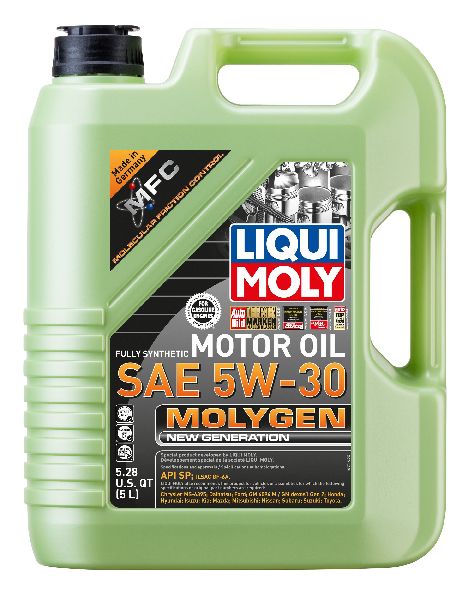
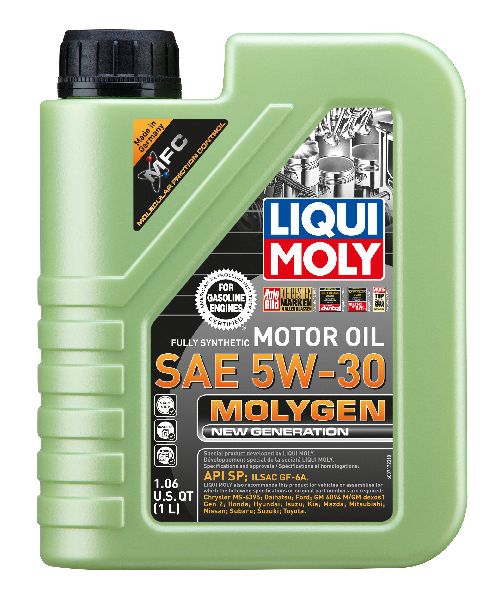
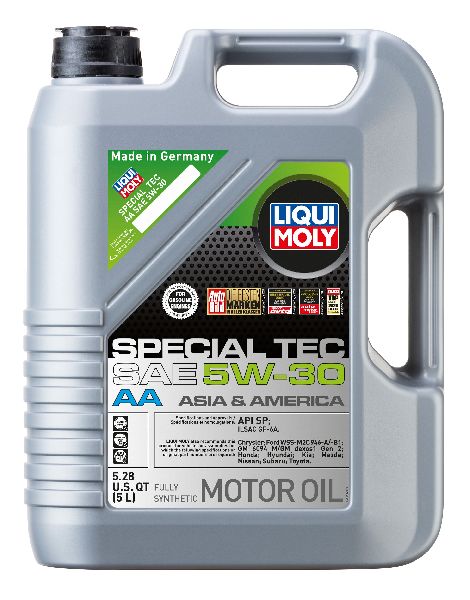
Typical fix: Perform an engine oil and filter change using the manufacturer-recommended oil viscosity (typically 5W-30). Clear codes and test drive.
Est. part cost: $30-$70 - Faulty Bank 2 Exhaust VVT Solenoid (Oil Control Valve) 🔴 High Probability This solenoid is a known failure point on many Toyota/Lexus engines. It can get stuck from oil sludge or simply fail electrically over time, preventing correct oil flow to the cam phaser. The Bank 2 exhaust solenoid is the lower of the two solenoids on the front (radiator side) cylinder head.
How to confirm: Use a scan tool to perform an active test on the Bank 2 exhaust VVT solenoid. Alternatively, remove the solenoid, inspect its screen for sludge, and apply 12V power to its terminals to see if the internal plunger actuates with a distinct click. Resistance should be between 6.9 and 7.9 ohms at room temperature.
Typical fix: Replace the Bank 2 exhaust VVT solenoid. It is held by a single 10mm bolt.
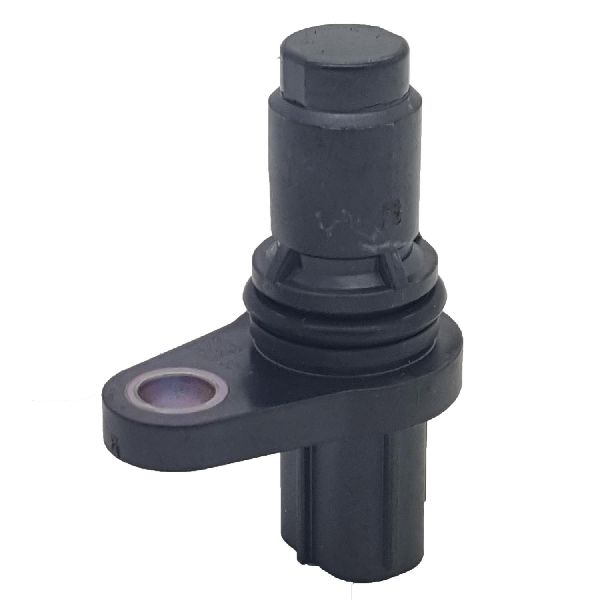
Est. part cost: $50-$180 - Faulty Bank 2 Exhaust Camshaft Position Sensor 🟡 Medium Probability Like any electronic sensor, it can fail with age and heat cycles, sending incorrect position data to the ECM. However, it is misdiagnosed more often than it fails.
How to confirm: Test the sensor's resistance with a multimeter or observe its waveform with an oscilloscope to see if it's sending a clean, consistent signal. Swapping the sensor with the intake sensor on the same bank (if they are identical parts) is a common diagnostic trick.
Typical fix: Replace the Bank 2 exhaust camshaft position sensor.
Est. part cost: $40-$140 - Stretched Timing Chain or Worn Timing Components ⚪ Low Probability While the 2GR-FE has a durable timing chain, very high mileage or severe neglect (infrequent oil changes) can cause the chain to stretch or tensioners to wear out, leading to a true mechanical timing error.
How to confirm: This is an advanced diagnosis. It requires removing the valve cover(s) to physically inspect the chain for slack and verify that the timing marks on the camshaft and crankshaft sprockets are perfectly aligned. An oscilloscope can also compare cam/crank signals to a known-good pattern.
Typical fix: Replace the timing chain, tensioners, and guides. This is a labor-intensive job.
Est. part cost: $400-$800
Rare But Worth Checking
- Clogged VVT Solenoid Filter Screen: Some VVT solenoids have a small, separate filter screen in the oil passage below them. This can become clogged with debris even if the solenoid itself is functional. It's worth checking and cleaning when the solenoid is removed.
- Damaged Camshaft Phaser (VVT Actuator): The gear on the end of the camshaft that actually adjusts the timing can fail internally. Toyota issued TSB T-SB-0094-09 for ticking noises and VVT codes on some 2GR engines related to this actuator. In rare cases on early 2GR-FSE (not FE) engines, the bolts holding the gear together could back out, causing catastrophic failure.
Diagnosis Steps
- Check the engine oil level and condition. If low, dark, or sludgy, perform an oil and filter change with 5W-30 synthetic oil. Clear the code and drive to see if it returns. This is the most common fix.
- Use an OBD-II scanner to check for any other codes. Troubleshoot other codes first, especially if they relate to other cam sensors.
- Inspect the wiring and connector for the Bank 2 (front bank, radiator side) exhaust VVT solenoid and camshaft position sensor for any damage, oil contamination, or corrosion.
- Use a capable scanner (like Toyota Techstream) to command the 'VVT Exhaust Linear (Bank 2)' solenoid on and off while monitoring engine RPM. A noticeable change in idle quality/RPM indicates the solenoid and phaser are likely working.
- If a scanner is unavailable, remove the Bank 2 exhaust VVT solenoid (lower solenoid on the front head, held by one 10mm bolt). Inspect it and its filter screen for sludge. Test it by applying 12V power and listening for a sharp click.
- If the solenoid is sludgy, fails to click, or tests out of resistance spec (6.9-7.9 ohms), replace it. This is the most common hardware fix.
- If the solenoid is good, consider swapping the Bank 2 exhaust cam position sensor with the Bank 2 intake sensor (if part numbers match) to see if the code follows the sensor (e.g., changes to P0018). If it does, the sensor is bad.
- If all electronic components and oil are good, the final step is to perform a mechanical inspection of the timing chain and VVT phaser for slack, damage, or misalignment, which requires significant disassembly.
Parts You'll Likely Need
- Engine Variable Valve Timing (VVT) Solenoid / Oil Control Valve (Bank 2 Exhaust)
(OEM #15340-0P020 (supersedes 15340-31020))— This is the most common component to fail or get stuck with sludge, directly causing the P0019 code on this engine. Bank 2 is the 'Left Hand' or driver's side of the engine itself, which corresponds to the front/radiator side in a transverse layout.
Trusted brands: Aisin, Denso, Dorman
OEM price range: $120-$180
Aftermarket price range: $50-$100 - Engine Camshaft Position Sensor (Bank 2 Exhaust)
(OEM #90919-05060)— If the VVT solenoid and oil are confirmed to be good, the sensor providing the position data to the ECM is the next logical part to suspect, though less common than the solenoid.
Trusted brands: Denso, NTK, SKP
OEM price range: $80-$140
Aftermarket price range: $40-$90 - Engine Oil and Filter — Dirty, low, or incorrect viscosity oil is a primary cause of VVT system faults and should be the first step in any repair.
Trusted brands: Mobil 1, Castrol, Valvoline
OEM price range: $50-$90
Aftermarket price range: $30-$70
Related Codes That Often Appear With This One
- P0017 — This is the same correlation error but for Bank 1 (rear bank), exhaust camshaft. Seeing both P0017 and P0019 together strongly suggests a systemic problem like low/dirty oil or low oil pressure affecting both banks.
- P0018 — This is a correlation error for the Bank 2 *intake* camshaft. Seeing it with P0019 points to a problem affecting the entire Bank 2 timing system, possibly a jumped tooth on the timing chain or a failing VVT actuator on that bank.
- P0025 — This code means 'Camshaft Position B - Timing Over-Retarded (Bank 2)'. It often appears with P0019 and points directly to a problem with the exhaust camshaft on Bank 2, reinforcing the diagnosis of a stuck VVT solenoid or failing phaser.
Technical Service Bulletins (TSBs) & Recalls
- T-SB-0094-09: 2GR/3GR/4GR Engine Ticking Noise and/or MIL ON: While not specifically for P0019, this Toyota TSB addresses ticking noises and various VVT-related DTCs caused by a faulty camshaft gear assembly (phaser). This is relevant for high-mileage vehicles where P0019 persists after replacing oil and solenoids, pointing to a mechanical phaser issue.
Platform-Specific Known Issues
- VVT Oil Line Rupture: Many early 2GR-FE engines (approx. 2007-2008) were built with a rear VVT oil line that contained a rubber section. This line was known to rupture, causing a massive and rapid oil leak that could destroy the engine. Toyota issued a Limited Service Campaign (LSC 90K) to replace the rubber line with an all-metal one. While this issue typically affects the rear bank (Bank 1), a significant oil loss from this failure can cause codes for both banks.
Mechanic-Grade Diagnostic Values
- Bank 2 Exhaust VVT Solenoid (OCV) Resistance — expected: 6.9 to 7.9 Ω at 20°C (68°F). Failure: A reading outside this range, or an open/short circuit, indicates a failed solenoid coil.
- VVT Solenoid (OCV) Supply Voltage — expected: Battery voltage (~12V). Failure: No voltage indicates a problem with the EFI MAIN relay, fuse, or wiring harness.
- Camshaft vs. Crankshaft Waveform Correlation (Oscilloscope) — expected: At idle, the 17th tooth of the crankshaft sensor signal after the missing tooth should align with the high signal of the camshaft sensor.. Failure: Misalignment of these signals confirms a mechanical timing issue (stretched chain, jumped tooth, or phaser problem).
- Camshaft Position Sensor Signal (Aftermarket ECU) — expected: These sensors have a low voltage output and may require an external 2.2k pull-up resistor between the +5V reference and the signal wire for proper operation with non-OEM electronics.. Failure: An unstable or non-existent signal on an aftermarket ECU may be due to the lack of a required pull-up resistor.
Hidden / Shadow Codes Worth Checking
- Pending DTC / Mode 6 Data: Before a DTC becomes permanent and illuminates the Check Engine Light, it may be stored as a 'Pending DTC'. Additionally, Mode 6 data provides raw test results from the ECM's self-checks, which can show a component is close to its failure threshold even if a code hasn't been set. (see via Use a professional scan tool like Toyota Techstream. Navigate to 'Powertrain / Engine / Trouble Codes / Pending' to see pending codes. Mode 6 data is also accessible through the same tool.)
Scan Tool Commands That Help
- Toyota Techstream: Active Test: 'Control the VVT Exhaust Linear (Bank 2)' — This is a primary diagnostic step after checking oil. It directly commands the suspect VVT solenoid to actuate. While monitoring engine RPM, a noticeable change in idle speed or quality confirms the solenoid, oil passages, and VVT phaser are mechanically responding to commands. No change in RPM points to a failure in that system.
Wiring & Ground Locations
- ECM Connector A55 (Bank 2 Exhaust VVT Sensor) — At the Engine Control Module (ECM).. Pin EV2+ (Pin 66), Pin EV2- (Pin 89), and Pin VCE2 (Pin 112) are the specific terminals for the Bank 2 exhaust cam sensor. These pins should be checked for continuity and voltage when diagnosing a sensor circuit fault.
- ECM Connector C55 (Bank 2 Exhaust OCV) — At the Engine Control Module (ECM).. Pin OE2+ (Pin 65) and Pin OE2- (Pin 48) are the ECM terminals that control the Bank 2 exhaust VVT solenoid (OCV). The ECM sends a duty-cycle signal via these pins to control oil flow. Checking the signal here with an oscilloscope can confirm if the ECM is commanding the solenoid correctly.
- Engine Ground Points — Multiple ground straps connect the engine block and cylinder heads to the chassis. Key locations are on the top of the cylinder heads and on the engine block near the starter.. A poor engine ground can cause electrical noise and voltage drops, potentially affecting the readings from the cam/crank sensors and the operation of the VVT solenoids, leading to correlation errors. Ensure all ground points are clean and tight.
Real Owner Repair Stories
- YouTube Commenter on 'Miracle Fix for the VVT Death Rattle' video (Toyota with 2GR-FE engine (specific model not mentioned)) — VVT rattle (often associated with VVT codes like P0019)
❌ Tried (didn't work) Replaced all 4 VVT gears (phasers), Replaced timing chains, Replaced timing chain tensioners
✅ What actually fixed it Replaced the VVT solenoids (OCVs) and the O-ring gaskets on the camshaft bearing caps. The commenter was 'so mad but also so happy' that this much simpler fix solved the problem after the expensive and laborious timing job did not.
When the Usual Fixes Don't Work
- While a stretched timing chain is a possible cause, it should be considered a diagnosis of last resort. In one documented case, a vehicle owner replaced the VVT gears, timing chains, and tensioners in an attempt to fix a VVT rattle and associated codes, but the problem persisted. The actual solution was replacing the VVT solenoids and, critically, the small O-ring gaskets on the camshaft bearing caps that had hardened and were leaking oil pressure. This demonstrates that even if mechanical timing seems suspect, the much more common (and sometimes hidden) oil pressure issues should be exhaustively ruled out first.
OEM Part Supersession History
15340-31020→15340-0P020— Standard design revision and part number consolidation by the manufacturer.
Heads up: The new part number (15340-0P020) is the correct replacement and is fully compatible with vehicles that originally used 15340-31020.
Model Year Variations Within This Range
- 2007-2009 (approx.): Early 2GR-FE engines were more susceptible to the issues described in TSB T-SB-0094-09, which involves ticking noises and various VVT codes (including correlation codes). This TSB could result in the replacement of the VVT gear and camshafts. This suggests a potential change in parts or manufacturing processes in later years to address these concerns.
Diagnostic Flowchart
Real Owner Stories
Aggregated from forums and TSBs cited above. Mileages and costs reflect what owners reported in those sources.
Lexus IS 2nd Gen 2GR-FSE
Symptoms: Codes P0019, P0025, and P0504 appeared after a battery issue, accompanied by a known cam gear rattle.
What fixed it: Diagnosed as a potential mechanical problem related to the cam gear rattle.
Source hint: ClubLexus.com: Thread 'P0019, p0025, p0504 after reset.'
Toyota/Lexus 2GR-FE
Symptoms: All monitors cleared but the vehicle was still throwing a P0019 code.
What fixed it: Cleaning gunked-up OCVs (Oil Control Valves).
Source hint: Reddit r/MechanicAdvice: 'All monitors cleared, still throwing P0019 code'
Lexus RX350 2GR-FE
Symptoms: Experiencing multiple correlation codes including P0016, P0017, P0018, and P0019.
What fixed it: Swapping sensors and solenoids between banks to isolate and diagnose the faulty component.
Source hint: club-lexus.ru: 'Ошибки p0016, p0017, p0018, p0019'
2007-2008 Lexus ES 350 2GR-FE
Symptoms: Massive and rapid oil leak causing VVT codes for both banks.
What fixed it: Replaced the ruptured rubber rear VVT oil line with an all-metal line under Limited Service Campaign (LSC) 90K.
Source hint: Vehicle Specific Issues: VVT Oil Line Rupture
Toyota/Lexus 2GR Engine
Symptoms: Engine ticking noise and MIL ON with VVT-related DTCs persisting after replacing oil and solenoids.
What fixed it: Replaced the faulty camshaft gear assembly (phaser) per Toyota TSB.
Source hint: T-SB-0094-09: 2GR/3GR/4GR Engine Ticking Noise and/or MIL ON
Related OBD-II Codes
Frequently Asked Questions
Does the VVT oil line issue on early 2GR-FE engines apply to my 2007 ES 350?
Does T-SB-0094-09 apply to my car for code P0019?
Where is the Bank 2 exhaust VVT solenoid located on the 3.5L V6?
How do I test the Bank 2 exhaust oil control valve on my ES 350?
Can I swap sensors to test for a bad camshaft position sensor?
What oil viscosity is required to keep the VVT system working properly and clear this code?
We Have This Part in Stock


The information in this article is provided for general reference and educational purposes only. Vehicle specifications, procedures, and part compatibility can vary by production date, trim level, and region. Always consult your vehicle's factory service manual and verify part numbers before purchasing or performing repairs. Safety-critical components such as airbags, seat belts, and braking systems should be installed by a qualified professional.
- Lexus ES 350:
- 🛍️ Shop This Part
- What's Unique About the 2007-2012 Lexus ES 350
- Symptoms You May Notice
- Most Likely Causes
- Rare But Worth Checking
- Diagnosis Steps
- Parts You'll Likely Need
- Related Codes That Often Appear With This One
- Technical Service Bulletins (TSBs) & Recalls
- Platform-Specific Known Issues
- Mechanic-Grade Diagnostic Values
- Hidden / Shadow Codes Worth Checking
- Scan Tool Commands That Help
- Wiring & Ground Locations
- Real Owner Repair Stories
- When the Usual Fixes Don't Work
- OEM Part Supersession History
- Model Year Variations Within This Range
- Diagnostic Flowchart
- Real Owner Stories
- Lexus IS 2nd Gen 2GR-FSE
- Toyota/Lexus 2GR-FE
- Lexus RX350 2GR-FE
- 2007-2008 Lexus ES 350 2GR-FE
- Toyota/Lexus 2GR Engine
- Related OBD-II Codes
- Frequently Asked Questions
- 🎟️ Get 5% Off