

P0019 on 2014-2019 GMC Sierra 5.3L: Crank/Cam Correlation Causes and Fixes
P0019 on a GMC Sierra 5.3L indicates a timing mismatch between the crankshaft and the Bank 2 exhaust camshaft. The most common cause is a stretched timing chain or a failed tensioner, which is a significant, labor-intensive repair. Less common causes include faulty sensors, a bad VVT solenoid, or low oil pressure.
- P0019 on your Sierra 5.3L almost always indicates a mechanical problem with the engine's timing, not just a bad sensor.
- Do not continue to drive the vehicle. A failing timing chain can break and cause catastrophic engine damage.
- The first and easiest check is the engine oil. Low or dirty oil can cause this code.
- The most probable cause is a stretched timing chain or failed tensioner, a repair that is complex and best left to a professional.
- When making the repair, always replace the timing chain, tensioners, and guides as a complete kit to ensure longevity.
What's Unique About the 2014-2019 GMC Sierra
While P0019 is a generic code, on GM trucks like the Sierra with the 5.3L L83 engine, it often points directly to mechanical timing issues rather than just a bad sensor. These engines can be susceptible to timing chain stretch or tensioner failure over time. GM Technical Service Bulletins for this engine family, like TSB #19-NA-212, discuss potential for sheared camshaft sprocket locating pins, which is a severe mechanical failure. Another TSB, #20-NA-085, notes that on some engines a missing timing chain guide insert could cause the chain to become loose, leading to correlation codes. These bulletins highlight a pattern of mechanical timing faults being the root cause.
Generation note: The 2014-2019 range covers the end of the third generation (K2XX, 2014-2018/2019 Limited) and the start of the fourth generation (T1XX, 2019). Both generations used a 5.3L V8, but the 2019 T1XX models introduced the L84 variant with Dynamic Fuel Management (DFM), while the K2XX used the L83 with Active Fuel Management (AFM). While the core timing architecture is similar, be aware of slight engine differences when ordering parts for a 2019 model.
Symptoms You May Notice
- Check Engine Light is on.
- Rough or unstable idle.
- Hesitation or stumbling during acceleration.
- Reduced engine power.
- Decreased fuel economy.
- Engine may stall, especially at low speeds.
- In some cases, the engine may be hard to start or fail to start.
- A rattling or chirping noise from the front of the engine, especially on startup.
- Replacing only the camshaft or crankshaft position sensor without checking the mechanical timing. The sensors are often reporting a real mechanical problem, not failing themselves.
Most Likely Causes
- Stretched Timing Chain 🔴 High Probability Over time, especially with extended oil change intervals, the timing chain can stretch. This is a known issue on many modern engines, including the Gen V GM V8s, and directly causes a correlation error. TSB #20-NA-085 for related engines points to issues like a missing guide insert causing chain slack.
How to confirm: Physical inspection is the only definitive way. This involves removing the engine's front cover to measure chain slack. A mechanic may first use an oscilloscope to analyze cam/crank signals for deviations. A rattling noise from the front of the engine is a strong indicator.
Typical fix: Replace the timing chain, tensioners, and guides as a complete kit.
Est. part cost: $200-$400 - Failed Timing Chain Tensioner 🔴 High Probability The tensioner keeps the timing chain taut. If it fails due to wear or low oil pressure, the chain can become slack, jump a tooth, or create timing inaccuracies. GM TSB #PIP3423P directly mentions inspecting for loose tensioners for this code family.
How to confirm: Visual inspection after removing the timing cover. A rattling noise from the front of the engine on startup is a common symptom.
Typical fix: Replace the timing chain tensioner. It is highly recommended to replace the chain and guides at the same time.
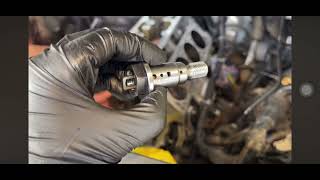
Est. part cost: $50-$100 - Faulty Camshaft Actuator Solenoid (VVT Solenoid) 🟡 Medium Probability This solenoid controls oil flow to the camshaft phaser to adjust timing. It can get clogged with sludge from dirty oil or fail electronically, causing the cam timing to be stuck in one position. The VVT system is highly dependent on oil pressure and cleanliness.
How to confirm: A technician can command the solenoid with a scan tool to check for response. It can also be removed and tested for resistance and operation. Swapping the exhaust solenoid with the intake solenoid on the same bank and seeing if the code changes to P0018 is a common diagnostic trick.
Typical fix: Replace the Bank 2 exhaust camshaft actuator solenoid.
Est. part cost: $40-$90 - Low or Dirty Engine Oil ⚪ Low Probability The entire variable valve timing (VVT) system, including phasers and tensioners, is dependent on clean oil at the correct pressure. Low or contaminated oil can starve components, leading to timing errors. This should always be the first check.
How to confirm: Check the oil level on the dipstick and inspect its condition. This should be the very first step in diagnosis.
Typical fix: Perform an oil and filter change using the manufacturer-specified grade of oil.
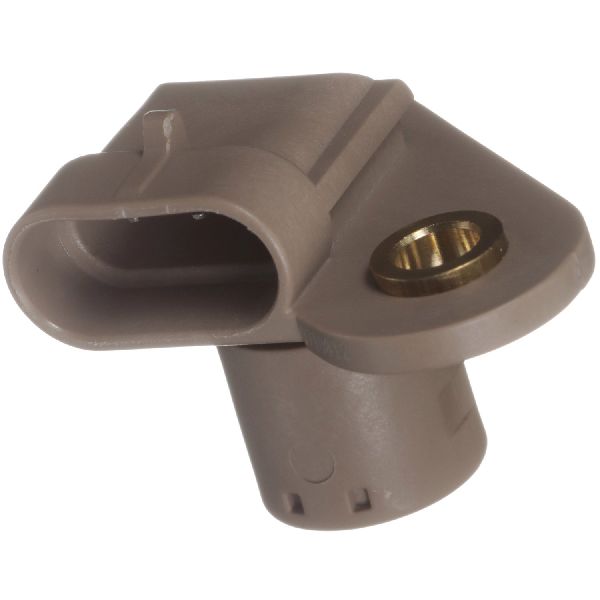
Est. part cost: $50-$100 - Faulty Camshaft Position Sensor ⚪ Low Probability While possible, it's less common for the sensor itself to fail than the mechanical components it monitors. People often replace this first, but it's rarely the root cause for this specific code on this engine. The sensor is usually accurately reporting a mechanical fault.
How to confirm: Monitor the sensor's output with a scan tool or oscilloscope. Swap with the intake sensor on the same bank to see if the code changes.
Typical fix: Replace the Bank 2 exhaust camshaft position sensor.
Est. part cost: $30-$70
Rare But Worth Checking
- Slipped Crankshaft Reluctor Wheel: GM TSB #PIP3423P notes that the reluctor wheel, which the crankshaft position sensor reads, can physically move on the crankshaft. This is a major failure that requires either crankshaft replacement or specialized tools to fix, but it's a documented possibility for this family of codes on GM engines.
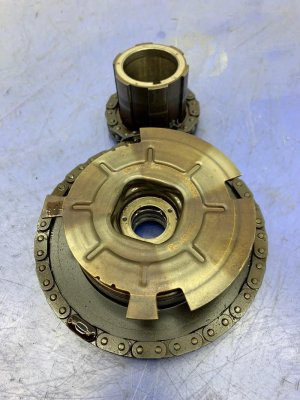
- Failed Camshaft Phaser: The mechanical gear (phaser) on the camshaft that adjusts timing can fail or get stuck. This is a mechanical failure that requires timing cover removal to replace.
- Sheared Camshaft Sprocket Locating Pin: A severe failure documented in GM TSB #19-NA-212. This can cause a crank/no-start condition or a very rough running engine. If the pin shears, the camshaft stops rotating with the crankshaft, leading to a complete loss of timing. The bulletin suggests engine replacement if this pin has sheared.
Diagnosis Steps
- Check engine oil level and condition. Correct if low or dirty before proceeding. This is the most critical first step as the VVT system is oil-dependent.
- Use a professional scan tool to confirm P0019 and check for any other related DTCs.
- Observe live data for the desired vs. actual angles of the Bank 2 exhaust camshaft phaser. A large, persistent discrepancy indicates a problem.
- Command the Bank 2 exhaust camshaft actuator solenoid on and off with the scan tool to verify its operation. Listen for a click and watch for a change in engine idle.
- Swap the Bank 2 exhaust VVT solenoid with the intake solenoid on the same bank. If the code changes to P0018, the solenoid is faulty.
- Inspect the wiring and connector for the Bank 2 exhaust cam sensor, crankshaft position sensor, and VVT solenoid for any damage, corrosion, or loose connections.
- If sensors and solenoids appear to be working, the next step is to suspect a mechanical timing issue.
- A physical inspection is required. This involves removing the engine's front timing cover to check for a stretched/loose timing chain, broken guides, or a failed tensioner. Also inspect the camshaft sprocket locating pin for shearing as per TSB #19-NA-212.
Parts You'll Likely Need
- Timing Chain Kit
(OEM #12680750)— This is the most common fix. A kit ensures all related wear items (chain, tensioner, guides) are replaced at once to prevent a repeat failure. Aftermarket kits are also available.
Trusted brands: ACDelco, Cloyes
OEM price range: $250-$400
Aftermarket price range: $150-$250 - Camshaft Actuator Solenoid
(OEM #12679099)— A common failure point that can cause timing correlation issues. It's relatively easy to access and replace as a diagnostic step before tearing into the timing cover.
Trusted brands: ACDelco, Delphi
OEM price range: $60-$100
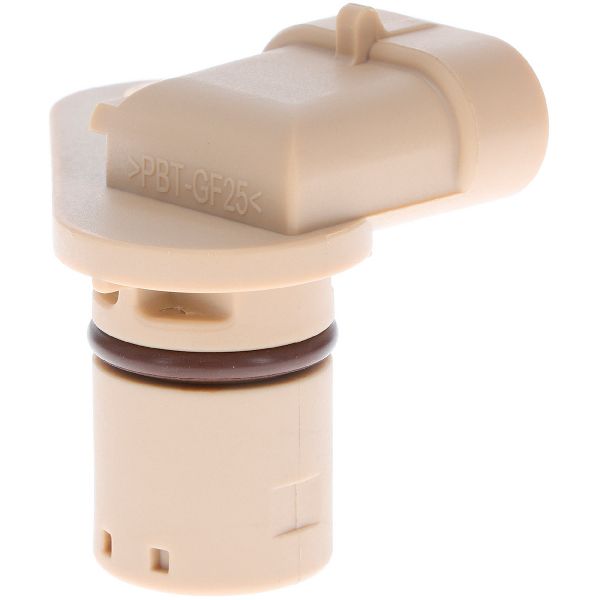
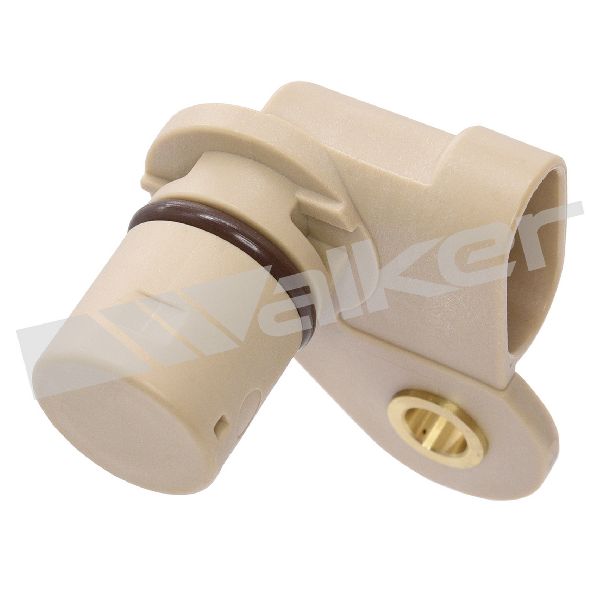
Aftermarket price range: $30-$60 - Camshaft Position Sensor
(OEM #12674702)— Though less likely to be the root cause, it can fail. It's often replaced as a first step but rarely solves the P0019 code on its own.
Trusted brands: ACDelco, NTK
OEM price range: $30-$70
Aftermarket price range: $20-$50
Related Codes That Often Appear With This One
- P0018 — Crank/Cam Correlation for Bank 2 Intake Cam. If both P0018 and P0019 are present, it strongly suggests a base timing issue on Bank 2, like a jumped chain or a problem with the Bank 2 phaser assembly. TSB #20-NA-085 specifically links P0018 and P0019 to a potential timing chain guide issue.
- P0008 / P0009 — These are general Engine Position System Performance codes. On GM vehicles, they are frequently triggered by a stretched timing chain and often appear alongside more specific codes like P0019.
- P0016 / P0017 — These are the equivalent correlation codes for Bank 1. If codes for both banks are present, it points to a problem common to both, such as the primary timing chain or the crankshaft reluctor wheel.
Technical Service Bulletins (TSBs) & Recalls
- PIP3423P: Mentions inspecting for loose timing chains or tensioners for codes P0016, P0017, P0018, P0019, P0008 or P0009.
- 19-NA-212: Diagnostic tip for a crank/no-start condition which may be caused by a sheared camshaft sprocket locating pin, a potential root cause for severe timing correlation faults.
- 20-NA-085: Discusses how a missing timing chain guide insert on some GM V6 engines could cause chain slack and set codes P0018 and P0019, illustrating a known failure mode for GM timing systems.
Platform-Specific Known Issues
- Owner Experience with P0019: On forums like SilveradoSierra.com, owners reporting P0019 on the 5.3L L83 are almost always advised to suspect a stretched timing chain or failed tensioner, especially on trucks approaching or exceeding 100,000 miles. Many threads detail owners who first replaced sensors and solenoids with no success, only to find the ultimate fix was a complete timing chain kit replacement. The job is often quoted at over $1500 at a dealership due to the high labor involved.
Mechanic-Grade Diagnostic Values
- Camshaft Actuator Solenoid (VVT Solenoid) Resistance — expected: 6.9 to 7.9 Ohms at 68°F (20°C).. Failure: A reading of infinite resistance (open circuit) or zero resistance (short circuit) indicates a failed solenoid.
- Camshaft Position Sensor (3-wire Hall Effect) Signal Voltage — expected: A toggling signal between approximately 0V and 5V as the engine is cranked.. Failure: A constant 0V or 5V, or no signal at all, points to a faulty sensor or wiring issue.
- Crankshaft Position Sensor Reference Voltage at Connector — expected: 4.8V to 5.2V between the reference terminal (Terminal C) and ground with the ignition on.. Failure: Voltage significantly lower or higher than this range suggests a wiring short or an issue with the ECM's 5V reference circuit.
Scan Tool Commands That Help
- GDS2 (GM Techline Connect): Camshaft Position Actuator Control — This bidirectional command allows a technician to manually command the VVT solenoid to advance or retard timing while monitoring the desired vs. actual cam angle PIDs. A phaser that doesn't respond to commands but has a good solenoid points to an oil pressure issue or a failed mechanical phaser.
- GDS2 (GM Techline Connect): Cylinder Deactivation (AFM) System Test — While not directly for P0019, issues with the Active Fuel Management (AFM) system, which is also oil-pressure dependent, can sometimes be related. Running this test can help verify the health of the oiling system and solenoids that could indirectly impact VVT operation.
Wiring & Ground Locations
- G103 / G104 — On the rear of the cylinder heads. G103 is typically on the left (driver's side) rear of the engine block, and G104 is on the rear of the left cylinder head for the 5.3L engine.. These are primary engine block and head grounds. A loose or corroded ground at these locations can cause erratic behavior from sensors like the camshaft and crankshaft position sensors, leading to false correlation codes.
- ECM Connector X1 — One of the main connectors at the Engine Control Module (ECM). On GM vehicles, connectors are often color-coded or labeled X1, X2, etc.. The camshaft position sensor signal, low reference, and 12V ignition voltage circuits all run through this connector. For example, on some L83 harnesses, the Crankshaft Position Sensor low signal is Pin 14 (PU/WH wire). Verifying pin integrity and checking for corrosion here is a key step if sensor readings are erratic.
Real Owner Repair Stories
- silveradosierra.com forum user (2014 GMC Sierra 5.3L) — Check engine light with code P0019. Truck ran fine otherwise.
❌ Tried (didn't work) Replaced Bank 2 exhaust VVT solenoid., Replaced Bank 2 exhaust camshaft position sensor.
✅ What actually fixed it The timing chain was found to be stretched upon inspection. Replacing the timing chain, guides, and tensioner resolved the code.
OEM Part Supersession History
12628347, 12655420→12679099— Part consolidation and design updates for the VVT Solenoid.
Heads up: The newest part number (12679099) is the correct service replacement for the listed predecessors.12635447, 12673669→12680750— Updates to the timing chain kit components for durability.
Heads up: 12680750 is the current comprehensive kit recommended for service.
Model Year Variations Within This Range
- 2014-2018 vs 2019+: The core L83 engine architecture is largely consistent from 2014-2018. However, a 2019 Sierra could have either the carry-over L83 (K2XX platform, "Limited" model) or the newer L84 (T1XX platform) which has Dynamic Fuel Management (DFM) instead of Active Fuel Management (AFM). While the timing components are very similar, some sensors and the ECM programming are different. It's crucial to verify the engine type by VIN for a 2019 model.
Diagnostic Flowchart
Other Known Issues on This Vehicle
Issues unrelated to this code that are worth knowing about as an owner of this generation:
- AFM/DFM Lifter Failure 🔴 High — Common, especially on vehicles over 60,000 miles. Can occur earlier. A class-action lawsuit has been filed regarding this issue. (Ref: TSB #15-06-01-002 (multiple revisions, e.g., H, K) addresses engine misfires (P0300) caused by stuck/collapsed AFM lifters.)
- 8-Speed (8L90/8L45) Transmission Shudder 🟠 Medium — Very common on 2015-2019 models equipped with the 8-speed automatic. Often described as feeling like driving over rumble strips at highway speeds. (Ref: TSB #18-NA-355 recommends a specific transmission fluid flush with Mobil 1 Synthetic LV ATF HP (Blue Label) to resolve the issue.)
- Cracked Radiator 🟠 Medium — A known issue where stress fractures can develop in the radiator, leading to coolant leaks. Particularly noted on 2014-2015 models. (Ref: Special Coverage Adjustment #15829 was issued for some 2014 models. Other bulletins like PI1513F exist for 2015 models.)
- Direct Injection Intake Valve Carbon Buildup 🟡 Low — A long-term consequence of all direct-injected engines. Over many miles (typically 80k+), carbon can accumulate on intake valves, potentially causing reduced performance or misfires.
- High-Pressure Fuel Pump (HPFP) Failure 🟠 Medium — The HPFP is a wear item in the direct injection system and failures are reported, sometimes leading to stalling or rough running conditions. (Ref: TSB #20-NA-098 provides guidance on replacing fuel injectors, which are also part of this system, but no specific recall for the pump itself.)
Used vs. New Parts: Buying Guide for This Vehicle
When a used part is the smart pick: Used parts are generally not recommended for this repair due to the nature of the components. The only potential exception would be sourcing a low-mileage complete engine assembly from a reputable salvage yard if a major mechanical failure like a sheared cam pin has occurred.
Donor-vehicle mileage cap: roughly under 50000 miles for the part to have meaningful remaining life.
What to inspect on the donor part:
- For a complete engine, ask for video of the engine running before it was pulled.
- Check for signs of heavy sludge or contamination in the oil fill port.
- Verify the VIN of the donor vehicle to ensure compatibility, especially for 2019 models.
- Obtain any available service history for the donor vehicle.
OEM-only on this vehicle (don't cheap out):
- Timing Chain Kit (Chain, Tensioner, Guides)
- Camshaft Phasers
- Camshaft/Crankshaft Position Sensors
Aftermarket brands forum-validated for this vehicle:
- Cloyes (for timing chain kits)
- IWIS (often the supplier for OEM timing chains, can be purchased separately).
- Delphi (for solenoids and sensors)
Brands owners have reported issues with on this vehicle:
- No-name, unbranded timing kits from online marketplaces. The labor cost for this job is too high to risk using a low-quality part that could fail prematurely.
Real Owner Stories
Aggregated from forums and TSBs cited above. Mileages and costs reflect what owners reported in those sources.
2014-2019 GMC Sierra 1500 5.3L L83 — ~105000 miles
Symptoms: Owners reported replacing sensors and solenoids with no success while dealing with the P0019 code.
What fixed it: A complete timing chain kit replacement (including chain, tensioners, and guides).
Cost: $1500-$2000
Source hint: SilveradoSierra.com Forum
Related OBD-II Codes
Frequently Asked Questions
Is there a TSB for my 5.3L L83 regarding timing chain tensioner issues?
My Sierra has a rattling noise at startup along with P0019; what does this usually mean?
Can I just swap the sensors to see if the P0019 code goes away?
Could a sheared pin in the camshaft be causing my P0019 code?
How much should I expect to pay for a full timing chain replacement on my GMC Sierra?
Is it true that the VVT solenoid can be tested by swapping it with another one?
Helpful Videos

Used OEM Parts in Stock
New Aftermarket Parts Available


The information in this article is provided for general reference and educational purposes only. Vehicle specifications, procedures, and part compatibility can vary by production date, trim level, and region. Always consult your vehicle's factory service manual and verify part numbers before purchasing or performing repairs. Safety-critical components such as airbags, seat belts, and braking systems should be installed by a qualified professional.
- GMC Sierra:
- 🎬 Helpful Videos
- 🛍️ Shop This Part
- What's Unique About the 2014-2019 GMC Sierra
- Symptoms You May Notice
- Most Likely Causes
- Rare But Worth Checking
- Diagnosis Steps
- Parts You'll Likely Need
- Related Codes That Often Appear With This One
- Technical Service Bulletins (TSBs) & Recalls
- Platform-Specific Known Issues
- Mechanic-Grade Diagnostic Values
- Scan Tool Commands That Help
- Wiring & Ground Locations
- Real Owner Repair Stories
- OEM Part Supersession History
- Model Year Variations Within This Range
- Diagnostic Flowchart
- Other Known Issues on This Vehicle
- Used vs. New Parts: Buying Guide for This Vehicle
- Real Owner Stories
- 2014-2019 GMC Sierra 1500 5.3L L83 — ~105000 miles
- Related OBD-II Codes
- Frequently Asked Questions
- 🎟️ Get 5% Off