

P0019 on 2015-2016 GMC Canyon 3.6L V6: Timing Chain and Sensor Guide
P0019 on a 2015-2016 GMC Canyon with the 3.6L V6 most often indicates a stretched timing chain, a serious repair costing over $1,500. Before assuming the worst, check for low or dirty engine oil and consider a faulty camshaft actuator solenoid, which is a much cheaper fix. Multiple owners have confirmed the timing chain as the ultimate cause after the code appeared.
- P0019 on the 3.6L V6 is a serious code that points to a mechanical timing issue.
- Always check your engine oil level and condition first; low or dirty oil is a common contributing factor.
- The most likely cause is a stretched timing chain, which is an expensive, professional-level repair.
- A faulty camshaft actuator (VVT) solenoid is a less severe but common cause that should be investigated before committing to a timing chain job.
- Do not simply replace the camshaft position sensor, as it is most likely doing its job correctly by reporting the timing error.
What's Unique About the 2015-2016 Gmc CANYON
The 3.6L V6 engine (RPO code LFX) used in the GMC Canyon and many other GM vehicles has a well-documented history of premature timing chain stretching. While the LFX generation saw improvements over the earlier LY7 and LLT engines, it is still susceptible to this issue, often accelerated by extended oil change intervals or low oil levels. GM has issued multiple Technical Service Bulletins (TSBs), like PIP3423P, acknowledging that codes like P0019, P0008, and others are often due to loose timing chains across a wide range of vehicles with this engine family.
Diagnostic Flowchart
Tap your situation to follow the diagnostic path that matches what you're seeing on this vehicle.
Symptoms You May Notice
- Check Engine Light is on
- Engine runs rough or has an unstable idle
- Hesitation or lack of power during acceleration
- Reduced fuel economy
- Engine rattling or clicking noise, especially on a cold start or when letting off the throttle
- Engine may be hard to start or stall
- Service Stabilitrak warning message may appear
- Replacing only the camshaft position sensor. The sensor is usually not the root cause; it is accurately reporting a mechanical timing problem caused by the timing chain or actuator solenoid.
- Replacing only the VVT solenoid when the timing chain is actually stretched. While the solenoid is a valid first step, many owners report the code returning until the chains are replaced.
Most Likely Causes
- Stretched Timing Chains and/or Failed Tensioners 🔴 High Probability The 3.6L V6 engine family is known for premature timing chain wear, often exacerbated by extended oil change intervals or using non-synthetic oil. GM TSB #PIP3423P directly links this code to loose timing chains. Forum users on Reddit and Chevrolet forums frequently report this as the ultimate fix for P0019 after other attempts fail.
How to confirm: A professional mechanic must physically inspect the timing chains for slack, which involves significant engine disassembly. Before teardown, a technician can use a high-end scan tool to monitor camshaft deviation angles; a deviation of more than 9-10 degrees is a strong indicator of a stretched chain. An oscilloscope can also be used to compare cam and crank sensor waveforms to a known-good pattern.
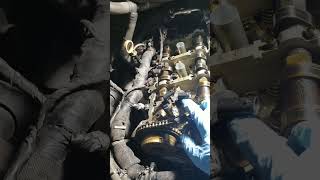
Typical fix: Complete replacement of all three timing chains, all tensioners, and all guides using an updated kit. It is also highly recommended to replace the water pump, as it is located behind the timing cover. 🎬 Watch: A complete walkthrough of the 3.6L timing chain replacement.
Est. part cost: $250-$500 for a complete kit - Faulty Camshaft Actuator Solenoid (VVT Solenoid) 🟡 Medium Probability These solenoids operate using engine oil pressure and can become clogged with sludge or fail electronically. It's a common failure point on many modern engines and a frequent first step in diagnosis due to its low cost and accessibility.
How to confirm: Use a scan tool to command the solenoid on and off while monitoring camshaft position. A simpler method is to swap the Bank 2 exhaust solenoid with the Bank 2 intake solenoid. Clear the codes and drive. If the code changes to P0018 (Intake Cam Position Correlation Bank 2), the solenoid is confirmed bad. You can also test resistance with a multimeter; a healthy solenoid should read between 8-12 Ohms.
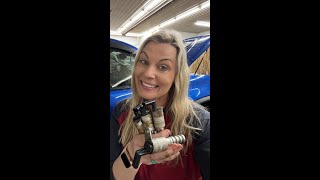
Typical fix: Replace the Bank 2 exhaust camshaft actuator solenoid. It is located on the front of the driver's side cylinder head. Access requires removing the throttle body to reach the mounting bolt. 🎬 Watch: How to install new camshaft position actuator solenoids.
Est. part cost: $25-$60 - Low or Dirty Engine Oil 🟡 Medium Probability The timing chain tensioners and camshaft phasers are hydraulically operated. Incorrect oil level, viscosity, or oil that is broken down and sludgy, can prevent these components from working correctly, leading to timing correlation codes.
How to confirm: Check the oil level on the dipstick and inspect the oil's condition and smell. If it's low, excessively dark, or smells burnt, it needs to be changed. Ensure the correct oil is being used (full synthetic dexos approved 5W-30).
Typical fix: Perform an oil and filter change using the correct viscosity full synthetic oil (dexos approved). If the code clears and does not return, this may have been the issue. However, if the chain is already stretched, an oil change will not fix it.
Est. part cost: $50-$100 - Faulty Camshaft Position Sensor ⚪ Low Probability
How to confirm: The sensor's signal can be monitored with an oscilloscope. A simpler, though less definitive, test is to swap it with the adjacent intake sensor (if they are the same part number) and see if the code changes to P0018.
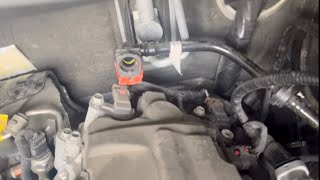
Typical fix: Replace the Bank 2 exhaust camshaft position sensor. It is located on the rear of the driver's side cylinder head, near the firewall. 🎬 See this video to locate the camshaft position sensors.
Est. part cost: $20-$50
Rare But Worth Checking
- Slipped Crankshaft Reluctor Ring: Mentioned in TSB #PIP3423P as a possibility if timing chains are found to be tight. This is a very rare and severe failure where the tone ring on the crankshaft moves, sending incorrect position data to the ECM. This requires crankshaft replacement to fix. Diagnosis may be possible with a borescope through the crank sensor hole.
Diagnosis Steps
- Check Engine Oil: Verify the oil level is full and the oil is clean and of the correct type (dexos-approved full synthetic 5W-30). If low or dirty, perform an oil and filter change, clear the codes, and see if P0019 returns.
- Scan Tool Analysis: Use a scan tool to check for other timing-related codes (P0008, P0016, P0017, P0018). Monitor the live data for 'Camshaft Position Variance' for Bank 2 Exhaust. A steady deviation from 0 degrees at idle, or large fluctuations under load, indicates a timing issue. A deviation exceeding 9-10 degrees is a strong sign of a stretched chain.
- Test Camshaft Actuator Solenoid: Locate the Bank 2 (driver's side) solenoids. Swap the exhaust and intake solenoids. Clear the codes and drive. If the code changes to P0018, the solenoid is faulty and needs replacement. If the code remains P0019, the issue is likely mechanical.
- Inspect Camshaft Position Sensor: Locate the Bank 2 exhaust sensor on the rear of the driver's side cylinder head. Check its wiring and connector for damage or oil contamination. The sensor can be tested or swapped as a diagnostic step, but it is rarely the cause.
- Professional Timing Chain Inspection: If the above steps do not resolve the issue, the vehicle must be taken to a professional for timing chain inspection. This is an invasive process that confirms if the chains have stretched and require replacement. The repair cost is significant, often $2,000-$4,000.
Parts You'll Likely Need
- Engine Timing Chain Kit
(OEM #12700436)— This is the most probable cause of code P0019 on the 3.6L V6 due to a known issue with premature chain stretching. The kit should include all 3 chains, 3 tensioners, and all guides/shoes.
Trusted brands: ACDelco, Cloyes
OEM price range: $300-$450
Aftermarket price range: $200-$350 - Camshaft Position Actuator Solenoid
(OEM #12679099)— This solenoid can get stuck or clogged with oil sludge, causing a timing correlation error. It's a common point of failure and a relatively easy part to replace as a diagnostic step. Note: This part number often supersedes previous versions like 12628347 and 12655420.
Trusted brands: ACDelco, Delphi, Dorman
OEM price range: $40-$70
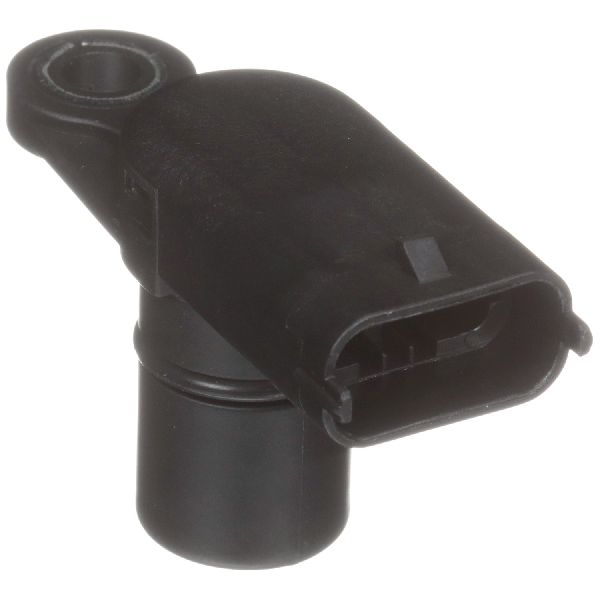
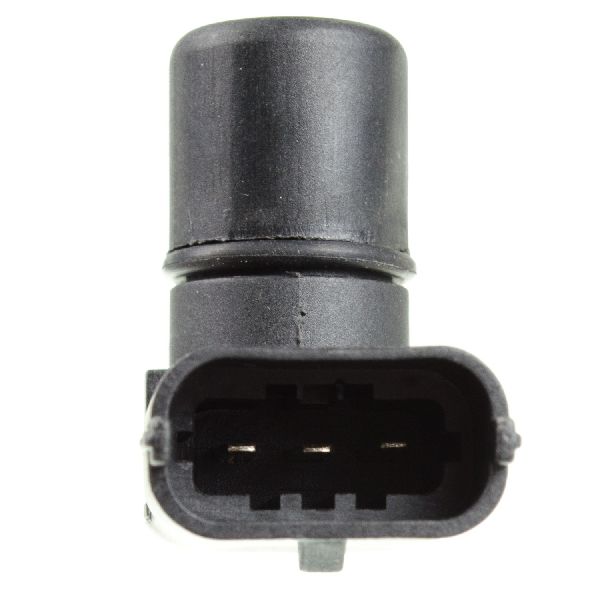
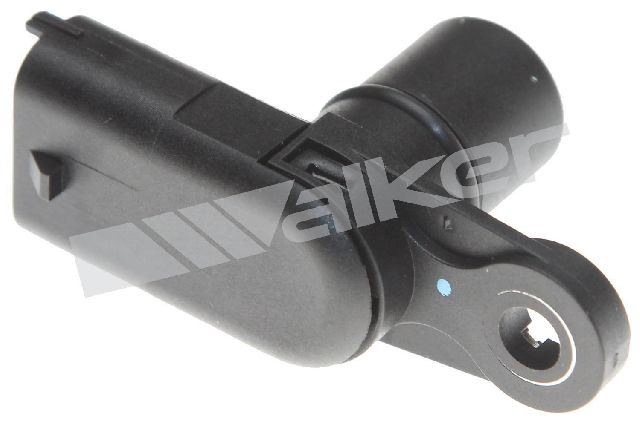
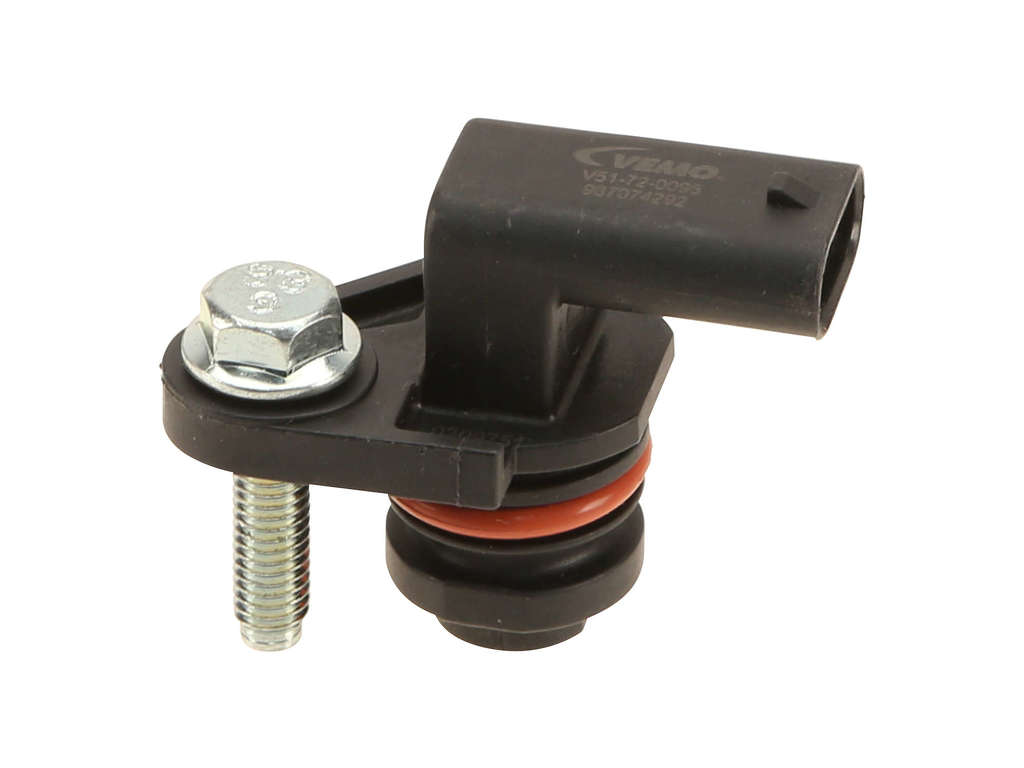
Aftermarket price range: $25-$50 - Camshaft Position Sensor
(OEM #12674704)— While less common, the sensor itself can fail. It's a relatively inexpensive part but should only be replaced after ruling out oil and solenoid issues.
Trusted brands: ACDelco, Bosch, NTK
OEM price range: $35-$60
Aftermarket price range: $20-$45 - Water Pump
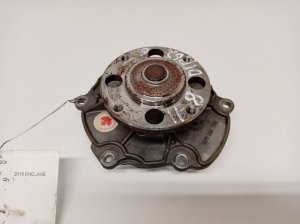
(OEM #12682295)— The water pump is driven by the timing system and located behind the timing cover. It is highly recommended to replace it during a timing chain service to avoid future labor costs, as it requires removal of the same components.
Trusted brands: ACDelco, Gates
OEM price range: $100-$180
Aftermarket price range: $70-$130
Related Codes That Often Appear With This One
- P0008 — This is a general Engine Position System Performance code for Bank 1. If timing chains are stretched, it often affects both banks, triggering multiple codes like P0008 and P0009.
- P0018 — This is the companion code for the intake camshaft on the same bank (Bank 2). A stretched secondary timing chain on Bank 2 can cause both intake and exhaust cams to be out of sync.
- P0017 — This code is for the exhaust camshaft on the opposite bank (Bank 1). Seeing P0017 and P0019 together strongly points to a stretched primary timing chain affecting the whole engine.
Technical Service Bulletins (TSBs) & Recalls
- PIP3423P: Advises technicians to inspect for loose timing chains, tensioners, or a moved crankshaft reluctor ring when codes P0016, P0017, P0018, or P0019 are present. This TSB covers a wide range of GM vehicles with the HFV6 engine, including the 2015-2016 Canyon.
Platform-Specific Known Issues
- The 3.6L LFX engine has a known history of timing chain issues, which GM has addressed in various TSBs (like PIP3423P).
- Poor oil quality or extended oil change intervals significantly accelerate timing chain wear on this specific engine. Sticking to 5,000-mile intervals with full synthetic dexos oil is recommended by many owners and mechanics.
- While some earlier GM engines had special coverage programs for timing chains (like 12313 for the 2.4L), no such widely known program exists specifically for the 2015-2016 Canyon's 3.6L LFX engine for this issue. Repairs are typically out-of-pocket unless covered by powertrain warranty.
Mechanic-Grade Diagnostic Values
- Camshaft Position Variance (Scan Tool) — expected: 0 degrees at idle. Failure: A steady deviation of more than 9-10 degrees from zero at idle strongly indicates a stretched timing chain.
- Camshaft Actuator Solenoid Bolt Torque — expected: 10 N.m (89 lb in). Failure: N/A - This is an installation specification.
- Camshaft End Play — expected: 0.045-0.215 mm (0.0018-0.0085 in). Failure: Excessive end play can cause noise and timing issues. New camshaft thrust washers are often installed during a timing job to correct this.
Scan Tool Commands That Help
- GDS2 (GM Dealer Scan Tool): Camshaft Position Actuator Solenoid Test — This bidirectional command allows the technician to manually activate and deactivate the VVT solenoid while observing live data to see if the camshaft angle changes as commanded. This directly tests the solenoid's functionality.
Wiring & Ground Locations
- Bank 2 Camshaft Sensors — Bank 2 is the driver's side of the engine. The exhaust camshaft position sensor is on the rear of the cylinder head near the firewall. The intake sensor is also on the rear of the head, adjacent to the exhaust sensor.. P0019 specifically relates to the Bank 2 exhaust sensor ('Sensor B'). Knowing its physical location is essential for inspection, testing, and replacement.
- Bank 2 VVT Solenoids — Bank 2 solenoids are on the front of the driver's side cylinder head. The exhaust solenoid is the outer one. Access to its mounting bolt requires removing the throttle body.. A faulty VVT solenoid is a common cause. Swapping the intake and exhaust solenoids is a key diagnostic step, and replacement requires accessing this location.
- ECM Connector X1 — The Engine Control Module (ECM) is in the engine bay. Connector X1 is distinguished by its Blue (BU) terminal position assurance clip.. This connector contains wiring for the camshaft position sensors. Technicians may need to test for continuity or voltage at the ECM pins to diagnose a wiring fault.
- ECM Connector X3 — Located on the ECM in the engine bay, identified by a Gray (GY) terminal position assurance clip.. For Bank 2 Cam/Crank signals, relevant pins on connector X3 can include Pin 4, Pin 7, and Pin 20. This is critical for advanced circuit diagnosis.
- G104 / G107 Engine Grounds — The primary engine ground for the 3.6L LFX is at the front of the engine. Another common ground point (G107 on similar LFX engines) is on the front of the right (passenger side) cylinder head. There are typically three smaller ground connections on the engine block itself.. The camshaft and crankshaft position sensors require a clean ground reference to send accurate signals. A loose or corroded ground can introduce electrical noise, potentially causing a false correlation code.
Real Owner Repair Stories
- YouTube user (2015-2022 Chevrolet Colorado 3.6L V6) — Check Engine Light with codes P0017 and P0019.
❌ Tried (didn't work) Replacing the camshaft position sensor for Bank 2.
✅ What actually fixed it Replaced both the Bank 1 and Bank 2 exhaust camshaft position actuator VVT solenoids. The code did not return after replacement, and fuel economy improved.
OEM Part Supersession History
12628347, 12655420, 12578517, 12646783→12679099— GM regularly updates service parts to integrate new materials and technologies for improved durability and performance. The new part is coated to help protect against premature corrosion.
Heads up: The new part number (12679099) is the correct replacement for the previous versions and should be used for service.
Model Year Variations Within This Range
- 2015-2016: The 2015-2016 models use the LFX engine, which is considered more prone to premature timing chain stretching compared to the updated LGZ engine introduced in 2017. While the failure mode is the same, it may occur at lower mileage on these earlier second-generation Canyons.
Helpful Videos
Used OEM Parts in Stock


New Aftermarket Parts Available


The information in this article is provided for general reference and educational purposes only. Vehicle specifications, procedures, and part compatibility can vary by production date, trim level, and region. Always consult your vehicle's factory service manual and verify part numbers before purchasing or performing repairs. Safety-critical components such as airbags, seat belts, and braking systems should be installed by a qualified professional.
- Gmc CANYON:
- 🎬 Helpful Videos
- 🛍️ Shop This Part
- What's Unique About the 2015-2016 Gmc CANYON
- Diagnostic Flowchart
- Symptoms You May Notice
- Most Likely Causes
- Rare But Worth Checking
- Diagnosis Steps
- Parts You'll Likely Need
- Related Codes That Often Appear With This One
- Technical Service Bulletins (TSBs) & Recalls
- Platform-Specific Known Issues
- Mechanic-Grade Diagnostic Values
- Scan Tool Commands That Help
- Wiring & Ground Locations
- Real Owner Repair Stories
- OEM Part Supersession History
- Model Year Variations Within This Range
- 🎟️ Get 5% Off