

P0019 on 2015-2021 Ford Expedition 3.5L: Causes for Crank-Cam Correlation
On a 2015-2021 Expedition with the 3.5L EcoBoost, P0019 is most often caused by a sticking VCT solenoid on the driver's side exhaust cam, usually due to dirty oil. Start with an oil change. If that doesn't work, replacing the solenoid is a relatively cheap fix. A cold start rattle for 2-5 seconds indicates a more serious and common timing chain and/or cam phaser issue, a repair that can cost $2,500-$4,500+.
- Always check your engine oil level and condition first. An oil and filter change is the cheapest and easiest first step and may resolve the issue.
- The most likely failed part is the Bank 2 (driver's side) exhaust VCT solenoid. This is a common failure and a logical second step if an oil change doesn't work.
- Do not immediately replace the camshaft position sensor. It is almost always reporting a real timing problem, not failing itself.
- A rattling noise from the engine on cold startups is a strong indicator of a stretched timing chain, which is a much more serious and expensive repair than a VCT solenoid.
What's Unique About the 2015-2021 Ford Expedition
The 3.5L EcoBoost engine's Variable Camshaft Timing (VCT) system is highly effective but notoriously sensitive to oil condition. The oil passages in the VCT solenoids and cam phasers are very narrow. Ford has issued multiple Technical Service Bulletins (TSBs), like SSM 49821 and SSM 50067, acknowledging that even small amounts of debris or sludge in the oil can cause the VCT solenoids to stick, leading directly to correlation codes like P0019. Furthermore, these engines have a well-documented history of timing chain stretch and cam phaser failure, which is a more severe cause for this same code. This failure is often signaled by a distinct 2-5 second rattle on cold startups, an issue specifically addressed by Ford's TSB 23-2142 for the 2018-2020 models.
Generation note: This range covers two Expedition generations: the third (2015-2017) with the first-generation 3.5L EcoBoost, and the fourth (2018-2021) with the updated second-generation 3.5L EcoBoost. While the fundamental causes of P0019 are the same, the first-gen engine was more known for timing chain stretch, while the second-gen (2017+) is infamous for cam phaser failure causing a cold-start rattle. Part numbers for VCT solenoids and timing components differ between the generations, so VIN verification is critical.
Symptoms You May Notice
- Check Engine Light illuminated
- Rough or unstable idle
- Engine hesitation or stumbling on acceleration
- Reduced engine power
- Increased fuel consumption
- Engine stalling at low speeds or when stopping
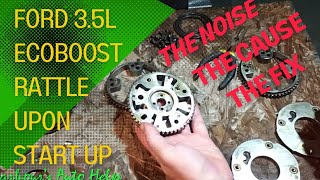
- Rattling, ticking, or grinding noise from the front of the engine on cold starts, lasting 2-5 seconds
- Replacing the camshaft position sensor (CMP) without further diagnosis. The sensor is typically functioning correctly by detecting the timing misalignment caused by a VCT solenoid or timing chain issue.
- Performing a complete, expensive timing chain job when the only issue was a simple, inexpensive VCT solenoid. Always diagnose the solenoids first unless a cold-start rattle is present.
Most Likely Causes
- Low or Dirty Engine Oil 🔴 High Probability The VCT system uses pressurized engine oil to adjust cam timing. The system's small oil passages are easily clogged by sludge or debris from infrequent oil changes, a primary cause of VCT-related codes.
How to confirm: Check the oil level and condition on the dipstick. If the oil is below the 'add' mark, very dark, or appears thick/sludgy, it needs to be changed. This is the first and most important diagnostic step.
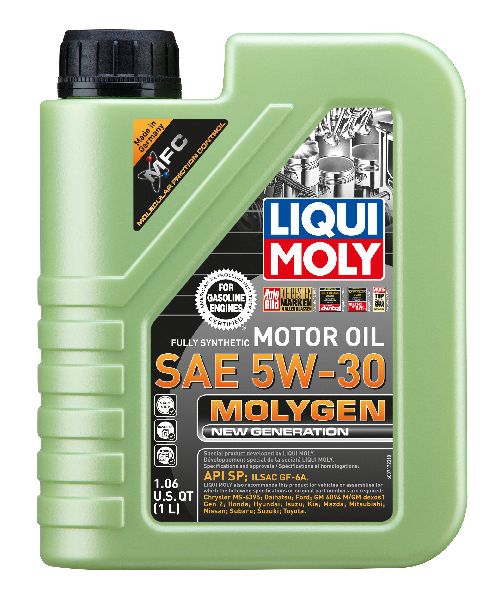
Typical fix: Perform an engine oil and filter change using a high-quality full synthetic 5W-30 oil (like Motorcraft) and a new filter. This is the cheapest and most important first step.
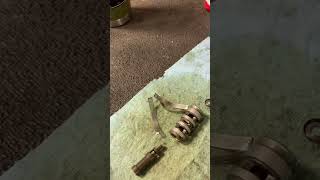
Est. part cost: $50-$100 - Sticking or Failed VCT Solenoid (Bank 2 Exhaust) 🔴 High Probability This is a well-documented failure point. Multiple Ford TSBs (like SSM 50067) confirm that debris in the oil causes these solenoids to stick, preventing proper cam timing adjustments. 🎬 See how these VCT solenoids fail and how to test them. They can also fail electrically.
How to confirm: A professional scan tool can command the solenoid to activate while monitoring cam angle PIDs. A simple DIY test is to swap the suspect exhaust solenoid with the intake solenoid on the same bank (Bank 2). Clear codes and drive. If the code changes to P0018 (Bank 2 Intake), the solenoid is confirmed bad.
Typical fix: Replace the Bank 2 (driver's side) exhaust VCT solenoid. When removing the old solenoid, inspect its screens for metal debris, which would indicate a more severe timing chain/phaser issue. It is highly recommended to change the engine oil at the same time.
Est. part cost: $25-$65 - Stretched Timing Chain and/or Failed Cam Phasers 🟡 Medium Probability The 3.5L EcoBoost engine is notorious for timing chain stretch and cam phaser failure. Chain stretch creates slack that tensioners cannot compensate for, while phaser failure (especially on 2017+ models) prevents the cam from locking in its base position, both leading to correlation errors.
How to confirm: A prominent rattling noise from the front of the engine for 2-5 seconds on a cold start is the classic symptom of phaser failure or chain slack. Physical inspection requires removing the timing cover for a visual check of chain slack, guide wear, and broken phaser components.
Typical fix: This is a major repair requiring the replacement of the timing chains, all four cam phasers, guides, and tensioners. It is often done as a complete kit. This job costs between $2,500 and $4,800 at a dealership or independent shop.
Est. part cost: $600-$1200 for a complete OEM kit.
Rare But Worth Checking
- Failed Camshaft Position Sensor (CMP): While the code points to a sensor, the sensor itself is rarely the cause. It is usually accurately reporting a mechanical or hydraulic problem. Only replace it if it fails a specific electrical voltage test.
- Wiring Harness Damage: Check the wiring and connector to the Bank 2 exhaust VCT solenoid and CMP sensor for any signs of damage, corrosion, or oil contamination before replacing parts. A wiggle test on the harness while the engine is running may reveal a fault.
- Slipped Camshaft or Crankshaft Tone Ring: The reluctor or tone ring that the position sensor reads can physically break or slip on the shaft, causing incorrect readings even if the mechanical timing is perfect. This is rare but possible.
Diagnosis Steps
- Check the engine oil level and condition. If low, dirty, or past its service interval, perform an oil and filter change with Motorcraft parts and the specified 5W-30 full synthetic oil. Clear the code and see if it returns.
- Use a professional OBD-II scanner to view freeze-frame data and check for other related trouble codes.
- Monitor the live data PIDs for the desired vs. actual camshaft position for Bank 2 Exhaust (CMP22). A large, lagging deviation, or an angle that doesn't change with RPM, points to a problem.
- Listen for a cold-start rattle. After the vehicle has sat for 6+ hours, start the engine and listen for a distinct rattle from the front of the engine lasting 2-5 seconds. If present, this strongly indicates a timing chain/phaser issue.
- Use the scanner's bidirectional controls to command the Bank 2 exhaust VCT solenoid on and off. Listen for an audible click from the driver's side valve cover. If there is no click, the solenoid is likely bad.
- If the solenoid clicks but the cam angle doesn't change, swap the Bank 2 exhaust and intake solenoids. If the code moves to P0018, the solenoid is faulty. If the code remains P0019, the issue is likely mechanical (phaser/chain) or a blocked oil passage.
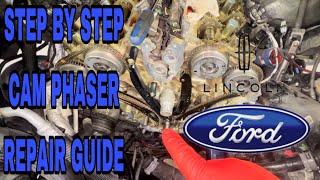
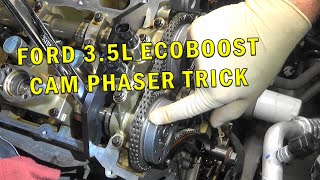
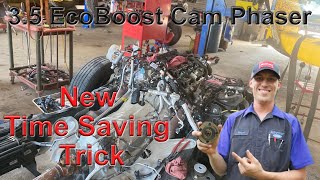
- If a new VCT solenoid does not fix the issue, or if a cold-start rattle was present from the beginning, the problem is almost certainly a stretched timing chain, worn guides, or failing cam phasers. This requires a major, invasive repair. 🎬 Watch: A complete walkthrough of the updated cam phaser replacement.
Parts You'll Likely Need
- Variable Camshaft Timing (VCT) Solenoid (Bank 2 Exhaust)
(OEM #HL3Z-6M280-A)— This part is the most common cause of P0019, as it is prone to sticking from oil debris. It controls oil flow to the cam phaser. Note: 2015-2017 models may use part BL3Z-6M280-B. HL3Z-6M280-A is the updated part for many 2018+ models, but always verify by VIN.
Trusted brands: Motorcraft, Dorman
OEM price range: $35-$65
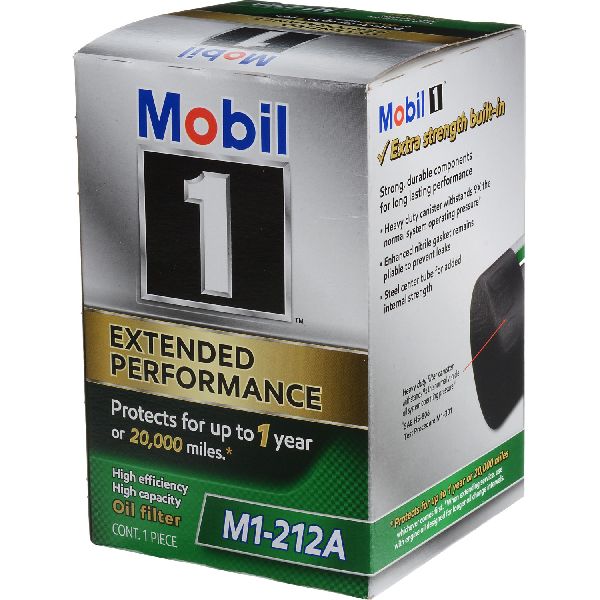
Aftermarket price range: $25-$50 - Engine Oil and Filter
(OEM #XO-5W30-Q1SP, FL-500S)— Clean, correct-viscosity oil is critical for VCT system operation. An oil change is the first and most important step in diagnosis and repair.
Related Codes That Often Appear With This One
- P0018 — This code is for a correlation error on the intake camshaft of the same bank (Bank 2). Seeing P0018 and P0019 together strongly points to a larger issue on the driver's side, like a failed cam phaser, jumped timing, or an oil supply problem to that cylinder head.
- P0017 — This code indicates a correlation error on the exhaust camshaft of the opposite bank (Bank 1). If P0017 and P0019 appear together, it suggests a systemic problem affecting both banks, with a stretched timing chain being the most likely culprit.
- P054C — This code for 'Cold Start 'B' Camshaft Position Timing Over-Retarded Bank 2' is very specific and often appears with P0019. It directly points to a failing cam phaser on the Bank 2 exhaust that is not locking into its base position when the engine is off, a classic symptom of the cold-start rattle issue.
Technical Service Bulletins (TSBs) & Recalls
- SSM 50067: Advises cycling the affected VCT solenoid with a scan tool to clear debris before replacement.
- TSB 16-0093: For low-mileage vehicles, instructs to replace the affected VCT solenoid for various timing codes, including P0019.
- TSB 18-2305 / 15-0131: Address cold-start rattle caused by timing chain and phaser issues on 3.5L EcoBoost engines, recommending replacement of the primary timing chain and all VCT units (phasers).
Platform-Specific Known Issues
- A series of Ford Technical Service Bulletins (TSBs) address issues related to this code. SSM 49821 acknowledges that various cam/crank correlation codes (including P0019) can occur. TSB SSM 50067 specifically advises cycling the VCT solenoid with a scan tool to clear debris before replacement. For the common cold-start rattle, TSB 23-2142 (for 2018-2020 models) outlines the procedure to replace all four VCT phaser units with updated parts to resolve the noise and associated codes.
Mechanic-Grade Diagnostic Values
- VCT Solenoid Internal Resistance — expected: 6.9 to 7.9 Ohms at 68°F (20°C). A general acceptable range is 5-15 Ohms.. Failure: A reading of 0 Ohms (short circuit) or OL/infinity (open circuit).
- VCT Solenoid Connector Voltage (KOEO) — expected: Battery voltage (~12V) on the power supply pin.. Failure: Significantly low or no voltage, indicating a wiring or fuse issue.
- 3-Wire CMP Sensor Voltage Test (KOEO) — expected: With the sensor connected and harness back-probed: ~5V on the power wire, 0V on the ground wire, and ~5V on the signal wire.. Failure: While cranking the engine by hand, the signal wire voltage should pulse down to 0V as the reluctor tooth passes the sensor. If the voltage does not pulse, the sensor is likely bad.
- Ford IDS Scan Tool VCT Error PID — expected: The 'VCT_ADV_ERR' PID for Bank 2 Exhaust should be close to 0° at idle and under steady load.. Failure: A consistent deviation greater than +/- 5 degrees indicates the cam is not where the PCM commands it to be.
Hidden / Shadow Codes Worth Checking
- Mode 6 Test Data: While not a 'shadow code,' the Ford IDS scanner's Mode 6 provides detailed statistical data on VCT system performance, including test results for cam phaser response that are more granular than a simple DTC. This can help identify a component that is failing but has not yet gone completely out of range. (see via Access the 'Mode 6' or 'On-Board System Readiness' section within a professional scan tool like the Ford Integrated Diagnostic System (IDS).)
Scan Tool Commands That Help
- Ford IDS (Integrated Diagnostic System): VCT Solenoid Bidirectional Control — Used to command the VCT solenoid on and off while the engine is running at idle. A functional system will cause the engine to stumble or run rough as the cam timing is changed, confirming the phaser and solenoid are responding. No change in engine operation points to a stuck solenoid, bad phaser, or blocked oil passage.
- Ford IDS (Integrated Diagnostic System): Datalogger with Histogram Mode on VCT_ADV_ERR PID — This is an advanced diagnostic technique. By logging the VCT error PID during a drive cycle that exercises the VCT system (like a wide-open throttle run), the histogram can visually show anomalies and how far out of sync the camshaft timing is, helping to confirm an intermittent or persistent correlation issue.
- Ford IDS (Integrated Diagnostic System): PCM Reprogramming / Calibration Update — This is required after replacing original cam phasers on a 2017+ model with the updated parts designed to fix the cold-start rattle. Failure to update the PCM software can result in improper VCT operation even with new parts.
Wiring & Ground Locations
- Bank 2 VCT Solenoid Connector — On the top of the driver's side valve cover, connected to the exhaust VCT solenoid.. This connector and its wiring are the primary electrical link for controlling the exhaust camshaft timing on Bank 2. Check for oil contamination, corrosion, or loose pins. One pin should have ~12V with Key On Engine Off, the other is the control ground from the PCM.
- Bank 2 CMP Sensor Connector — On the front of the driver's side cylinder head, connected to the exhaust camshaft position sensor.. This 3-pin connector provides power, ground, and signal for the sensor that reports the camshaft's position to the PCM. A bad connection here will cause correlation codes. Test for 5V reference, good ground, and a 5V signal that pulses to 0V when the engine is cranked.
Real Owner Repair Stories
- Ford Truck Enthusiasts Forum user 'Michael D Oliver' (2012 Ford F-150 3.5L EcoBoost) — P0019 code, delayed acceleration, and overheating immediately after a DIY timing chain replacement.
❌ Tried (didn't work) Replacing the Bank 2 exhaust VCT solenoid (it tested bad but didn't fix the code)., Replacing the Camshaft Position Sensor., Tearing the engine down a second time to re-do the timing job, believing the phaser was put on wrong.
✅ What actually fixed it A professional shop had to perform the repair. The owner had misaligned the cam phaser on the camshaft twice. The cause was that the oil passages on the cam are the same size as the phaser's locating dowel pin hole, making it easy to install incorrectly. The final fix was a professional replacement of the phasers and tensioners. - Ford F150 Forum user 'Jack Brown' (2011 Ford F-150 3.5L EcoBoost) — P0019 code appeared immediately after a complete DIY timing job using all Motorcraft components.
❌ Tried (didn't work) Replacing VCT solenoids during the timing job.
✅ What actually fixed it After disassembly and inspection, it was discovered that the Bank 2 (Left) exhaust camshaft was off by one tooth. This happened despite using the special camshaft holding tool and double-checking the work, highlighting how sensitive the procedure is. The user opted to live with the code rather than perform the 40-hour job again.
OEM Part Supersession History
BL3Z-6M280-A→BL3Z-6M280-B— Internal design improvements for better durability and resistance to sticking from oil debris.
Heads up: This part is for the Gen 1 engine and is not interchangeable with the Gen 2 engine's solenoid.N/A (Original design)→HL3Z-6M280-A— Part designed for the Gen 2 EcoBoost engine.
Heads up: This part is for the Gen 2 engine and is not interchangeable with the Gen 1 engine's solenoid.HL3Z-6256-A / HL3Z-6256-B→HL3Z-6256-CD / HL3Z-6C525-CD (and subsequent revisions)— Redesigned cam phasers to eliminate the cold-start rattle, per Ford TSB 23-2142.
Heads up: When replacing original phasers with these updated parts, a mandatory PCM software calibration is required for proper VCT system function.
Model Year Variations Within This Range
- 2015-2017: These models use the first-generation 3.5L EcoBoost, which is direct-injection only. They use VCT solenoid part number BL3Z-6M280-B. While they can have phaser issues, widespread timing chain stretch was a more noted problem for this generation.
- 2018-2021: These models use the second-generation 3.5L EcoBoost, which features both port and direct injection. They use VCT solenoid part number HL3Z-6M280-A. These engines, particularly those built before late 2019, are infamous for a specific cam phaser design flaw causing a cold-start rattle, addressed by TSB 23-2142.
Diagnostic Flowchart
Other Known Issues on This Vehicle
Issues unrelated to this code that are worth knowing about as an owner of this generation:
- Cam Phaser Cold Start Rattle 🔴 High — Very common, especially on 2017-2020 models. A loud rattle for 2-5 seconds on cold start is the primary symptom. (Ref: TSB 23-2142 (supersedes 22-2200) addresses this by replacing the VCT units. Customer Satisfaction Program 21N03 also existed but has expired.)
- Internal Water Pump Failure (Gen 1 EcoBoost) 🔴 High — More prevalent in the first-generation 3.5L engine (pre-2017). Failure allows coolant to mix with engine oil, leading to catastrophic engine damage if not caught early.
- 10R80 Transmission Harsh/Delayed Shifting 🟠 Medium — Common on 2018+ models with the 10-speed automatic. Can manifest as harsh engagements or clunky shifts. (Ref: TSB 21-2315 and its successors (like 23-2123) address this with valve body overhauls or software updates.)
- Leaking Plastic Oil Pan 🟡 Low — Affects 2nd-gen 3.5L EcoBoost engines (2017+). The composite oil pan is known to warp or have poor factory RTV seals, causing oil leaks.
- Turbocharger Coolant/Oil Line Leaks 🟠 Medium — Leaks can develop at the fittings for the turbocharger oil and coolant lines over time. (Ref: TSB SSM 49210 notes that some 2009-2020 vehicles with turbochargers may exhibit oil leaks from the turbocharger oil supply or drain tubes.)
Used vs. New Parts: Buying Guide for This Vehicle
When a used part is the smart pick: For this specific code, buying used parts is strongly discouraged. VCT solenoids are inexpensive new, and timing components are critical-wear items where used parts carry a very high risk of premature failure. A used cylinder head from a low-mileage donor is a potential last-resort option if an oil passage is confirmed to be blocked and cannot be cleaned.
Donor-vehicle mileage cap: roughly under 75000 miles for the part to have meaningful remaining life.
What to inspect on the donor part:
- For a cylinder head, inspect all visible oil passages for signs of heavy sludge or carbon buildup.
- Ensure camshaft bearing surfaces (journals) are smooth and free of scoring or deep scratches.
- Verify the donor vehicle did not suffer from a coolant/oil mixing failure.
OEM-only on this vehicle (don't cheap out):
- Cam Phasers: Aftermarket cam phasers for the 3.5L EcoBoost are notoriously unreliable and a common source of repeat failures. Only use Ford/Motorcraft OEM parts.
- Timing Chains, Guides, and Tensioners: These are high-stress components critical to engine health. Using cheap, unproven aftermarket kits is a major gamble that can lead to catastrophic engine failure.
- VCT Solenoids: While some aftermarket brands exist, forum consensus indicates that only OEM Motorcraft solenoids provide reliable, long-term operation. Dorman solenoids are frequently reported to fail prematurely.
Aftermarket brands forum-validated for this vehicle:
- Melling: For timing chain kits and oil pumps, Melling is widely regarded as an OEM-quality supplier. Their 'Professional' grade timing kits often contain the exact same parts as Ford/Motorcraft, sometimes with the FoMoCo logo ground off.
Brands owners have reported issues with on this vehicle:
- Dorman: Specifically for VCT solenoids and cam phasers on this platform.
- Generic/Unbranded Kits: Avoid inexpensive, no-name timing kits from online marketplaces like eBay or Amazon, as their quality and material strength are unverified.
Real Owner Stories
Aggregated from forums and TSBs cited above. Mileages and costs reflect what owners reported in those sources.
2019 Ford Expedition 3.5L EcoBoost
Symptoms: Owner required a full timing chain and phaser replacement.
What fixed it: Replacement of timing chain and phasers at a dealership.
Cost: $4,800
Source hint: Reddit thread titled '2015 timing chain phasers costs' in r/fordexpedition
2015-2017 Ford Expedition 3.5L EcoBoost
Symptoms: P0019 error code appeared immediately after a timing chain replacement job was performed.
What fixed it: The owner suspected a stuck VCT solenoid or a blocked oil passage resulting from the repair work.
Source hint: Ford Truck Enthusiasts forum thread 'timing chain replacement p0019 error'
2015-2021 Ford Expedition 3.5L EcoBoost
Symptoms: Persistent P0019 and P0025 codes on Bank 2 that remained even after significant engine work was performed.
What fixed it: The source highlights the extreme diagnostic difficulty of these codes on the Bank 2 side.
Source hint: Ford Expedition Forum thread 'scratching my head still have p0025 p0019 on bank2'
Related OBD-II Codes
Frequently Asked Questions
My 2018 Expedition has a loud rattle for about 3 seconds when I first start it in the morning. Is this related to P0019?
Is there a TSB for the VCT solenoids on my Ford Expedition?
Can I just swap parts to see if the Bank 2 Exhaust solenoid is bad?
What kind of oil should I use to prevent VCT issues in my 3.5L EcoBoost?
I heard there was a program to fix the cam phasers for free; is it still active?
How much does it cost to fix the timing chain and phasers on a 2015-2021 Expedition?
Helpful Videos
Used OEM Parts in Stock

New Aftermarket Parts Available


The information in this article is provided for general reference and educational purposes only. Vehicle specifications, procedures, and part compatibility can vary by production date, trim level, and region. Always consult your vehicle's factory service manual and verify part numbers before purchasing or performing repairs. Safety-critical components such as airbags, seat belts, and braking systems should be installed by a qualified professional.
- Ford Expedition:
- 🎬 Helpful Videos
- 🛍️ Shop This Part
- What's Unique About the 2015-2021 Ford Expedition
- Symptoms You May Notice
- Most Likely Causes
- Rare But Worth Checking
- Diagnosis Steps
- Parts You'll Likely Need
- Related Codes That Often Appear With This One
- Technical Service Bulletins (TSBs) & Recalls
- Platform-Specific Known Issues
- Mechanic-Grade Diagnostic Values
- Hidden / Shadow Codes Worth Checking
- Scan Tool Commands That Help
- Wiring & Ground Locations
- Real Owner Repair Stories
- OEM Part Supersession History
- Model Year Variations Within This Range
- Diagnostic Flowchart
- Other Known Issues on This Vehicle
- Used vs. New Parts: Buying Guide for This Vehicle
- Real Owner Stories
- 2019 Ford Expedition 3.5L EcoBoost
- 2015-2017 Ford Expedition 3.5L EcoBoost
- 2015-2021 Ford Expedition 3.5L EcoBoost
- Related OBD-II Codes
- Frequently Asked Questions
- 🎟️ Get 5% Off