

P0018 on 2009-2019 Ford Flex 3.5L V6: Crankshaft/Camshaft Correlation Causes and Fixes
On the Ford Flex 3.5L V6, code P0018 is most often caused by a stretched timing chain or a faulty VCT solenoid. The timing chain issue is frequently a symptom of a failing internal water pump leaking coolant into the oil. A VCT solenoid is an affordable fix, but a full timing chain and water pump service is a major repair often costing over $2,000.
- P0018 on a Ford Flex 3.5L indicates a serious mechanical timing issue on the firewall-side cylinder bank (Bank 2).
- Always check the engine oil level and condition first. An oil change with the correct full synthetic oil can sometimes resolve the issue if it's caused by a sticking VCT solenoid.
- The most likely cause is a stretched timing chain, which is often a symptom of a failing internal water pump leaking coolant into the oil.
- Do not ignore this code. Continued driving can lead to severe engine damage, turning a costly repair into a catastrophic engine failure.
- Any repair involving timing chain replacement on this engine MUST also include replacing the water pump to fix the root cause.
What's Unique About the 2009-2019 Ford Flex
The Ford 3.5L Cyclone V6 has a critical design feature that directly relates to this code: an internal, timing-chain-driven water pump. When this water pump's seals fail, it is designed to leak out of a 'weep hole' as a warning. However, if this hole gets clogged or the failure is catastrophic, coolant can leak directly into the engine oil pan. This contamination severely degrades the oil's ability to lubricate, causing rapid wear and stretching of the timing chain, which in turn triggers correlation codes like P0018. Therefore, this code is often an early warning of a failing water pump that has started a cascade of timing component failure, a repair job that is notoriously labor-intensive.
Symptoms You May Notice
- Check Engine Light is on
- Rough or uneven idle
- Reduced engine power and poor acceleration
- Engine may hesitate or stall, especially when coming to a stop
- Decreased fuel economy
- Rattling noise from the engine, particularly on a cold start, which may indicate a loose timing chain
- Replacing the camshaft position sensor first. The sensor is usually reporting the problem accurately; it is not the cause of the problem.
- Replacing the crankshaft position sensor. This sensor rarely fails and would likely trigger other codes if it did.
- Replacing only the VCT solenoid when the timing chain is stretched. This will not fix the underlying mechanical misalignment and the code will return.
- Performing an expensive timing chain job without replacing the internal water pump. The water pump is the likely root cause and will cause the new chain to fail prematurely if not replaced.
Most Likely Causes
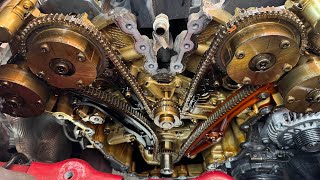
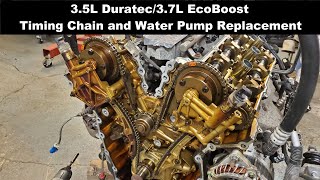
- Stretched Timing Chain 🔴 High Probability Often a secondary failure caused by a leaking internal water pump contaminating the oil, which accelerates chain wear. Also linked to extended oil change intervals. This is a well-documented issue on the 🎬 Watch this full timing chain and water pump replacement guide 3.5L Cyclone engine family.
How to confirm: A physical inspection is required. This involves significant disassembly to remove the timing cover and check for chain slack, broken guides, and worn tensioners. A professional diagnosis may use an oscilloscope to analyze cam/crank sensor signals to confirm the timing deviation before teardown.
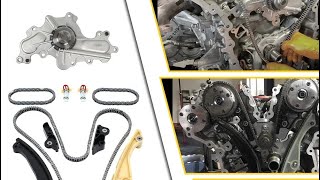
Typical fix: Replace the primary timing chain, secondary chains, all guides, tensioners, and camshaft phasers. The internal water pump MUST also be replaced at the same time as a preventative measure, as it is the likely root cause.
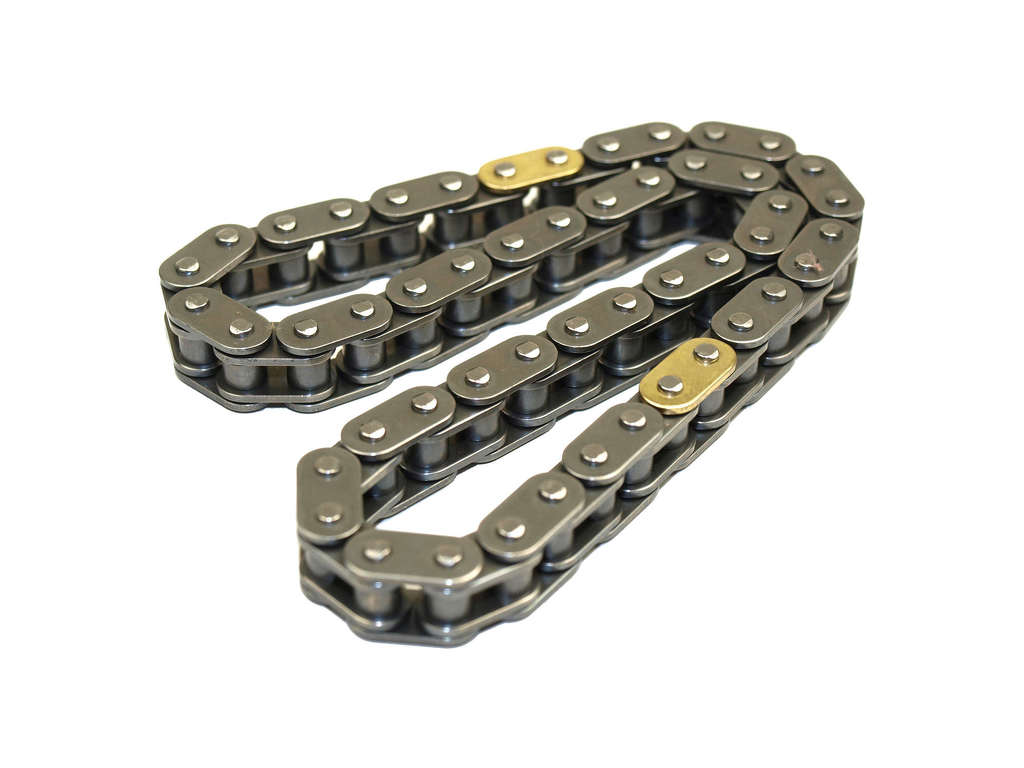
Est. part cost: $400-$800 for a complete kit. A representative Motorcraft kit part number is TK-428. - Failing Internal Water Pump 🔴 High Probability The water pump is located inside the engine and is driven by the timing chain. When its seals fail, it leaks coolant into the oil, destroying the oil's lubricating properties and causing timing chain stretch. This is the primary design flaw leading to P0018 on this engine.
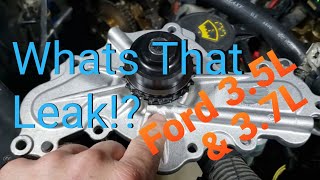
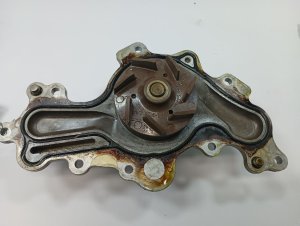
How to confirm: Check for a milky, frothy appearance on the oil cap or dipstick. An oil analysis from a lab can confirm coolant contamination. A visual inspection behind the alternator may reveal 🎬 Watch: How to spot a leaking water pump weep hole coolant leaking from the water pump weep hole, which is an early sign of failure.
Typical fix: This is the root cause of many timing failures. The water pump must be replaced, which requires a full timing job. All timing components (chain, guides, tensioners) should be replaced as they have been compromised by contaminated oil.
Est. part cost: $150-$300 for the pump itself, but it's always done as part of a larger timing kit. - Sticking or Failed VCT Solenoid (Bank 2 Intake) 🟡 Medium Probability The Variable Camshaft Timing (VCT) system is operated by oil pressure. Debris from infrequent oil changes or from a failing water pump can cause the solenoid to stick. Ford has issued TSBs (SSM 47170, 48423) advising that debris can cause these solenoids to stick and trigger correlation codes.
How to confirm: Use a scan tool with bidirectional controls to command the solenoid on and off 10 times, as recommended by Ford TSBs, to see if it can be cleared of debris. You can also swap the Bank 2 intake and exhaust solenoids; if the code changes to P0019 (exhaust cam correlation), the solenoid is bad.
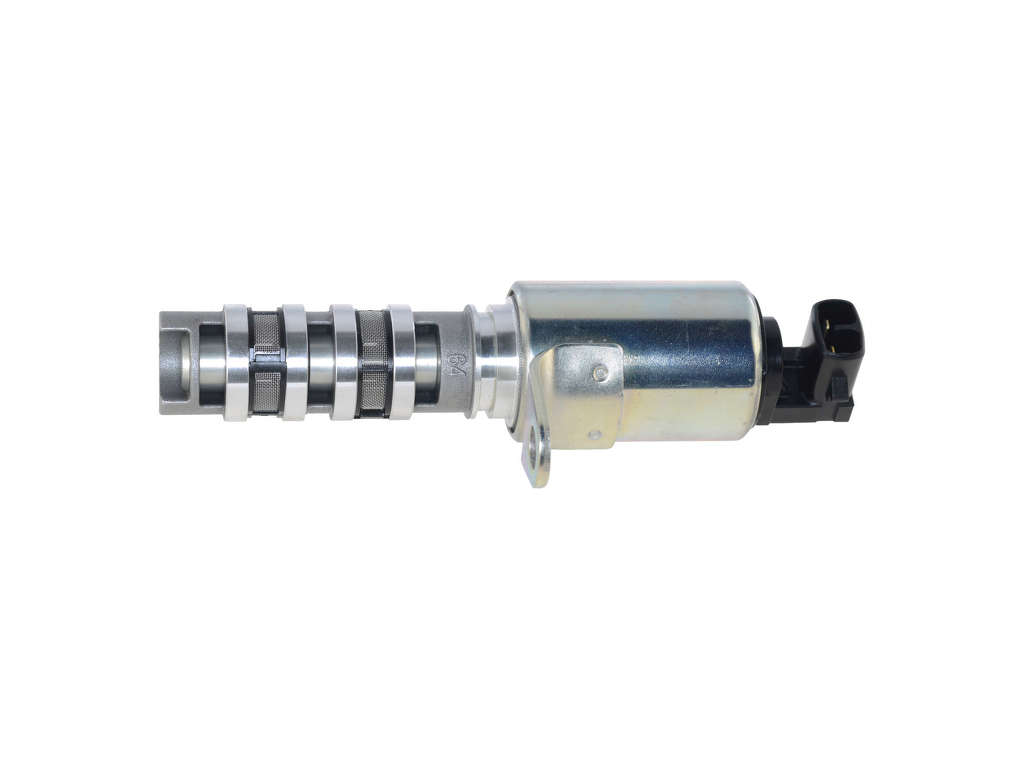
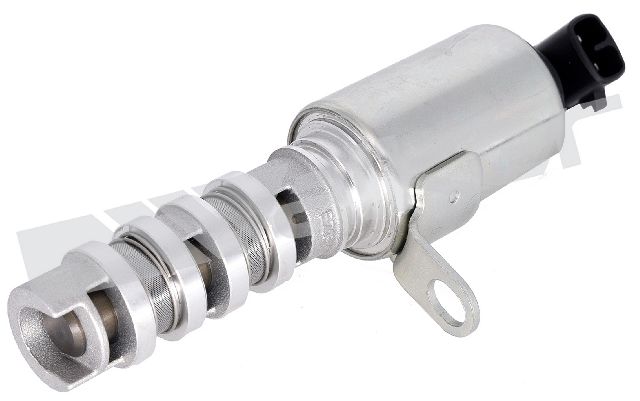
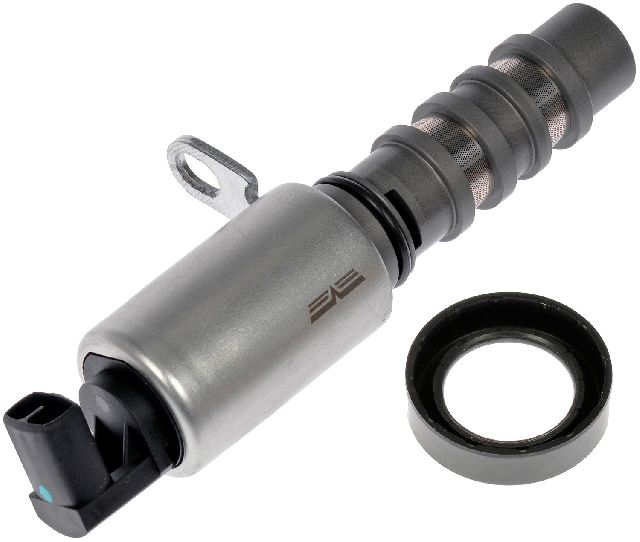
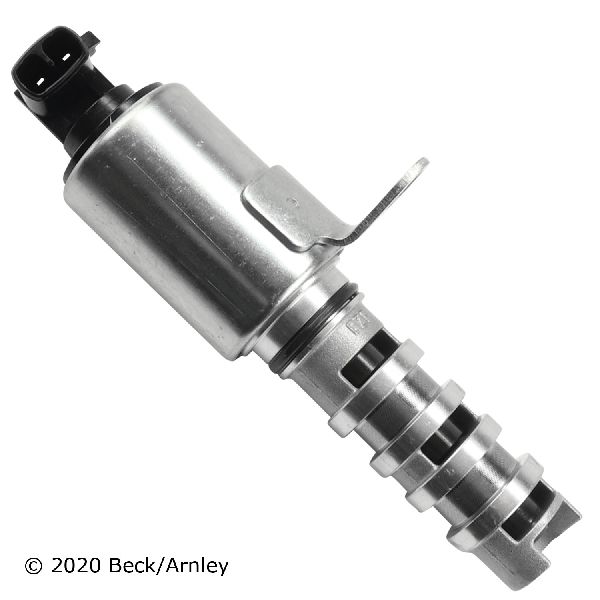
Typical fix: Replace the Bank 2 intake VCT solenoid. Accessing Bank 2 (firewall side) requires removing the upper intake manifold. The OEM part number is often 7T4Z-6M280-C or an equivalent successor like AT4Z-6M280-A/B.
Est. part cost: $30-$90 - Low, Dirty, or Incorrect Viscosity Engine Oil 🟡 Medium Probability The VCT system is highly sensitive to oil pressure and cleanliness. The wrong oil or delayed oil changes can cause sludge and prevent the phasers and solenoids from operating correctly. Some owners on forums have reported the code appearing after running the engine very low on oil.
How to confirm: Check the oil level and condition on the dipstick. Review vehicle service records for the last oil change date and the type of oil used.
Typical fix: Perform an oil and filter change using the manufacturer-specified grade of full synthetic oil (e.g., Motorcraft 5W-20). Clear codes and re-test. This is the cheapest and easiest first step.
Est. part cost: $40-$80
Rare But Worth Checking
- Failed Camshaft Phaser (Bank 2 Intake): The phaser is the gear on the end of the camshaft that actually adjusts the timing. It can fail mechanically or get clogged with debris, but it's less common than a solenoid failure or chain stretch. It is typically replaced during a full timing chain service.
- Failed Camshaft Position Sensor (Bank 2 Intake): It is very rare for the sensor itself to fail. It is almost always correctly reporting a mechanical timing issue. Do not replace this sensor unless all other causes have been ruled out.
Diagnosis Steps
- Check Engine Oil: Verify the oil level is correct and the oil is clean. If the oil is old, dirty, or the wrong viscosity, perform an oil and filter change with the correct full synthetic oil. Clear the codes and re-test. This is a crucial first step.
- Scan Tool Analysis: Use a scan tool to check for other DTCs. Diagnose any camshaft sensor (CMP) or oil pressure codes first. Note any pending codes.
- Test VCT Solenoid: As per Ford TSBs SSM 47170 and 48423, use a scan tool's bidirectional controls to command the Bank 2 intake VCT solenoid on and off 10 times to attempt to clear any debris. Listen for an audible click from the engine. 🎬 See what happens when a VCT solenoid fails
- Swap VCT Solenoids: If the code persists, swap the Bank 2 intake solenoid with the Bank 2 exhaust solenoid. Clear codes and drive. If the code changes to P0019, the intake solenoid is confirmed faulty and must be replaced.
- Inspect Wiring: If the code remains P0018, inspect the wiring and connector for the Bank 2 intake VCT solenoid and the camshaft position sensor for any damage, corrosion, or loose connections.
- Mechanical Timing Inspection: If all previous steps fail, the cause is almost certainly a mechanical timing issue. This requires a significant teardown to physically inspect the timing chain for stretch, check the guides for damage, and verify the cam phasers are correctly aligned. This step is best left to a professional.
Parts You'll Likely Need
- Timing Chain and Water Pump Kit
(OEM #Motorcraft TK-428 (representative kit))— This is the most common comprehensive fix. A stretched chain is often caused by a failing water pump contaminating the oil. Replacing all related components at once is critical for a long-term repair. - VCT Solenoid (Bank 2 Intake)
(OEM #7T4Z-6M280-C (or superseding part AT4Z-6M280-A/B))— A common failure point due to oil debris, as noted in Ford TSBs. A much cheaper fix
Related Codes That Often Appear With This One
- P0016 — This is the same correlation error but for Bank 1 (radiator side). Seeing both P0016 and P0018 together strongly suggests a base timing issue affecting the whole engine, like a stretched primary timing chain or low oil pressure.
- P0019 — This is a correlation fault for the exhaust camshaft on Bank 2. If P0018 and P0019 appear together, it points to a problem affecting the entire Bank 2 cylinder head, like a jumped timing chain on that side or an oil delivery issue.
- P0021 — This code indicates 'Intake Camshaft Position Timing - Over-Advanced (Bank 2)'. It can appear with P0018 when the cam phaser or VCT solenoid fails in a way that causes uncontrolled movement.
Technical Service Bulletins (TSBs) & Recalls
- SSM 47170: Notes that various VCT codes including P0018 can be caused by small debris causing the solenoid to stick. Recommends cycling the solenoid with a scan tool before replacement.
- SSM 48423: Supersedes 47170 with similar advice for 2015-2020 vehicles, confirming the same diagnostic procedure of cycling the VCT solenoid 10 times to attempt to clear debris before component replacement.
Platform-Specific Known Issues
- The transverse mounting of the 3.5L V6 places Bank 2 against the firewall, making access to its VCT solenoids and valve cover significantly more difficult than Bank 1, requiring removal of the upper intake manifold.
Mechanic-Grade Diagnostic Values
- VCT Solenoid Internal Resistance — expected: 5 - 14 Ohms. Failure: A reading outside this range, or infinite resistance (open circuit), indicates a failed solenoid.
- Camshaft Position (CMP) Sensor (3-wire Hall-effect type) Voltage — expected: With Key On, Engine Off: 5V on the reference wire and 5V on the signal wire. When cranking, the signal wire should switch between ~5V and 0V as the camshaft rotates.. Failure: Signal voltage does not switch or is stuck high or low during cranking.
- Engine Oil Pressure — expected: Minimum 15 PSI at hot idle, and a minimum of 30-35 PSI at 1500 RPM.. Failure: Pressure below these minimums, especially when the engine is warm, indicates an oil delivery problem that will starve the VCT system.
- VCT Advance Error PID (VCT_ADV_ERR) — expected: Using a Ford IDS or equivalent scan tool, this PID should be close to 0° at idle and during steady-state driving.. Failure: A consistent deviation of more than +/- 5 degrees for an extended period indicates a correlation error that can set P0018.
Scan Tool Commands That Help
- Ford IDS (or equivalent high-level scan tool): VCT Solenoid Actuator Test / Output State Control — This bidirectional command allows a technician to manually cycle the VCT solenoid while the engine is running at idle. If the solenoid is working, activating it should cause the engine to stumble or stall. If there is no change in idle quality, the solenoid is likely stuck or clogged.
- Ford IDS (or equivalent high-level scan tool): VCT Advance Error PID (e.g., VCT_ADV_ERR2 for Bank 2) — This is a live data parameter (PID) used to monitor the difference between the desired and actual camshaft angle. It is the primary data point the PCM uses to determine if a correlation fault exists. Watching this PID while driving can confirm the fault is happening in real-time.
Wiring & Ground Locations
- Powertrain Control Module (PCM) — Located in the engine compartment, at the rear, near the firewall.. The PCM is the source of the 5V reference voltage for the CMP sensor and controls the ground signal for the VCT solenoid. All related wiring terminates here.
- Camshaft Position Sensor 2 (Bank 2) — On the rear of the left cylinder head (the bank closer to the firewall).. This is the specific sensor ('Sensor A' for the intake cam) that provides the camshaft position data for Bank 2 to the PCM.
- G305 (Ground) — Located at the right 'C' pillar.. While not a primary engine ground, body and module grounds like this are critical for the proper function of various control modules, including the Fuel Pump Control Module, which can impact overall engine performance.
Real Owner Repair Stories
- Reddit r/AskMechanics (Ford Taurus 3.5L V6 (same engine family)) — Code P0018 appeared immediately after a major repair.
❌ Tried (didn't work) Replaced water pump and timing chains., Changed oil twice since the repair.
✅ What actually fixed it The issue was traced to an improper timing job. Although the main timing marks were aligned, the specific camshaft alignment tool for one bank did not fit perfectly, indicating the cams were not correctly phased during reassembly. The final fix was to re-time the engine correctly using the proper cam holding tools.
OEM Part Supersession History
7T4Z-6M280-A, 7T4Z-6M280-AA, 7T4Z-6M280-B→7T4Z-6M280-C— Updated design for improved reliability and to address sticking issues.
Heads up: This part number is specific to the 3.5L/3.7L Cyclone engine family. Other Ford engines use different VCT solenoids (e.g., AT4Z-6M280-A/B) which may look similar but are not interchangeable. Always verify by VIN.
Model Year Variations Within This Range
- 2010-2012 vs 2013-2019: Following the 2013 model year facelift, the base 3.5L Cyclone V6 received a power increase from 263 hp to 288 hp. While the fundamental timing system and water pump design remained the same, some ancillary parts and PCM software calibrations may differ.
Diagnostic Flowchart
Other Known Issues on This Vehicle
Issues unrelated to this code that are worth knowing about as an owner of this generation:
- Power Transfer Unit (PTU) Failure (AWD Models) 🔴 High — Commonly occurs between 80,000-120,000 miles. The PTU fluid is not easily serviceable and often overheats, leading to failure. (Ref: No specific recall, but a widely known issue. Owners report whining/grinding noises and fluid leaks as symptoms.)
- Electronic Throttle Body (ETB) Failure 🔴 High — Widespread issue, especially on 2010-2016 models, causing sudden 'limp mode' and loss of power. Can occur at any mileage. (Ref: Ford Customer Satisfaction Program 13N03 extended the warranty for this part. TSBs like 16-0139 also address this.)
- Door Ajar Sensor Malfunction 🟡 Low — Very common across many Ford models of this era. The sensor in the door latch fails, causing the interior lights to stay on and draining the battery.
- Electronic Power Steering Assist Failure 🔴 High — Multiple complaints of sudden loss of power steering, making the vehicle very difficult to steer. Onset can be sudden and without warning.
- Fractured Rear Toe Links 🔴 High — Affects 2013-2018 models, particularly in regions that use road salt. A fracture can cause a sudden loss of vehicle control. (Ref: Subject of Ford safety recall 20S04.)
Used vs. New Parts: Buying Guide for This Vehicle
When a used part is the smart pick: For this specific repair, using used parts is generally not recommended. The primary failure components (timing chain, water pump, VCT solenoids) are all wear items or prone to failure from contamination. A used VCT solenoid could be considered if it's from a verified low-mileage vehicle and is thoroughly cleaned and tested before installation, but the risk of it being clogged or failing soon is high.
Donor-vehicle mileage cap: roughly under 50000 miles for the part to have meaningful remaining life.
What to inspect on the donor part:
- For a VCT solenoid, check that the screens are perfectly clean and intact.
- Ask for the VIN of the donor vehicle to verify low mileage and check for any reported history of engine trouble.
- Avoid parts from engines that show signs of heavy oil sludge on the oil cap or in the valve cover.
OEM-only on this vehicle (don't cheap out):
- Timing Chain Kit
- Water Pump
- Camshaft Phasers
Aftermarket brands forum-validated for this vehicle:
- Cloyes (for timing chains and kits)
- Melling (for timing components and oil pumps)
Brands owners have reported issues with on this vehicle:
- Dorman (specifically for timing components like phasers and VCT solenoids, as reported by forum users)
Real Owner Stories
Aggregated from forums and TSBs cited above. Mileages and costs reflect what owners reported in those sources.
2009 Ford Flex 3.5L V6
Symptoms: Check engine light with a related correlation code; the owner noted that the issue seemed linked to debris in the oil system.
What fixed it: The owner performed an engine flush and an oil change, which temporarily resolved the code.
Source hint: Reddit - r/FordFlex - 2009 Flex with P0016 code
2013 Ford Taurus 3.5L V6
Symptoms: The P0018 code appeared immediately after a massive repair job involving the timing chain and water pump.
What fixed it: The report suggests the code was caused by incorrect timing alignment during the reassembly of the timing components.
Source hint: Reddit - r/AskMechanics - P0018 code after massive repair job
Related OBD-II Codes
Frequently Asked Questions
My 2016 Ford Flex is throwing P0018; are there any Technical Service Bulletins for this?
Why is the Bank 2 intake solenoid so much harder to reach on my Flex than Bank 1?
I see milky residue on my oil cap and have a P0018 code. What does this mean for my 3.5L engine?
Can I just replace the VCT solenoid to fix P0018 on my Ford Flex?
Is there a specific timing kit recommended for the 3.5L Cyclone engine?
Does the water pump have to be replaced during a P0018 timing chain repair?
Helpful Videos

Used OEM Parts in Stock
New Aftermarket Parts Available


The information in this article is provided for general reference and educational purposes only. Vehicle specifications, procedures, and part compatibility can vary by production date, trim level, and region. Always consult your vehicle's factory service manual and verify part numbers before purchasing or performing repairs. Safety-critical components such as airbags, seat belts, and braking systems should be installed by a qualified professional.
- Ford Flex:
- 🎬 Helpful Videos
- 🛍️ Shop This Part
- What's Unique About the 2009-2019 Ford Flex
- Symptoms You May Notice
- Most Likely Causes
- Rare But Worth Checking
- Diagnosis Steps
- Parts You'll Likely Need
- Related Codes That Often Appear With This One
- Technical Service Bulletins (TSBs) & Recalls
- Platform-Specific Known Issues
- Mechanic-Grade Diagnostic Values
- Scan Tool Commands That Help
- Wiring & Ground Locations
- Real Owner Repair Stories
- OEM Part Supersession History
- Model Year Variations Within This Range
- Diagnostic Flowchart
- Other Known Issues on This Vehicle
- Used vs. New Parts: Buying Guide for This Vehicle
- Real Owner Stories
- 2009 Ford Flex 3.5L V6
- 2013 Ford Taurus 3.5L V6
- Related OBD-II Codes
- Frequently Asked Questions
- 🎟️ Get 5% Off