

P0018 on 2011-2019 Ford Explorer 3.5L V6: Crankshaft-Camshaft Correlation Causes and Fixes
On the 3.5L V6 Explorer, P0018 is most often caused by low/dirty oil or a sticking Bank 2 (front side) intake VCT solenoid. An oil change and a new solenoid (around $50) may fix it. However, it can also be an early warning of a stretched timing chain or a failing internal water pump, which are very expensive repairs. Prompt diagnosis is critical to avoid catastrophic engine failure.
- First, check your engine oil. Low, old, or dirty oil is a primary cause of P0018 on this engine.
- If the oil is milky or looks like a milkshake, stop driving immediately. This indicates the internal water pump has failed and is leaking coolant into your oil, requiring a major repair.
- The most common part to fail is the Bank 2 (front) intake VCT solenoid. Replacing it is a logical and relatively inexpensive next step after checking the oil.
- A rattling noise from the engine, especially on cold starts, strongly suggests a more serious timing chain issue that requires professional diagnosis.
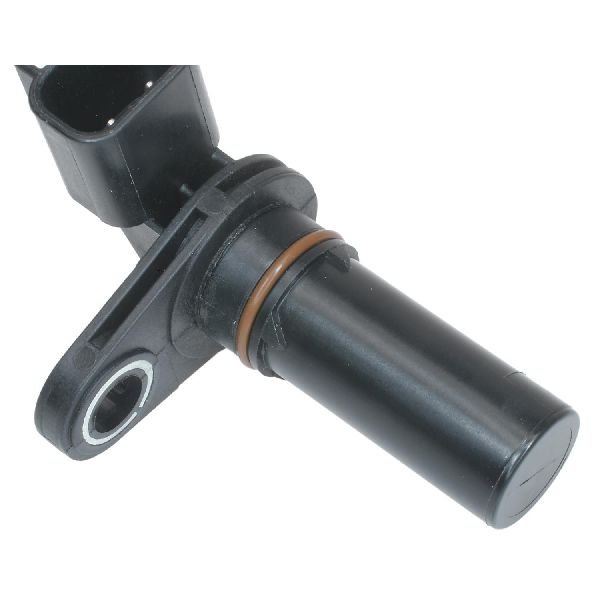
- Do not simply replace the camshaft or crankshaft sensors; they are almost certainly not the problem. The issue is mechanical.
What's Unique About the 2011-2019 Ford Explorer
The 3.5L Cyclone V6 has a critical design feature that makes P0018 a particularly serious code. The water pump is located inside the engine and is driven by the timing chain. When the water pump's internal seals fail, it leaks coolant directly into the engine oil. This contamination destroys the oil's lubricating properties, creating sludge that clogs VCT solenoids and causes rapid wear on the timing chain, guides, and VCT components, which in turn triggers timing correlation codes like P0018. Therefore, this code can be the first and only warning of an impending catastrophic engine failure stemming from a seemingly unrelated component.
Generation note: The 2011-2019 year range covers the fifth-generation Ford Explorer. The 3.5L V6 engine, which is particularly prone to the issues causing this code, was a primary engine option throughout this generation. The internal water pump design is a key vulnerability across all applications of the transverse 3.5L Cyclone V6.
Symptoms You May Notice
- Check Engine Light is on
- Rough, unstable, or low idle
- Hesitation or loss of power during acceleration
- Engine stalling, especially when coming to a stop
- Reduced fuel economy
- Rattling noise from the engine, especially on cold startups, which may indicate a stretched timing chain.
- Replacing the camshaft or crankshaft position sensors. These sensors are usually correctly reporting the mechanical timing problem; they are rarely the cause of it. A YouTube video shows a user replacing these for P0018 on a 2013 Explorer, which is a common but often incorrect first step. 🎬 See a real-world diagnosis of P0018 and P0021 codes.
- Replacing only the VCT solenoids when the timing chain is stretched. This may temporarily fix the code, but it will return as the underlying mechanical slack is still present.
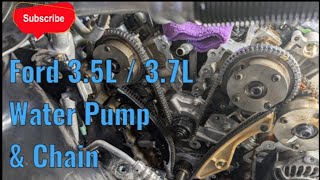
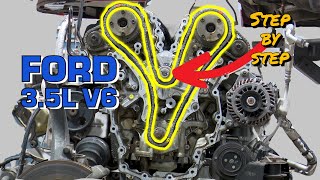
- Performing a full timing job but not replacing the water pump. If the original water pump fails later, it will contaminate the oil and destroy the new timing components, requiring the entire job to be redone. 🎬 Watch: How to replace the internal water pump and timing chain.
Most Likely Causes
- Low, Dirty, or Incorrect Viscosity Engine Oil 🔴 High Probability The Ford Ti-VCT (Variable Camshaft Timing) system is hydraulically operated and extremely sensitive to oil pressure, volume, and cleanliness. Debris in the oil is a primary cause of VCT solenoid failure, and coolant contamination from a failing water pump creates sludge that clogs oil passages.
How to confirm: Check the oil level on the dipstick. Inspect the oil's condition on the dipstick or a paper towel. It should be a translucent amber or brown, not black, sludgy, or milky like chocolate milk, which indicates coolant contamination.
Typical fix: Perform an engine oil and filter change using the Ford-specified 5W-20 or 5W-30 full synthetic or synthetic blend oil and a high-quality filter. Clear the codes and see if P0018 returns.
Est. part cost: $50-$100 - Sticking or Failed VCT Solenoid (Bank 2 Intake) 🔴 High Probability Multiple Ford Technical Service Bulletins (TSBs) like SSM 50067 and SSM 48423 identify sticking VCT solenoids as a common cause for timing codes due to oil debris. They are a known failure point on the Cyclone V6 family.
How to confirm: A mechanic can use a scan tool to command the solenoid on and off to check for response. It can also be removed and tested with a 12V source. Often, if P0021 appears with P0018, it strongly points to this solenoid per TSB 16-0038.
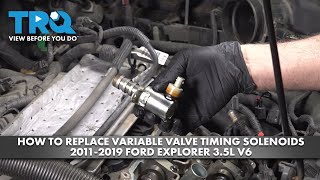
Typical fix: Replace the Bank 2 (front/radiator side) intake VCT solenoid. It is located on the top of the valve cover and held by one bolt, though accessing it requires removing the upper intake plenum. 🎬 Watch: Step-by-step guide to replacing the VCT solenoids.
Est. part cost: $40-$80 - Stretched Timing Chain 🟡 Medium Probability This is a well-documented issue on the 3.5L V6, typically occurring over 100,000 miles. Extended oil change intervals or oil contamination from the internal water pump accelerates wear, causing the chain to stretch and trigger correlation codes.
How to confirm: This is a mechanical failure confirmed by physical inspection. A mechanic must remove the timing cover to measure the slack in the chain. A loud rattling or whirring noise from the front of the engine is a strong indicator.
Typical fix: This is a major repair requiring the replacement of the timing chain, tensioners, and guides. Due to the labor involved, the water pump is almost always replaced at the same time.
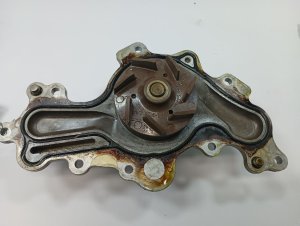
Est. part cost: $400-$900 for a full kit - Failing Internal Water Pump 🟡 Medium Probability The 3.5L V6 features a timing-chain-driven water pump inside the engine. When its seals fail, it leaks coolant directly into the oil, contaminating it. This is the root cause of many timing chain and VCT failures on this platform.
How to confirm: The most definitive sign is milky, frothy, or sludgy engine oil that may smell sweet (like coolant). A mechanic may also spot weeping or crusty residue from the water pump weep hole, which is a small hole located behind the A/C compressor or alternator.
Typical fix: This requires a complete timing system overhaul: new water pump, timing chains, tensioners, and guides. The engine must be thoroughly flushed to remove all contaminated oil.
Est. part cost: $400-$900 for a full timing and water pump kit
Rare But Worth Checking
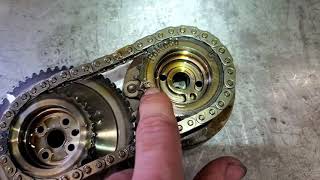
- Failed Camshaft Phaser (VCT Actuator): The phaser is the gear on the end of the camshaft. It can fail mechanically, but this is less common than a solenoid or chain issue. It often produces a loud 'cold start rattle' and is typically replaced during a full timing chain job.
- Damaged or Shifted Crankshaft Reluctor Wheel: The reluctor wheel on the crankshaft provides the position signal. If it gets damaged or shifts, it can cause a correlation code. This is rare and usually only happens after a major engine event or incorrect service.
Diagnosis Steps
- Check the engine oil level and condition. If low, dirty, or milky, perform an oil and filter change with the correct Ford-spec oil and re-evaluate. A milky appearance is a strong indicator of water pump failure.
- Scan for all OBD-II codes. Note if other codes like P0021 or P0016 are present, as they help narrow the diagnosis.
- Inspect the area behind the alternator/AC compressor for signs of coolant leakage from the water pump weep hole. A crusty orange or yellow residue is a tell-tale sign of impending failure.
- Using a professional scan tool (like FORScan), monitor the requested vs. actual camshaft angles for Bank 2 (PIDs like VCT_ADV_ACT and VCT_ERR). Command the Bank 2 intake VCT solenoid (VCT21) on and off to check for a response and changes in cam angle.
- If the solenoid is suspect, replace the Bank 2 intake VCT solenoid. It is relatively inexpensive and accessible after removing the upper intake plenum. Clear codes and test drive.
- If the code returns, a mechanical noise (rattle) is present, or oil is contaminated, the next step is to prepare for a major mechanical inspection. This requires removing the valve cover and timing cover for a physical inspection of the timing chain, guides, and tensioners for wear, slack, or damage.
Parts You'll Likely Need
- Variable Camshaft Timing (VCT) Solenoid (Bank 2 Intake)
(OEM #BL3Z-6M280-B (superseded by BR3Z-6M280-F))— This is one of the most common failure points due to its sensitivity to oil debris. It's a relatively inexpensive and accessible part to replace first.
Trusted brands: Motorcraft, Dorman
OEM price range: $50-$90
Aftermarket price range: $30-$60 - Timing Chain and Water Pump Kit — If the timing chain is stretched or the internal water pump has failed, a complete kit is required. The pump is replaced as a preventative measure due to its location behind the timing chain.
Trusted brands: Motorcraft, Cloyes, Melling
OEM price range: $600-$900
Aftermarket price range: $400-$700
Related Codes That Often Appear With This One
- P0021 — This code for 'Intake Camshaft Position Timing - Over-Advanced (Bank 2)' often appears with P0018 because a stuck VCT solenoid can cause the cam to be both misaligned (P0018) and stuck in an advanced position (P0021). TSB 16-0038 specifically pairs these codes as pointing to a bad solenoid on low-mileage vehicles.
- P0016 — This is the same correlation fault but for Bank 1 (firewall side). If both P0016 and P0018 appear together, it strongly points to a base timing issue affecting the whole engine, like a stretched primary timing chain or widespread oil contamination from a failed water pump.
Technical Service Bulletins (TSBs) & Recalls
- TSB 16-0038: For some low-mileage 2016 3.5L GTDI engines, this TSB specifically states that if codes P0018 and P0021 are present together, the fix is to replace the Bank 2 intake VCT solenoid.
- SSM 50067, 48423, 47170: These Special Service Messages from Ford advise technicians that various timing DTCs, including P0018, can be caused by small debris causing a VCT solenoid to stick. They recommend attempting to cycle the solenoid with a scan tool to clear debris before replacement.
Platform-Specific Known Issues
- Internal Water Pump Failure: The 3.5L V6's timing-chain-driven water pump is a significant design vulnerability. When its seals fail, it leaks coolant directly into the engine oil, leading to sludge, accelerated timing chain wear, and VCT system failure, often manifesting as code P0018.
- VCT Solenoid Sticking: Ford has issued multiple Special Service Messages (SSMs) like 47170, 48423, and 50067, acknowledging that small debris in the oil can cause VCT solenoids to stick, leading to various timing codes.
Mechanic-Grade Diagnostic Values
- VCT Solenoid Internal Resistance — expected: 5 - 14 Ohms. Failure: A reading outside this range, or infinite resistance (open circuit), indicates a failed solenoid.
- FORScan VCT Error PID (VCT_ERR) — expected: Should hover around 0° at idle and during steady-state driving.. Failure: A consistent error of more than +/- 5 degrees for Bank 2 indicates a correlation fault.
- Engine Oil Pressure at Idle — expected: At least 25 PSI. Failure: Pressure below 25 PSI can cause VCT system malfunctions due to oil starvation.
- Camshaft Position (CMP) Sensor Resistance (2-wire VR type) — expected: 586 - 2,033 Ohms. Failure: Resistance outside this range indicates a faulty sensor. Note: This is less common than a VCT or mechanical issue.
Hidden / Shadow Codes Worth Checking
- Mode 6, Test ID $82: This is Ford's on-board diagnostic monitor for VCT position performance. It tracks statistical data on cam timing errors and can reveal a degrading VCT system even before a persistent DTC like P0018 is set. (see via A professional scan tool capable of reading Ford-specific Mode 6 data.)
Scan Tool Commands That Help
- FORScan or Ford IDS: VCT Solenoid On/Off Command (e.g., VCT21 for Bank 2 Intake) — Used to test the functionality of the VCT solenoid. When commanding the solenoid on at idle, the engine should stumble or run rough. If there is no change, the solenoid is likely stuck or clogged.
- FORScan or Ford IDS: Monitor PIDs: VCT_ADV_ACT2 (Bank 2 Actual Cam Angle), VCT_ADV_DSD (Desired Cam Angle), and VCT_ERR2 (Bank 2 Cam Angle Error) — These live data PIDs are essential for diagnosis. Watching the desired angle versus the actual angle, and the resulting error value, confirms in real-time whether the camshaft is out of sync with the PCM's command.
Wiring & Ground Locations
- Main Engine Ground — A heavy black cable attached from the engine block to the vehicle body, typically located under or near the battery tray.. A poor ground connection can cause erratic voltage signals from the crankshaft and camshaft position sensors, potentially leading to false correlation codes. While not a primary cause, it should be checked for corrosion and tightness.
Real Owner Repair Stories
- Ford Edge Forum User (2013 Ford Edge 3.5L V6 (mechanically similar to Explorer)) — Check engine light with code P0018 appeared immediately after a water pump and head gasket replacement.
❌ Tried (didn't work) The user had just completed a major repair, so the initial assumption was a faulty new part.
✅ What actually fixed it The root cause was incorrect timing set during the reassembly of the timing chains after the water pump replacement. The engine had to be re-timed correctly to resolve the code. - YouTube Video - Truck Lab (2019 Ford F-150 3.5L (uses similar VCT technology)) — P0018 and P0021 codes, occasional power loss, and a cold start rattle.
❌ Tried (didn't work) The cold start rattle is typically associated with failing cam phasers, which is a very expensive repair.
✅ What actually fixed it Diagnosis revealed a piece of the VCT solenoid's internal control ring had broken off, jamming the spool valve. Replacing the faulty VCT solenoid fixed all symptoms, including the P0018 code and the cold start rattle, avoiding a much more expensive phaser replacement.
OEM Part Supersession History
BL3Z-6M280-B→BR3Z-6M280-F— Updated part design for improved durability and performance. The VCT solenoids are a known high-failure item and have gone through several revisions.
Heads up: The new part number BR3Z-6M280-F is the correct replacement for the original. Using old stock or incorrect revisions (like BR3Z-6M280-D or -E) is not recommended.
Model Year Variations Within This Range
- 2016-2019: A mid-cycle refresh occurred for the 2016 model year. This included exterior styling updates and a major interior technology upgrade from the often-criticized MyFord Touch infotainment system to the much-improved SYNC 3 system. While the base 3.5L V6 remained the same, a new optional 2.3L EcoBoost I-4 was introduced.
- 2011-2015: These earlier fifth-generation models feature the original styling and are equipped with the MyFord Touch infotainment system, which can be slow and less user-friendly compared to the later SYNC 3.
Diagnostic Flowchart
Other Known Issues on This Vehicle
Issues unrelated to this code that are worth knowing about as an owner of this generation:
- Exhaust Fumes / Carbon Monoxide in Cabin 🔴 High — Widespread issue affecting 2011-2017 models, leading to a NHTSA investigation and a customer satisfaction program from Ford for repairs. (Ref: TSB 16-0166)
- Failing Power Transfer Unit (PTU) 🔴 High — Common on AWD models. The PTU fluid can overheat and break down, leading to seal leaks and eventual failure of the unit, causing loss of AWD. Often noticed as a burning gear oil smell.
- Electronic Power Steering (EPAS) Failure 🔴 High — A known issue where the power steering assist can suddenly fail during operation, making the vehicle very difficult to steer. This led to recalls on some earlier models. (Ref: Recall 14S06, 15N01)
- Cracked Rear Applique Panel 🟡 Low — The black plastic panel across the tailgate is known to develop stress cracks, particularly on 2011-2014 models. This is a cosmetic issue but is very common.
Used vs. New Parts: Buying Guide for This Vehicle
When a used part is the smart pick: For this specific P0018 repair, using used parts is generally not recommended. The primary failure components (VCT solenoids, timing chains, water pump) are all wear-and-tear items sensitive to oil quality and maintenance history. The cost savings of a used part are minimal compared to the high labor cost and risk of premature failure.
Donor-vehicle mileage cap: roughly under 50000 miles for the part to have meaningful remaining life.
What to inspect on the donor part:
- If considering a used engine component, demand proof of the donor vehicle's mileage and a vehicle history report.
- Inspect any used part for signs of sludge, varnish, or coolant contamination.
- For VCT solenoids, check that the screens are perfectly clean and intact.
OEM-only on this vehicle (don't cheap out):
- Timing Chain Kit: Given the catastrophic potential of a failure and the high labor cost, using an OEM (Motorcraft) or high-quality OE-supplier kit is critical.
- Water Pump: The internal water pump is a known weak point; using a cheap aftermarket pump is a significant gamble that could destroy the engine.
- VCT Solenoids: While some aftermarket brands work, many forum users report immediate or premature failure with non-OEM solenoids, making Motorcraft the safest choice.
Aftermarket brands forum-validated for this vehicle:
- Cloyes: A well-regarded OE supplier for timing components, often considered a reliable alternative to Motorcraft for timing chain kits.
Brands owners have reported issues with on this vehicle:
- Dorman (for VCT Solenoids): While Dorman makes many quality parts, their VCT solenoids for this application have mixed reviews, with some users reporting immediate failure or setting circuit codes.
Real Owner Stories
Aggregated from forums and TSBs cited above. Mileages and costs reflect what owners reported in those sources.
2014 Ford Explorer 3.5L V6
Symptoms: Owner experienced P0018 along with multiple other codes and discovered a severe mechanical failure where the secondary timing chain had 'deleted itself'.
What fixed it: A full timing job was required to repair the engine.
Source hint: Reddit r/AskMechanics thread titled 'Ford Explorer cam shaft sensor issues'
2016 Ford Explorer 3.5L GTDI
Symptoms: Low-mileage vehicle presenting with both P0018 and P0021 codes simultaneously.
What fixed it: Replacement of the Bank 2 intake VCT solenoid as specified by the manufacturer's technical bulletin.
Source hint: TSB 16-0038
Ford Edge 3.5L V6 (Platform Mate)
Symptoms: The owner reported a rough idle accompanied by trouble codes P0018 and P0021.
What fixed it: The combination of codes pointed to a Bank 2 VCT solenoid issue, a common failure point on the Cyclone V6 engine.
Source hint: ExplorerForum.com thread 'Rough idle and trouble codes P0018 and P0021'
Ford F-150 3.5L V6 (Platform Mate)
Symptoms: Rough idle and low power. In one instance, the owner performed their own timing repair but triggered P0018 because the crank gear jumped a tooth during the initial startup.
What fixed it: Correcting the timing chain alignment on the crank gear.
Source hint: F150forum.com thread 'P0018 Crankshaft Position - Camshaft Position Correlation Bank 2 Sensor Code'
Related OBD-II Codes
Frequently Asked Questions
My 2016 Explorer has both P0018 and P0021; does Ford have a specific fix for this?
Can I just clean the VCT solenoid on my Cyclone V6 instead of replacing it?
Why is my oil milky and what does it have to do with the P0018 code?
I hear a rattling noise on cold startups; is this related to the P0018 code?
Where is the Bank 2 intake VCT solenoid located on the Explorer 3.5L?
What oil should I use to prevent VCT and timing issues on my 2011-2019 Explorer?
Helpful Videos
Used OEM Parts in Stock

New Aftermarket Parts Available


The information in this article is provided for general reference and educational purposes only. Vehicle specifications, procedures, and part compatibility can vary by production date, trim level, and region. Always consult your vehicle's factory service manual and verify part numbers before purchasing or performing repairs. Safety-critical components such as airbags, seat belts, and braking systems should be installed by a qualified professional.
- Ford Explorer:
- 🎬 Helpful Videos
- 🛍️ Shop This Part
- What's Unique About the 2011-2019 Ford Explorer
- Symptoms You May Notice
- Most Likely Causes
- Rare But Worth Checking
- Diagnosis Steps
- Parts You'll Likely Need
- Related Codes That Often Appear With This One
- Technical Service Bulletins (TSBs) & Recalls
- Platform-Specific Known Issues
- Mechanic-Grade Diagnostic Values
- Hidden / Shadow Codes Worth Checking
- Scan Tool Commands That Help
- Wiring & Ground Locations
- Real Owner Repair Stories
- OEM Part Supersession History
- Model Year Variations Within This Range
- Diagnostic Flowchart
- Other Known Issues on This Vehicle
- Used vs. New Parts: Buying Guide for This Vehicle
- Real Owner Stories
- 2014 Ford Explorer 3.5L V6
- 2016 Ford Explorer 3.5L GTDI
- Ford Edge 3.5L V6 (Platform Mate)
- Ford F-150 3.5L V6 (Platform Mate)
- Related OBD-II Codes
- Frequently Asked Questions
- 🎟️ Get 5% Off