

P0018 on 2013-2018 Audi S6 4.0T: Crank-Cam Correlation Causes and Fixes
On the Audi S6 4.0T, code P0018 is most often caused by a faulty VVT solenoid (camshaft adjuster valve) or issues with engine oil quality/pressure. The solenoid's internal screen can break and cause a blockage. A clogged solenoid can be replaced for around $100-$200 in parts, but be aware this code can also point to more severe timing chain problems requiring an engine-out service.
- P0018 on your S6 is a serious code that points to a timing problem on the passenger-side intake camshaft.
- Before suspecting a major mechanical failure, check your engine oil level and condition, as the timing system relies on oil pressure.
- The most likely part to fail is the VVT solenoid (camshaft adjuster), which is relatively accessible and can be diagnosed by swapping it with the one from the other side of the engine.
- Be aware of the 4.0T's known issues: a recall for a main oil strainer (21H7) and the tendency for VVT solenoid screens to break. These can be the root cause of the code.
- Do not immediately assume the timing chain has failed, but if the car has high mileage and makes rattling noises, it is a possibility that requires professional diagnosis.
What's Unique About the 2013-2018 Audi S6
The Audi S6's 4.0T V8 engine's variable valve timing (VVT) system is highly dependent on clean engine oil and adequate pressure. This engine has a known issue with a central oil strainer that can clog, leading to oil starvation for critical components. While this strainer primarily affects the turbochargers (leading to recall 21H7), the resulting oil contamination and pressure issues can also damage the VVT solenoids, causing timing correlation codes like P0018. Furthermore, the individual VVT solenoids (camshaft adjuster magnets) have small filter screens that are known to break apart, causing the solenoid to fail and potentially sending debris into oil passages. This specific failure mode is a well-documented cause of P0018 on this platform.
Symptoms You May Notice
- Check Engine Light illuminated
- Rough, unstable, or low idle
- Hesitation or loss of power during acceleration
- Reduced fuel economy
- Engine may take longer than usual to start
- Engine stalling, particularly at low speeds
- Rattling or ticking noise from the engine, especially on startup, which could indicate chain tensioner issues 🎬 Listen: Does your engine sound like this startup rattle?
- Replacing the camshaft position sensor immediately. Forum users on AudiWorld report replacing the sensor only to have the code return because the underlying issue was a VVT solenoid or mechanical timing.
- Replacing the crankshaft position sensor without ruling out camshaft-specific components first.
- Assuming a timing chain replacement is needed without first checking camshaft adaptation values and ruling out the much more common VVT solenoid failure.
Most Likely Causes
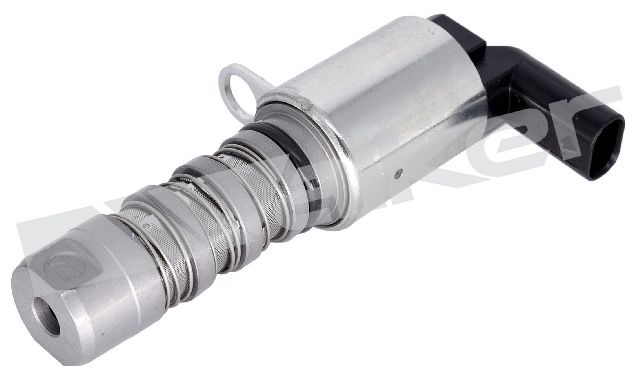
- Faulty Variable Valve Timing (VVT) Solenoid / Camshaft Adjuster Magnet 🔴 High Probability The solenoid's internal filter screen can break apart, causing it to clog or fail. It's also sensitive to oil contamination, a known issue on the 4.0T engine due to the turbo oil screen problem. Owners report the screen pieces getting stuck in the valve, causing the timing to be over-advanced.
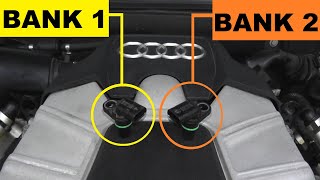
How to confirm: Swap the Bank 2 intake solenoid with the Bank 1 intake solenoid. Clear the codes and drive the vehicle. If the trouble code changes to P0016 (the Bank 1 equivalent), the solenoid is bad. Inspect the removed solenoid to see if its filter screen is broken or missing. A user on YouTube documented this exact failure, showing the broken screen causing the issue.
Typical fix: Replace the faulty VVT solenoid and perform an engine oil and filter change. Ensure no part of the old solenoid's screen is missing. Some owners proactively remove the screens from new solenoids, though this is not an official recommendation.
Est. part cost: $80-$150 - Low or Dirty Engine Oil 🟡 Medium Probability The VVT system is hydraulic and requires the correct oil viscosity and pressure to function. The 4.0T can suffer from oil contamination due to issues with the main oil strainer (Recall 21H7), which can block oil passages and affect VVT operation.
How to confirm: Check the oil level via the MMI system and inspect the oil's condition and service history. If it's old, dark, or below the minimum level, this could be the cause.
Typical fix: Perform a complete engine oil and filter change using an oil that meets Audi's specific requirements (e.g., VW 502 00 or 504 00). Clear codes and see if the issue returns.
Est. part cost: $80-$150 - Stretched Timing Chain or Failed Tensioner/Guides ⚪ Low Probability Like all engines with timing chains, the 4.0T's chains, plastic guides, and hydraulic tensioners can wear out over time, typically at higher mileage (over 100k miles). However, forum discussions suggest this is not a common failure point compared to other issues.
How to confirm: This requires advanced diagnostics. A technician will use a scan tool (like VCDS) to check 'Camshaft adaptation intake bank 1/2' values in the engine measuring blocks. Values exceeding +/- 5 degrees are a strong indicator of a stretched chain. Physical inspection requires engine removal.
Typical fix: Complete replacement of all timing chains, tensioners, and guides. This is a major, labor-intensive repair with costs reported in the thousands.
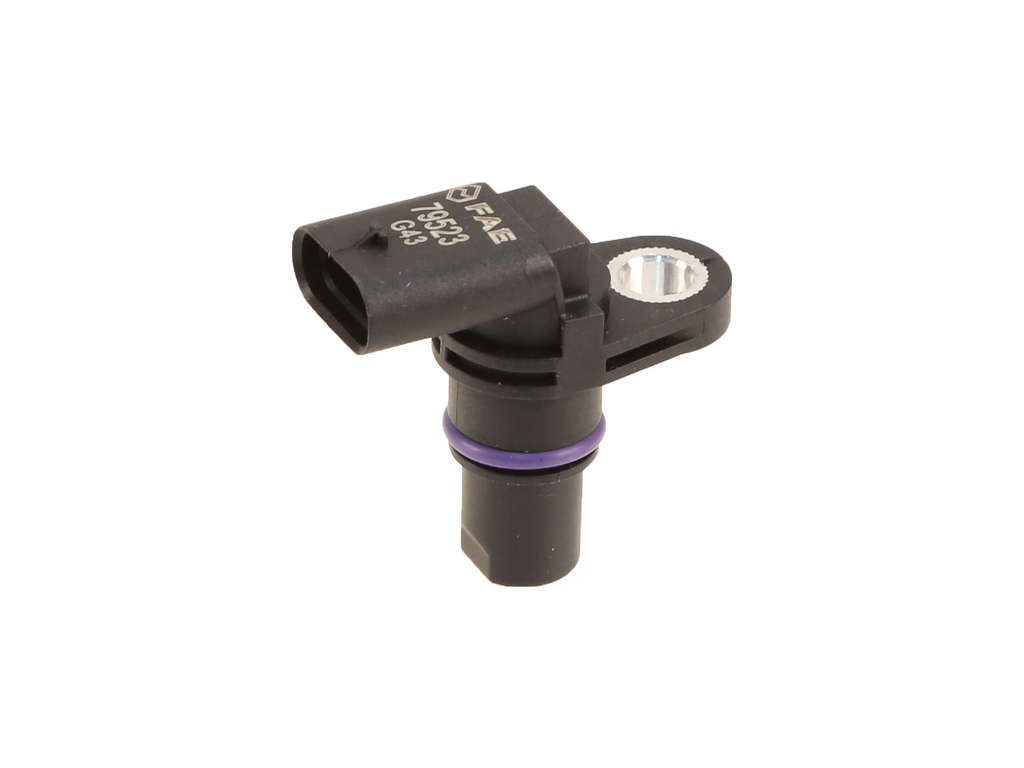
Est. part cost: $800-$1500 - Faulty Camshaft Position Sensor (CMP) ⚪ Low Probability While sensors can fail, they are often misdiagnosed. The issue is more commonly oil-related or mechanical. Forum users frequently report replacing the sensor with no success.
How to confirm: Use a multimeter to test the sensor's power supply and signal output. The most effective method is to swap it with the sensor from the other bank 🎬 See this guide on testing and replacing camshaft sensors. (e.g., swap Bank 2 intake with Bank 1 intake) to see if the code follows (changes to P0016).
Typical fix: Replace the Bank 2 intake camshaft position sensor (Sensor G163).
Est. part cost: $50-$100
Rare But Worth Checking
- Clogged Main Oil Strainer: This is a critical issue covered by Audi recall 21H7 (TSB 2061432). A blocked strainer starves the turbochargers of oil, but the resulting oil contamination and pressure fluctuations can trigger VVT-related codes like P0018. Ensure this recall has been performed on your vehicle by checking with an Audi dealer.
- Faulty Crankshaft Position Sensor (CKP): A failure of the main crankshaft sensor (Sensor G28) can cause a variety of correlation codes as the ECM loses its primary timing reference. It's less likely than a camshaft sensor or solenoid but should be considered if other diagnostics fail.
Diagnosis Steps
- Check Engine Oil: Verify the oil level is correct and the oil is clean and of the correct VW 502/504 specification. An overdue oil change is a common cause. If low or dirty, perform an oil and filter change and clear the code to see if it returns.
- Scan Tool Analysis: Use an Audi-specific scanner (VCDS, OBDeleven) to check for other codes. Crucially, check the live data for 'Camshaft adaptation intake bank 2'. A value greater than +5 degrees or less than -5 degrees at warm idle suggests a timing chain issue. If the value is blank or erratic, suspect the sensor or wiring.
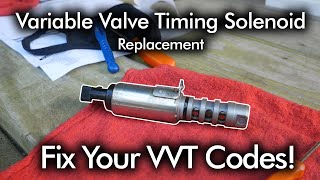
- Swap VVT Solenoids: As a diagnostic test, swap the Bank 2 intake solenoid with the Bank 1 intake solenoid. Clear the codes and drive the vehicle. If code P0016 appears, the solenoid you moved is faulty and must be replaced. This is the most common fix. 🎬 Watch: How to swap and replace your VVT solenoids.
- Inspect VVT Solenoid: When removing the solenoid, inspect its small metal screen for tears or missing pieces. A broken screen is a definitive sign of failure.
- Swap Camshaft Position Sensors: If the solenoid swap does not isolate the problem, perform the same test by swapping the Bank 2 and Bank 1 intake camshaft position sensors. If the code moves to P0016, the sensor is faulty.
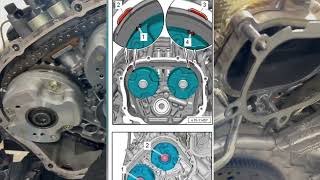
- Mechanical Timing Check: If all electronic components and oil-related issues are ruled out and camshaft adaptation values are out of spec, the vehicle must be inspected by a professional for mechanical timing problems, such as a stretched chain or failed tensioner. This is a highly involved, engine-out process.
Parts You'll Likely Need
- Variable Valve Timing (VVT) Solenoid / Camshaft Adjuster Magnet
(OEM #06E109257S)— This is the most probable cause of P0018 on the 4.0T, often failing due to its internal screen breaking. This part is used for both intake and exhaust positions on both banks.
Trusted brands: Audi (OEM), INA, Pierburg
OEM price range: $120-$180
Aftermarket price range: $70-$120 - Camshaft Position Sensor
(OEM #06E905163C)— Though less common than a solenoid failure, a faulty sensor (G163 for Bank 2 Intake) can send incorrect data and trigger this code.
Related Codes That Often Appear With This One
- P0019 — This is the correlation code for Bank 2's *exhaust* camshaft. If both appear, it points more strongly toward a systemic issue like oil pressure or a problem with the main timing chain for that bank.
- P0016 — This is the equivalent correlation code (Crank/Cam) for Bank 1. Seeing both P0016 and P0018 simultaneously is rare but would indicate a major timing issue, possibly a slipped main timing chain or crankshaft reluctor wheel problem.
- P0021 — This code means 'Intake (A) Camshaft Position Timing - Over-Advanced (Bank 2)'. It often accompanies P0018 and points specifically to the cam phaser being stuck in an advanced position, often due to a faulty VVT solenoid whose screen has broken and jammed the mechanism.
Technical Service Bulletins (TSBs) & Recalls
- Audi Recall 21H7 / TSB 2061432: Addresses blocked turbocharger oil strainer. The fix involves replacing the strainer and changing the engine oil. This is a critical campaign for all 2013-2017 4.0T engines.
Platform-Specific Known Issues
- Audi Recall 21H7 (NHTSA 22V178000): Addresses a clogged oil strainer that can lead to turbocharger failure. The resulting oil pressure and contamination issues from this problem can also be a root cause for VVT-related fault codes like P0018.
Mechanic-Grade Diagnostic Values
- Camshaft Adjuster (VVT) Solenoid Resistance — expected: 6.9 to 7.9 Ohms at 68°F (20°C). Failure: A reading outside this range, or an open circuit (infinite resistance), indicates a faulty solenoid coil.
- VCDS Camshaft Adaptation (Phase Position) — expected: Between -5° and +5° at warm idle. Failure: A value consistently outside the +/- 5° range is a strong indicator of a stretched timing chain or other mechanical timing issue, rather than a solenoid or sensor fault.
- Camshaft Position Sensor (G163) Power Supply — expected: Approximately 5V at Pin 1 (to ground). Failure: No voltage or significantly low voltage points to a wiring or ECM issue, not a faulty sensor.
Scan Tool Commands That Help
- VCDS (VAG-COM) or ODIS: Read Measuring Value Blocks (MVB) for Camshaft Adjustment — This is a critical first diagnostic step after reading the main fault code. Checking the 'Camshaft adaptation intake bank 2' value (e.g., in MVB 91 or similar) helps differentiate between a mechanical timing issue (values exceed +/- 5 degrees) and a component failure like a solenoid.
Wiring & Ground Locations
- Engine Block Ground — On the right side of the engine compartment, near the alternator.. A poor ground connection at this point can cause erratic behavior and implausible signals from engine sensors, including the camshaft and crankshaft position sensors, leading to correlation codes.
- Junction Box Ground Straps — In the electrical junction box located in the plenum area (under the plastic cowl at the rear of the engine bay).. This box contains main ground connections for various engine management components. Corrosion or looseness here can cause widespread electrical issues, including sensor data problems that could trigger a P0018.
- Camshaft Position Sensor (G163) Connector — On the front of the Bank 2 (passenger side) cylinder head cover.. The sensor has a 3-pin connector. Pin 1 is the 5V supply, Pin 3 is the ground. Verifying voltage and ground continuity at this connector is essential to rule out wiring issues before replacing the sensor.
Real Owner Repair Stories
- Audizine Forum User (Audi S6 4.0T) — P0018 and P0019 codes, indicating correlation issues on both intake and exhaust cams for Bank 2.
❌ Tried (didn't work) Replaced all four camshaft position sensors., Replaced all four VVT solenoids (camshaft adjusters)., Performed multiple oil changes.
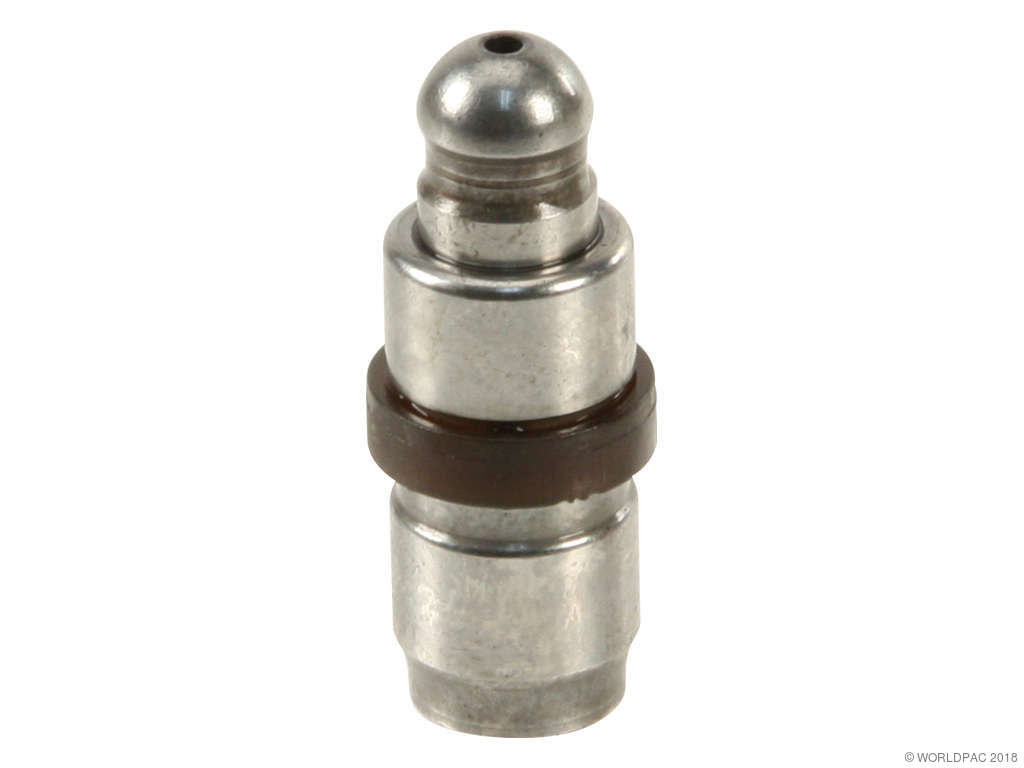
✅ What actually fixed it The actual cause was clogged oil non-return valves (check valves) located in the cylinder heads. These valves are designed to keep oil in the upper head area. When they clog, they can restrict oil flow to the cam phasers, causing timing deviation codes even when the solenoids and sensors are good. Replacing the two non-return valves in the Bank 2 cylinder head resolved the codes. - NHTSA ODI #11233069 — An owner reported that at approximately 63,000 miles, the check engine light illuminated with code P0018, which subsequently caused the vehicle to fail an emissions test.
OEM Part Supersession History
06E109257M, 06E109257N, 06E109257S, 06E109257T→06E109257AC— Standard part evolution for improved reliability and material changes.
Heads up: All previous versions are replaced by 06E109257AC. While older versions may be found, the latest revision is always recommended for this repair.
Model Year Variations Within This Range
- 2013-2018: The 4.0T engine in the S6 came with different engine codes, primarily CEUC and CTGE. While mechanically very similar, there can be minor differences in software and some ancillary components. However, for the purpose of diagnosing P0018, the VVT system components and common failures are consistent across these codes.
Diagnostic Flowchart
Other Known Issues on This Vehicle
Issues unrelated to this code that are worth knowing about as an owner of this generation:
- Turbocharger Oil Strainer Clogging 🔴 High — Very common across all 2013-2017 4.0T engines, leading to a safety recall. (Ref: Recall 21H7)
- PCV / Oil Separator Failure 🟠 Medium — Common failure item due to heat exposure in the engine's 'hot-vee'. Symptoms include a loud whistling noise, rough idle, and excessive oil consumption.
- Active Engine Mount Failure 🟠 Medium — The fluid-filled active engine mounts are a known weak point, often failing before 100k miles, and sometimes as early as 40k miles. Failure causes increased vibration and can trigger fault codes. Replacement is expensive.
- Mechatronic Unit Failure (S-Tronic DL501) 🔴 High — The dual-clutch transmission's mechatronic unit is a known point of failure, often occurring around 100k miles. Issues with cooling and pressure solenoids are common.
- Excessive Oil Consumption 🟠 Medium — Higher mileage 4.0T engines can consume significant amounts of oil, often attributed to wear on valve stem seals, which are exposed to high heat in the hot-vee design.
Used vs. New Parts: Buying Guide for This Vehicle
When a used part is the smart pick: Given the relatively low cost of new aftermarket VVT solenoids and sensors, buying used electronic parts is generally not recommended. The primary failure mode of the solenoid (broken screen) and the unknown history of a used part make it a poor value proposition. A used part could fail shortly after installation.
Donor-vehicle mileage cap: roughly under 50000 miles for the part to have meaningful remaining life.
What to inspect on the donor part:
- For a VVT solenoid, visually inspect the connector for corrosion and the body for cracks.
- Crucially, inspect the small filter screen at the tip. If it is torn, missing, or clogged with metallic debris, the part is bad and the donor engine likely had significant issues.
- For a camshaft sensor, check for physical damage to the housing or connector pins.
OEM-only on this vehicle (don't cheap out):
- Timing Chains and Tensioners: Due to the catastrophic consequences of failure and the immense labor involved, only OEM or high-quality OE-supplier (like IWIS) timing components should be used.
Aftermarket brands forum-validated for this vehicle:
- VVT Solenoid: Pierburg, INA, Vaico are reputable OE suppliers or high-quality aftermarket brands.
- Camshaft Position Sensor: Bosch, Continental/VDO are reliable choices.
Brands owners have reported issues with on this vehicle:
- Unbranded, no-name solenoids and sensors from online marketplaces should be avoided. The risk of premature failure is high, and a bad solenoid can cause performance issues that mimic more serious problems, leading to wasted diagnostic time.
Real Owner Stories
Aggregated from forums and TSBs cited above. Mileages and costs reflect what owners reported in those sources.
2013-2018 Audi S6 4.0T V8
Symptoms: Check engine light with P0018; the owner found the internal filter screen of the solenoid had broken apart, causing the valve to get stuck and over-advance the timing.
What fixed it: Replacement of the faulty VVT solenoid (camshaft adjuster magnet) and an oil change.
Source hint: YouTube video documented by a user showing broken solenoid screen failure
2013-2018 Audi S6 4.0T V8 — ~110000 miles
Symptoms: Rattling or ticking noise from the engine, especially on startup, accompanied by timing correlation codes.
What fixed it: Complete replacement of all timing chains, tensioners, and guides.
Cost: $800-$1500
Source hint: Forum discussions regarding high-mileage timing chain stretch
Audi S6 4.0T V8 — 63,000 miles
Symptoms: The check engine light came on and the owner found code P0018. This issue resulted in a failed emissions test during a license renewal attempt (NHTSA ODI #11233069).
What fixed it: Diagnostic inspection at a dealership.
Related OBD-II Codes
Frequently Asked Questions
Does the Audi Recall 21H7 for the turbo oil strainer apply to my 2013-2017 S6?
Can I just swap parts to see if the P0018 code on my Bank 2 intake moves?
What should the 'Camshaft adaptation' values be on my VCDS for a healthy 4.0T engine?
Is it true that the VVT solenoid filter screens break off on these engines?
My S6 has a loud whistling noise and a rough idle along with P0018; are they related?
What oil specification should I use to prevent VVT issues on my Audi S6?
Helpful Videos

We Have This Part in Stock


The information in this article is provided for general reference and educational purposes only. Vehicle specifications, procedures, and part compatibility can vary by production date, trim level, and region. Always consult your vehicle's factory service manual and verify part numbers before purchasing or performing repairs. Safety-critical components such as airbags, seat belts, and braking systems should be installed by a qualified professional.
- Audi S6:
- 🎬 Helpful Videos
- 🛍️ Shop This Part
- What's Unique About the 2013-2018 Audi S6
- Symptoms You May Notice
- Most Likely Causes
- Rare But Worth Checking
- Diagnosis Steps
- Parts You'll Likely Need
- Related Codes That Often Appear With This One
- Technical Service Bulletins (TSBs) & Recalls
- Platform-Specific Known Issues
- Mechanic-Grade Diagnostic Values
- Scan Tool Commands That Help
- Wiring & Ground Locations
- Real Owner Repair Stories
- OEM Part Supersession History
- Model Year Variations Within This Range
- Diagnostic Flowchart
- Other Known Issues on This Vehicle
- Used vs. New Parts: Buying Guide for This Vehicle
- Real Owner Stories
- 2013-2018 Audi S6 4.0T V8
- 2013-2018 Audi S6 4.0T V8 — ~110000 miles
- Audi S6 4.0T V8 — 63,000 miles
- Related OBD-II Codes
- Frequently Asked Questions
- 🎟️ Get 5% Off