

P0017 on 2006-2011 Saab 9-3 2.8L V6: Timing Chain Stretch and Fixes
On the Saab 9-3 with the 2.8L Turbo V6, code P0017 almost always means the timing chains have stretched. This is a serious and expensive repair, often costing $1,800-$3,000+ due to the high labor involved. The job is not recommended for DIYers. Ignoring the issue can lead to catastrophic engine failure.
- P0017 on a 2006-2011 Saab 9-3 2.8L V6 is a strong indicator of stretched timing chains, a known major issue with this engine.
- Always check engine oil level and condition first, as low or dirty oil is a major contributing factor.
- Do not simply replace the sensors; the problem is almost certainly mechanical.
- This is a serious issue. Continued driving can lead to the chain breaking, causing catastrophic and non-repairable engine damage.
- Budget for a professional repair, as timing chain replacement is a complex job that can cost over $2,000.
What's Unique About the 2006-2011 Saab 9-3
The 2.8L Turbo V6 in this Saab 9-3, known as the GM LP9 (and B284 in Saab terms), is part of the High Feature V6 (HFV6) engine family. This engine series is infamous for a design flaw leading to premature timing chain stretching. The problem was made worse by GM's original long oil change interval recommendations via the Oil Life Monitor system, which led to accelerated oil degradation and increased wear on the chains and guides. As a result, for many owners, experiencing P0017 is not a matter of 'if' but 'when,' and it almost always points directly to this well-documented and costly timing chain issue rather than a simple sensor failure.
Symptoms You May Notice
- Check Engine Light is on, with P0017 stored.
- Rattling, buzzing, or scraping noise from the passenger side of the engine for a few seconds on a cold startup.
- Rough or unstable idle.
- Reduced engine power and poor acceleration.
- Hesitation or engine misfiring.
- Increased fuel consumption.
- Engine may stall at low speeds.
- Replacing only the camshaft or crankshaft position sensors without addressing the underlying mechanical timing issue. While a sensor can fail, it is rarely the root cause of P0017 on this specific engine.
- Replacing just the VVT solenoid without confirming the timing chain's condition. A faulty solenoid can cause the code, but it's much less common than chain stretch.
Most Likely Causes
- Stretched Timing Chains 🔴 High Probability This engine family has a known design weakness regarding timing chain longevity. The issue is exacerbated by extended oil change intervals recommended by the factory oil life monitor, which leads to oil breakdown, sludge, and increased wear on the chains, guides, and tensioners.
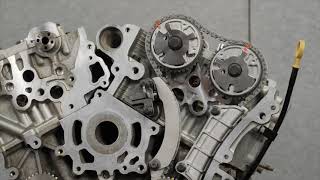
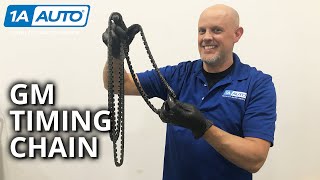
How to confirm: A professional mechanic can use a scan tool to observe cam/crank deviation data. A persistent deviation greater than 9-12 degrees is a strong indicator. However, the definitive diagnosis is a physical inspection of the chains for slack 🎬 See how to determine if your timing chain needs replacement., and the guides/tensioners for wear. This requires significant engine disassembly.
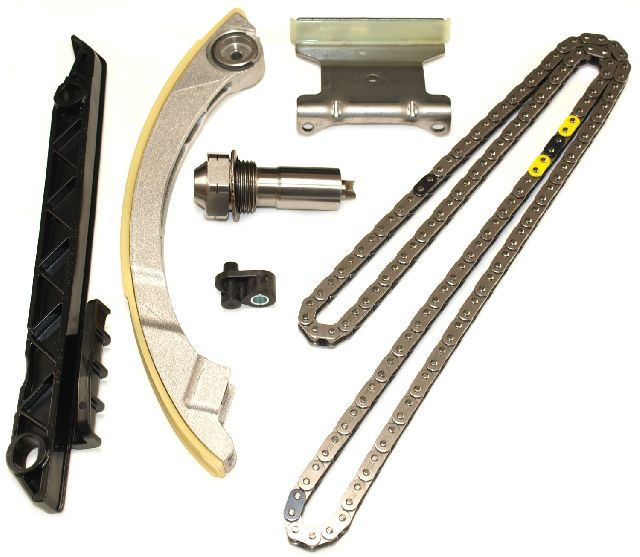
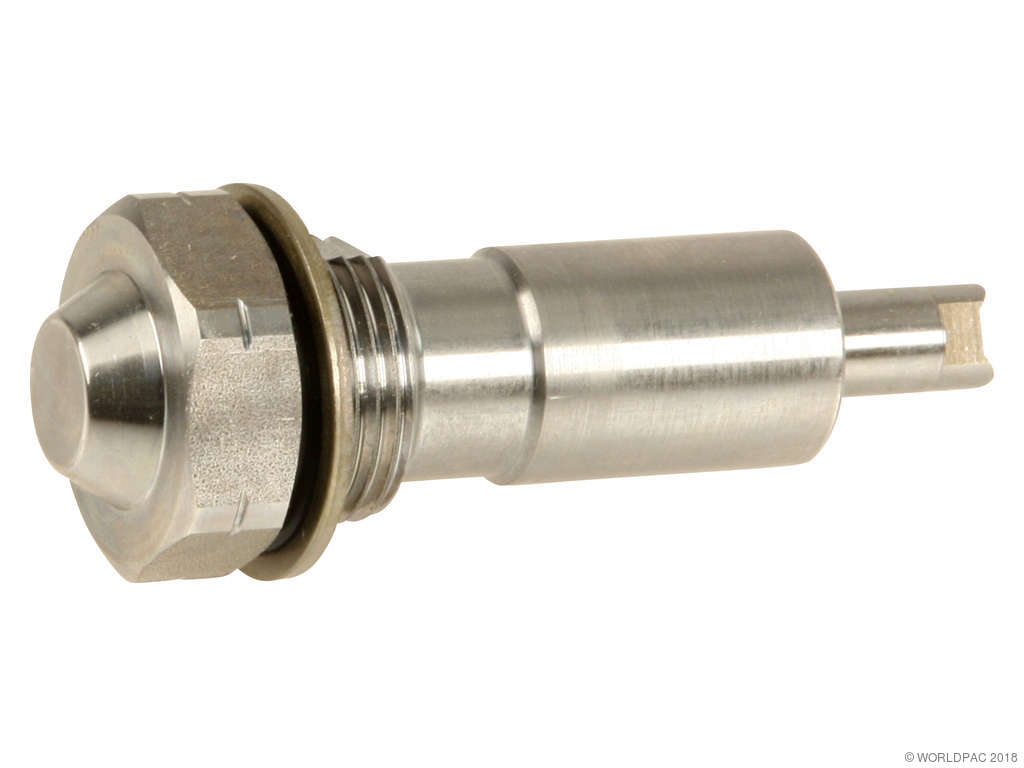
Typical fix: Replace all three timing chains (primary and two secondary), all guides, and all tensioners with a new, updated kit. It is highly recommended to also replace the water pump and camshaft phasers during this service.
Est. part cost: $300-$700 - Low or Dirty Engine Oil 🟡 Medium Probability The timing chain tensioners and camshaft phasers are hydraulically operated by engine oil pressure. Low or degraded oil cannot provide proper tension, accelerating chain wear and causing correlation faults. This is a primary contributor to the main timing chain failure.
How to confirm: Check the oil level on the dipstick and inspect the oil's condition. If it is low, black, or sludgy, this is a likely contributor. An oil change may temporarily quiet the engine but will not fix a chain that is already stretched.
Typical fix: Perform an oil and filter change using a high-quality full-synthetic oil that meets GM specifications (like Dexos). If the code returns after clearing, the chains have likely already stretched beyond the tensioners' ability to compensate.
Est. part cost: $50-$100 - Faulty Camshaft Position Actuator Solenoid (VVT Solenoid) ⚪ Low Probability
How to confirm: Use a scan tool to command the solenoid on and off to check for response. The solenoid can also be removed and tested for resistance. A healthy VVT solenoid typically has a resistance between 5 and 25 ohms. Swapping the exhaust solenoid with the intake solenoid on the same bank can see if the code changes to P0016.
Typical fix: Replace the Bank 1 exhaust VVT solenoid. One user on a forum reported cleaning gunked-up solenoids, which provided a temporary fix before the code returned, confirming the underlying issue was likely chain-related.
Est. part cost: $40-$90 - Faulty Camshaft or Crankshaft Position Sensor ⚪ Low Probability
How to confirm: Monitor the sensor's output on a scan tool or oscilloscope for a clean, consistent signal. Check for a 5V reference signal at the sensor connector. Swapping the suspect sensor with a known good one (e.g., from the other bank, if applicable) is a common diagnostic step. If the code does not move with the sensor, the sensor is not the fault.
Typical fix: Replace the faulty sensor (Bank 1 exhaust camshaft position sensor or the crankshaft position sensor). On this engine, this is rarely the root cause.
Est. part cost: $30-$80
Rare But Worth Checking
- Slipped Camshaft Reluctor Wheel:
- Loose Crankshaft Balancer Bolt: A manufacturer service bulletin for related Saab models, TSB Bulletin #PIP4581B, notes that if a rattle noise is duplicated along with P0016 or P0017 and standard diagnosis does not isolate the cause, the crankshaft balancer bolt should be re-torqued to specifications.
Diagnosis Steps
- Check Engine Oil: Verify the oil level is correct and the oil is clean. If low or dirty, perform an oil and filter change with high-quality synthetic oil and a new filter. Clear the codes and see if the problem returns. This is a critical first step but rarely the final solution.
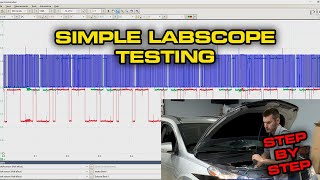
- Scan Tool Analysis: Use a capable scan tool (e.g., Tech 2) to read all fault codes. Note any other codes present (P0016, P0008, etc.). Observe live data for the desired vs. actual camshaft position angles for Bank 1 Exhaust. 🎬 Watch: Using a labscope to diagnose timing correlation codes. A persistent deviation greater than 9 degrees advanced or 12 degrees retarded indicates a mechanical timing problem.
- Swap Solenoids and Sensors: As a low-cost diagnostic step, swap the Bank 1 exhaust VVT solenoid with the intake solenoid and clear codes. See if the code changes to P0016. You can do the same for the camshaft position sensors. If the code stays P0017, the issue is not the sensor or solenoid.
- Inspect Wiring: Check the wiring and connectors for the Bank 1 exhaust camshaft sensor, crankshaft position sensor, and VVT solenoid for any damage, corrosion, or oil contamination. Pay attention to the main engine ground (G7) located near the ECM.
- Confirm Timing Chain Condition: If the above steps do not resolve the issue, the next step is to physically inspect the timing chains. This is a labor-intensive process that involves removing the engine front cover and/or valve covers to check for chain slack and guide wear. Given the high failure rate, this is the most likely diagnostic path and eventual repair.
Parts You'll Likely Need
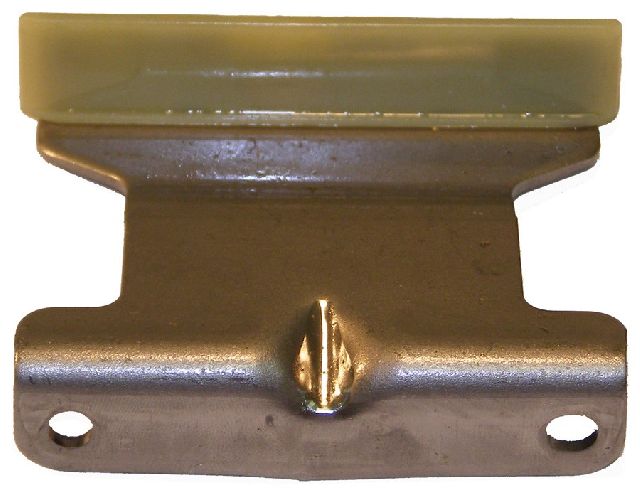
- Engine Timing Chain Kit
(OEM #GM 12651450 (This is an updated kit for the related 3.6L, cross-reference for 2.8L is needed but likely contains similar updated parts))— This is the most common failure item for code P0017 on this engine. A complete kit replaces all the worn components (chains, guides, tensioners) at once. Using an updated kit from a reputable brand is crucial.
Trusted brands: Cloyes, Melling, ACDelco
OEM price range: $500-$700
Aftermarket price range: $300-$500 - Camshaft Position Actuator Solenoid (VVT Solenoid)
(OEM #ACDelco 12636175 (Verify for Bank 1 Exhaust))— A much less common but possible cause. It can get clogged with debris from infrequent oil changes and fail to control cam phasing correctly.
Trusted brands: ACDelco, Delphi, Dorman
OEM price range: $60-$100
Aftermarket price range: $40-$90
Related Codes That Often Appear With This One
- P0016 — This code is for the intake camshaft on the same bank (Bank 1). Seeing P0016 and P0017 together strongly suggests a timing issue affecting the entire bank, most likely a stretched secondary timing chain for Bank 1.
- P0008 — This is a more general engine position performance code for Bank 1. When seen with P0016/P0017, it reinforces the diagnosis of a significant timing chain problem.
- P0018 / P0019 — These are the correlation codes for Bank 2 (the front bank). If codes for both banks are present (e.g., P0017 and P0019), it points to a problem with the primary timing chain that synchronizes both banks to the crankshaft.
Technical Service Bulletins (TSBs) & Recalls
- While no specific TSB for P0017 on the Saab 2.8L was found, numerous GM bulletins exist for the broader HFV6 family (e.g., 3.6L LY7, LLT) regarding timing chain wear and codes like P0008, P0016, P0017, etc. These bulletins often call for replacing the timing chains with updated parts. A key related TSB is PIP3423P, which addresses a slipped crankshaft reluctor wheel as a cause for these codes when chains are found to be tight.
- Manufacturer TSB Bulletin #PIP4581B addresses instances where a rattle noise is duplicated along with P0016 or P0017; it suggests that if standard diagnosis fails to isolate the cause, the crankshaft balancer bolt should be re-torqued according to service specifications.
Platform-Specific Known Issues
- The GM High Feature V6 (LP9/B284) used in this Saab is notorious for premature timing chain stretch. No official recall was ever issued, but it is a widely acknowledged design flaw.
- The 2.8L Turbo engine runs very hot. The decorative plastic engine cover can trap heat and bake the rear ignition coils, causing misfires. Many owners remove this cover entirely as a preventative measure.
Mechanic-Grade Diagnostic Values
- Cam/Crank Correlation Deviation — expected: Less than 9 degrees advanced or 12 degrees retarded.. Failure: A persistent reading greater than 9 degrees advanced or 12 degrees retarded will set the DTC.
- VVT Solenoid Coil Resistance — expected: 5 - 25 Ohms (general spec, verify with service manual). Failure: Reading of infinite resistance (Open Loop) or near zero ohms (short).
- Cam/Crank Sensor Supply Voltage — expected: ~5 Volts. Failure: Significantly lower or no voltage indicates a wiring or ECM issue.
Scan Tool Commands That Help
- Tech 2 / GDS2: Camshaft Position Actuator Solenoid Control — To test the mechanical function of the VVT solenoid. The command allows the technician to cycle the solenoid on and off to see if it responds and affects engine operation, helping to isolate a faulty solenoid from a wiring or mechanical timing issue.
- Trionic 8 CAN Flasher: Read/Flash ECU — This is an advanced function used for cloning a new or used ECU to the vehicle. It is required if the ECM itself is diagnosed as faulty, as the replacement module must be programmed to the car's VIN and security system (immobilizer).
Wiring & Ground Locations
- Motronic Control Module (ECM/608B) — Located at the top of the rear cylinder bank, under the plastic engine cover.. The ECM is the source of sensor reference voltage and the destination for all sensor signals. A critical ground wire is often attached to one of the ECM mounting bolts, and a poor connection here can cause numerous engine codes.
- G7 — On 2006 models, located above the upper right engine control module attachment eye.. This is a primary engine management ground. Corrosion or a loose connection at this point can cause erratic sensor readings and unpredictable behavior, including correlation codes.
- G2 — On 2007 models, located on the side of the left-hand structural member near the connector console.. A key chassis ground point. While less likely to be the primary cause than an engine block ground, poor chassis grounds can create electrical noise and intermittent issues.
Real Owner Repair Stories
- iATN Technician Forum Discussion (2008 GM Acadia (with related 3.6L HFV6 engine)) — P0017 sets consistently within the first minute after a cold start. Scan data looks good during road tests.
❌ Tried (didn't work) Observing scan data during normal operation (fault only appears on cold start).
✅ What actually fixed it The consensus among technicians in the thread pointed towards a stretched timing chain, which is most evident on a cold start before oil pressure fully builds and the tensioners take up all the slack. The recommended action was timing chain replacement.
"I Checked Everything" — The Actual Cause
- A common scenario for P0017 on the HFV6 family is that all sensors (cam, crank) and solenoids (VVT) test perfectly fine with a multimeter and respond to scan tool commands. After replacing these parts with no change, the root cause is often discovered to be a slipped crankshaft reluctor wheel. This is a purely mechanical failure where the tone ring that the crankshaft sensor reads has physically moved on the crankshaft. GM issued TSB PIP3423P to address this specific issue, as it can only be confirmed by physical inspection and measurement, often requiring removal of the oil pan or engine.
OEM Part Supersession History
Varies (early, unrevised kits)→Kits containing updated components like GM PN 12633451 (Primary Chain) and 12609261 (Primary Tensioner).— The original timing chains were prone to premature stretching. Updated kits from GM (and reputable aftermarket brands like Cloyes) feature more robust chain designs and improved tensioners to increase service life.
Heads up: Using old-stock or non-updated parts will likely lead to a repeat failure in a short time.
Model Year Variations Within This Range
- 2006-2007: These are pre-facelift models. The 2.8L V6 was introduced in 2006.
- 2008-2009: These are post-facelift models. Saab claimed over 2,000 changes for 2008. A higher-output 280hp version of the 2.8L V6 was introduced for the 'Turbo X' and all-wheel-drive (XWD) models, which may have different ECU tuning.
- 2010-2011: The 2.8L V6 engine was eliminated from the US market lineup starting in the 2010 model year, though it may have continued in other markets. Therefore, this issue primarily affects 2006-2009 models in the United States.
Diagnostic Flowchart
Real Owner Stories
Aggregated from forums and TSBs cited above. Mileages and costs reflect what owners reported in those sources.
2008 Saab 9-3 2.8t — 108000 miles
Symptoms: Check engine light came on with codes P0017 and P0018. The car ran fine with no weird noises or performance issues.
What fixed it: Owner was preparing for a full timing chain replacement after researching the codes, noting it as a common issue despite hoping for a simple sensor fault.
Source hint: SaabCentral Forums
GM High Feature V6
Symptoms: Persistent P0017 code that would not clear.
What fixed it: Owner changed the oil twice, swapped the OCVs (oil control valves), and swapped the camshaft position sensors, but the code remained. This confirmed the underlying issue was likely chain-related.
Source hint: reddit.com
2008 Saab 9-5 2.8L V6
Symptoms: Timing chain stretch requiring major repair.
What fixed it: Replaced the timing chains and related parts (highlighted as a major selling point for the vehicle due to how common the failure is).
Source hint: saabnet.com
Related OBD-II Codes
Frequently Asked Questions
Is there a recall for the timing chain issue on the 2006-2011 Saab 9-3 2.8L V6?
Does GM TSB PIP3423P apply to my Saab 9-3 with a P0017 code?
Why does my 2.8L Turbo V6 rattle on cold startup before throwing the P0017 code?
Can I just replace the VVT solenoid or camshaft sensor to fix P0017 on my Saab 9-3?
How can my mechanic confirm the timing chains are stretched without taking the engine apart?
Why do the ignition coils fail on my 2.8L Turbo, and is it related to P0017?
Helpful Videos
We Have This Part in Stock


The information in this article is provided for general reference and educational purposes only. Vehicle specifications, procedures, and part compatibility can vary by production date, trim level, and region. Always consult your vehicle's factory service manual and verify part numbers before purchasing or performing repairs. Safety-critical components such as airbags, seat belts, and braking systems should be installed by a qualified professional.
- Saab 9-3:
- 🎬 Helpful Videos
- 🛍️ Shop This Part
- What's Unique About the 2006-2011 Saab 9-3
- Symptoms You May Notice
- Most Likely Causes
- Rare But Worth Checking
- Diagnosis Steps
- Parts You'll Likely Need
- Related Codes That Often Appear With This One
- Technical Service Bulletins (TSBs) & Recalls
- Platform-Specific Known Issues
- Mechanic-Grade Diagnostic Values
- Scan Tool Commands That Help
- Wiring & Ground Locations
- Real Owner Repair Stories
- "I Checked Everything" — The Actual Cause
- OEM Part Supersession History
- Model Year Variations Within This Range
- Diagnostic Flowchart
- Real Owner Stories
- 2008 Saab 9-3 2.8t — 108000 miles
- GM High Feature V6
- 2008 Saab 9-5 2.8L V6
- Related OBD-II Codes
- Frequently Asked Questions
- 🎟️ Get 5% Off