

P0017 on 2019-2021 Lincoln Nautilus: Crank-Cam Correlation Causes and Fixes
P0017 on a Lincoln Nautilus indicates a timing mismatch between the crankshaft and exhaust camshaft. The most common causes are low/dirty engine oil or a failing VCT solenoid. Start by checking your oil; if that's fine, the VCT solenoid is the next likely culprit. Ford TSB SSM 47170 notes that debris can cause these solenoids to stick. Replacing the correct solenoid (Bank 1 Exhaust) is a common, sub-$100 DIY fix.
- P0017 is a serious code on your Nautilus that requires prompt attention to avoid engine damage.
- Always check your engine oil level and condition first. A simple oil change can sometimes fix this issue.
- The most likely failed part is the Bank 1 exhaust VCT solenoid, which is relatively inexpensive and accessible.
- A rattling noise when starting the engine cold is a major red flag for a stretched timing chain, which is a very expensive repair.
- Do not replace sensors without proper diagnosis; the problem is more often mechanical (oil/solenoid/chain) than electrical (sensor).
What's Unique About the 2019-2021 Lincoln NAUTILUS
For the EcoBoost engines in the Nautilus, the Variable Camshaft Timing (VCT) system is highly sensitive to oil quality and pressure. Many timing correlation issues, including P0017, are first addressed by checking the oil and then inspecting the VCT solenoids, which are a known failure point. Ford has issued several Technical Service Bulletins (TSBs) related to these codes. TSB SSM 47170 explicitly states that debris can cause the VCT solenoid to stick and recommends cycling the solenoid with a scan tool 10 times to clear it before replacement. TSB SSM 54366 also groups P0017 with other VCT-related codes and points to updated diagnostic procedures. This highlights a common theme: address oil and solenoids before suspecting a more serious timing chain issue.
Diagnostic Flowchart
Tap your situation to follow the diagnostic path that matches what you're seeing on this vehicle.
Symptoms You May Notice
- Check Engine Light is on
- Rough or unstable idle
- Reduced engine power and poor acceleration
- Engine stalling, especially at low speeds
- Rattling or ticking noise from the engine, particularly on cold startup
- Engine cranks but fails to start
- Replacing the camshaft or crankshaft position sensor when the actual fault is low/dirty oil or a sticking VCT solenoid.
- Replacing the timing chain without first diagnosing the much cheaper and more common VCT solenoids.
- Assuming a sensor is bad when the wiring or connector is the actual point of failure. 🎬 See how to test and fix the P0017 correlation code
Most Likely Causes
- Low or Dirty Engine Oil 🔴 High Probability The VCT system uses oil pressure to adjust cam timing. Old, dirty, or low oil can clog the small passages in the VCT solenoids and phasers, preventing them from operating correctly. This is the first and most important check. 🎬 Watch this breakdown of P0017 causes and diagnostic steps
How to confirm: Check the oil level on the dipstick and inspect its color and consistency. If the oil is dark, gritty, or below the minimum level, it needs to be changed. Many owners on related platforms recommend oil change intervals of 5,000 miles or less to prevent VCT issues.
Typical fix: Perform an engine oil and filter change using the correct OEM-specified viscosity (e.g., SAE 5W-30 Synthetic Blend). Clear the codes and drive to see if P0017 returns.
Est. part cost: $50-$100 - Failing VCT Solenoid (Bank 1 Exhaust) 🔴 High Probability These solenoids are a common failure point. Debris in the oil can cause them to stick, or they can fail electrically. TSB SSM 47170 specifically mentions this possibility, suggesting debris can be cleared by cycling the solenoid with a scan tool.
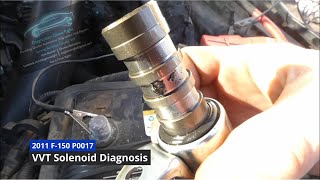
How to confirm: A mechanic can use a scan tool to command the solenoid on and off to check for response. The solenoid can also be removed and inspected for debris on its screens or tested for resistance with a multimeter. 🎬 Watch: A mechanic's guide to VVT solenoid diagnostics
Typical fix: Replace the Bank 1 exhaust VCT solenoid. It is often recommended to replace both the intake and exhaust solenoids for that bank at the same time. Cleaning is considered a temporary fix at best.
Est. part cost: $40-$100 - Stretched Timing Chain 🟡 Medium Probability EcoBoost engines, particularly past 100,000 miles, can experience timing chain stretch. This creates slack, altering the mechanical timing between the crank and cams and can lead to catastrophic engine failure if ignored.
How to confirm: A distinct rattling noise on cold startup that goes away after a few seconds is a strong indicator. A mechanic can confirm by measuring camshaft deviation with a scan tool; a value greater than +/- 5 degrees at idle suggests a timing chain issue. A user on a Reddit forum for a Ford Expedition with a similar engine noted this classic 'chain rattle on start up' before a timing job.
Typical fix: This is a major repair requiring replacement of the timing chain, tensioners, and guides. The water pump is often replaced at the same time. A Reddit user was quoted around $2,000 for a similar job on a Lincoln MKS.
Est. part cost: $400-$900 - Faulty Camshaft Position Sensor (Bank 1 Exhaust) ⚪ Low Probability While the sensor itself can fail, it's more common for the code to be triggered by a mechanical issue (timing chain/VCT) rather than a faulty sensor. It is often misdiagnosed.
How to confirm: Inspect the sensor and its wiring for damage. A mechanic can test the sensor's signal with an oscilloscope or check its resistance with a multimeter. A simple diagnostic trick is to swap the suspect sensor with an identical one from another position and see if the code follows.
Typical fix: Replace the Bank 1 exhaust camshaft position sensor.
Est. part cost: $20-$60
Rare But Worth Checking
- Damaged Camshaft Phaser/Actuator: The phaser is the gear at the end of the camshaft that actually adjusts the timing. It can fail mechanically or get clogged with sludge. A forum user on a Ford Edge with high mileage was told their phasers were likely worn out and needed replacement to solve a persistent P0017.
- Faulty Crankshaft Position Sensor: If the crankshaft sensor provides an erratic signal, it can cause a correlation code. This is rare and would likely be accompanied by other symptoms like difficulty starting or stalling.
- Damaged Reluctor Wheel/Tone Ring: The sensors read teeth on a tone ring on the crankshaft and camshafts. If a tooth is damaged or the ring has slipped, it will cause a correlation code. This is very rare and usually only happens after major engine work or impact.
- Faulty Powertrain Control Module (PCM): In very rare cases, the PCM itself can be the source of the code, even after all mechanical and sensor-related issues have been ruled out. A Reddit user with a similar Ford platform fixed persistent P0017/P0018 codes by replacing the ECU after a timing chain job did not solve the issue.
Diagnosis Steps
- Check Engine Oil: Verify the oil level is correct and the oil is clean. If in doubt, perform an oil and filter change with the correct grade oil. Clear codes and see if P0017 returns.
- Scan Tool Analysis: Use an OBD-II scanner to check for any other pending or active trouble codes. A professional scanner can monitor live data for commanded vs. actual cam position to see the deviation in degrees. A deviation of more than 5 degrees at idle points towards a mechanical timing issue.
- Inspect VCT Solenoid: Locate the exhaust VCT solenoid on Bank 1. Inspect the wiring and connector for damage. Per TSB SSM 47170, a technician can use a scan tool to cycle the solenoid 10 times to attempt to clear debris.
- Test VCT Solenoid: Remove the solenoid and check its screens for sludge or debris. You can test its mechanical operation by applying 12V directly. Check its internal resistance with a multimeter.
- Inspect and Test Sensors: Inspect the wiring for the camshaft and crankshaft position sensors. Test the sensors if the VCT system appears to be working correctly. Swapping a suspect cam sensor with a known good one is a valid diagnostic step.
- Mechanical Timing Check: If all else fails, the front engine/valve covers must be removed to inspect the timing chain for stretch, check the tensioner's position, and verify the phasers and tone rings are not damaged. This is a job for a professional.
Parts You'll Likely Need
- Engine Variable Valve Timing (VVT) Solenoid
(OEM #FT4Z-6M280-B (For 2.7L) / JT4Z-6C880-A (For 2.0L))— This part controls oil flow to the cam phaser and is a very common failure point due to clogging from oil debris or electrical failure, as noted in Ford TSBs.
Trusted brands: Motorcraft, Standard Motor Products (SMP)
OEM price range: $50-$100
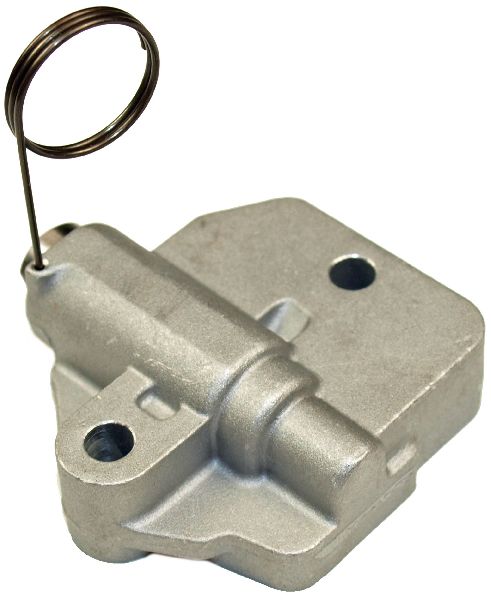
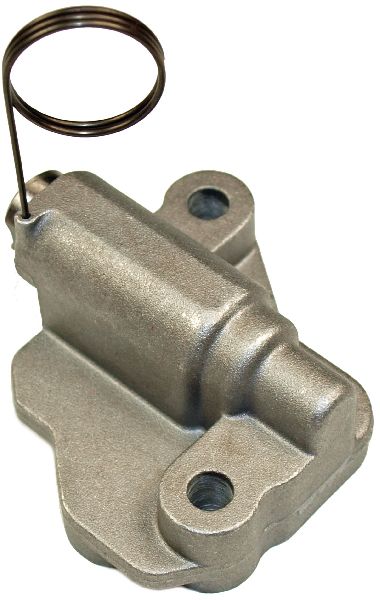
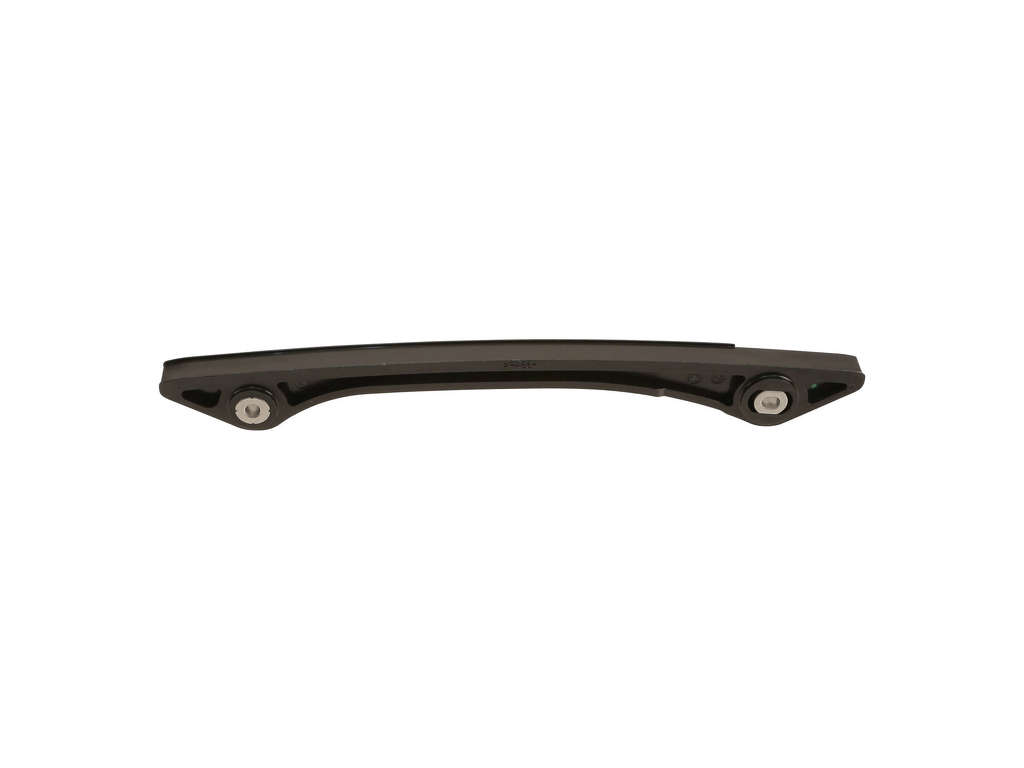
Aftermarket price range: $30-$70 - Timing Chain Kit — On higher mileage EcoBoost engines, the timing chain can stretch, causing correlation codes like P0017. This is a major repair that also includes tensioners and guides.
Trusted brands: Motorcraft, Cloyes
OEM price range: $400-$900
Aftermarket price range: $250-$600
Related Codes That Often Appear With This One
- P0016 — This is the correlation code for the intake camshaft on the same bank (Bank 1). If P0016 and P0017 appear together, it strongly points to a base timing issue like a stretched timing chain affecting the entire bank.
- P0011 — This code indicates 'Camshaft Position Timing - Over-Advanced (Bank 1)'. It can be caused by the same faulty VCT solenoid that is causing the P0017 correlation error, as it struggles to control oil flow.
- P0300, P0301, P0302, P0303, P0304 — These are random or cylinder-specific misfire codes. Incorrect cam timing disrupts the combustion process, leading to misfires on the affected bank.
- P0018, P0019 — These are the equivalent correlation codes for Bank 2. They would not typically appear with P0017 on an I4 engine, but on the V6, seeing codes for both banks could indicate a systemic issue like oil pressure or a faulty crankshaft sensor.
Technical Service Bulletins (TSBs) & Recalls
- SSM 47170 — Advises that various timing codes (including P0017) may be caused by small debris causing a VCT solenoid to stick. Recommends cycling the solenoid 10 times with a scan tool to clear debris before replacement.
- SSM 54366 — A general bulletin for numerous 2015-2021 Ford/Lincoln vehicles that groups many VCT-related DTCs (P0011-P0025) together and points technicians to updated diagnostic procedures in the workshop manual for these concerns.
Platform-Specific Known Issues
- A cold start rattle is a well-documented symptom of timing chain or VCT phaser wear on Ford EcoBoost engines and should be investigated immediately to avoid engine failure.
- TSB SSM 54366 (superseding earlier versions like SSM 49821) was issued for a wide range of Ford/Lincoln vehicles, including the Nautilus, for numerous VCT-related codes (P0011-P0025), indicating this is a known area of concern for the manufacturer. The bulletin directs technicians to a specific pinpoint test rather than a simple part replacement.
Mechanic-Grade Diagnostic Values
- VCT Solenoid Internal Resistance (2.7L EcoBoost) — expected: 6.9 to 7.9 Ohms at 68°F (20°C). Failure: A reading of 0 Ohms (short), infinity (open circuit), or a value outside the specified range indicates a faulty solenoid coil.
- VCT Solenoid Connector Voltage (Key On, Engine Off) — expected: Greater than 10.5 Volts on the power supply pin.. Failure: Voltage below 10.5V points to an open or short in the VPWR (power supply) circuit to the solenoid.
- Scan Tool Live Data: VCT Advanced Error PID — expected: Should hover around 0 degrees at a stable idle.. Failure: A deviation of greater than +/- 5 degrees for a sustained period indicates a mechanical timing or VCT system issue.
- Camshaft Position Sensor (3-wire Hall-effect) Signal Voltage — expected: The signal wire should toggle between approximately 5V and 0V as the engine is cranked.. Failure: A constant voltage or no voltage on the signal wire during cranking suggests a faulty sensor or wiring issue.
Scan Tool Commands That Help
- Ford IDS, FORScan, or equivalent professional scanner: VCT Solenoid On/Off State or Duty Cycle Control (part of Pinpoint Test HK) — As recommended by Ford TSBs like SSM 47170, this command cycles the solenoid 10 times. It is used to test if the solenoid is electrically responsive and can sometimes dislodge small debris, potentially resolving the fault without replacing the part.
Wiring & Ground Locations
- VCT Solenoid Connector — Plugged directly into the top of the VCT solenoid, which is mounted on the engine's valve cover.. This is the primary connection point for testing voltage and resistance of the VCT solenoid. Damage, corrosion, or oil contamination in this connector can mimic the symptoms of a failed solenoid.
Real Owner Repair Stories
- Reddit user, summarized from a report on a similar Ford platform (Ford 3.5L V6 (similar VCT system design)) — Check Engine Light with multiple correlation codes (P0016, P0017, P0018, P0019) appearing immediately after a timing chain replacement.
❌ Tried (didn't work) The timing chain, tensioners, and guides were already new parts.
✅ What actually fixed it The issue was confirmed to be incorrect base timing from the recent repair. The mechanic had to disassemble the front of the engine again to correctly align the timing marks on the new chain, phasers, and sprockets.
"I Checked Everything" — The Actual Cause
- A common scenario for this code, especially after a major repair, is when all sensors and solenoids test good, yet the code persists. A prime example is a vehicle that has just had a timing chain service. The new parts (chain, guides, tensioners) are assumed to be good, but if the mechanical timing was set incorrectly by even one tooth during installation, it will trigger a P0017 code. Mechanics may waste time re-diagnosing sensors when the root cause is a procedural error from the previous repair.
OEM Part Supersession History
FT4Z-6M280-A→FT4Z-6M280-B— Standard part revision by the manufacturer, likely for improved durability or material changes.
Heads up: The new part (B) is a direct replacement for the old part (A). Using the older 'A' part, if found, is not recommended.
Helpful Videos


Used OEM Parts in Stock


New Aftermarket Parts Available


The information in this article is provided for general reference and educational purposes only. Vehicle specifications, procedures, and part compatibility can vary by production date, trim level, and region. Always consult your vehicle's factory service manual and verify part numbers before purchasing or performing repairs. Safety-critical components such as airbags, seat belts, and braking systems should be installed by a qualified professional.
- Lincoln NAUTILUS:
- 🎬 Helpful Videos
- 🛍️ Shop This Part
- What's Unique About the 2019-2021 Lincoln NAUTILUS
- Diagnostic Flowchart
- Symptoms You May Notice
- Most Likely Causes
- Rare But Worth Checking
- Diagnosis Steps
- Parts You'll Likely Need
- Related Codes That Often Appear With This One
- Technical Service Bulletins (TSBs) & Recalls
- Platform-Specific Known Issues
- Mechanic-Grade Diagnostic Values
- Scan Tool Commands That Help
- Wiring & Ground Locations
- Real Owner Repair Stories
- "I Checked Everything" — The Actual Cause
- OEM Part Supersession History
- 🎟️ Get 5% Off