

P0017 on 2011-2019 Ford Explorer 3.5L V6: Crank/Cam Correlation Causes and Fixes
On the 3.5L V6 Explorer, P0017 is most often caused by a sticking Bank 1 exhaust VCT solenoid due to dirty oil, or a stretched timing chain. Always check oil level and condition first; replacing the VCT solenoid is a common, affordable fix. A rattling noise on startup points to the more serious timing chain issue, while a coolant leak near the passenger side wheel may indicate a failing internal water pump.
- First, check your engine oil. Low, old, or dirty oil is a primary trigger for P0017 on this engine.
- The most likely failed part is the Bank 1 (firewall side) exhaust VCT solenoid. This is a common fix and much cheaper than a timing chain job.
- A rattling noise from the engine on startup is a strong sign of a stretched timing chain, which is a serious and expensive repair.
- If your oil looks milky or you are losing coolant, stop driving immediately. This could be a failed internal water pump, which can destroy the engine.
What's Unique About the 2011-2019 Ford Explorer

The 3.5L Cyclone V6 engine has two well-documented vulnerabilities that directly cause the P0017 code. First, its Variable Camshaft Timing (VCT) system is highly sensitive to oil cleanliness, and Ford has issued multiple Technical Service Bulletins (TSBs) acknowledging that the VCT solenoids can stick from small debris in the oil. Second, this engine family is known for issues with stretched timing chains and, more critically, a timing-chain-driven internal water pump. A failing water pump can leak coolant directly into the engine oil, leading to severe lubrication failure and triggering timing correlation codes like P0017. This water pump design is a notorious, expensive failure point on transverse applications of this engine.
Symptoms You May Notice

- Check Engine Light is on
- Rough or erratic idle
- Reduced engine power and poor acceleration
- Engine may stall, especially at low speeds
- Decreased fuel economy
- Rattling noise from the engine, particularly on cold startup, indicating a potential timing chain issue.
- Visible coolant drip from a 'weep hole' below the alternator/AC compressor area (passenger side), indicating internal water pump seal failure.
- Replacing the camshaft position sensor. The sensor is usually functioning correctly and reporting a real correlation problem. The code indicates a timing misalignment, not necessarily a sensor failure.
- Replacing the crankshaft position sensor. Similar to the camshaft sensor, this part is rarely the cause of a correlation code.
Most Likely Causes


- Low, Old, or Dirty Engine Oil 🔴 High Probability The VCT system uses oil pressure to adjust cam timing. It is extremely sensitive to oil viscosity and cleanliness. Contaminated oil can clog passages and cause solenoids to stick, a fact acknowledged by Ford in TSBs.
How to confirm: Check the oil level on the dipstick and inspect its color and consistency. If it's low, dark, or appears milky/frothy (indicating coolant contamination from a failed water pump), this is a likely contributor.
Typical fix: Perform an engine oil and filter change using the manufacturer-specified grade (typically 5W-20 or 5W-30, check owner's manual). Clear codes and see if P0017 returns.
Est. part cost: $40-$80 - Sticking or Failed VCT Solenoid (Bank 1 Exhaust) 🔴 High Probability Ford has issued multiple TSBs (e.g., SSM 47170, SSM 48423, SSM 50067) for this exact issue, where debris in the oil causes the solenoid to malfunction. This is the most common component failure for this code.
How to confirm: A mechanic can use a diagnostic scan tool to command the solenoid on and off to check its response (per TSB SSM 48423). It can also be removed and bench-tested or inspected for debris. A common DIY trick is to swap the exhaust solenoid with the intake solenoid on the same bank and see if the code changes to P0016.
Typical fix: Replace the Bank 1 exhaust VCT solenoid. It is located in the rear valve cover and requires removing the upper intake manifold for access.
Est. part cost: $30-$90 - Stretched Timing Chain and/or Worn Guides/Tensioners 🟡 Medium Probability The 3.5L Cyclone engine family is known to have issues with timing chains stretching over time, especially with extended oil change intervals.
How to confirm: A distinct rattling or scraping noise from the front of the engine (passenger side wheel well area) on cold starts is a strong indicator. A mechanic can use a scan tool to view camshaft deviation data (PIDs like CAM_ERR). Physical inspection is the ultimate confirmation, but requires significant labor.
Typical fix: Replace the primary timing chain, secondary chains, tensioners, guides, and phasers. This is a major repair often combined with water pump replacement.
Est. part cost: $400-$900
Rare But Worth Checking
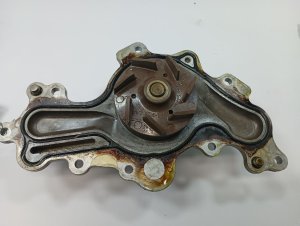
- Failing Internal Water Pump: This is a critical failure point on the 3.5L Cyclone. The water pump is driven by the timing chain, and if its seals fail, it can leak coolant externally from a weep hole below the alternator or, catastrophically, internally into the engine oil. This contaminates the oil, destroying its lubricating properties and leading to timing component failure and codes like P0017. Milky, frothy oil is the key symptom of internal failure. Repair costs are high ($2,000+) due to the 12+ hours of labor required.
- Failed Camshaft Phaser: The phaser is the gear on the end of the camshaft that is hydraulically adjusted by the VCT solenoid. It can become clogged with debris or fail mechanically, getting stuck in one position and causing a correlation error. This is often replaced during a full timing chain service.
Diagnosis Steps
- Verify Oil Level and Condition: Check the dipstick. If oil is low, top it off. If it's old, dirty, or looks milky, perform an oil and filter change before proceeding. This simple step resolves the issue in some cases.
- Scan Tool Analysis: Use an OBD-II scanner to confirm P0017 and check for other pending codes. A more advanced scanner can view live data for camshaft and crankshaft position, specifically looking at the PIDs for Bank 1 Camshaft Error (CAM_ERR1). A persistent non-zero value indicates a timing deviation.
- Cycle VCT Solenoid: Per Ford TSB SSM 48423, use a capable scan tool to command the Bank 1 exhaust VCT solenoid on and off 10 times. This can dislodge small debris and may resolve the code. If the code clears and does not return, the issue was likely minor debris.
- Inspect VCT Solenoid and Consider Swapping: Locate the Bank 1 exhaust VCT solenoid on the rear valve cover. Inspect the wiring and connector for damage. Remove the solenoid and check its screen for sludge or debris. A common diagnostic trick is to swap the exhaust solenoid with the intake solenoid on the same bank, clear codes, and run the engine. If the code changes to P0016 (Intake Cam Correlation), the solenoid is confirmed faulty.
- Listen for Noise & Check for Leaks: On a cold start, listen carefully for any rattling, scraping, or whining sounds from the engine's timing cover area (front passenger side). A rattle that quickly disappears is a classic symptom of a bad timing chain tensioner or stretched chain. Also, inspect the area below the AC compressor for any signs of coolant leakage from the water pump weep hole.
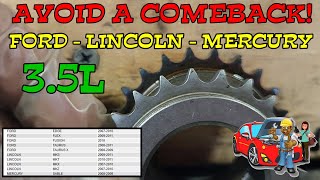
- Mechanical Timing Inspection: If the above steps do not resolve the issue, a deeper mechanical diagnosis is needed. This involves removing the valve cover and potentially the timing cover to physically inspect the timing chain for slack, check the condition of the guides and tensioners, and verify the timing marks on the phasers 🎬 Watch: Essential timing chain tips to avoid correlation codes. and crankshaft are aligned. This step is best left to a professional.
Parts You'll Likely Need

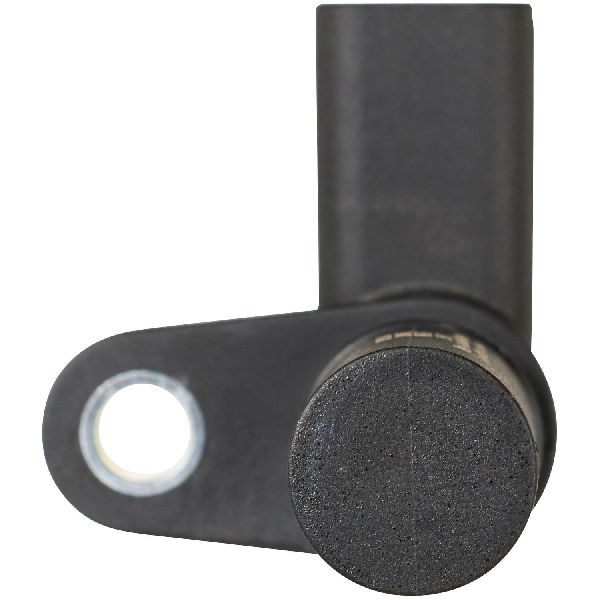
- Variable Camshaft Timing (VCT) Solenoid
(OEM #7T4Z-6M280-C)— This is the most common point of failure due to clogging from oil debris, as documented in Ford TSBs.
Trusted brands: Motorcraft, Standard Motor Products (SMP), Dorman
OEM price range: $50-$90
Aftermarket price range: $30-$60 - Timing Chain Kit
(OEM #AT4Z-6268-C (Primary Chain))— If the timing chain is stretched or the guides are broken, a complete kit is required for the repair. This is the second most likely cause after the VCT solenoid.
Trusted brands: Motorcraft, Cloyes
OEM price range: $500-$900
Aftermarket price range: $300-$600 - Water Pump
Related Codes That Often Appear With This One
- P0016 — This is the correlation code for the intake camshaft on the same bank (Bank 1). If P0016 and P0017 appear together, it strongly points to a base mechanical timing issue, like a stretched or jumped timing chain, affecting the entire bank.
- P0018 / P0019 — These are the equivalent correlation codes for Bank 2 (the bank near the radiator). Seeing codes for both banks at once is a major red flag for a severe timing chain problem or catastrophic oil pressure/contamination issue affecting the whole engine.
Technical Service Bulletins (TSBs) & Recalls
- SSM 48423: Mentions that P0017 on 2015-2020 Ford/Lincoln vehicles may be caused by small debris leading to a sticking VCT solenoid.
- SSM 47170: An earlier bulletin with similar guidance to SSM 48423, indicating a known history of VCT solenoid issues due to oil contamination.
- SSM 54366: Notes that some 2015-2021 Ford and Lincoln vehicles may exhibit an illuminated MIL with DTC P0017 and directs technicians to Pinpoint test HK in the PC/ED.
- TSB-16-0093: Reports that vehicles with less than 2000 miles may exhibit an illuminated MIL with P0017 stored in the Powertrain Control Module memory.
Platform-Specific Known Issues
- Internal Water Pump Failure: The 3.5L Cyclone V6 features a timing-chain-driven water pump located inside the engine. When it fails, it leaks coolant into the oil pan, contaminating the oil and causing rapid wear of timing components. A P0017 code accompanied by 'milky' oil or unexplained coolant loss is a major red flag for this issue.
Mechanic-Grade Diagnostic Values
- VCT Solenoid Internal Resistance — expected: 6.9-7.9 Ohms. Failure: A reading of 0 Ohms (short), infinite/OL (open), or a value significantly outside the target range.
- VCT Solenoid Connector Voltage (Key On, Engine Off) — expected: Approx. 12V (Battery Voltage). Failure: Voltage below 10.5V suggests a problem in the power supply wiring or fuse.
- Scan Tool PID: VCT_EXH_ERR1 (Bank 1 Exhaust Cam Error) — expected: Close to 0 degrees at warm idle.. Failure: A consistent deviation of more than +/- 5 degrees indicates a correlation problem the PCM cannot correct.
- Minimum Hot Idle Oil Pressure — expected: At least 25 PSI.. Failure: Pressure below this threshold can starve the VCT system of oil, causing it to malfunction and trigger timing codes.
Hidden / Shadow Codes Worth Checking
- Mode $06, TID for VCT: This is not a standard DTC, but a PCM self-diagnostic monitor for the VCT system. Before a hard code like P0017 is set, the test values for this monitor may approach or exceed the manufacturer's threshold, providing an early warning of a developing mechanical or hydraulic issue. (see via Use a scan tool that supports Global OBD-II Mode $06. In Ford's IDS or advanced tools like FORScan, this data is available under 'VCT statistical data'.)
Scan Tool Commands That Help
- Ford IDS / FORScan: VCT Solenoid On/Off Cycle (Pinpoint Test HK11) — As per Ford TSBs (SSM 48423, SSM 50067), this command should be used after an oil change but before replacing parts. Cycling the solenoid on and off 10 times can dislodge small debris causing it to stick, potentially resolving the P0017 code without component replacement.
- Ford IDS / FORScan: Monitor PIDs: VCT_ADV_ERR, RCAM, CAM_ERR — During a test drive, monitor the commanded vs. actual camshaft angles in real-time. A large, persistent difference between the commanded and actual values for the Bank 1 exhaust cam points directly to the source of the P0017 fault.
Wiring & Ground Locations
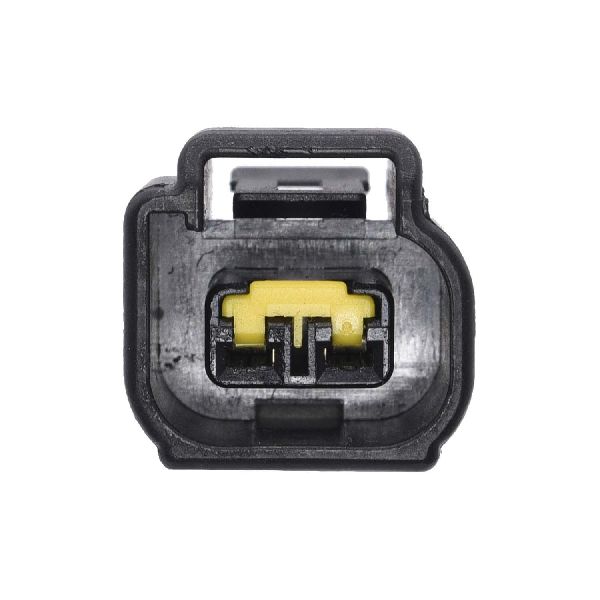
- Bank 1 Camshaft/VCT Connectors — Bank 1 is the cylinder bank closer to the firewall. The Camshaft Position Sensor and VCT solenoid connectors are located on the valve cover for this bank, on the passenger side of the engine.. This is the direct electrical connection for the components involved. Damage to the connectors or wiring harness from heat or abrasion will cause a loss of signal or incorrect readings, directly triggering P0017.
- Engine Block Ground — There is a primary engine-to-chassis ground point located on the engine block, often near the front on the passenger side, as well as a ground on the cylinder head that goes to the firewall.. A poor ground connection can introduce electrical noise and cause erratic sensor readings. While not a common cause for P0017, verifying the engine ground is clean and tight is a fundamental step in diagnosing any electronic engine code.
Real Owner Repair Stories
- Ford F150 Forum (2011 Ford F-150 3.5L (Same engine family and timing procedure)) — P0017 code appeared immediately after a full timing chain replacement job.
❌ Tried (didn't work) Clearing the code; it came back instantly.
✅ What actually fixed it The owner had to tear the engine down again and discovered the timing was off by one tooth on the chain. Re-timing the engine correctly resolved the P0017 code. This highlights the extreme precision required for the timing job. - NHTSA ODI #11725963 — An owner reported the check engine light turning off and on, which was diagnosed by a retailer as code P0018 and then at a dealership as code P0017. These codes related to the engine control module detecting the camshaft was out of sync with the crankshaft.
OEM Part Supersession History
7T4Z-6M280-A, 7T4Z-6M280-AA, 7T4Z-6M280-B→7T4Z-6M280-C— Standard part revision and improvement by the manufacturer to enhance durability and performance.
Model Year Variations Within This Range
- 2011-2015 vs 2016-2019: The Ford Explorer received a significant refresh for the 2016 model year, which included new front/rear styling and some equipment changes. While the base 3.5L V6 remained largely the same, some engine controls and surrounding components may have been updated.
- Post-2013: Around 2013, Ford introduced updates to the 3.5L engine family, which included a move to a Bosch direct fuel-injection system on some variants and other minor revisions. While the core timing components are similar, some sensor and electrical specifics could vary on later models.
Diagnostic Flowchart
Other Known Issues on This Vehicle
Issues unrelated to this code that are worth knowing about as an owner of this generation:
- Internal Water Pump Failure 🔴 High — Common around 100,000 miles, but can occur earlier. Repair is extremely labor-intensive ($2000-$4000).
- Power Transfer Unit (PTU) Overheating/Failure 🔴 High — Common on AWD models. Ford claimed 'lifetime fluid' which was inadequate, leading to overheating and failure. Recommended fluid change every 30k miles.
- Electronic Throttle Body (ETB) Malfunction 🟠 Medium — Widespread issue causing sudden limp mode and stalling. Ford issued Customer Satisfaction Program 16B32, not a full recall. (Ref: 16B32)
- Exhaust / Carbon Monoxide Odor in Cabin 🔴 High — Numerous complaints of exhaust smell, especially under hard acceleration. Addressed by multiple TSBs to seal the cabin and reprogram HVAC. (Ref: TSB 14-0130, TSB 16-0166)
- Corroding Aluminum Hood 🟡 Low — Paint bubbles and flakes along the leading edge of the hood due to aluminum corrosion. A cosmetic issue, but very common.
- Door Ajar Sensor Failure 🟡 Low — Faulty switch inside the door latch causes the 'door ajar' light to stay on, draining the battery and preventing doors from locking.
Used vs. New Parts: Buying Guide for This Vehicle
When a used part is the smart pick: Used parts are generally NOT recommended for this repair. The failure modes of the primary components (VCT solenoids, timing chains, water pump) are all related to wear, clogging, and age. A used part carries the same risk of failure as the part being replaced.
Donor-vehicle mileage cap: roughly under 60000 miles for the part to have meaningful remaining life.
What to inspect on the donor part:
- If forced to consider a used VCT solenoid, only source it from a very low-mileage, documented vehicle.
- Never consider a used timing chain, tensioner, guide, or water pump. These are wear items and must be new.
- Ask for the VIN of the donor vehicle to check its service history for regular oil changes.
OEM-only on this vehicle (don't cheap out):
- Timing Chain Kit: While some aftermarket brands are reputable, the OEM Motorcraft kit is the safest bet to avoid premature stretching and failure. The labor is too high to risk using a questionable part.
- Camshaft Phasers: If phasers need replacement, using OEM Motorcraft parts is strongly advised as aftermarket phasers have a mixed reputation.
- Internal Water Pump: Given the catastrophic consequences of a failure, only an OEM part should be used.
Aftermarket brands forum-validated for this vehicle:
- Cloyes: Widely regarded as a high-quality OEM equivalent for timing components. Many professional mechanics trust and use their kits.
Brands owners have reported issues with on this vehicle:
- Unbranded/White-box eBay/Amazon kits: There are reports of low-quality aftermarket timing chains stretching again in as little as a year. For a job this labor-intensive, the risk is not worth the savings.
Real Owner Stories
Aggregated from forums and TSBs cited above. Mileages and costs reflect what owners reported in those sources.
2011-2019 Ford Explorer 3.5L V6 — ~100000 miles
Symptoms: Internal water pump failure leading to coolant leaking into the oil pan, contaminating the oil and causing rapid wear of timing components.
What fixed it: Replacement of the internal timing-chain-driven water pump and timing components.
Cost: $2000-$4000
Source hint: vehicle_specific_issues section regarding Internal Water Pump Failure
2015-2020 Ford Explorer 3.5L V6
Symptoms: P0017 code triggered by small debris leading to a sticking VCT solenoid.
What fixed it: Cycling the VCT solenoid on and off 10 times using a scan tool to dislodge debris, as directed by service guidelines.
Source hint: SSM 48423
NHTSA ODI #11725963
Symptoms: The check engine light was turning off and on. A retailer diagnosed the vehicle with code P0018, but a subsequent dealership inspection produced code P0017.
What fixed it: The codes were found to relate to the engine control module detecting that the camshaft was out of sync with the crankshaft.
Related OBD-II Codes
Frequently Asked Questions
My 2015 Explorer has a P0017 code; does Ford have a specific service bulletin for this?
I'm seeing P0017 and my oil looks 'milky' on the dipstick. Is this just a bad sensor?
Can I just clean the VCT solenoid on my Explorer to fix P0017?
Where is the Bank 1 exhaust VCT solenoid located on the 3.5L V6?
Is the rattling noise on cold startup related to the P0017 code?
What oil should I use in my Explorer to prevent VCT solenoid issues?
Helpful Videos
Used OEM Parts in Stock

New Aftermarket Parts Available


The information in this article is provided for general reference and educational purposes only. Vehicle specifications, procedures, and part compatibility can vary by production date, trim level, and region. Always consult your vehicle's factory service manual and verify part numbers before purchasing or performing repairs. Safety-critical components such as airbags, seat belts, and braking systems should be installed by a qualified professional.
- Ford Explorer:
- 🎬 Helpful Videos
- 🛍️ Shop This Part
- What's Unique About the 2011-2019 Ford Explorer
- Symptoms You May Notice
- Most Likely Causes
- Rare But Worth Checking
- Diagnosis Steps
- Parts You'll Likely Need
- Related Codes That Often Appear With This One
- Technical Service Bulletins (TSBs) & Recalls
- Platform-Specific Known Issues
- Mechanic-Grade Diagnostic Values
- Hidden / Shadow Codes Worth Checking
- Scan Tool Commands That Help
- Wiring & Ground Locations
- Real Owner Repair Stories
- OEM Part Supersession History
- Model Year Variations Within This Range
- Diagnostic Flowchart
- Other Known Issues on This Vehicle
- Used vs. New Parts: Buying Guide for This Vehicle
- Real Owner Stories
- 2011-2019 Ford Explorer 3.5L V6 — ~100000 miles
- 2015-2020 Ford Explorer 3.5L V6
- NHTSA ODI #11725963
- Related OBD-II Codes
- Frequently Asked Questions
- 🎟️ Get 5% Off