

P0017 on 2013-2019 Ford Escape: Crankshaft/Camshaft Correlation Causes and Fixes
On a 2013-2019 Ford Escape, code P0017 is most often caused by a sticking exhaust VCT (Variable Camshaft Timing) solenoid, frequently due to dirty or low engine oil. Start by checking your oil; if the level and quality are good, the next step is usually cleaning or replacing the exhaust VCT solenoid, a common and relatively inexpensive fix for this platform.
- P0017 on your Escape means the exhaust camshaft timing is out of sync with the crankshaft.
- Before buying any parts, check your engine oil level and quality. A simple oil change can sometimes fix this code.
- The most likely part to fail is the exhaust VCT solenoid, which is relatively inexpensive and accessible to replace.
- Do not immediately assume you need a new camshaft or crankshaft sensor; these are less common culprits than the VCT solenoid or oil issues.
- If you hear a rattling noise from the engine, the problem is more likely a stretched timing chain, which is a more complex and expensive repair.
What's Unique About the 2013-2019 Ford Escape
Ford's Variable Camshaft Timing (VCT) system on these engines is known to be sensitive to oil quality and debris. Multiple Ford Technical Service Bulletins (TSBs) have been issued noting that P0017 can be triggered by small debris causing the VCT solenoid to stick. This makes checking the oil and inspecting the VCT solenoid a more probable first step on an Escape than on some other vehicles where a stretched timing chain or sensor failure might be the primary suspect.
Symptoms You May Notice
- Check Engine Light is on
- Rough or unstable idle
- Reduced engine power and poor acceleration
- Engine stalling, especially at low speeds or when stopping
- Increased fuel consumption
- Rattling noise from the engine bay, particularly on startup, which could indicate a loose timing chain.
- Replacing the camshaft or crankshaft position sensors without testing them. The issue is more often hydraulic or mechanical, related to the VCT solenoid or the timing chain itself.
- Immediately assuming a stretched timing chain. Given the high frequency of VCT solenoid issues on this platform, the solenoid should always be diagnosed and likely replaced first due to its low cost and ease of access before committing to a costly timing chain replacement.
Most Likely Causes
- Sticking or Failed Exhaust VCT Solenoid 🔴 High Probability Ford TSB #SSM 48423 directly states that debris can cause the VCT solenoid to stick, triggering this code, and recommends cycling the solenoid with a scan tool to clear it before replacement. This is a widely reported fix in owner forums.
How to confirm: Use a scan tool to command the solenoid on and off while observing engine performance (Pinpoint Test HK11). You can also remove the solenoid and test it with a 12V power source to see if the internal plunger moves freely. Swapping the exhaust and intake solenoids and seeing if the code changes to P0016 (Intake) is another effective diagnostic trick.
Typical fix: Remove and clean the VCT solenoid and its mounting port. If cleaning doesn't work or the solenoid fails electrical tests, it must be replaced. The solenoids are located on the top of the valve cover and are relatively easy to access.
Est. part cost: $25-$70 - Low or Dirty Engine Oil 🔴 High Probability The VCT system is hydraulic and relies on clean oil at the correct pressure to function. Delayed oil changes lead to sludge and debris that clog the fine mesh screens on the VCT solenoids and block oil passages, impeding the phaser's ability to adjust timing.
How to confirm: Check the oil level on the dipstick and inspect its color and consistency. If it's low, excessively dark, or sludgy, it needs to be changed immediately.
Typical fix: Perform an engine oil and filter change using the correct viscosity oil specified by Ford (e.g., Motorcraft 5W-20 or 5W-30 depending on engine). Clear codes and drive to see if the issue is resolved.
Est. part cost: $40-$80 - Stretched Timing Chain or Failed Tensioner 🟡 Medium Probability While the timing chain is designed to last the life of the engine, factors like poor maintenance or high mileage can cause it to stretch. The tensioner can also weaken, introducing slack that the PCM detects as a correlation error.
How to confirm: This is a more involved diagnosis. A persistent rattling noise from the front of the engine on startup is a strong indicator. Confirmation requires removing the valve cover to physically inspect the chain for slack. A mechanic can also observe cam/crank deviation PIDs with a professional scan tool.
Typical fix: Replacement of the timing chain, guides, and tensioners. This is a labor-intensive job with shop costs often exceeding $1,200.
Est. part cost: $200-$500 - Failed Exhaust Camshaft Position Sensor ⚪ Low Probability
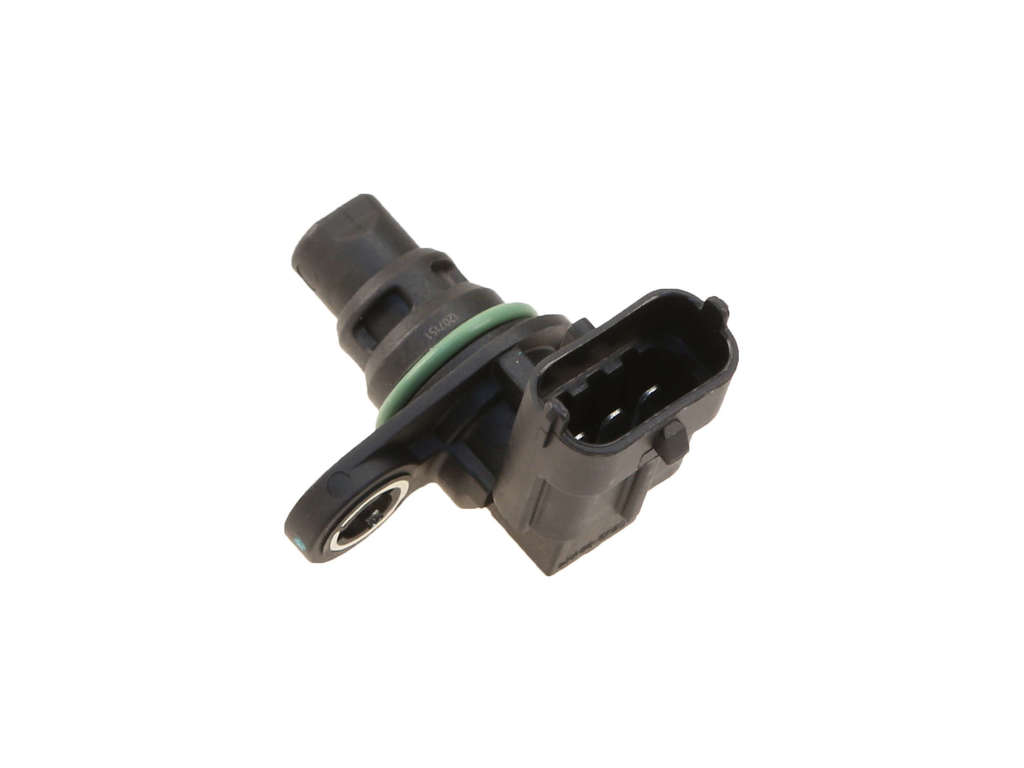
How to confirm: Inspect the sensor and its wiring for damage. A multimeter can be used to test the sensor's resistance (if applicable) or a scan tool can be used to monitor its live data signal for dropouts or erratic readings.
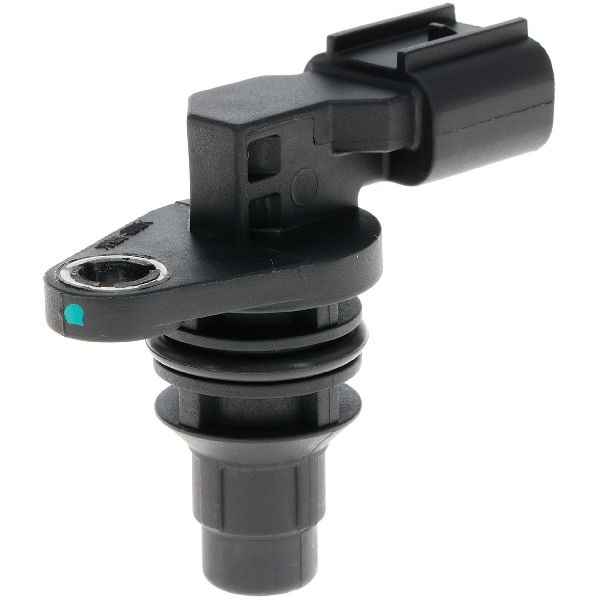
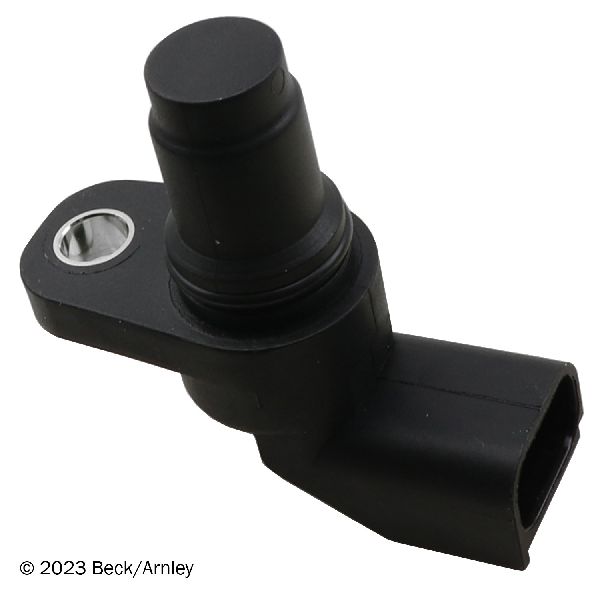
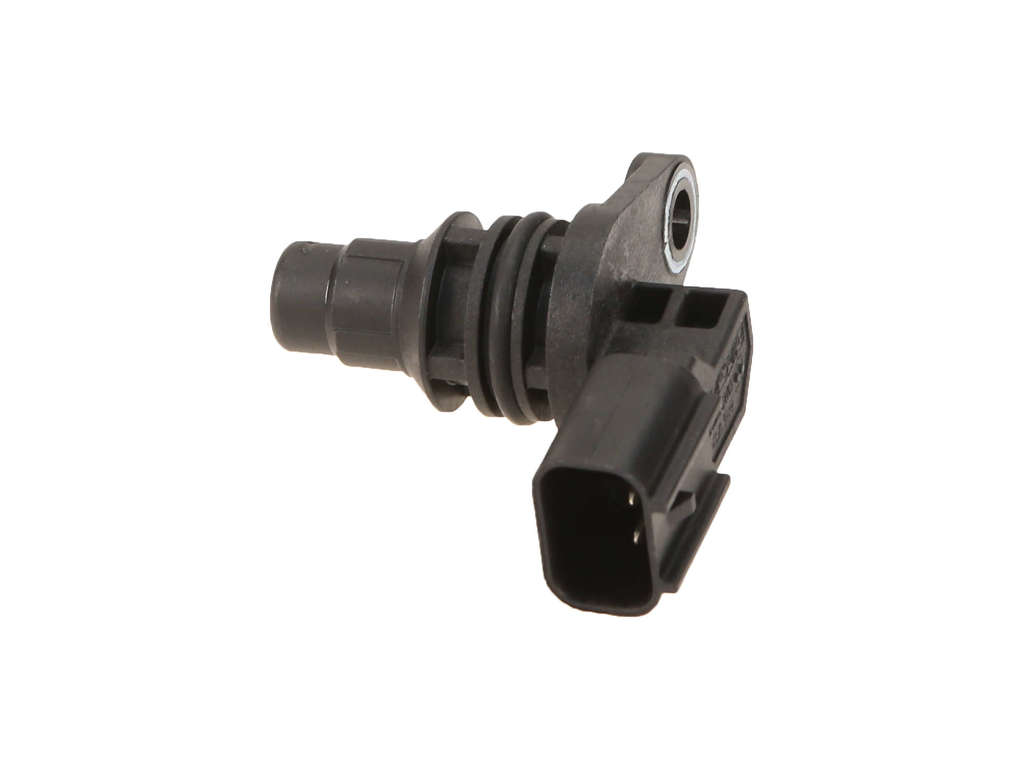
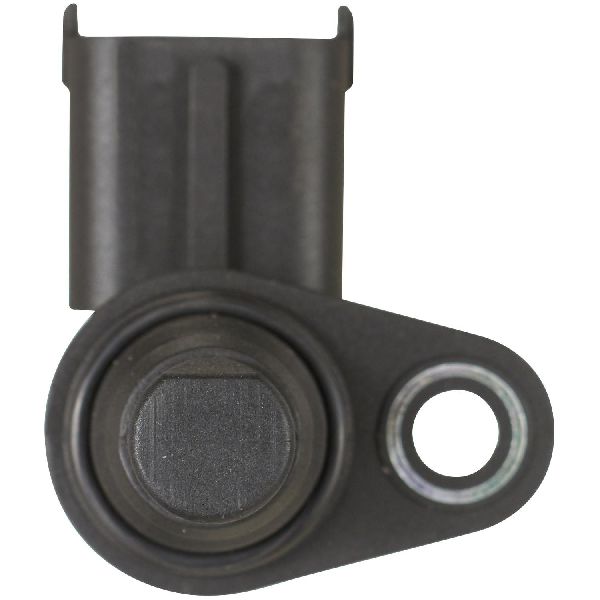
Typical fix: Replace the Bank 1 exhaust camshaft position sensor. It is typically located on the valve cover or cylinder head near the exhaust camshaft.
Est. part cost: $20-$50
Rare But Worth Checking
- Damaged VCT Phaser (Camshaft Actuator): The VCT phaser is the gear on the end of the camshaft that actually performs the timing adjustment. While less common to fail than the solenoid, it can get stuck, break internally, or have its locking pin fail. Replacement requires a full timing chain job.
- Damaged Crankshaft Reluctor Wheel/Tone Ring: The crankshaft position sensor reads notches on a reluctor wheel. If this wheel is damaged, bent, or has debris on it, it will send an incorrect signal, causing a correlation code. This is rare but can happen, especially if other work has been done on the bottom end of the engine.
- Clogged Oil Passages: In cases of severe engine sludge from neglected oil changes, the small oil passages in the cylinder head leading to the VCT phaser can become blocked. This prevents the system from operating correctly even with a good solenoid and requires extensive cleaning or head replacement.
Diagnosis Steps
- Check Engine Oil: Verify the oil level is correct and the oil is clean. If low or dirty, perform an oil and filter change using Ford-specified oil, clear the code, and drive to see if it returns.
- Scan for Other Codes: Check for any other related DTCs that could provide more clues (e.g., P0016, P0014, P0015).
- Inspect Wiring: Visually inspect the wiring and connectors for the crankshaft sensor, exhaust camshaft sensor, and exhaust VCT solenoid for any obvious damage, corrosion, or loose connections.
- Test the VCT Solenoid: Following Ford's TSB SSM 48423, use a capable scan tool to command the exhaust VCT solenoid on and off 10 times to attempt to dislodge any debris. If the code returns, remove the solenoid. Check its screen for debris. Test its mechanical function by applying 12V power; you should hear a distinct click. Clean it and reinstall, or replace if it fails the test or is contaminated.
- Swap VCT Solenoids: A simple and effective test is to swap the exhaust (Sensor B) and intake (Sensor A) VCT solenoids. Clear the codes and run the engine. If the code changes to P0016, the solenoid you moved is faulty and must be replaced.
- Monitor Live Data: Use an OBD-II scanner with live data to watch the desired vs. actual camshaft position angles for the exhaust cam (Cam Angle B). A large discrepancy or a value that doesn't change as RPMs increase points to a problem in the VCT circuit or mechanical timing.
- Test Sensors: If the VCT system seems unresponsive, test the camshaft and crankshaft position sensors. This is best done by monitoring their signal patterns on an oscilloscope, but resistance checks can sometimes identify a failed sensor.
- Check Mechanical Timing: If all else fails, the final step is to assume a base timing issue. This requires removing the valve cover and timing cover to physically inspect the timing chain, guides, and phasers for wear, damage, or misalignment. This is a labor-intensive step and is best left for last.
Parts You'll Likely Need
- Variable Camshaft Timing (VCT) Solenoid / Oil Control Valve (Exhaust)
(OEM #CJ5Z-6M280-A (For 2.0L EcoBoost & 2.5L Duratec) or CN1Z-6M280-A/F (superseding numbers may exist).)— This is the most common failure point for P0017 on this vehicle, as identified by multiple Ford TSBs and extensive owner reports.
Trusted brands: Motorcraft, Dorman, Delphi
OEM price range: $40-$70
Aftermarket price range: $25-$50 - Engine Oil and Filter
(OEM #Motorcraft FL-910S (Filter for 2.0L/2.5L))— Dirty or incorrect viscosity oil is a primary cause of VCT system faults.
Trusted brands: Motorcraft
OEM price range: $50-$80
Aftermarket price range: $40-$60 - Timing Chain Kit — If the chain has stretched or a tensioner has failed, the entire timing set should be replaced to restore proper correlation.
Trusted brands: Motorcraft, Cloyes
OEM price range: $300-$500
Aftermarket price range: $150-$300
Related Codes That Often Appear With This One
- P0016 — Crankshaft/Camshaft Correlation for Bank 1, Sensor A (Intake). If both P0016 and P0017 are present, it points more strongly toward a base timing issue like a stretched chain or a problem common to both VCT systems, such as low oil pressure.
- P0014 / P0015 — These codes indicate the exhaust camshaft (Bank 1) is over-advanced (P0014) or over-retarded (P0015), which are specific faults within the VCT system that can accompany the general correlation error of P0017.
Technical Service Bulletins (TSBs) & Recalls
- SSM 48423: Notes that P0017 may be due to small debris causing the VCT solenoid to stick.
- SSM 54366: References P0017 and points to specific diagnostic tests in the service manual.
- SSM 47170: An earlier TSB that also identifies sticking VCT solenoids from debris as a cause for P0017.
Platform-Specific Known Issues
- TSB #SSM 48423: This bulletin from Ford notes that P0017 (among other VCT codes) may be caused by small debris causing the VCT solenoid to stick. It advises using a scan tool to cycle the solenoid 10 times to clear it before proceeding with replacement.
- TSB #SSM 47170: An earlier TSB with similar guidance, highlighting that sticking VCT solenoids due to debris is a known issue.
- Owner Forum Consensus: Across platforms like fordescape.org and Reddit, the overwhelming first recommendation from other owners for a P0017 code is to check the oil and then replace the exhaust VCT solenoid before considering more expensive repairs like a timing chain service.
Mechanic-Grade Diagnostic Values
- VCT Solenoid (Oil Control Valve) Internal Resistance — expected: 7 to 14 Ohms. Failure: A reading of 0 Ohms indicates a short, while an infinite reading (OL) indicates an open circuit. Readings significantly outside the expected range suggest a failing coil.
- Camshaft Position Sensor (3-Wire Hall Effect) Voltage — expected: With ignition on, engine off: Power wire ≈5V or 12V (battery voltage), Signal wire ≈5V, Ground wire should show battery voltage when probed against the positive battery terminal.. Failure: Missing voltage on the power or signal wire, or a bad ground reading, points to a wiring or PCM issue rather than a failed sensor.
- Ford IDS Live Data: VCT_ADV_ERR PID — expected: Should hover around 0° when the engine is in closed-loop operation.. Failure: A sustained deviation greater than ±5 degrees indicates the PCM cannot achieve the desired cam timing, pointing to a mechanical (phaser, chain) or hydraulic (solenoid, pressure) problem.
Scan Tool Commands That Help
- Ford IDS (or equivalent professional scan tool): VCT Solenoid Actuator Test / Bidirectional Control — As recommended by TSB SSM 48423, this command cycles the solenoid on and off to dislodge small debris. It can also be used while the engine is running; a functioning solenoid will cause the engine to stumble or stall, confirming it is mechanically working.
- Ford IDS (or equivalent professional scan tool): Monitor VCT PIDs (RCAM, CAMERR, VCT_ADV_ERR) — To diagnose if the timing correlation issue is constant or intermittent. Watching the desired vs. actual cam angle (RCAM) and the error (CAMERR) in real-time helps differentiate between a stuck solenoid, a slow-to-respond phaser, or a base timing issue.
- Ford IDS / FORScan: Crankshaft Position Sensor Relearn — Some Ford vehicles require a relearn procedure after replacing the crankshaft or camshaft position sensors to calibrate the PCM to the new sensor's signal. If the code persists or the engine runs poorly after sensor replacement, this procedure may be necessary.
Wiring & Ground Locations
- VCT Solenoid Connector — On top of the valve cover, plugged into the VCT solenoid.. It has two pins: one receives battery voltage from the PCM power relay, and the other is a ground-side control wire that the PCM pulses to actuate the solenoid. A loss of power or a short/open on the control wire will prevent the solenoid from functioning.
- Exhaust Camshaft Position Sensor Connector — On the cylinder head or valve cover, near the exhaust camshaft.. It has three pins: a 5V or 12V reference voltage from the PCM, a ground wire from the PCM, and a signal wire that sends the cam's position back to the PCM. Damage to this connector or harness is a common cause of sensor-related codes.
Real Owner Repair Stories
- Reddit user 'wwoolyieten' in r/fordexpedition (2015 Ford Expedition EcoBoost (3.5L, but same timing principles as 2.0L EcoBoost)) — Code P0017 appeared immediately after a full timing chain and phaser replacement. The code was not present before the job.
❌ Tried (didn't work) Testing VCT solenoids (they clicked with voltage applied)., Testing camshaft position sensor voltage (read 11V, seemed ok).
✅ What actually fixed it The timing chain had jumped one tooth upon the first startup. Although the timing marks were aligned during assembly, slack was left on the wrong side of the chain. The fix required re-doing the timing job correctly. - Fiesta ST Forum user 'Donnogan' (Ford Fiesta ST (EcoBoost engine family)) — Intermittent P0017 code appearing every 50-100 miles after a timing belt replacement. Car drove fine otherwise.
❌ Tried (didn't work) Mechanic cleaned the VCT solenoid.
✅ What actually fixed it The strong consensus from other forum members was that the mechanical timing was set incorrectly by one tooth during the timing belt job, causing the intermittent correlation error. The resolution required taking it back to the mechanic to verify and correct the base timing.
When the Usual Fixes Don't Work
- In multiple documented cases, P0017 appears for the first time immediately following a timing chain or belt service. While the common causes like a stuck VCT solenoid are valid for general diagnosis, if the code appears directly after major engine work, the overwhelming probability shifts to a mechanical timing error (e.g., the chain being off by a tooth), even if the car seems to run acceptably. Technicians and DIYers should treat this scenario as a likely workmanship error before replacing sensors or solenoids that were working prior to the service.
Model Year Variations Within This Range
- 2017-2019 (2.0L EcoBoost only): The 2.0L EcoBoost engine was significantly updated for the 2017 model year, changing from a single-scroll to a twin-scroll turbo design. This engine revision may involve different part numbers for timing components, VCT system parts, and sensors compared to the 2013-2016 2.0L engine. The 2.5L Duratec engine remained consistent throughout the 2013-2019 range.
Diagnostic Flowchart
Other Known Issues on This Vehicle
Issues unrelated to this code that are worth knowing about as an owner of this generation:
- 2.0L EcoBoost Coolant Intrusion 🔴 High — Common enough to warrant multiple TSBs. Can occur at various mileages, often noted between 60k-100k miles. (Ref: TSB 19-2346 and TSB 19-2208 describe the issue of coolant leaking into cylinders due to a flaw in the engine block design. The only prescribed fix is a long block replacement.)
- 6F35 Transmission Failure 🔴 High — Widespread complaints of shuddering, hesitation, or complete failure, often occurring between 70,000 and 120,000 miles. (Ref: No specific recall for outright failure, but numerous complaints have been filed. A class-action lawsuit was filed regarding this transmission. Symptoms include harsh shifting, slipping, and sudden loss of drive.)
- Faulty Door Latches 🟠 Medium — Very common on 2013-2015 models, leading to a massive recall. (Ref: Recall 16V643 (Ford 16S30) was issued for a broken pawl spring tab that could prevent the door from latching or cause it to open while driving.)
- Power Steering Failure 🔴 High — Primarily affects 2013-2014 models, where the electric power steering assist can fail suddenly. (Ref: Ford issued a recall for this issue, but some owners outside the specified VIN range have also reported problems.)
Used vs. New Parts: Buying Guide for This Vehicle
When a used part is the smart pick: For this specific trouble code, using used parts is highly discouraged. The only exception might be for a wiring harness connector (pigtail) if the original is physically broken.
Donor-vehicle mileage cap: roughly under 15000 miles for the part to have meaningful remaining life.
What to inspect on the donor part:
- If considering a used VCT solenoid, test its resistance with a multimeter (should be 7-14 ohms) and apply 12V to ensure it makes an audible click before purchase. Even with these tests, it remains a gamble.
OEM-only on this vehicle (don't cheap out):
- Timing Chain Kit (Chain, Phasers, Guides, Tensioner): This is a labor-intensive job. The risk of premature failure from a lower-quality aftermarket kit outweighs the cost savings. Aftermarket phasers are a frequent point of failure.
- Camshaft/Crankshaft Position Sensors: While some aftermarket brands are reliable, OEM (Motorcraft) sensors are recommended to avoid signal variance issues that can sometimes prevent the code from clearing or require a relearn procedure.
Aftermarket brands forum-validated for this vehicle:
- Melling: Often an OEM supplier for Ford. When purchasing timing components, ensure it is their 'professional grade' kit, not the 'service grade' kit.
- Motorcraft: This is Ford's OEM parts brand and is the safest, most reliable choice.
Brands owners have reported issues with on this vehicle:
- Cloyes: While a long-established brand, owner reports and reviews are mixed. Some have experienced premature chain or phaser failures, making it a riskier choice compared to OEM/Motorcraft.
- Unbranded 'White Box' Kits: Avoid inexpensive, unbranded timing kits from online marketplaces. The failure of these components can lead to catastrophic engine damage, making the initial savings extremely costly in the long run.
Real Owner Stories
Aggregated from forums and TSBs cited above. Mileages and costs reflect what owners reported in those sources.
2014 Ford Escape 2.0L EcoBoost
Symptoms: P0017 code present, owner seeking advice on whether it is a sensor or a mechanical timing issue.
What fixed it: Owner forum consensus and TSB guidance suggest checking oil and replacing the exhaust VCT solenoid as the primary fix.
Source hint: Reddit r/MechanicAdvice/comments/x9s74h/2014_ford_escape_20_ecoboost_p0017_code/
2017 Ford Escape 2.5L Duratec
Symptoms: Vehicle triggered a P0017 code.
What fixed it: Following TSB #SSM 48423, the VCT solenoid was identified as the likely culprit due to debris sticking.
Source hint: https://www.fordescape.org/threads/2017-escape-2-5-p0017-code.117935/
Related OBD-II Codes
Frequently Asked Questions
My 2013-2019 Ford Escape has a P0017 code; does Ford have a specific service bulletin for this?
The dealership wants to replace my timing chain for a P0017 code. Is there a simpler fix for the 2.5L or 2.0L engines?
Can I test the VCT solenoids myself on my Ford Escape to confirm the P0017 code?
What kind of oil should I use in my Ford Escape to prevent VCT-related timing codes?
Is the rattling noise on startup related to the P0017 code on my 2.0L EcoBoost?
Helpful Videos
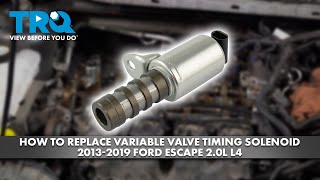
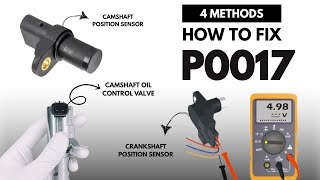

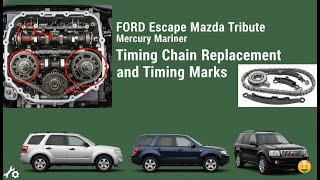
Used OEM Parts in Stock
New Aftermarket Parts Available


The information in this article is provided for general reference and educational purposes only. Vehicle specifications, procedures, and part compatibility can vary by production date, trim level, and region. Always consult your vehicle's factory service manual and verify part numbers before purchasing or performing repairs. Safety-critical components such as airbags, seat belts, and braking systems should be installed by a qualified professional.
- Ford Escape:
- 🎬 Helpful Videos
- 🛍️ Shop This Part
- What's Unique About the 2013-2019 Ford Escape
- Symptoms You May Notice
- Most Likely Causes
- Rare But Worth Checking
- Diagnosis Steps
- Parts You'll Likely Need
- Related Codes That Often Appear With This One
- Technical Service Bulletins (TSBs) & Recalls
- Platform-Specific Known Issues
- Mechanic-Grade Diagnostic Values
- Scan Tool Commands That Help
- Wiring & Ground Locations
- Real Owner Repair Stories
- When the Usual Fixes Don't Work
- Model Year Variations Within This Range
- Diagnostic Flowchart
- Other Known Issues on This Vehicle
- Used vs. New Parts: Buying Guide for This Vehicle
- Real Owner Stories
- 2014 Ford Escape 2.0L EcoBoost
- 2017 Ford Escape 2.5L Duratec
- Related OBD-II Codes
- Frequently Asked Questions
- 🎟️ Get 5% Off