

P0016 on 2005-2010 Pontiac G6 3.6L V6: Stretched Timing Chain Causes and Fixes
On a Pontiac G6 with the 3.6L V6 engine, code P0016 almost always means the timing chains have stretched. This is a serious, well-documented issue requiring a major repair that can cost between $1,800 and $3,000. Do not replace sensors first; the root cause is almost always mechanical due to a combination of part design and lubrication issues exacerbated by the original Oil Life Monitor (OLM) calibration.
- P0016 on a 3.6L G6 almost always means you need a timing chain replacement; do not waste money on sensors first.
- This is a critical code. Do not continue to drive the vehicle, as a chain failure can destroy the engine.
- The root cause is a well-documented design issue with the timing chains, often made worse by extended oil change intervals.
- Due to the 10+ hour labor time and complexity, this is a job best left to a professional repair shop.
- Ensure the repair uses a complete, updated timing chain kit from a quality brand to prevent the issue from recurring.
What's Unique About the 2005-2010 Pontiac G6
The Pontiac G6 with the 3.6L LY7 V6 engine is notorious for premature timing chain stretching. This widespread issue was so common that General Motors issued multiple Technical Service Bulletins (TSBs), such as #12-06-01-009F, and a special warranty extension (Special Coverage Adjustment #11340C) to address it. A primary contributing factor was the original Oil Life Monitor (OLM) system calibration, which often allowed for excessively long oil change intervals (10,000+ miles), leading to oil degradation, sludge, and accelerated chain wear. GM later issued software updates to shorten the OLM intervals to mitigate this problem.
Symptoms You May Notice
- Check Engine Light is on with code P0016, often accompanied by P0008, P0017.
- Engine rattling noise on cold startup, sounding like a chain dragging against metal, which may quiet down as the engine warms up.
- Rough or unstable idle
- Reduced engine power and poor, sluggish acceleration
- Engine stalling, especially at low speeds or when coming to a stop
- Engine cranks but fails to start in severe cases
- Noticeable decrease in fuel economy
- Replacing the camshaft position sensor without checking for a stretched timing chain.
- Replacing the crankshaft position sensor without checking for a stretched timing chain.
- Replacing only the VVT solenoids without confirming they are the cause, only to have the code return due to stretched chains.
Most Likely Causes
- Stretched Timing Chains 🔴 High Probability The early 3.6L LY7 V6 engines are widely known for this issue, caused by a combination of an inadequate original chain design and long oil change intervals leading to poor lubrication. GM issued TSB #12-06-01-009F to address this problem by providing updated, more durable timing chain kits. Manufacturer Bulletin #PIP3423P further notes that technicians should specifically inspect for loose timing chains or tensioners when P0016 is present.
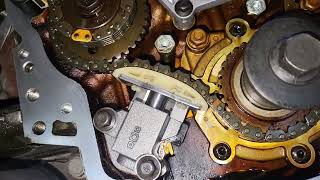
How to confirm: A rattling noise on cold starts is a strong indicator. 🎬 Hear the classic 3.6L startup rattle and learn the fix. A mechanic can confirm by using a scan tool to observe the cam/crank correlation data; a deviation of more than 4-5 degrees typically confirms a mechanical timing issue. 🎬 Watch: How to diagnose a P0016 code and check for stretch. The ultimate confirmation is a physical inspection of chain slack, which requires significant labor.
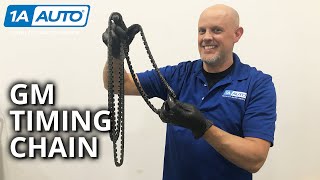
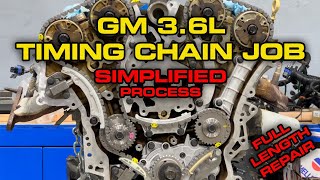
Typical fix: Replacement of all three timing chains, tensioners, and guides with an updated kit. This is a major repair requiring 10-20 labor hours. It is critical to use a complete, updated kit from a quality brand like ACDelco or Cloyes. 🎬 See this full walkthrough of the 3.6L timing chain replacement.
Est. part cost: $250-$600 - Low or Dirty Engine Oil 🟡 Medium Probability The timing chain tensioners and camshaft phasers (VVT system) are hydraulically operated. The original Oil Life Monitor (OLM) software encouraged overly long oil change intervals, leading to oil breakdown and sludge formation, which starves the hydraulic components of pressure and accelerates wear.
How to confirm: Check the oil level on the dipstick and inspect its condition. If it's low, black, or sludgy, it needs to be changed. Review service records for oil change frequency.
Typical fix: Perform an engine oil and filter change using a full synthetic 5W-30 oil that meets GM's dexos1 specification. Clear the code and see if it returns. If the code returns quickly, the damage to the chains is likely already done.
Est. part cost: $50-$100 - Faulty Camshaft Actuator Solenoid (VVT Solenoid) ⚪ Low Probability Oil sludge and debris, common in this engine due to the OLM issue, can clog the fine mesh screens on the solenoids, impeding their function.
How to confirm: These can be tested with a scan tool that can command them on and off. They can also be removed and inspected for clogged screens or tested for resistance with a multimeter (a good valve should have a resistance of around 6.9 to 7.9 ohms). Swapping the intake and exhaust solenoids is a common diagnostic trick to see if the code follows the solenoid (e.g., P0016 changes to P0017).
Typical fix: Replace the faulty solenoid. They are located on the front of the valve covers and are relatively easy to access. OEM part number is 12636175.
Est. part cost: $30-$80 - Faulty Camshaft or Crankshaft Position Sensor ⚪ Low Probability
How to confirm: Inspect the sensor wiring for damage. A scan tool can monitor the live data from the sensors to check for erratic signals. A multimeter can be used to test sensor resistance. However, these sensors are rarely the root cause of P0016 on this engine.
Typical fix: Replace the failed sensor. Note that replacing sensors is a very common misdiagnosis for this code on this engine; the problem is almost always the mechanical timing chains. The OEM crankshaft position sensor part number is 12613030.
Est. part cost: $25-$70
Rare But Worth Checking
- Slipped Crankshaft Reluctor Wheel: There is a known issue, detailed in GM TSB PIP3423L/P, where the toothed ring that the crankshaft sensor reads can physically move on the crankshaft itself. This will cause a persistent P0016 code even after replacing the timing chains. The only fix is to replace the entire crankshaft, which is a massive and very expensive repair.
- Engine Belt and Steering Components: Manufacturer Bulletin #PIP4716F notes that a short, sharp rattle noise at start up accompanied by P0016 may require an inspection of the engine belt and, if equipped, the hydraulic power steering system.
- No-Start Conditions: Bulletin #PIP4548F advises technicians to inspect the engine if P0016 is set on a properly timed engine or if the vehicle cranks but will not start.
Diagnosis Steps
- Check the engine oil level and condition. If low or dirty, perform an oil and filter change with full synthetic 5W-30 oil, clear the codes, and re-test.
- Listen for a metallic rattling or scraping sound from the passenger side of the engine during a cold start. This is a classic sign of a loose timing chain.
- Use a professional scan tool to monitor the live data for cam/crank correlation PIDs. A deviation greater than 4-5 degrees strongly indicates a mechanical timing issue.
- Inspect the wiring and connectors for the camshaft and crankshaft position sensors for any damage or corrosion.
- Test the Bank 1 intake camshaft actuator solenoid. Command it with a scan tool, check for resistance, and inspect the screens for sludge. Consider swapping it with the exhaust solenoid to see if the code changes.
- If the above steps do not resolve the issue and data points to a timing problem, a mechanical inspection of the timing chains is necessary. This involves significant engine disassembly to physically check for chain stretch and guide wear.
Parts You'll Likely Need
- Engine Timing Chain Kit
(OEM #12650230)— This is the primary failure point on the 3.6L LY7 engine that causes code P0016. An updated kit with improved chains, guides, and tensioners is required for a durable repair. TSB #12-06-01-009F specifies the use of these updated kits.
Trusted brands: ACDelco (OEM), Cloyes, Melling
OEM price range: $400-$550
Aftermarket price range: $250-$450 - Camshaft Position Actuator Solenoid
(OEM #12636175)— Can become clogged with oil sludge or fail electronically, preventing proper camshaft phasing and triggering a correlation code. It's a less common cause but much easier and cheaper to replace than the timing chains. Often replaced as a 'while you're in there' part during a timing job.
Trusted brands: ACDelco (OEM), Delphi, Dorman
OEM price range: $50-$90
Aftermarket price range: $30-$60 - Crankshaft Position Sensor
(OEM #12613030)— Rarely the cause of P0016 on this engine, but can fail. It's a common misdiagnosis. If it does fail, it will prevent the PCM from knowing the crankshaft's position, leading to correlation codes.
Trusted brands: ACDelco (OEM), Delphi, Standard Motor Products
OEM price range: $40-$70
Aftermarket price range: $25-$50
Related Codes That Often Appear With This One
- P0017 — This code indicates a correlation issue with the exhaust camshaft on Bank 1. It's very common to see both P0016 and P0017 together when a timing chain has stretched, as the slack affects both camshafts on the bank.
- P0008 — This is a more general engine timing code indicating a bank-to-bank correlation issue. It is frequently the first code to appear and is a hallmark of a stretched primary timing chain on the LY7 engine.
- P0018 / P0019 — These are the equivalent correlation codes for Bank 2 (the cylinder bank closer to the radiator). If the primary chain is severely stretched, or the secondary chain for Bank 2 is also stretched, it can affect timing on both banks.
Technical Service Bulletins (TSBs) & Recalls
- TSB #12-06-01-009F: Issued March 2015, this bulletin provides information on the updated, comprehensive timing chain service kits for High Feature V6 engines, specifically citing DTCs like P0016, P0008, and P0017 as indicators for stretched chains that require this repair.
- TSB #PIP3423L/P: This Preliminary Information bulletin instructs technicians that if timing codes like P0016 persist after checking the chains, the cause may be a physically slipped crankshaft reluctor wheel, a rare but serious issue requiring crankshaft replacement.
- Bulletin #PIP3423P: This communication notes that Diagnostic Trouble Codes P0016, P0017, P0018, P0019, P0008 or P0009 may be set and requires technicians to inspect for loose timing chains or tensioners.
- Bulletin #PIP4548F: Advises technicians on what to inspect if P0016 and/or P0017 are set on a properly timed engine or if the vehicle cranks but will not start.
- Bulletin #PIP4716F: Discusses vehicles that may have a short, sharp rattle noise from the front of the engine at start up with codes P0011, P0014, P0016 or P0017, suggesting an inspection of the engine belt.
Platform-Specific Known Issues
- The 3.6L LY7 V6 engine is notorious for premature timing chain stretching, which is the most common cause of P0016.
- GM issued Special Coverage Adjustment #11340C, which extended the warranty for timing chain wear to 10 years or 120,000 miles for some vehicles with this engine, though this has expired for all G6 models.
Mechanic-Grade Diagnostic Values
- Camshaft Position Sensor (3-wire) Power Wire Voltage — expected: Approximately 5V with key on, engine off.. Failure: No voltage on the power wire points to a wiring or ECM issue, not a faulty sensor.
- Camshaft Position Sensor (3-wire) Signal Wire Voltage — expected: Roughly 5V with key on, engine off. Voltage should drop to near 0V when metal passes in front of the sensor.. Failure: Voltage that is stuck high, low, or does not change indicates a failed sensor or wiring problem.
- Camshaft Position Sensor Low Reference Circuit Resistance — expected: 5 ohms or less between the low reference circuit terminal and a good ground.. Failure: Resistance greater than 5 ohms indicates an open or high resistance in the ground circuit for the sensor.
- Slipped Crankshaft Reluctor Wheel Inspection — expected: 25 to 26 mm from the end of the machined surface of the crankshaft throw to the edge of the open space in the reluctor wheel.. Failure: A measurement outside this range indicates the reluctor wheel has slipped, requiring crankshaft replacement as per TSB PIP3423L/P.
Hidden / Shadow Codes Worth Checking
- Mode $06, TID $83 (example): While not a hidden code, Mode $06 data shows the raw test results from the ECM's continuous monitors. For cam/crank correlation, it can show the actual measured deviation value, the pass/fail threshold, and whether the test passed or failed during the last drive cycle. This reveals if the timing is borderline or significantly out of spec. (see via A professional scan tool with Mode $06 capability is required. The specific Test ID (TID) can vary by model year.)
Scan Tool Commands That Help
- GM Tech2 / GDS2: Camshaft Position Actuator Control — This bidirectional test allows a technician to command the VVT actuator solenoid while observing live data for desired vs. actual cam angle. It helps determine if a correlation issue is due to a stuck phaser or a non-responsive solenoid, isolating the fault without disassembly.
- GM Tech2 / GDS2: Crankshaft Position Variation Relearn — This procedure is mandatory after replacing the crankshaft, crankshaft position sensor, or ECM. It allows the ECM to learn the precise position of the new component's reluctor wheel teeth. Failure to perform this relearn can cause a P0016 code to set even if the mechanical repair was done correctly.
Wiring & Ground Locations
- G107 — Located on the left rear of the engine for the 3.6L V6.. This is a critical engine-to-chassis ground. A loose or corroded connection here can cause erratic signals from the crankshaft and camshaft position sensors, leading to false P0016 codes.
- G105 — Located at the center rear of the engine for the 3.6L V6.. This is a primary engine ground point. Poor contact can cause unpredictable behavior from various sensors, including those critical for timing, which can mimic a mechanical fault.
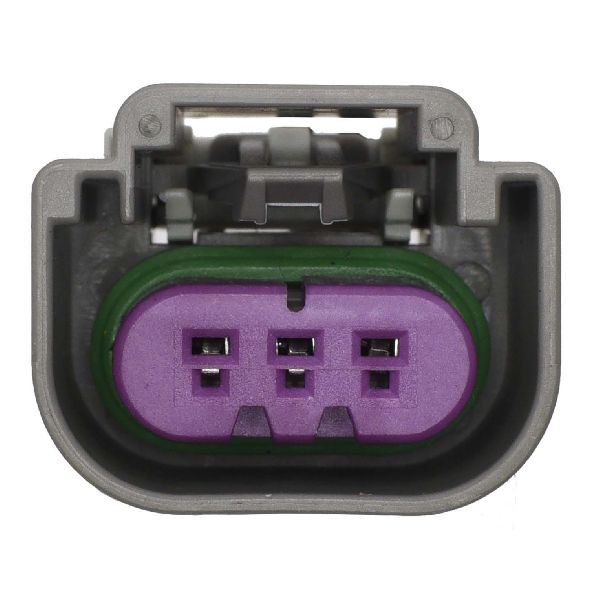
- Camshaft Position Sensor Connector — On the front of the timing cover, plugging into the sensor. It is a 3-wire connector.. The three wires are the 5V reference, low reference (ground), and the signal wire back to the ECM. Testing voltage and continuity at this specific connector is a primary electrical diagnostic step for this code.
- Crankshaft Position Sensor Connector — On the right (passenger) side of the engine block, typically above the starter motor.. Provides the primary timing signal for the engine. Damage to the wiring harness near the starter or exhaust can cause a loss of signal and trigger correlation codes.
Real Owner Repair Stories
- Reddit user 'jeffel374' (2007 Suzuki XL7 with GM 3.6L LY7 engine) — Initially had a P0009 (Bank 2 timing error). After a shop replaced the timing chains, a new P0008 code (Bank 1 timing error) appeared 6 days later.
❌ Tried (didn't work) Complete timing chain replacement by a repair shop.
✅ What actually fixed it Performing a 'crank/cam relearn' procedure with a scan tool resolved the issue. The user stated, 'Chad thank you I feel pretty stupid I relearned the crank/cam and that was my problem.'
OEM Part Supersession History
Various older, un-kitted part numbers→12650230 (For 2007 Models)— GM consolidated the necessary updated timing chains into a comprehensive service kit to ensure all required components were replaced. TSB #12-06-01-009F specifies using these kits for warranty repairs to address premature chain stretch.
Heads up: The TSB explicitly states not to replace idler sprockets, camshaft actuator gears, or the crankshaft driven gear for a stretched chain issue, as they are not included in the kits.
Model Year Variations Within This Range
- 2007-2009: The 3.6L engine in the G6 is the LY7 port-injected version. Later versions of the GM High Feature V6, like the LLT (starting in 2008 on other platforms), introduced direct injection, which had its own set of issues like high-pressure fuel pump failures and carbon buildup, though the timing chain weakness remained.
Diagnostic Flowchart
Real Owner Stories
Aggregated from forums and TSBs cited above. Mileages and costs reflect what owners reported in those sources.
Pontiac G6 3.6L
Symptoms: Check engine light on, code P0016 and P0017 shown.
What fixed it: Replaced both intake and exhaust camshaft solenoids.
Source hint: YourMechanic owner report
2009 Pontiac G6
Symptoms: Received a camshaft warning light.
What fixed it: Identified as a potential VVT actuator issue related to oil change intervals; required a hands-on mechanic to diagnose.
Source hint: Car Talk Community - 'Question on Camshaft warning' (2021)
GM 3.6L LY7 Platform Mate
Symptoms: P0016 keeps returning even after replacing the sensors.
What fixed it: Advised to use OEM ACDelco parts for VVT components, and to check the cam phaser itself after ruling out sensors and solenoids.
Source hint: GMTNation - 'p0016 keeps returning' (2013)
Pontiac G6 3.6L
Symptoms: Experiencing codes P0016 and P0008.
What fixed it: Concluded the cause was stretched timing chains and advised against replacing sensors first.
Source hint: g6ownersclub.com
Related OBD-II Codes
Frequently Asked Questions
Does Special Coverage Adjustment #11340C cover the timing chain replacement on my Pontiac G6?
I have a P0016 code on my 3.6L LY7. Should I replace the camshaft and crankshaft sensors first?
What does TSB #12-06-01-009F mean for my 2005-2010 G6?
Can low oil cause the P0016 code on my G6?
I replaced the timing chains but P0016 keeps returning. What else could it be?
Which VVT solenoid part number do I need for the 3.6L LY7?
Helpful Videos
We Have This Part in Stock




The information in this article is provided for general reference and educational purposes only. Vehicle specifications, procedures, and part compatibility can vary by production date, trim level, and region. Always consult your vehicle's factory service manual and verify part numbers before purchasing or performing repairs. Safety-critical components such as airbags, seat belts, and braking systems should be installed by a qualified professional.
- Pontiac G6:
- 🎬 Helpful Videos
- 🛍️ Shop This Part
- What's Unique About the 2005-2010 Pontiac G6
- Symptoms You May Notice
- Most Likely Causes
- Rare But Worth Checking
- Diagnosis Steps
- Parts You'll Likely Need
- Related Codes That Often Appear With This One
- Technical Service Bulletins (TSBs) & Recalls
- Platform-Specific Known Issues
- Mechanic-Grade Diagnostic Values
- Hidden / Shadow Codes Worth Checking
- Scan Tool Commands That Help
- Wiring & Ground Locations
- Real Owner Repair Stories
- OEM Part Supersession History
- Model Year Variations Within This Range
- Diagnostic Flowchart
- Real Owner Stories
- Pontiac G6 3.6L
- 2009 Pontiac G6
- GM 3.6L LY7 Platform Mate
- Pontiac G6 3.6L
- Related OBD-II Codes
- Frequently Asked Questions
- 🎟️ Get 5% Off