

P0016 on 2010-2017 GMC Terrain 2.4L: Stretched Timing Chain Causes and Fixes
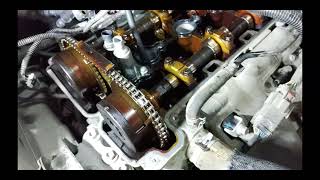
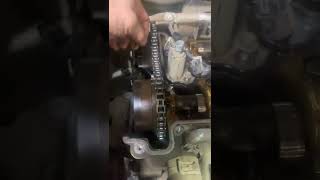
On the 2.4L Ecotec engine, P0016 almost always means the timing chain has stretched. This is a serious issue, often caused by excessive oil consumption due to a piston ring design defect. The fix is a complete timing chain kit replacement, costing $1,200-$2,600 at a shop. Driving is not recommended as it can lead to catastrophic engine failure.
- P0016 on this engine is a critical code, almost always indicating a stretched timing chain.
- The root cause is typically excessive oil consumption due to a known piston ring issue. Check your oil level frequently (at every fuel fill-up) to prevent this expensive repair.
- Do not drive the vehicle. A timing chain failure can cause the pistons to hit the valves, destroying the engine.
- The correct repair is a full timing kit replacement, not just sensors or solenoids. This is a complex job for a professional.
What's Unique About the 2010-2017 GMC Terrain
For the 2010-2017 GMC Terrain and its sibling, the Chevy Equinox, the 2.4L Ecotec engine has a well-documented history of issues that directly lead to code P0016. The primary problem is excessive oil consumption, often caused by a faulty piston ring design, which starves the timing chain and its hydraulic tensioners of lubrication. This leads to premature wear and stretching of the chain. Unlike many other vehicles where P0016 could be a simple sensor issue, on this specific platform, it is almost always a warning of a severe mechanical timing problem that requires immediate attention.
Symptoms You May Notice
- Check Engine Light is on
- Rattling, scraping, or slapping noise from the passenger side of the engine, especially on a cold start for 2-5 seconds.
- Reduced engine power or vehicle entering 'limp mode'.
- Rough or unstable idle, sometimes stalling at stops.
- Engine may crank but fail to start in severe cases.
- Increased oil consumption, requiring frequent top-offs.
- Engine sounds 'like a diesel' at idle.
- Replacing the camshaft position sensor
- Replacing the crankshaft position sensor
- Replacing only the VVT solenoids without checking for timing chain stretch or debris
Most Likely Causes
- Stretched Timing Chain and/or Failed Tensioner/Guides 🔴 High Probability The 2.4L Ecotec engine is notorious for excessive oil consumption due to piston ring design. Low oil levels lead to loss of hydraulic pressure for the tensioner, causing the chain to go slack. This slack causes the chain to slap against and break the plastic guides, and the chain itself stretches from wear.
How to confirm: Listen for a startup rattle. A mechanic will confirm by checking cam/crank deviation with a scan tool or by physically inspecting the timing components, which requires removing the valve cover and timing cover. Finding pieces of broken plastic guides in the oil pan is definitive proof. Manufacturer Bulletin #PIP3423P specifically instructs technicians that when P0016 is set, they must inspect for loose timing chains or tensioners.
Typical fix: Replace the entire timing chain kit, including the primary timing chain, balance shaft chain, all tensioners, all guides, and often the camshaft actuator sprockets (phasers) as they also wear. The oil pan must be dropped to clean out debris.
Est. part cost: $200-$500 - Low or Dirty Engine Oil 🟡 Medium Probability This is the primary contributor to the main cause. The engine consumes oil (often 1 quart per 2,000 miles or less), and if not checked and topped off frequently, the level becomes critically low, starving the VVT and timing systems of lubrication and pressure.
How to confirm: Check the oil dipstick. The oil level will be low, and the condition may be very dark or sludgy. Many owners are unaware of the consumption issue until the check engine light comes on.
Typical fix: Perform an oil and filter change with the correct viscosity oil (5W-30). However, if code P0016 is already present, this will not fix the mechanical damage that has likely already occurred and a timing chain replacement is still necessary.
Est. part cost: $40-$80 - Faulty Camshaft Position Actuator (VVT) Solenoid ⚪ Low Probability The solenoids can become clogged with sludge from old oil or, more commonly, with debris from failing timing chain guides. The screens on the solenoids will catch this debris, causing them to stick.
How to confirm: Remove the intake and exhaust solenoids (located on top of the valve cover). Inspect screens for metal or plastic debris. Swapping the intake and exhaust solenoids and seeing if the code changes to P0017 (exhaust correlation) can confirm a faulty solenoid. A good solenoid should have a resistance between 8 and 13 Ohms.
Typical fix: Replace the faulty solenoid. It is best practice to replace them in pairs (intake and exhaust) and perform an oil change. If debris is found, it's a strong sign of a larger timing component failure.
Est. part cost: $25-$70
Rare But Worth Checking
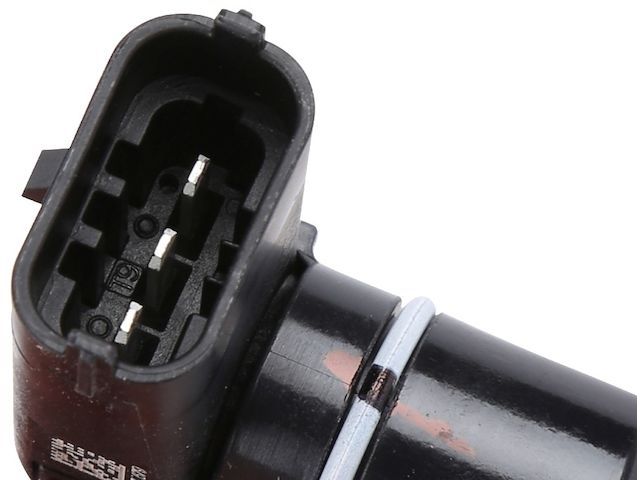
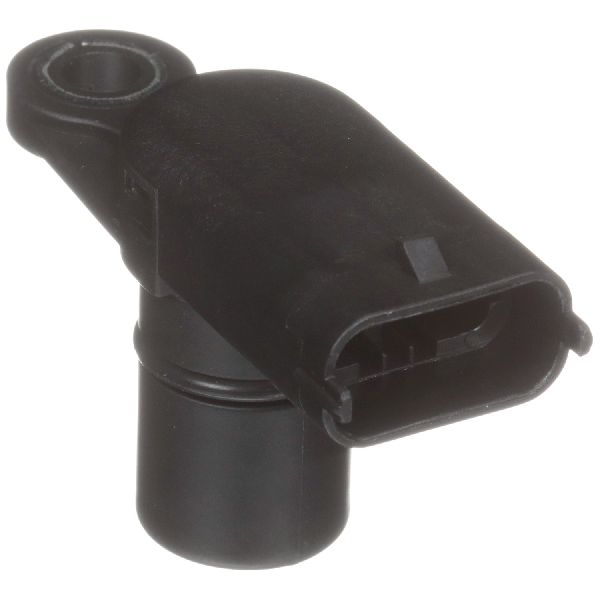
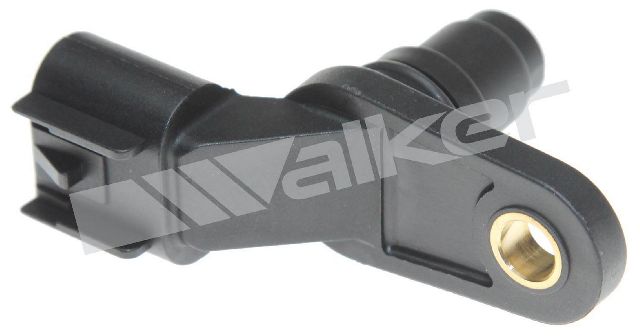
- Failed Camshaft or Crankshaft Position Sensor: This is very rare on this platform. The sensors are usually accurately reporting the mechanical fault. Only replace a sensor if it fails a specific electrical test (e.g., with an oscilloscope); do not replace it based on the code alone.
- Slipped Camshaft Reluctor Wheel: As described in TSB Bulletin #PIP4548F, the reluctor wheel on the end of the camshaft is press-fit and can spin, especially after an overheat event. This causes the sensor to read an incorrect position even if the mechanical timing is perfect. This is a rare but difficult-to-diagnose cause.
- Swapped Electrical Connectors: After a repair, it is possible to swap the identical connectors for the intake camshaft actuator solenoid and the intake actuator park lock solenoid. This will immediately trigger a P0016 code. TSB 19-NA-150 was issued to highlight this specific mistake.
Diagnosis Steps
- Check the engine oil level and condition immediately. If it's low, top it off. This is the most common root cause of the failure.
- Scan for other trouble codes. The presence of P0017, P0011, or fuel pressure codes like P0089/P228D strongly points to a base timing issue.
- Listen for a distinct rattling or slapping noise from the passenger side of the engine during a cold start. This is a classic symptom of a loose timing chain.
- If comfortable, inspect the camshaft position actuator (VVT) solenoids. Remove the intake and exhaust solenoids, check their screens for metal or plastic debris. Finding debris is a major red flag for timing guide failure.
- If the oil level is good and the solenoids appear clean, the next step is to assume a mechanical timing issue. This requires professional diagnosis.
- A professional will use a scan tool to view cam/crank correlation data. If that is inconclusive, they will remove the valve cover to visually inspect for chain slack.
- During repair, it is critical to drop the oil pan and clean the oil pump pickup tube screen, as it is often clogged with plastic debris from the broken guides. Failure to do this can lead to oil starvation and a repeat failure of the new parts.
Parts You'll Likely Need
- Timing Chain Kit
(OEM #12680750)— This is the most common failure. A complete kit replaces the stretched chain, worn plastic guides, and failed tensioner that cause the code. It's critical to replace all components together.
Trusted brands: ACDelco (OEM), Cloyes
OEM price range: $250-$400
Aftermarket price range: $150-$250 - Intake Camshaft Position Actuator Solenoid
(OEM #12655420)— Can become clogged or fail, but is a much less likely cause than the chain itself. Often replaced during the timing chain job as a preventative measure or if its screen is full of debris.
Trusted brands: ACDelco (OEM), Delphi
OEM price range: $40-$60
Aftermarket price range: $20-$40 - Exhaust Camshaft Position Actuator Solenoid
(OEM #12655421)— Same as the intake solenoid. Often replaced as a pair as a preventative measure.
Trusted brands: ACDelco (OEM), Delphi
OEM price range: $40-$60
Aftermarket price range: $20-$40
Related Codes That Often Appear With This One
- P0017 — Indicates a correlation issue with the exhaust camshaft. Seeing both P0016 and P0017 strongly suggests the timing chain has stretched enough to affect both cams, making a base timing problem almost certain.
- P0011 — Indicates 'Camshaft Position 'A' - Timing Over-Advanced'. This often appears with P0016 as a result of a stretched chain causing incorrect cam timing.
- P0089 / P228D — These are fuel pressure codes. On this direct-injection engine, the high-pressure fuel pump is driven by a lobe on the intake camshaft. When the intake cam's timing is incorrect (P0016), it directly disrupts the mechanical operation 🎬 Watch: How timing issues trigger these specific fuel pressure codes. of the fuel pump, leading to these codes. Their presence strongly corroborates a mechanical timing fault.
Technical Service Bulletins (TSBs) & Recalls
- Special Coverage Adjustment #14159D / #15285: Addresses excessive oil consumption due to piston ring wear on 2010-2013 models, the root cause of oil starvation that leads to P0016.
- Bulletin #PIP3423P: Provides information that P0016 may be set and technicians should inspect for loose timing chains or tensioners.
- TSB Bulletin #PIP4548F: Guides technicians to check for a slipped camshaft reluctor wheel if P0016/P0017 appears even when mechanical timing seems correct.
- TSB 19-NA-150: Warns technicians about the possibility of swapping the identical electrical connectors for the intake VVT solenoid and the intake actuator park lock solenoid after a repair, which will cause P0016.
Platform-Specific Known Issues
- This engine is subject to GM Special Coverage Adjustments (e.g., #14159D for 2010 models, #15285 for 2011) for excessive oil consumption, which is the primary driver for premature timing chain failure. These programs extended the warranty for piston ring replacement.
- Due to the high rate of oil consumption, the oil level must be checked at every fuel fill-up to prevent lubrication-related failures.
- A clogged PCV orifice in the intake manifold can also contribute to high oil consumption and should be checked. GM issued TSB 14882 for this issue on related vehicles.
Documented NHTSA Reports
- An owner reported in NHTSA ODI #11355112 that their vehicle would not accelerate properly and seemed to be backfiring before the check engine light displayed code P0016, resulting in a dealer recommendation to replace the timing chains.
- NHTSA ODI #11719289 describes a vehicle that felt like it wanted to shake; a diagnostic scan returned codes P0016, P0089, and P228D, which the owner noted are well-known codes for this engine.
- According to NHTSA ODI #11678282, a vehicle started displaying error P0016 during the evening and stopped working entirely the following day.
Mechanic-Grade Diagnostic Values
- VVT Solenoid Resistance — expected: 8 to 13 Ohms. Failure: A reading outside this range, or one that fluctuates wildly when wiggling the connector pins, indicates a failed solenoid.
- Engine Oil Pressure (Mechanical Gauge) — expected: At least 25 PSI at idle. Failure: Pressure significantly below 25 PSI at idle confirms oil starvation, which is the root cause of timing chain tensioner failure.
- High-Pressure Fuel System (Direct Injection) — expected: 550-600 PSI (low end) up to 2,000 PSI. Failure: Codes P0089 or P228D appearing with P0016 strongly suggest the intake cam timing is off, as the high-pressure fuel pump runs off a lobe on the intake cam. A failing pump can also leak fuel into the crankcase, causing a rich condition (P0172) and a smell of gas in the oil.
Scan Tool Commands That Help
- GDS2 / Tech2: Cam/Crank Variation Data — This is a primary diagnostic step. The scan tool can display the number of degrees of deviation between the crankshaft and camshaft sensors. On this engine, the ECM will set code P0016 when the deviation exceeds about 10 degrees, confirming a mechanical timing issue.
Wiring & Ground Locations
- VVT Solenoid Connectors — On top of the valve cover, towards the front of the engine (passenger side). The intake solenoid has a gray connector, and the exhaust solenoid has a black connector.. These connectors are easily accessible for testing resistance. Swapping them is a common diagnostic step; if a P0016 (intake) changes to a P0017 (exhaust), the solenoid is confirmed bad. It is also possible to accidentally swap the intake solenoid connector with the nearby intake actuator park lock solenoid connector after a repair, which will set a P0016.
- PCV Orifice — Inside the intake manifold, between cylinders two and three.. This non-serviceable orifice is prone to clogging. A clogged orifice increases crankcase pressure, which exacerbates the engine's oil consumption problem. Excessive oil consumption is the primary driver of the oil starvation that leads to timing chain failure and code P0016. Several methods exist to clean it without full manifold removal.
Real Owner Repair Stories
- YouTube user comment/video (2017 GMC Terrain 2.4L Ecotec) — P0016 code was present.
❌ Tried (didn't work) Complete timing chain replacement (done twice to verify marks)., Swapping known-good camshaft and crankshaft position sensors., Checking all electrical components.
✅ What actually fixed it The reluctor wheel on the end of the intake camshaft had spun. Replacing the intake camshaft with one that had a correctly positioned reluctor wheel finally resolved the P0016 code.
OEM Part Supersession History
12635447, 12673669, 12675579→12680750— Represents updated kit with revised components to improve longevity.12628347, 12646783, 12578517→12655420, which is now superseded by 12679099— Updated design for the intake VVT solenoid to improve reliability and prevent sticking.12628348, 12646784, 12578518→12655421, which is now superseded by 12679100— Updated design for the exhaust VVT solenoid to improve reliability and prevent sticking.
Model Year Variations Within This Range
- 2010-2013: These earlier model years were most affected by the piston ring design flaw causing severe oil consumption. While the issue can exist on later models, GM's Special Coverage Adjustments and class-action lawsuits primarily focused on these years, indicating a higher prevalence of the root cause for P0016.
- 2010-2011 (LAF) vs 2012-2017 (LEA/LUK): The 2.4L engine was updated from the LAF to the LEA/LUK design around 2012. While they share the same fundamental architecture and timing chain issues, some parts may differ. The LEA/LUK engines are 'flex-fuel' capable. However, the core causes and fixes for P0016 remain consistent across these engine codes within this vehicle generation.
Diagnostic Flowchart
Real Owner Stories
Aggregated from forums and TSBs cited above. Mileages and costs reflect what owners reported in those sources.
2011 GMC Terrain
Symptoms: Experienced the classic combination of timing and fuel pressure codes, specifically P228D, P0089, P0016, and P0017.
What fixed it: Diagnosed as a significant internal engine base timing issue requiring timing component replacement, rather than a secondary sensor fault.
Source hint: GMTNation - '2011 Terrain codes; P228D, P0089, P0016, P0017'
2012 Chevrolet Equinox 2.4L
Symptoms: Replaced VVT solenoids for a different code, only to have P0016 appear, accompanied by engine stalling.
What fixed it: Identified as a failure of the timing chain, tensioner, and VVT system, which are known issues for these power plants.
Source hint: Reddit r/MechanicAdvice - 'Getting Code P0016 On my 2012 Chevy Equinox'
2017 GMC Terrain 2.4L Ecotec
Symptoms: P0016 and fuel pressure codes (P0011, P228D) returned even after a full timing chain replacement was performed.
What fixed it: Required further diagnosis for rarer issues like a slipped reluctor wheel and ensuring high-quality OEM parts were used for the timing job.
Source hint: Chevy Equinox Forum - '2017 Terrain 2.4 ecotec, new timing chain, still p0016...'
Related OBD-II Codes
Frequently Asked Questions
Does GM have any special coverage or recalls for the oil consumption causing P0016 on my 2010-2011 GMC Terrain?
I just replaced the VVT solenoids on my 2.4L Ecotec and now I have a P0016 code. What happened?
My 2017 Terrain has a new timing chain but the P0016 code came back. What else could it be?
Why does my 2.4L Terrain sound like a diesel engine on a cold start before throwing P0016?
Can a clogged PCV valve cause the P0016 code on my GMC Terrain?
Do I need to drop the oil pan when fixing the P0016 timing chain issue on the 2.4L Ecotec?
Helpful Videos

We Have This Part in Stock


The information in this article is provided for general reference and educational purposes only. Vehicle specifications, procedures, and part compatibility can vary by production date, trim level, and region. Always consult your vehicle's factory service manual and verify part numbers before purchasing or performing repairs. Safety-critical components such as airbags, seat belts, and braking systems should be installed by a qualified professional.
- GMC Terrain:
- 🎬 Helpful Videos
- 🛍️ Shop This Part
- What's Unique About the 2010-2017 GMC Terrain
- Symptoms You May Notice
- Most Likely Causes
- Rare But Worth Checking
- Diagnosis Steps
- Parts You'll Likely Need
- Related Codes That Often Appear With This One
- Technical Service Bulletins (TSBs) & Recalls
- Platform-Specific Known Issues
- Documented NHTSA Reports
- Mechanic-Grade Diagnostic Values
- Scan Tool Commands That Help
- Wiring & Ground Locations
- Real Owner Repair Stories
- OEM Part Supersession History
- Model Year Variations Within This Range
- Diagnostic Flowchart
- Real Owner Stories
- 2011 GMC Terrain
- 2012 Chevrolet Equinox 2.4L
- 2017 GMC Terrain 2.4L Ecotec
- Related OBD-II Codes
- Frequently Asked Questions
- 🎟️ Get 5% Off