

P0016 on 2011-2019 Ford Explorer 3.5L V6: Timing Chain and Water Pump Causes
On the 2011-2019 Ford Explorer 3.5L, P0016 almost always means the timing chain has stretched, often caused by a failing internal water pump leaking coolant into the oil. This is a serious, non-DIY repair costing $2,000-$4,000+ that requires replacing the timing chain, tensioners, guides, and water pump. Ignoring it risks catastrophic engine failure.
- P0016 on a 2011-2019 Explorer 3.5L is a critical code that should be addressed immediately to prevent catastrophic engine failure.
- The most likely cause is a stretched timing chain, which is often a symptom of a failing internal water pump that has contaminated the engine oil.
- Do not simply replace the sensors; the problem is almost always mechanical.
- Any repair that involves opening the timing cover MUST include the replacement of the timing chain, all related components, AND the water pump.
- This is not a DIY-friendly repair. Expect a professional shop bill of $2,000 to $4,000+ due to the high labor involved.
What's Unique About the 2011-2019 Ford Explorer

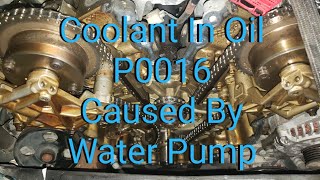
The Ford 3.5L V6 engine in this Explorer has a critical design vulnerability: the water pump is located internally and is driven by the timing chain. When the water pump's internal seal inevitably fails, it leaks coolant directly into the engine oil pan through a weep hole designed to vent into the crankcase. This coolant-contaminated oil loses its lubricating properties and rapidly destroys the timing chain, guides, and tensioners, leading directly to chain stretch and the P0016 code. This makes the water pump's failure a common root cause for catastrophic timing system failure on this specific platform, a fact well-documented in owner forums.
Symptoms You May Notice
- Check Engine Light is on
- Rattling or clattering noise from the front of the engine, especially on a cold start
- Reduced engine power or a 'gutless' feeling
- Rough or unstable idle
- Engine stalling, especially when coming to a stop
- Poor fuel economy
- Engine may crank but fail to start in severe cases
- Remote start is disabled by the system when the Check Engine Light is on
- Replacing only the camshaft or crankshaft position sensors. While these sensors provide the data, the P0016 code on this engine almost always indicates a mechanical problem (the timing chain) rather than a sensor failure. An owner on the Ecoboost Performance Forum noted that replacing the sensor did nothing and the code came right back. This is echoed in NHTSA ODI #11415416, where an owner reported the engine light gave a reading of P0016 for a camshaft position sensor, but further inspection was required at the dealership.
Most Likely Causes

- Stretched Timing Chain 🔴 High Probability Often a direct result of the internal water pump failing and contaminating the oil with coolant, which accelerates wear. This is a well-documented issue on the 3.5L Cyclone/EcoBoost engine family.
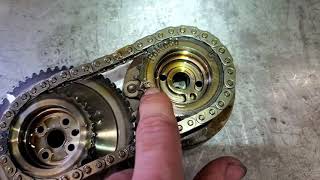
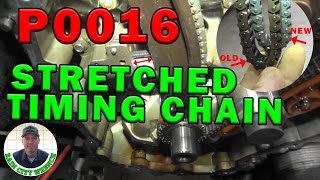
How to confirm: A mechanic can use a scan tool to monitor the VCT_INT_ACT1 PID. A reading of +6 degrees or more at idle indicates a worn chain per a related Ford TSB (17-0026). Visual confirmation involves removing the valve cover to inspect the timing chain tensioner's extension; if it's fully extended, the chain is stretched. 🎬 Watch: How to visually confirm a stretched timing chain
Typical fix: Replace the primary timing chain, secondary chains, all tensioners, and all guides. This is a complete timing system overhaul.
Est. part cost: $400-$800 for a complete OEM-quality kit. - Failing Internal Water Pump 🔴 High Probability The water pump is driven by the timing chain. When its internal bearing seal fails, it leaks coolant directly into the oil, destroying the oil's viscosity and causing the timing chain to stretch.
How to confirm: Often diagnosed during a timing chain replacement when coolant is found in the oil pan ('milky' oil) or the pump shows signs of weeping from its sweep hole (which is inside the timing cover). A pre-emptive check for coolant in the oil 🎬 Watch: How to diagnose a failing internal water pump is a key diagnostic step for P0016 on this engine.
Typical fix: Replace the water pump. This MUST be done whenever the timing chain is replaced, even if the pump hasn't failed yet, to prevent a repeat failure.
Est. part cost: $100-$250 - Faulty Variable Camshaft Timing (VCT) Solenoid 🟡 Medium Probability The solenoids can become clogged with debris from infrequent oil changes or from the failing timing chain components. Ford TSBs SSM 47170 and SSM 48423 address this issue, suggesting debris can cause the solenoid to stick.
How to confirm: Swap the Bank 1 intake solenoid with the Bank 1 exhaust solenoid. Clear the codes and drive. If the code changes to P0017 (Exhaust Camshaft Correlation), the solenoid is faulty. A scan tool can also be used to command the solenoid and check for response, as suggested in TSB SSM 48423 which recommends cycling the solenoid 10 times to try and clear debris before replacement.
Typical fix: Replace the Bank 1 intake VCT solenoid. It is often recommended to replace them in pairs or as a full set of four.
Est. part cost: $25-$70 per solenoid. - Low or Dirty Engine Oil ⚪ Low Probability
How to confirm: Check the oil level and condition on the dipstick. If the oil is low, black, sludgy, or has a 'milky' appearance (coolant contamination), this is a likely contributor.
Typical fix: Perform an oil and filter change using the manufacturer-specified grade of oil. This is a good first step but is unlikely to fix a P0016 code if a mechanical issue like a stretched chain is already present.
Est. part cost: $50-$100
Rare But Worth Checking
- Sheared Crankshaft Woodruff Key: A sheared key that aligns the crankshaft timing sprocket can cause this code. This is extremely rare but could be the result of an improperly torqued crankshaft pulley bolt from a previous repair, such as a water pump replacement. A Reddit user reported this exact scenario, resulting in a dealer recommending a full engine replacement.
- Failed Cam Phaser (VCT Actuator): The gear on the end of the camshaft that actually adjusts the timing can fail. This is less common than a solenoid or chain issue but is a possibility. Phasers are typically replaced as part of a full timing chain service to prevent future issues.
- Early Engine Life Faults: According to Bulletin #TSB-16-0093, engines with less than 2,000 miles may exhibit an illuminated MIL with P0016 and other correlation codes stored in the PCM memory.
Diagnosis Steps
- Verify engine oil level and condition. Check for a 'milky' appearance on the dipstick or oil cap, indicating coolant contamination. Top off or change if necessary.
- Use a professional scan tool to check for P0016 and any other codes. Note the freeze frame data. Bulletin #SSM 54366 notes that P0016 may appear alongside a wide range of other VCT-related codes such as P0011 through P0025.
- Monitor the VCT_INT_ACT1 PID value at a warm idle. If it is a positive value of 6 degrees or greater, this strongly indicates a stretched timing chain per Ford TSB 17-0026.
- Listen for a rattling noise from the front of the engine during a cold start (after sitting for several hours), which is a classic sign of a worn timing chain tensioner and guides.
- If a stretched chain is not immediately confirmed, diagnose the VCT solenoid. Per TSB SSM 48423, use the scan tool to command the solenoid to cycle 10 times to attempt to clear debris. If this doesn't work, swap the Bank 1 intake and exhaust solenoids, clear codes, and see if the code changes to P0017. If it does, the solenoid is bad.
- If the solenoid is good and the chain is suspected, the next step is to remove the Bank 1 valve cover to visually inspect the timing chain for slack and check the extension of the chain tensioner.
- If a stretched chain is confirmed, proceed with a full timing system replacement, including the internal water pump, all chains, guides, and tensioners.
Parts You'll Likely Need

- Timing Chain and Water Pump Kit
(OEM #BL3Z-6D256-C (This is an F-150 kit number from TSB 17-0026, but components are shared and it represents the most up-to-date revision))— This is the definitive fix. A stretched chain is the most common cause, and the internal water pump is the most common root cause of the chain failure. They must be replaced together.
Trusted brands: Motorcraft, Cloyes, Melling
OEM price range: $500-$900
Aftermarket price range: $350-$600 - Variable Camshaft Timing (VCT) Solenoid
(OEM #AT4Z-6M280-A)— This is the next most likely cause if the timing chain is not stretched. It can become clogged with debris and stick, causing a correlation error.
Trusted brands: Motorcraft, Dorman
OEM price range: $50-$80
Aftermarket price range: $25-$50
Related Codes That Often Appear With This One
- P0017 — Crankshaft Position - Camshaft Position Correlation (Bank 1 Sensor B). This code for the exhaust camshaft can appear alongside P0016 if the timing chain has jumped or there are issues with the Bank 1 exhaust VCT system.
- P0018 / P0019 — These are the equivalent correlation codes for Bank 2 (driver's side). If the primary timing chain is severely stretched, it can affect the timing on both banks.
- P0300, P0301-P0306 — Misfire codes. If the cam/crank timing is off sufficiently, it can lead to misfires on one or more cylinders.
Technical Service Bulletins (TSBs) & Recalls
- TSB 17-0026 (for F-150, but applicable): Notes that a VCT_INT_ACT1 PID reading of +6 degrees or more indicates a worn primary timing chain. This is a key diagnostic data point.
- SSM 47170 / SSM 48423: Suggests debris can cause the VCT solenoid to stick and recommends using a scan tool to cycle the solenoid to clear it before replacement.
- Bulletin #SSM 54366: Highlights that P0016 may be stored in the PCM alongside several other correlation codes and points technicians toward Pinpoint test HK in the Powertrain Control and Emissions Diagnosis manual.
- Bulletin #TSB-16-0093: Specifically addresses an illuminated MIL with P0016 in vehicles with very low mileage (less than 3200 km / 2000 miles).
Platform-Specific Known Issues
- The internal, timing-chain-driven water pump is the single most significant issue related to this code. Its failure contaminates the engine oil with coolant, leading to premature and catastrophic failure of the timing chain and related components. Any P0016 diagnosis on this engine MUST begin with checking for coolant in the oil.
Mechanic-Grade Diagnostic Values

- VCT Solenoid Internal Resistance — expected: 7 to 14 Ohms. Failure: A very low reading indicates a short, while a very high or infinite reading (OL) indicates an open circuit.
- Camshaft Position (CMP) Sensor Power Supply — expected: 4.8 to 5.2 Volts DC (Key On, Engine Off). Failure: Voltage outside this range points to a wiring or PCM issue, not necessarily a bad sensor.
- Camshaft Position (CMP) Sensor Signal — expected: Toggles between ~0V and ~5V as engine is cranked. Failure: Voltage stuck high or low indicates a faulty sensor or a wiring short/open.
- VCT Advanced Error PIDs (e.g., VCTADVERR) — expected: Should hover around 0°, with a difference no greater than +/- 5° for an excessive time.. Failure: A consistent, large error value (like the +6° in the TSB for a stretched chain) despite a high VCT duty cycle command points to a mechanical or hydraulic issue.
- Engine Oil Pressure for VCT Diagnosis — expected: Minimum 15 PSI at idle with engine at normal operating temperature.. Failure: Low oil pressure can cause the camshafts to oscillate and create timing issues, even if components are good.
Hidden / Shadow Codes Worth Checking
- Mode 6, TID $83, CID $0B: This monitor tracks the maximum detected deviation between the camshaft and crankshaft. While not a formal DTC, a high value can indicate an emerging timing problem before the Check Engine Light is triggered. (see via A professional scan tool or an advanced OBD-II app (like FORScan) that can display Mode $06 data.)
Scan Tool Commands That Help
- Ford IDS / FORScan: VCT Solenoid Cycle — As per TSB SSM 48423, cycle the suspect VCT solenoid 10 times to attempt to dislodge small debris before condemning the solenoid.
- Ford IDS / FORScan: Live Data PID Monitoring (VCT_INT_ACT1, VCTADVERR, VCT_DUTY) — Monitor these PIDs during idle and test drives. VCT_INT_ACT1 > +6° indicates chain stretch. A large VCTADVERR value when VCT_DUTY is high indicates a mechanical/hydraulic fault (stuck phaser, low oil pressure).
- Ford IDS: Histogram Mode — This is a pro-level technique to record VCT error PIDs during a drive cycle, allowing the technician to analyze anomalies and statistical data to pinpoint intermittent VCT issues.
Wiring & Ground Locations
- Engine Harness Ground Strap — A ground strap is located on the front side of the engine, held by an 8mm bolt, near the VVT solenoids. This ground must be removed to service the solenoids.. A loose or corroded ground here could potentially cause erratic behavior or incorrect readings from the VCT solenoids or CMP sensors, although it is not a primary cause.
Real Owner Repair Stories

- Reddit user on r/Ford (2016 Explorer 3.5L NA, 86k miles) — Sudden 'gutless' loss of power, followed by P0016 code.
❌ Tried (didn't work) External diagnosis by the dealer found nothing.
✅ What actually fixed it The root cause was a sheared Woodruff key on the crankshaft sprocket. This was discovered after authorizing teardown. The failure was attributed to an improperly torqued crankshaft bolt from a water pump replacement performed just three months prior. The dealer quoted a new engine. - SHO Forum user (2014 Ford Taurus SHO (3.5L EcoBoost), 66k miles) — P0016 Check Engine Light.
❌ Tried (didn't work) Replacing the CMP sensor., Performing an oil change., Checking wiring harnesses., Replacing the VVT solenoid.
✅ What actually fixed it After removing the valve cover, slack was visible in the timing chain. The consensus and final repair was a full timing chain replacement. Another user confirmed this repair cost them $3,000 at a dealership. - Reddit user on r/MechanicAdvice (2012 Explorer 3.5L NA) — After a full timing job (chain, phasers, solenoids, oil pump), the engine idled fine but had no power on a test drive, throwing cam position codes that would clear again at idle.
❌ Tried (didn't work) A complete timing component replacement.
✅ What actually fixed it The discussion concluded the most likely cause was that the timing was off by one tooth on the primary chain. The colored links lined up, but slack was not properly managed during installation, leading to a slight misalignment that only became apparent under load. - NHTSA ODI #11415416 — An owner reported the engine light came on with a reading of P0016, which was identified as a camshaft position sensor. The vehicle was taken to a dealership for further inspection.
Model Year Variations Within This Range
- 2011-2016: These years use the first-generation 3.5L V6 (both NA and EcoBoost). This generation features the single, long primary timing chain that also drives the internal water pump. This design is highly susceptible to the P0016 failure mode where a water pump leak contaminates the oil and destroys the timing chain.
- 2017-2019: These years use the second-generation 3.5L V6. The timing system was completely redesigned to address the flaws of the first generation. It uses a more robust dual-chain system (one for each bank), revised phasers, and different guides. While phaser rattle can still be an issue (see Ford CSP 21N03), the catastrophic chain stretch due to an internal water pump leak is not the primary failure pattern as it was in Gen1.
Diagnostic Flowchart
Other Known Issues on This Vehicle
Issues unrelated to this code that are worth knowing about as an owner of this generation:
- Power Transfer Unit (PTU) Failure 🔴 High — Common on AWD models, often due to overheating and non-serviceable fluid. Symptoms like grinding noises or a propane-like smell can appear.
- Exhaust Odor in Cabin 🟠 Medium — Widespread issue, especially under hard acceleration. Caused by body seam/grommet leaks allowing fumes to be drawn inside. (Ref: TSB 16-0166, TSB 17-0029, TSB 17-0044)
- Rear Suspension Toe Link Fracture 🔴 High — Subject to multiple recalls across the generation (2011-2017). Can cause loss of steering control. (Ref: NHTSA Recalls 19S17, 21V296, and others)
- Electronic Throttle Body Malfunction 🟠 Medium — Common issue causing sudden power loss and vehicle entering 'limp mode'. Often sets codes P2111 or P2112.
- Cracked Rear Liftgate Panel 🟡 Low — Cosmetic issue where the plastic appliqué around the Ford emblem cracks. Very common but does not affect function.
Used vs. New Parts: Buying Guide for This Vehicle
When a used part is the smart pick: For this specific P0016 repair, using used (junkyard) parts is strongly discouraged. The primary failure components—timing chain, tensioners, guides, water pump, and phasers—are all wear-and-tear items. Installing used versions of these parts provides no assurance of longevity and risks a rapid repeat failure of a highly labor-intensive job.
What to inspect on the donor part:
- Not applicable. Do not use salvaged wear components for this repair.
OEM-only on this vehicle (don't cheap out):
- Timing Chain Kit
- Water Pump
- Cam Phasers
- VCT Solenoids
Aftermarket brands forum-validated for this vehicle:
- Motorcraft (OEM)
- Cloyes (for timing kits)
- Melling (for timing kits and oil pumps)
Brands owners have reported issues with on this vehicle:
- Unbranded, low-cost timing kits from online marketplaces (e.g., Amazon, eBay). The quality of the chain, guides, and tensioners is critical to engine longevity, and failure of a cheap component can be catastrophic.
Real Owner Stories
Aggregated from forums and TSBs cited above. Mileages and costs reflect what owners reported in those sources.
2016 Ford Explorer 3.5L
Symptoms: P0016 code appeared three months after a water pump replacement.
What fixed it: The dealer diagnosed a sheared crankshaft woodruff key, likely caused by an improperly torqued crank pulley bolt during the previous repair, and recommended a new engine.
Source hint: Reddit: '16 explorer- P0016 - Dealer says new engine needed
2014 Ford Explorer Sport 3.5L EcoBoost — 78000 miles
Symptoms: Intermittent P0016 code with no rattling or driveability issues.
What fixed it: A full timing job (primary chain, secondary chains, tensioners, and guides).
Cost: $3,500-$3,500
Source hint: Ford Truck Enthusiasts: 3.5 EcoBoost trouble code P0016
2014 Ford Explorer Sport 3.5L EcoBoost
Symptoms: P0016 code present; owner investigated the complexity of a DIY timing chain replacement due to high repair costs.
What fixed it: Complete timing chain system overhaul.
Source hint: BobIsTheOilGuy: Ecoboost Timing Chains
2014 Ford Explorer
Symptoms: The engine light came on and gave a reading of P0016, which was initially identified as a camshaft position sensor.
What fixed it: The owner took the vehicle to a dealership for inspection following the code reading.
Source hint: NHTSA ODI #11415416
Related OBD-II Codes
Frequently Asked Questions
How can a mechanic confirm if my 3.5L Explorer's timing chain is stretched without taking the whole engine apart?
My 2016 Explorer has a P0016 code and my remote start stopped working. Are these related?
I heard the water pump is a major issue on the 3.5L EcoBoost. How does that cause a P0016 code?
Is there a way to clear a stuck VCT solenoid on my Explorer without replacing it immediately?
If I have to replace the timing chain, do I really need to replace the water pump too?
Helpful Videos
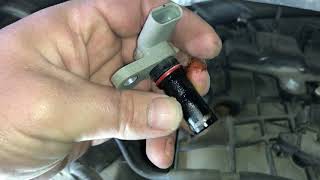
Used OEM Parts in Stock
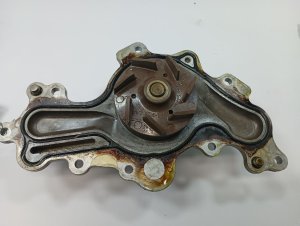

New Aftermarket Parts Available


The information in this article is provided for general reference and educational purposes only. Vehicle specifications, procedures, and part compatibility can vary by production date, trim level, and region. Always consult your vehicle's factory service manual and verify part numbers before purchasing or performing repairs. Safety-critical components such as airbags, seat belts, and braking systems should be installed by a qualified professional.
- Ford Explorer:
- 🎬 Helpful Videos
- 🛍️ Shop This Part
- What's Unique About the 2011-2019 Ford Explorer
- Symptoms You May Notice
- Most Likely Causes
- Rare But Worth Checking
- Diagnosis Steps
- Parts You'll Likely Need
- Related Codes That Often Appear With This One
- Technical Service Bulletins (TSBs) & Recalls
- Platform-Specific Known Issues
- Mechanic-Grade Diagnostic Values
- Hidden / Shadow Codes Worth Checking
- Scan Tool Commands That Help
- Wiring & Ground Locations
- Real Owner Repair Stories
- Model Year Variations Within This Range
- Diagnostic Flowchart
- Other Known Issues on This Vehicle
- Used vs. New Parts: Buying Guide for This Vehicle
- Real Owner Stories
- 2016 Ford Explorer 3.5L
- 2014 Ford Explorer Sport 3.5L EcoBoost — 78000 miles
- 2014 Ford Explorer Sport 3.5L EcoBoost
- 2014 Ford Explorer
- Related OBD-II Codes
- Frequently Asked Questions
- 🎟️ Get 5% Off