

P0016 on 2013-2016 Chevrolet Malibu 2.5L: Stretched Timing Chain Causes and Fixes
On a 2013-2016 Malibu with the 2.5L engine, P0016 almost always means the timing chain has stretched. This is a serious issue requiring a full timing chain kit replacement. Do not replace the cam/crank sensors first, as they are just reporting the mechanical fault. Expect a professional repair to cost between $1,200 and $2,500.
- P0016 on this Malibu is a critical code that should be addressed immediately to prevent catastrophic engine failure.
- Do not waste money replacing the camshaft or crankshaft position sensors; they are almost never the cause.
- The most likely cause is a stretched timing chain, a known issue with the 2.5L Ecotec engine.
- Always check engine oil level and condition first, as low or dirty oil is a major contributor to timing system failure.
- If codes P0016 and P0017 appear together, it is virtually certain that the timing chain needs to be replaced.
What's Unique About the 2013-2016 Chevrolet Malibu

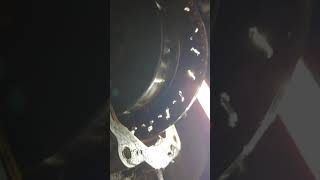
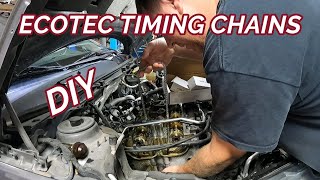
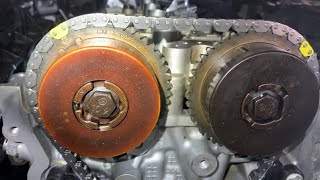
The 2.5L Ecotec LCV engine, like many in the Ecotec family, is widely known for premature timing chain failure. While causes like faulty sensors or solenoids can trigger timing codes on other vehicles, on this specific Malibu, P0016 is a very strong indicator of a stretched timing chain 🎬 Watch: Real-world example of a stretched chain on this Malibu or a failed guide/tensioner. This issue is so prevalent that mechanics often suspect the timing chain immediately, especially if the vehicle has over 80,000 miles or a spotty oil change history. The problem is common enough that many aftermarket companies sell complete timing kits specifically for this engine.
Generation note: This guide covers the eighth-generation Chevrolet Malibu (2013-2015) and the 2016 'Malibu Limited' model, which was a carryover of the eighth generation. The 2.5L LCV engine was the standard engine for these models. The redesigned ninth-generation Malibu, also launched in 2016, primarily used a different 1.5L turbo engine.
Symptoms You May Notice
- Check Engine Light is on
- Engine runs rough or idles poorly
- Rattling, scraping, or buzzing noise from the passenger side of the engine, especially on a cold startup
- Reduced engine power and poor acceleration
- Engine may crank but fail to start, especially as the problem worsens
- Stalling, especially after the engine warms up
- Noticeable decrease in fuel economy
- Entering "limp mode" with a sudden loss of power brakes, as documented in NHTSA ODI #11481844
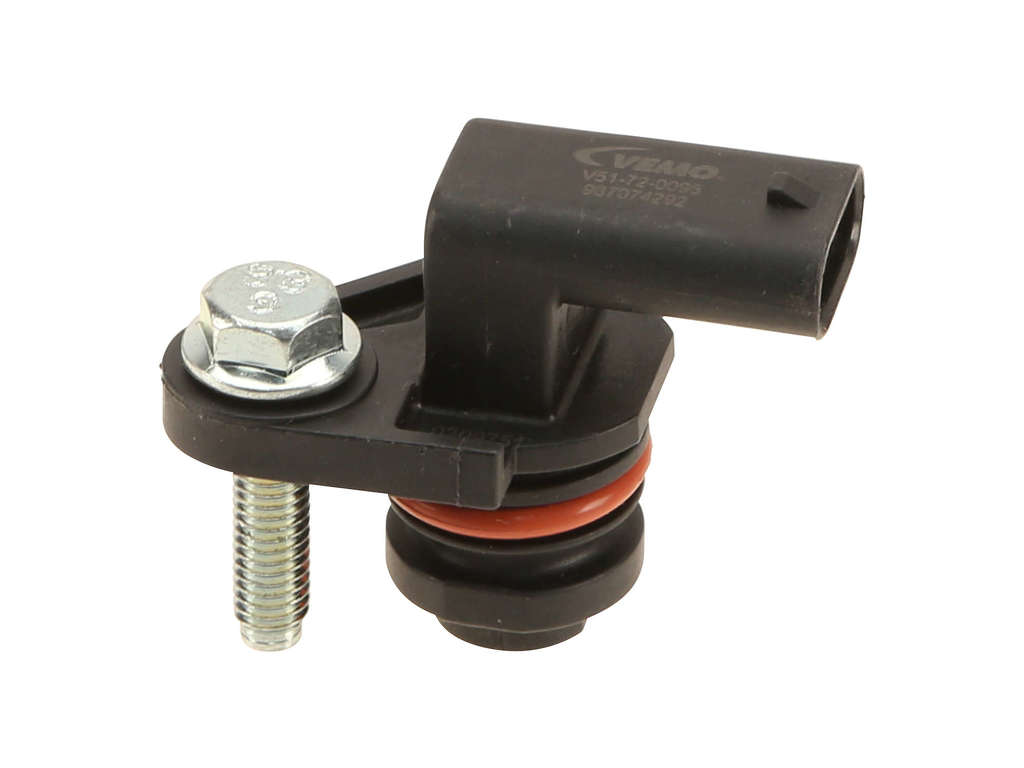
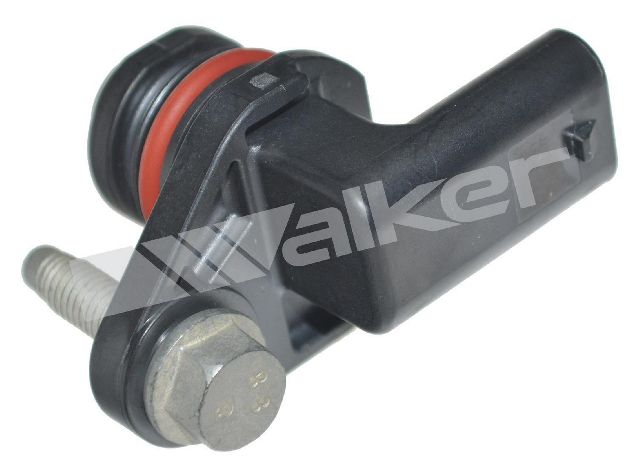
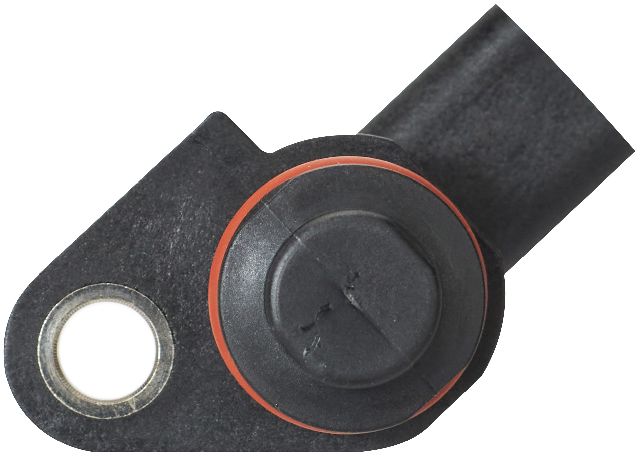
- Replacing the camshaft position sensor.
- Replacing the crankshaft position sensor. These sensors are almost always functioning correctly and are simply reporting the mechanical timing misalignment. Replacing them is a waste of money and a common mistake.
Most Likely Causes

- Stretched Timing Chain and/or Failed Guides/Tensioner 🔴 High Probability The Ecotec engine family has a well-documented history of timing chain issues. Wear is accelerated by infrequent oil changes, low oil levels, or using oil that doesn't meet the GM dexos specification. The hydraulic tensioner can weaken, allowing slack, and the plastic guides can become brittle and break.
How to confirm: A definitive diagnosis requires physical inspection. After removing the valve cover, a technician can check for excessive slack in the chain. The ultimate confirmation involves removing the front timing cover to measure tensioner extension and inspect all components for wear, such as broken plastic from the guides in the oil pan. Manufacturer Bulletin #PIP3423P specifically instructs technicians to inspect for loose timing chains or tensioners when P0016 is present.
Typical fix: Replace the entire timing chain kit. A comprehensive kit includes the primary timing chain, balance shaft chain, all plastic guides, both tensioners, and sprockets. It is also wise to replace the water pump, as it is driven by the timing chain and located in the same area.
Est. part cost: $200-$500 - Low or Degraded Engine Oil 🟡 Medium Probability The VVT system and the timing chain tensioner are both operated by oil pressure. Low or dirty oil starves these components, which can cause the VVT solenoids to respond slowly or stick, and also accelerates wear on the timing chain itself.
How to confirm: Check the oil level on the dipstick and inspect its condition. If the oil is very low, black, or sludgy, this is a likely contributing factor. Note the oil life monitor on these vehicles can sometimes overestimate the useful life of the oil.
Typical fix: Perform an immediate oil and filter change using a full synthetic oil that meets the GM dexos1 specification (typically 5W-20). Note: If the chain is already stretched, an oil change will not fix the P0016 code but is critical for the health of the new replacement parts.
Est. part cost: $40-$80 - Faulty Intake Camshaft Position Actuator Solenoid (VVT Solenoid) ⚪ Low Probability These solenoids can become clogged with debris from dirty oil or fail electrically. However, they are more likely to set solenoid-specific codes like P0010 or P0011. Because they are inexpensive and easy to access, they are often a first diagnostic step.
How to confirm: Swap the intake solenoid (usually a gray or white connector) with the identical exhaust solenoid (black connector) on the top of the engine. Clear the codes and drive. If the code changes to P0017 (Exhaust Cam Correlation), the solenoid is bad. If P0016 returns, the solenoid is not the cause.
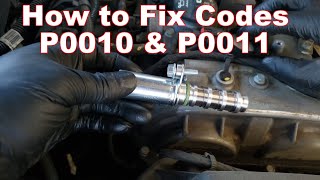
Typical fix: Replace the faulty solenoid. It is often recommended to replace both intake and exhaust solenoids 🎬 See how to easily replace these VVT solenoids yourself as a pair since they are exposed to the same conditions.
Est. part cost: $30-$60
Rare But Worth Checking
- Spun Camshaft Reluctor Wheel: If the timing chain has been replaced and is confirmed to be correctly timed, but code P0016 persists, the reluctor ring on the intake camshaft itself may have spun. This is a press-fit ring that the cam sensor reads. GM issued Bulletin #PIP4548F regarding this issue, advising technicians to inspect the respective reluctor wheels if P0016 is set on a properly timed engine or if the vehicle cranks but will not start.
Diagnosis Steps

- Check the engine oil level and condition. If low or dirty, perform an oil and filter change with the correct dexos-spec synthetic oil, clear the code, and see if it returns.
- Scan for other codes. The presence of P0017 strongly suggests a timing chain issue. The presence of P0011 or P0010 might point towards a VVT solenoid issue.
- Perform a 'solenoid swap'. Exchange the positions of the intake and exhaust VVT solenoids on top of the valve cover. Clear codes and run the engine. If the code changes to P0017, the solenoid is the problem. If P0016 returns, the chain is the likely culprit.
- Listen for a rattling or scraping noise from the passenger side of the engine, which is a classic sign of a loose timing chain or broken guide, especially on cold starts.
- If the above steps do not resolve the issue, seek professional diagnosis. A mechanic will likely use a scope to compare cam and crank signals first. If signals are out of sync, they will remove the valve cover to visually inspect the timing chain for slack.
- For definitive proof, the front engine/timing cover must be removed to inspect the chain, guides, and tensioner for wear and damage.
Parts You'll Likely Need

- Engine Timing Chain Kit
(OEM #12680750)— This is the most common cause of P0016. A complete kit ensures all worn components (chains, guides, tensioners, sprockets) are replaced at once. Manufacturer Bulletin #12-06-01-009F notes the availability of these high-feature kits specifically for repairing stretched timing chains.
Trusted brands: ACDelco (GM Genuine), Cloyes, Melling
OEM price range: $250-$400
Aftermarket price range: $150-$250 - Intake Camshaft Position Actuator Solenoid
(OEM #12679099)— A potential, though less likely, cause. It can get clogged or fail, causing timing issues. It's a common diagnostic step to test or replace this part.
Trusted brands: ACDelco (GM Genuine), Dorman
OEM price range: $45-$65
Aftermarket price range: $20-$40 - Exhaust Camshaft Position Actuator Solenoid
(OEM #12679100)— Often replaced as a pair with the intake solenoid during diagnosis or as preventative maintenance, as they wear at similar rates.
Trusted brands: ACDelco (GM Genuine), Dorman
OEM price range: $45-$65
Aftermarket price range: $20-$40
Related Codes That Often Appear With This One
- P0017 — This code is for the exhaust camshaft correlation. Since a single stretched timing chain affects the timing of both camshafts relative to the crank, seeing P0016 and P0017 together is a near-certain sign of a base timing problem.
- P0011 — This code indicates the intake camshaft timing is over-advanced. It's often caused by a sticking VVT solenoid, which can be a precursor or related issue to the P0016 correlation fault.
- P0326 — This is a knock sensor performance code. The physical rattling or slapping noise from a loose timing chain can be picked up by the knock sensor. The sensor interprets this mechanical noise as engine knock (detonation), triggering the P0326 code even when no actual knocking is occurring.
Technical Service Bulletins (TSBs) & Recalls

- Bulletin #PIP4548F: Discusses the possibility of a spun camshaft reluctor wheel causing persistent timing codes after a chain replacement.
- Bulletin #PIP3423P: Provides guidance for technicians to inspect for loose timing chains or tensioners when correlation codes like P0016 are present.
- Bulletin #12-06-01-009F: Details the availability of timing chain kits and guide replacements for repairing stretched chains that set DTC P0016.
- N192289160: A special coverage adjustment for certain 2014 models for a malfunctioning rocker arm oil control valve that could cause rough running and set DTCs.
Platform-Specific Known Issues
- The 2.5L Ecotec engine is known for premature timing chain stretch, often requiring replacement between 80,000 and 150,000 miles.
- Customer Satisfaction Program 18305 was issued for some 2013 Malibu models due to camshaft cap bolts not being torqued correctly at the factory, which could lead to engine performance problems.
- A rattling noise on startup that quickly disappears is a very common early warning sign of a failing timing chain tensioner on this engine.
Mechanic-Grade Diagnostic Values
- Camshaft Position Sensor Signal Wire Voltage (Key On, Engine Off) — expected: Approximately 4.8-5.0V. Failure: A constant zero or no change when a metal object is passed over the sensor tip indicates a bad sensor.
- Camshaft Position Sensor 5V Reference Wire Voltage (Key On, Engine Off) — expected: 4.8V - 5.2V. Failure: Voltage outside this range indicates a wiring issue or a problem with the ECM's 5V reference circuit.
- Camshaft Position Sensor Low Reference (Ground) Circuit Resistance — expected: Less than 10 Ω to a known good ground. Failure: Resistance higher than 10 Ω indicates a poor ground connection, which can cause incorrect sensor readings.
- P0016 DTC Set Threshold — expected: The ECM detects the intake camshaft is advanced more than 9 degrees when it should not be.. Failure: This threshold being met for more than a few seconds will trigger the Check Engine Light.
Scan Tool Commands That Help
- GDS2 / Professional Scan Tool: Crankshaft Position Variation Learn — This procedure is required after replacing the crankshaft position sensor to allow the ECM to learn the minor variations in the new sensor's reluctor wheel.
- GDS2 / Professional Scan Tool: Camshaft Position Actuator Solenoid Test — Allows a technician to command the VVT solenoids on and off while monitoring the camshaft angle PIDs to verify the solenoids are responding correctly and that oil pressure is sufficient to move the phasers.
Wiring & Ground Locations
- G103 — On the transmission stud, located below the throttle body.. This is a critical ground for the Engine Control Module (ECM). A loose or corroded connection here can cause incorrect readings from the cam and crank sensors, potentially leading to false correlation codes.
- G106 / G107 — G106 is at the left rear of the engine block; G107 is at the lower left side of the engine (for the 2.4L, similar location on 2.5L).. These are primary engine block grounds. Since sensors like the crankshaft position sensor ground through the block, a poor connection at these points can introduce electrical noise and signal errors.
- ECM Connector X1, Pin 57 — At the Engine Control Module (ECM) in the engine compartment.. Pin 57 is the specific input for the Camshaft Position Sensor signal. Testing for a clean signal at this pin can definitively rule out any wiring harness issues between the sensor and the ECM.
- Camshaft Position Sensor Connector — Top of the engine, on the front of the cylinder head.. This is the primary test point for the sensor circuit. The typical pinout is Pin 1 (5V Reference), Pin 2 (Low Reference/Ground), and Pin 3 (Signal).
Real Owner Repair Stories
- NHTSA ODI #11190432 — An owner reported that their vehicle broke a timing chain guide at 67,000 miles, which triggered both P0016 and P0017 crank/cam correlation codes despite regular oil changes.
- chevymaibuforum.com user report (2014 Chevrolet Malibu 2.5L LCV) — P0016 and P0017 codes present.
❌ Tried (didn't work) Replaced timing chain, guides, and tensioners., Replaced both VVT solenoids.
✅ What actually fixed it The codes returned after the timing chain service. The final fix was replacing the intake camshaft because the press-fit reluctor wheel had spun on the camshaft, which was confirmed to be a known issue per GM TSB PIP4548F. - Reddit user Key-Middle-7884 (2016 Malibu 2.5L Ecotec) — P0016 code, but engine runs perfectly with no chain rattle.
❌ Tried (didn't work) VVT solenoids were previously replaced for a 'reduced engine power' message.
✅ What actually fixed it The user was advised by others that a slipped reluctor wheel on the camshaft or plugged oil passages in the valve cover feeding the VVT solenoids were likely causes, especially with no audible chain noise. The final resolution was a timing chain replacement covered by an aftermarket warranty.
OEM Part Supersession History
12635447, 12673669, 12675579→12680750— Standard part evolution for improved durability and manufacturing consistency of the timing chain kit components.
Model Year Variations Within This Range
- 2014: Certain 2014 models were subject to Special Coverage Adjustment N192289160 for a rocker arm oil control valve that could malfunction, causing a rough run condition and setting DTCs. While not directly P0016, it represents a known valvetrain oil pressure issue for this specific year.
Diagnostic Flowchart
Real Owner Stories
Aggregated from forums and TSBs cited above. Mileages and costs reflect what owners reported in those sources.
2015 Chevrolet Malibu (non-turbo) — 57000 miles
Symptoms: Engine started to shake the car, knocking, check engine light, lost power, completely stalled, difficult to restart, burning smell, smoke from behind the engine. Codes P0016 and P0324.
What fixed it: The owner did not report the final fix in the provided text; they were asking for advice.
Source hint: Reddit r/MechanicAdvice
2013-2016 Chevrolet Malibu 2.5L — ~115000 miles
Symptoms: P0016 and P0017 codes present, leading to diagnosis of a stretched timing chain.
What fixed it: Timing chain replacement.
Source hint: ChevyMalibuForum.com: Multiple threads titled 'P0016 and P0017'
Chevy Malibu 2.4
Symptoms: P0016 and P0017 codes present.
What fixed it: A professional technician used an oscilloscope to definitively prove the timing was off before tearing down the engine, confirming it was a mechanical timing issue and not a sensor issue.
Source hint: YouTube - South Main Auto Repair LLC: A video titled 'Chevy Malibu 2.4 : P0016 P0017 The Diagnosis'
Chevrolet Colorado / GMC Canyon (2.5L LCV)
Symptoms: P0016 code present.
What fixed it: Timing chain replacement at the dealership.
Source hint: GM-Trucks.com
Related OBD-II Codes
Frequently Asked Questions
Does Customer Satisfaction Program 18305 apply to my 2013 Malibu with a P0016 code?
Is there a special coverage or TSB for 2014 Malibu models that run rough and set codes?
At what mileage does the timing chain usually fail on the 2.5L Ecotec engine?
I replaced the timing chain on my 2.5L LCV but P0016 came back. What else could it be?
How can I test if the VVT solenoid is causing P0016 on my Malibu?
What kind of oil should I use to prevent timing chain wear on the 2.5L Ecotec?
Helpful Videos
We Have This Part in Stock


The information in this article is provided for general reference and educational purposes only. Vehicle specifications, procedures, and part compatibility can vary by production date, trim level, and region. Always consult your vehicle's factory service manual and verify part numbers before purchasing or performing repairs. Safety-critical components such as airbags, seat belts, and braking systems should be installed by a qualified professional.
- Chevrolet Malibu:
- 🎬 Helpful Videos
- 🛍️ Shop This Part
- What's Unique About the 2013-2016 Chevrolet Malibu
- Symptoms You May Notice
- Most Likely Causes
- Rare But Worth Checking
- Diagnosis Steps
- Parts You'll Likely Need
- Related Codes That Often Appear With This One
- Technical Service Bulletins (TSBs) & Recalls
- Platform-Specific Known Issues
- Mechanic-Grade Diagnostic Values
- Scan Tool Commands That Help
- Wiring & Ground Locations
- Real Owner Repair Stories
- OEM Part Supersession History
- Model Year Variations Within This Range
- Diagnostic Flowchart
- Real Owner Stories
- 2015 Chevrolet Malibu (non-turbo) — 57000 miles
- 2013-2016 Chevrolet Malibu 2.5L — ~115000 miles
- Chevy Malibu 2.4
- Chevrolet Colorado / GMC Canyon (2.5L LCV)
- Related OBD-II Codes
- Frequently Asked Questions
- 🎟️ Get 5% Off