

P0016 on 2013-2018 Cadillac ATS 3.6L V6: Stretched Timing Chain Causes and Fixes
On a 2013-2018 Cadillac ATS with the 3.6L V6, P0016 almost always means the timing chains have stretched, a problem exacerbated by extended oil change intervals. This is a serious, labor-intensive repair. Do not drive the vehicle. Expect a professional repair cost of $2,000 to $4,000.
- P0016 on a 3.6L V6 Cadillac ATS is a severe code that almost always points to stretched timing chains.
- Do not drive the vehicle. Continuing to drive risks catastrophic engine failure, which is far more expensive than the timing chain repair.
- Do not waste money replacing the camshaft or crankshaft sensors first; they are very rarely the cause of the problem.
- The repair is complex and expensive, typically costing between $2,000 and $4,000. This is not a DIY-friendly job for most home mechanics.
- Using high-quality, dexos-approved synthetic oil and changing it regularly is the best preventative measure to prolong the life of the timing chains.
What's Unique About the 2013-2018 Cadillac ATS
The GM 3.6L V6 engine family (LFX/LGX) used in the Cadillac ATS has a widely documented history of premature timing chain stretching. This is often attributed to the original chain design and GM's oil life monitoring system, which could encourage oil change intervals that were too long, leading to oil degradation and accelerated chain wear. Unlike on many other vehicles where this code might point to a simple sensor failure, on the ATS V6 it is a very strong indicator of a significant mechanical issue. Multiple Technical Service Bulletins (TSBs) have been issued that direct technicians to inspect for loose timing chains when P0016 and related codes appear.
Generation note: The 2013-2015 models use the 3.6L LFX V6, which is more commonly associated with premature timing chain issues. The 2016-2018 models use the updated 3.6L LGX V6, which features a more durable timing system design. While the problem is less common on the LGX, it is still possible. TSBs for the LGX note that P0016 can also be caused by sticking Intake Camshaft Position Actuator Park Lock Solenoid Valves or by swapping their electrical connectors with the VVT solenoids during a repair, as the plugs are identical.
Symptoms You May Notice
- Check Engine Light is on
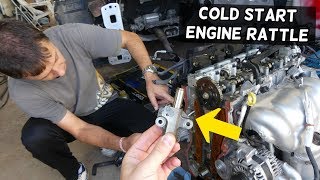
- Engine rattling noise, especially on a cold start 🎬 Watch: Hear what a timing chain rattle sounds like on startup.
- Rough or unstable idle
- Reduced engine power and hesitation during acceleration
- Engine may be hard to start or cranks but does not start
- Stalling
- Decreased fuel economy
- Replacing the camshaft position sensor or crankshaft position sensor without checking mechanical timing. These sensors are rarely the root cause of P0016 on this engine.
- Replacing only the VVT solenoids when the timing chains are already stretched. This will not fix the underlying mechanical slack in the system and the code will return.
- Replacing timing chain guides and sprockets unnecessarily. TSB 12-06-01-009F notes that for a simple stretched chain issue, the original guides and sprockets are often not worn and do not require replacement, reducing repair cost.
Most Likely Causes
- Stretched Timing Chains and/or Failed Tensioners 🔴 High Probability The 3.6L V6 LFX engine, in particular, has a well-documented history of premature timing chain wear. The chains stretch over time, and the hydraulic tensioners can fail or weaken, causing slack. A primary contributing factor is oil breakdown from extended oil change intervals, which starves the chains and tensioners of proper lubrication.
How to confirm: The definitive method is physical inspection, which requires removing the front timing cover to check for chain slack. An advanced scan tool can also show the degrees of camshaft deviation, with a value over 9-12 degrees often indicating a stretched chain. A labscope can also be used to compare crankshaft and camshaft sensor waveforms to visually confirm the timing offset.
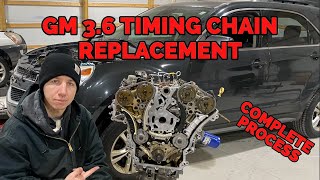
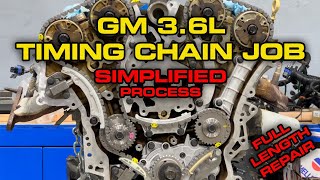
Typical fix: Replace all three timing chains, all guides, and all tensioners with a complete timing chain kit. This is a major repair. 🎬 See this full-length walkthrough of the timing chain removal and installation.
Est. part cost: $350-$800 - Low or Dirty Engine Oil 🟡 Medium Probability The camshaft phasers (actuators) and timing chain tensioners are both hydraulically operated by engine oil pressure. Low, old, or incorrect viscosity oil can impede their function, leading to timing correlation errors, and is a primary cause of accelerated timing chain wear.
How to confirm: Check the engine oil level on the dipstick and inspect its condition. If the oil is very low, black, or sludgy, this could be the cause or a major contributing factor. This should always be the first check.
Typical fix: Perform an oil and filter change using a high-quality full synthetic oil that meets GM's dexos specification. Clear the code and drive. If the code returns, the problem is almost certainly mechanical.
Est. part cost: $50-$120 - Faulty Camshaft Position Actuator Solenoid (VVT Solenoid) ⚪ Low Probability These solenoids control oil flow to the phasers. They can become clogged with sludge or fail electrically, causing incorrect camshaft positioning. While they can fail, they are often replaced unnecessarily when the root cause is a stretched chain, as confirmed by many owner experiences in forums.
How to confirm: A common diagnostic step is to swap the Bank 1 intake solenoid with the exhaust solenoid. If the code changes to P0017 (Exhaust Cam Correlation), the solenoid is confirmed to be faulty. However, TSB PIP5096C for some 2013-2015 models warns against this practice.
Typical fix: Replace the faulty solenoid. It is often recommended to replace them in pairs (intake and exhaust).
Est. part cost: $30-$80
Rare But Worth Checking
- Slipped Crankshaft Reluctor Wheel: GM TSB PIP3423L explicitly states that if timing chains are inspected and found to be tight, the issue may be that the reluctor wheel, which is press-fit onto the crankshaft, has moved. This causes a persistent correlation code even with perfect mechanical timing. A technician can sometimes inspect for this with a borescope through the crank sensor hole before removing the oil pan. The only fix is crankshaft replacement.
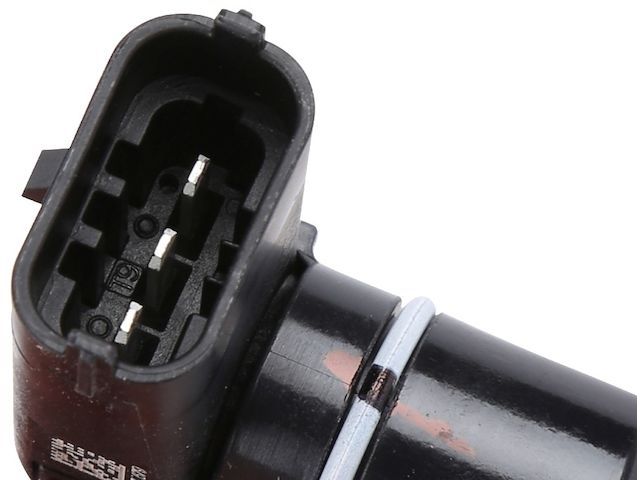
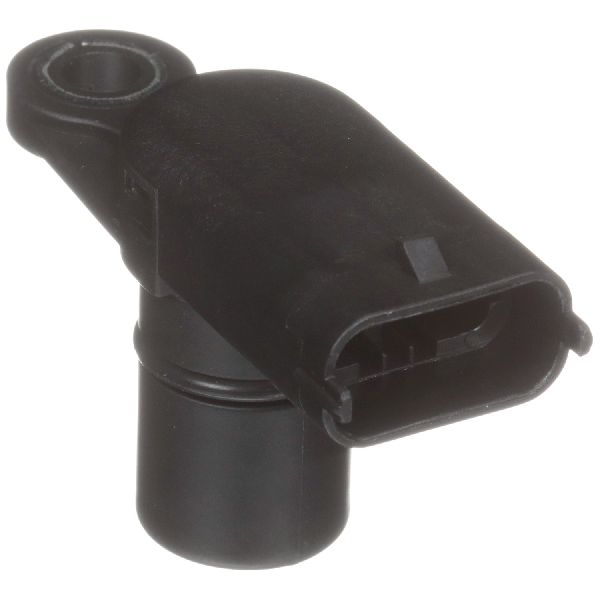
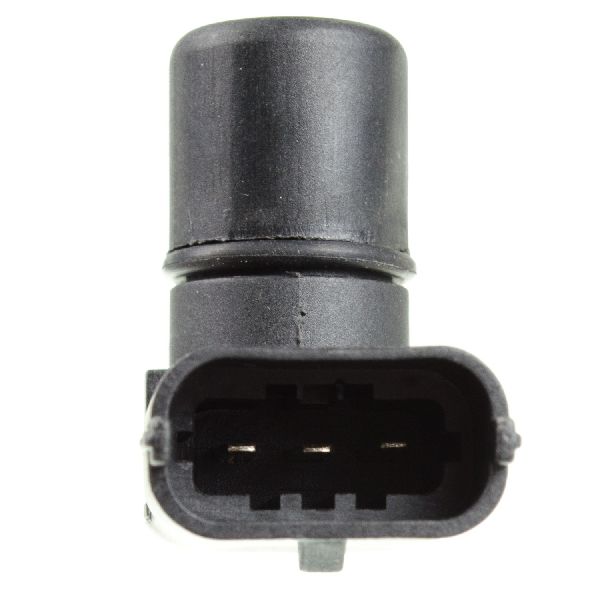
- Faulty Camshaft or Crankshaft Position Sensor: While possible, a sensor failure is the least likely cause on this platform. The sensors are usually accurately reporting a real mechanical problem. Do not replace sensors without ruling out mechanical issues first, a common mistake cited by owners.
Diagnosis Steps
- Check Engine Oil: Verify the oil level is full and the oil is clean. If low or dirty, perform an oil change with the correct GM dexos-spec synthetic oil, clear the codes, and see if the problem returns. This is the first and most critical step.
- Scan Tool Analysis: Use an OBD-II scanner to check for other related timing codes (P0008, P0017, etc.). Use an advanced scan tool to view live data for camshaft angle deviation to see how far out of sync the cam is. A deviation greater than 9-12 degrees strongly suggests a mechanical issue.
- Inspect VVT Solenoids: Inspect the wiring and connectors for the Bank 1 intake VVT solenoid. Consider swapping the intake and exhaust solenoids to see if the code changes from P0016 to P0017. If it does, the solenoid is bad.
- Mechanical Inspection: If the oil and solenoids are good, the next step is a mechanical inspection. This is a labor-intensive process that involves removing the engine front cover to physically check the timing chains for slack and inspect the guides and tensioners for wear or damage.
- Inspect Crankshaft Reluctor Wheel: During mechanical inspection, or via a borescope through the crank sensor port, a technician should check if the crankshaft reluctor wheel has slipped, as noted in GM TSB PIP3423L.
Parts You'll Likely Need
- Engine Timing Chain Kit
(OEM #12700437)— This is the most common fix. A complete kit replaces the stretched chains and related wear items like tensioners. Per TSB 12-06-01-009F, the original guides and sprockets can often be reused 🎬 Watch: A professional mechanic demonstrates timing chain service on a Cadillac. if not visibly worn, but many kits include them.
Trusted brands: ACDelco, Cloyes, Melling, Gates, DNJ Rock
OEM price range: $400-$600
Aftermarket price range: $250-$450 - Intake Camshaft Position Actuator Solenoid
(OEM #12655420)— This is a much less common cause, but can fail due to sludge or electrical issues. It's often attempted as a first, less-expensive repair before committing to the timing chain job.
Trusted brands: ACDelco, Delphi
OEM price range: $40-$80
Aftermarket price range: $25-$50
Related Codes That Often Appear With This One
- P0008 — This is a general 'Engine Position System Performance Bank 1' code. Seeing P0008 with P0016 is a very strong confirmation of a stretched timing chain on the 3.6L V6.
- P0017 — This code is for the Bank 1 Exhaust camshaft. If the primary or a secondary timing chain is stretched, it can affect both cams on the bank, causing both codes to appear.
- P0018, P0019, P0009 — These are the equivalent timing correlation codes for Bank 2 (driver's side). Seeing codes for both banks (e.g., P0016 and P0018) almost guarantees a problem with the primary timing chain that serves both banks.
Technical Service Bulletins (TSBs) & Recalls
- PIP3423L / PIP5163G: Links codes P0008, P0009, P0016-P0019 directly to loose timing chains. Crucially, it advises that if chains are found to be tight, the crankshaft reluctor wheel may have slipped.
- 12-06-01-009F: Notes that for simple stretched chain issues, original guides and sprockets are often reusable.
- 23-NA-091 (supersedes 19-NA-150): Warns that on LGX engines (2016+), P0016 can be caused by swapping the identical electrical connectors for the Bank 1 intake cam actuator and the park lock solenoid after a repair.
- PIP5730B: Identifies a sticking or broken Intake Camshaft Position Actuator Park Lock Solenoid as a specific cause for P0016 on the 3.6L LGX engine.
Platform-Specific Known Issues
- The 3.6L LFX V6 (2013-2015) is particularly notorious for premature timing chain failure, sometimes at mileages as low as 60,000-80,000 miles, often linked to extended oil change intervals.
- GM issued several TSBs (e.g., PIP3423L and 12-06-01-009F) acknowledging that codes P0016, P0017, P0018, and P0019 are likely caused by stretched timing chains.
- Owner forums frequently cite dealership repair quotes in the $3,000-$5,000 range for the full timing chain service on the 3.6L V6.
Mechanic-Grade Diagnostic Values
- Camshaft Position Actuator Solenoid (VVT Solenoid) resistance — expected: 6-12 ohms. Failure: A reading outside this range indicates a faulty solenoid coil.
Scan Tool Commands That Help
- GDS2 (GM Techline): Camshaft Position Actuator Solenoid Test — This bidirectional command allows a technician to manually activate the VVT solenoid while watching live data to see if the camshaft angle responds. It confirms if the solenoid is mechanically stuck or if the circuit is faulty.
- GDS2 (GM Techline): Camshaft Position Counter — While cranking the engine, if the camshaft position counters are not incrementing, it points to a problem with the sensor, its wiring, or the reluctor wheel, rather than a stretched chain.
Wiring & Ground Locations
- G104 — On the front of the right (passenger side) cylinder head for the 3.6L LFX engine.. This is a primary engine ground. A poor, loose, or corroded connection here can cause erratic voltages and unpredictable behavior from engine sensors and the ECM, potentially leading to false codes.
- ECM Connector X1 — One of the main harness connectors at the Engine Control Module (ECM), located in the right front of the engine compartment.. This connector contains the pins for the camshaft and crankshaft position sensor circuits. It must be inspected for corrosion or backed-out pins when diagnosing sensor-related codes.
- Bank 1 Intake Cam Actuator & Park Lock Solenoid Connectors (LGX Engine Only) — On the 2016+ 3.6L LGX V6, the intake camshaft actuator solenoid is on top of the engine, while the intake actuator park lock solenoid is on the front of the engine for Bank 1 (firewall side).. Per GM TSB 23-NA-091, these two connectors are physically identical and can be accidentally swapped during engine service. This will immediately set a hard P0016 code with a rough idle. Verifying the correct wire colors at each connector is a critical diagnostic step after any engine repair on the LGX.
Real Owner Repair Stories
- ColoradoFans forum user (2016 Chevrolet Colorado V6 (LGZ engine, similar to LGX), 78,000 miles) — P0016 and P0017 codes present.
❌ Tried (didn't work) Not specified, but the vehicle was taken to a dealer for diagnosis.
✅ What actually fixed it The dealer diagnosed stretched timing chains and quoted a $3,800 repair. This confirms the common cause and high cost on a similar GM V6 engine. - YouTube channel 'd5241' (Cadillac CTS with 3.6L V6 (similar LFX family), 88,000 miles) — Check engine light with codes P0008 and P0017.
❌ Tried (didn't work) Replacing camshaft position sensors., Inspecting VVT solenoids (screens were clean).
✅ What actually fixed it The check engine light returned after a 5-mile test drive. The user concludes in the video description that the timing chain was the likely root cause, despite attempting the easier fixes first. This serves as a cautionary tale against replacing sensors when the underlying issue is mechanical.
OEM Part Supersession History
12655420→12679099— The part was updated by the manufacturer. Reasons often include design improvements, material changes, or consolidation of part numbers.
Heads up: The new part number (12679099) is the correct service replacement for the original.
Model Year Variations Within This Range
- 2016-2018: Models from 2016 onwards use the updated 3.6L LGX V6 engine and an 8-speed automatic transmission. The LGX has a unique potential cause for P0016: two identical electrical connectors for the VVT solenoid and the intake actuator park lock solenoid can be swapped during service, a problem that does not exist on the 2013-2015 LFX engine.
Diagnostic Flowchart
Real Owner Stories
Aggregated from forums and TSBs cited above. Mileages and costs reflect what owners reported in those sources.
Cadillac 3.6L V6
Symptoms: Experienced P0016 and P0017 codes. Initially tried cheaper repairs like replacing sensors and solenoids, which failed to resolve the issue.
What fixed it: A costly complete timing chain replacement at the dealership.
Cost: $3000-$5000
Source hint: CadillacForums.com - Multiple P0017/P0016 Threads
Cadillac 3.6L V6
Symptoms: Got a timing code after an oil consumption issue caused the engine oil to run low.
What fixed it: Replaced the timing chain, tensioners, and sprockets, but the code persisted, highlighting the complexity of the issue.
Source hint: Reddit r/MechanicAdvice & r/Cadillac - P0017 after oil low
GM 3.6L LFX — ~40000 miles
Symptoms: Correlation codes appeared despite having a newer, low-mileage engine.
What fixed it: Timing cover resealing job.
Source hint: Pennock's Fiero Forum - GM 3.6 experts... Why the disparity between different LFX engines?
Related OBD-II Codes
Frequently Asked Questions
Is the timing chain issue common on my 2013-2015 Cadillac ATS 3.6L LFX?
I have a 2016 ATS with the LGX engine and just had a repair done. Why did P0016 suddenly appear?
Should I swap the VVT solenoids to test if they are bad on my 2014 ATS?
How much does it cost to fix the P0016 code on a Cadillac ATS 3.6L?
My mechanic checked the timing chains and they are tight, but I still have P0016. What else could it be?
What is the first thing I should check if P0016 pops up on my ATS?
Helpful Videos

Used OEM Parts in Stock

New Aftermarket Parts Available


The information in this article is provided for general reference and educational purposes only. Vehicle specifications, procedures, and part compatibility can vary by production date, trim level, and region. Always consult your vehicle's factory service manual and verify part numbers before purchasing or performing repairs. Safety-critical components such as airbags, seat belts, and braking systems should be installed by a qualified professional.
- Cadillac ATS:
- 🎬 Helpful Videos
- 🛍️ Shop This Part
- What's Unique About the 2013-2018 Cadillac ATS
- Symptoms You May Notice
- Most Likely Causes
- Rare But Worth Checking
- Diagnosis Steps
- Parts You'll Likely Need
- Related Codes That Often Appear With This One
- Technical Service Bulletins (TSBs) & Recalls
- Platform-Specific Known Issues
- Mechanic-Grade Diagnostic Values
- Scan Tool Commands That Help
- Wiring & Ground Locations
- Real Owner Repair Stories
- OEM Part Supersession History
- Model Year Variations Within This Range
- Diagnostic Flowchart
- Real Owner Stories
- Cadillac 3.6L V6
- Cadillac 3.6L V6
- GM 3.6L LFX — ~40000 miles
- Related OBD-II Codes
- Frequently Asked Questions
- 🎟️ Get 5% Off