

P0016 on 2012-2017 Buick Verano 2.4L: Timing Chain and Solenoid Fixes
On a 2012-2017 Buick Verano with the 2.4L Ecotec engine, P0016 almost always indicates a stretched timing chain, a problem accelerated by the engine's known oil consumption issues. Before committing to the costly timing chain job (often $1,500+), check for low engine oil and consider swapping the inexpensive VVT solenoids as a diagnostic step. A dry dipstick is a major red flag.
- P0016 on this car is a critical warning. Do not drive the vehicle to avoid catastrophic engine failure.
- The 2.4L Ecotec engine is known to consume oil. Check your oil level frequently, regardless of the oil life monitor reading.
- The most likely cause is a stretched timing chain, which is a major, professional-level repair.
- Before authorizing a timing chain replacement, always check the oil level and consider swapping the inexpensive VVT solenoids as a first diagnostic step.
- Do not waste money replacing the cam or crank sensors, as they are almost never the root cause of this code.
What's Unique About the 2012-2017 Buick Verano

The 2.4L Ecotec engine (RPOs LAF, LEA, LUK) in the Verano and its platform-mates has a well-documented history of issues that directly lead to code P0016. These engines are known for excessive oil consumption (over 1 quart per 2,000 miles) due to a piston ring design flaw, a problem acknowledged by GM in TSB 13-06-01-003J. This oil starvation accelerates wear of the timing chain and its hydraulic tensioner, causing the chain to stretch and trigger the P0016 code. Additionally, a clogged PCV orifice in the intake manifold (TSB 14882) can increase crankcase pressure, worsen oil consumption, and even blow out seals. Therefore, on this specific vehicle, the code is almost always a symptom of a larger, well-known mechanical issue rather than a simple sensor failure.
Symptoms You May Notice
- Check Engine Light is on
- Engine rattling noise, especially on a cold start, that sounds like a chain slapping around.
- Rough idling or stalling, especially when stopped at a light.
- Reduced engine power or sluggish acceleration
- Engine cranks but won't start in severe cases
- Poor fuel economy
- StabiliTrak warning light may illuminate alongside the Check Engine Light.
- Replacing the camshaft position sensor. The sensor is usually just accurately reporting the timing correlation problem; it is not the cause.
- Replacing the crankshaft position sensor. Like the cam sensor, this part is extremely unlikely to be the cause of a correlation fault.
- Replacing only the VVT solenoids without addressing the underlying cause. A Reddit user reported their boyfriend's 2015 Verano had the solenoids replaced, but the engine blew up later because the root cause (likely the timing chain) was ignored.
Most Likely Causes

- Stretched Timing Chain and/or Failed Guides/Tensioner 🔴 High Probability The 2.4L Ecotec is known for premature timing chain wear, often accelerated by oil starvation from high oil consumption. The plastic guides can also become brittle and break. Low oil pressure compromises the hydraulic tensioner's ability to keep the chain taut.
How to confirm: A mechanic will remove the timing cover to physically inspect the chain for slack and check for broken guide material. Finding plastic pieces on the VVT solenoid screens or in the oil pan is a definitive sign of failure. A rattling noise from the passenger side of the engine is a strong indicator.
Typical fix: Replacement of the entire timing chain kit, including the chain, tensioner, and all guides. The balance shaft chain and its components are typically replaced at the same time. The oil pan must be dropped and cleaned of all plastic debris.
Est. part cost: $150-$450 - Low or Dirty Engine Oil 🟡 Medium Probability These engines are known for consuming oil, and the vehicle's oil life monitor may not accurately reflect the true oil level. TSB 13-06-01-003J notes that no oil may appear on the dipstick if the engine is low by 1.25 quarts or more. Low oil pressure starves the VVT system and timing chain tensioner.
How to confirm: Physically check the oil level on the dipstick. If it is low or the dipstick is dry, top it off with the correct 5W-30 full synthetic oil. Note the oil's condition; if it is very dark or sludgy, it needs to be changed. An oil change alone will not fix a P0016 that has already appeared, as damage has likely already occurred.
Typical fix: Perform an oil and filter change using a high-quality full synthetic 5W-30 oil that meets dexos1 specifications. Clear the codes and see if P0016 returns. This is a critical first step, but rarely the final solution once the code is set.
Est. part cost: $40-$80 - Faulty Intake Camshaft Actuator Solenoid (VVT Solenoid) ⚪ Low Probability Oil sludge or debris from failing timing chain guides can clog the fine mesh screens on the solenoid, causing it to stick or respond slowly.
How to confirm: A simple diagnostic test is to swap the intake solenoid (front of the engine, often with a gray connector) with the exhaust solenoid (rear of the engine, often with a black connector). If the code changes to P0017 (Exhaust Camshaft Correlation), the solenoid is confirmed to be faulty. Before swapping, inspect the screens on both solenoids for metal or plastic debris, which indicates a more serious timing chain issue.
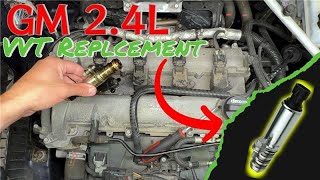
Typical fix: Replace the faulty solenoid. It is often recommended to replace both the intake and exhaust solenoids as a pair. 🎬 See how to easily replace the VVT solenoids yourself This is a cheap and easy first step, but often does not resolve the P0016 on this engine.
Est. part cost: $30-$60
Rare But Worth Checking
- Spun Camshaft Reluctor Ring: GM Technical Service Bulletin PIP4548F (and later versions) notes that the reluctor ring (tone wheel) on the camshaft is press-fit and can spin out of position, especially after an overheat event. This will cause a P0016/P0017 code even if the timing chain is perfectly aligned. The fix requires camshaft replacement as the ring cannot be repositioned.
Diagnosis Steps
- Check the engine oil level and condition immediately. If low or dirty, perform an oil and filter change using full synthetic 5W-30 oil. A dry dipstick is a common and severe symptom. Clear codes and see if they return, but do not assume this is a fix.
- Inspect the VVT solenoids. Remove both the intake (front) and exhaust (rear) solenoids and check their screens for metal shavings or plastic debris. Debris is a clear sign of timing guide failure.
- Swap the intake and exhaust solenoids. Clear the codes and drive the vehicle. If the code changes from P0016 to P0017, the solenoid you moved to the exhaust position is faulty and must be replaced.
- If the oil is full and the solenoids are clean and functional, the next step is to assume a mechanical timing issue.
- Use a scan tool to observe cam and crank sensor data. An oscilloscope can provide a definitive waveform to confirm the timing relationship is off.
- Have a professional remove the valve cover and/or timing cover to physically inspect the timing chain for slack and look for broken plastic guide material. This is the definitive diagnostic step.
- Check for a clogged PCV orifice in the intake manifold per TSB 14882, as this contributes to the oil consumption that causes the timing failure.
Parts You'll Likely Need

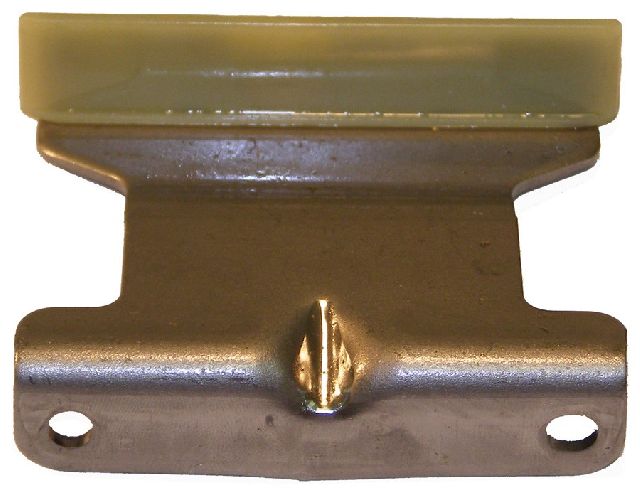
- Engine Timing Chain Kit
(OEM #12680750)— This is the most common cause of P0016 on the 2.4L Ecotec. A complete kit replaces the stretched chain, failed tensioner, and brittle guides.
Trusted brands: ACDelco, Cloyes
OEM price range: $150-$230
Aftermarket price range: $100-$180 - Intake Camshaft Position Actuator Solenoid
(OEM #12655420)— A less common but much cheaper potential fix. These can get clogged with debris or fail electrically, causing timing control issues. Often has a gray electrical connector.
Trusted brands: ACDelco, Delphi
OEM price range: $40-$70
Aftermarket price range: $25-$50 - Exhaust Camshaft Position Actuator Solenoid
(OEM #12655421)— Often replaced as a pair with the intake solenoid. Useful for swapping during diagnosis. Often has a black electrical connector.
Trusted brands: ACDelco, Delphi
OEM price range: $40-$70
Aftermarket price range: $25-$50
Related Codes That Often Appear With This One
- P0017 — Exhaust Camshaft Position Correlation. Seeing P0016 and P0017 together strongly indicates a base timing issue, as a stretched chain affects both camshafts.
- P0011 — Intake Camshaft Position Timing Over-Advanced. This can be caused by a sticking VVT solenoid or a stretched chain causing the ECM to see an implausible value.
- P0087 / P228D — Fuel Pressure Regulator Performance. The high-pressure fuel pump is driven by a lobe on the intake camshaft. Incorrect cam timing from a stretched chain can disrupt fuel pump operation and set these codes. Seeing these with P0016 strongly points to a timing chain issue, not a fuel system issue.
Technical Service Bulletins (TSBs) & Recalls
- 13-06-01-003J: Details the procedure for performing an oil consumption test and, if consumption exceeds 1 quart per 2,000 miles, replacing the pistons and rings. It also notes the dipstick can read empty when only ~1.25 quarts low.
- 14882: A special coverage adjustment for a plugged PCV orifice in the intake manifold, which can cause high crankcase pressure and oil leaks. It covers cleaning the orifice for up to 10 years/120,000 miles.
- PIP4548F: Diagnostic aid for P0016/P0017 caused by a spun camshaft reluctor ring, which is press-fit and not keyed. Advises camshaft replacement if the reluctor has moved. Bulletin #PIP4548F also advises technicians to inspect the respective camshafts if the engine is properly timed but still sets these codes or exhibits a crank-but-no-start condition.
Platform-Specific Known Issues
- Excessive oil consumption is a widely documented problem for this engine, often requiring new pistons and rings to permanently fix, as outlined in TSB 13-06-01-003J. This is a primary contributor to timing chain failure. The TSB specifies the acceptable consumption rate is less than 1 quart per 2,000 miles.
- A clogged Positive Crankcase Ventilation (PCV) orifice in the intake manifold is another known issue (TSB 14882) that can affect crankcase pressure, leading to oil consumption and even blown rear main seals. A simple test involves blocking the fresh air PCV tube and listening for changes in engine sound.
Mechanic-Grade Diagnostic Values
- VVT Actuator Solenoid Resistance — expected: 8 to 13 Ohms. Failure: A reading outside this range, an open circuit (OL), or a resistance reading that is unstable and bounces around when wiggling the connector indicates a faulty solenoid.
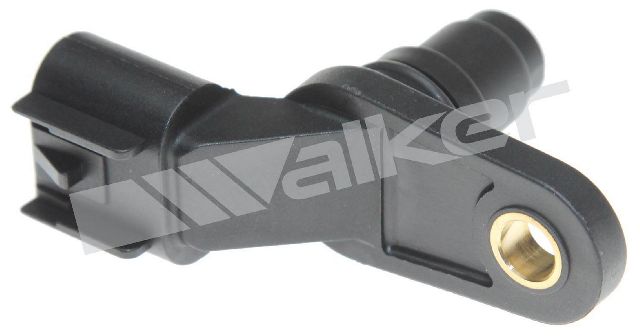
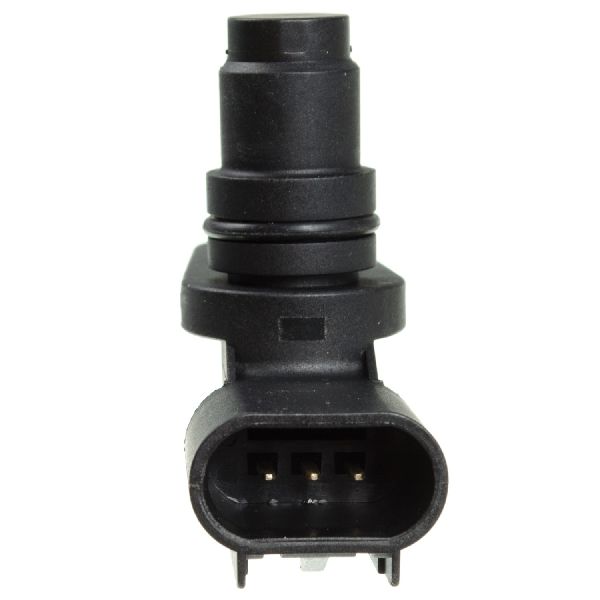
- Camshaft Position Sensor (3-wire Hall Effect) Signal Voltage — expected: The signal wire should switch between approximately 5V and 0V as a metal object (like the reluctor wheel) passes the sensor tip.. Failure: Voltage that does not switch, or is stuck at 0V or 5V, indicates a failed sensor.
- Camshaft End Play — expected: Less than 0.40 mm (0.016 in). Failure: If end play is equal to or greater than 0.40 mm, the camshaft can shift axially, causing the reluctor wheel to misalign with the sensor and trigger correlation codes.
- Cam/Crank Waveform Sync (Oscilloscope) — expected: At idle, the 17th signal pulse of the crankshaft sensor (CKP) after the missing tooth gap should align with the rising edge (high signal) of the camshaft sensor (CMP) waveform.. Failure: Misalignment of these two signal events indicates a base timing or phaser problem.
Scan Tool Commands That Help
- GDS2 (or equivalent professional scan tool): VVT Actuator Test / Oil Control Valve (OCV) Actuation — After verifying oil level and solenoid resistance, this command manually activates the VVT solenoid. A healthy engine should hesitate or stall, confirming the solenoid, oil passages, and phaser are mechanically responding to the command. If there is no change in engine operation, it points to a clogged solenoid, blocked oil passage, or a stuck phaser.
Wiring & Ground Locations
- G107 / G108 — G107 is often found on the lower left side of the engine block or on the transmission housing. G108 is often on the right rear of the engine block.. These are primary engine-to-chassis grounds. A loose or corroded connection at these points can create an unstable ground reference for the ECM and its sensors (cam, crank), leading to erratic signals and false correlation codes.
- VVT Solenoid Connectors — On top of the valve cover, at the front and rear of the engine.. The intake solenoid connector is typically gray, and the exhaust is black. While keyed differently, verifying they are not damaged and are connected to the correct solenoid is a basic but crucial visual check.
Real Owner Repair Stories
- Chevy Equinox Forum user '51r' (2017 GMC Terrain 2.4L Ecotec) — Check Engine Light with codes P0016, P0011, P228D after a few miles of driving. Car runs okay.
❌ Tried (didn't work) Replaced the timing chain and components (even though the original chain appeared to be in time and not stretched).
✅ What actually fixed it The code P0016 still returned after the timing chain replacement. The final fix was replacing the intake VVT solenoid and the intake camshaft position sensor with genuine GM/ACDelco parts and cleaning the reluctor wheel on the camshaft. - BobIsTheOilGuy Forum user 'ironman_gq' (2016 Chevrolet Equinox 2.4L Ecotec, 63,000 miles) — Engine jumped time and bent valves.
❌ Tried (didn't work) Regular maintenance and oil changes did not prevent the failure.
✅ What actually fixed it The timing chain failure required a major engine repair (fixing bent valves). The owner noted that even after the repair, the engine developed new noises, and they sold the vehicle. This story highlights that failure can occur even on lower-mileage, maintained engines.
"I Checked Everything" — The Actual Cause
- The diagnostic equivalent for this timing code is 'timing marks align, but the code persists.' A forum user with a 2.4L Ecotec reported that after getting a P0016, they opened the engine, confirmed the timing marks were perfectly aligned, and even replaced the timing chain as a precaution. The code immediately returned. The problem was only resolved after replacing the intake VVT solenoid and camshaft position sensor with OEM parts, suggesting a failure of the control or sensor components can mimic a mechanical timing fault.
OEM Part Supersession History
12655420→12679099— This is the Intake Camshaft Position Actuator Solenoid Valve. Part numbers are often superseded due to design improvements or manufacturing changes.
Heads up: The new part number (12679099) is the correct current replacement for the original. Using old stock of 12655420 is acceptable, but ordering the new number is preferred.
Model Year Variations Within This Range
- 2012-2017: The 2.4L Ecotec came in LAF and LEA variants. The Verano primarily used the LEA (dual VVT, FlexFuel). However, if sourcing a used engine, be aware of differences. When swapping an older LAF engine with a newer LEA, the intake camshaft and sprocket from the original LAF engine must be transferred to the LEA block for the camshaft position sensor and ECM to function correctly, as the reluctor wheel and phaser designs are not interchangeable between the two engine computers.
Diagnostic Flowchart
Real Owner Stories
Aggregated from forums and TSBs cited above. Mileages and costs reflect what owners reported in those sources.
2016 Buick Verano 2.4L Ecotec
Symptoms: Owner experienced a rattling noise and shaking at idle before the P0016 code appeared. Upon checking, the oil dipstick was completely dry.
What fixed it: Diagnosed as severe oil starvation directly linking to the timing code.
Source hint: Reddit r/MechanicAdvice: Error code p0016
2015 Buick Verano 2.4L Ecotec
Symptoms: Vehicle threw a P0016 code. The owner opted for the cheapest fix first, but the underlying mechanical issue was ignored.
What fixed it: Initially replaced the VVT solenoid, but the engine suffered catastrophic failure shortly after, requiring a full replacement.
Cost: $5000-$5000
Source hint: Reddit r/MechanicAdvice: Engine Code on 2015 Buick Verano
2017 GMC Terrain 2.4L Ecotec
Symptoms: Vehicle presented with codes P0016, P0011, and P228D. Owner underwent a major repair, but the codes immediately returned.
What fixed it: Replaced the timing chain, but persistent codes indicated further issues with VVT actuators or a spun cam reluctor ring.
Source hint: GMC Terrain Forum: 2017 Terrain 2.4 ecotec, new timing chain, still p0016...
Related OBD-II Codes
Frequently Asked Questions
Does TSB 13-06-01-003J apply to my Verano's P0016 code?
Why did my StabiliTrak warning light come on at the same time as the Check Engine Light?
Is the clogged PCV orifice issue covered under warranty for the 2012-2017 Verano?
I checked my oil and the dipstick is completely dry. Is my engine destroyed?
Can I just replace the VVT solenoids to fix P0016 on my 2.4L Ecotec?
What does TSB PIP4548F mean for my P0016 diagnosis?
Helpful Videos


We Have This Part in Stock


The information in this article is provided for general reference and educational purposes only. Vehicle specifications, procedures, and part compatibility can vary by production date, trim level, and region. Always consult your vehicle's factory service manual and verify part numbers before purchasing or performing repairs. Safety-critical components such as airbags, seat belts, and braking systems should be installed by a qualified professional.
- Buick Verano:
- 🎬 Helpful Videos
- 🛍️ Shop This Part
- What's Unique About the 2012-2017 Buick Verano
- Symptoms You May Notice
- Most Likely Causes
- Rare But Worth Checking
- Diagnosis Steps
- Parts You'll Likely Need
- Related Codes That Often Appear With This One
- Technical Service Bulletins (TSBs) & Recalls
- Platform-Specific Known Issues
- Mechanic-Grade Diagnostic Values
- Scan Tool Commands That Help
- Wiring & Ground Locations
- Real Owner Repair Stories
- "I Checked Everything" — The Actual Cause
- OEM Part Supersession History
- Model Year Variations Within This Range
- Diagnostic Flowchart
- Real Owner Stories
- 2016 Buick Verano 2.4L Ecotec
- 2015 Buick Verano 2.4L Ecotec
- 2017 GMC Terrain 2.4L Ecotec
- Related OBD-II Codes
- Frequently Asked Questions
- 🎟️ Get 5% Off