

P0015 on 2020-2021 Ford Transit: "B" Camshaft Timing Over-Retarded Causes and Fixes
On a 2020-2021 Ford Transit, code P0015 is most often caused by a powertrain control module (PCM) software issue, per Ford TSB 21-2224. The fix is a dealer software update. If that doesn't solve it, the next most likely cause is a faulty Bank 1 exhaust VCT solenoid, often due to dirty oil.
- For a 2020-2021 Ford Transit, your first step for a P0015 code should be to check with a dealer about TSB 21-2224 for a software update.
- Always check your engine oil level and condition first; low or dirty oil is a simple but common cause of this code.
- If a software update doesn't fix it, the most likely failed part is the Bank 1 (passenger side) exhaust VCT solenoid.
- Do not replace the camshaft position sensor; it is almost never the cause of this code.
- Ignoring the code can lead to poor fuel economy, rough running, and potentially more expensive engine damage down the line if a timing chain issue is the cause.
What's Unique About the 2020-2021 Ford TRANSIT
For this specific generation of Ford Transit, the P0015 code is frequently not a mechanical problem. Ford issued Technical Service Bulletin (TSB) 21-2224, which identifies a software glitch in the Powertrain Control Module (PCM) as a primary cause for this and other related camshaft timing codes on 2020-2021 models. This makes a trip to the dealer for a software update a crucial first diagnostic step before replacing any parts. The TSB applies specifically to 2020 Transits with the 3.5L Duratec engine and all 2021 Transits built on or before July 1, 2021.
Diagnostic Flowchart
Tap your situation to follow the diagnostic path that matches what you're seeing on this vehicle.
Symptoms You May Notice
- Check Engine Light is on
- Rough or unstable idle
- Reduced engine power and acceleration
- Decreased fuel economy
- Engine may hesitate or stall
- Rattling or knocking noise from the engine, especially on cold starts
- Replacing the camshaft position sensor. While related, the sensor is usually not the cause of a P0015 code. The sensor is correctly reporting that the timing is off; it's not the part that failed. A sensor replacement can cost between $286 and $428, making it an expensive incorrect repair.
- Replacing cam phasers or timing chains before checking for the PCM software update or testing the VCT solenoids.
Most Likely Causes
- Powertrain Control Module (PCM) Software Issue 🔴 High Probability This is a known issue documented by Ford in Technical Service Bulletin TSB 21-2224 for 2020 Transits with the 3.5L Duratec and all 2021 Transits built on or before July 1, 2021.
How to confirm: A Ford dealership or a qualified shop with access to Ford's diagnostic software (FDRS) can check if the TSB applies to your vehicle's VIN and if the PCM software has been updated.
Typical fix: Reprogramming the PCM to the latest software version. The TSB procedure involves cycling the VCT system 10 times with a diagnostic tool before performing the reflash.
Est. part cost: $0 - Low or Dirty Engine Oil 🟡 Medium Probability The Variable Camshaft Timing (VCT) system is hydraulic and relies on clean engine oil at the correct pressure to function. Dirty, thick, or low oil can impede the movement of the VCT solenoids and phasers, a common cause of VCT-related codes. Using oil that does not meet the manufacturer's specified viscosity (e.g., 5W-30 for the 3.5L) can also cause issues.
How to confirm: Check the engine oil level on the dipstick and examine its condition. If the oil is low or appears dark, gritty, or sludgy, it needs to be changed.
Typical fix: Perform an oil and filter change using the manufacturer-specified grade of oil (e.g., Motorcraft Synthetic Blend) and a quality filter (e.g., Motorcraft FL-500-S).
Est. part cost: $50-$100 - Faulty VCT Solenoid (Oil Control Valve) 🟡 Medium Probability These solenoids control oil flow to the cam phasers. They can get clogged with small debris from the oil or fail electrically, causing them to stick. Ford has issued multiple service messages (like SSM 48423) for other models noting that debris can cause these solenoids to stick.
How to confirm: A common diagnostic trick is to swap the Bank 1 exhaust VCT solenoid with the Bank 1 intake VCT solenoid. Clear the codes and drive the vehicle. If the code changes to P0012 (Intake 'A' Camshaft Over-Retarded), the solenoid is faulty. A scan tool can also command the solenoid to activate to check its response and measure resistance (should be 6.9-7.9 ohms).
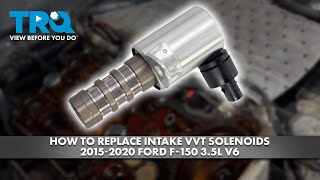
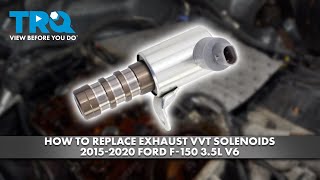
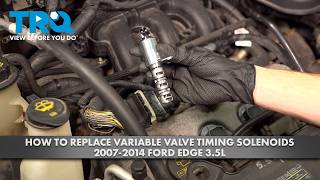
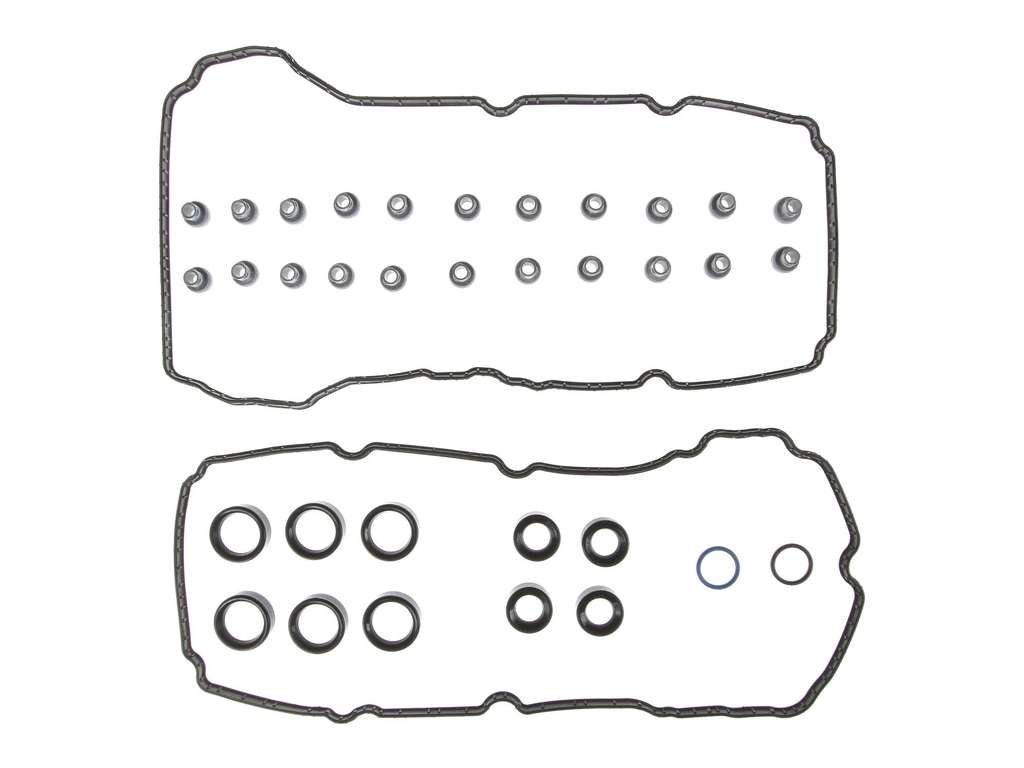
Typical fix: Replace the Bank 1 (passenger side) exhaust VCT solenoid. On the 3.5L engine, the VCT solenoids are located under the valve cover, so the valve cover gasket must also be replaced. 🎬 See this walkthrough for replacing the exhaust VCT solenoid.
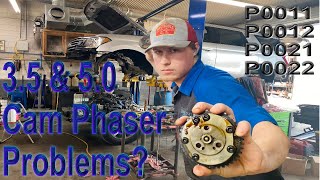
Est. part cost: $40-$120 - Worn Timing Chain or Cam Phaser ⚪ Low Probability While less common on newer vehicles, a stretched timing chain or a failing (stuck) cam phaser can cause the camshaft's actual position to lag behind its commanded position. This is a more widely known issue on higher-mileage 3.5L EcoBoost engines.
How to confirm: This is a more involved diagnosis. It often presents with a distinct rattling noise on startup. A mechanic would need to use advanced scan tool data to monitor camshaft deviation and potentially remove the valve cover to inspect the timing components for slack or damage.
Typical fix: Replace the timing chain, tensioners, guides, and/or the faulty cam phaser. This is a labor-intensive and expensive job.
Est. part cost: $500-$1500+
Diagnosis Steps
- Check the engine oil level and condition. If low or dirty, perform an oil and filter change with the correct viscosity oil (e.g., Motorcraft 5W-30) and clear the code. This is the most critical first step.
- Check vehicle build date and service history. For 2020-2021 models, contact a Ford dealer to see if TSB 21-2224 (PCM reflash) applies and is still open for your VIN.
- If the TSB has been performed or does not apply, the next step is to test the Bank 1 exhaust VCT solenoid. Use a scan tool to command the solenoid on and off, listening for a click from the top of the engine.
- For a more definitive test, swap the Bank 1 exhaust solenoid with the Bank 1 intake solenoid. They are located next to each other under the passenger-side valve cover. Clear the codes and drive. If the code changes to P0012, the solenoid you moved is bad.
- If the code P0015 returns after the swap, the issue is not the solenoid. Inspect the solenoid's wiring harness and connector for damage, corrosion, or oil saturation.
- If wiring is good and the code persists, listen carefully for a rattling noise on startup. If present, the problem is likely mechanical, such as a sticking cam phaser or a timing chain issue, which requires professional diagnosis.
Parts You'll Likely Need
- Engine Variable Valve Timing (VCT) Solenoid (Exhaust, Bank 1)
(OEM #AT4Z-6M280-A or AT4Z-6M280-C)— This solenoid is the most common mechanical failure point for VCT timing codes. It gets clogged with debris or fails electronically, causing it to stick. For the 3.5L V6, the exhaust and intake solenoids may have different part numbers. AT4Z-6M280-A is listed for the L/H exhaust and R/H intake, while AT4Z-6M280-C is listed for the R/H (passenger side) exhaust. Always verify with VIN.
Trusted brands: Motorcraft, Dorman, APDTY
OEM price range: $80-$120
Aftermarket price range: $40-$70 - Valve Cover Gasket (Bank 1)
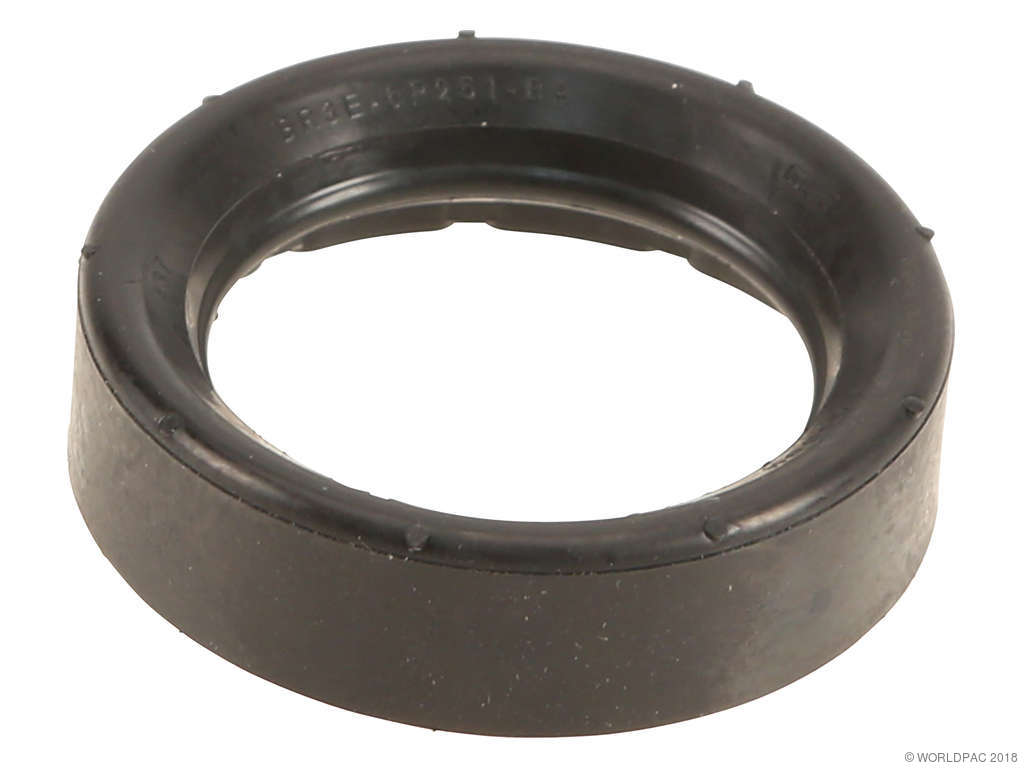
(OEM #DL3Z-6584-C)— On the 3.5L V6 engines in the Transit, the VCT solenoids are located under the valve covers. The valve cover must be removed to access and replace them, requiring a new gasket for reassembly.
Trusted brands: Motorcraft, Fel-Pro
OEM price range: $30-$50
Aftermarket price range: $20-$40
Related Codes That Often Appear With This One
- P0011, P0012, P0014, P0021, P0022, P0024, P0025 — These are all VCT-related codes. TSB 21-2224 lists them together, indicating a common systemic cause, such as the PCM software or oil quality issues, can trigger multiple timing faults across both banks.
- P0017 — This code for "Crankshaft Position - Camshaft Position Correlation (Bank 1, Sensor B)" often appears with P0015. If the exhaust cam is out of position, its correlation with the crankshaft will also be incorrect. Some older TSBs for other models pair P0015 and P0017 as pointing directly to a bad exhaust VCT solenoid.
Technical Service Bulletins (TSBs) & Recalls
- TSB 21-2224: Addresses P0015 and other VCT codes on 2020-2021 Transits being caused by a PCM software issue, recommending a VCT cycle and PCM reprogram.
- SSM 54366: A general service message noting that various VCT codes, including P0015, can occur on a wide range of 2015-2021 Ford/Lincoln vehicles, pointing technicians to a specific diagnostic test.
- SSM 49821: Supersedes older messages, again grouping P0015 with a family of other VCT codes across 2015-2021 Ford/Lincoln vehicles, indicating a common diagnostic approach.
Platform-Specific Known Issues
- TSB 21-2224: Ford identified that on some 2020 Transit vehicles with a 3.5L Duratec engine and 2021 Transit vehicles built on or before 01-Jul-2021, a P0015 code could be set due to a PCM software error. The official fix is a PCM reprogram.
- Owner Experience: On forums like 'ExpeditersOnline.com', owners of high-mileage Transits discuss various maintenance costs, reinforcing the importance of regular oil changes to prevent more costly repairs like timing components, though specific P0015 threads were not found.
Mechanic-Grade Diagnostic Values
- VCT Solenoid Internal Resistance — expected: 6.9 to 7.9 Ohms at 68°F (20°C). Some service documents allow a broader 5-15 Ohm range.. Failure: A reading of 0 ohms (short), infinite/OL (open), or significantly outside the specified range indicates a faulty solenoid coil.
- VCT Solenoid Connector Voltage (Key On, Engine Off) — expected: Battery Voltage (approx. 12V) on the power supply pin of the harness connector.. Failure: Low or no voltage points to a problem in the power supply circuit, such as a blown fuse or a wiring fault between the fuse box and the solenoid.
- Engine Oil Pressure (Hot Idle) — expected: Minimum of 15 PSI at normal operating temperature.. Failure: Pressure below 15 PSI at hot idle can cause erratic VCT operation and trigger timing codes. This test must be done with a mechanical gauge, not the dashboard gauge.
- Scan Tool VCT Error PID (e.g., VCT_EXH_ERR, VCT_EXH_DIF) — expected: Should hover near 0 degrees (+/- 5 degrees) at idle and during steady-state driving.. Failure: A large, persistent non-zero value that mirrors the 'over-retarded' condition confirms the PCM is seeing a timing deviation and the problem is not a faulty sensor.
Hidden / Shadow Codes Worth Checking
- Mode 6, Test ID $53: Provides cylinder-specific misfire counts. While not a direct VCT test, it can help identify if the P0015 timing issue is causing a misfire on a specific cylinder within Bank 1 before a P030X code is set. (see via A scan tool capable of displaying generic OBD-II Mode 6 data. The Component ID (CID) corresponds to the cylinder number (e.g., CID $01 is Cylinder 1).)
Scan Tool Commands That Help
- Ford IDS (or equivalent professional scanner): VCT Solenoid On/Off Command (part of Pinpoint Test HK) — This bidirectional control is used to test the VCT solenoid's mechanical and electrical function. The technician commands the solenoid to activate and listens for an audible 'click' from the engine and observes a change in idle quality, confirming the solenoid is responding.
- Ford IDS / FDRS: VCT System Cycle Test — Specifically required by TSB 21-2224. Before reprogramming the PCM, the technician must use the scan tool to cycle the VCT system 10 times. This procedure may help dislodge small debris and ensure the system is responsive before the software update is applied.
Wiring & Ground Locations
- VCT Solenoid Connector — On the 3.5L V6, the solenoids are under the valve cover. The connectors are accessible on top of the valve cover. Bank 1 (passenger side) exhaust solenoid may have a blue or white connector.. This 2-pin oval connector is the primary point for electrical testing (voltage and resistance). Oil saturation from a leaking valve cover gasket can contaminate the connection and cause issues.
- Engine Harness Ground Strap — On similar 3.5L V6 engine platforms, a main ground strap for the engine wiring harness is bolted to the chassis near the passenger side strut tower.. The PCM and VCT solenoids rely on a clean ground path. A loose or corroded ground at this location can cause erratic voltage and unpredictable behavior in the VCT system, leading to timing codes.
Model Year Variations Within This Range
- 2020: TSB 21-2224, which addresses P0015 with a software update, applies specifically to the 3.5L Duratec (PFDI, naturally aspirated) engine. It does NOT apply to the 2020 3.5L EcoBoost (GTDI, turbocharged) engine. Therefore, a 2020 Transit with an EcoBoost engine and a P0015 code is more likely to have a mechanical or electrical fault (solenoid, oil, phaser) rather than the software issue.
Helpful Videos


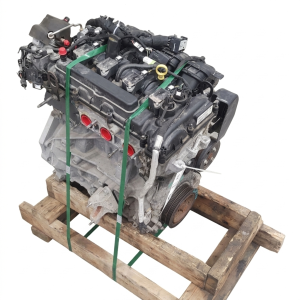
Used OEM Parts in Stock

New Aftermarket Parts Available


The information in this article is provided for general reference and educational purposes only. Vehicle specifications, procedures, and part compatibility can vary by production date, trim level, and region. Always consult your vehicle's factory service manual and verify part numbers before purchasing or performing repairs. Safety-critical components such as airbags, seat belts, and braking systems should be installed by a qualified professional.
- Ford TRANSIT:
- 🎬 Helpful Videos
- 🛍️ Shop This Part
- What's Unique About the 2020-2021 Ford TRANSIT
- Diagnostic Flowchart
- Symptoms You May Notice
- Most Likely Causes
- Diagnosis Steps
- Parts You'll Likely Need
- Related Codes That Often Appear With This One
- Technical Service Bulletins (TSBs) & Recalls
- Platform-Specific Known Issues
- Mechanic-Grade Diagnostic Values
- Hidden / Shadow Codes Worth Checking
- Scan Tool Commands That Help
- Wiring & Ground Locations
- Model Year Variations Within This Range
- 🎟️ Get 5% Off