

P0015 on 2015-2020 Ford Fusion: Exhaust Cam Timing Over-Retarded Causes & Fixes
Code P0015 on a 2015-2020 Ford Fusion typically points to a sticking exhaust VCT (Variable Camshaft Timing) solenoid, often caused by dirty or low engine oil. The most common fix is replacing the exhaust VCT solenoid, which costs about $30-$90 for the part. An oil and filter change is a critical first step.
- The most likely cause of a P0015 code on your 2015-2020 Fusion is a faulty exhaust VCT solenoid, often caused by oil debris as noted in Ford TSBs.
- Always check your engine oil level and condition first. A simple oil change with the correct filter and oil viscosity can sometimes fix the problem.
- Replacing the exhaust VCT solenoid is a relatively simple and affordable DIY job that requires basic tools.
- Do not immediately assume the problem is with the timing chain or camshaft position sensor, as these are less common culprits for this specific code on this vehicle.
What's Unique About the 2015-2020 Ford FUSION
For this generation of Ford Fusion and other contemporary Ford models with EcoBoost and Duratec engines, the manufacturer has issued multiple Technical Service Bulletins (TSBs). These bulletins, including SSM 47170 and SSM 48423, specifically state that P0015 and related codes can be caused by small debris in the engine oil, which makes the Variable Camshaft Timing (VCT) solenoid stick. This makes checking the oil condition and the health of the VCT solenoid the primary focus for diagnosis. The TSBs even recommend a specific diagnostic step (pinpoint test HK11) to cycle the solenoid multiple times with a scan tool to try and dislodge debris before replacing the part.
Diagnostic Flowchart
Tap your situation to follow the diagnostic path that matches what you're seeing on this vehicle.
Symptoms You May Notice
- Check Engine Light is on
- Rough or unstable idle, sometimes with noticeable vibration in the cabin and steering wheel
- Engine stalling, especially at low speeds, when stopping, or when shifting from Reverse to Drive
- Reduced engine power and sluggish acceleration
- Decreased fuel economy
- Rattling or tapping noise from the engine, particularly on startup
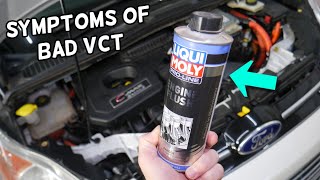
- Engine hesitation or shuddering, sometimes described as a jolt during shifts 🎬 Watch: A breakdown of common bad VCT solenoid symptoms
- Replacing the camshaft position sensor. The P0015 code indicates a timing correlation problem, not a failure of the sensor's electrical circuit. The sensor is correctly reporting that the timing is wrong.
Most Likely Causes
- Faulty Exhaust VCT Solenoid 🔴 High Probability Ford TSBs #SSM 47170 and #SSM 48423 directly cite that debris can cause the VCT solenoid to stick, which is a known issue on this platform. The solenoids contain fine mesh screens that can become clogged by oil sludge or debris, impeding oil flow.
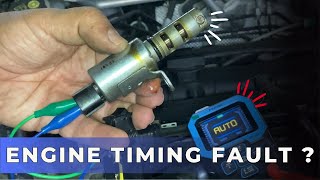
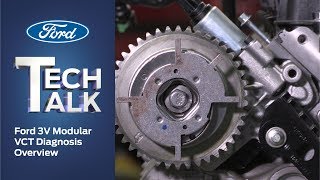
How to confirm: After checking oil, this is the next step. Use a scan tool to command the solenoid on and off while monitoring cam position data. 🎬 See this Ford Tech Talk on VCT diagnosis and testing You can also test the solenoid's resistance with a multimeter (typically 7-14 ohms). Applying 12V directly to the solenoid terminals should produce an audible click and move the internal plunger. Swapping the exhaust and intake solenoids (if identical) and seeing if the code changes to P0012 (Intake Over-Retarded) is an effective diagnostic trick.
Typical fix: Replace the Bank 1 exhaust VCT solenoid. Before replacement, some technicians recommend attempting the procedure in TSB SSM 47170, which involves cycling the solenoid 10 times with a diagnostic tool to clear debris.
Est. part cost: $30-$90 - Low or Dirty Engine Oil 🟡 Medium Probability The VCT system is hydraulically operated by engine oil pressure. Contaminated, low, or incorrect viscosity oil can impede the function of the VCT solenoids and phasers. The TSBs mentioning debris confirm the system's sensitivity to oil quality. Using aftermarket oil filters has also been anecdotally linked to oil flow issues.
How to confirm: Check the oil level on the dipstick and inspect the oil's condition. If it is below the minimum level, dark, thick, or gritty, it needs to be changed. Ensure the correct oil viscosity (e.g., SAE 5W-20 or 5W-30 as specified for your engine) is being used.
Typical fix: Perform an engine oil and filter change using the manufacturer-specified oil (e.g., Motorcraft Synthetic Blend) and a quality OEM oil filter (e.g., Motorcraft FL-910S). Some mechanics suggest performing an engine oil system flush to remove sludge.
Est. part cost: $40-$75 - Wiring or Connector Issue at VCT Solenoid ⚪ Low Probability
How to confirm: Visually inspect the wiring harness and connector going to the exhaust VCT solenoid for any signs of damage, corrosion, or loose pins. Oil leaking into the connector can also disrupt the signal. Use a multimeter to check for battery voltage on the power supply wire with the ignition on.
Typical fix: Repair the damaged wiring or clean/replace the connector.
Est. part cost: $5-$50
Rare But Worth Checking
- Failed Camshaft Phaser: The phaser is the mechanical gear that actually adjusts the cam timing. It can get stuck, fail internally due to a broken lock pin, or become clogged with sludge, but this is less common than a solenoid failure. This is a more involved and expensive repair that often requires removal of the valve cover.
- Stretched Timing Chain or Worn Guides: While possible on higher-mileage engines, a stretched timing chain is a less frequent cause for this specific code compared to oil-related issues. This would likely be accompanied by rattling noises from the front of the engine, especially on startup, and may set additional codes like P0017 (Crank/Cam Correlation).
Diagnosis Steps
- Read the code with an OBD-II scanner and check for any other accompanying codes. Note any pending or history codes.
- Inspect the engine oil level and condition. If the oil is low, dirty, or the wrong viscosity, perform an oil and filter change with the correct OEM-spec oil and filter. Clear the code and test drive to see if it returns.
- If the code returns, locate the exhaust VCT solenoid on Bank 1 (it's the rearward solenoid on the top of the valve cover). Inspect its electrical connector and wiring for any visible damage, corrosion, or looseness.
- Using a capable scan tool, monitor the desired vs. actual exhaust camshaft position PIDs (Parameter IDs). Command the solenoid on and off (Ford's diagnostic procedure in TSB SSM 47170 suggests cycling it 10 times) to see if the actual angle changes and if the debris can be cleared.
- If the solenoid doesn't respond correctly, disconnect it and test its internal resistance with a multimeter. A typical reading is between 7 and 14 ohms. A reading of infinity or zero indicates a failed solenoid.
- If resistance is good, you can carefully apply 12V power and ground to the solenoid pins to check for a physical 'click'. Lack of a click means it's mechanically stuck.
- A known-good diagnostic step is to swap the exhaust VCT solenoid with the intake VCT solenoid (they are identical parts). Clear the codes and drive the vehicle. If the code changes to P0012 (Intake Camshaft Position Timing - Over-Retarded), the solenoid is confirmed to be faulty.
- If the solenoid and wiring are good, the issue may be more complex, such as a faulty camshaft phaser, clogged oil passages, or a timing chain problem. These diagnoses require more advanced mechanical inspection and are best left to a professional.
Parts You'll Likely Need
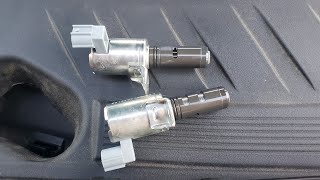
- Engine Variable Valve Timing (VVT) Solenoid (Exhaust)
(OEM #KX6Z-6M280-A (Supersedes CJ5Z-6M280-A))— This is the most common point of failure for the P0015 code on this vehicle, as confirmed by Ford's own service bulletins. It is identical to the intake solenoid, allowing for diagnostic swapping.
Trusted brands: Motorcraft, Dorman, Standard Motor Products, NGK 🎬 Watch: Step-by-step guide to replacing the VVT solenoid
OEM price range: $60-$90
Aftermarket price range: $30-$60 - Engine Oil and Filter
(OEM #Motorcraft XO-5W20-Q1SP (Oil), Motorcraft FL-910S (Filter))— The VCT system is highly dependent on clean oil at the proper pressure. An oil change is a critical first step and may resolve the issue on its own, especially if maintenance has been deferred.
Trusted brands: Motorcraft (Oil & Filter), Mobil 1, Castrol
OEM price range: $50-$75
Aftermarket price range: $40-$60
Related Codes That Often Appear With This One
- P0014 — This code is for 'B' Camshaft Position - Timing Over-Advanced. It relates to the same hardware, and fluctuating oil pressure or a sticking solenoid could potentially cause either condition.
- P0017 — Crankshaft Position - Camshaft Position Correlation (Bank 1, Sensor B). This code often appears with P0015, especially if the timing deviation is significant or potentially related to a base timing issue like a stretched chain.
- P0011, P0012, P0021, P0022, P0024, P0025 — These are all VCT-related codes. The TSBs issued by Ford (SSM 47170, SSM 48423) list this entire family of codes as being potentially caused by the same issue of debris in the VCT solenoids.
Technical Service Bulletins (TSBs) & Recalls
- SSM 47170: Notes that P0015 may be due to small debris causing the VCT solenoid to stick. Recommends cycling the solenoid with a scan tool before replacement.
- SSM 48423: Repeats the information from SSM 47170 for a wider range of model years.
- SSM 54366: Acknowledges P0015 and other VCT codes, referring to specific diagnostic tests.
Platform-Specific Known Issues
- TSB SSM 47170 & SSM 48423: Ford noted that some vehicles may set P0015 (and other related VCT codes) due to 'small debris causing the VCT solenoid to stick.' This strongly points to oil contamination or solenoid failure as the root cause, advising diagnosis of the solenoid before attempting more complex repairs. The TSB specifically mentions using diagnostic tool functionality to cycle the solenoid to attempt to clear it.
- TSB SSM 54366: This bulletin also lists P0015 among a group of VCT codes and directs technicians to specific diagnostic procedures in the official service manual, reinforcing that this is a recognized issue.
- Owner Reports of Shuddering: Multiple owners on forums report a distinct shudder or vibration when the car is stopping, which is often resolved by replacing the VCT solenoids.
Mechanic-Grade Diagnostic Values
- VCT Solenoid Internal Resistance — expected: 7.0 to 14.0 ohms. Failure: A reading of zero (short circuit) or infinity (open circuit) indicates a failed solenoid.
- VCT Solenoid Connector Voltage — expected: Battery voltage (approx. 12V) on the power supply pin with key on, engine off.. Failure: No voltage indicates a problem with the power supply circuit, fuse, or PCM power relay.
- Scan Tool PID: VCT_EXH_ERR (Bank 1) — expected: Close to 0 degrees at idle.. Failure: A consistent negative value (e.g., -5 degrees or more) indicates the exhaust cam is retarded from the commanded position, which is the direct measurement that triggers P0015.
Scan Tool Commands That Help
- Ford IDS, FORScan, or equivalent professional scanner: VCT Solenoid On/Off Command or Duty Cycle Control — This bidirectional control is used to manually activate the solenoid while monitoring cam position PIDs (RCAM, VCT_EXH_ERR). It helps determine if the solenoid is mechanically stuck or if the hydraulic circuit is responsive. Ford TSBs recommend cycling the solenoid multiple times to attempt to dislodge debris.
Wiring & Ground Locations
- C146 (Exhaust VCT Solenoid Connector) — On the top of the valve cover, connected to the rearward (exhaust) VCT solenoid.. This is the primary connector to inspect for damage, corrosion, or oil intrusion. Electrical tests for power, ground, and resistance are performed at this connector.
- C146 Pin 1 (Power) — Pin 1 of the exhaust VCT solenoid connector.. This pin should have battery voltage with the key on. A lack of voltage points to a wiring or fuse issue upstream from the solenoid.
- C146 Pin 2 (Control) — Pin 2 of the exhaust VCT solenoid connector.. This pin is the control wire that the PCM provides a ground to (using Pulse Width Modulation) to activate the solenoid. Checking continuity from this pin back to the PCM connector can identify a broken wire.
- Engine Block/Chassis Grounds — Key ground points are typically from the negative battery terminal to the chassis and from the engine block to the chassis via a ground strap.. A poor engine ground can cause a variety of electrical issues and erratic sensor readings. While not a primary cause for a single VCT code, verifying grounds are clean and tight is a good practice during any electrical diagnosis.
Real Owner Repair Stories
- fordfusionforum.com user (2016 Ford Fusion 2.0L EcoBoost) — Check engine light with code P0015, accompanied by engine shuddering when coming to a stop.
❌ Tried (didn't work) Initial diagnosis pointed towards oil level, but it was correct.
✅ What actually fixed it The user replaced both the intake and exhaust VCT solenoids. After the replacement, the check engine light went away and the shuddering issue was resolved.
OEM Part Supersession History
CJ5Z-6M280-A→KX6Z-6M280-A— Part number has been updated by Ford. Supersessions often involve minor improvements to design, materials, or manufacturing process to increase reliability.
Heads up: The new part number KX6Z-6M280-A is a direct replacement for the old one and is compatible with the 2015-2020 Fusion models.
Model Year Variations Within This Range
- 2015-2020: The 1.5L EcoBoost engine uses a timing belt that runs in oil, whereas the 2.0L EcoBoost and 2.5L Duratec engines use timing chains. This creates a different potential root cause for timing correlation codes like P0015 (e.g., stretched belt on the 1.5L vs. stretched chain on the others).
Helpful Videos
Used OEM Parts in Stock


New Aftermarket Parts Available




The information in this article is provided for general reference and educational purposes only. Vehicle specifications, procedures, and part compatibility can vary by production date, trim level, and region. Always consult your vehicle's factory service manual and verify part numbers before purchasing or performing repairs. Safety-critical components such as airbags, seat belts, and braking systems should be installed by a qualified professional.
- Ford FUSION:
- 🎬 Helpful Videos
- 🛍️ Shop This Part
- What's Unique About the 2015-2020 Ford FUSION
- Diagnostic Flowchart
- Symptoms You May Notice
- Most Likely Causes
- Rare But Worth Checking
- Diagnosis Steps
- Parts You'll Likely Need
- Related Codes That Often Appear With This One
- Technical Service Bulletins (TSBs) & Recalls
- Platform-Specific Known Issues
- Mechanic-Grade Diagnostic Values
- Scan Tool Commands That Help
- Wiring & Ground Locations
- Real Owner Repair Stories
- OEM Part Supersession History
- Model Year Variations Within This Range
- 🎟️ Get 5% Off