

P0014 on 2010-2014 Subaru Legacy 2.5L Turbo: Exhaust Cam Timing Causes & Fixes
On a 2010-2014 Subaru Legacy with the 2.5L Turbo engine, code P0014 is most often caused by a faulty passenger-side exhaust Oil Control Valve (OCV) or low/dirty engine oil. The notorious banjo bolt filters can also get clogged, restricting oil flow. Expect to pay $90-$150 for a new OCV and about an hour of labor if you don't do it yourself.
- Always check your engine oil level and condition first; this is the simplest and most common cause for P0014.
- The most likely failed part is the passenger-side exhaust Oil Control Valve (OCV), also known as the AVCS solenoid.
- Don't overlook the small mesh filter inside the oil feed banjo bolt for the AVCS solenoid; it's a known failure point on these Subaru turbo engines.
- Do not immediately replace the camshaft position sensor, as it is rarely the cause for this performance-based code.
What's Unique About the 2010-2014 Subaru Legacy
The Subaru EJ255 turbo engine is known for being particularly sensitive to oil maintenance. The AVCS (variable valve timing) system relies heavily on clean oil and proper pressure to function correctly. A unique and notorious issue on these engines are tiny, removable mesh filters inside the banjo bolts that feed oil to the AVCS solenoids and the turbocharger. These filters can become clogged with sludge over time, starving the components of oil and triggering timing codes like P0014. Many owners and independent shops recommend removing these filters as a preventative measure to avoid oil starvation to both the AVCS system and the turbo.
Symptoms You May Notice
- Check Engine Light is on
- Rough idle or stalling
- Hesitation or sluggish acceleration
- Decreased fuel economy
- Engine rattling or knocking noises
- Hard starting
- Replacing the camshaft position sensor. A P0014 code indicates a problem with timing *performance*, not the sensor's electrical circuit. While the sensor reports the timing, it is rarely the cause of this specific code. A user on a Reddit forum replaced the sensor for P0014 and P0017 with no success.
Most Likely Causes
- Low, Dirty, or Incorrect Viscosity Engine Oil 🔴 High Probability The AVCS system is hydraulic and highly dependent on oil pressure and cleanliness. Sludge can easily disrupt its function, and these engines are known to consume oil.
How to confirm: Check the engine oil dipstick for level and inspect the oil's color and consistency. An oil change is the first, easiest, and cheapest diagnostic step.
Typical fix: Perform an engine oil and filter change using the manufacturer-recommended oil viscosity (typically 5W-30 synthetic for this model).
Est. part cost: $50-$100 - Failed Bank 1 Exhaust Oil Control Valve (OCV) / AVCS Solenoid 🔴 High Probability The OCV is an electronic solenoid that can fail electrically or become mechanically stuck from oil sludge, a common issue in these engines.
How to confirm: Test the solenoid's resistance with a multimeter (should be 6-12 ohms). A more definitive test is to swap it with the identical solenoid from the driver's side (Bank 2) and see if the code follows (e.g., changes to P0024).
Typical fix: Replace the Bank 1 (passenger side) exhaust AVCS solenoid. The part number for the 2010-2012 Legacy GT is often cited as 10921AA080, which supersedes 10921AA020.
Est. part cost: $90-$160 - Clogged AVCS Banjo Bolt Filter 🟡 Medium Probability Subaru placed small mesh filters in the banjo bolts that supply oil to the AVCS system. These are known to clog with debris over time, restricting oil flow. This is a well-documented failure point.
How to confirm: Remove the oil feed line banjo bolt for the Bank 1 AVCS solenoid and visually inspect the internal mesh screen for blockage. The screen may fall out into the cylinder head upon removal, so be careful.
Typical fix: Most owners and shops recommend removing the mesh screen from the banjo bolt with a pick and reinstalling the bolt without the filter. This relies on the main engine oil filter to do its job and prevents a future clog that could starve the system or turbo.
Est. part cost: $0 (if removing), $15-$25 (for a new bolt)
Rare But Worth Checking
- Stretched Timing Belt or Incorrect Mechanical Timing: If the timing belt has skipped a tooth, is significantly worn, or was installed incorrectly, the base camshaft timing will be incorrect, which can trigger AVCS performance codes. This is more likely if the code appeared after recent timing belt service.
- Failing AVCS Camshaft Sprocket (Phaser): The hydraulic actuator on the camshaft itself can fail internally, getting stuck in an advanced position. This is a more complex and expensive repair, often requiring removal of the timing belt and camshafts.
- Turbo Oil Feed Line Banjo Bolt Filter Clog: A separate, identical banjo bolt filter exists for the turbo oil feed line. While less likely to cause P0014 specifically, a clog here starves the turbo, causing it to fail and send metallic debris throughout the oil system. This debris can then clog the AVCS OCVs and passages, leading to P0014 as a secondary symptom of a much larger problem.
Diagnosis Steps
- Check Engine Oil: Verify the oil level is full and the oil is clean and of the correct viscosity (5W-30 synthetic). If low, dirty, or overdue for a change, perform an oil and filter change before any other steps.
- Inspect OCV Wiring: Check the wiring and connector for the Bank 1 (passenger side) exhaust OCV for any obvious damage, corrosion, or loose connection. Oil wicking into the harness connector is a known issue.
- Test the OCV: Unplug the OCV and measure its internal resistance with a multimeter. It should be between 6 and 15 ohms. You can also briefly apply 9V-12V power to the solenoid to listen for an audible click, indicating mechanical movement.
- Swap the OCVs: The most definitive and cost-effective test. Swap the passenger side (Bank 1) exhaust OCV with the driver's side (Bank 2) exhaust OCV. They are identical parts. Clear the codes and drive. If the code returns as P0024, the OCV is confirmed to be faulty and needs replacement.
- Inspect AVCS Banjo Bolt Filters: Locate the banjo bolts for the oil lines feeding the AVCS solenoids on top of the engine. The Bank 1 exhaust OCV is on the passenger side. Remove the banjo bolt (typically 17mm) and inspect the tiny mesh filter inside for sludge or debris. Many owners recommend removing these filters permanently.
- Advanced Diagnostics: If the above steps do not resolve the issue, the problem may lie with the mechanical timing (timing belt), the AVCS cam sprocket (phaser), or internal engine oil pressure issues, which may require professional diagnosis. A dealership quoted one owner $3,200 for a P0014 fix, highlighting the potential for expensive repairs if the issue is not a simple component.
Parts You'll Likely Need
- Oil Control Valve / AVCS Solenoid (Bank 1 Exhaust)
(OEM #10921AA080 (Supersedes 10921AA020))— This solenoid is the most common part to fail, either by getting stuck or failing electrically, directly causing the P0014 code.
Trusted brands: Subaru (OEM), Denso, Standard Motor Products
OEM price range: $120-$160
Aftermarket price range: $70-$110 - Engine Oil and Filter — The AVCS system is entirely dependent on clean oil at the proper pressure. This is always the first and cheapest step in resolving this code.
Trusted brands: Mobil 1, Castrol, Subaru (OEM)
OEM price range: $60-$90
Aftermarket price range: $40-$70 - AVCS Banjo Bolt
(OEM #14445AA090)— This small, often-overlooked filter can get clogged and starve the AVCS solenoid of oil. It's a common failure point specific to Subaru turbo engines. Many owners simply remove the internal filter rather than replacing the bolt.
Trusted brands: Subaru (OEM)
OEM price range: $15-$25
Related Codes That Often Appear With This One
- P0011 — This code is for the intake camshaft timing on the same bank (Bank 1). If both appear, it strongly points to a systemic issue on that side of the engine, like a clogged main AVCS oil feed banjo bolt filter or a problem with the oil supply to that entire cylinder head.
- P0024 — This is the same exhaust cam timing code but for Bank 2 (driver's side). Seeing both P0014 and P0024 together often points to a global oiling issue like very low/dirty oil or low oil pressure from a failing pump.
- P0017 — Crankshaft Position - Camshaft Position Correlation Bank 1 Sensor B. This indicates a more direct conflict between the crank and cam signals. A Reddit user reported having both P0014 and P0017 together, pointing towards a significant timing discrepancy on that bank.
Technical Service Bulletins (TSBs) & Recalls
- 02-132-12R: DIAGNOSIS AND REPAIR FOR AVCS-RELATED DTCS P000A, P000B, P000C, P000D, P0011, P0014, P0021 AND P0024
Platform-Specific Known Issues
- The provided Technical Service Bulletin #02-132-12R specifically addresses diagnosis for a group of AVCS-related codes including P0014, confirming it's a known issue requiring a specific diagnostic procedure.
- The mesh filters inside the oil feed banjo bolts for both the AVCS solenoids and the turbocharger are a well-documented point of failure. Many owners and independent shops recommend removing them as a preventative measure to avoid oil starvation.
- A thread on LegacyGT.com titled 'How to Remove All Banjo Filters' provides a detailed walkthrough, calling the turbo feed filter the '#1 reason Subaru turbos die often'.
Mechanic-Grade Diagnostic Values
- Oil Control Valve (OCV) Solenoid Resistance — expected: 6 to 15 Ohms at approx. 70°F (20°C).. Failure: A reading outside this range, or an open circuit (infinite resistance), indicates a failed solenoid.
- AVCS Exhaust Advance Angle (Live Scan Tool Data) — expected: Near 0 degrees at idle. Should increase smoothly as engine RPM is raised and held around 2000-3000 RPM.. Failure: The angle for Bank 1 does not change, is erratic, or is significantly different from the angle reported for Bank 2 under the same conditions.
- OCV Connector Voltage — expected: Battery voltage (approx. 12V) with key on, engine off.. Failure: No voltage or significantly low voltage points to a wiring issue upstream of the solenoid.
Scan Tool Commands That Help
- Subaru Select Monitor (SSM) or equivalent professional scan tool: AVCS Actuator Test / Bidirectional Control — This function allows the technician to command the OCV solenoid to operate directly from the scan tool. It's used to verify if the solenoid is mechanically functioning and can affect cam timing without having to physically remove it or swap it with the other side.
- Any OBD-II scanner with live data capability: Live Data PID Monitoring: 'AVCS Exh Adv Angle B1' & 'AVCS Exh Adv Angle B2' — This is the primary method for observing the AVCS system's real-time performance. Comparing the commanded vs. actual angles, and comparing Bank 1 to Bank 2, is critical for diagnosing if the issue is with the OCV, oil supply, or the phaser itself.
Wiring & Ground Locations
- OCV Harness Connector — Directly on top of the Bank 1 (passenger side) exhaust Oil Control Valve solenoid.. Subaru OCVs have been known to leak oil internally, which then seeps into the electrical connector and wicks up the wiring harness. This can cause poor connection, short circuits, and incorrect signals, directly leading to code P0014. The connector and harness should be inspected for any signs of oil contamination.
Real Owner Repair Stories
- LegacyGT.com forum user (2010 Subaru Legacy GT Limited, 125,000 miles) — Check Engine Light with code P0014.
❌ Tried (didn't work) The user took the car directly to a dealer for diagnosis.
✅ What actually fixed it The user was quoted $3,200 by the dealership for the repair. While the final repair isn't stated, the high cost strongly implies the diagnosis pointed to a failed AVCS camshaft phaser or a major timing component issue, not a simple OCV solenoid or oil change. This serves as a real-world example of the potential severity if initial, simple fixes don't work. - Reddit user on r/subaru (2010 Legacy GT 2.5T) — Check Engine Light with codes P0014 and P0017.
❌ Tried (didn't work) User planned to replace the camshaft position sensor and change the oil as initial steps.
✅ What actually fixed it The resolution was not posted by the original author, but the community discussion immediately and strongly recommended inspecting and likely removing the banjo bolt filters for the AVCS oil supply. This was cited as a common cause for these codes, especially when appearing together, referencing older TSBs for the same issue. This reinforces that clogged oil passages are a primary suspect when sensor replacement doesn't work.
"I Checked Everything" — The Actual Cause
- A smoke test is not applicable for P0014. The equivalent scenario is when the Oil Control Valve (OCV) is tested and found to be working correctly (correct resistance, clicks with 12V power), yet the code persists. In these cases, the actual cause is often a clogged banjo bolt filter upstream of the OCV, which starves the (perfectly good) solenoid of the oil pressure it needs to function. Another cause is a mechanically failed AVCS cam phaser that is stuck and cannot be moved by the OCV, regardless of oil pressure.
When the Usual Fixes Don't Work
- While a faulty Oil Control Valve (OCV) is the most common fix, if the P0014 code returns immediately after replacement, it is strong evidence that the OCV was not the root cause. In these instances, the problem is almost certainly either a lack of oil supply to the valve (due to a clogged banjo bolt filter) or a mechanical failure of the AVCS cam phaser itself. The case of a dealership quoting $3,200 for the repair points directly to a diagnosis of a failed phaser, a multi-thousand dollar job, after presumably ruling out the much cheaper solenoid.
OEM Part Supersession History
10921AA020→10921AA080— Part update/revision by Subaru for later model year applications.
Heads up: While the solenoids may be physically similar, using the older 10921AA020 part on a vehicle specified for 10921AA080 is not recommended as internal calibration or flow rates may differ. For the 2010-2012 Legacy GT, 10921AA080 is the correct part for the intake and exhaust OCVs.
Model Year Variations Within This Range
- 2010-2012: The EJ255 2.5L Turbo engine was only available in the Legacy 2.5GT model from 2010 to 2012. For 2013 and 2014, the 2.5L non-turbo models used the newer FB25 engine, which has a different AVCS system and architecture. Therefore, this guide is specifically for the 2010-2012 Legacy 2.5GT.
- 2010-2012: The EJ255 engine in the 2010-2012 Legacy GT features a unique low-mount, twin-scroll turbocharger setup. This differs from the top-mount turbo setup on the WRX of the same era, affecting access to some components like the turbo oil feed line banjo bolt.
Diagnostic Flowchart
Other Known Issues on This Vehicle
Issues unrelated to this code that are worth knowing about as an owner of this generation:
- Piston Ringland Failure 🔴 High — More common on modified vehicles or those driven aggressively at low RPMs ('lugging'). Can occur at any mileage but is often linked to detonation or pre-ignition events.
- Turbocharger (IHI VF54) Failure 🔴 High — A significant number of failures are attributed to oil starvation caused by the clogged banjo bolt filter in the oil feed line. When the turbo fails, it can send metal debris into the engine, leading to catastrophic engine failure.
- Excessive Oil Consumption 🟠 Medium — While more notorious on the non-turbo FB25 engine, the EJ255 can also consume oil, particularly as it ages. This can lead to low oil levels that trigger AVCS codes like P0014 if not monitored closely.
- CVT Transmission Issues 🟠 Medium — For models equipped with the CVT, issues like shuddering, vibration, and stalling have been reported, sometimes requiring expensive repairs or replacement. A TSB (16-132-20R) exists for diagnosing chain slip conditions on these transmissions. (Ref: 16-132-20R)
Used vs. New Parts: Buying Guide for This Vehicle
When a used part is the smart pick: For this repair, a used Oil Control Valve (OCV) from a low-mileage, reputable salvage yard can be a viable budget option. It is an external, self-contained electronic solenoid that is relatively easy to replace if it's found to be faulty.
Donor-vehicle mileage cap: roughly under 80000 miles for the part to have meaningful remaining life.
What to inspect on the donor part:
- Ensure the donor vehicle was not in a severe front-end collision.
- Inspect the electrical connector on the used OCV for any signs of oil leakage from the solenoid body.
- If possible, test the resistance with a multimeter before purchase; it should be within the 6-15 ohm range.
- Look for a donor vehicle with a clean oil maintenance record if available.
OEM-only on this vehicle (don't cheap out):
- Timing Belt and related idlers/tensioner
- AVCS Cam Sprocket (Phaser)
Aftermarket brands forum-validated for this vehicle:
- Denso (often the Original Equipment Manufacturer for Subaru)
- Standard Motor Products (SMP)
Brands owners have reported issues with on this vehicle:
- Unbranded, 'white-box' solenoids from major online marketplaces are a gamble and often have high failure rates. It is better to buy a tested, used OEM part than a new, no-name part for this component.
Real Owner Stories
Aggregated from forums and TSBs cited above. Mileages and costs reflect what owners reported in those sources.
2010 Legacy GT 2.5T
Symptoms: Check engine light with codes P0017 and P0014 appearing simultaneously.
What fixed it: Checking and addressing the banjo bolt filters, which is a known issue documented in TSBs for these models.
Source hint: Reddit - r/subaru - '2010 legacy GT 2.5T P0017 and P0014 Codes'
2010 Legacy GT 2.5T
Symptoms: P0014 code; dealer provided an extremely high repair estimate.
What fixed it: The source notes the potential for complex root causes, though the owner was seeking a second opinion after a $3,200 quote.
Cost: $3,200-$3,200
Source hint: LegacyGT.com - 'Is the dealer taking advantage of me? P0014 code'
2010-2014 Subaru Legacy GT (EJ255)
Symptoms: The owner describes the turbo feed filter as the '#1 reason Subaru turbos die often,' leading to oil system contamination.
What fixed it: Removing all mesh screens from the banjo bolts for the AVCS and turbo oil feed lines.
Source hint: LegacyGT.com - 'How to Remove All Banjo Filters'
Related OBD-II Codes
Frequently Asked Questions
Is there a specific Technical Service Bulletin for P0014 on my 2010-2014 Legacy GT?
I heard there are filters inside the bolts that can cause this; should I replace them?
Can I test the Bank 1 exhaust AVCS solenoid without buying a new part?
What oil should I be using in my 2.5L Turbo Legacy to avoid AVCS issues?
Could a P0014 code be related to my turbocharger failing?
Is P0014 a common issue for other Subarus with the same engine?
Helpful Videos
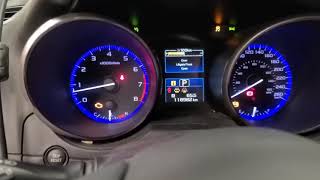
![How to Fix P0014 Engine Code in 4 Minutes [2 DIY Methods / Only $6.74]](https://img.youtube.com/vi/olrC8UYw9cQ/mqdefault.jpg)
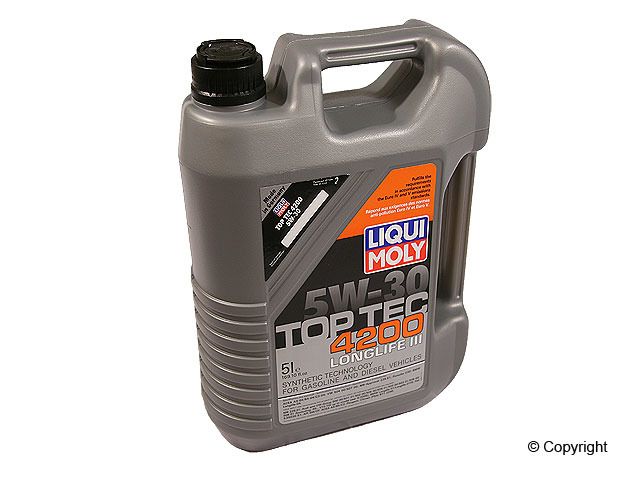
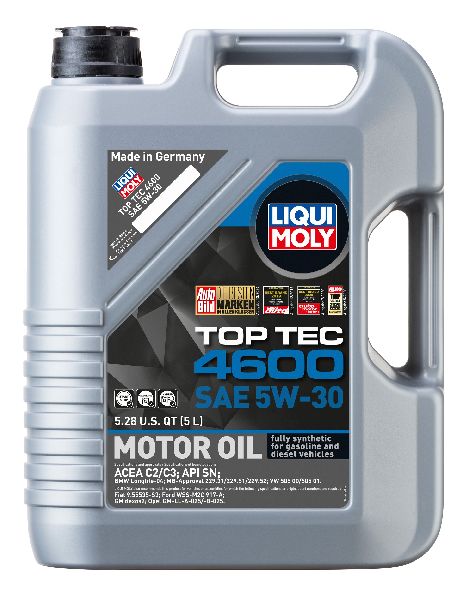
We Have This Part in Stock


The information in this article is provided for general reference and educational purposes only. Vehicle specifications, procedures, and part compatibility can vary by production date, trim level, and region. Always consult your vehicle's factory service manual and verify part numbers before purchasing or performing repairs. Safety-critical components such as airbags, seat belts, and braking systems should be installed by a qualified professional.
- Subaru Legacy:
- 🎬 Helpful Videos
- 🛍️ Shop This Part
- What's Unique About the 2010-2014 Subaru Legacy
- Symptoms You May Notice
- Most Likely Causes
- Rare But Worth Checking
- Diagnosis Steps
- Parts You'll Likely Need
- Related Codes That Often Appear With This One
- Technical Service Bulletins (TSBs) & Recalls
- Platform-Specific Known Issues
- Mechanic-Grade Diagnostic Values
- Scan Tool Commands That Help
- Wiring & Ground Locations
- Real Owner Repair Stories
- "I Checked Everything" — The Actual Cause
- When the Usual Fixes Don't Work
- OEM Part Supersession History
- Model Year Variations Within This Range
- Diagnostic Flowchart
- Other Known Issues on This Vehicle
- Used vs. New Parts: Buying Guide for This Vehicle
- Real Owner Stories
- 2010 Legacy GT 2.5T
- 2010 Legacy GT 2.5T
- 2010-2014 Subaru Legacy GT (EJ255)
- Related OBD-II Codes
- Frequently Asked Questions
- 🎟️ Get 5% Off