

P0014 on 2011-2016 Scion tC 2.5L: Exhaust Cam Timing Over-Advanced Causes and Fixes
On a 2011-2016 Scion tC, code P0014 is most often caused by low/dirty engine oil or a faulty exhaust Oil Control Valve (OCV). An oil change and a new OCV solenoid is the most likely fix, costing around $40-$120 for DIY parts. In some cases, a worn exhaust VVT gear (phaser) is the culprit, especially if a startup rattle is present.
- Always check your engine oil level and condition first; this is the easiest and most common fix.
- P0014 points specifically to the exhaust camshaft timing system.
- The most likely failed part is the exhaust Oil Control Valve (OCV), which is relatively inexpensive and easy to replace.
- A rattling noise on startup is a strong indicator of a failing VVT gear, which is a more complex and expensive repair.
- Using the correct high-quality 0W-20 synthetic oil and changing it on schedule is the best way to prevent this issue.
What's Unique About the 2011-2016 Scion tC
The Toyota 2AR-FE engine is well-known for a startup rattle issue, which is caused by a faulty VVT camshaft gear (phaser). While a Technical Service Bulletin (S-SB-0010-13) specifically addresses this rattle on the *intake* side for 2011-2012 models, the P0014 code points specifically to the *exhaust* side. The underlying cause is often related to oil pressure, meaning that while the code points to the exhaust cam, the root cause could be dirty oil, a failing oil control valve, or a worn exhaust cam gear. Forum discussions on ScionLife confirm that VVT gear failure is a known issue on tC models.
Symptoms You May Notice
- Check Engine Light is on
- Rough or unstable idle
- Engine hesitation or stumbling on acceleration
- Reduced fuel economy
- A brief rattling or knocking noise from the engine on cold startups
- Engine stalling
- Hard starting
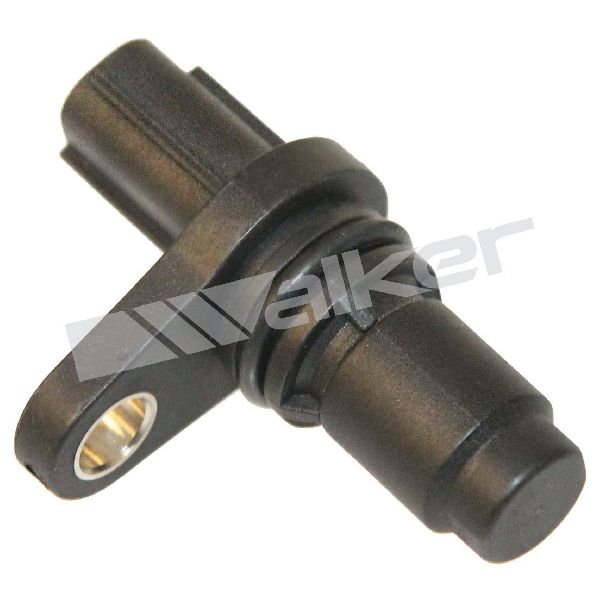
- Replacing the Camshaft Position Sensor. While a sensor can fail, it is not a common cause for P0014 and would typically set a different, sensor-specific trouble code (e.g., P0345-P0349).
Most Likely Causes
- Low or Dirty Engine Oil 🔴 High Probability The VVT-i system is highly sensitive to oil pressure and cleanliness. Sludge from extended oil change intervals can clog the small passages in the Oil Control Valves and VVT gears, which is a very common cause of P0014.
How to confirm: Check the engine oil dipstick. The oil level should be between the 'full' and 'add' marks. Note the color and consistency; if it is black, thick, or gritty, it is overdue for a change.
Typical fix: Perform a complete engine oil and filter change using the manufacturer-recommended oil viscosity (0W-20).
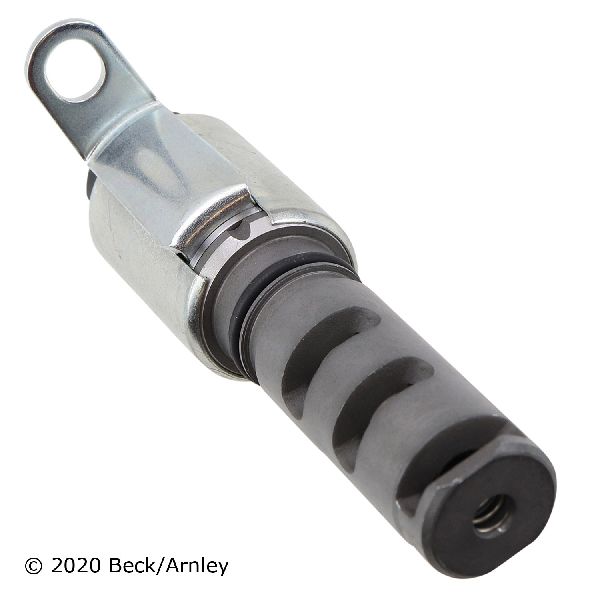
Est. part cost: $40-$70 - Faulty Exhaust Oil Control Valve (OCV) / VVT Solenoid 🔴 High Probability This solenoid controls the oil flow to the VVT gear. It can become clogged with debris from dirty oil or fail electrically, causing it to stick in one position. This is a very common point of failure.
How to confirm: Remove the solenoid (one bolt on the valve cover). Inspect its filter screen for sludge. You can test it by applying 12V to its terminals; a healthy solenoid will make an audible 'click'. Resistance should be between 6.9 and 7.9 ohms at 68°F (20°C).
Typical fix: Replace the exhaust camshaft oil control valve. It is recommended to replace, not just clean, a faulty or sludge-filled valve.
Est. part cost: $30-$150 - Faulty Exhaust VVT Camshaft Gear (Phaser) 🟡 Medium Probability The internal locking pin and vanes of the VVT gear can wear out or break, causing it to fail. This is a known issue on the 2AR-FE engine, often presenting as a startup rattle. While a TSB exists for the intake gear, the exhaust gear can also fail and is a known cause for timing codes.
How to confirm: This is a more difficult diagnosis. It often requires listening for the characteristic startup rattle or removing the valve cover for a physical inspection of the timing components. A mechanic can also use a scan tool to monitor commanded vs. actual cam angle. A discrepancy points to a faulty gear.
Typical fix: Replace the exhaust camshaft VVT gear and related gaskets. This is a more labor-intensive repair.
Est. part cost: $100-$400
Rare But Worth Checking
- Clogged Oil Control Valve (OCV) Filter: There is a small, inexpensive screen filter located under a cap on the cylinder head that can become clogged with sludge, restricting oil flow to the VVT system. It's worth checking or replacing when servicing the OCV.
- Stretched Timing Chain: While durable, the timing chain can stretch over high mileage, causing timing correlation codes. This is less common than OCV or gear failure but is a possibility, especially on high-mileage engines.
- Wiring Harness Issues: Damage or corrosion to the wiring or connector for the OCV can cause an open or short, preventing it from functioning correctly and triggering the code.
Diagnosis Steps
- Check Engine Oil: Verify the oil level is correct and the oil is clean. If low or dirty, perform an oil and filter change before proceeding. This solves the problem a surprising amount of the time.
- Scan for Other Codes: Use an OBD-II scanner to check if any other codes are present, which could point to a broader issue.
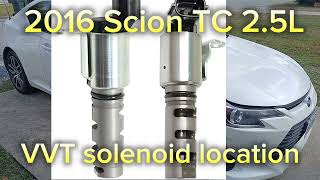
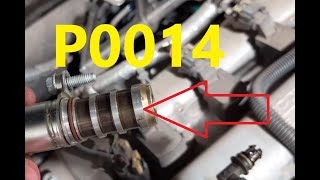
- Inspect the Exhaust Oil Control Valve (OCV): Locate the exhaust OCV on the top of the valve cover. 🎬 Watch: How to locate and remove the VVT solenoids. Disconnect it and remove the single 10mm bolt holding it in place. Inspect the screens for sludge or debris.
- Test the OCV: Apply 12V power to the two pins on the solenoid. You should hear a distinct click as the internal plunger moves. If there is no click, or it sounds weak, the solenoid has failed. You can also test the resistance, which should be 6.9-7.9 Ohms.
- Inspect the OCV Filter: Locate the small round cap on the side of the cylinder head near the OCV. Remove it to access the small mesh filter. Check if it is clogged with debris and clean or replace as needed.
- Advanced Diagnostics (Professional Recommended): If the OCV and filter are good, the next step is to inspect the VVT gear and timing chain. This involves removing the valve cover and potentially the timing cover to check for a failed gear or excessive chain slack. A professional can use a scan tool to graph commanded vs. actual cam angle to confirm a lazy or non-responsive phaser. This is typically a job for a professional mechanic.
Parts You'll Likely Need
- Engine Oil Control Valve (VVT Solenoid)
(OEM #15330-0T010 (Supersedes 15330-37010))— This is the most common mechanical failure point for P0014. It gets clogged with sludge or fails electrically, causing it to stick.
Trusted brands: Denso (OEM supplier), Aisin, Dorman, Toyota Genuine Parts
OEM price range: $100-$150
Aftermarket price range: $30-$70 - Exhaust Camshaft Timing Gear Assembly (VVT Phaser)
(OEM #13070-0V013 (Supersedes 13070-0V010, 13070-0V011, 13070-0V012, 13070-36010, 13070-36011))— This gear is a known failure point on the 2AR-FE engine, often causing a startup rattle and timing codes if it fails internally.
Trusted brands: Toyota (OEM)
OEM price range: $250-$400
Aftermarket price range: $80-$150 - Oil Control Valve Filter
(OEM #15678-0V010)— This inexpensive filter can get clogged and starve the VVT system of oil. It's a cheap and easy part to replace during diagnosis.
Trusted brands: Toyota (OEM)
OEM price range: $8-$12
Aftermarket price range: $5-$10
Related Codes That Often Appear With This One
- P0011 — P0011 is the equivalent code for the *intake* camshaft ('A' Camshaft). If oil sludge or low pressure is the root cause, it can affect both VVT systems simultaneously.
- P0015 — P0015 is for an over-*retarded* exhaust camshaft. Seeing it intermittently with P0014 can point to a very erratic or sticking OCV or VVT gear.
- P0017 — This code indicates a correlation issue between the crankshaft and the exhaust camshaft. A TSB for other 2AR-FE models (T-SB-0012-11 Rev1) links P0015 and P0017 to a faulty exhaust VVT gear, suggesting a similar root cause could trigger P0014.
Technical Service Bulletins (TSBs) & Recalls
- S-SB-0010-13: Brief Engine Knock/Rattle Noise at Cold Startup (applies to 2011-2012 Scion tC, addresses the intake VVT gear).
- T-SB-0012-11 Rev1: MIL "ON" and/or Rattle Noise from Engine (applies to 2010-2011 Camry and 2009-2011 RAV4, addresses the exhaust VVT gear for codes P0015/P0017).
- T-SB-0041-13 Rev1: Brief Engine Knock/Rattle Noise at Cold Startup (applies to various 2009-2013 Toyota models with 1AR/2AR engines, addresses intake VVT gear).
Platform-Specific Known Issues
- A Technical Service Bulletin (S-SB-0010-13) was issued for 2011-2012 Scion tC models for a brief engine rattle at cold startup. This TSB involves replacing the *intake* VVT gear. While P0014 is an *exhaust* code, this highlights the VVT gear as a known weak point on this engine platform. Owners on ScionLife.com have discussed this rattle issue extensively.
- Another TSB (T-SB-0012-11 Rev1) for the same engine in the Camry and RAV4 directly addresses P0015 (over-retarded) and P0017 by replacing the *exhaust* VVT gear, confirming it is also a known failure point that can cause timing codes.
Mechanic-Grade Diagnostic Values
- Exhaust Oil Control Valve (OCV) Resistance — expected: 6.9 to 7.9 Ohms at 68°F (20°C). Failure: A reading outside this range, or an open circuit (infinite resistance), indicates a failed solenoid coil.
- Scan Tool Live Data: Commanded vs. Actual Cam Angle — expected: The 'Exhaust VVT Change Angle' should closely mirror the 'Exhaust VVT Target Angle' within a few degrees during engine operation.. Failure: A large discrepancy between target and actual angle, or the actual angle not changing while the target angle does, points to a mechanical/hydraulic issue. If the OCV duty cycle goes to maximum with no change in actual angle, a blockage or failed phaser is likely.
Scan Tool Commands That Help
- Toyota Techstream: Active Test: 'Control the VVT System (Bank 1)' — This bidirectional command allows a technician to manually operate the exhaust OCV. It should cause a noticeable change in idle quality or even stall the engine. If activating the solenoid has no effect on the engine, it confirms a problem in the OCV, its oil supply, or the VVT phaser itself.
- Toyota Techstream: Data List: 'Exhaust VVT Target Angle' & 'Exhaust VVT Change Angle' — Use this to monitor the VVT system's performance in real-time during a test drive. It is the primary method for confirming if the phaser is responding to the ECM's commands. A lazy or non-responsive phaser will be evident by watching these parameters.
Wiring & Ground Locations
- Engine Block Ground — A primary engine ground point is located on the left side of the cylinder head.. The ECM and its sensors require a solid ground reference. While not a common cause for P0014 specifically, a corroded or loose engine ground can cause a variety of erratic sensor readings and actuator problems. Verifying this ground is clean and tight is a good practice during electrical diagnosis.
- OCV Connector Pins — The two-wire connector on the exhaust OCV solenoid itself.. The ECM sends a duty-cycled 12V signal to these pins to control the solenoid. Technicians must test for voltage at the harness connector and resistance at the solenoid's pins. The wires (often labeled OC1+ and OC1- in diagrams) run directly to the ECM, so checking for continuity between the connector and the ECM pins can rule out a wiring break.
Real Owner Repair Stories
- AUTEL Professional Diagnostic Scenarios (YouTube) (Toyota 4Runner (demonstrating a common VVT issue applicable to the 2AR-FE)) — Initial issue was multiple VVT codes (P0011, P0014, etc.) and a collapsed oil filter. After fixing the filter, a persistent P0014 code remained.
❌ Tried (didn't work) Replacing the collapsed oil filter and performing an oil change cleared other codes but not P0014.
✅ What actually fixed it The technician who had previously inspected the OCV had reinstalled it with the main body/bracket slightly rotated. This misalignment blocked the oil ports between the solenoid and the cylinder head, preventing oil flow even though the solenoid was electrically good. Correctly aligning the solenoid body and re-torquing the bolt resolved the P0014 code.
"I Checked Everything" — The Actual Cause
- A case was documented where all electrical tests for the OCV were normal and live data showed the ECM commanding the solenoid, but the cam angle would not change. The root cause was not an electrical failure or a clogged passage that a chemical flush would fix, but a physical misalignment of the OCV body during reinstallation. The mounting bracket had been rotated relative to the solenoid body, blocking the oil ports. This is a purely mechanical installation error that no electrical or smoke test would find.
OEM Part Supersession History
13070-0V010, 13070-0V011, 13070-0V012, 13070-36010, 13070-36011→13070-0V013— These are earlier revisions of the exhaust VVT gear. The final part number represents the most updated design to address durability issues like internal locking pin failure that can cause startup rattle and timing codes.
Heads up: A user review noted receiving an older, superseded part number when ordering the new 13070-0V013 online. Buyers should physically verify the part number stamped on the gear they receive to ensure it is the latest revision and not old stock, which may be prone to the original failure.
Model Year Variations Within This Range
- 2014-2016: The 2014 model year introduced a mid-cycle refresh with a new 6-speed automatic transmission and cosmetic updates. However, the 2.5L 2AR-FE engine and its VVT components remained the same throughout the 2011-2016 range, so the diagnosis for P0014 is not affected by the refresh.
Diagnostic Flowchart
Real Owner Stories
Aggregated from forums and TSBs cited above. Mileages and costs reflect what owners reported in those sources.
2012 Scion tC
Symptoms: Check engine light came on, code P0014 was read at Autozone, then the light went off on its own.
What fixed it: User was advised that VVT systems are driven by oil pressure and that an oil change would be a good first step. Final resolution was not posted.
Source hint: Reddit r/MechanicAdvice thread titled "Went to Autozone to get a check engine light checked out..."
2010-2011 Toyota Camry (2.5L 2AR-FE)
Symptoms: Check Engine Light (MIL) illuminated and/or a rattle noise coming from the engine.
What fixed it: Replaced the exhaust VVT gear to resolve timing codes.
Source hint: TSB T-SB-0012-11 Rev1
Related OBD-II Codes
Frequently Asked Questions
Does TSB S-SB-0010-13 apply to the P0014 code on my 2012 Scion tC?
I hear a brief rattling noise on cold startups in my Scion tC. Is this related to P0014?
Where is the exhaust Oil Control Valve (OCV) located on the 2.5L 2AR-FE engine?
Can I just clean the exhaust VVT solenoid on my tC, or do I need to replace it?
How can I test the exhaust VVT solenoid on my 2011-2016 Scion tC?
My Scion tC has P0014 and the oil is dark and gritty. Could this be the only problem?
Helpful Videos
Used OEM Parts in Stock

New Aftermarket Parts Available


The information in this article is provided for general reference and educational purposes only. Vehicle specifications, procedures, and part compatibility can vary by production date, trim level, and region. Always consult your vehicle's factory service manual and verify part numbers before purchasing or performing repairs. Safety-critical components such as airbags, seat belts, and braking systems should be installed by a qualified professional.
- Scion tC:
- 🎬 Helpful Videos
- 🛍️ Shop This Part
- What's Unique About the 2011-2016 Scion tC
- Symptoms You May Notice
- Most Likely Causes
- Rare But Worth Checking
- Diagnosis Steps
- Parts You'll Likely Need
- Related Codes That Often Appear With This One
- Technical Service Bulletins (TSBs) & Recalls
- Platform-Specific Known Issues
- Mechanic-Grade Diagnostic Values
- Scan Tool Commands That Help
- Wiring & Ground Locations
- Real Owner Repair Stories
- "I Checked Everything" — The Actual Cause
- OEM Part Supersession History
- Model Year Variations Within This Range
- Diagnostic Flowchart
- Real Owner Stories
- 2012 Scion tC
- 2010-2011 Toyota Camry (2.5L 2AR-FE)
- Related OBD-II Codes
- Frequently Asked Questions
- 🎟️ Get 5% Off