

P0014 on 2018-2022 Mitsubishi Eclipse Cross: Exhaust Cam Timing Causes and Fixes
On the 2018-2022 Eclipse Cross, code P0014 is frequently caused by a software issue that can be fixed with an ECU reflash from a Mitsubishi dealer, as noted in TSB-20-13-002REV. If the software is up to date, the next most likely causes are low/dirty engine oil or a failing exhaust oil control valve (VVT solenoid).
- For a 2018-2022 Eclipse Cross, the first step for P0014 should be to check if the ECU software update from TSB-20-13-002REV has been performed.
- If the software is up to date, the most likely causes are dirty/low engine oil or a faulty exhaust oil control valve (VVT solenoid).
- Do not immediately replace the camshaft position sensor; it is likely doing its job correctly by reporting the timing error.
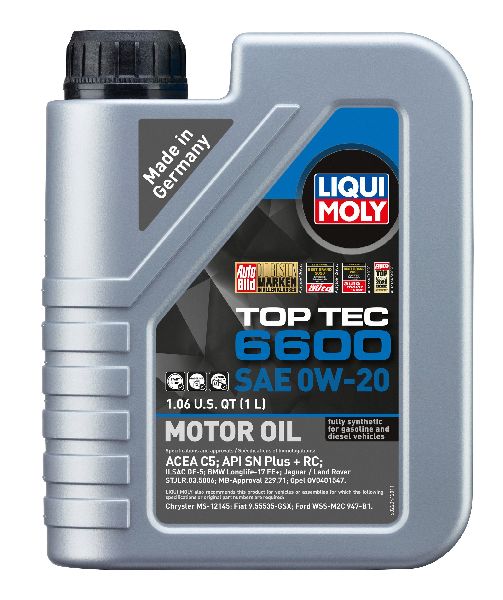
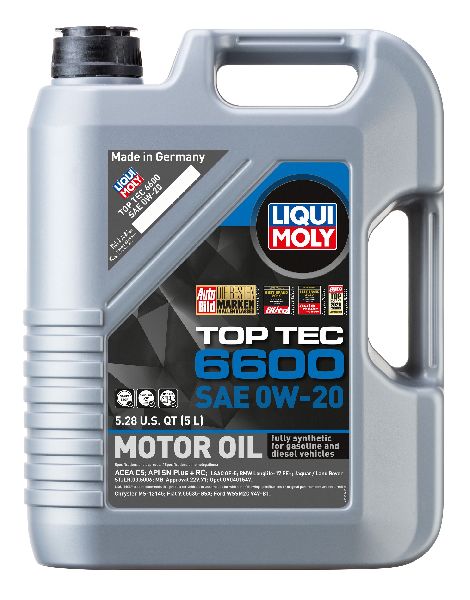
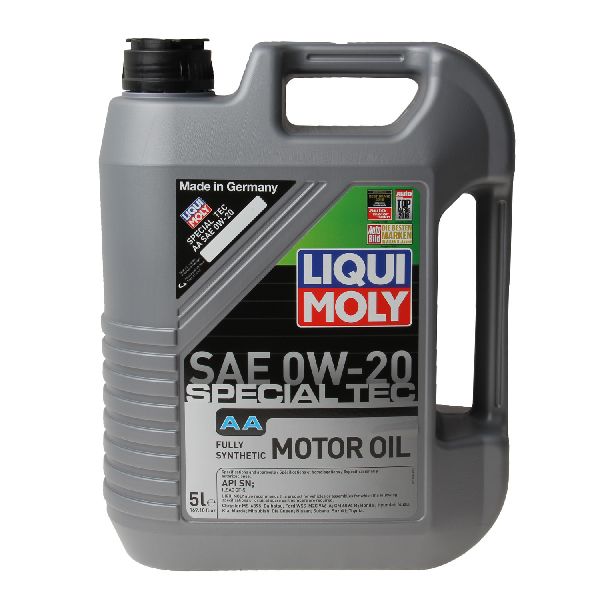
- Using the correct full-synthetic 0W-20 engine oil and a quality filter is critical for the proper function of the MIVEC variable timing system.
What's Unique About the 2018-2022 Mitsubishi Eclipse Cross
For this specific vehicle, a primary cause of P0014 is not a mechanical failure, but a software glitch. Mitsubishi released a Technical Service Bulletin (TSB-20-13-002REV) indicating that the check engine light can illuminate with this code (and/or P0011) without any actual drivability problems. The official fix in this scenario is a simple ECU software update performed by a dealer, making it a crucial first diagnostic check before replacing any parts.
Symptoms You May Notice
- Check Engine Light illuminated
- No noticeable symptoms (common if caused by software issue)
- Rough or unstable idle
- Engine stalling at low speeds
- Reduced engine power and sluggish acceleration
- Decreased fuel economy
- Rattling noise from the engine bay on startup or during operation
- Low oil pressure warning light may illuminate intermittently
- Replacing the camshaft position sensor. The sensor is usually reporting the problem accurately; it's rarely the cause of the timing error itself.
- Replacing the crankshaft position sensor. This sensor is also involved in timing correlation, but it is not the likely culprit for a P0014 code specifically.
Most Likely Causes
- Engine Control Unit (ECU) Software Anomaly 🔴 High Probability Mitsubishi issued Technical Service Bulletin TSB-20-13-002REV specifically for this issue on the 2018-2022 Eclipse Cross, noting P0014 can be stored without any mechanical fault. Additionally, Bulletin #TSB-20-13-002 notes that this code may appear alongside electrical system issues, such as the starter not engaging.
How to confirm: A Mitsubishi dealer can check service records or connect their MUT-III scan tool to see if the vehicle has the updated software. If the update has not been performed, this is the most likely cause.
Typical fix: Reprogramming the ECU with the latest software version. This is typically performed by a Mitsubishi dealership.
Est. part cost: $0 (if under warranty or per TSB guidelines) - Dirty, Low, or Incorrect Viscosity Engine Oil 🟡 Medium Probability The MIVEC (Variable Valve Timing) system uses oil pressure to adjust cam timing. Any issue with the oil's quality, level, or viscosity directly impacts the system's ability to function correctly. A Reddit user with a 2020 Eclipse Cross reported a P0014 code accompanied by a low oil pressure sensor and discovered the engine was consuming oil, highlighting the link between oil level and this code.
How to confirm: Check the oil level on the dipstick and inspect the oil's condition. If it's dark, gritty, or below the 'add' line, this could be the cause. Verify the oil viscosity matches the manufacturer's recommendation (typically 0W-20 for this engine).
Typical fix: Perform an oil and filter change using a high-quality, full-synthetic oil of the correct viscosity and a new OEM or equivalent oil filter. Top off oil if low and monitor for consumption.
Est. part cost: $40-$80 - Failed Exhaust Oil Control Valve (OCV) / VVT Solenoid 🟡 Medium Probability This solenoid is an electromechanical part that directs oil flow to the cam phaser. It can get clogged with sludge from old oil or fail electrically over time, preventing proper cam adjustment.
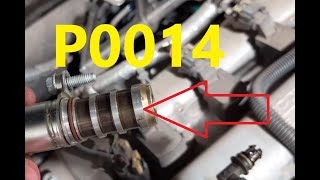
How to confirm: The solenoid can be removed and inspected for sludge or a clogged screen. It can be tested for resistance with a multimeter (spec is often 6.9-7.9 Ohms) or activated with a 9-12V power source to see if the internal plunger moves. A professional scan tool can also command the solenoid to activate while monitoring the camshaft angle for a response. 🎬 Watch: How to test and replace the VVT solenoid
Typical fix: Replacement of the exhaust VVT solenoid. It is recommended to change the engine oil at the same time to prevent contamination of the new part.
Est. part cost: $100-$250
Rare But Worth Checking
- Sticking or Failed Camshaft Phaser (VVT Sprocket): This is a more serious mechanical failure. The phaser is the gear on the end of the camshaft that actually performs the timing adjustment. It can become stuck due to internal wear or oil contamination.
- Stretched Timing Chain or Worn Guides: While the 4B40 engine uses a timing chain designed to last the life of the engine, poor maintenance, high mileage, or oil pressure issues can cause stretch or wear, leading to timing correlation errors.
- Clogged Oil Passages: In cases of severe oil sludging, the small passages that feed oil to the VVT components can become blocked, starving the system of the pressure it needs to operate.
Diagnosis Steps
- Check for TSBs: Contact a Mitsubishi dealer with your VIN to see if TSB-20-13-002REV or Bulletin #TSB-20-13-002 is open for your vehicle. If so, have the ECU reprogrammed. This is the most important first step for this specific vehicle.
- Check Engine Oil: Verify the engine oil level is correct and the oil is clean. If it's low or overdue for a change, correct this first, clear the code, and see if it returns. This is a simple, low-cost step that resolves the issue in some cases.
- Scan Tool Data: Use an advanced OBD-II scanner to monitor the desired vs. actual exhaust camshaft position. This can confirm if the camshaft is indeed over-advanced and by how much.
- Inspect/Test the Oil Control Valve (OCV): Locate the exhaust VVT solenoid. Remove and inspect it for debris on the screen. Test its operation manually with a power source or with a scan tool's actuation test.
- Check Wiring: Inspect the wiring harness and connector for the exhaust OCV for any damage, corrosion, or loose connections.
- Mechanical Inspection: If all else fails, a more in-depth mechanical inspection of the timing chain, guides, and the camshaft phaser itself is required. This is more labor-intensive and may require professional help.
Parts You'll Likely Need
- Exhaust Engine Oil Control Valve (VVT Solenoid)
(OEM #1028A134)— This is the most commonly failed component (after the software issue is ruled out) that directly controls oil flow for cam phasing. It can get clogged or fail electrically.
Trusted brands: Mitsubishi Genuine, Denso, Aisin
OEM price range: $200-$285
Aftermarket price range: $80-$150 - Engine Oil and Filter — Clean, correct-viscosity oil is critical for VVT system operation. An oil change is a simple and often effective first step.
Trusted brands: Mobil 1, Castrol, Pennzoil, Mitsubishi Genuine Filter
OEM price range: $60-$90
Aftermarket price range: $40-$60
Related Codes That Often Appear With This One
- P0011 — This code is for 'Intake Camshaft Position Timing - Over-Advanced (Bank 1)'. The TSB for the Eclipse Cross also mentions this code, as both intake and exhaust VVT systems can be affected by the same software or oil-related issues.
- P0017 — This code indicates 'Crankshaft Position - Camshaft Position Correlation (Bank 1 Sensor B)'. It often appears with P0014 because if the exhaust cam is out of position, its correlation with the crankshaft will also be incorrect. 🎬 Watch: A breakdown of P0014 causes and common fixes
Technical Service Bulletins (TSBs) & Recalls
- TSB-20-13-002REV: Addresses an issue where DTC P0014 (or P0011) can be stored without any drivability concerns, and instructs dealers to reprogram the ECU with updated software.
- Bulletin #TSB-20-13-002: A manufacturer service bulletin noting that P0014 may be stored in vehicles that also experience the starter not engaging.
- TIN-20-13-001REV: Reminds technicians that for P0010-P0017 codes, the software reflash TSB should be consulted first for P0011/P0014 before proceeding with deeper mechanical diagnostics.
Platform-Specific Known Issues
- A known software issue can falsely trigger DTC P0014 without any mechanical fault, correctable by an ECU reflash under TSB-20-13-002REV.
- Some owners report higher than expected oil consumption, which can lead to a low oil level, triggering a P0014 code if not monitored closely.
Mechanic-Grade Diagnostic Values
- Exhaust Oil Control Valve (OCV) Resistance — expected: 6.9 - 7.9 Ohms at 68°F (20°C). Failure: A reading outside this range, or an open circuit (no reading), indicates a faulty solenoid coil.
- DTC P0014 Set Condition (Live Data) — expected: The difference between the desired and actual exhaust camshaft angle should be less than 5 degrees.. Failure: A difference of more than 5 degrees for 5 consecutive seconds will trigger the code.
- DTC P0014 Monitor Execution Conditions — expected: Engine speed must be > 1,188 RPM and engine coolant temperature must be > 76°C (169°F).. Failure: The code will not be evaluated by the ECU under these conditions. This is useful for knowing when to check live data during a test drive.
Scan Tool Commands That Help
- Mitsubishi M.U.T.-III: Actuator Test (for Oil Control Valve) — To command the exhaust OCV solenoid on and off while the engine is running. A change in engine idle or a response in the actual cam angle PID confirms the solenoid is mechanically working.
- Mitsubishi M.U.T.-III: ECU Reprogramming — This is the primary function used to apply the fix for TSB-20-13-002REV, which is the most common cause of P0014 on this vehicle.
- Mitsubishi M.U.T.-III: Reset Learned Values (Chain Learned Values) — In cases where a simple ECU reflash does not resolve the code, or if the timing chain has been serviced. The ECU learns timing chain stretch over time, and resetting this learned value can resolve an erroneous P0014 code, as documented in forums for similar Mitsubishi engines.
Wiring & Ground Locations
- B-17 — The electrical connector on the exhaust oil control valve (VVT solenoid) itself.. This is the primary connector to check for corrosion, damage, or a loose connection when diagnosing a P0014 that is not solved by an oil change or ECU flash.
- B-08 — The connector at the Engine Control Unit (ECU) that contains the wires leading to the OCV.. If testing at the B-17 connector shows no issues, checking for continuity and voltage at the ECU-side connector helps determine if there is a break in the wiring harness between the ECU and the solenoid.
- Engine Block / Cylinder Head Ground — Main ground strap from the battery negative terminal to the engine block or cylinder head.. While not specific to the OCV circuit, a poor main engine ground can cause a host of electrical issues and erratic sensor readings, potentially contributing to timing errors. Ensure this connection is clean and tight.
Real Owner Repair Stories
- EvolutionM Forum User (2008 Mitsubishi Lancer GSR (4B11 Engine - similar MIVEC system)) — Persistent P0014 CEL for exhaust cam timing over-advance.
❌ Tried (didn't work) Replaced camshaft position sensor., Replaced the exhaust oil control feeder valve (OCV)., Confirmed oil passages were clear., Confirmed MIVEC sprocket was operational.
✅ What actually fixed it The dealership technician used the M.U.T.-III tool to specifically 'relearn the chain learned values' or 'reset the learned values'. A simple reflash had not worked, but this specific reset procedure resolved the code permanently.
OEM Part Supersession History
1028A134→N/A (Current as of search)
Heads up: Online vendors suggest part numbers like 1028A034 may be compatible, but it is strongly recommended to use 1028A134 specifically for the 4B40 engine to ensure correct oil flow rate and pressure characteristics.
Diagnostic Flowchart
Other Known Issues on This Vehicle
Issues unrelated to this code that are worth knowing about as an owner of this generation:
- CVT Shudder or Hesitation 🟠 Medium — Can occur as early as 30,000 km (approx. 18,600 miles). More common after 100,000 km (62,000 miles) if fluid is not changed regularly. (Ref: TSB-20-23-001REV3 addresses diagnosing and repairing shudder/surge conditions.)
- Intake Valve Carbon Buildup 🟡 Low — A long-term issue common to Gasoline Direct Injection (GDI) engines. The 4B40's dual injection (port and direct) system mitigates this, but it can still occur over high mileage, leading to rough idle or reduced efficiency. (Ref: TSB-ME-18-007 (mentioned in one source) suggests Mitsubishi has addressed this, with later models having revised EGR/PCV systems.)
- Air Conditioning System Malfunction 🟡 Low — Some owners report issues with insufficient cooling or compressor noise, sometimes occurring as early as 25,000 km (approx. 15,500 miles).
- Forward Collision Mitigation (FCM) System Braking Erratically 🟠 Medium — Owners have reported the vehicle braking unexpectedly when using adaptive cruise control or when the system falsely detects an obstacle. (Ref: A recall was issued for some 2019 models for prolonged braking due to FCM software, requiring a dealer ECU reprogram.)
Used vs. New Parts: Buying Guide for This Vehicle
When a used part is the smart pick: For this specific repair, a used part is not recommended. The primary fixes are an ECU software update (which cannot be bought used) or replacing the Oil Control Valve (OCV). Given the relatively low cost of a new OCV and the high risk of a used one being clogged or failing, buying new is the smart choice.
What to inspect on the donor part:
- Not applicable. Do not purchase a used Oil Control Valve for this repair.
OEM-only on this vehicle (don't cheap out):
- ECU Reflash: The software update to fix the issue described in TSB-20-13-002REV can only be performed by a Mitsubishi dealer or a shop with a subscription to Mitsubishi's OEM tools and software.
Aftermarket brands forum-validated for this vehicle:
- Denso
- Aisin
Brands owners have reported issues with on this vehicle:
- No specific brands were consistently reported as problematic, but ultra-low-cost, unbranded parts from online marketplaces carry a higher risk of premature failure.
Real Owner Stories
Aggregated from forums and TSBs cited above. Mileages and costs reflect what owners reported in those sources.
2020 Mitsubishi Eclipse Cross SE AWC 1.5L Turbo
Symptoms: The engine was consuming oil rapidly with no visible leaks. The 'LOW OIL PRESSURE' sensor would kick on from time to time, and the car threw a P0014 code for the exhaust side camshaft position sensor.
What fixed it: The source is a request for help and does not describe a fix, though it identifies the link between oil consumption and the code.
Source hint: Reddit thread titled '2020 Mitsubishi Eclipse Cross Issues - plz help if you can'
Related OBD-II Codes
Frequently Asked Questions
Is there a specific Mitsubishi TSB for the P0014 code on my Eclipse Cross?
Can low oil levels cause the P0014 code on the 1.5L Turbo engine?
What is the specific resistance specification for the Exhaust Oil Control Valve on this vehicle?
Does the software update TSB apply to other codes besides P0014?
What oil viscosity should I use to prevent VVT issues in my 4B40 engine?
Could my Eclipse Cross's P0014 code be related to the Forward Collision Mitigation (FCM) system?
Helpful Videos


We Have This Part in Stock


The information in this article is provided for general reference and educational purposes only. Vehicle specifications, procedures, and part compatibility can vary by production date, trim level, and region. Always consult your vehicle's factory service manual and verify part numbers before purchasing or performing repairs. Safety-critical components such as airbags, seat belts, and braking systems should be installed by a qualified professional.
- Mitsubishi Eclipse Cross:
- 🎬 Helpful Videos
- 🛍️ Shop This Part
- What's Unique About the 2018-2022 Mitsubishi Eclipse Cross
- Symptoms You May Notice
- Most Likely Causes
- Rare But Worth Checking
- Diagnosis Steps
- Parts You'll Likely Need
- Related Codes That Often Appear With This One
- Technical Service Bulletins (TSBs) & Recalls
- Platform-Specific Known Issues
- Mechanic-Grade Diagnostic Values
- Scan Tool Commands That Help
- Wiring & Ground Locations
- Real Owner Repair Stories
- OEM Part Supersession History
- Diagnostic Flowchart
- Other Known Issues on This Vehicle
- Used vs. New Parts: Buying Guide for This Vehicle
- Real Owner Stories
- 2020 Mitsubishi Eclipse Cross SE AWC 1.5L Turbo
- Related OBD-II Codes
- Frequently Asked Questions
- 🎟️ Get 5% Off