

P0014 on 2019-2021 Lincoln Nautilus: Exhaust Cam Timing Over-Advanced Causes & Fixes
On the 2019-2021 Lincoln Nautilus, code P0014 is most often caused by low or dirty engine oil, or a failing exhaust VCT solenoid on Bank 1. Start by checking your oil; if it's clean and full, the VCT solenoid is the next likely part to replace, costing around $40-$100 for the part. On the 2.7L V6, this code can sometimes be an early warning for more significant timing chain or cam phaser issues.
- P0014 on a Lincoln Nautilus points to the exhaust camshaft on Bank 1 being too far advanced.
- The absolute first step is to check your engine oil. Low, old, or incorrect oil is the leading cause.
- If the oil is good, the next most likely culprit is a faulty VCT solenoid (OEM Part #: FT4Z-6M280-C), which is an affordable and accessible part to replace.
- Ignoring this code can lead to poor engine performance and may result in more expensive repairs down the line, especially if accompanied by a rattling noise on the 2.7L V6.
- Multiple TSBs (SSM 54366, SSM 51923) exist for this and related issues, confirming it's a recognized problem by the manufacturer.
What's Unique About the 2019-2021 Lincoln NAUTILUS
The 2.0L and 2.7L EcoBoost engines in the Lincoln Nautilus use a sophisticated Twin Independent Variable Camshaft Timing (Ti-VCT) system to improve performance and fuel economy. This system relies heavily on clean engine oil of the correct viscosity to function. These engines can be sensitive to oil maintenance schedules, and even slightly degraded or low oil can lead to issues with the VCT solenoids and phasers, making P0014 a relatively common code if oil service is neglected. Ford has acknowledged this sensitivity in TSBs for related vehicles, noting that debris can cause VCT solenoids to stick. The 2.7L V6, in particular, has been noted in other platforms for potential timing chain and phaser issues, which can also manifest as VCT-related codes.
Diagnostic Flowchart
Tap your situation to follow the diagnostic path that matches what you're seeing on this vehicle.
Symptoms You May Notice
- Check Engine Light is on
- Rough or unstable idle
- Engine is hard to start
- Engine stalling
- Hesitation or poor acceleration
- Reduced fuel economy
- Rattling noise from the engine, especially on a cold start (more common with 2.7L V6)
- Replacing the camshaft position sensor. While a sensor can fail, it's less likely to cause an 'over-advanced' code than a mechanical or oil-related issue. The sensor is accurately reporting the problem, not causing it.
Most Likely Causes
- Low or Dirty Engine Oil 🔴 High Probability The VCT system is entirely dependent on oil pressure to adjust cam timing. Sludge, debris, or low oil levels directly impede the VCT solenoid's and phaser's ability to function correctly. Many owners on forums report this code appearing when an oil change is due.
How to confirm: Check the engine oil dipstick for level and clarity. If the oil is dark, gritty, or below the 'add' line, this is the likely cause. Ensure the correct oil viscosity is being used, per the owner's manual (typically a full synthetic SAE 5W-30 meeting Ford WSS-M2C961-A1 spec for these engines).
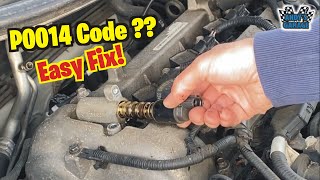
Typical fix: Perform an engine oil and filter change 🎬 Watch: A complete walkthrough on fixing a P0014 code using the manufacturer-specified grade and a high-quality filter (e.g., Motorcraft). Clear the codes and perform a drive cycle.
Est. part cost: $50-$100 - Faulty Bank 1 Exhaust VCT Solenoid (Oil Control Valve) 🟡 Medium Probability These solenoids can become clogged with oil sludge or fail electrically, causing them to get stuck in the advanced position. Ford has issued TSBs for other models that instruct technicians to cycle the VCT solenoids with a scan tool to clear debris before replacement, acknowledging this common failure point.
How to confirm: After confirming oil level and quality, this is the next step. A mechanic can command the solenoid with a scan tool. You can also test its resistance with a multimeter 🎬 See how to tell if your VVT solenoid is bad (a common reading is 6.9-7.9 ohms) or swap it with the intake solenoid on the same bank and see if the code changes to P0011.
Typical fix: Replace the Bank 1 exhaust VCT solenoid. It is typically located on the valve cover and is accessible for DIY replacement.
Est. part cost: $40-$100 - Failing Camshaft Phaser ⚪ Low Probability The phaser is a mechanical gear that can fail internally, getting stuck in the advanced position. While less common than a solenoid failure, phaser issues are a known problem on some Ford EcoBoost engines, particularly the larger V6s.
How to confirm: This is diagnosed after ruling out oil issues and a faulty solenoid. A key symptom can be a distinct rattling noise from the front of the engine for 2-5 seconds on a cold start. 🎬 Watch: Hear what a failing EcoBoost cam phaser sounds like Diagnosis requires significant engine disassembly to inspect.
Typical fix: Replace the camshaft phaser, which is a major repair that often involves replacing the timing chain, guides, and tensioners at the same time.
Est. part cost: $200-$500
Rare But Worth Checking
- Stretched Timing Chain or Failed Tensioner: While less common, a stretched chain can cause camshaft timing to be out of sync with the crankshaft, triggering this code. This is a more serious mechanical issue often accompanied by rattling noises. On the 2.7L EcoBoost, this should be considered a higher possibility if oil and solenoid issues are ruled out.
- Wiring or Connector Issue: Damage to the wiring or a loose/corroded connection at the VCT solenoid can prevent it from operating correctly. Always inspect the harness and connector pins for integrity when replacing the solenoid.
Diagnosis Steps
- Verify the code with an OBD-II scanner.
- Check the engine oil level and condition. If it is low, dirty, or the wrong viscosity, perform an oil and filter change, clear the code, and see if it returns.
- If the oil is fine, inspect the wiring and connector for the Bank 1 exhaust VCT solenoid for any damage or corrosion.
- Using a capable scan tool, monitor the desired vs. actual camshaft position for the Bank 1 exhaust cam. A large discrepancy confirms the fault.
- Test the VCT solenoid. You can command it with a scan tool to check for a change in engine idle, or remove it and test its resistance with a multimeter. A common diagnostic trick is to swap the exhaust VCT solenoid with the intake VCT solenoid and see if the code follows (e.g., P0014 becomes P0011).
- If the solenoid tests bad, is clogged, or the code follows it after a swap, replace it.
- If the solenoid is good and the code persists, listen carefully for any startup rattles or engine noises that could indicate a timing chain or phaser problem.
- If a timing component issue is suspected, the issue is likely more mechanical, such as a faulty camshaft phaser or a timing chain problem. This level of diagnosis is best left to a professional.
Parts You'll Likely Need
- Variable Camshaft Timing (VCT) Solenoid
(OEM #FT4Z-6M280-C (For 2.0L & 2.7L EcoBoost))— This is the most common component to fail or become clogged, causing the P0014 code when oil quality is good.
Trusted brands: Motorcraft, Dorman, Standard Motor Products
OEM price range: $50-$90
Aftermarket price range: $30-$70 - Engine Oil Filter
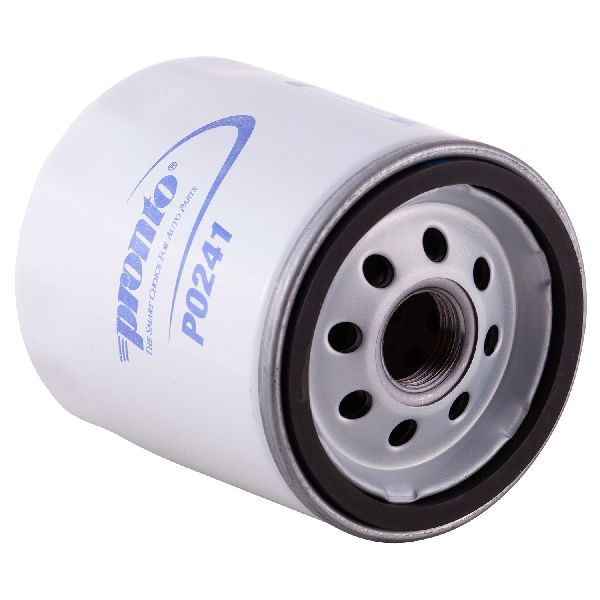
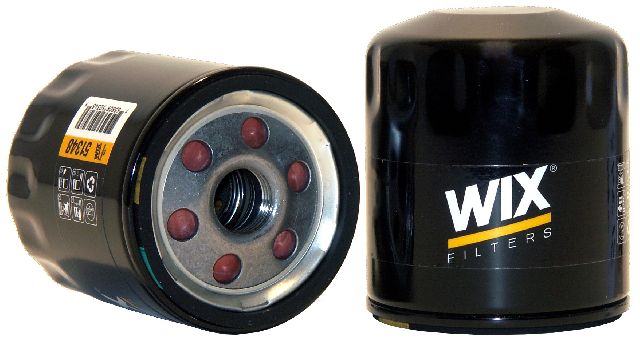
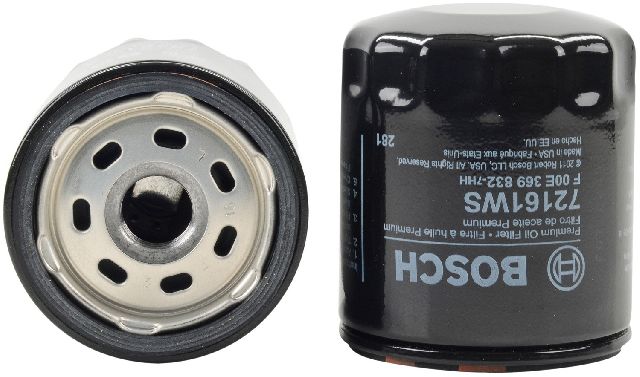
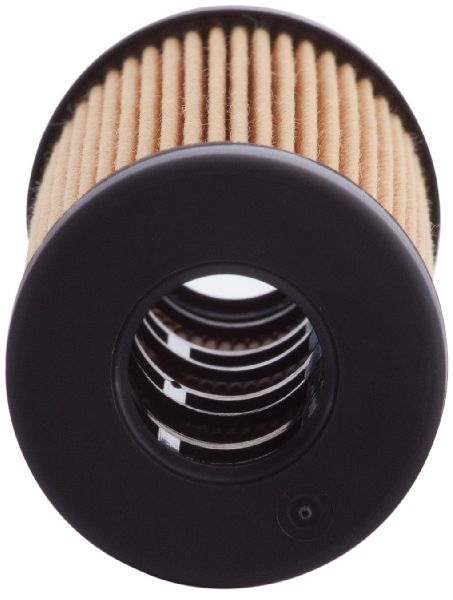
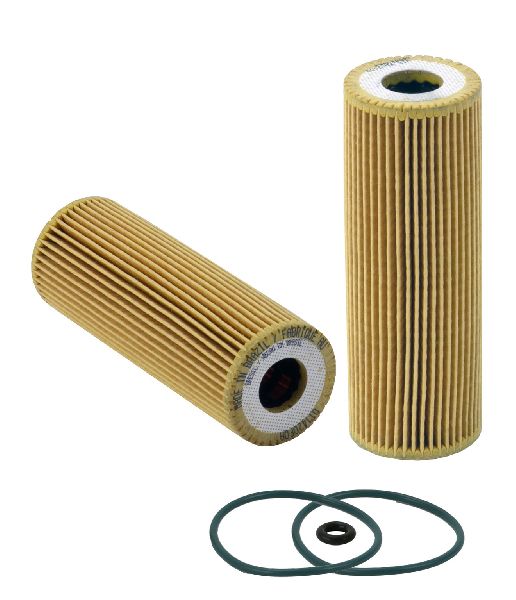
(OEM #Motorcraft FL-910S (2.0L) or FL-2062 (2.7L))— Required for an oil change, which is the first and most critical step in resolving this code. Using a quality OEM filter is recommended as aftermarket filters can sometimes cause oil pressure issues.
Trusted brands: Motorcraft, Bosch, Wix
OEM price range: $10-$20
Aftermarket price range: $5-$15
Related Codes That Often Appear With This One
- P0011 — This is the code for the intake camshaft ('A') on the same bank. If both appear, it could point to a more significant oil pressure or timing chain issue affecting the entire bank.
- P0024 — This is the same 'over-advanced' exhaust cam code, but for Bank 2 (driver's side on the 2.7L V6). Seeing both P0014 and P0024 strongly suggests a systemic problem like old oil, incorrect oil viscosity, or low oil pressure affecting the entire engine.
Technical Service Bulletins (TSBs) & Recalls
- SSM 54366: Notes that some 2015-2021 Ford and Lincoln vehicles may show an illuminated MIL with various VCT codes, including P0014, and refers to a specific pinpoint test for diagnosis.
- SSM 51923: Pertains to 2019-2023 Edge/Nautilus with the 2.7L EcoBoost and describes a 2-5 second startup rattle, a symptom often linked to the cam phasers which can cause VCT codes.
- SSM 47171: Mentions that small debris can cause VCT solenoids to stick on 2.7L and 3.0L EcoBoost engines, a direct cause for P0014.
Platform-Specific Known Issues
- A Technical Service Bulletin (TSB SSM 54366) was issued for some 2015-2021 Ford and Lincoln vehicles for a group of VCT-related codes, including P0014. This indicates a known pattern and directs technicians to an updated diagnostic procedure in the service manual.
- Another TSB for related vehicles (SSM 47171) notes that small debris can cause VCT solenoids to stick, leading to these codes.
- On the 2.7L EcoBoost engine specifically, TSB SSM 51923 addresses a startup rattle that can last for 2-5 seconds, which is a known symptom of cam phaser issues that can be associated with code P0014.
Mechanic-Grade Diagnostic Values
- VCT Solenoid Internal Resistance — expected: 5.0 to 15.0 Ohms is a general range, with 6.9-7.9 Ohms being commonly cited for these specific solenoids.. Failure: A reading of 0 Ohms (short), OL/infinity (open circuit), or a value significantly outside the expected range indicates a failed solenoid.
- Scan Tool VCT Error PID (e.g., VCT_EXH_ERR1, VCTADVERR) — expected: Should hover around 0 degrees (+/- 5 degrees) at a steady idle in closed loop.. Failure: A consistent, large error value (positive or negative) while the PCM is commanding a change indicates the phaser is not reaching its target position. This confirms a hydraulic or mechanical fault rather than a sensor issue.
- VCT Solenoid Connector Voltage (Key On, Engine Off) — expected: Approximately 12V (Battery Voltage) on the power supply pin.. Failure: No voltage or low voltage suggests a wiring issue, blown fuse, or problem with the PCM power relay, not a faulty solenoid.
Scan Tool Commands That Help
- Ford IDS (Integrated Diagnostic System) or equivalent (FORScan, high-end Autel/Snap-on): Pinpoint Test HK / VCT Solenoid Cycle Test — This is a bidirectional command referenced in Ford TSBs (SSM 54366, SSM 50067) to be used before replacing a VCT solenoid. The test cycles the solenoid rapidly 10 times to dislodge small pieces of debris that may be causing it to stick. If the code is resolved after running this test, it confirms the issue was debris and not a failed part, saving the cost of a new solenoid.
Wiring & Ground Locations
- VCT Solenoid Connector — Plugged into the top of the VCT solenoid, which is mounted on the valve cover for Bank 1 (passenger side). The exhaust solenoid is typically the one towards the rear of the cylinder head.. This 2-pin connector provides power and control. Pin 1 is typically the 12V power supply from the PCM Power Relay, and Pin 2 is the duty-cycled ground signal from the PCM. A poor connection, corrosion, or oil contamination in this connector can mimic a failed solenoid.
Real Owner Repair Stories
- Ford Edge Forum user (Ford Edge with 2.7L EcoBoost (mechanically similar to Nautilus)) — Check engine light with P0014 after an oil change at a quick-lube shop.
❌ Tried (didn't work) Clearing the code (it returned immediately), Replacing the Bank 1 exhaust VCT solenoid
✅ What actually fixed it The owner took the vehicle to a dealership. The technician identified that the quick-lube shop had used a low-quality aftermarket oil filter. The filter's anti-drainback valve was not functioning correctly, causing a momentary oil pressure drop on startup that was enough to set the VCT timing code. Replacing the aftermarket filter with a genuine Motorcraft FL-2062 filter and performing another oil change with the correct 5W-30 synthetic blend oil permanently resolved the code. - Reddit user in r/MechanicAdvice (2019 Lincoln Nautilus 2.7L V6) — P0014, P0024, rough idle, and stalling at low RPM.
❌ Tried (didn't work) Oil and filter change, Replacing both exhaust VCT solenoids (P0014 and P0024)
✅ What actually fixed it The issue was finally traced to a failing high-pressure fuel pump. The pump's internal failure was causing timing chain stretch due to the extra load on the camshaft that drives it. This stretch caused the cam timing to deviate enough to trigger the VCT codes. The fix was a complete timing job (chains, phasers, tensioners) and a new high-pressure fuel pump. This highlights how VCT codes can sometimes be a symptom of a seemingly unrelated component.
OEM Part Supersession History
FT4Z-6M280-A→FT4Z-6M280-C— Internal improvements to materials and construction for better resistance to debris and heat cycling. The -C revision is the current recommended part for this application.
Heads up: The -A and -B revisions will physically fit and function, but the -C revision is considered the most robust and reliable version. When replacing, it is best practice to use the latest available part number.
Model Year Variations Within This Range
- 2019-2021: No significant variations related to the VCT system or the causes of P0014 are documented for the 2019-2021 Lincoln Nautilus. The 2.0L and 2.7L powertrains remained consistent throughout this period, even with the 2021 interior refresh.
Helpful Videos
Used OEM Parts in Stock


New Aftermarket Parts Available

The information in this article is provided for general reference and educational purposes only. Vehicle specifications, procedures, and part compatibility can vary by production date, trim level, and region. Always consult your vehicle's factory service manual and verify part numbers before purchasing or performing repairs. Safety-critical components such as airbags, seat belts, and braking systems should be installed by a qualified professional.
- Lincoln NAUTILUS:
- 🎬 Helpful Videos
- 🛍️ Shop This Part
- What's Unique About the 2019-2021 Lincoln NAUTILUS
- Diagnostic Flowchart
- Symptoms You May Notice
- Most Likely Causes
- Rare But Worth Checking
- Diagnosis Steps
- Parts You'll Likely Need
- Related Codes That Often Appear With This One
- Technical Service Bulletins (TSBs) & Recalls
- Platform-Specific Known Issues
- Mechanic-Grade Diagnostic Values
- Scan Tool Commands That Help
- Wiring & Ground Locations
- Real Owner Repair Stories
- OEM Part Supersession History
- Model Year Variations Within This Range
- 🎟️ Get 5% Off