

P0014 on 2007-2017 Jeep Patriot 2.4L: Exhaust Cam Timing Over-Advanced Causes & Fixes
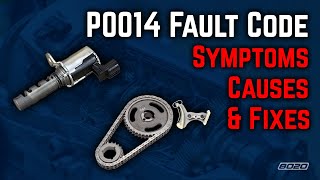
On a 2007-2017 Jeep Patriot with the 2.4L engine, code P0014 is most often caused by low or dirty engine oil, or a failing exhaust Variable Valve Timing (VVT) solenoid. An oil change with the correct 5W-20 viscosity oil is the first and most crucial step. If that doesn't work, a new solenoid (Mopar P/N 4884483AC) costs around $30-$60 for an aftermarket part and is a simple DIY fix that often resolves the issue.
- P0014 on your Jeep Patriot is almost always an oil-related issue. Start with the cheapest and easiest fix: check your oil level and quality.
- The most likely failed part is the exhaust VVT solenoid. You can confirm this for free by swapping it with the intake solenoid and seeing if the code changes to P0011.
- This is a very DIY-friendly repair. Replacing the VVT solenoid requires basic tools and can be done in under 30 minutes.
- Do not immediately assume you have a major timing chain problem. While possible, it is far less likely than a simple oil or solenoid issue.
What's Unique About the 2007-2017 Jeep Patriot
The 2.4L World Engine, used in the Patriot and other Chrysler/Jeep/Dodge vehicles, is generally considered reliable but is known to be sensitive to oil quality and level. The VVT system, which triggers this code, relies entirely on clean oil at the correct pressure to function. Sludge or debris can clog the fine mesh screens on the VVT solenoids, impeding oil flow and causing timing deviations. Therefore, issues that might be minor on other engines, like slightly dirty oil or being low by a quart, can cause timing-related codes like P0014 on this platform. Owners frequently report that simple oil system maintenance is the key to preventing and fixing these VVT-related problems.
Symptoms You May Notice
- Check Engine Light is on
- Rough or unstable idle
- Engine stalling, especially at low speeds
- Poor acceleration and loss of power
- Increased fuel consumption
- Rattling or ticking noise from the engine, especially on startup
- Replacing the camshaft position sensor first. The sensor's job is to report the timing; it doesn't cause the timing to be incorrect. The problem is almost always oil-related or the VVT solenoid itself.
- Replacing the cam phaser before diagnosing the VVT solenoid. The solenoid is much cheaper, easier to replace, and is the more likely culprit.
Most Likely Causes
- Low, Dirty, or Incorrect Viscosity Engine Oil 🔴 High Probability The VVT system is hydraulically operated and highly sensitive to oil pressure and cleanliness. Sludge or debris can easily clog the small passages and filter screens in the oil control solenoids.
How to confirm: Check the oil dipstick for level and inspect the oil's color and consistency. If it's low, dark, or thick, it needs to be changed. This is the number one cause.
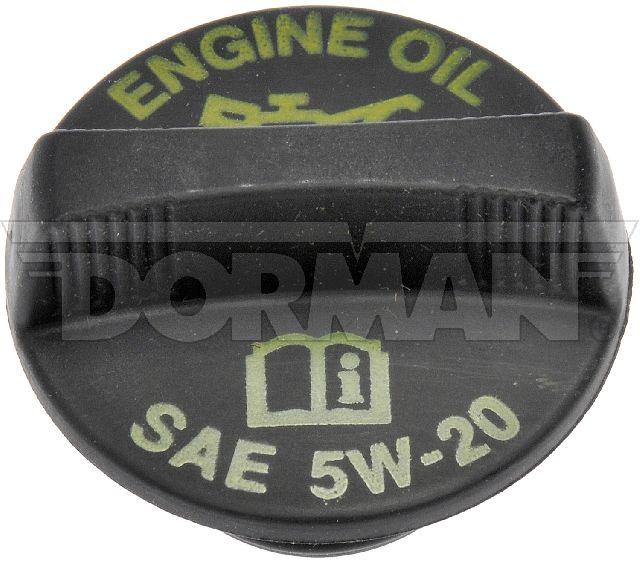
Typical fix: Perform an engine oil and filter change using the manufacturer-specified oil viscosity (typically 5W-20). Clear codes and re-test.
Est. part cost: $40-$80 - Faulty Exhaust VVT Solenoid (Oil Control Valve) 🔴 High Probability This solenoid is an electromechanical part that cycles constantly and is exposed to engine heat and potentially dirty oil, making it a common failure point. The internal plunger can stick or the coil can fail.
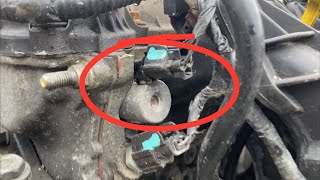
How to confirm: After confirming oil is good, swap the intake and exhaust VVT solenoids. They are identical and easily accessible on the top of the valve cover. 🎬 Watch: Locate the intake and exhaust solenoids on your engine. If the code changes to P0011 (Intake Camshaft Position), the solenoid you moved to the intake side is faulty. This is a very common and effective diagnostic step mentioned by owners.
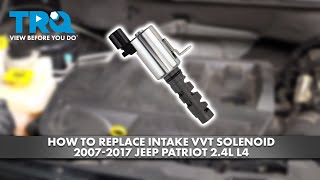
Typical fix: Replace the faulty exhaust VVT solenoid. It is held in by a single 10mm bolt and can be replaced in minutes. 🎬 Watch: A quick walkthrough of the solenoid removal process.
Est. part cost: $30-$100 - Stretched Timing Chain or Faulty Phaser ⚪ Low Probability While less common, timing chains can stretch over time with high mileage (typically over 100,000-120,000 miles), causing a constant timing offset that the VVT system cannot correct.
How to confirm: This is a more advanced diagnosis. A mechanic would use a scan tool to view desired vs. actual cam timing angles. A significant, constant deviation that doesn't respond to solenoid replacement points to a mechanical timing issue.
Typical fix: Replace the timing chain, guides, tensioner, and potentially the cam phasers. This is a labor-intensive job.
Est. part cost: $400-$800
Rare But Worth Checking
- Damaged Wiring to VVT Solenoid: The wiring harness connector can become brittle from heat and fail, or wires can chafe. Always inspect the connector and nearby wiring when replacing the solenoid.
- Faulty Camshaft Position Sensor: This is an uncommon cause for P0014, as a failing sensor usually sets its own specific codes (e.g., P0365, P0366). However, an intermittent sensor could potentially send incorrect data to the PCM. Recall S89 addressed this for some 2016 models.
Diagnosis Steps
- Check Engine Oil: Verify the oil level is full and the oil is clean. If low, top it off. If it's near its change interval or looks dirty, perform a full oil and filter change with the correct 5W-20 oil. This alone often fixes the problem. 🎬 See this step-by-step guide for P0014 diagnostics and solenoid replacement. Clear the code and drive to see if it returns.
- Inspect VVT Solenoid Connector: Check the electrical connector on the exhaust VVT solenoid for damage, corrosion, or loose wires.
- Swap Test the Solenoids: The intake and exhaust VVT solenoids are located on the top front of the engine and are identical. Mark them, then swap their positions. Clear the codes and drive. If the code returns as P0011 (intake side), the solenoid is confirmed bad.
- Test the Solenoid (Optional): If you have a multimeter, you can test the solenoid's resistance. It should be between 6.9 and 7.9 ohms at 68°F (20°C). You can also briefly apply 12V to see if the internal plunger clicks, but be cautious.
- Replace the Solenoid: If the swap test confirms a bad solenoid, replace it with a new one. The Mopar part is 4884483AC, and a common aftermarket alternative is Dorman 916-537.
- Advanced Diagnostics: If a new solenoid and fresh oil do not fix the issue, the problem is likely more serious, such as a clogged oil passage, a failing cam phaser, or a stretched timing chain. This level of diagnosis typically requires a professional mechanic.
Parts You'll Likely Need
- Exhaust Variable Valve Timing (VVT) Solenoid / Oil Control Valve
(OEM #4884483AC)— This is the most common part to fail, either by getting stuck from oil sludge or having its internal coil fail. It directly controls the oil flow that adjusts the camshaft timing.
Trusted brands: Mopar, Dorman (P/N: 916-537 or 917-290 for exhaust), Standard Motor Products (SMP)
OEM price range: $75-$110
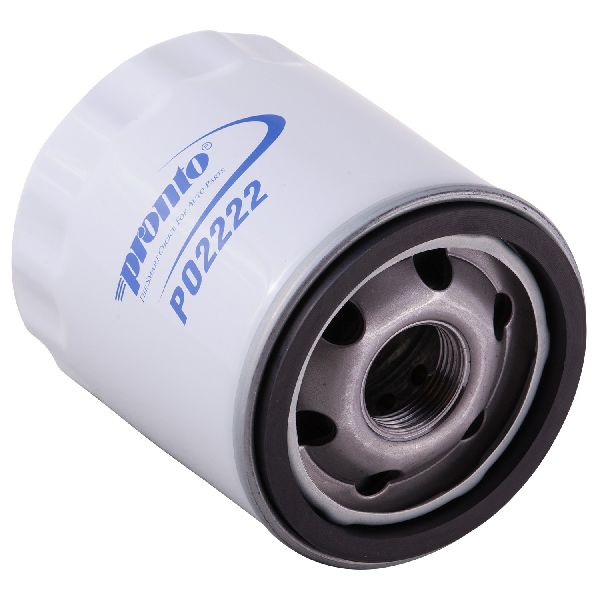
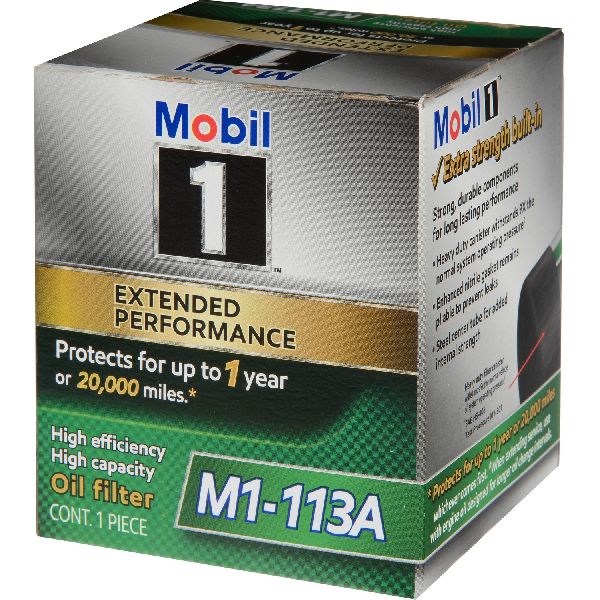
Aftermarket price range: $30-$60 - Engine Oil and Filter — Low, old, or incorrect viscosity oil is the number one cause of VVT system problems on this engine.
Trusted brands: Pennzoil, Mobil 1, Valvoline
OEM price range: $60-$90
Aftermarket price range: $40-$70
Related Codes That Often Appear With This One
- P0011 — Intake Camshaft Position Timing Over-Advanced. If both P0011 and P0014 are present, it strongly points to a systemic issue like very low/dirty oil or a jumped timing chain affecting both camshafts.
- P000D — 'B' Camshaft Position Slow Response Bank 1. This code can accompany P0014 and indicates the exhaust cam phaser is not moving to its commanded position as quickly as expected, often due to oil flow issues.
Technical Service Bulletins (TSBs) & Recalls
- TSB 09-002-14: While not for the 2.4L engine, this TSB for the 3.6L Pentastar engine deals with misfire codes (P030x) related to cylinder head issues, showing a pattern of Chrysler addressing engine timing and performance problems through technical bulletins.
Platform-Specific Known Issues
- Recall S89 (NHTSA Campaign ID: 16V907000) was issued for some 2016 models for an intermittent crankshaft or camshaft sensor that could cause stalling. The fix involved replacing the sensor connectors. While not directly for P0014, it highlights the sensitivity of the engine's timing systems and potential wiring issues.: This recall affected 2016 Jeep Patriot, Compass, and Dodge Journey vehicles manufactured between May and July 2016.
- Recall N52 (NHTSA Campaign ID: 13V529000) for some 2014 models involved abrasive debris in balance shaft bearings causing a loss of oil pressure, which could trigger VVT codes before leading to engine failure.: This was a severe issue that would cause P0014 as a secondary symptom of a much larger oil pressure problem.
Mechanic-Grade Diagnostic Values
- VVT Solenoid (Oil Control Valve) Internal Resistance — expected: 6.9 to 7.9 ohms at 68°F (20°C). Some sources state a broader but acceptable range of 8 to 12 ohms.. Failure: A reading outside this range, or an open circuit (infinite resistance), indicates a failed solenoid coil.
- VVT Solenoid Connector Voltage — expected: Battery voltage (~12V) on the power supply pin with the ignition key in the 'ON' position (engine off).. Failure: No voltage indicates a problem with the wiring or the main engine relay that supplies power.
Scan Tool Commands That Help
- Professional Scan Tool (e.g., wiTECH, Autel, Snap-on): VVT Solenoid Actuator Test / OCV Actuator Test — Use this bidirectional command with the engine running at idle. When you activate the exhaust VVT solenoid, the engine should hesitate, stumble, or stall. If there is no change in engine operation, it confirms a problem with the solenoid, its oil supply, or the phaser itself.
Wiring & Ground Locations
- Main Battery Ground Point — On the chassis frame rail directly in front of the battery. It is a stud with multiple (up to 14) ground wires attached.. This is a critical ground point for numerous systems. Corrosion here can cause a wide range of bizarre electrical issues, including sensor data corruption and PCM problems that could indirectly trigger timing codes. Owners report this point is highly susceptible to corrosion.
- Engine Compartment Grounds — Key grounds are located on the top of the transmission (G102, G103), the right front of the engine compartment (G104), and near the alternator.. A poor engine-to-chassis ground can affect the performance of all engine sensors and actuators, including the VVT solenoids and camshaft position sensors. The ground near the alternator is difficult to access but has been reported to fail due to corrosion.
- VVT Solenoid Connector Pins — The two-pin connector on the VVT solenoid itself.. One pin is the 12V power supply from the main relay, and the other is the ground-side control wire from the PCM. Testing for power here is a primary step in diagnosing a non-responsive solenoid.
Real Owner Repair Stories
- Reddit user on r/JeepPatriot (2012 Jeep Patriot Latitude 2.4L Manual 4x4, 173k miles) — Fast blinking turn signal, random check engine light, brake indicator light flashing, and a headlight that stopped working.
❌ Tried (didn't work) Splicing a new ground wire directly to the headlight plug (temporary fix)., Cleaning and repairing only the ground point near the alternator.
✅ What actually fixed it The final fix for all electrical issues was thoroughly cleaning a major ground point on the frame in front of the battery, which had 14 wires attached and was heavily corroded, and also repairing the corroded ground near the alternator. - GMTNation forum user (General Motors vehicle with P0014 (similar VVT system)) — Persistent P0014 code.
❌ Tried (didn't work) Replacing the VVT solenoid (CPAS) with a new OEM part., Replacing the solenoid a second time with another new OEM part.
✅ What actually fixed it The third new OEM solenoid finally fixed the problem. The first two were defective out of the box. This highlights that 'new' does not always mean 'good'.
"I Checked Everything" — The Actual Cause
- While a smoke test isn't standard for P0014, the equivalent is when an oil change and VVT solenoid replacement fail to fix the code. In these cases, the root cause can be sludge or debris physically blocking the small oil passages inside the cylinder head that feed the cam phaser. This requires more invasive cleaning or inspection, as a new solenoid will still be starved of oil pressure.
OEM Part Supersession History
4884483AA, 4884483AB→4884483AC— Standard part revision and improvement by the manufacturer.
Heads up: The newest part, 4884483AC, is the correct and backward-compatible service part for the entire 2007-2017 model range.
Model Year Variations Within This Range
- 2007-2017: While the Patriot had an interior refresh in 2009 and a 6-speed automatic transmission became more common after 2014 (replacing the CVT in some trims), the 2.4L World engine's VVT system and the common causes for P0014 remained consistent. The same VVT solenoid part number (4884483AC) is used for all years.
Diagnostic Flowchart
Other Known Issues on This Vehicle
Issues unrelated to this code that are worth knowing about as an owner of this generation:
- CVT Transmission Overheating and Failure 🔴 High — Very common on earlier models (2007-2014), often manifesting as whining, overheating warnings, and loss of power.
- Front and Rear Subframe Corrosion 🔴 High — Widespread issue, especially in salt-belt regions. Can lead to unsafe driving conditions. An extended warranty (10yr/150k miles) and a TSB were issued. (Ref: TSB 23-007-17 REV C)
- Sunroof Water Leaks 🟠 Medium — Commonly reported problem where clogged sunroof drain tubes cause water to leak into the cabin, often through the dome light, potentially damaging electronics.
- Manual Transmission Shifting Difficulty 🟡 Low — Some 2007-2010 models experienced issues with grinding or popping out of gear, sometimes requiring replacement of synchronizer rings.
Used vs. New Parts: Buying Guide for This Vehicle
When a used part is the smart pick: For this specific repair, a used VVT solenoid from a junkyard is NOT recommended. The part is highly sensitive to oil sludge and contamination, and its failure is a primary cause of the P0014 code. The risk of getting a part that is already failing or will fail shortly is very high.
What to inspect on the donor part:
- Not applicable as used parts are not recommended for this component.
OEM-only on this vehicle (don't cheap out):
- While not strictly 'OEM-only', using a reputable brand is critical. There are forum reports of multiple bad-out-of-the-box OEM solenoids, and cheap aftermarket parts are a significant gamble. Stick to Mopar or top-tier aftermarket brands with strong warranties.
Aftermarket brands forum-validated for this vehicle:
- Dorman (often provides design improvements)
- Standard Motor Products (SMP)
Brands owners have reported issues with on this vehicle:
- Unbranded, low-cost solenoids from online marketplaces should be avoided due to a high likelihood of premature failure.
Real Owner Stories
Aggregated from forums and TSBs cited above. Mileages and costs reflect what owners reported in those sources.
2013 Jeep Patriot 2.4L
Symptoms: Check engine light appeared shortly after performing an oil change.
What fixed it: The issue was resolved by ensuring the oil level was correct and using the proper oil/filter, as corroborated by common forum discussions regarding VVT sensitivity.
Source hint: jeeppatriot.com thread 'P0014 code after oil change'
2016 Jeep Patriot 2.4L
Symptoms: Intermittent stalling while driving.
What fixed it: Replacing the sensor connectors as part of the S89 recall addressing crankshaft/camshaft sensor signal loss.
Source hint: Recall S89 (NHTSA Campaign ID: 16V907000)
2014 Jeep Patriot 2.4L
Symptoms: Loss of oil pressure followed by VVT-related error codes.
What fixed it: This was a severe mechanical issue involving abrasive debris in balance shaft bearings requiring significant engine repair.
Source hint: Recall N52 (NHTSA Campaign ID: 13V529000)
Related OBD-II Codes
Frequently Asked Questions
Is there a recall for my 2016 Jeep Patriot that could be related to engine stalling and timing issues?
Could my P0014 code be caused by a more serious engine defect on a 2014 Patriot?
Can I test if the solenoid is bad without buying a new one immediately?
What is the specific Mopar part number for the VVT solenoid on the 2.4L World Engine?
What oil viscosity should I use in my Jeep Patriot to prevent VVT issues?
Does the P0014 code mean I definitely need a new timing chain?
Helpful Videos
![How to Fix P0014 Engine Code in 4 Minutes [2 DIY Methods / Only $6.74]](https://img.youtube.com/vi/olrC8UYw9cQ/mqdefault.jpg)
We Have This Part in Stock


The information in this article is provided for general reference and educational purposes only. Vehicle specifications, procedures, and part compatibility can vary by production date, trim level, and region. Always consult your vehicle's factory service manual and verify part numbers before purchasing or performing repairs. Safety-critical components such as airbags, seat belts, and braking systems should be installed by a qualified professional.
- Jeep Patriot:
- 🎬 Helpful Videos
- 🛍️ Shop This Part
- What's Unique About the 2007-2017 Jeep Patriot
- Symptoms You May Notice
- Most Likely Causes
- Rare But Worth Checking
- Diagnosis Steps
- Parts You'll Likely Need
- Related Codes That Often Appear With This One
- Technical Service Bulletins (TSBs) & Recalls
- Platform-Specific Known Issues
- Mechanic-Grade Diagnostic Values
- Scan Tool Commands That Help
- Wiring & Ground Locations
- Real Owner Repair Stories
- "I Checked Everything" — The Actual Cause
- OEM Part Supersession History
- Model Year Variations Within This Range
- Diagnostic Flowchart
- Other Known Issues on This Vehicle
- Used vs. New Parts: Buying Guide for This Vehicle
- Real Owner Stories
- 2013 Jeep Patriot 2.4L
- 2016 Jeep Patriot 2.4L
- 2014 Jeep Patriot 2.4L
- Related OBD-II Codes
- Frequently Asked Questions
- 🎟️ Get 5% Off