

P0014 on 2007-2017 Jeep Compass 2.4L: Exhaust Cam Timing Over-Advanced Causes and Fixes
On a Jeep Compass with the 2.4L World engine, code P0014 is most often caused by low or dirty engine oil, or a failing exhaust VVT solenoid (also called an oil control valve). An oil change is the first step; if that doesn't work, replacing the VVT solenoid costs about $40-$80 for an aftermarket part and is a 1/5 difficulty DIY job. The solenoids are identical and can be swapped to confirm failure.
- Always check your engine oil level and condition first. A simple oil change fixes P0014 more often than not.
- The second most likely cause is a bad exhaust VVT solenoid, which is an affordable part and easy to replace.
- A simple diagnostic trick is to swap the intake and exhaust VVT solenoids. If the code changes to P0011, you've confirmed the solenoid is bad.
- Only suspect more serious mechanical issues like a bad cam phaser or timing chain after you have ruled out oil and the VVT solenoid.
What's Unique About the 2007-2017 Jeep Compass
The 2.4L World Engine, used across many Chrysler, Dodge, and Jeep platforms, relies heavily on clean, correct-viscosity oil for its dual VVT system to function. Unlike some engines where this code points directly to a stretched timing chain, on the Compass and its platform mates (Patriot, Caliber), the issue is far more likely to be hydraulic (oil-related) or electrical (the controlling solenoid). Owners often resolve this code with basic maintenance (oil change) or a simple solenoid swap before needing to explore more serious mechanical failures like cam phasers.
Generation note: The 2007-2017 year range covers the entire first generation (MK) of the Jeep Compass. A new, second-generation (MP) Compass was also released in 2017 with a different 2.4L 'Tigershark' engine which has a different VVT system design. This guide specifically covers the first-generation (2007-early 2017) models with the 2.4L World Engine.
Symptoms You May Notice
- Check Engine Light is on
- Rough or erratic idle
- Engine stalling, especially at low speeds or when stopping.
- Poor acceleration and reduced engine power, may feel sluggish.
- Decreased fuel economy.
- Rattling or ticking noise from the top of the engine, especially on startup.
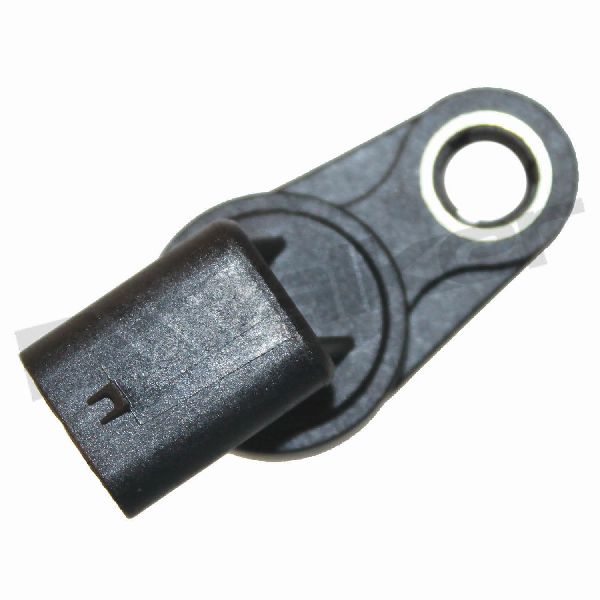
- Replacing the camshaft position sensor. While a cam sensor provides the position data, it rarely fails in a way that causes a P0014 code without also setting a specific sensor circuit code (like P0365-P0369). Some 2016 models were subject to recall S89/NHTSA 16V-907 for a faulty wiring harness to the cam/crank sensors, which could cause stalling.
Most Likely Causes
- Low or Dirty Engine Oil 🔴 High Probability The VVT system is operated by oil pressure. Old, sludgy, or incorrect viscosity oil can clog the small passages and filter screens in the VVT solenoids and cam phasers, preventing them from operating correctly. This is the most common cause across all platforms using this engine.
How to confirm: Check the oil level on the dipstick and inspect its color and consistency. If the oil is low, dark, or thick, or if it's been more than 5,000 miles since the last change, this is the likely cause. Even if the level is full, degraded oil can cause the issue.
Typical fix: Perform a complete oil and filter change using the manufacturer-specified oil weight (typically 5W-20 for this engine). Clear codes and drive.
Est. part cost: $30-$70 - Faulty Exhaust VVT Solenoid (Oil Control Valve) 🔴 High Probability This solenoid is an electronic actuator that directs oil flow to the cam phaser. It can become clogged with debris from dirty oil or fail electrically, causing it to stick.
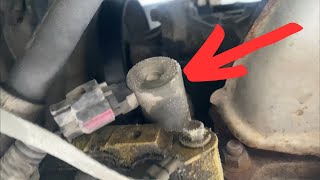
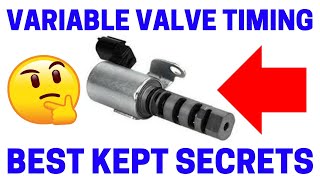
How to confirm: After an oil change, if the code persists, this is the next logical step. A simple test is to swap the exhaust VVT solenoid with the intake solenoid (they are identical parts on this engine). They are on the valve cover, held by one 10mm bolt each. 🎬 Watch: How to locate and replace your VVT solenoids. Clear the codes and drive. If the code changes to P0011 (Intake Camshaft Position), the solenoid is confirmed bad. You can also remove the solenoid and inspect its screens for metal shavings or sludge. 🎬 See this guide on how to tell if a solenoid is bad.
Typical fix: Replace the exhaust VVT solenoid. It is located on the top of the valve cover on the exhaust side and is held in by a single 10mm bolt.
Est. part cost: $40-$120 - Faulty Exhaust Camshaft Phaser ⚪ Low Probability The cam phaser is the mechanical gear on the end of the camshaft that actually rotates it. It can fail internally, getting stuck in an advanced position due to wear, oil contamination, or failure of its internal locking pin.
How to confirm: This is diagnosed after confirming the oil and VVT solenoid are good. Diagnosis requires a scan tool capable of monitoring commanded vs. actual cam angle and may require partial engine disassembly to inspect the phaser and timing components. A user on GMTNation found metal shavings clogging their solenoid screen, which pointed to a failing phaser.
Typical fix: Replace the exhaust camshaft phaser. This is a complex job that involves removing the valve cover and timing components.
Est. part cost: $70-$200
Rare But Worth Checking
- Damaged Wiring or Poor Ground Connection: On the sister vehicle (Jeep Patriot), a corroded ground wire near the alternator has been known to cause open circuit codes (P0010, P0013) for both VVT solenoids and other components. While P0014 is a performance code, a poor connection could cause erratic solenoid behavior. It's worth inspecting the main engine grounds for corrosion.
- Stretched Timing Chain or Failed Guide/Tensioner: While less common than on other engines, significant timing chain stretch can cause the base camshaft timing to be off, leading the VVT system to set a fault code when it cannot compensate. This is usually accompanied by a distinct rattling noise on startup.
- PCM Software Issue: TSB 18-018-07 REV. A was issued for 2.4L engines in other Chrysler platforms for correlation codes (P0016/P0017), recommending a PCM flash (software update) and replacement of the oil control valves. While not directly for P0014, it shows a precedent for software-related timing issues on this engine family.
Diagnosis Steps
- Check the engine oil level and condition. If low, top it off. If old or dirty, perform an oil and filter change with 5W-20 oil. Clear the code and see if it returns. This is the most common fix. 🎬 Watch: Two quick DIY methods to fix the P0014 code.
- Use a scan tool to check for any other pending or active trouble codes, such as P0011 or P0013.
- Locate the intake and exhaust VVT solenoids on the valve cover. They are identical and held by a 10mm bolt each.
- Clear the codes and drive the vehicle. If the code changes to P0011 (Intake), the solenoid you moved to the intake side is faulty and must be replaced.
- If the P0014 code returns, remove the exhaust solenoid again and carefully inspect the mesh screens for any sludge or metallic debris. Clean it with brake cleaner and reinstall if it appears dirty but intact.
- Inspect the wiring harness and connector for the exhaust VVT solenoid for any damage, corrosion, or loose pins. Check the main engine ground points for corrosion.
- If wiring is okay and the solenoid is confirmed good, the next step involves more advanced mechanical diagnosis. This includes checking oil pressure to ensure it's within specification.
- If oil pressure is good, the final suspect is a mechanical failure in the exhaust cam phaser or the timing chain system. This requires removing the valve cover for inspection.
Parts You'll Likely Need
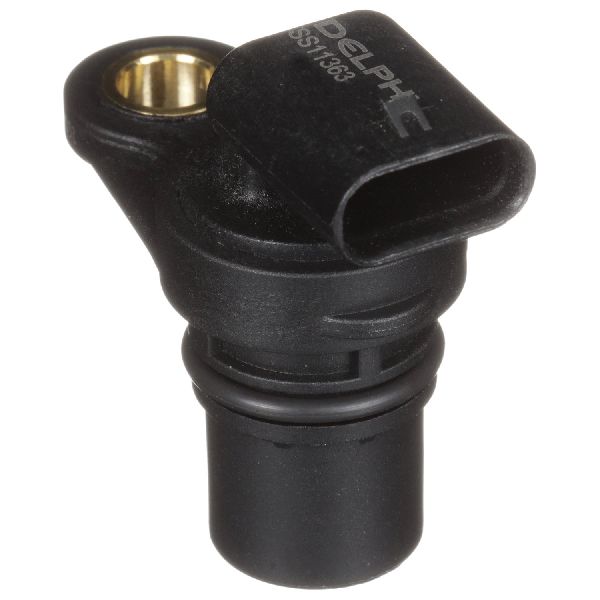
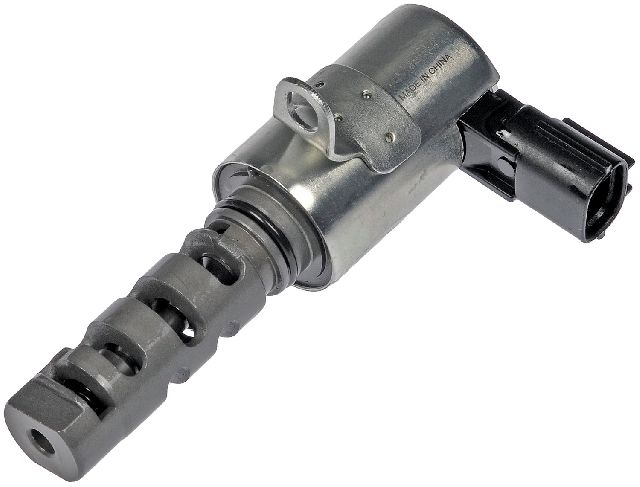
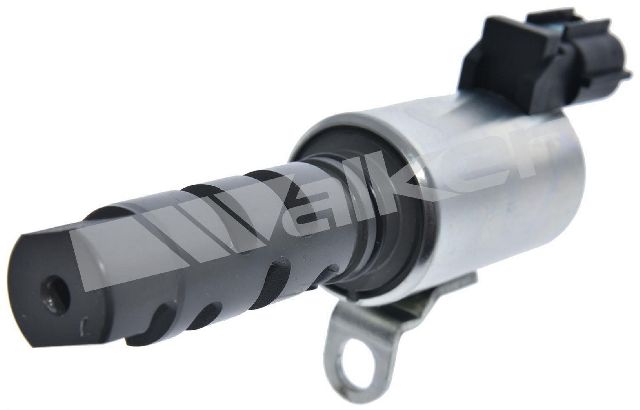
- Engine Variable Valve Timing (VVT) Solenoid
(OEM #4884483AC)— This is the most common part to fail after ruling out oil issues. It gets clogged or fails electrically, causing the timing to be over-advanced. This part number supersedes 4884483AA and 4884483AB.
Trusted brands: Mopar, Dorman, Walker Products
OEM price range: $70-$110
Aftermarket price range: $40-$80 - Exhaust Camshaft Phaser
(OEM #05184101AG)— If the solenoid and oil are good, the mechanical phaser is the next likely cause. It can get stuck due to internal wear or debris.
Trusted brands: Mopar, Dorman
OEM price range: $150-$250
Aftermarket price range: $70-$150
Related Codes That Often Appear With This One
- P0011 — Intake Camshaft Position Timing Over-Advanced. If both P0011 and P0014 are present, it strongly points to a systemic issue like low/dirty oil or a problem with the timing chain, as both camshafts are affected.
- P0013 — 'B' (Exhaust) Camshaft Position Actuator Circuit. This indicates an electrical problem (open or short) with the exhaust VVT solenoid. If seen with P0014, it points directly to a failing solenoid or its wiring, rather than a purely mechanical/hydraulic issue.
Technical Service Bulletins (TSBs) & Recalls
- TSB 18-018-07 REV. A: While for codes P0016/P0017 on 2.4L engines, it establishes a precedent for software-related timing issues on this engine family and recommends PCM flashing as a potential step.
Platform-Specific Known Issues
- Real World Repair Story: Solenoid Swap Confirms Failure: An owner of a Dodge Journey with the 2.4L engine experienced both P0011 and P0014 codes. After verifying the oil was clean and at the correct level, they replaced both VVT solenoids with part number 4884483AC, which permanently resolved the codes and rough idle.
- Forum Experience: Clogged Solenoid Screen: A user on GMTNation with a P0014 code changed their oil, but the code and noise persisted. Upon removing the VVT solenoid, they found the center screen was clogged with small metal shavings. Cleaning it provided a temporary fix, but the return of the noise indicated a deeper mechanical issue, likely the cam phaser itself disintegrating.
Mechanic-Grade Diagnostic Values
- VVT Solenoid (Oil Control Valve) Coil Resistance — expected: 6.9 to 7.9 Ohms at 68°F (20°C). Some sources state a wider acceptable range of 8 to 12 Ohms.. Failure: A reading outside the specified range (open circuit/infinite resistance or short/zero resistance) indicates a failed solenoid coil.
- VVT Solenoid Connector Voltage (Key On, Engine Off) — expected: One of the two pins should show battery voltage (approx. 12V).. Failure: No voltage indicates a problem with the power supply circuit from the ASD relay or a blown fuse, not the solenoid itself.
- Engine Oil Pressure — expected: Minimum of 25 PSI at idle and over 30 PSI at 3000 RPM.. Failure: Pressure below these thresholds indicates a systemic oiling problem (e.g., worn oil pump, clogged pickup tube) that must be fixed before addressing VVT components.
Scan Tool Commands That Help
- wiTECH (Chrysler/Jeep/Dodge Dealer Tool) or equivalent high-end scanner: VVT Solenoid Actuator Test or Duty Cycle Command — This bidirectional control is used after verifying oil level and electrical integrity. The technician can command the solenoid to a specific duty cycle (e.g., 25%) and watch the live data for 'Commanded' vs. 'Actual' cam angle on the scan tool. If the actual angle does not change or changes erratically, it confirms a fault in the solenoid, phaser, or oil passages, helping to distinguish between an electrical and a mechanical/hydraulic problem.
Wiring & Ground Locations
- VVT Solenoid Connector — On the top of the valve cover, plugging into the VVT solenoid.. This 2-pin connector provides power and control to the solenoid. One pin receives 12V from the Auto Shutdown (ASD) relay, and the other is a pulse-width modulated ground controlled by the PCM. Corrosion or damage here will cause P0013 (circuit fault) and can lead to P0014 performance issues.
- G104 / G105 — These are primary engine compartment grounds. G104 is often found on the engine block near the rear, while G105 is near an engine mount.. The PCM and its sensors rely on clean ground connections. Corrosion or looseness at these major ground points can cause erratic voltage signals and unpredictable behavior from actuators like the VVT solenoid, potentially leading to performance codes like P0014.
Real Owner Repair Stories
- JeepPatriot.com forum user (Jeep Patriot with 2.4L World Engine) — Check engine light with codes P0014 and P0017 (Crank/Cam correlation).
❌ Tried (didn't work) Oil and filter change, Swapping VVT solenoids (this correctly identified the solenoid was not the issue as the code did not move), Replacing the camshaft position sensor
✅ What actually fixed it The ultimate fix was replacing the exhaust camshaft phaser. The original phaser had failed internally, causing it to be stuck in an over-advanced position that the solenoid could not correct. - Dodge Caliber forum user (Dodge Caliber with 2.4L World Engine, high mileage) — P0014 code accompanied by a persistent rattling noise from the engine, especially on startup.
❌ Tried (didn't work) Oil change, VVT solenoid replacement
✅ What actually fixed it A full timing job was required. The timing chain had stretched significantly and the tensioner was failing, causing the base timing to be off. The VVT system was trying to compensate for the slack but was unable to, triggering the P0014 code.
When the Usual Fixes Don't Work
- While an oil change and solenoid replacement are the most common fixes, there are numerous documented cases in owner forums for the Compass, Patriot, and Caliber where these steps did not resolve the P0014 code. In these instances, the root cause was often a more serious mechanical issue. The most frequent 'next step' that provided a final fix was the replacement of the exhaust camshaft phaser, which had mechanically failed. A less common but still notable cause was a stretched timing chain, usually indicated by an accompanying startup rattle.
OEM Part Supersession History
4884483AA→4884483AB— Initial production part, superseded by an updated revision.4884483AB→4884483AC— Second revision, superseded by the current and most common replacement part.
Heads up: 4884483AC is the standard service replacement for all earlier versions and is fully compatible.
Model Year Variations Within This Range
- 2007-2017 (MK Generation): While the Jeep Compass had a significant facelift in 2011, the 2.4L World Engine and its dual VVT system components remained fundamentally unchanged for the entire first generation. Therefore, the causes and fixes for P0014 are consistent across this year range.
Diagnostic Flowchart
Other Known Issues on This Vehicle
Issues unrelated to this code that are worth knowing about as an owner of this generation:
- Front/Rear Subframe Corrosion 🔴 High — Common on vehicles in the 'salt belt'. A poorly routed A/C drain can drip onto the front crossmember, accelerating rust. Can occur around 50,000-100,000 miles. (Ref: Warranty Extension X69 (supersedes TSB 23-007-17) extended coverage to 10 years for 2008-2012 models in salt belt states, but may now be expired.)
- CVT Transmission Overheating and Failure 🔴 High — Common, especially on 2007-2014 models. The Jatco-made CVT is prone to overheating during high-speed or high-temperature driving, causing whining noises, loss of power, and eventual failure. Failures can occur under 100,000 miles.
- Faulty Throttle Body 🟠 Medium — Can fail causing the vehicle to enter 'limp mode' with reduced power, which is a safety hazard. Often occurs between 50,000 and 90,000 miles.
- Premature Tie Rod and Control Arm Failure 🟠 Medium — Owners report needing to replace tie rods and control arm bushings relatively early, often starting around 50,000-60,000 miles, leading to abnormal tire wear and noises.
- Water Leaks into Cabin 🟡 Low — Commonly reported on earlier models (2007-2014), with water entering through failed sunroof drains or seals in the roof.
- Wireless Control Module (WCM) / TIPM Failure 🟠 Medium — Can cause a no-start/no-crank condition that can be difficult to diagnose. The Totally Integrated Power Module (TIPM) can also cause widespread, random electrical issues.
Used vs. New Parts: Buying Guide for This Vehicle
When a used part is the smart pick: For this specific repair, using used parts is generally not recommended. The primary failure components (solenoid, phaser) are subject to wear, internal clogging, and electrical failure, making a used part from a salvage yard a significant gamble.
Donor-vehicle mileage cap: roughly under 60000 miles for the part to have meaningful remaining life.
What to inspect on the donor part:
- For a VVT solenoid, a used part is not advised due to the low cost of a new aftermarket unit.
- If considering a used cam phaser (high risk), verify the donor vehicle had no timing-related codes and ran smoothly.
- Check for any signs of heavy oil sludge on the donor engine's valve cover or oil cap area, as this indicates poor maintenance and likely VVT system issues.
OEM-only on this vehicle (don't cheap out):
- Camshaft Phaser: While aftermarket options exist, many professional technicians recommend using an OEM (Mopar) phaser due to the part's complexity and the high labor cost of the job. A failure of a cheaper aftermarket phaser would be costly to rectify.
Aftermarket brands forum-validated for this vehicle:
- VVT Solenoid: Dorman (e.g., 917-290/917-291) is a widely available and commonly used aftermarket brand for this part.
- Walker Products
Brands owners have reported issues with on this vehicle:
- Avoid no-name, unbranded solenoids from online marketplaces. Failure rates are high, and they can introduce new diagnostic variables. Sticking to established brands like Dorman or OEM is a safer bet.
Real Owner Stories
Aggregated from forums and TSBs cited above. Mileages and costs reflect what owners reported in those sources.
2009-2020 Dodge Journey 2.4L
Symptoms: The vehicle experienced both P0011 and P0014 codes along with a rough idle.
What fixed it: Verified oil was clean and at the correct level, then replaced both VVT solenoids with part number 4884483AC.
Source hint: vehicle_specific_issues: Real World Repair Story: Solenoid Swap Confirms Failure
2007-2017 Jeep Compass 2.4L
Symptoms: P0014 code and engine noise persisted even after an oil change.
What fixed it: The owner found the VVT solenoid center screen was clogged with small metal shavings. While cleaning it was a temporary fix, the noise indicated the cam phaser was disintegrating and required replacement.
Source hint: GMTNation Forums: A thread titled 'NEED HELP - P0014 Camshaft Phasing System Malfunction'
Related OBD-II Codes
Frequently Asked Questions
Is there a specific VVT solenoid part number recommended for the 2.4L Jeep Compass to fix P0014?
Can I swap the solenoids on my 2.4L World Engine to test if the exhaust solenoid is bad?
Does TSB 18-018-07 REV. A apply to my P0014 timing issue?
What oil weight should I use in my Jeep Compass to prevent VVT-related codes like P0014?
I have a P0014 and a rattling noise from the top of my engine; what does this mean?
Is the subframe rust issue related to my P0014 code?
Helpful Videos
![How to Fix P0014 Engine Code in 4 Minutes [2 DIY Methods / Only $6.74]](https://img.youtube.com/vi/olrC8UYw9cQ/mqdefault.jpg)
We Have This Part in Stock


The information in this article is provided for general reference and educational purposes only. Vehicle specifications, procedures, and part compatibility can vary by production date, trim level, and region. Always consult your vehicle's factory service manual and verify part numbers before purchasing or performing repairs. Safety-critical components such as airbags, seat belts, and braking systems should be installed by a qualified professional.
- Jeep Compass:
- 🎬 Helpful Videos
- 🛍️ Shop This Part
- What's Unique About the 2007-2017 Jeep Compass
- Symptoms You May Notice
- Most Likely Causes
- Rare But Worth Checking
- Diagnosis Steps
- Parts You'll Likely Need
- Related Codes That Often Appear With This One
- Technical Service Bulletins (TSBs) & Recalls
- Platform-Specific Known Issues
- Mechanic-Grade Diagnostic Values
- Scan Tool Commands That Help
- Wiring & Ground Locations
- Real Owner Repair Stories
- When the Usual Fixes Don't Work
- OEM Part Supersession History
- Model Year Variations Within This Range
- Diagnostic Flowchart
- Other Known Issues on This Vehicle
- Used vs. New Parts: Buying Guide for This Vehicle
- Real Owner Stories
- 2009-2020 Dodge Journey 2.4L
- 2007-2017 Jeep Compass 2.4L
- Related OBD-II Codes
- Frequently Asked Questions
- 🎟️ Get 5% Off