

P0014 on 2010-2015 GMC Terrain 2.4L: Exhaust Cam Timing Causes and Fixes
On a 2010-2015 GMC Terrain 2.4L, code P0014 is almost always caused by low engine oil or a failed exhaust camshaft actuator solenoid. First, check your oil level, as these engines are known to consume oil. If the oil is full, replacing the exhaust solenoid (the rear one, GM Part #12679099) is a common, low-cost fix (~$25-50) that most DIYers can do in under an hour. It is highly recommended to replace both intake and exhaust solenoids at the same time.
- Always check your engine oil level first. The 2.4L engine's tendency to consume oil is the number one cause of P0014.
- The second most likely cause is a failed exhaust camshaft actuator solenoid (rear position), which is an inexpensive and easy part to replace.
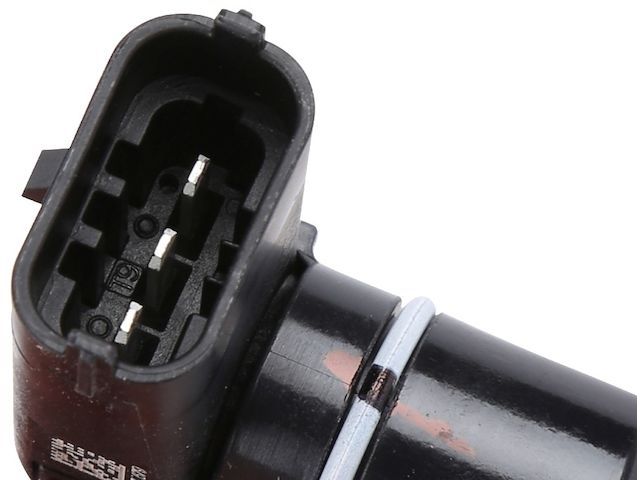
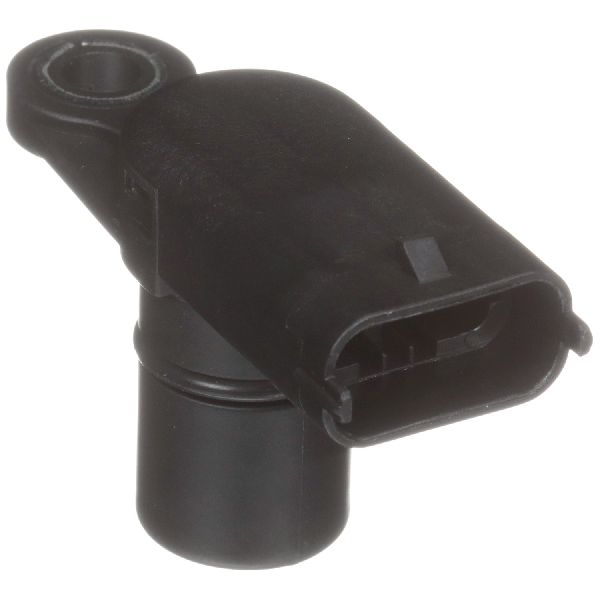
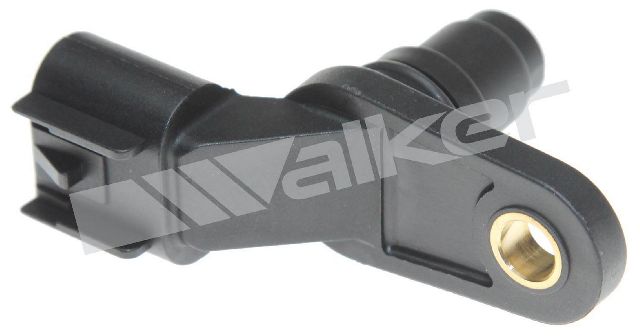
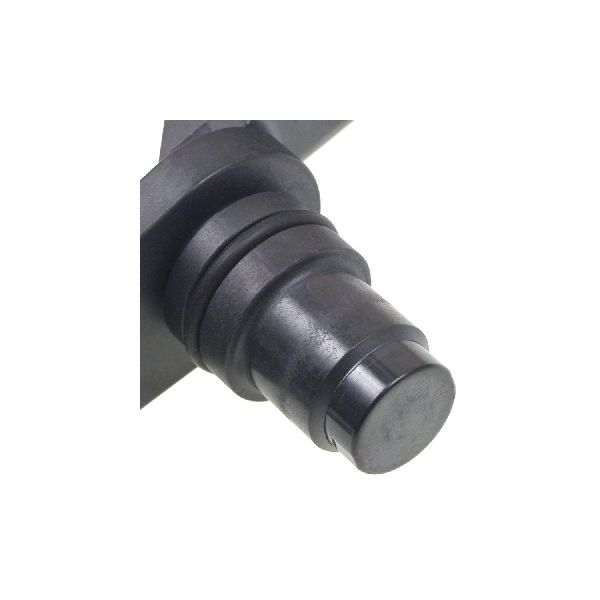
- Do not confuse the actuator *solenoid* with the camshaft position *sensor*. The solenoid is the part that fails in the vast majority of cases for this code.
- If you hear a rattling noise from the engine on startup, the problem could be a more serious timing chain issue which requires immediate attention.
- Using the correct 5W-30 dexos-approved engine oil and changing it regularly is critical for the health of the VVT system and preventing this code.
What's Unique About the 2010-2015 GMC Terrain
The 2.4L Ecotec engine in this generation of GMC Terrain is notorious for excessive oil consumption, often due to a piston ring design issue acknowledged by GM in multiple service bulletins and special coverage programs. This oil loss is a direct and frequent cause of code P0014 because the VVT system relies entirely on clean oil at the correct pressure to function. When the oil level drops, the camshaft actuator solenoids can be starved of oil, get clogged by sludge, or fail, leading directly to this timing performance code. In cold climates, a blocked PCV system can also cause crankcase pressure issues that lead to oil loss past seals, exacerbating the problem.
Symptoms You May Notice
- Check Engine Light is on
- Rough, unstable, or low idle
- Engine stalling, especially when coming to a stop
- Reduced engine power and poor acceleration
- Decreased fuel economy
- Hard starting
- Rattling or knocking noise from the engine, especially on startup
- Engine sounds like a diesel at idle
- Replacing the camshaft position *sensor* instead of the camshaft position actuator *solenoid*. The sensor reads the camshaft's position, but the solenoid is the part that controls it and is the component that almost always fails for this code.
Most Likely Causes
- Low or Dirty Engine Oil 🔴 High Probability These 2.4L Ecotec engines have a well-documented history of excessive oil consumption due to piston ring issues, as outlined in GM Special Coverage Adjustments like #14159D and #15285C. This starves the VVT system of the oil it needs to operate.
How to confirm: Check the engine oil level using the dipstick. If it is below the 'full' mark, this is the likely cause. Also, check the oil's condition; if it is dark, sludgy, or past its change interval, it can clog the solenoid screens and internal passages.
Typical fix: Top up the oil to the correct level using a dexos-approved 5W-30 synthetic oil. If the oil is old or dirty, perform a complete oil and filter change. Monitor oil levels frequently (e.g., at every fuel fill-up) to prevent recurrence.
Est. part cost: $30-$60 for oil and a filter - Faulty Exhaust Camshaft Position Actuator Solenoid 🔴 High Probability These solenoids are a very common failure item on GM Ecotec engines. They get clogged with engine sludge (often from low oil conditions) or fail electronically, causing them to get stuck. GM issued TSBs recommending the replacement of both solenoids if this code appears. Manufacturer Bulletin #17NA098 notes that a camshaft position actuator solenoid valve failure can cause the engine to run rough, hesitate, be hard to start, or stall.
How to confirm: The exhaust solenoid is the one closer to the firewall (rear of the engine). You can test its resistance with a multimeter (should be within a specific ohm range) or swap it with the intake solenoid (front). If the code changes to P0011 (intake side), the solenoid is confirmed bad.
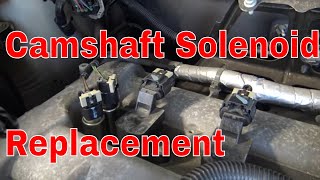
Typical fix: Replace the exhaust camshaft position actuator solenoid. It is held in by a single 10mm bolt and is easily accessible after removing the plastic engine cover. Many owners and technicians choose to replace both the intake and exhaust solenoids at the same time as a preventative measure.
Est. part cost: $25-$50 for one aftermarket solenoid
Rare But Worth Checking
- Stretched Timing Chain or Failed Tensioner: While less common than the above, the 2.4L Ecotec can suffer from premature timing chain wear, a problem often made worse by running on low oil. A distinct rattling noise on startup that goes away after a few seconds is a key symptom. This can also be 🎬 See an example of the engine rattle caused by a stretched chain. caused by broken plastic timing chain guides, which can then clog oil passages. If you hear this, investigate immediately as a chain failure can destroy the engine. This is a much more involved and expensive repair.
- Faulty Camshaft Phaser (Actuator Gear): The phaser is the mechanical gear on the camshaft that the solenoid controls. It can become clogged with debris or fail mechanically, getting stuck in an over-advanced position. GM TSB PIP5090 mentions investigating for debris in the camshaft phaser oil galleys. This is less common than a solenoid failure and is often replaced during a full timing chain service.
Diagnosis Steps
- Check Engine Oil Level and Condition: This is the most critical first step. Use the dipstick to verify the oil is full and clean. If low, top it off, clear the code, and drive to see if it returns. If dirty, perform an oil change.
- Scan for Other Codes: Use an OBD-II scanner to check for related codes like P0013, P0011, or P0017, which can help pinpoint the root cause. Manufacturer Bulletin #PIP5096C advises technicians to check for codes P0011, P0014, P0021, and P0024, and to inspect the engine EUN sticker for specific sequence markers if no other drivability concerns are found.
- Inspect Solenoid and Wiring: Remove the plastic engine cover. Locate the exhaust camshaft actuator solenoid (the rear one, typically with a black connector). Inspect the electrical connector and wiring for any damage, corrosion, or looseness.
- Test or Swap the Solenoid: The easiest test is to swap the exhaust solenoid with the intake solenoid (the front one). Clear the codes and drive the vehicle. If the code returns as P0011, the solenoid you moved is faulty and needs replacement.
- Inspect Solenoid Screens: When you remove the solenoid, carefully inspect the small mesh screens on its body. If they are clogged with dark, sludgy debris, it's a strong indicator of an oil quality/sludge issue and confirms the solenoid needs replacement.
- Replace the Solenoid(s): If the solenoid is confirmed bad, replace it. It's held by one 10mm bolt. Unplug the connector, remove the bolt, and gently pull/twist the old solenoid straight out. Lubricate the O-rings on the new solenoid with clean engine oil before installing. It is best practice to replace both solenoids at once.
- Advanced Scan Tool Test: If you have a bidirectional scan tool, you can command the VVT solenoids to activate while monitoring camshaft position data. A lack of response from the exhaust side can confirm a bad solenoid or a blockage in the oil passage.
- Investigate Mechanical Timing: If a new solenoid and correct oil level do not fix the code, especially if you hear a rattling noise on startup, the issue may be a stretched timing chain, faulty tensioner, or a bad camshaft phaser. This level of diagnosis and repair is more complex and may require professional service.
Parts You'll Likely Need
- Exhaust Camshaft Position Actuator Solenoid
(OEM #12679100 (supersedes 12655421, 12628348))— This is the most common part to fail, either electronically or by getting clogged with debris from low or dirty oil.
Trusted brands: ACDelco (GM Genuine), Delphi, Dorman (917-216)
OEM price range: $40-$60
Aftermarket price range: $20-$45 - Intake Camshaft Position Actuator Solenoid
(OEM #12679099 (supersedes 12655420, 12628347))— Often replaced as a pair with the exhaust solenoid, as it is subjected to the same conditions and has a similar lifespan. GM TSBs and common practice recommend replacing both.
Trusted brands: ACDelco (GM Genuine), Delphi, Dorman (917-215)
OEM price range: $40-$60
Aftermarket price range: $20-$45
Related Codes That Often Appear With This One
- P0013 — This code indicates an electrical circuit problem (open/short) with the same exhaust camshaft actuator solenoid. Seeing P0013 and P0014 together strongly points to a failed solenoid or its wiring connector.
- P0011 — This is the equivalent code for the intake camshaft. If P0011 and P0014 appear together, it suggests a systemic issue like extremely low oil pressure, severe oil sludging, or a base timing problem (e.g., stretched timing chain) affecting the entire engine.
- P0017 — This code indicates a correlation problem between the crankshaft and the exhaust camshaft. Paired with P0014, it often points towards a more serious mechanical timing issue, like a stretched timing chain that has caused the cam timing to jump.
Technical Service Bulletins (TSBs) & Recalls
- 15285C / 16118 / N192291100: Special Coverage Adjustments addressing excessive oil consumption due to piston ring wear, a root cause of VVT system problems.
- PIP5081E / 17-NA-098: Addresses P0014 and recommends checking/replacing the camshaft position actuator solenoid valve due to failure.
- Bulletin #PIP5096C: Provides diagnostic information for technicians finding DTCs P0011, P0014, P0021, and P0024, suggesting an inspection of the engine EUN sticker.
Platform-Specific Known Issues
- Excessive Oil Consumption: The 2.4L Ecotec engine in 2010-2013 models is subject to multiple GM Special Coverage Adjustments and TSBs (e.g., 15285C, 16118, N192291100) for excessive oil consumption due to piston ring wear. This is a primary underlying cause of P0014. The special coverage often involved an oil consumption test and, if failed, replacement of the pistons and rings.
- Premature Timing Chain Wear: Exacerbated by low oil conditions, the timing chains on these engines can stretch, causing rattling noises and setting timing correlation codes. GM TSB 12-06-01-009 provides information on timing chain service but notes that guides should only be replaced if visibly worn.
Mechanic-Grade Diagnostic Values
- Camshaft Position Actuator Solenoid Resistance — expected: 8 to 13 Ohms. Failure: A reading of infinity (OL) indicates an open circuit, near zero indicates a short, or a fluctuating/unstable reading while wiggling the connector indicates an internal fault.
- Scan Tool Live Data: Desired vs. Actual Camshaft Position Angle — expected: The 'Actual' angle should closely mirror the 'Desired' angle commanded by the ECM as engine RPM and load change.. Failure: If the 'Actual' value is stuck, responds slowly, or consistently deviates from the 'Desired' value, it points to a problem with the solenoid, phaser, or oil flow.
- Voltage at Solenoid Connector (Key On, Engine Off) — expected: One pin should have battery voltage (approx. 12.6V).. Failure: Lack of voltage could indicate a wiring or fuse issue upstream from the solenoid.
Scan Tool Commands That Help
- GDS2 (GM Dealer Scan Tool): Output Control - Camshaft Position Actuator Solenoid — This bidirectional command allows a technician to manually activate the exhaust VVT solenoid at idle. A noticeable change in engine idle or a stumbling sound confirms the solenoid and phaser are mechanically responding, helping to isolate the problem between a wiring/ECM issue and a stuck mechanical component.
Wiring & Ground Locations
- Exhaust Camshaft Actuator Solenoid Connector — Top of the engine on the valve cover, toward the firewall (rear of the engine). The connector is typically black.. This is the direct electrical connection to the failing component. The two pins are for the 12V supply and the ECM control signal (pulsed ground). Oil can leak into this connector, causing poor contact.
- G105 (2.4L) — Located on the rear of the engine block.. This is a primary engine block ground. A poor connection here can affect the ECM's ground reference, potentially causing erratic behavior in sensor readings and actuator control, although it's a less common cause for a specific code like P0014.
- G103 — Located on the left front of the engine compartment, under the battery tray.. This is a major chassis and ECM ground point. Corrosion or looseness here can cause a wide range of electrical issues, including intermittent ECM power problems that could indirectly affect VVT system operation.
Real Owner Repair Stories
- NHTSA ODI #11221891 — An owner reported that their vehicle would go dead during stops. A mechanic diagnosed codes P0013 and P0014 and repaired the camshaft sensor and accelerator sensors.
- NHTSA ODI #11180301 — An owner discovered the check engine symbol and used an OBDII reader which displayed code P0014, described as "Camshaft Position 'B' Timing Over-Advanced or System Performance Bank 1".
- NHTSA ODI #11402894 — One owner expressed frustration that codes P0014 and P0017 were becoming a significant problem and believed the issue should be handled as a recall.
- YouTube channel 'Old Soul Millennial' (2014 GMC Terrain, 2.4L, 100,000 miles) — Check Engine Light with codes P0013 and P0014.
✅ What actually fixed it Replaced both the intake and exhaust camshaft actuator solenoids. After replacement and clearing the codes, the check engine light did not return. - YouTube channel 'Fixing with Passion' (2006 GMC Envoy 4.2L (similar VVT system)) — Check Engine Light with code P0014. Light would return 80-100 miles after being cleared.
❌ Tried (didn't work) Clearing the code without repair.
✅ What actually fixed it Replacing the exhaust VVT solenoid fixed the issue. The user confirmed driving over 240 miles after the repair with no return of the check engine light.
OEM Part Supersession History
12628348→12655421, then 12679100— Standard part evolution for improved reliability and performance. The design of the solenoids has been updated over the years to better resist failure from oil contamination and internal shorts/opens.12628347→12655420, then 12679099— Standard part evolution for improved reliability and performance, consistent with the exhaust solenoid.
Model Year Variations Within This Range
- 2010-2011: These models were equipped with the 2.4L LAF Ecotec engine.
- 2012-2015: These models were equipped with the 2.4L LEA Ecotec engine. The LEA is largely the same as the LAF but is FlexFuel (E85) capable and had some minor revisions. However, the VVT system, solenoids, and the common causes for P0014 remain identical between the LAF and LEA engines in this platform.
Diagnostic Flowchart
Real Owner Stories
Aggregated from forums and TSBs cited above. Mileages and costs reflect what owners reported in those sources.
2017 GMC Terrain 2.4L
Symptoms: Vehicle threw a P0014 code despite being well-maintained.
What fixed it: Confirmed VVT solenoid failure and had it replaced at the dealer.
Source hint: BobIsTheOilGuy - 2017 GMC Terrain P0014 code
2017 Chevrolet Equinox 2.4L
Symptoms: Experienced a persistent P0014 code that would not clear even after replacing both solenoids and changing the oil.
What fixed it: Required further diagnostic steps such as an engine flush to clear sludge from oil passages or checking the camshaft position sensor.
Source hint: Chevy Equinox Forum - P0014 code
2014 GMC Terrain 2.4L — 100000 miles
Symptoms: Triggered P0013 and P0014 codes. Upon inspection, the engine had a sludgy condition.
What fixed it: Replaced both the intake and exhaust solenoids as a preventative DIY repair.
Source hint: YouTube - GMC Terrain 2.4L P0013, P0014, P0010, P0011 Easy DIY Repair
Related OBD-II Codes
Frequently Asked Questions
Does the excessive oil consumption issue on my 2010-2013 GMC Terrain 2.4L cause the P0014 code?
How can I tell if the exhaust camshaft position actuator solenoid is bad on my Terrain?
Should I replace both VVT solenoids if I only have a P0014 code?
My Terrain sounds like a diesel at idle and rattles on startup with a P0014 code. What does this mean?
Are there any specific TSBs for the P0014 code on the 2.4L Ecotec engine?
I replaced the solenoids and changed the oil, but P0014 keeps coming back. What's next?
Helpful Videos
We Have This Part in Stock


The information in this article is provided for general reference and educational purposes only. Vehicle specifications, procedures, and part compatibility can vary by production date, trim level, and region. Always consult your vehicle's factory service manual and verify part numbers before purchasing or performing repairs. Safety-critical components such as airbags, seat belts, and braking systems should be installed by a qualified professional.
- GMC Terrain:
- 🎬 Helpful Videos
- 🛍️ Shop This Part
- What's Unique About the 2010-2015 GMC Terrain
- Symptoms You May Notice
- Most Likely Causes
- Rare But Worth Checking
- Diagnosis Steps
- Parts You'll Likely Need
- Related Codes That Often Appear With This One
- Technical Service Bulletins (TSBs) & Recalls
- Platform-Specific Known Issues
- Mechanic-Grade Diagnostic Values
- Scan Tool Commands That Help
- Wiring & Ground Locations
- Real Owner Repair Stories
- OEM Part Supersession History
- Model Year Variations Within This Range
- Diagnostic Flowchart
- Real Owner Stories
- 2017 GMC Terrain 2.4L
- 2017 Chevrolet Equinox 2.4L
- 2014 GMC Terrain 2.4L — 100000 miles
- Related OBD-II Codes
- Frequently Asked Questions
- 🎟️ Get 5% Off