

P0014 on 2015-2021 Ford Transit Connect: Exhaust Cam Timing Over-Advanced Causes & Fixes
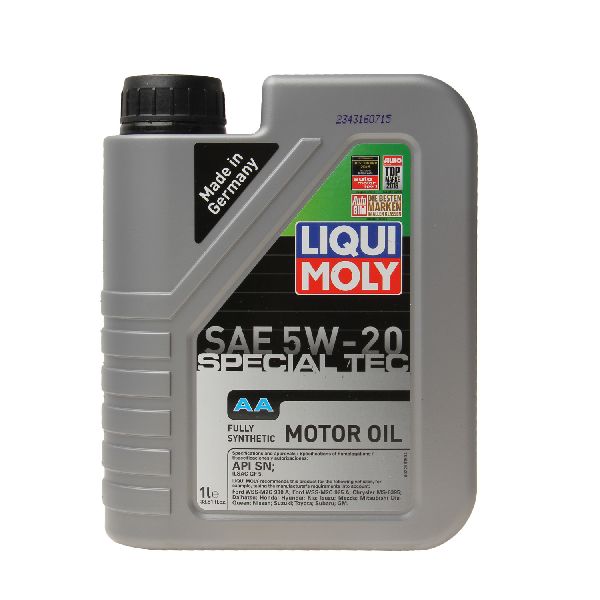
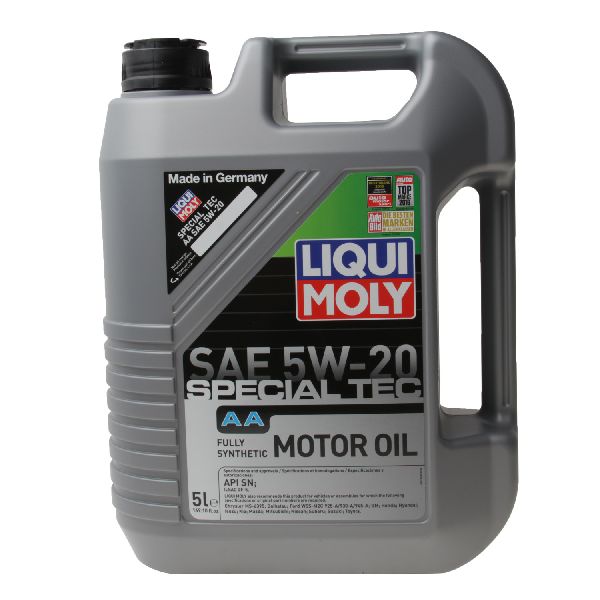
On a 2015-2021 Transit Connect, P0014 is most often caused by dirty engine oil or a sticking exhaust VCT solenoid. Start by changing the oil and filter with the correct type (SAE 5W-20). If the code returns, the exhaust VCT solenoid is the next likely culprit. Ford TSBs confirm this is a common issue caused by debris. An OEM replacement part costs around $30-$80.
- Always start your diagnosis by checking the engine oil. A simple oil change is the cheapest and easiest potential fix.
- The most likely failed part is the exhaust VCT solenoid, which can often get stuck due to oil debris.
- Before replacing the solenoid, try cleaning it and its electrical connector. If you have a capable scan tool, follow Ford's TSB procedure to cycle the solenoid.
- If an oil change and a new VCT solenoid do not fix the code, the problem is likely a more serious mechanical issue with the timing chain or phaser, requiring professional service.
What's Unique About the 2015-2021 Ford TRANSIT CONNECT
For this generation of Ford Transit Connect and other Ford vehicles of the era, the Variable Camshaft Timing (VCT) system is known to be sensitive to oil contamination. Ford has issued multiple Technical Service Bulletins (TSBs), including SSM 48423 and SSM 54366, stating that P0014 can be caused by small debris lodging in the VCT solenoid, causing it to stick. Before replacing parts, Ford technicians are advised to use a diagnostic tool to cycle the solenoid multiple times (Pinpoint Test HK11) in an attempt to clear the debris, highlighting how common this specific failure mode is.
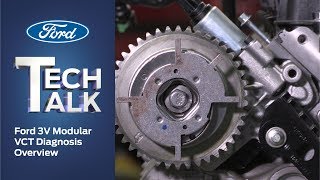
🎬 Watch: Ford technicians explain VCT diagnosis and common failure modes.Diagnostic Flowchart
Tap your situation to follow the diagnostic path that matches what you're seeing on this vehicle.
Symptoms You May Notice
- Check Engine Light is illuminated
- Rough or unstable idle
- Engine is difficult to start
- Noticeable loss of engine power and acceleration
- Reduced fuel economy
- Engine may stall at low speeds or when stopping
- A rattling or ticking noise from the top of the engine, especially on a cold start
- Replacing the camshaft position sensor first. While possible, it's a less likely cause than oil issues or a faulty VCT solenoid for this specific code.
- Replacing the camshaft phaser or timing chain without first addressing oil quality and the VCT solenoid. Always start with the simplest and cheapest fixes, as recommended by Ford's own TSBs.
Most Likely Causes
- Low, Dirty, or Incorrect Viscosity Engine Oil 🔴 High Probability The VCT system is hydraulic and uses engine oil pressure to adjust cam timing. Sludge or contaminated oil can easily clog the fine mesh screens on the VCT solenoids, impeding their function. An oil change is often the most economical first step to fixing a P0014 code.
How to confirm: Check the oil level on the dipstick. Note the oil's color and consistency. If it is dark black, thick, or below the 'add' line, it needs to be changed. Check service records for the last oil change interval.
Typical fix: Change the engine oil and filter using the correct viscosity oil specified in your owner's manual (e.g., SAE 5W-20).
Est. part cost: $40-$100 - Sticking or Failed Exhaust VCT Solenoid 🔴 High Probability Ford TSBs SSM 48423 and SSM 54366 specifically state that small debris can cause the VCT solenoid to stick, triggering this code. The causal part listed in TSB 48423 is base number 6M280, which corresponds to the VCT solenoid.
How to confirm: Using a capable OBD-II scanner, monitor the VCT PIDs (For Ford, this may be VCT_EXH_ACT1 and VCT_EXH_DIF1). Follow the procedure in TSB SSM 48423 (Pinpoint Test HK11) to command the solenoid on and off to see if it frees up. You can also remove the solenoid and test its resistance with a multimeter or apply 12V to see if the internal plunger actuates.
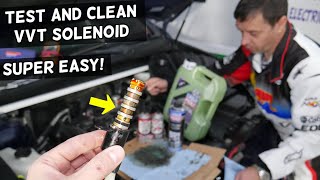
Typical fix: First, attempt to clean the solenoid and its mesh screens with brake cleaner or mass air flow sensor cleaner. 🎬 See how to properly clean and test your VVT solenoid. If cleaning or the diagnostic cycling fails, replace the exhaust VCT solenoid.
Est. part cost: $30-$80 - Worn Camshaft Phaser 🟡 Medium Probability The phaser is the mechanical gear that actually adjusts the cam timing. Internal components can wear out, or the locking pin can fail, causing it to seize in an over-advanced position. This can sometimes be preceded by a startup rattle.
How to confirm: This is difficult to confirm without ruling out the oil and solenoid first. Diagnosis typically requires a professional mechanic to inspect the timing components directly, which involves removing the valve cover.
Typical fix: Replacement of the camshaft phaser, which is a labor-intensive job that often includes replacing the timing chain and tensioner at the same time.
Est. part cost: $100-$250 - Stretched Timing Chain or Failed Tensioner ⚪ Low Probability Over time, timing chains can stretch, and hydraulic tensioners can weaken due to oil pressure issues. This creates slack and alters the base timing, which the VCT system may not be able to overcome, triggering the code.
How to confirm: Listen for a persistent rattling noise from the front of the engine, especially on startup. A mechanic can confirm by removing the valve cover and checking for chain slack.
Typical fix: Replacement of the timing chain, guides, and tensioner. This is a significant repair requiring specialized tools.
Est. part cost: $150-$400
Rare But Worth Checking
- Faulty Camshaft Position Sensor: This is rare because a failing sensor usually triggers its own specific trouble code (like P0340). However, if it sends inaccurate (but not completely failed) signals, it could contribute to a P0014 code.
- Damaged Wiring to VCT Solenoid or Cam Sensor: Check for frayed wires, oil contamination, or loose connectors at the exhaust VCT solenoid and camshaft position sensor, as this can interrupt the signal and cause timing errors.
- Clogged VCT Solenoid Filter Screen: Some engines have a small, separate oil filter screen in the cylinder head oil passages leading to the VCT solenoids. If this screen becomes clogged with sludge, it can starve the solenoid and phaser of oil pressure, causing timing faults.
Diagnosis Steps
- Check Engine Oil: Verify the oil level is full and the oil is clean. If it's low or past its service interval, perform an oil and filter change with the manufacturer-specified oil viscosity (SAE 5W-20). Clear the code and drive to see if it returns.
- Scan Tool Analysis: Connect an OBD-II scanner. Confirm P0014 is the primary code. If possible, use a tool that can access Ford-specific PIDs (e.g., VCT_EXH_ACT1, VCT_EXH_DIF1) and perform active tests.
- Perform VCT Solenoid Cycle Test: As recommended by Ford TSB SSM 48423, use the scan tool to command the exhaust VCT solenoid on and off 10 times to attempt to clear any internal debris. This is part of Pinpoint Test HK. Clear the code and test drive.
- Inspect and Clean VCT Solenoid: If the code persists, locate and remove the exhaust VCT solenoid from the valve cover. Inspect the mesh screens for sludge or debris. Clean thoroughly with a suitable solvent like brake parts cleaner.
- Test the VCT Solenoid: While removed, test the solenoid's resistance with a multimeter (check for 5-15 ohms typically, but verify spec). You can also carefully apply 12V power to see if the internal plunger clicks open and closed. 🎬 Watch: A step-by-step guide to testing VVT solenoid functionality.
- Inspect Wiring: Check the wiring harness and connector for the exhaust VCT solenoid for any signs of damage, corrosion, or oil saturation. Ensure a snug connection.
- Replace VCT Solenoid: If cleaning and testing fail, or if the solenoid was the confirmed point of failure, replace the exhaust VCT solenoid. Be sure to lubricate the new O-rings with clean engine oil before installation.
- Professional Diagnosis: If a new solenoid and clean oil do not resolve the code, the issue is likely mechanical (timing chain, tensioner, or phaser). This level of diagnosis and repair requires specialized tools and should be performed by a qualified mechanic.
Parts You'll Likely Need
- Engine Variable Valve Timing (VVT) Solenoid / Oil Control Valve (OCV)
(OEM #CJ5Z-6M280-A (Fits many Ford 2.0L, 2.3L, and 2.5L engines, verify for your specific engine))— This is the most common part to fail for this code on this vehicle, often due to internal debris or simple wear, as noted in Ford's own service bulletins.
Trusted brands: Motorcraft, Dorman, Delphi
OEM price range: $30-$80
Aftermarket price range: $25-$60 - Engine Oil and Filter — The VCT system is entirely dependent on clean oil at the correct pressure. Neglected oil changes are a primary cause of P0014.
Trusted brands: Motorcraft, Mobil 1, Castrol
OEM price range: $50-$90
Aftermarket price range: $35-$70
Related Codes That Often Appear With This One
- P0011 — Intake ('A') Camshaft Position - Timing Over-Advanced. This indicates a similar problem on the intake camshaft, often pointing to a systemic issue like low/dirty oil affecting both VCT solenoids.
- P0012 — Intake ('A') Camshaft Position - Timing Over-Retarded. Seeing this code along with P0014 suggests a more complex VCT system problem, possibly related to oil pressure or a failing timing component affecting both cams.
- P0015 — Exhaust ('B') Camshaft Position - Timing Over-Retarded. This is the opposite fault for the same camshaft. Seeing both intermittently could point to a very erratic VCT solenoid or oil pressure problem.
Technical Service Bulletins (TSBs) & Recalls
- SSM 54366: Notes that various 2015-2021 Ford vehicles may exhibit P0014 and other VCT codes, referencing a specific pinpoint test in the service manual.
- SSM 48423: States that P0014 on 2015-2020 Fords may be due to small debris causing the VCT solenoid to stick and advises cycling the solenoid to attempt to clear it before replacement.
- SSM 47170: An earlier bulletin with similar information to SSM 48423, indicating this has been a known issue for some time.
Platform-Specific Known Issues
- This engine has a timing belt, not a chain. While belts don't 'stretch' in the same way chains do, incorrect tension or a skipped tooth after a service (like a water pump replacement) can cause timing correlation codes like P0014. A Reddit user with a 1.6L Escape reported P0012 and P0014 codes after a shop incorrectly performed a timing-related repair.
- This engine uses a timing chain. It shares its VCT solenoid part number (CJ5Z-6M280-A) with many other Ford 4-cylinder engines, indicating a widely used component. The issues are very likely to be the oil-related and solenoid-sticking problems described in the Ford TSBs.
Mechanic-Grade Diagnostic Values
- VCT Solenoid Internal Resistance — expected: 6.9 to 7.9 ohms at 68°F (20°C). Some sources state up to 8.3 ohms or a general range of 6-12 ohms. An open circuit or a reading far outside this range indicates a failed solenoid.. Failure: A reading of 0 ohms (short) or infinite/OL (open).
- VCT Solenoid Power Supply Voltage — expected: Battery voltage (approx. 12V) should be present on the power supply wire (Pin 1) with the key on.. Failure: Low or no voltage indicates a problem with the fuse or wiring from the battery junction box.
- Live Scan Tool Data: VCT Angle Error — expected: Using a Ford-capable scanner (like IDS), monitor the VCTADVERR (Angle Error) PID. This value should be close to 0 degrees at idle and during steady-state driving.. Failure: A consistent, large error value (positive or negative) indicates the PCM is unable to achieve the commanded cam timing.
- Live Scan Tool Data: VCT Solenoid Duty Cycle — expected: Monitor the VCT solenoid duty cycle PID. The PCM will vary this percentage to control oil flow.. Failure: If the PCM is commanding a very high duty cycle (e.g., >75%) but the cam angle isn't changing, it suggests a mechanical issue (sticking solenoid, bad phaser) rather than an electrical one.
Scan Tool Commands That Help
- Ford IDS (or equivalent advanced scan tool): VCT Solenoid Disconnect Test — If a rattling noise or drivability issue is present, disconnect the VCT solenoids electronically. If the noise or symptom disappears, it strongly suggests the fault is within the VCT system (solenoids or phasers), as this forces the phasers into their locked/default position.
- Ford IDS (or equivalent advanced scan tool): Active Command: VCT Solenoid On/Off — As mentioned in TSB SSM 48423, this command cycles the solenoid rapidly to dislodge small debris. It's a low-effort first attempt to fix a sticking solenoid before removal. When performed with the engine running at idle, activating the solenoid should cause the engine to run rough or stall, confirming the solenoid is mechanically functioning.
Wiring & Ground Locations
- VCT Solenoid Connector — On the VCT solenoid itself, typically on top of the valve cover.. The VCT solenoid is ground-controlled by the PCM. Pin 1 is typically 12V+ power from a fuse, and Pin 2 is the control wire that the PCM provides a ground to. Checking for voltage at Pin 1 and for a clean, secure connection is a primary electrical diagnostic step.
- G203 — On some Transit Connect models, this ground point is located under the plastic trim in the passenger side kick panel area.. This ground is used by multiple components, including potentially the OBD-II port and instrument cluster. While not exclusively for the VCT circuit, a poor ground here can cause widespread electrical issues and erratic behavior from the PCM and its sensors, leading to false codes. Checking major chassis and PCM grounds is a crucial step when electrical issues are suspected.
Real Owner Repair Stories
- GMTNation Forum User (2004 GMC Envoy 4.2L (different vehicle, but same underlying principle and codes)) — Check gauges light flashing with 'low oil pressure' warning at idle. OBD codes P0014 and P0016 were present.
❌ Tried (didn't work) Clearing codes.
✅ What actually fixed it The user was advised that the low oil pressure at idle was the likely root cause, as the cam phaser system is hydraulic. A failing oil pressure switch or, more seriously, an actual low-pressure condition (worn pump) would prevent the phaser from operating correctly, triggering the P0014/P0016 codes. The fix path was to first verify actual oil pressure with a mechanical gauge before replacing VCT components. - Reddit r/fordfusion user comment (2013 Ford Fusion with 2.5L Duratec) — No specific symptoms reported, but discussing long-term reliability.
❌ Tried (didn't work) N/A
✅ What actually fixed it This is a reliability story, not a fix story. The user reported 265,000 miles on the original engine with no oil consumption. Another user in the same thread reported 358,000 miles on a similar 2.5L engine. The consensus was that the 2.5L Duratec is extremely durable, and major problems like timing chain failure are almost always due to severe maintenance neglect (lack of oil changes), which leads to sludge and oil starvation. This reinforces that for P0014 on a high-mileage 2.5L, the root cause is overwhelmingly likely to be oil-related.
OEM Part Supersession History
CJ5Z-6M280-A→No common supersession found.— This part number appears to be stable and is the current OEM replacement.
Heads up: This solenoid is widely used across many Ford and Lincoln 2.0L, 2.3L, and 2.5L engines from roughly 2012 to 2025, including Escape, Fusion, Focus, and Mustang models. Always verify fitment with the vehicle's VIN, but its wide use indicates a common design.
Model Year Variations Within This Range
- 2015-2021: The primary difference is the engine: the 1.6L EcoBoost I4 vs. the 2.5L Duratec I4. While the P0014 fault's direct cause (VCT system) is the same, the long-term failure modes leading to it can differ. The 2.5L Duratec is known for high-mileage durability, where a P0014 might be a secondary symptom of a worn timing chain tensioner causing oil pressure loss by shedding guide material into the oil pan and clogging the pickup tube. The 1.6L EcoBoost, being turbocharged, may be more immediately sensitive to oil quality and breakdown.
Helpful Videos

Used OEM Parts in Stock

New Aftermarket Parts Available


The information in this article is provided for general reference and educational purposes only. Vehicle specifications, procedures, and part compatibility can vary by production date, trim level, and region. Always consult your vehicle's factory service manual and verify part numbers before purchasing or performing repairs. Safety-critical components such as airbags, seat belts, and braking systems should be installed by a qualified professional.
- Ford TRANSIT CONNECT:
- 🎬 Helpful Videos
- 🛍️ Shop This Part
- What's Unique About the 2015-2021 Ford TRANSIT CONNECT
- Diagnostic Flowchart
- Symptoms You May Notice
- Most Likely Causes
- Rare But Worth Checking
- Diagnosis Steps
- Parts You'll Likely Need
- Related Codes That Often Appear With This One
- Technical Service Bulletins (TSBs) & Recalls
- Platform-Specific Known Issues
- Mechanic-Grade Diagnostic Values
- Scan Tool Commands That Help
- Wiring & Ground Locations
- Real Owner Repair Stories
- OEM Part Supersession History
- Model Year Variations Within This Range
- 🎟️ Get 5% Off