

P0014 on 2015-2020 Ford Fusion: Exhaust Cam Timing Causes & Fixes
On a 2015-2020 Ford Fusion, P0014 most often points to a sticking exhaust VCT solenoid, frequently caused by old or low engine oil. An oil and filter change is the first step. If that doesn't work, replacing the VCT solenoid is the next likely fix. The causal part number for the solenoid is 6M280, and a replacement can cost between $30 and $90.
- P0014 on a Fusion means the exhaust camshaft timing is too far advanced, usually due to an oil-related problem.
- The first and cheapest step is to check your oil. An oil and filter change with the correct synthetic oil may fix the issue.
- The most likely failed part is the exhaust VCT solenoid, which Ford has acknowledged can stick due to debris.
- Do not drive the vehicle. This code has been linked to stalling and, in a documented case, failure of the power brakes.
- Replacing the VCT solenoid is a manageable DIY job for many, but if the problem persists, it requires professional diagnosis for potential timing chain issues.
What's Unique About the 2015-2020 Ford FUSION

For the 2015-2020 Fusion, especially those with EcoBoost engines, the Ti-VCT system is highly sensitive to oil quality and condition. Ford has issued multiple Technical Service Bulletins (TSBs) acknowledging that small debris in the oil can cause the VCT solenoids—the very parts that control the system—to stick, directly leading to code P0014. [TSB #SSM 47170, TSB #SSM 48423] Before replacing the solenoid, Ford advises technicians to run a specific diagnostic test (Pinpoint Test HK) to cycle the solenoid multiple times in an attempt to clear the debris. [TSB #SSM 54366] Furthermore, a documented owner complaint has linked this timing code to a failed vacuum pump and subsequent loss of brake assist, highlighting a potential safety-critical failure path on these vehicles, particularly the 1.6L EcoBoost which is known for oil-starvation-related vacuum pump failures. [ODI #11266426]
Diagnostic Flowchart

Tap your situation to follow the diagnostic path that matches what you're seeing on this vehicle.
Symptoms You May Notice
- Check Engine Light is on
- Rough or unstable idle
- Engine is hard to start
- Engine stalling, especially at low speeds
- Reduced fuel economy
- Noticeable loss of power or sluggish acceleration
- Rattling or knocking noise from the engine
- In rare but documented cases, a loss of power brake assist [ODI #11266426]
- Replacing the camshaft position sensor. While it's part of the system, the sensor simply reads the position. It's rare for a sensor failure to cause an over-advanced code; it's more often a mechanical or hydraulic issue with the solenoid or phaser. Owners on forums have reported replacing the sensor without fixing the code.
Most Likely Causes

- Low, Dirty, or Incorrect Viscosity Engine Oil 🔴 High Probability The Ti-VCT system uses oil pressure to actuate the cam phasers. Sludge, debris, or the wrong oil thickness directly impacts the system's ability to function correctly, and is the most common cause of VCT issues.
How to confirm: Check the oil level and condition using the dipstick. If the oil is dark, gritty, or below the 'add' line, it's the likely culprit. Review service records to see if an oil change is overdue. An intermittent P0014 that appears and disappears can be a sign of sludgy bits temporarily clogging the system.
Typical fix: Perform an engine oil and filter change using the manufacturer-specified grade of oil (typically a full synthetic for EcoBoost engines). This is the universally recommended first step. 🎬 Watch: A breakdown of P0014 causes and common fixes
Est. part cost: $40-$80 - Faulty Exhaust VCT Oil Control Solenoid 🔴 High Probability Ford TSBs #SSM 47170 and #SSM 48423 specifically state that debris can cause the VCT solenoid to stick, triggering this code. The solenoid's internal passages and screens can become clogged with sludge, preventing proper oil flow and response.
How to confirm: After ruling out oil issues, the solenoid is the next suspect. A mechanic can command the solenoid with a scan tool to check its response (Pinpoint Test HK). [TSB #SSM 54366] It can also be removed and tested for resistance with a multimeter, which should typically read between 7 and 14 ohms.
Typical fix: Clean or replace the Bank 1 exhaust VCT solenoid. Given the low cost of the part and the TSBs, replacement is often the best course of action. 🎬 Watch: How to replace the VVT solenoid on a Fusion Cleaning with an appropriate solvent can sometimes resolve the issue if the part is not electrically faulty.
Est. part cost: $30-$95 - Faulty Camshaft Phaser 🟡 Medium Probability The phaser is the mechanical gear that the solenoid controls. It can fail internally from wear or oil contamination and get stuck in the over-advanced position, especially with high mileage or infrequent oil changes.
How to confirm: This is a more advanced diagnosis. A mechanic may use a high-end scan tool to monitor commanded vs. actual cam angle or perform a physical inspection of timing components, which requires significant disassembly.
Typical fix: Replacement of the camshaft phaser. This is a labor-intensive job that also requires replacing the timing chain and related components.
Est. part cost: $100-$300 for the phaser, but much more with labor. - Stretched Timing Chain or Worn Guides/Tensioner ⚪ Low Probability Over time, timing chains can stretch and tensioners can weaken, causing slack in the system that leads to incorrect timing readings. While timing chains are designed to last the life of the engine, extreme mileage or poor maintenance can lead to wear.
How to confirm: Usually diagnosed by a persistent rattling noise on startup or by physically inspecting the timing components, which requires significant engine disassembly. A mechanic can also verify mechanical timing.
Typical fix: Replacement of the timing chain, guides, and tensioners. This is a major engine repair.
Est. part cost: $200-$500 for a kit.
Rare But Worth Checking
- Failed Vacuum Pump: A 2017 Fusion owner filed NHTSA complaint #11266426 reporting codes P0012 and P0014, which they traced to a destroyed vacuum pump that resulted in a loss of brake assistance. On some EcoBoost engines, like the 1.6L, the vacuum pump is driven by the camshaft and lubricated by engine oil. Oil starvation can cause the pump to seize, which could potentially be linked to timing issues and a loss of brake assist.
Diagnosis Steps
- Check engine oil level and condition. If low, dirty, or overdue for a change, perform an oil and filter change with the correct viscosity oil. Clear the code and test drive.
- If the code returns, scan for any other pending or active DTCs.
- Locate the Bank 1 exhaust VCT solenoid. On the 1.5L and 2.0L engines, these are on the top of the valve cover. Inspect the electrical connector and wiring for damage or oil contamination.
- If wiring is okay, the next step is to test the solenoid. The easiest way for a DIYer is to swap the exhaust solenoid with the intake solenoid (if they are identical parts) and see if the code changes to P0011. If it does, the solenoid is bad.
- Alternatively, remove the solenoid and inspect the mesh screens for sludge or debris. It can be cleaned with an appropriate solvent like mass airflow sensor cleaner. 🎬 See how to clean and fix the solenoid for cheap
- A professional can use a scan tool to run the Ford-specific 'Pinpoint Test HK' which cycles the solenoid 10 times to dislodge debris. [TSB #SSM 54366]
- If the problem persists after cleaning/swapping the solenoid, the issue is likely more severe, such as a failing cam phaser or stretched timing chain. This level of diagnosis and repair should be left to a professional mechanic.
Parts You'll Likely Need
- Engine Variable Valve Timing (VCT) Solenoid
(OEM #BL3Z-6M280-B (Motorcraft - fits many Ford engines, verify application), CN1G-6L713-AD (seen on 1.5L))— This is the most common part to fail or get clogged with debris, as identified in Ford's own service bulletins. [TSB #SSM 47170, TSB #SSM 48423]
Trusted brands: Motorcraft, Dorman, Standard Motor Products, Gates
OEM price range: $50-$90
Aftermarket price range: $30-$70 - Engine Oil and Filter — The entire VCT system relies on clean oil at the proper pressure. An oil change is the first and most crucial step in troubleshooting.
Trusted brands: Motorcraft, Mobil 1, Castrol
OEM price range: $50-$90
Aftermarket price range: $40-$70
Related Codes That Often Appear With This One
- P0011 — Intake camshaft timing over-advanced. This points to a similar issue on the intake side, often with the same root causes (oil, solenoids).
- P0015 — Exhaust camshaft timing over-retarded. This is the opposite fault on the same camshaft, suggesting a problem with the VCT solenoid or phaser's range of motion.
- P0012 — Intake camshaft timing over-retarded. When seen with P0014, it can indicate a more systemic issue like low oil pressure, or in some cases, a timing chain problem.
Technical Service Bulletins (TSBs) & Recalls

- SSM 47170: Notes that P0014 may be due to small debris causing the VCT solenoid to stick. Recommends running pinpoint test HK11 to clear debris.
- SSM 54366: Mentions P0014 among other DTCs and refers to Pinpoint Test HK in the PC/ED manual for diagnosis.
- SSM 48423: Similar to SSM 47170, points to debris in the VCT solenoid as a potential cause for P0014.
Platform-Specific Known Issues
- TSB #SSM 47170 & #SSM 48423: Ford notes that various VCT-related DTCs, including P0014, may be caused by small debris causing the VCT solenoid to stick. The bulletins advise running pinpoint test HK11 to cycle the solenoid 10 times to clear debris before replacement.
- NHTSA ODI #11266426: A real-world owner complaint for a 2017 Fusion documented that codes P0012 and P0014 appeared in conjunction with a failed vacuum pump, leading to a loss of power brake assist. This is a known failure pattern on the 1.6L EcoBoost engine due to oil starvation of the pump.
Mechanic-Grade Diagnostic Values
- VCT Solenoid Resistance — expected: 7 to 14 Ohms. Failure: A reading outside this range, or an open circuit (infinite resistance), indicates a faulty solenoid.
- VCT Solenoid Connector Voltage — expected: 12V (Battery Voltage). Failure: With the ignition on and connector unplugged, one pin should show battery voltage when measured against a known good ground. No voltage indicates a wiring or fuse issue.
- Ford IDS Scan Tool VCT Advanced Error PID — expected: ~0 degrees (+/- 5 degrees). Failure: An excessive variation beyond +/- 5 degrees for a prolonged time while the engine is at idle and in closed loop suggests a VCT system fault.
Hidden / Shadow Codes Worth Checking
- Mode 6 Data: Mode 6 provides access to test results for non-continuous monitors. For VCT systems, this can show statistical data on timing deviations and solenoid performance that may not have crossed the threshold to set a full DTC like P0014, but can indicate a borderline component. (see via A professional scan tool with Mode 6 capabilities, such as the Ford IDS.)
Scan Tool Commands That Help
- Ford IDS (Integrated Diagnostic System): VCT Error PIDs & Histogram Mode — This function should be used to visually monitor for anomalies and timing variations during a test drive, especially when the fault is intermittent. The histogram can help quantify the duration and severity of the timing error.
- Ford IDS (or equivalent professional scanner): Pinpoint Test HK / VCT Solenoid On/Off Command — As recommended by Ford TSBs, this command cycles the solenoid rapidly to attempt to dislodge small debris. It's also used to confirm if the solenoid is responding to commands from the PCM. A lack of change in engine idle or timing data during this test points to a stuck or failed solenoid. [TSB #SSM 47170, TSB #SSM 54366]
Wiring & Ground Locations
- Fuse #8 (Under-hood) — In the power distribution box located in the engine compartment on the driver's side.. This 20A fuse is identified as powering the VCT solenoids. A blown fuse will cut power to the solenoid, preventing it from functioning.
- G108 / G109 — G108 is located on the left rear of the engine compartment; G109 is on the rear of the engine block.. These are primary engine ground points. A poor or corroded ground connection at these locations can cause erratic behavior from sensors and actuators controlled by the PCM, including the VCT solenoids.
- VCT Solenoid Connector — Directly on the VCT solenoid, typically on top of the valve cover.. This 2-pin connector provides power and the control signal from the PCM. Pin 1 is typically the 12V supply from the fuse, and Pin 2 is the ground-side control wire from the PCM. Testing for voltage and continuity occurs here.
"I Checked Everything" — The Actual Cause
- A common diagnostic dead-end for P0014 occurs after an oil change and VCT solenoid replacement fail to resolve the code. In these cases, the root cause is almost always a more significant mechanical issue that a smoke test or basic electrical tests would not find. The problem is typically a camshaft phaser that is mechanically stuck or has failed internally, or a stretched timing chain causing a constant timing deviation that the VCT system cannot correct.
OEM Part Supersession History
3L3Z-6M280-EA, 8L3Z-6M280-A→8L3Z-6M280-B (also listed as BL3Z-6M280-B)— Part revision and improvement by Ford/Motorcraft.
Heads up: While physically similar, there are reports of different color connectors (e.g., black, gray, blue) for different applications or revisions. It is critical to verify the correct part number for your specific engine and position (intake vs. exhaust) as they may not be interchangeable.CN1G-6L713-AD→N/A— This is a part number specifically seen on the 1.5L EcoBoost engine.
Heads up: This part is likely specific to the 1.5L engine and may not be interchangeable with the -6M280 series solenoids used on other Ford engines.
Model Year Variations Within This Range
- 2015-2020: The Fusion was available with multiple engines (2.5L I4, 1.5L EcoBoost, 2.0L EcoBoost, 2.7L EcoBoost V6). While the P0014 code applies to all, the diagnosis can vary. The 2.7L V6 has two cylinder banks and four camshafts/solenoids, so 'Bank 1' must be correctly identified. The naturally aspirated 2.5L may be less sensitive to oil condition than the turbocharged EcoBoost engines, which run hotter and can degrade oil more quickly.
Helpful Videos
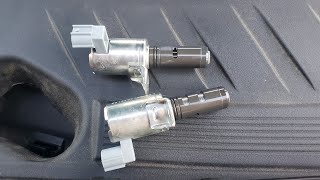
![How to Fix P0014 Engine Code in 4 Minutes [2 DIY Methods / Only $6.74]](https://img.youtube.com/vi/olrC8UYw9cQ/mqdefault.jpg)
Used OEM Parts in Stock


New Aftermarket Parts Available




The information in this article is provided for general reference and educational purposes only. Vehicle specifications, procedures, and part compatibility can vary by production date, trim level, and region. Always consult your vehicle's factory service manual and verify part numbers before purchasing or performing repairs. Safety-critical components such as airbags, seat belts, and braking systems should be installed by a qualified professional.
- Ford FUSION:
- 🎬 Helpful Videos
- 🛍️ Shop This Part
- What's Unique About the 2015-2020 Ford FUSION
- Diagnostic Flowchart
- Symptoms You May Notice
- Most Likely Causes
- Rare But Worth Checking
- Diagnosis Steps
- Parts You'll Likely Need
- Related Codes That Often Appear With This One
- Technical Service Bulletins (TSBs) & Recalls
- Platform-Specific Known Issues
- Mechanic-Grade Diagnostic Values
- Hidden / Shadow Codes Worth Checking
- Scan Tool Commands That Help
- Wiring & Ground Locations
- "I Checked Everything" — The Actual Cause
- OEM Part Supersession History
- Model Year Variations Within This Range
- 🎟️ Get 5% Off