

P0014 on 2011-2014 Ford F-150 3.5L EcoBoost: Exhaust Cam Timing Over-Advanced Causes and Fixes
On a 2011-2014 F-150 with the 3.5L EcoBoost, P0014 is most often caused by low or dirty engine oil, or a faulty VCT solenoid. However, this code is also a very common early warning sign for a stretched timing chain and failing cam phasers, a notorious issue for this engine often identified by a brief rattle on cold starts.
- Always check your engine oil level and condition first. A simple oil change with full synthetic 5W-30 oil can sometimes fix this code.
- Listen carefully for a 2-5 second rattle when starting the engine cold. This noise is a classic sign of a stretched timing chain or bad cam phasers, a common and serious issue on this engine.
- If the oil is good and there's no rattle, the next most likely cause is a faulty VCT solenoid on the passenger-side exhaust cam.
- Do NOT replace the camshaft position sensor; it is almost never the cause of a P0014 code.
- Due to the high probability of this code indicating a need for a timing chain replacement, it should be diagnosed promptly to avoid further engine damage.
What's Unique About the 2011-2014 Ford F-150

The first-generation 3.5L EcoBoost engine is highly dependent on clean, correct-viscosity oil for its timing system to function. Unlike many other vehicles where P0014 is just a simple sensor or solenoid issue, on this specific F-150 it is frequently an early symptom of a much more serious and well-documented problem: timing chain stretch and cam phaser failure. This issue is so common that Ford has issued multiple technical service bulletins (TSBs) and owners on forums like F150Forum.com frequently report a distinct 2-5 second engine rattle on cold startups, which is a tell-tale sign of the underlying mechanical timing problem.
Symptoms You May Notice
- Illuminated Check Engine Light
- Rough or unstable idle
- Engine stalling at low speeds or when stopping
- Reduced engine power and sluggish acceleration
- Decreased fuel economy
- Loud rattle or grinding noise from the front of the engine for 2-5 seconds on a cold start (the most definitive symptom of the underlying timing chain issue).
- Replacing the camshaft position sensor. The sensor is accurately reporting the timing deviation; it is almost never the cause of the problem. A faulty sensor would typically generate a different code related to its own circuit (e.g., P0365, P0369).
Most Likely Causes


- Low, Dirty, or Incorrect Viscosity Engine Oil 🔴 High Probability The EcoBoost's VCT system is hydraulic and extremely sensitive to oil pressure and cleanliness. Sludge and contaminants from extended oil change intervals are a primary cause of VCT system faults, as noted in Ford TSBs SSM 48423 and SSM 47170.
How to confirm: Check the oil level on the dipstick and inspect its condition. If the oil is dark, gritty, or past the recommended service interval (many owners on forums recommend 5,000-mile intervals instead of the factory monitor), it should be changed.
Typical fix: Perform a complete engine oil and filter change using the manufacturer-specified grade (SAE 5W-30 Full Synthetic). In many cases, this alone can resolve the code, especially if it appeared when oil life was low.
Est. part cost: $50-$100 - Sticking or Failed VCT Solenoid (Bank 1 Exhaust) 🔴 High Probability Debris in the engine oil can easily clog the fine mesh screens on the VCT solenoids, causing them to stick open or closed. This is a very common failure and is the first component to suspect after verifying oil quality.
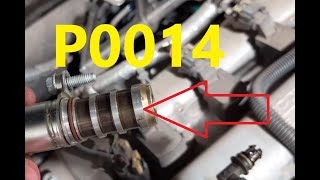
How to confirm: Swap the Bank 1 exhaust VCT solenoid with the Bank 1 intake solenoid (they are the same part, AT4Z-6M280-A). Clear the codes. If the code returns as P0011 (Intake Camshaft Position Timing Over-Advanced), the solenoid is faulty. 🎬 Watch: A breakdown of P0014 causes and common fixes If P0014 returns, the issue is mechanical (phaser or chain).
Typical fix: Replace the faulty VCT solenoid. Since the solenoids are located under the valve cover on the 3.5L EcoBoost, the valve cover gasket must also be replaced. This is a more involved job than on many other engines.
Est. part cost: $40-$120 - Stretched Timing Chain and/or Failed Cam Phasers 🟡 Medium Probability The primary timing chain on early 3.5L EcoBoost engines is known to stretch prematurely. This causes slack in the system, leading to timing deviations and the classic 'cold start rattle' as the tensioner struggles to compensate. Ford acknowledged this in TSB 15-0131 and its successors.
How to confirm: A persistent 2-5 second rattle on cold starts is the most definitive symptom. A mechanic can confirm by monitoring cam error PIDs (e.g., RCAM_DIF on FORScan) which will show a large deviation, or by physically inspecting the timing components, which requires significant engine disassembly.
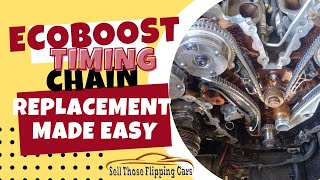
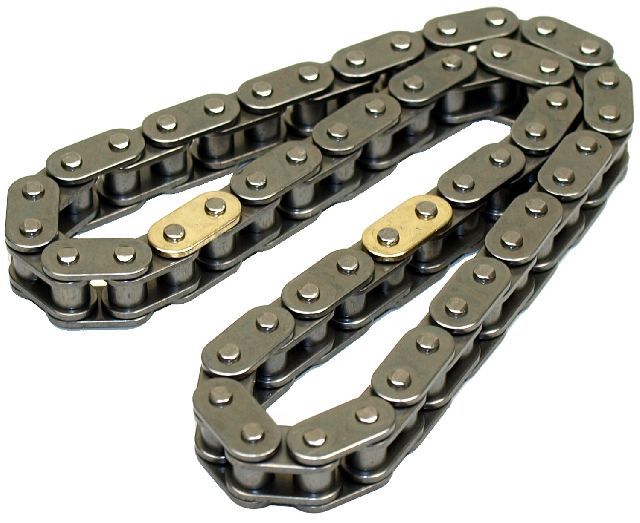
Typical fix: Replace the primary timing chain, all chain guides, and the chain tensioner. It is highly recommended to replace all four VCT phasers at the same time, as they are often the root cause or a related failure point. This is a labor-intensive and expensive repair, with forum members reporting dealer quotes from $3,000 to over $6,000. 🎬 See this walkthrough for replacing the EcoBoost timing chain
Est. part cost: $600-$1500
Rare But Worth Checking
- Clogged VCT Solenoid Oil Screens / Sludged Oil Passages: Sometimes the small filter screens for the VCT system can become clogged with sludge, restricting oil flow even if the solenoid itself is functional. A forum user on f150forum.com reported that when P0014 and P0024 appeared together, an engine flush using ATF (a controversial method) followed by a fresh oil change resolved the issue by clearing sludge.
Diagnosis Steps

- Check the engine oil level and condition. If low, dirty, or past its service interval, perform an oil and filter change with full synthetic 5W-30 oil, clear the code, and re-test. Many owners recommend a 5,000-mile interval.
- On a cold start (after the truck has sat for 6+ hours), listen for a distinct metallic rattle from the front of the engine lasting 2-5 seconds. If this noise is present, a timing chain and phaser issue is highly likely.
- If the oil is good and there is no rattle, suspect the Bank 1 exhaust VCT solenoid. These are located under the passenger side valve cover.
- For a definitive diagnosis, swap the exhaust VCT solenoid with the intake VCT solenoid on the same bank (Bank 1). They are the same part number.
- Clear the codes and drive the vehicle. If the trouble code changes to P0011, the solenoid you moved is bad and needs to be replaced.
- If code P0014 returns after the swap, the problem is mechanical and almost certainly related to the cam phaser or timing chain. This requires professional service for tear-down and inspection.
- Advanced Diagnosis: Use a tool like FORScan to monitor VCT PIDs. Look at VCT_EXH_DIF1 (Bank 1 Exhaust Desired vs Actual) and VCT_ERR1 (Bank 1 Cam Error). A large, persistent error value confirms a control problem.
Parts You'll Likely Need
- Engine Variable Valve Timing (VVT) Solenoid
(OEM #AT4Z-6M280-A)— This is the most common part to fail due to sticking from oil contamination. It is the first component to replace after verifying oil quality. The intake and exhaust solenoids are the same part on Bank 1.
Trusted brands: Motorcraft, Dorman
OEM price range: $40-$70
Aftermarket price range: $25-$50 - Timing Chain and Phaser Kit
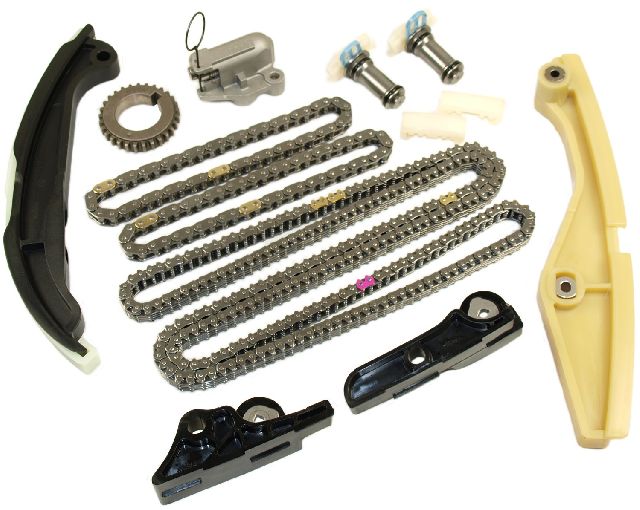
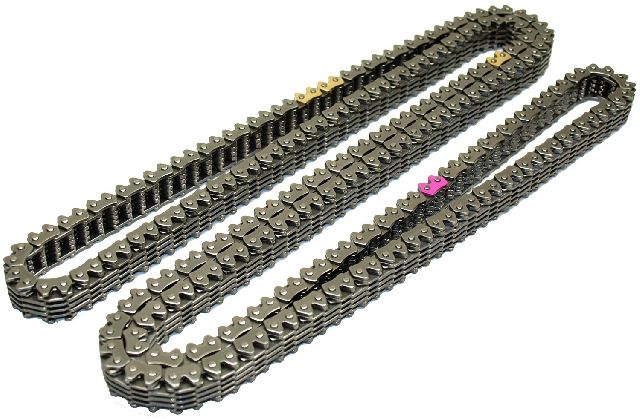
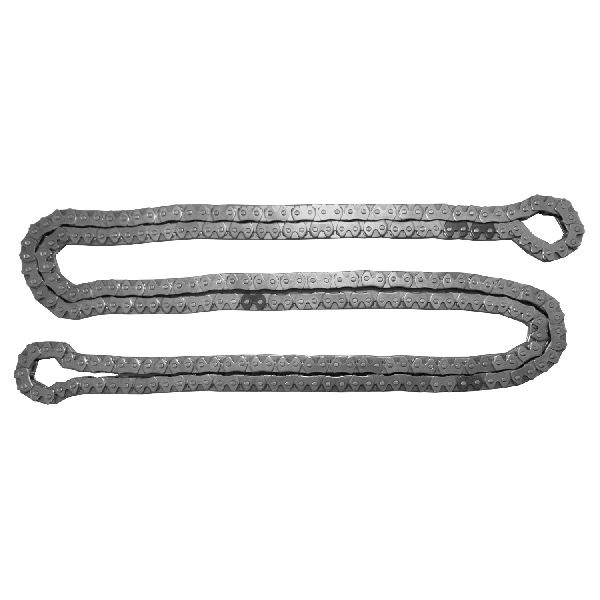
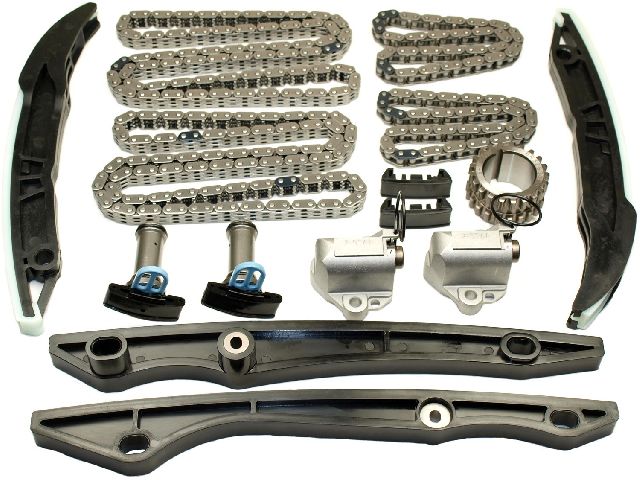
(OEM #ML3Z-6268-A (Primary Chain), ML3Z-6C525-A (Phasers))— This is the definitive fix for the notorious cold-start rattle and stretched timing chain issue on the 3.5L EcoBoost, which is a common underlying cause of P0014. The kit should include the primary chain, tensioners, guides, and all four phasers.
Trusted brands: Motorcraft, Cloyes
OEM price range: $800-$1500
Aftermarket price range: $400-$800 - Valve Cover Gasket (Passenger Side)
(OEM #HL3Z-6584-A)— Required for replacing the VCT solenoids, as they are located underneath the valve cover on this engine. The gasket kit typically includes new solenoid seals.
Trusted brands: Motorcraft, Fel-Pro
OEM price range: $50-$80
Aftermarket price range: $30-$60
Related Codes That Often Appear With This One
- P054A — This is a more specific version of P0014, indicating the over-advanced timing is detected specifically during a cold start, strongly pointing to the phaser/chain rattle issue.
- P0011 — Intake camshaft timing over-advanced on the same bank. If seen with P0014, it can point to a shared issue like a stuck solenoid (if swapped) or a broader oil pressure problem on Bank 1. If it appears *after* swapping the intake and exhaust solenoids, it confirms the solenoid is bad.
- P0024 — Exhaust camshaft over-advanced on Bank 2 (driver's side). If both P0014 and P0024 appear together, it strongly suggests a systemic problem affecting the whole engine, such as very low/dirty oil or widespread sludging.
- P0016 — Crankshaft/Camshaft Position Correlation Error. This code often appears once the timing chain has stretched significantly, indicating a fundamental timing mismatch between the crank and cam. It is a more severe indicator of a timing job being required.
Technical Service Bulletins (TSBs) & Recalls
- TSB 15-0131
- TSB 16-0027
- TSB 18-2305
- SSM 48423
- SSM 47170
Platform-Specific Known Issues
- Timing Chain Stretch and Cold Start Rattle: The primary timing chain in this engine is known to stretch prematurely. This causes a 2-5 second rattle on cold starts as the hydraulic tensioner takes up the slack. Ford released TSB 15-0131, which was later superseded by TSB 16-0027 and then TSB 18-2305, to address this by replacing the primary timing chain and all four VCT phasers. Owners on forums report this issue as early as 41,000 miles.
- Cam Phaser Failure: The VCT units (phasers) can fail to lock in their base position on shutdown. Upon the next cold start, they rattle loudly until oil pressure builds and forces them into the commanded position. This failure is a primary contributor to timing codes and is addressed in the same TSBs as the timing chain stretch.
Mechanic-Grade Diagnostic Values

- VCT Solenoid Internal Resistance — expected: 6.9 to 7.9 Ohms at 68°F (20°C). A wider, more general range is 5-15 Ohms.. Failure: A reading of 0 Ohms (short circuit) or OL/infinity (open circuit) indicates a failed solenoid.
- VCT Solenoid Connector Voltage (Key On, Engine Off) — expected: Approximately 12V (Battery Voltage) on the power supply pin.. Failure: No voltage or significantly low voltage points to a wiring issue, fuse, or PCM power supply problem.
- FORScan PID: VCT_EXH_ERR1 (Bank 1 Exhaust Cam Angle Error) — expected: Should be near 0 degrees at a stable hot idle.. Failure: A large, persistent error value (e.g., stuck at +/- 5 degrees or more) indicates a control problem, likely a sticking solenoid or a mechanical phaser/chain issue.
- FORScan PID: VCT_INT_DIF1 (Intake Cam Differential - used for chain stretch diagnosis) — expected: Should be close to 0 degrees at warm idle.. Failure: A reading of +6 degrees or greater at idle is a strong indicator of a stretched timing chain, according to Ford TSB 17-0026.
Scan Tool Commands That Help
- Ford IDS / FORScan: VCT Solenoid On/Off Actuator Test — This is a bidirectional control that manually cycles the solenoid. Per Ford TSBs, it should be used to attempt to dislodge small debris from a sticking solenoid before authorizing replacement. It can also be used to verify the solenoid is capable of actuating (an audible click should be heard).
- Ford IDS / FORScan: Electrically disconnect VCT solenoids — This is a diagnostic step, not a scan tool command. If there is a rattle or drivability issue, unplugging the solenoids forces the cam phasers to their locked, default position. If the noise or symptom disappears, it strongly points to a problem within the VCT system (solenoids, phasers) rather than a base engine issue.
Wiring & Ground Locations
- PCM Connector C175E — This is one of the main connectors at the Powertrain Control Module (PCM).. The control circuit (ground signal) for the Bank 1 VCT solenoids originates from the PCM. A document for a 2011 model shows the Bank 1 Exhaust VCT Solenoid control wire is on Pin 69 of this connector. This is a critical point for checking circuit integrity if a wiring fault is suspected.
Real Owner Repair Stories
- Ford F150 Forum (2013 F-150, 3.5L EcoBoost) — Cold start rattle, no Check Engine Light initially. Took it in for TSB work at 85k miles.
❌ Tried (didn't work) The dealer performed the timing chain TSB (16-0027) at 85k miles. The rattle returned almost exactly one year later at 95k miles.
✅ What actually fixed it The dealer performed the TSB work a second time under their 2-year parts and labor warranty. The user noted that many forum members report better long-term success when replacing all related components, not just the bare minimum in the TSB, suggesting the initial TSB repair may have been inadequate. - Ford F150 Forum (2013 F-150 Limited, 3.5L EcoBoost, 41,000 miles) — Sudden onset of cold start rattle.
❌ Tried (didn't work) Owner was out of warranty despite very low mileage. Dealer quoted $3500 for the repair.
✅ What actually fixed it The repair was a full timing job per TSB 16-0027. The key takeaway from this story is the extremely low mileage at which the failure occurred (41,000 miles), demonstrating this is a design/part quality issue, not just a wear-and-tear problem on high-mileage engines. The owner noted they performed oil changes every 3,000 miles, yet the failure still occurred.
OEM Part Supersession History
AT4Z-6M280-A→AT4Z-6M280-B, AT4Z-6M280-C— Likely internal revisions for improved durability or performance against sludge/debris.
Heads up: The -A, -B, and -C revisions are generally interchangeable, but have different color connectors (black, gray, blue). Some users on forums report being confused by the color changes when replacing old parts. The key is that the intake and exhaust solenoids on a given bank are the same part number, allowing for diagnostic swapping.TSB 15-0131 parts list→TSB 16-0027, then TSB 18-2305 parts list— Ford updated the official repair procedure and parts list for the cold start rattle issue over several years. TSB 18-2305 is the final version for this vehicle range, superseding 16-0027.
Model Year Variations Within This Range
- 2011-2012 vs 2013-2014: The 2013-2014 models received larger turbos with an electronic blow-off valve and a revised intercooler to help mitigate condensation issues seen in earlier models. While not directly related to the P0014 code's root cause (oil-driven VCT system), the engine did receive minor revisions during this period.
- 2014 only: For the 2014 model year, Ford changed the front lower control arm mount for the struts from a clevis style to a pin mount. This has no bearing on the P0014 code but is a critical difference for anyone working on the front suspension.
Diagnostic Flowchart
Real Owner Stories
Aggregated from forums and TSBs cited above. Mileages and costs reflect what owners reported in those sources.
2013 Ford F-150 3.5L EcoBoost — 110000 miles
Symptoms: Had all four codes go off at once (permanent) as well as a pending P054C. Engine seemed to be running fine with no misses or rough running, just a minor loss of fuel efficiency.
What fixed it: A local Ford Tech found oil sludging that started clogging the variable timing phaser oil screens and replaced them.
Source hint: f150forum.com
2011-2014 Ford F-150 3.5L EcoBoost — 41000 miles
Symptoms: Distinct 2-5 second rattle on cold starts as the hydraulic tensioner struggled to take up slack in the system.
What fixed it: Replaced the primary timing chain, all chain guides, chain tensioner, and all four VCT phasers.
Cost: $3000-$6000
Source hint: f150forum.com / TSB 15-0131 discussions
Related OBD-II Codes
Frequently Asked Questions
Does TSB 15-0131 apply to my 2011-2014 F-150 3.5L EcoBoost for code P0014?
I hear a 2-5 second rattle on cold starts. Is this related to my P0014 code?
Can I fix P0014 by just changing the oil on my 3.5L EcoBoost?
How can I test if the Bank 1 Exhaust VCT solenoid is causing my P0014 code?
What FORScan PIDs should I monitor to diagnose P0014 on my F-150?
Helpful Videos
Used OEM Parts in Stock



New Aftermarket Parts Available


The information in this article is provided for general reference and educational purposes only. Vehicle specifications, procedures, and part compatibility can vary by production date, trim level, and region. Always consult your vehicle's factory service manual and verify part numbers before purchasing or performing repairs. Safety-critical components such as airbags, seat belts, and braking systems should be installed by a qualified professional.
- Ford F-150:
- 🎬 Helpful Videos
- 🛍️ Shop This Part
- What's Unique About the 2011-2014 Ford F-150
- Symptoms You May Notice
- Most Likely Causes
- Rare But Worth Checking
- Diagnosis Steps
- Parts You'll Likely Need
- Related Codes That Often Appear With This One
- Technical Service Bulletins (TSBs) & Recalls
- Platform-Specific Known Issues
- Mechanic-Grade Diagnostic Values
- Scan Tool Commands That Help
- Wiring & Ground Locations
- Real Owner Repair Stories
- OEM Part Supersession History
- Model Year Variations Within This Range
- Diagnostic Flowchart
- Real Owner Stories
- 2013 Ford F-150 3.5L EcoBoost — 110000 miles
- 2011-2014 Ford F-150 3.5L EcoBoost — 41000 miles
- Related OBD-II Codes
- Frequently Asked Questions
- 🎟️ Get 5% Off