

P0014 on 2009-2017 Chevrolet Traverse 3.6L: Exhaust Cam Timing Causes and Fixes
On a 2009-2017 Traverse, P0014 is most often caused by a faulty Bank 1 exhaust camshaft actuator solenoid or low/dirty engine oil. However, on earlier 2009-2012 models with the LLT engine, it can be a strong indicator of a stretched timing chain, which is a major and expensive repair. Always check oil first, then test the solenoid before suspecting the timing chain.
- Always check your engine oil level and condition first. Low or dirty oil is a simple fix that can resolve this code.
- P0014 on a 2009-2012 Traverse is a strong warning sign for a stretched timing chain, a known, expensive problem. Look for rattling noises or other timing codes like P0008.
- The second most likely cause is a bad camshaft actuator solenoid, which is relatively cheap and easy to replace. Swapping the intake and exhaust solenoids is a reliable way to diagnose this.
- Do not replace the camshaft position sensor; it is almost never the cause of this code.
- Use only the manufacturer-specified 5W-30 engine oil and follow a reasonable oil change schedule (5,000-7,500 miles) to protect the timing components.
What's Unique About the 2009-2017 Chevrolet Traverse
The 3.6L V6 engine family in this Traverse, particularly the earlier LLT version (2009-2012), is notorious for premature timing chain stretch. This was such a widespread issue that GM issued a Special Coverage program (#11340C) for 2009 models, extending the warranty to 10 years or 120,000 miles for this specific failure. The problem was often blamed on the original oil life monitor (OLM) software allowing for excessively long oil change intervals, leading to oil degradation that accelerated chain wear. The special coverage also included a mandatory ECM reprogram to shorten the OLM intervals.
Generation note: The 2009-2017 year range covers the first generation of the Traverse, but uses two different engines. The 2009-2012 models use the 3.6L LLT V6, which is highly prone to the timing chain issues. The 2013-2017 models use the updated 3.6L LFX V6, which has an improved timing chain design, making chain stretch less common but not impossible. On LFX models, P0014 is more likely to be a solenoid or oil issue.
Symptoms You May Notice
- Check Engine Light is on
- Rough or unstable idle
- Engine hesitation or stumbling on acceleration
- Reduced engine power
- Poor fuel economy
- Engine stalling
- Rattling or ticking noise from the engine, especially on cold startup
- Replacing the camshaft position sensor. The sensor's job is to report the problem, and it is rarely the cause of the problem itself. P0014 indicates the sensor is working correctly and has detected a mechanical timing issue.
Most Likely Causes
- Stretched Timing Chains 🔴 High Probability The 3.6L LLT engine (2009-2012) has a well-documented history of premature timing chain wear. GM acknowledged this with Special Coverage Adjustment #11340C for 2009 models, extending coverage to 10 years/120,000 miles. The issue is often linked to the original oil life monitor calibration allowing for overly long oil change intervals, which degrades oil and accelerates wear.
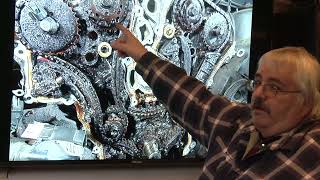
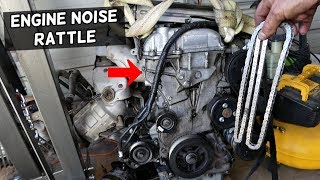
How to confirm: Diagnosis requires checking for correlation codes like P0008, P0017, or P0009; seeing these with P0014 makes a timing chain issue almost certain. A key symptom is a brief rattling noise from the engine on a cold start. 🎬 See what causes that engine rattle on cold starts A mechanic can also measure timing deviation with a scan tool; a consistent variance greater than 4-5 degrees between desired and actual cam position points to a mechanical timing fault. 🎬 Watch: How to tell if you need a timing chain Physical inspection is the ultimate confirmation but is a labor-intensive process.
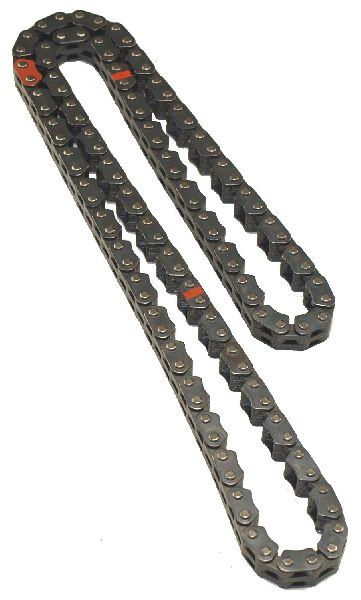
Typical fix: This is a major repair that involves replacing all three timing chains, the tensioners, and the guides. It is a labor-intensive job (10-15 hours) that often requires lowering or removing the engine for access. Many owners on forums report dealer quotes from $2,500 to over $4,000 for the job.
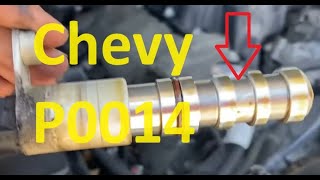
Est. part cost: $250-$600 - Faulty Exhaust Camshaft Actuator Solenoid (Bank 1) 🔴 High Probability These solenoids operate in engine oil and can become clogged with sludge or debris, causing them to stick in an advanced position. They can also fail electrically. It's a very common failure point in many VVT systems and the most likely cause if oil is clean 🎬 Watch: A breakdown of P0014 causes and common fixes and no timing chain codes are present.
How to confirm: A simple and definitive test is to swap the Bank 1 exhaust solenoid (rear bank, lower position) with the Bank 1 intake solenoid (rear bank, upper position). Clear the codes and drive. If the code changes to P0011 (Intake Camshaft Position), the solenoid is confirmed bad. You can also test its resistance with a multimeter (should be 7-12 ohms for the LLT engine). Access is tight; some mechanics loosen the power steering pump or fuse box to gain clearance.
Typical fix: Replace the faulty solenoid. It is held in by a single 10mm bolt and is located on the rear cylinder head. Always use a new seal.
Est. part cost: $25-$60 - Low or Dirty Engine Oil 🟡 Medium Probability The entire VVT system is hydraulic and depends on clean oil at the correct pressure and viscosity to function. The original long oil change intervals recommended by GM's software contributed to oil breakdown and sludge, which clogs the small passages in the VVT solenoids and phasers.
How to confirm: Check the oil level on the dipstick and inspect the oil's condition. If the level is low or the oil is dark, gritty, or sludgy, this is a likely contributor. Ensure the correct oil viscosity (5W-30) and specification (GM dexos1) is being used.
Typical fix: Perform an oil and filter change using a full synthetic 5W-30 oil that meets the GM dexos1 specification. In cases of heavy sludge, an engine flush may be recommended by a professional, though this carries its own risks.
Est. part cost: $40-$80
Rare But Worth Checking
- Failed Camshaft Phaser (Actuator): This is the gear-like mechanism on the end of the camshaft itself. While less common than a solenoid failure, the phaser can become stuck due to internal debris or failure. This is a much more involved repair requiring removal of the valve cover and sometimes the timing chain.
- Poor Wiring Connection to Solenoid: GM issued a preliminary bulletin (PI0090D) about intermittent hesitation caused by poor terminal connections at the Bank 1 camshaft sensor/solenoid connectors. Check the wiring harness and connector for damage, corrosion, or backed-out pins before replacing parts.
Diagnosis Steps
- Check Engine Oil: Verify the oil level is correct and the oil is clean and of the proper 5W-30 dexos specification. If low or dirty, perform an oil and filter change, clear the code, and see if it returns. This is the cheapest and easiest first step.
- Scan for Other Codes: Check for other codes like P0008, P0017, P0009, or P0024. The presence of these codes, especially P0008/P0017, strongly points towards a stretched timing chain.
- Test the Solenoid: Locate the Bank 1 (rear bank) intake and exhaust solenoids. Unplug them and swap their positions (intake is top, exhaust is bottom). Clear the codes and drive. If P0014 returns, the solenoid is likely not the issue. If the code changes to P0011 (intake timing), the solenoid you moved is faulty and needs replacement.
- Inspect Solenoid and Wiring: When the solenoid is removed, inspect its screens for metal shavings. Metal shavings are a definitive sign of a failing timing chain or other severe internal engine wear. Also inspect the wiring connector for damage or corrosion per TSB PI0090D.
- Professional Diagnosis for Timing Chain: If the oil is good and the solenoid tests okay (or was replaced) but the code persists, the next probable cause is a stretched timing chain, especially on a 2009-2012 LLT engine. This should be diagnosed by a professional mechanic.
Parts You'll Likely Need
- Exhaust Camshaft Position Actuator Solenoid
(OEM #12679100)— This is the most common part to fail after ruling out oil issues. It gets clogged or fails electrically. GM has updated this part multiple times; 12679100 supersedes older numbers like 12655421, 12646784, 12628348, and 12578518.
Trusted brands: ACDelco (GM Original), Delphi, Dorman
OEM price range: $40-$60
Aftermarket price range: $25-$45 - Engine Timing Chain Kit
(OEM #12651450)— Required if diagnosis confirms a stretched timing chain, a very common failure on the 3.6L LLT engine. A complete kit should be used. This is a complex, engine-out or engine-drop repair not recommended for novice DIYers. The part number for the 2009 LLT engine kit is specified as 12651450 in GM bulletin 11340C.
Trusted brands: ACDelco (GM Original), Cloyes
OEM price range: $400-$600
Aftermarket price range: $250-$400
Related Codes That Often Appear With This One
- P0011 — Intake camshaft timing code for the same bank (Bank 1). If you swap the intake and exhaust solenoids for diagnosis and the code changes to P0011, it confirms a bad solenoid.
- P0008 — Engine Positions System Performance (Bank 1). This is a classic code indicating a stretched timing chain on the 3.6L engine. If you see P0014 with P0008, the timing chain is almost certainly the cause.
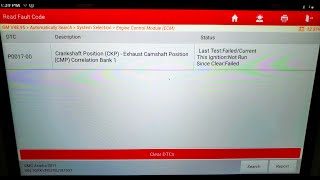
- P0017 — Crankshaft Position - Camshaft Position Correlation (Bank 1 Sensor B). This code also directly points to a timing correlation error. Seeing P0014 and P0017 together is another strong indicator of a stretched timing chain.
- P0024 — Exhaust Camshaft Position Timing Over-Advanced (Bank 2). Seeing codes for both exhaust camshafts (P0014 and P0024) points to a systemic issue like dirty oil, low oil pressure, or a stretched timing chain affecting the whole engine.
Technical Service Bulletins (TSBs) & Recalls
- 11340C: Special Coverage Adjustment for Premature Timing Chain Wear (2009 Traverse). Covered replacement of timing chains and an ECM reprogram for the oil life monitor.
- 12-06-01-009F: Provides updated part numbers for timing chain service kits to address the wear issue.
- 08-06-01-011K: Details diagnostic steps for camshaft position codes, including checking for excessive camshaft end play.
- Bulletin #N192266190 02: Notes that while the vehicle is stopped, conditions can cause the engine to run rough, run at reduced power, or stall, potentially setting DTCs P0011, P0021, P0014, and P0024. Dealers are instructed to reprogram the ECM.
- Bulletin #PIP5568E: Communicates an investigation into the cause and correction for a group of DTCs setting together, specifically P0011, P0014, P0021, and P0024.
- Bulletin #17-NA-317: Describes conditions including MIL illumination, transmission shudder, low idle, and stalling associated with DTCs P0011, P0014, P0021, and P0024.
Platform-Specific Known Issues
- Premature Timing Chain Stretch: The 3.6L LLT V6 (2009-2012) is widely known for this issue. GM's Special Coverage Adjustment #11340C extended the warranty for this specific failure on 2009 models to 10 years/120,000 miles, confirming the high rate of occurrence.
Mechanic-Grade Diagnostic Values
- Camshaft Position Actuator Solenoid Resistance (LLT Engine) — expected: 7 to 13 Ohms at 68°F (20°C).. Failure: A reading of 0 Ohms (short), OL/infinite (open circuit), or a value significantly outside the expected range indicates a failed solenoid coil.
- Scan Tool: Desired vs. Actual Camshaft Position Angle Variance — expected: Less than 2-3 degrees at a steady idle.. Failure: A consistent variance greater than 5 degrees for more than a few seconds will trigger the fault code and points to a mechanical timing issue (chain), a stuck phaser, or a faulty solenoid.
- Engine Oil Pressure (Hot Idle) — expected: Greater than 10-12 PSI at 1,000 RPM. Normal operating pressure is often around 25-30 PSI at idle.. Failure: Pressure dropping below 10 PSI at hot idle can starve the VVT phasers and solenoids of the hydraulic pressure needed to operate, triggering timing codes.
- VVT Solenoid Connector Voltage (Key On, Engine Off) — expected: Battery Voltage (~12V) on the power supply pin.. Failure: Low or no voltage points to a problem in the wiring harness or fuse, not the solenoid itself.
Scan Tool Commands That Help
- GDS2 (GM Techline) or equivalent professional scanner: Camshaft Position Actuator Control / Test — This is a crucial bidirectional test to isolate the fault. It allows a technician to manually command the Bank 1 exhaust solenoid on and off while observing the 'Desired' vs. 'Actual' cam angle PIDs. If the actual angle does not change when commanded, it confirms a fault in the solenoid, its wiring, the hydraulic circuit (oil pressure), or a mechanically stuck phaser.
- GDS2 (GM Techline) or equivalent professional scanner: Camshaft Position Variation Learn — This function must be performed after replacing a camshaft, phaser, or the timing chains. It allows the ECM to relearn the new baseline positions of the valvetrain components to prevent false codes after a major repair.
Wiring & Ground Locations
- G109 — On the right front of the 3.6L V6 engine.. A poor engine ground at this location can cause erratic signals from various engine sensors, including the camshaft and crankshaft position sensors, potentially leading to false timing correlation faults.
- G112 — On the left rear of the 3.6L V6 engine.. This is another primary engine ground. Ensuring it is clean, tight, and free of corrosion is a fundamental step before diagnosing complex electronic control issues like VVT faults.
- Bank 1 Camshaft Actuator Solenoid Connector — On the rear valve cover (firewall side). The exhaust solenoid is the lower of the two.. This is the direct electrical connection to the solenoid. Per GM bulletin PI0090D, poor terminal connections or corrosion here can cause intermittent operation and trigger P0014. The connector and harness should be inspected before replacing the solenoid.
Real Owner Repair Stories
- YouTube channel 'Daniels Customs' (2013 Chevrolet Traverse (LFX Engine)) — Check Engine Light with codes P0014 and P0016.
❌ Tried (didn't work) Verified oil condition and pressure were good., Removed and tested the Bank 1 exhaust VVT solenoid; it tested good for resistance (7.96 Ohms) and activated correctly with a power probe., Checked cam/crank sensor signals with an oscilloscope; signals were present and looked correct initially.
✅ What actually fixed it Upon removing the valve cover, the technician discovered the dowel pin for the exhaust camshaft phaser had sheared off. This allowed the camshaft to move independently of the phaser sprocket, causing the timing correlation error even though the chain and solenoid were functional. The final fix was replacing the failed camshaft phaser. - NHTSA ODI #11221193 — An owner reported that a technician performed a diagnostic test and found codes P0014 and P0024. The manufacturer advised the technician to clear the codes and return the vehicle to the owner.
OEM Part Supersession History
12651450→12693218, then 12700436— GM released multiple updated timing chain kits to improve durability and address the premature stretching issue found in the original parts. The newer kits contain chains of an improved design.
Heads up: While older kits may physically fit, it is critical to use the latest available part number (or a quality aftermarket equivalent like Cloyes 9-0753S) to get the most durable components and prevent a repeat failure.
Model Year Variations Within This Range
- 2009-2012 (LLT Engine): These models are extremely prone to timing chain stretch, and P0014 is a very strong indicator of this issue. The VVT solenoid resistance specification is 7-13 Ohms.
- 2013-2017 (LFX Engine): These models feature an improved timing chain design, making chain failure less common (though still possible). On the LFX, P0014 is more likely to be caused by a faulty solenoid or oil issue. A sheared phaser dowel pin was also documented on a 2013 model.
Diagnostic Flowchart
Other Known Issues on This Vehicle
Issues unrelated to this code that are worth knowing about as an owner of this generation:
- Power Steering Loss 🔴 High — Common on 2009-2011 models. Can occur intermittently, especially at low speeds. (Ref: Special Coverage Adjustment #14329 / #10056459 extended warranty to 10 years/150,000 miles for the pump and gear.)
- Leaking Water Pump 🟠 Medium — Common failure item, often noticeable by coolant smell or drips from the passenger side of the engine. Many owners report failure around 100,000-150,000 miles.
- Transmission 3-5-R Wave Plate Failure 🔴 High — A well-known issue in the 6T70/6T75 transmission, particularly in 2009 models, leading to loss of 3rd, 5th, and Reverse gears. (Ref: Special Coverage Adjustment #14404B extended warranty to 10 years/120,000 miles for this specific failure on 2009 models.)
- Carbon Buildup on Intake Valves 🟠 Medium — An inherent issue with the direct-injection (GDI) LLT engine. Over time, buildup can cause rough idle, hesitation, and misfires.
- Failed Master Window Switch 🟡 Low — Extremely common failure where the driver's side window switch panel stops working or works intermittently.
Used vs. New Parts: Buying Guide for This Vehicle
When a used part is the smart pick: For this specific repair, using used parts is generally not recommended. A used VVT solenoid is a significant gamble as it may be clogged or near the end of its electrical life, and the cost of a new, quality aftermarket part is low. Other related components like sensors or wiring connectors could be sourced from a junkyard if a new replacement is unavailable.
Donor-vehicle mileage cap: roughly under 80000 miles for the part to have meaningful remaining life.
What to inspect on the donor part:
- For a solenoid, look for clean screens with no visible metal debris.
- Ensure the donor vehicle did not have a catastrophic engine failure, which would contaminate all oil-system components.
- Check for a service history if possible, specifically looking for regular oil changes.
OEM-only on this vehicle (don't cheap out):
- Engine Timing Chain Kit: Never use a used timing chain, tensioner, or guide. The risk of premature failure is extremely high. While aftermarket is acceptable, OEM (ACDelco) is the safest bet.
- Camshaft Position Sensors: Due to the ECM's sensitivity to signal quality, using OEM (ACDelco) sensors is highly recommended to avoid chasing false codes caused by incorrect aftermarket sensor waveforms.
Aftermarket brands forum-validated for this vehicle:
- Timing Chain Kits: Cloyes (often cited as an OEM supplier), Melling.
- VVT Solenoids: Delphi, Dorman.
Brands owners have reported issues with on this vehicle:
- Unbranded, 'white-box' electronic parts like sensors and solenoids from online marketplaces can have high failure rates and may not perform to OEM specifications, causing persistent diagnostic issues.
Real Owner Stories
Aggregated from forums and TSBs cited above. Mileages and costs reflect what owners reported in those sources.
2014 Chevy Traverse 3.6L LFX — 40000 miles
Symptoms: Owner reported a P0014 code and received a high-priced quote for a timing chain job from the dealer.
What fixed it: Timing chain replacement (noted as less common on newer LFX models but still possible).
Source hint: Reddit r/MechanicAdvice - '2014 Chevy Traverse, 40k miles, P0014 code'
2008 GMC Acadia 3.6L (Lambda Platform)
Symptoms: Engine throwing both P0014 and P0017 codes simultaneously.
What fixed it: A complex, engine-out timing chain replacement procedure.
Source hint: GMTNation - 'Acadia p0014 & p0017 engine codes'
2009 Chevrolet Traverse 3.6L LLT
Symptoms: P0014 code present; users on forums discussed diagnosing the issue using a solenoid swap trick.
What fixed it: Swapping or replacing the VVT solenoid, or in more severe cases, a full timing chain replacement costing $2,500-$4,000.
Cost: $2,500-$4,000
Source hint: traverseforum.com
Related OBD-II Codes
Frequently Asked Questions
Is my 2009 Chevrolet Traverse covered for timing chain issues under a special warranty?
What specific oil should I use in my 3.6L LLT engine to prevent P0014?
I have P0014 and a rattling noise on cold starts; does this mean I need a new engine?
Can I test the Bank 1 exhaust camshaft actuator solenoid myself before paying for a repair?
Why did the oil life monitor calibration on my 2009-2012 Traverse cause this code?
Is there a TSB for the wiring connector related to camshaft codes?
Helpful Videos


Used OEM Parts in Stock
New Aftermarket Parts Available


The information in this article is provided for general reference and educational purposes only. Vehicle specifications, procedures, and part compatibility can vary by production date, trim level, and region. Always consult your vehicle's factory service manual and verify part numbers before purchasing or performing repairs. Safety-critical components such as airbags, seat belts, and braking systems should be installed by a qualified professional.
- Chevrolet Traverse:
- 🎬 Helpful Videos
- 🛍️ Shop This Part
- What's Unique About the 2009-2017 Chevrolet Traverse
- Symptoms You May Notice
- Most Likely Causes
- Rare But Worth Checking
- Diagnosis Steps
- Parts You'll Likely Need
- Related Codes That Often Appear With This One
- Technical Service Bulletins (TSBs) & Recalls
- Platform-Specific Known Issues
- Mechanic-Grade Diagnostic Values
- Scan Tool Commands That Help
- Wiring & Ground Locations
- Real Owner Repair Stories
- OEM Part Supersession History
- Model Year Variations Within This Range
- Diagnostic Flowchart
- Other Known Issues on This Vehicle
- Used vs. New Parts: Buying Guide for This Vehicle
- Real Owner Stories
- 2014 Chevy Traverse 3.6L LFX — 40000 miles
- 2008 GMC Acadia 3.6L (Lambda Platform)
- 2009 Chevrolet Traverse 3.6L LLT
- Related OBD-II Codes
- Frequently Asked Questions
- 🎟️ Get 5% Off