

P0013 on 2007-2013 Mini Cooper 1.6L: Exhaust VANOS Solenoid Circuit Fault
On a 2007-2013 Mini Cooper, code P0013 is almost always caused by a faulty exhaust VANOS solenoid or low/dirty engine oil. This code only applies to N12, N16, and N18 engines, as the N14 engine lacks an exhaust VANOS solenoid. Replacing the solenoid is a common, relatively simple DIY fix costing between $30 and $100 for the part. Carefully inspect the electrical connector for damage, as it's a known failure point.
- P0013 on a 2007-2013 Mini almost always points to a problem with the exhaust VANOS solenoid circuit.
- Before buying parts, check your engine oil level and condition. Low or dirty oil is a common cause.
- The most likely fix is replacing the exhaust VANOS solenoid. The OEM part number 11367587760 has been updated to 11368610388.
- When diagnosing, consider swapping the intake and exhaust solenoids (on N12/N16/N18 engines) to confirm the faulty part before spending money.
- Carefully inspect the solenoid's electrical connector for damage, as the plastic housing is a known weak point on these cars that can cause a persistent, hard-to-diagnose fault.
What's Unique About the 2007-2013 Mini Cooper

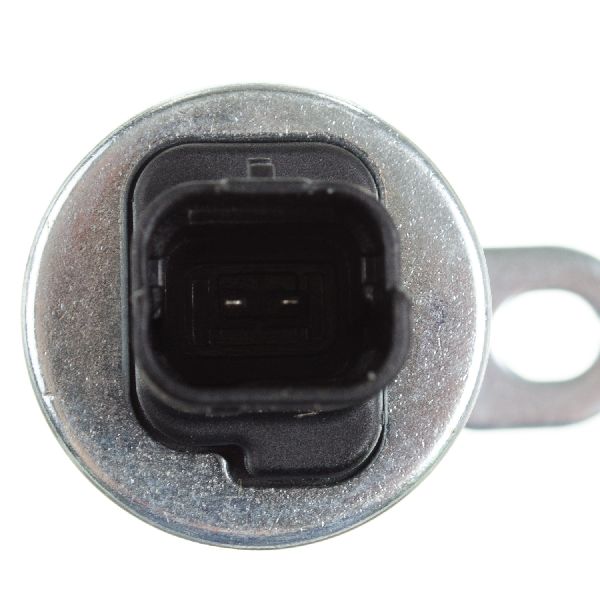
On these second-generation (R56) Mini Coopers, the variable valve timing system is called VANOS. Code P0013 is very specific, pointing directly to the exhaust-side VANOS solenoid circuit, not the intake side (which would typically be P0010) or the camshaft position sensors themselves. A very common point of failure, documented extensively by owners, is not just the solenoid itself but also its plastic electrical connector. The tip of the connector housing can become brittle from heat cycles and break off, allowing the internal pins to back out and create an intermittent open circuit even when the plug feels secure.
Symptoms You May Notice
- Check Engine Light is illuminated.
- Rough, unstable, or surging idle, sometimes described as a 'dancing MINI' at red lights.
- Noticeable loss of power and sluggish acceleration.
- Poor fuel economy.
- Engine may stall or die when coming to a stop.
- Rattling or unusual noises from the engine.
- Hard starting, where the engine struggles to turn over.
- Replacing the camshaft position sensor. Forum users specifically note that for this engine, P0013 points to the VANOS solenoid (actuator), not the position sensor. A user on North American Motoring initially replaced the wrong part before realizing the issue was the solenoid.
Most Likely Causes

- Faulty Exhaust VANOS Solenoid 🔴 High Probability The solenoids are exposed to constant engine heat cycles and oil contaminants, leading to eventual electrical failure or mechanical sticking. It's a very common failure item on this platform, often discussed in owner forums.
How to confirm: Swap the exhaust and intake VANOS solenoids (they are identical on engines with two). Clear the codes. If the code changes to P0010 (intake side), the solenoid is bad. You can also test the solenoid's resistance with a multimeter; it should be around 6.9-7.9 ohms at 68°F (20°C). If you get no reading (open circuit), the solenoid is faulty.
Typical fix: Replace the exhaust VANOS solenoid. Many owners recommend replacing both intake and exhaust solenoids at the same time as a preventative measure.
Est. part cost: $30-$100 - Low, Dirty, or Incorrect Engine Oil 🟡 Medium Probability The VANOS system is hydraulic and relies on clean oil at the correct pressure. These engines, particularly the turbocharged N14 and N18, are known for consuming oil, making low oil levels a frequent issue if not checked regularly. Oil sludge can also clog the fine mesh screens on the solenoid, impeding its function.
How to confirm: Check the oil level on the dipstick. Observe the oil's color and consistency. If it is black, sludgy, or below the minimum mark, this is a likely contributing factor. Some owners have resolved the code simply by performing an oil change.
Typical fix: Perform an oil and filter change using a high-quality, manufacturer-specified oil (e.g., 5W-30 full synthetic). Ensure the oil filter cap's center cage/insert is not missing, as its absence allows unfiltered oil to circulate, clogging solenoids.
Est. part cost: $50-$90 - Damaged Solenoid Connector or Wiring ⚪ Low Probability The plastic connector housing can become brittle from engine heat and break, particularly the tip that locks the pins in place. This allows the wire pins inside to back out and lose connection, causing an intermittent P0013 code that can be difficult to trace.
How to confirm: Visually inspect the connector for cracks or damage. Gently tug on the wires entering the back of the connector; they should not move. Wiggle the connector with the engine running to see if it affects the idle. A broken wire inside the connector's insulation can also cause an open circuit fault.
Typical fix: Replace the connector pigtail if the housing is broken or the wires are damaged. An OEM repair kit is available.
Est. part cost: $15-$40
Rare But Worth Checking
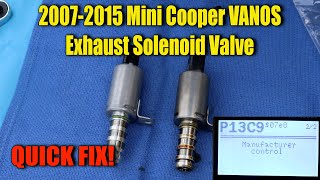
- Clogged Solenoid Passages or Debris: Even if the solenoid tests good electrically, its small internal passages and filter screen can become clogged with oil sludge or debris from a failing timing chain guide, preventing it from functioning. Cleaning the solenoid with MAF cleaner or a similar solvent can sometimes be a temporary fix. 🎬 See how to clean a blocked solenoid to restore performance. One owner recommended briefly cranking the engine with the solenoid removed to blow out any clogs in the oil passages before installing the new part.
- Stretched Timing Chain or Failing Guides: While P0013 is an electrical circuit code, severe timing chain stretch or guide failure can cause erratic camshaft movement that the DME may struggle to control, sometimes flagging a VANOS-related code. This is more likely if accompanied by rattling noises on startup. Debris from broken plastic guides can also enter the oil and clog the VANOS solenoids.
- Failing Powertrain Control Module (PCM/DME): This is very rare. The PCM should only be considered after all other possibilities, including the entire wiring harness from the solenoid to the PCM, have been exhaustively checked and ruled out.
Diagnosis Steps

- Read the code with an OBD-II scanner to confirm P0013 is the primary code. Note any other codes like 2A87.
- Check the engine oil level and condition. Top up or perform an oil change if necessary. Use the correct viscosity oil (e.g., 5W-30 Full Synthetic).
- Locate the exhaust VANOS solenoid. On N12/N16/N18 engines, it's the more accessible one on the front of the cylinder head.
- Carefully inspect the electrical connector and wiring. Look for a broken plastic housing tip or loose pins by gently pulling on the wires.
- If the wiring looks good, swap the intake and exhaust VANOS solenoids (for N12/N16/N18 engines). They are identical and usually held by one 10mm or T30 bolt. Clear the codes and run the engine. If the fault code changes to P0010 (Intake 'A' Actuator Circuit), you have confirmed the solenoid you moved is faulty.
- If the code P0013 returns after the swap, the problem likely lies in the wiring circuit or the DME. Test the wiring for continuity from the solenoid connector back to the DME.
- If the solenoid was confirmed bad, replace it with a new part. 🎬 Watch: A step-by-step guide to replacing the exhaust solenoid. It is recommended to lubricate the new O-ring with clean engine oil before installation.
- Clear the codes and perform a test drive to ensure the fix was successful.
Parts You'll Likely Need
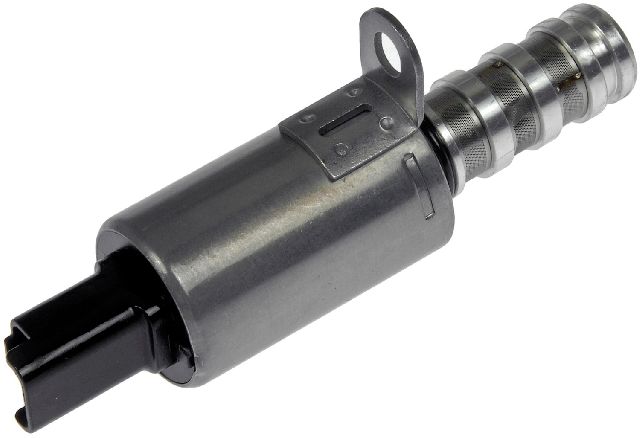
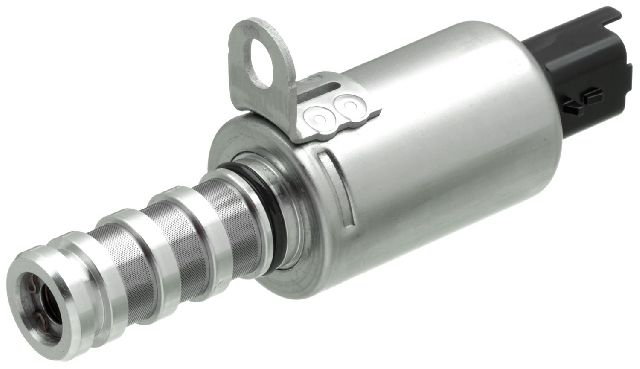
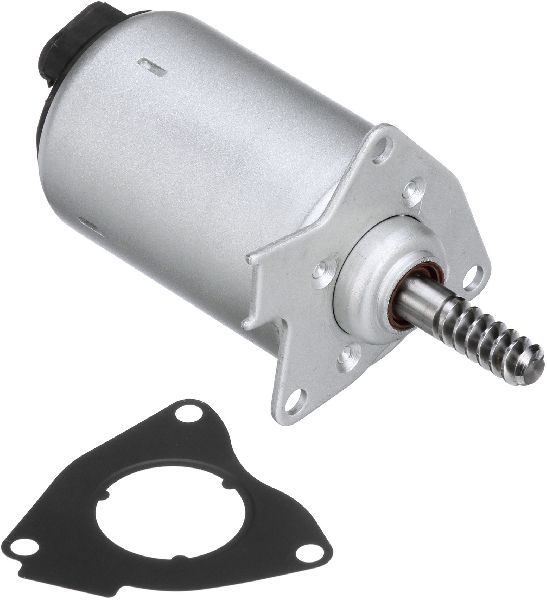
- Exhaust VANOS Solenoid / Oil Control Valve
(OEM #11367587760)— This is the most common component to fail and directly cause the P0013 circuit fault code.
Trusted brands: Genuine Mini/BMW, Pierburg (often the OEM supplier), Febi Bilstein, Bosch, Delphi, Dorman
OEM price range: $90-$215
Aftermarket price range: $30-$85 - VANOS Solenoid Connector Pigtail
(OEM #12527542849)— Needed if the original connector housing is cracked or broken, causing an intermittent electrical connection.
Trusted brands: Genuine Mini/BMW, Aftermarket repair kits
OEM price range: $15-$25
Aftermarket price range: $10-$20
Related Codes That Often Appear With This One
- P0012 — P0012 ('A' Camshaft Position Timing - Over-Retarded) can sometimes appear with P0013 if there are significant oil pressure or timing issues affecting the entire VANOS system.
- P0015 — P0015 ('B' Camshaft Position - Timing Over-Retarded) is a mechanical timing fault, not an electrical one. It can appear alongside P0013 if the solenoid is stuck or clogged, causing the camshaft to be in the wrong position.
- 2A87 — This is a BMW/Mini specific code for 'VANOS exhaust - stiff; jammed mechanically'. It often accompanies P0013 and points directly to a mechanical issue with the solenoid or actuator, rather than just an electrical circuit fault.
- 2A82 — This is the BMW/Mini specific code for an intake VANOS mechanical fault. It may appear with an exhaust code if there is a systemic oil pressure or debris issue affecting both solenoids.
Technical Service Bulletins (TSBs) & Recalls
- SI B11 02 08: While not directly for P0013, this BMW/Mini service bulletin addresses VANOS mechanical faults (like 2A82, 2A87) caused by insufficient oil pressure, clogged solenoids, a missing oil filter cage, or wear on the camshaft bearing ledge. It advises checking oil supply and potentially replacing both solenoids and changing the oil.
Platform-Specific Known Issues
- A recurring theme in owner forums is the brittleness of the VANOS solenoid's electrical connector. A broken locking tab or housing can cause an intermittent connection that is hard to diagnose visually, leading to repeat codes even after replacing the solenoid.
Mechanic-Grade Diagnostic Values
- VANOS Solenoid Resistance — expected: 6.9 to 7.9 Ohms at 68°F (20°C) across the two pins of the solenoid.. Failure: A reading of 0 Ohms (short circuit) or infinite/OL (open circuit) indicates a failed solenoid.
- Voltage at Solenoid Connector (Power Pin) — expected: Approximately 12V (battery voltage) with key on, engine off.. Failure: No voltage indicates a problem with the power supply circuit, such as a broken wire or blown fuse.
- Signal at Solenoid Connector (Control Pin) — expected: A duty-cycled signal from the DME when the engine is running. This is best observed with an oscilloscope.. Failure: No signal or a constant voltage indicates a wiring fault or a problem with the DME driver circuit.
Hidden / Shadow Codes Worth Checking
- 2A87: Exhaust VANOS, mechanism: Reports that the solenoid is jammed, stiff, or mechanically stuck. This is a very common companion code to P0013. (see via BMW/Mini specific scan tools like ISTA, or advanced OBD-II scanners with manufacturer-specific code reading capabilities.)
- 2A82: Intake VANOS, mechanism: Reports a mechanical jam on the intake solenoid. If seen with P0013/2A87, it could point to a systemic issue like oil sludge or low pressure affecting both solenoids. (see via BMW/Mini specific scan tools like ISTA, or advanced OBD-II scanners.)
- 2845: VANOS, exhaust, actuator movement: Indicates a problem with the mechanical movement of the VANOS actuator itself, which could be caused by the solenoid fault from P0013. (see via BMW/Mini specific scan tools like ISTA.)
Scan Tool Commands That Help
- ISTA or equivalent advanced scanner: VANOS Solenoid Activation Test / Component Actuation — Use this bidirectional test with the engine off to command the solenoid to open and close. A healthy solenoid will produce an audible 'click'. If no click is heard, but the solenoid has correct resistance and the wiring has power, the solenoid is mechanically seized and must be replaced.
- ISTA or equivalent advanced scanner: VANOS Adaptation, Reset — After replacing a VANOS solenoid or performing other timing-related work, this service function should be run to have the DME relearn the end stops and operational range of the new components. While not always mandatory for a simple solenoid swap, it is best practice.
Wiring & Ground Locations

- Exhaust VANOS Solenoid Connector — Plugged into the exhaust VANOS solenoid on the front of the cylinder head, near the oil dipstick.. This is the primary point of failure for the circuit. The connector itself can break, or the pins/wires can fail, causing the P0013 open/short circuit fault. Pin 1 is typically the 12V supply, and Pin 2 is the control signal wire from the DME.
- DME Connector (e.g., X60001) — The main engine computer (DME) is located in the electronics box (E-box) in the engine bay, typically on the passenger side under the cowl.. The control wire from the VANOS solenoid terminates here. A poor connection at the main DME plug, due to corrosion or a backed-out pin, can cause a P0013 code that is difficult to trace at the solenoid end.
- Engine Ground Strap — A primary ground strap typically runs from the engine block or transmission case (near the clutch housing) to the chassis inner wing or subframe.. A weak or corroded main engine ground can cause a variety of floating voltages and erratic electrical behavior in engine sensors and actuators, including the VANOS solenoids. Verifying this connection is clean and tight is a crucial step in diagnosing any electrical fault.
Real Owner Repair Stories
- Reviewer on Detroit Tuned (2nd Gen Mini Cooper (Engine not specified, but one with dual VANOS)) — Check engine light with codes for cam position and blocked intake pressure.
❌ Tried (didn't work) Replacing the VANOS solenoid with a cheap, unbranded part 'made in China'.
✅ What actually fixed it Replacing the faulty solenoid with a quality OEM part fixed the codes. The owner also noted they cranked the engine briefly with the solenoid removed to blow out any potential clogs in the oil passages before installing the new part. - Chevy HHR Network Forum User (similar engine design) (Chevrolet HHR (Ecotec engine)) — Multiple engine codes appearing at once, including P0013 and others related to cam/crank sensors.
❌ Tried (didn't work) Initial diagnosis focused on individual components mentioned in the codes.
✅ What actually fixed it The root cause was a broken gasket on the main ECM (DME) connector, which prevented it from seating properly. Fixing the main computer connection resolved all the codes simultaneously. - Reddit user r/MINI (Mini Cooper with N12 engine) — Check Engine Light for P0013.
❌ Tried (didn't work) Cleaning the VANOS solenoid.
✅ What actually fixed it The connector itself crumbled to pieces upon removal due to heat and age. The final fix was to order and install a new connector pigtail, confirming the connector housing itself is a common point of failure.
When the Usual Fixes Don't Work
- While replacing the VANOS solenoid is the most common fix, it is not a guaranteed solution. Owners have reported that the P0013 code returned shortly after replacement. In these cases, the actual cause was often found to be either a faulty aftermarket part of poor quality, requiring a switch to an OEM or OEM-supplier brand like Pierburg, or a separate underlying issue. Other causes for a returning code include a broken connector pigtail that wasn't replaced with the solenoid, or oil passages clogged with sludge or timing chain debris that prevent even a new solenoid from functioning correctly. One owner successfully cleared the passages by briefly cranking the engine with the old solenoid removed before installing the new one.
OEM Part Supersession History
11367564734→11368610388— Progressive design improvements to enhance durability and resistance to oil contamination and heat.
Heads up: None. The latest part number, 11368610388, is the correct and backward-compatible replacement for all previous versions including 11367587760 and 11367604292.
Model Year Variations Within This Range
- 2007-2010 (Cooper S): The Cooper S with the N14 engine only has one VANOS solenoid on the intake camshaft. Therefore, it cannot generate a P0013 code, which is specific to the exhaust camshaft ('B' camshaft).
- 2011-2013 (vs. 2007-2010 Non-S): The post-facelift non-S Cooper uses the N16 engine, which replaced the N12. A key difference is that the N16 features a map-controlled oil pump, providing more precise oil pressure regulation for the VANOS system compared to the N12's single-stage pump.
Diagnostic Flowchart
Used vs. New Parts: Buying Guide for This Vehicle
When a used part is the smart pick: For a VANOS solenoid, buying a used part is strongly discouraged. It is a known high-failure component, and the cost of a new, quality aftermarket part is low enough that the risk of a used part failing quickly is not worth the small savings.
Donor-vehicle mileage cap: roughly under 40000 miles for the part to have meaningful remaining life.
What to inspect on the donor part:
- Inspect the mesh screens; they must be perfectly clean and free of any sludge or metallic debris.
- Ensure the plastic connector housing is not cracked, brittle, or showing signs of heat stress.
- If possible, test the resistance with a multimeter before purchase. It should read between 7 and 8 ohms.
- Ask for the donor vehicle's maintenance history; a part from a car with regular, documented oil changes is a lower risk.
OEM-only on this vehicle (don't cheap out):
- Powertrain Control Module (DME)
Aftermarket brands forum-validated for this vehicle:
- Pierburg (often the original OEM supplier)
- Febi Bilstein
- Bosch
- Delphi
Brands owners have reported issues with on this vehicle:
- Unbranded, low-cost solenoids from online marketplaces (e.g., eBay, Amazon) have been reported by users to be faulty out of the box or fail prematurely.
Real Owner Stories
Aggregated from forums and TSBs cited above. Mileages and costs reflect what owners reported in those sources.
2009 Mini Cooper Hatchback — 70000 miles
Symptoms: Lagging acceleration power, engine died out coming to a stop sign, irregular/rough idle, and check engine light.
What fixed it: The owner replaced the rear (exhaust) camshaft position sensor. The code returned at first but then went away permanently after about a week of driving.
Cost: $25-$35
Source hint: North American Motoring forum thread 'R56 P0013 B Camshaft Position Actuator Bank 1'
2008 Mini Cooper
Symptoms: A recurring P0013 code and persistent driveability issues that weren't solved by other fixes.
What fixed it: The owner discovered the plastic tip of the exhaust VANOS solenoid's electrical connector housing had broken off. This allowed the metal pins to back out and lose connection. Properly seating and securing the connector fixed the code and all driveability problems.
Source hint: North American Motoring forum thread titled 'P0013 recurring code solved. Something to watch for'
Related OBD-II Codes
Frequently Asked Questions
I swapped my VANOS solenoids and the code changed from P0013 to P0010. What does that mean?
My mechanic mentioned TSB SI B11 02 08. Is that relevant for my P0013 code?
Are the intake and exhaust VANOS solenoids the same part on my N12/N16/N18 engine?
I replaced the VANOS solenoid but the P0013 code came back. What should I check next?
What is the correct resistance for a good VANOS solenoid on this Mini?
What kind of engine oil is recommended to prevent VANOS issues like P0013?
I have a Peugeot 207 with the same 1.6L engine. Does P0013 mean the same thing?
Helpful Videos
We Have This Part in Stock



The information in this article is provided for general reference and educational purposes only. Vehicle specifications, procedures, and part compatibility can vary by production date, trim level, and region. Always consult your vehicle's factory service manual and verify part numbers before purchasing or performing repairs. Safety-critical components such as airbags, seat belts, and braking systems should be installed by a qualified professional.
- Mini Cooper:
- 🎬 Helpful Videos
- 🛍️ Shop This Part
- What's Unique About the 2007-2013 Mini Cooper
- Symptoms You May Notice
- Most Likely Causes
- Rare But Worth Checking
- Diagnosis Steps
- Parts You'll Likely Need
- Related Codes That Often Appear With This One
- Technical Service Bulletins (TSBs) & Recalls
- Platform-Specific Known Issues
- Mechanic-Grade Diagnostic Values
- Hidden / Shadow Codes Worth Checking
- Scan Tool Commands That Help
- Wiring & Ground Locations
- Real Owner Repair Stories
- When the Usual Fixes Don't Work
- OEM Part Supersession History
- Model Year Variations Within This Range
- Diagnostic Flowchart
- Used vs. New Parts: Buying Guide for This Vehicle
- Real Owner Stories
- 2009 Mini Cooper Hatchback — 70000 miles
- 2008 Mini Cooper
- Related OBD-II Codes
- Frequently Asked Questions
- 🎟️ Get 5% Off