

P0012 on 2006-2014 Volkswagen Passat: Timing Chain & VVT Solenoid Guide
On 2.0T TSI engines (CCTA, CBFA), P0012 is a serious warning for a failing timing chain tensioner, a critical repair costing over $1000. For all engines, the code can also be caused by low/dirty oil or a faulty VVT solenoid (a ~$100 part). Always check oil first and listen for a startup rattle.
- For any engine, your first step should be to check the engine oil level and condition. An oil change may fix the issue.
- On a 2.0T TSI engine, a rattling noise at startup combined with P0012 is a critical warning of a failing timing chain tensioner. Do not ignore it.
- A faulty VVT solenoid is a common, relatively inexpensive, and DIY-friendly fix to attempt after checking the oil.
- If the timing chain tensioner is the cause, it is a complex and expensive repair, but it is essential to prevent catastrophic engine failure.
- P0012 is often accompanied by P0016 (Crank/Cam Correlation fault), which further points to a base mechanical timing problem.
What's Unique About the 2006-2014 Volkswagen Passat
For the 2006-2014 Passat, especially models with the 2.0T TSI engine (engine codes CCTA, CBFA from approx. 2008.5-2014), this code is often a direct symptom of a well-documented and critical issue: premature failure of the timing chain tensioner. The original tensioner design used a weak ratchet mechanism that could fail to hold tension, allowing the chain to go slack. While P0012 can be a simple oil-related issue on many cars, on the 2.0T TSI it serves as a major red flag for a potential catastrophic engine failure if the timing chain jumps. This makes diagnosis more urgent than on other platforms where a faulty VVT solenoid is the most common outcome. For earlier 2.0T FSI engines (approx. 2006-2008.5, e.g., BPY code), which use a timing belt, this code is not related to the tensioner issue and points more towards the VVT adjuster (phaser), oil pressure problems, or the N205 solenoid itself.
Generation note: The 2006-2014 range covers the B6 (2006-2010) and B7 (2011-2014 for the North American Market) generations. The most common engines were the 2.0T TSI, 3.6L VR6, and the 2.5L 5-cylinder (B7 NMS). The P0012 code is most critically associated with the 2.0T TSI engine (specifically CCTA and CBFA codes) due to a known timing chain tensioner issue prevalent in models from approximately 2008.5-2013. Earlier 2006-2008.5 models with the 2.0T FSI (BPY) engine have different primary causes for this code, typically unrelated to timing chain tensioners.
Symptoms You May Notice
- Check Engine Light is on.
- Loud rattling noise from the engine on a cold startup, which may quiet down as the engine warms.
- Rough or unstable engine idle.
- Noticeable loss of engine power and sluggish acceleration.
- Difficulty starting the engine, or extended cranking time.
- Decreased fuel economy.
- Engine may stall unexpectedly.
- Replacing the camshaft position sensor when the underlying cause is actually a mechanical timing issue (stretched chain/bad tensioner) or a faulty VVT solenoid.
- Replacing only the VVT solenoid when the root cause is oil sludge or a disintegrating camshaft bridge screen that will cause the new solenoid to fail as well.
Most Likely Causes
- Failing Timing Chain Tensioner or Stretched Timing Chain (Primarily 2.0T TSI) 🔴 High Probability VW used a failure-prone tensioner design in 2.0T TSI engines (CCTA, CBFA) from roughly 2008-2013. The tensioner's internal ratchet fails, it loses hydraulic pressure, and fails to maintain tension, allowing the chain to go slack. This causes retarded timing and can lead to the chain jumping teeth, resulting in catastrophic engine failure.
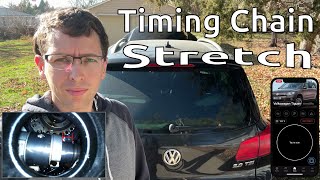
How to confirm: Listen for a 'death rattle' from the right side of the engine on cold starts. A mechanic can remove an inspection plug on the lower timing cover to visually check the tensioner's extension (a measure of chain stretch) and see which revision of the tensioner is installed. A VW-specific scan tool can check measuring block 93 for camshaft phase deviation 🎬 Watch: How to check chain stretch using a scanner and inspection plug.; a value greater than -5° (e.g., -8°) often indicates a stretched chain.
Typical fix: Replace the timing chain tensioner with the updated part (06K109467K), and replace the timing chain and all guides if they are stretched or worn. This is a labor-intensive job.
Est. part cost: $400-$700 for a full timing kit - Low, Dirty, or Incorrect Viscosity Engine Oil 🟡 Medium Probability The VVT system is entirely dependent on clean oil at the correct pressure to function. Long oil change intervals or using non-specified oil can lead to sludge buildup that clogs the tiny passages in the VVT solenoid and actuator, impeding their function.
How to confirm: Check the oil level on the dipstick and inspect its condition. If it's low, black, or sludgy, this is a likely contributor. Ensure the oil used meets VW 502 00 specification.
Typical fix: Perform an oil and filter change using the manufacturer-specified oil (e.g., VW 502 00).
Est. part cost: $60-$100 - Faulty VVT Control Solenoid (N205 / Camshaft Adjuster Magnet) 🟡 Medium Probability
How to confirm: The solenoid can be removed (usually one T30 Torx bolt) and inspected for clogged screens or debris. It can also be tested by applying a 12V source to see if the internal plunger moves, or by checking its resistance with a multimeter (typically 10-18 Ω). Swapping the intake and exhaust solenoids (if identical) and seeing if the code changes to P0015 (exhaust side) is another diagnostic trick.
Typical fix: Replace the VVT control solenoid. It is often recommended to replace it rather than just cleaning it, as internal failure is common.
Est. part cost: $50-$180
Rare But Worth Checking
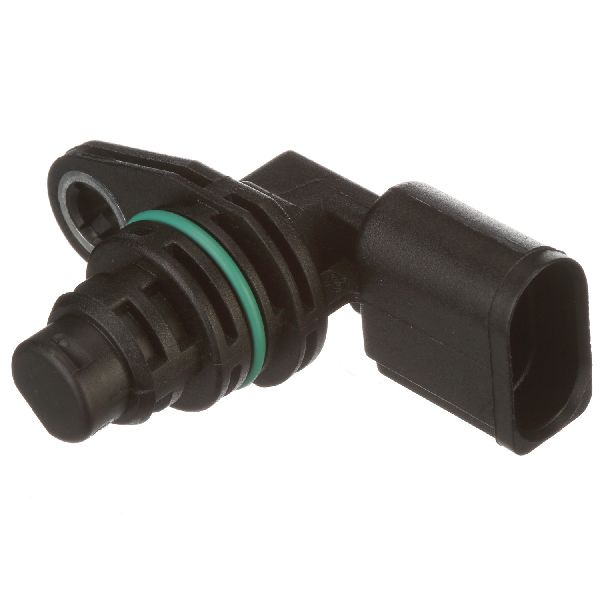
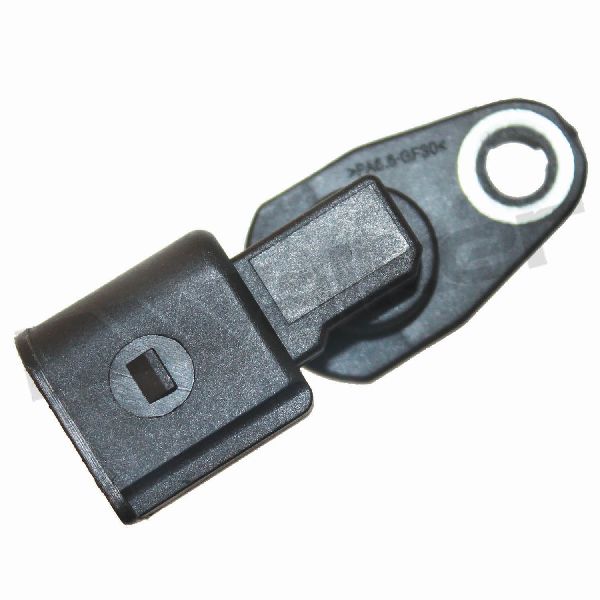
- Failed Camshaft Position Sensor: The sensor itself can fail, sending incorrect signals to the ECU. This is less common than the oil-related or mechanical timing issues.
- Failed Camshaft Adjuster (Phaser): The mechanical gear that actually performs the timing adjustment can fail internally, often due to a failed locking pin or clogged internal oil passages. This is much less common than the solenoid that controls it.
- Blocked Camshaft Bridge Screen: A screen in the camshaft bridge (which supplies oil to the VVT system) can disintegrate, sending debris into the VVT solenoid or the camshaft adjuster spool valve, causing a blockage. This is mentioned in VW Technical Service Bulletin 2025415 / 15-12-01.
Diagnosis Steps
- Check Engine Oil: Verify the oil level is correct and the oil is clean and of the correct viscosity (VW 502 00). If in doubt, perform an oil and filter change. This is the cheapest and easiest first step.
- Scan for Codes: Use an OBD-II scanner to confirm P0012 and check for other related codes like P0016 or misfire codes. A VW-specific tool like VCDS can check 'Camshaft Adaptation' in measuring block 93. A value more negative than -5° strongly suggests chain stretch.
- Listen for Noise: Pay close attention to the engine sound on a cold start. A distinct, sharp rattle lasting for 2-3 seconds from the passenger side of the engine strongly indicates a timing chain tensioner problem on TSI engines.
- Inspect VVT Solenoid (N205): Locate the VVT solenoid on the upper timing cover. Unplug it and remove the single T30 Torx bolt holding it in. Inspect the screens for sludge or metallic debris.
- Test VVT Solenoid: With the solenoid removed, you can apply 12V to its terminals to see if the internal plunger actuates. You can also test its internal resistance with a multimeter (should be around 10-18 Ohms). A VW-specific scan tool can also run a 'Final Control Diagnosis' to functionally test the solenoid.
- Professional Inspection: If the above steps do not resolve the code, especially if a startup rattle is present on a 2.0T TSI engine, the vehicle must be inspected by a professional. This involves visually inspecting the timing chain tensioner through the inspection port and measuring chain stretch, which is a more involved diagnostic procedure.
Parts You'll Likely Need
- Timing Chain Tensioner
(OEM #06K109467K)— This is the latest updated design that replaces the failure-prone original tensioner on 2.0T TSI engines. Earlier problematic versions include 06H109467N, 06H109467T, and 06H109467AB.
Trusted brands: Volkswagen (OEM), INA
OEM price range: $70-$100
Aftermarket price range: $50-$80 - VVT Control Solenoid / Camshaft Adjuster Magnet (N205)
(OEM #06H109257C (common for TSI), 06L109257F (later models, check VIN), 06H109257A (earlier models))— This solenoid controls oil flow to the cam phaser. It's a common failure point due to clogging from oil sludge or electrical failure. Part number varies by year and specific engine. The 'C' revision is a common replacement for many 2.0T TSI engines.
Trusted brands: Volkswagen (OEM), Pierburg, INA, Bosch
OEM price range: $120-$180
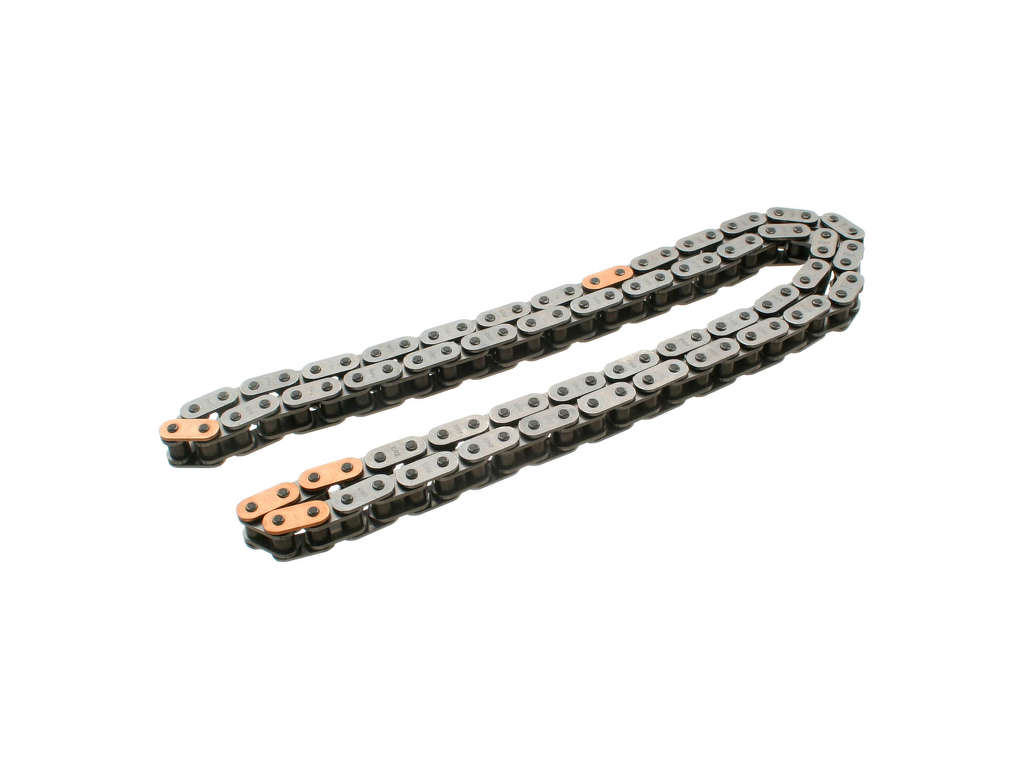
Aftermarket price range: $40-$100 - Timing Chain Kit — If the tensioner has failed or the chain is stretched, a full kit including the chain, guides, and tensioner is required to restore proper timing. It's recommended to do this as a complete set.
Trusted brands: FCP Euro (Kit), INA (Kit), Iwis (Chain)
OEM price range: $500-$700
Aftermarket price range: $300-$500
Related Codes That Often Appear With This One
- P0016 — Crankshaft/Camshaft Position Correlation (Bank 1 Sensor A). This code often appears with P0012 because if the cam timing is retarded, its position will not correlate correctly with the crankshaft's position, indicating a base timing problem.
- P0300-P0304 — Random or specific cylinder misfire codes. Incorrect cam timing disrupts the air/fuel mixture and combustion stability, leading to misfires.
- P0341 — Camshaft Position Sensor 'A' Circuit Range/Performance (Bank 1). This code can accompany P0012 if the timing deviation is severe enough to be considered a sensor performance issue.
Technical Service Bulletins (TSBs) & Recalls
- VW Technical Service Bulletin 2025415 / 15-12-01: Mentions that a disintegrated screen in the camshaft adjuster bridge can cause debris to lodge in the camshaft adjuster spool valve, leading to codes like P0011 (and by extension, P0012).
Platform-Specific Known Issues
- A class-action lawsuit was filed regarding the timing chain tensioner failure in 2.0T TSI engines (CCTA, CBFA, etc.) from model years ~2008-2013. This led to a warranty extension program for the tensioner on some vehicles. Owners of these specific models should be especially vigilant if P0012 appears, as it is a primary indicator of this specific, well-documented defect.
Mechanic-Grade Diagnostic Values
- VVT Control Solenoid (N205) internal resistance — expected: 10 - 18 Ω. Failure: A reading outside this range (open circuit or short) indicates a failed solenoid coil.
- VVT Control Solenoid (N205) connector voltage — expected: Battery voltage present with ignition on. Failure: No voltage suggests a wiring issue or a problem with the power source (Fuel Pump Relay J17).
- VCDS Measuring Block 93, Field 3 (Camshaft Adaptation) — expected: Close to 0° at idle.. Failure: A value consistently more negative than -5° (e.g., -6° to -10°) at hot idle strongly indicates a stretched timing chain or other base timing issue.
- Engine Oil Pressure at hot idle (~80°C) — expected: 17.4 - 30.5 psi (1.2 - 2.1 bar). Failure: Pressure below this range can prevent the VVT system from functioning correctly, leading to timing codes.
Scan Tool Commands That Help
- VCDS (VAG-COM) or ODIS: Engine (01) -> Output Tests (03) -> Camshaft Adjustment Valve (N205) — This bidirectional test directly commands the N205 solenoid to actuate. The technician can listen for a click and observe changes in engine operation or measuring blocks to confirm if the solenoid is responding to ECU commands, helping to isolate a faulty solenoid from a wiring or mechanical issue.
Wiring & Ground Locations
- Ground Point 15 — On the cylinder head.. Provides the ground reference for critical sensors mounted on the engine's cylinder head, including the Camshaft Position Sensor (G40). A poor connection here can cause erratic sensor readings, potentially triggering timing-related fault codes.
- Ground Point 652 — Main ground strap between the engine/transmission and the vehicle body/frame.. A corroded or loose main engine ground can cause a voltage drop across the entire engine's electrical system, leading to unpredictable behavior from the ECU, sensors, and solenoids, including the N205 VVT solenoid.
- Fuel Pump Relay (J17) — Located in the under-dash relay panel.. It supplies power to the N205 VVT solenoid. If the relay is faulty or its wiring is compromised, the solenoid will not receive power and cannot adjust cam timing, directly causing a P0012 code.
Real Owner Repair Stories
- Common repair narrative from VWVortex & Ross-Tech forums (2011 VW Passat 2.0T TSI (CCTA)) — Check Engine Light on, rough idle, and a distinct 'chain rattle' for a few seconds on cold starts.
❌ Tried (didn't work) Performing an oil change., Replacing the VVT Control Solenoid (N205).
✅ What actually fixed it The owner took the car to a specialist after the easy fixes failed. VCDS scan showed P0012 and P0016, with camshaft adaptation in block 93 at -8.5 degrees. The mechanic visually confirmed the old-style tensioner was over-extended. A full timing service including the updated tensioner (06K109467K), new timing chain, and all new guide rails resolved all symptoms and codes.
When the Usual Fixes Don't Work
- A common misdiagnosis on the 2.0T TSI engine is to treat P0012 as a simple solenoid issue. Many owners have reported replacing the VVT solenoid (N205), which is the most common cause on many other vehicles, only to have the check engine light and rough running return. This often happens because the true underlying issue is mechanical timing stretch. The ECU is attempting to correct a deviation that is beyond the VVT system's physical ability to adjust for. The solenoid replacement acts as a costly diagnostic step that ultimately points to the need for a full timing chain and tensioner service, which is the actual fix in a majority of high-mileage or symptomatic TSI cases.
OEM Part Supersession History
06H109257A, 06H109257B, 06J109257B→06H109257C— Updated design for the VVT Control Solenoid (N205) to improve reliability and performance on 2.0T TSI engines.
Heads up: Always verify the part number with the vehicle's VIN. While often interchangeable on TSI engines, using the wrong revision can lead to improper operation.
Model Year Variations Within This Range
- 2008.5-2014: These models primarily use the 2.0T TSI (e.g., CCTA) engine with a timing chain. For these vehicles, P0012 is a strong indicator of the infamous timing chain tensioner failure, a stretched chain, or a clogged N205 solenoid.
- 2006-2008.5: These models primarily use the 2.0T FSI (e.g., BPY) engine, which has a timing belt for primary timing and a smaller chain for the camshafts. The widespread tensioner failure of the TSI does not apply. P0012 on an FSI engine is more likely caused by low oil pressure, a faulty N205 solenoid, or a failed VVT adjuster (phaser) unit itself.
Diagnostic Flowchart
Real Owner Stories
Aggregated from forums and TSBs cited above. Mileages and costs reflect what owners reported in those sources.
2005 Volkswagen Passat 3c 2.0 FSI (BLR)
Symptoms: Intermittent fault code P0012 - 008 - Advance Setpoint not Reached (Over-Retarded).
What fixed it: The user performed a 'Complete flush van de motor' (complete engine flush), but it is not explicitly stated that this solved the problem; the post was created to share information and seek advice.
Source hint: gerritspeek.nl forum thread 'P0012 - 008 - Advance Setpoint not Reached (Over-Retarded) - Intermittent'
2005 Volkswagen Passat B5.5 (ECU only)
Symptoms: The owner of an Audi A4 with a transplanted Passat ECU observed an intermittent P0012 code and noted, 'occasionally and randomly when I am driving I will suddenly lose a bunch of power.'
What fixed it: The cause and fix were not identified in the thread; the discussion focused on the implications of the incorrect ECU being installed in the car.
Source hint: Ross-Tech Forums thread 'Guidance on auto scan results -- ECU vin different than my car vin.'
Related OBD-II Codes
Frequently Asked Questions
Is there a recall or warranty extension for the P0012 code on my 2.0T Passat?
What does the 'death rattle' sound like on my Passat, and is it related to P0012?
Does VW TSB 2025415 / 15-12-01 apply to my Passat with a P0012 code?
How can I check if my Passat's timing chain is stretched using VCDS?
What kind of oil should I use in my Passat to prevent VVT issues and the P0012 code?
What is the updated part number for the 2.0T TSI timing chain tensioner?
Helpful Videos
We Have This Part in Stock


The information in this article is provided for general reference and educational purposes only. Vehicle specifications, procedures, and part compatibility can vary by production date, trim level, and region. Always consult your vehicle's factory service manual and verify part numbers before purchasing or performing repairs. Safety-critical components such as airbags, seat belts, and braking systems should be installed by a qualified professional.
- Volkswagen Passat:
- 🎬 Helpful Videos
- 🛍️ Shop This Part
- What's Unique About the 2006-2014 Volkswagen Passat
- Symptoms You May Notice
- Most Likely Causes
- Rare But Worth Checking
- Diagnosis Steps
- Parts You'll Likely Need
- Related Codes That Often Appear With This One
- Technical Service Bulletins (TSBs) & Recalls
- Platform-Specific Known Issues
- Mechanic-Grade Diagnostic Values
- Scan Tool Commands That Help
- Wiring & Ground Locations
- Real Owner Repair Stories
- When the Usual Fixes Don't Work
- OEM Part Supersession History
- Model Year Variations Within This Range
- Diagnostic Flowchart
- Real Owner Stories
- 2005 Volkswagen Passat 3c 2.0 FSI (BLR)
- 2005 Volkswagen Passat B5.5 (ECU only)
- Related OBD-II Codes
- Frequently Asked Questions
- 🎟️ Get 5% Off