

P0012 on 2013-2018 Ford Focus ST: Causes and Fixes for Over-Retarded Camshaft Timing
On a 2013-2018 Focus ST, code P0012 is most often caused by old, dirty engine oil or a sticking intake VCT solenoid. The first step is an oil change with 5W-30 synthetic oil. If that doesn't work, replacing the VCT solenoids is the next likely fix, with a DIY difficulty of 3/5.
- Always start with the simplest fix: an oil and filter change using full synthetic 5W-30 oil.
- P0012 on the Focus ST is most commonly caused by a sticking VCT solenoid, a well-documented issue.
- Replacing both VCT solenoids and the valve cover gasket is a common, effective, and DIY-friendly repair.
- If the code persists after an oil change and solenoid replacement, investigate more serious mechanical issues like timing chain stretch, especially if you hear a startup rattle.
What's Unique About the 2013-2018 Ford Focus ST

The 2.0L EcoBoost engine's Variable Camshaft Timing (VCT) system is particularly sensitive to oil condition. Ford has issued Technical Service Bulletins (TSBs) like SSM 48423, which acknowledge that small debris in the oil can cause the VCT solenoids to stick, leading directly to this code. Unlike some engines where this code might point to more severe mechanical issues first, on the Focus ST, the problem is very frequently traced back to either oil maintenance or the easily accessible VCT solenoids located under the valve cover. A user on r/FocusST reported getting the code, and after an oil change didn't fix it, was advised by the community that the VCT solenoids were the next logical step.
Symptoms You May Notice
- Check Engine Light illuminated
- Rough, unstable idle
- Engine stumbling or misfiring at idle
- Sluggish acceleration and reduced engine power
- Decreased fuel economy
- Engine may stall when coming to a stop
- Hard starting (long crank times).
- Rattling noise from the engine. 🎬 Watch: Common symptoms of a failing VCT solenoid
- Replacing the camshaft position sensor first. While possible, the VCT solenoid is a much more frequent cause of P0012 on this engine.
- Assuming a jumped timing chain without other symptoms like a startup rattle. The issue is far more likely to be oil-related or a faulty solenoid.
Most Likely Causes

- Low, Dirty, or Incorrect Viscosity Engine Oil 🔴 High Probability The VCT system uses oil pressure to adjust timing. The passages in the solenoids are very small and can become clogged by sludge or debris from old oil, preventing proper function. This is the most common cause across all Ford EcoBoost engines. In a cross-manufacturer reference, NHTSA ODI #11579824 notes that P0012 and P0014 codes were found alongside metal in the oil and contaminated oil conditions.
How to confirm: Check the oil level on the dipstick and inspect its color and consistency. If the oil is dark, thick, or below the minimum level, it needs to be changed. This should always be the first step.
Typical fix: Perform an engine oil and filter change using the correct full synthetic 5W-30 oil. Clear the codes and drive to see if the issue is resolved.
Est. part cost: $50-$90 - Sticking or Failed Intake VCT Solenoid 🔴 High Probability Debris in the engine oil can cause the mechanical plunger inside the solenoid to stick, preventing it from accurately controlling oil flow to the cam phaser. This is a well-documented issue in Ford TSBs. In some cases, the filter screens on the solenoids themselves can become completely clogged with debris.
How to confirm: After an oil change, if the code persists, the solenoid is the next logical suspect. A professional can use a scan tool to command the solenoid on and off to check its response (as per TSB SSM 48423). You can also test the solenoid's internal resistance with a multimeter; it should be between 7 and 14 Ohms. A common DIY diagnostic step is to swap the intake and exhaust solenoids; if the code changes to P0014 (exhaust side), you have confirmed the solenoid is faulty.
Typical fix: Replace the intake VCT solenoid. It is highly recommended to replace both the intake and exhaust solenoids at the same time, as they are the same part and the labor is identical.
Est. part cost: $30-$60 per solenoid - Stretched Timing Chain or Failed Tensioner ⚪ Low Probability While less common, timing chains can stretch over many miles (typically over 100,000), causing the base engine timing to be off and triggering this code when the VCT system can't compensate. NHTSA ODI #11557822 describes a failure where diagnostic codes P0011, P0012, and P0016 were retrieved, and the dealer determined the crankshaft chain was stretched and needed replacement. Similarly, NHTSA ODI #11611949 reports a P0012 code where a tensioner may have broken off on the timing belt, causing low oil pressure and an engine rattling noise.
How to confirm: Listen for a distinct rattling or scraping noise from the side of the engine, especially during a cold start, that lasts for a few seconds. A loud metallic rattle that appears with the P0012 code is a strong indicator of a timing component issue.
Typical fix: This is a major repair that involves replacing the timing chain, guides, and tensioners.
Est. part cost: $400-$800
Rare But Worth Checking
- Failed Camshaft Position Sensor (CPS): While a faulty sensor can cause timing codes, it's less common for P0012 than a sticking solenoid. A failing CPS often presents with other codes as well, such as a specific sensor circuit code like P0341. One owner on r/FocusST speculated a bad sensor could be the cause of an intermittent P0012.
- Failed Camshaft Phaser: The phaser is the mechanical gear that the solenoid acts upon. If it fails internally or gets stuck, timing will be incorrect even with a good solenoid. This is a more involved and expensive repair. NHTSA ODI #11675960 notes a case where a vehicle was brought in for a P0012 code, rough idling, and loss of power, and the cam phasers were found to be the culprit.
- Disintegrated Brake Vacuum Pump Internals: A unique failure on some 2.0L EcoBoost engines involves the plastic impeller of the brake vacuum pump disintegrating. Debris from this failure can travel through the oil system and clog the VCT solenoid screens, causing P0012 and other timing codes. This issue often presents first as a loss of brake assist. NHTSA ODI #11266426 describes an instance where an owner pinpointed a destroyed vacuum pump with no suction after receiving P0012 and P0014 codes.
Diagnosis Steps

- Read the code with an OBD-II scanner to confirm P0012 is present.
- Check the engine oil level and condition. If it is low, dirty, or past its service interval, perform an oil and filter change with a quality full synthetic 5W-30 oil. Clear the code and drive the vehicle to see if it returns.
- If the code returns, the next step is to inspect the VCT solenoids. Listen for any abnormal clicking from the top of the engine.
- Using a capable scan tool, perform the VCT solenoid cycling test as described in Ford TSB SSM 48423 to try and dislodge any debris. The test, Pinpoint Test HK11, cycles the affected solenoid 10 times.
- If the test fails or the code comes back, plan to replace the VCT solenoids. A good DIY test is to swap the intake and exhaust solenoids and see if the code follows to the exhaust side (P0014). Disconnect the battery.
- Remove the engine cover, ignition coils, and disconnect all electrical connectors and vacuum lines from the valve cover.
- Remove the bolts securing the valve cover and carefully lift it off. This is an easy job according to forum members.
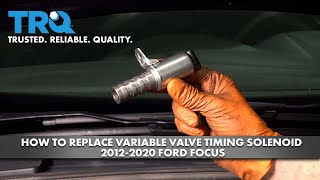
- The two VCT solenoids will be visible at the top of the head. The intake solenoid is the one closer to the front of the vehicle. Unplug and unbolt them (typically an 8mm or 10mm bolt). 🎬 See this step-by-step VCT solenoid replacement walkthrough
- Inspect the solenoid screens for any clogging or debris. Install the new solenoids, ensuring the O-rings are lightly lubricated with clean engine oil.
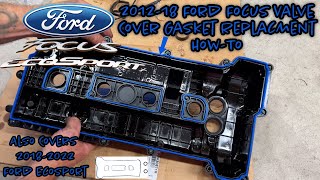
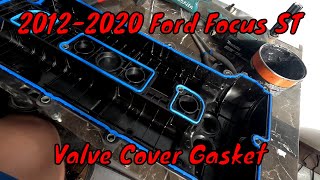
- Clean the mating surfaces on the cylinder head and install a new valve cover gasket (Part No. BB5Z-6584-A) and VVT solenoid seals (Part No. BR3Z-6C535-B). Use high-temp gray RTV gasket maker in a few key spots per the service manual. 🎬 Watch: How to properly replace your valve cover gasket
- Reinstall the valve cover, torquing the bolts to specification in the correct sequence. Reconnect all lines and electrical connectors.
- Reconnect the battery, clear any stored codes, and start the engine. Monitor for the return of the check engine light.
Parts You'll Likely Need

- Intake/Exhaust VCT Solenoid
(OEM #CJ5Z-6M280-A)— This is the most common part to fail for this code, typically by sticking due to oil debris. The intake and exhaust solenoids are the same part number and should be replaced in pairs.
Trusted brands: Motorcraft, Dorman
OEM price range: $40-$60
Aftermarket price range: $25-$50 - Valve Cover Gasket Set
(OEM #BB5Z-6584-A)— The valve cover must be removed to access the VCT solenoids. The gasket is a one-time use item and must be replaced to prevent oil leaks.
Trusted brands: Motorcraft, Fel-Pro, Mahle
OEM price range: $30-$50
Aftermarket price range: $20-$40 - Engine Oil and Filter — Clean oil is critical for the VCT system's operation and is the first step in troubleshooting. The Focus ST requires full synthetic 5W-30 oil.
Trusted brands: Motorcraft, Mobil 1, Castrol
OEM price range: $60-$90
Aftermarket price range: $50-$75
Related Codes That Often Appear With This One
- P0011 — This code for 'Intake Camshaft Timing Over-Advanced' can appear if the VCT solenoid is sticking intermittently, causing both over-retarded and over-advanced conditions at different times.
- P0014 / P0015 — These are the equivalent codes for the exhaust camshaft. Seeing them with P0012 can point to a shared issue like severe oil contamination or low oil pressure affecting the entire VCT system.
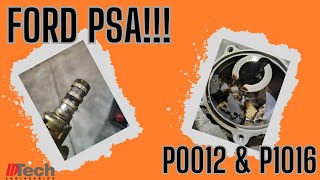
- P1016 — This code, related to VCT solenoid performance, can appear alongside P0012, particularly if the root cause is debris from a failed brake vacuum pump clogging the solenoids.
Technical Service Bulletins (TSBs) & Recalls
- SSM 48423: Notes that various VCT codes, including P0011, P0012, P0014, P0015, and more, may be caused by small debris causing the VCT solenoid to stick. Recommends using a scan tool to cycle the solenoid 10 times (Pinpoint Test HK11) to attempt to clear debris before replacement.
- SSM 47170: A related TSB, also mentioned alongside SSM 48423, pointing to sticking VCT solenoids as the cause for various timing codes on Ford vehicles.
Mechanic-Grade Diagnostic Values
- VCT Solenoid Internal Resistance — expected: 7.0 to 14.0 Ohms. Failure: A reading outside of this range indicates a faulty solenoid coil.
- VCT Solenoid Power Supply Voltage (Key On, Engine Off) — expected: ~12V (Battery Voltage). Failure: No voltage indicates a wiring issue, a blown fuse (unlikely as it's shared with injectors), or a problem with the PCM power relay.
- Scan Tool VCT Advance Error PID (VCT_ADV_ERR) — expected: Should be close to 0° when the engine is at a steady RPM.. Failure: A consistent deviation of more than +/- 5° for several seconds indicates the camshaft is not tracking the PCM's command, pointing to a VCT system fault.
Scan Tool Commands That Help
- Ford IDS (or equivalent like FORScan): Pinpoint Test HK11 / HK12 (VCT Solenoid Cycle Test) — As per TSB SSM 48423, this command should be used after an oil change but before replacing the solenoid. It cycles the solenoid on and off 10 times to dislodge small debris that may be causing it to stick. If the code clears after this test, no parts replacement is needed.
- Ford IDS (or equivalent like FORScan): Live Data Logger - VCT PIDs (VCT_ADV, VCT_ADV_ERR) — To monitor the commanded vs. actual camshaft angle in real-time while driving. This helps confirm if the timing is actually over-retarded and under what conditions the fault occurs.
Wiring & Ground Locations
- Main Engine Bay Ground — On the chassis frame rail, located under the air box and in front of the battery.. A poor or corroded main ground can cause unstable voltage references for the PCM and various engine sensors. This can lead to erratic sensor readings and incorrect commands being sent to actuators like the VCT solenoids, potentially triggering false codes.
- VCT Solenoid Connector — On top of the VCT solenoid, under the valve cover.. The two wires are Pin 1 (Power Supply, typically Blue-Green) and Pin 2 (Ground Control from PCM). Testing for battery voltage at Pin 1 with the key on confirms the circuit is powered.
Real Owner Repair Stories
- Reddit user on r/FocusST (2014 Ford Focus ST3) — Intermittent P0012 code. The car would run perfectly, then suddenly the check engine light would illuminate, causing a rough idle and misfiring. Clearing the code with a scanner would immediately make the car run perfectly again. The issue was random and not tied to specific driving conditions.
❌ Tried (didn't work) The intermittent nature made it difficult to diagnose.
✅ What actually fixed it The owner suspected a faulty sensor sending a false signal. Another user in the thread confirmed they fixed the exact same intermittent issue by replacing the VVT (VCT) solenoid.
When the Usual Fixes Don't Work
- While an oil change and VCT solenoid replacement are the most common fixes, there are documented cases on forums where these steps did not resolve the P0012 code. In these instances, the root cause was a more significant mechanical issue, such as a failing camshaft phaser or a stretched timing chain, requiring a more in-depth and costly repair. If new solenoids do not fix the code, a full mechanical timing inspection is the necessary next step.
OEM Part Supersession History
CJ5Z-6M280-A→No direct supersession found, this part number remains current.— N/A
Heads up: This part number (CJ5Z-6M280-A) is used for both the intake and exhaust VCT solenoids on the 2.0L EcoBoost and is also shared with other Ford engines like the 2.3L and 2.5L.
Model Year Variations Within This Range
- 2015-2018: A mid-cycle refresh for the 2015 model year (often called Mk3.5) included revised suspension tuning, a redesigned interior with a flat-bottom steering wheel, and an updated SYNC infotainment system. However, the core 2.0L EcoBoost engine and VCT system components related to code P0012 remained the same as the 2013-2014 models.
Diagnostic Flowchart
Other Known Issues on This Vehicle
Issues unrelated to this code that are worth knowing about as an owner of this generation:
- Canister Purge Valve (CPV) Failure 🔴 High — Very common. Can fail multiple times. Some owners report replacement every 25-30k miles. (Ref: Safety Recall 18S32 / NHTSA 18V735. Ford offered a one-time replacement and PCM software update.)
- Low-Speed Pre-Ignition (LSPI) 🔴 High — A risk inherent to many direct-injection turbo engines. Avoided by not applying heavy throttle at low RPM in high gears (e.g., below 3000 RPM in 5th/6th).
- Cracked Cylinder Head 🟠 Medium — Less common than other issues, but a known potential failure. The exhaust manifold is integrated into the aluminum head, and cracks can develop near the turbo flange from heat cycles.
- Weak Manual Transmission Synchronizers 🟠 Medium — The Getrag 6-speed manual can develop issues with synchronizers, particularly on 2nd gear, leading to grinding or difficult shifts. More common on cars that are driven hard.
- Failing Passenger Side Motor Mount 🟡 Low — The stock, fluid-filled passenger side motor mount is known to fail, sometimes as early as 50,000 miles, leaking its fluid.
Used vs. New Parts: Buying Guide for This Vehicle
When a used part is the smart pick: Given the low cost of new aftermarket VCT solenoids and the fact that they fail due to internal wear and contamination, buying a used solenoid is not recommended. The risk of getting a part with similar wear or existing contamination is high. There is no significant value in purchasing used parts for this specific repair.
Donor-vehicle mileage cap: roughly under 75000 miles for the part to have meaningful remaining life.
What to inspect on the donor part:
- If considering a used solenoid against advice, inspect the mesh screens for any signs of sludge, debris, or tearing.
- Test the resistance with a multimeter before purchase; it must be between 7 and 14 ohms.
OEM-only on this vehicle (don't cheap out):
- No parts for this specific job are strictly OEM-only, as reputable aftermarket brands offer quality replacements.
Aftermarket brands forum-validated for this vehicle:
- VCT Solenoid: Dorman, Standard Motor Products (SMP)
- Valve Cover Gasket: Fel-Pro, Mahle
Brands owners have reported issues with on this vehicle:
- Avoid unbranded, no-name VCT solenoids from online marketplaces, as their internal components and coil windings may not meet OEM specifications for durability and performance.
Real Owner Stories
Aggregated from forums and TSBs cited above. Mileages and costs reflect what owners reported in those sources.
2013-2018 Ford Focus ST 2.0L EcoBoost
Symptoms: A user on Reddit asked for help after an oil change failed to clear the P0012 code.
What fixed it: The community recommended replacing both VCT solenoids (CJ5Z-6M280-A), the valve cover gasket (BB5Z-6584-A), and the VVT solenoid seals (BR3Z-6C535-B).
Source hint: r/FocusST - P0012 code (Reddit Thread) URL: reddit.com/r/FocusST/comments/k5z3o9/p0012_code/
2013-2018 Ford Focus ST 2.0L EcoBoost — ~110000 miles
Symptoms: Persistent P0012 code accompanied by a startup rattle.
What fixed it: Replacement of the timing chain, as the VCT system could no longer compensate for the stretch.
Source hint: focusst.org / r/MechanicAdvice
Related OBD-II Codes
Frequently Asked Questions
Does Ford TSB SSM 48423 apply to my Focus ST if I have the P0012 code?
What specific parts do I need to replace the VCT solenoids on my 2013-2018 Focus ST?
Is there a DIY way to confirm if my P0012 code is definitely a bad intake solenoid?
Could my P0012 code be related to the safety recall for the Canister Purge Valve (CPV)?
What is the correct oil to use to prevent VCT issues like P0012 on the 2.0L EcoBoost?
I have a P0012 and a loud metallic rattle on startup; is this just a solenoid?
Helpful Videos
We Have This Part in Stock




The information in this article is provided for general reference and educational purposes only. Vehicle specifications, procedures, and part compatibility can vary by production date, trim level, and region. Always consult your vehicle's factory service manual and verify part numbers before purchasing or performing repairs. Safety-critical components such as airbags, seat belts, and braking systems should be installed by a qualified professional.
- Ford Focus ST:
- 🎬 Helpful Videos
- 🛍️ Shop This Part
- What's Unique About the 2013-2018 Ford Focus ST
- Symptoms You May Notice
- Most Likely Causes
- Rare But Worth Checking
- Diagnosis Steps
- Parts You'll Likely Need
- Related Codes That Often Appear With This One
- Technical Service Bulletins (TSBs) & Recalls
- Mechanic-Grade Diagnostic Values
- Scan Tool Commands That Help
- Wiring & Ground Locations
- Real Owner Repair Stories
- When the Usual Fixes Don't Work
- OEM Part Supersession History
- Model Year Variations Within This Range
- Diagnostic Flowchart
- Other Known Issues on This Vehicle
- Used vs. New Parts: Buying Guide for This Vehicle
- Real Owner Stories
- 2013-2018 Ford Focus ST 2.0L EcoBoost
- 2013-2018 Ford Focus ST 2.0L EcoBoost — ~110000 miles
- Related OBD-II Codes
- Frequently Asked Questions
- 🎟️ Get 5% Off