

P0012 on 2015-2021 Ford Escape: Causes and Fixes for Over-Retarded Cam Timing
On a 2015-2021 Ford Escape, code P0012 is most often caused by a sticking Variable Camshaft Timing (VCT) solenoid or low/dirty engine oil. The VCT solenoids are operated by oil pressure, and debris can clog them, leading to this fault. An oil change and a new VCT solenoid is the most common fix. In some cases, particularly with the 1.5L EcoBoost, this code can be an early warning of oil contamination due to internal coolant leaks.
- P0012 on your Ford Escape almost always points to an issue with the Variable Camshaft Timing (VCT) system.
- Before replacing any parts, check your engine oil level and condition. Low or dirty oil is a very common cause.
- The most likely part to fail is the VCT solenoid, which can get clogged with debris. This is a relatively inexpensive and accessible part to replace.
- On 1.5L and 2.0L EcoBoost engines, P0012 could be an early symptom of oil contamination caused by the known coolant intrusion defect.
- Swapping the intake and exhaust VCT solenoids is a common and effective DIY diagnostic step to confirm a faulty solenoid.
What's Unique About the 2015-2021 Ford ESCAPE

For the 2015-2021 Ford Escape, particularly those with EcoBoost engines, this code is frequently linked to oil quality and VCT solenoid health. Ford has issued multiple Technical Service Bulletins (TSBs) acknowledging that debris in the oil can cause these solenoids to stick. Furthermore, some 1.5L and 2.0L EcoBoost engines in this year range are known for a coolant intrusion issue, which can contaminate the engine oil and lead to a variety of problems, including VCT system faults like P0012. A lawsuit filing explicitly mentions a 2017 Escape with a 1.5L engine presenting with code P0012 as a symptom of the coolant leak defect. This makes checking oil condition and investigating the root cause of any contamination especially important on these vehicles.
Diagnostic Flowchart

Tap your situation to follow the diagnostic path that matches what you're seeing on this vehicle.
Generation note: This range covers the end of the third generation (2013-2019) and the start of the fourth generation (2020-2021) Ford Escape. The third generation featured 1.5L, 1.6L, and 2.0L EcoBoost engines, while the fourth generation introduced a new 1.5L 3-cylinder EcoBoost and an updated 2.0L. While the engines differ, they all use a similar VCT system operated by oil pressure, making the causes and diagnostic principles for P0012 largely the same across these years.
Symptoms You May Notice
- Check Engine Light is on
- Rough or unstable idle
- Engine hesitates or stalls, especially at low speeds
- Reduced engine power and poor acceleration
- Decreased fuel economy
- Rattling noise from the engine, especially on startup.
- Engine running in 'limp mode'.
- Replacing the camshaft position sensor when the actual problem is a sticking VCT solenoid or dirty oil.
- Replacing the cam phaser when the issue is just a clogged VCT solenoid.
- Assuming the timing chain has stretched before verifying VCT solenoid function and oil condition.
Most Likely Causes

- Low or Dirty Engine Oil 🔴 High Probability The VCT system is hydraulic and highly sensitive to oil pressure and cleanliness. Lack of maintenance or oil contamination from issues like coolant intrusion can quickly lead to problems. Forum users on Reddit frequently report that checking the oil level is the first step, and often find it's extremely low, which triggers the code.
How to confirm: Check the oil level on the dipstick and inspect its color and consistency. If it's low, black, sludgy, or milky (indicating coolant), it needs to be changed.
Typical fix: Change the engine oil and filter using the correct grade (viscosity) specified for your engine. Clear the codes and see if the issue returns.
Est. part cost: $40-$80 - Sticking or Failed VCT Solenoid 🔴 High Probability Ford TSBs SSM 47170 and SSM 48423 directly state that small debris can cause the VCT solenoid to stick, triggering this code. YouTube videos show mechanics finding the solenoid screens completely clogged with oil sludge. This is a well-documented issue on these engines.
How to confirm: A mechanic can command the solenoid with a scan tool to check its response, as suggested in TSB SSM 48423 which advises cycling it 10 times to clear debris. A common DIY method is to swap the intake and exhaust solenoids on Bank 1; if the code changes to P0014 (exhaust timing), the solenoid is faulty.
Typical fix: Replace the Bank 1 intake VCT solenoid. It's often recommended to replace both intake and exhaust solenoids at the same time. 🎬 Watch: Step-by-step 1.6L EcoBoost VVT solenoid replacement guide. Some owners attempt to clean them, but replacement is more reliable.
Est. part cost: $25-$70 - Failed Camshaft Position Sensor ⚪ Low Probability
How to confirm: Monitor the sensor's output with a scan tool for erratic readings. Test the sensor's resistance and voltage against specifications.
Typical fix: Replace the Bank 1 intake camshaft position sensor.
Est. part cost: $20-$50
Rare But Worth Checking
- Stretched Timing Chain or Failed Cam Phaser: This is a more serious mechanical issue. It can be caused by prolonged operation with oil issues. A rattling noise on startup is a common symptom. A cam phaser replacement can be expensive, with estimates ranging from $800 to $2,500. In some cases at a dealership, a full timing job including phasers can cost $3,000-$5,000.
- Engine Coolant Intrusion (1.5L & 2.0L EcoBoost): A known issue on 2017-2019 1.5L and 2.0L models where coolant leaks into the cylinders due to a block design flaw, contaminating the oil. This can cause the debris that clogs VCT solenoids. An owner complaint (ODI #11727408) and a lawsuit filing both link P0012 directly to this known issue. 🎬 See how to diagnose coolant loss and engine misfires.
- Clogged Oil Passages: If oil maintenance has been severely neglected, sludge can build up and block the small oil passages that feed the VCT system. A mechanic on YouTube demonstrated how clogged screens on the VVT solenoids from oil sludge directly cause this code.
- Incorrectly Installed Components: In a documented case on iATN, a technician found that a P0012 code was caused by a camshaft bridge that had been installed backwards during a previous repair.
Diagnosis Steps
- Verify the engine oil level and condition. If low or dirty, perform an oil and filter change with the manufacturer-specified oil. Clear codes and re-test. 🎬 Watch: A breakdown of common P0012 causes and fixes. This is the most common and cheapest first step.
- Use an OBD-II scanner to check for any other related trouble codes.
- With a capable scanner, monitor the desired vs. actual camshaft angle for Bank 1 intake. A significant and persistent difference confirms the timing issue. A dealership noted a reading of -6 degrees on a vehicle with this code.
- Per Ford TSB SSM 48423, use a scan tool to command the VCT solenoid on and off 10 times to attempt to dislodge any debris.
- Locate the Bank 1 intake and exhaust VCT solenoids. Unplug and swap them. They are typically held in by a single 8mm bolt.
- Clear the codes and drive the vehicle. If the code changes to P0014 (Exhaust Camshaft Position Timing), the solenoid you moved is faulty and needs replacement.
- If the code does not change, inspect the wiring and connector for the VCT solenoid for any damage or corrosion.
- If solenoids and wiring are good, the issue may be more complex, such as a failing cam phaser or stretched timing chain, and may require professional diagnosis, which could involve removing the valve cover for inspection.
Parts You'll Likely Need

- Variable Camshaft Timing (VCT) Solenoid
(OEM #CM5230 (Motorcraft - for 1.6L EcoBoost, check specific application))— This part is the most common failure point for P0012, as it gets stuck due to oil debris, per multiple Ford TSBs. A YouTube repair video for a 1.6L EcoBoost with P0012 successfully fixed the issue by replacing this part.
Trusted brands: Motorcraft, Dorman, Carquest Premium
OEM price range: $50-$90
Aftermarket price range: $25-$60 - Engine Oil and Filter — Clean, correct-viscosity oil is essential for the VCT system to function. This should always be the first step.
Trusted brands: Motorcraft, Mobil 1, Castrol
OEM price range: $50-$90
Aftermarket price range: $40-$70
Related Codes That Often Appear With This One
- P0011 — This is the code for 'Timing Over-Advanced' on the same camshaft. It can appear with P0012 if the VCT system is behaving erratically.
- P0014 — This is the code for the exhaust camshaft on Bank 1. Problems with oil pressure or debris can affect both intake and exhaust solenoids. A Reddit user with a 2017 Escape reported getting P0012 and P0014 after a water pump replacement, suggesting a potential timing issue.
- P0300, P0301, P0302, etc. — Misfire codes can be triggered if the incorrect cam timing is severe enough to affect combustion in one or more cylinders. These codes are also common symptoms of the coolant intrusion issue.
Technical Service Bulletins (TSBs) & Recalls
- SSM 54366: Notes that various 2015-2021 Ford vehicles may exhibit P0012 and other VCT codes.
- SSM 48423: States that P0012 may be due to small debris causing the VCT solenoid
Platform-Specific Known Issues
- TSBs SSM 47170, SSM 48423, and SSM 54366 all mention that P0012 (among other VCT codes) can be caused by small debris causing the VCT solenoid to stick. TSB SSM 48423 specifically recommends cycling the solenoid with a scan tool to try and clear it before replacement.
- Owner complaint ODI #11727408 links P0012 and P0014 to the known coolant intrusion issue on the 1.5L EcoBoost engine, which can contaminate oil and cause engine failure.
- Ford has a Customer Satisfaction Program (21N12, superseding 19B37) for 2017-2019 models with the 1.5L engine for coolant intrusion issues that could be a root cause for oil contamination leading to P0012.
- A class-action lawsuit regarding the 1.5L EcoBoost coolant leak defect (Robert Reed, et al., v. Ford Motor Company) specifically cites an owner's 2017 Escape which presented with DTC P0012 as a result of the defect.
Mechanic-Grade Diagnostic Values
- VCT Solenoid Internal Resistance — expected: 7 to 14 Ohms. Failure: A reading outside this range indicates a faulty solenoid coil.
- VCT Solenoid Connector Voltage (Key On, Engine Off) — expected: Battery voltage (approx. 12V) on the power supply pin.. Failure: No voltage indicates a problem with the power supply from the fuse box or PCM power relay.
- Camshaft Position Sensor (CMP) Signal Wire Voltage (Key On, Engine Off) — expected: A Ford diagnostic manual for a 1.5L EcoBoost indicates there should be no voltage on the CMP signal wire with the engine off.. Failure: The presence of voltage (e.g., 4.9V as found by one technician) on the signal wire with the key on and engine off can indicate a short to voltage or a faulty PCM.
- Live Data - VCT Advance Error PID — expected: Close to 0 degrees at idle and should respond to engine speed/load changes.. Failure: A persistent negative value, such as the -6 degrees noted by a Ford dealer, indicates the camshaft is over-retarded. Significant disparity between banks can also indicate a problem.
Scan Tool Commands That Help
- Ford IDS (or capable equivalent like FORScan): VCT Solenoid On/Off Command — As per TSB SSM 48423, this bidirectional test cycles the solenoid multiple times to try and dislodge small debris causing it to stick. This can be used as a diagnostic step before deciding to replace the solenoid.
- Ford IDS (or capable equivalent): Monitor VCT PIDs (VCTADV, VCTADVERR) — During a road test, monitoring the VCT advance and VCT advance error PIDs can show if the system is responding correctly to commands or if there is excessive variation, pointing to a VCT system fault.
Wiring & Ground Locations
- VCT Solenoid Connector — On the top of the valve cover, plugged into the VCT solenoid.. The VCT solenoid has a two-wire connector. One wire is the power supply (often from a fuse in the battery junction box via the PCM power relay) and the other is the ground-side control wire from the PCM. Testing for battery voltage at the power pin and checking continuity on the control wire are key diagnostic steps.
- PCM Power Relay — Located in the under-hood fuse box (Battery Junction Box).. This relay supplies power to multiple components, including the VCT solenoids. A faulty relay could cut power to the solenoid, preventing it from functioning and potentially causing timing codes.
Real Owner Repair Stories
- Reddit user in r/MechanicAdvice (2012 Ford Escape XLT V6 (Note: older than target range, but demonstrates diagnostic path)) — Check Engine Light with code P0012, no noticeable drivability issues.
❌ Tried (didn't work) Replaced Cam Position Sensor (for a previous P0340 code)., Replaced both VCT solenoids and valve cover gaskets at a Ford dealership.
✅ What actually fixed it The user's post is a chronicle of frustration where replacing the common parts (CMP sensor, VCT solenoids) did not resolve the P0012 code, even when done by a dealer. The final outcome was not posted, highlighting that sometimes the cause is deeper, such as a timing chain issue, clogged oil passages, or a failing phaser, which another mechanic quoted at $1400 to repair. - Reddit user in r/AskAMechanic (2017 Ford Escape 1.5L) — P0012 and P0014 codes appeared immediately after a water pump replacement.
❌ Tried (didn't work) The post is a request for advice, not a repair log.
✅ What actually fixed it The context strongly implies the mechanical timing was likely set incorrectly during the water pump and timing belt service, as these codes appeared directly after the repair. This serves as a real-world example of incorrect mechanical timing being a direct cause.
When the Usual Fixes Don't Work
- In one documented case on a Ford F-150, a user replaced the VCT solenoid for a P0012 code, but the issue persisted. The dealership ultimately diagnosed a failing engine, demonstrating that while the solenoid is the most common fix, this code can sometimes be a symptom of a much larger mechanical failure that a simple part swap won't resolve.
OEM Part Supersession History
3l3z6m280ea→8l3z6m280a, then 8L3Z-6M280-B— Part revision and improvement over time for the 3-valve V8 engines (like 5.4L), which had notorious VCT issues. While not for the Escape EcoBoost, this shows a history of Ford revising VCT solenoids to improve reliability.
Heads up: These specific part numbers are for different Ford engines (e.g., 4.6L/5.4L V8) and are not compatible with the Escape's EcoBoost engines, but illustrate a pattern of OEM part evolution for VCT systems.
Model Year Variations Within This Range
- 2020-2021: The 2020 model year introduced a new 1.5L 3-cylinder 'Dragon' engine to the Escape lineup. This engine has a different architecture from the previous 1.5L/1.6L 4-cylinder engines, notably featuring a timing belt that runs in oil ('wet belt') for the oil pump. While the VCT system's principle is the same, degradation of this wet belt could introduce debris into the oil, leading to VCT issues like P0012.
Helpful Videos
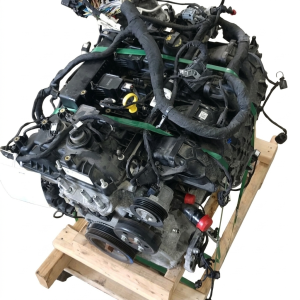
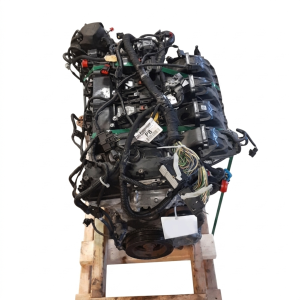
Used OEM Parts in Stock
New Aftermarket Parts Available

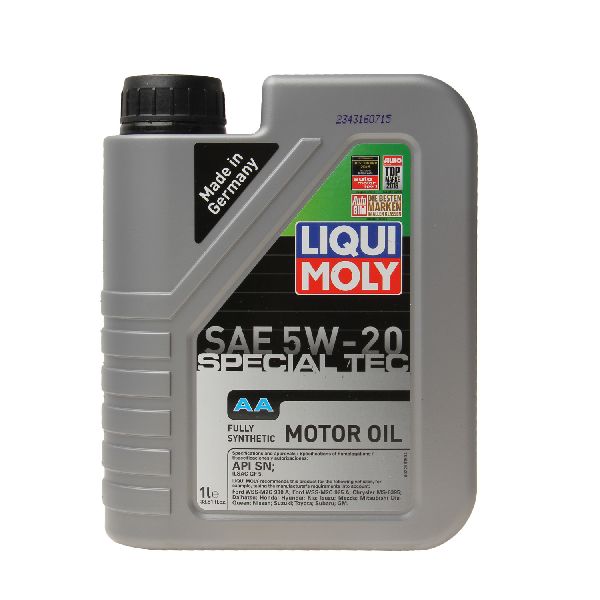
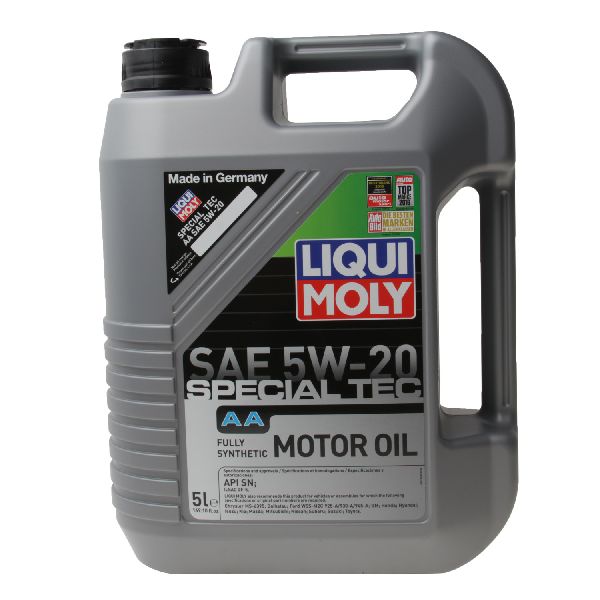

The information in this article is provided for general reference and educational purposes only. Vehicle specifications, procedures, and part compatibility can vary by production date, trim level, and region. Always consult your vehicle's factory service manual and verify part numbers before purchasing or performing repairs. Safety-critical components such as airbags, seat belts, and braking systems should be installed by a qualified professional.
- Ford ESCAPE:
- 🎬 Helpful Videos
- 🛍️ Shop This Part
- What's Unique About the 2015-2021 Ford ESCAPE
- Diagnostic Flowchart
- Symptoms You May Notice
- Most Likely Causes
- Rare But Worth Checking
- Diagnosis Steps
- Parts You'll Likely Need
- Related Codes That Often Appear With This One
- Technical Service Bulletins (TSBs) & Recalls
- Platform-Specific Known Issues
- Mechanic-Grade Diagnostic Values
- Scan Tool Commands That Help
- Wiring & Ground Locations
- Real Owner Repair Stories
- When the Usual Fixes Don't Work
- OEM Part Supersession History
- Model Year Variations Within This Range
- 🎟️ Get 5% Off