

P0012 on 2013-2019 Ford Escape: 'A' Camshaft Timing Over-Retarded Causes & Fixes
On a 2013-2019 Ford Escape, code P0012 is most often caused by a sticking intake Variable Camshaft Timing (VCT) solenoid, frequently due to low or dirty engine oil. An oil change and a new VCT solenoid (around $30-$60 for the part) is the most common fix. This is a well-documented issue, and Ford has issued service bulletins regarding debris causing these solenoids to stick.
- Always check your engine oil level and condition first. Low or dirty oil is the #1 cause of P0012.
- The most likely faulty part is the intake VCT solenoid, which is relatively inexpensive and accessible to replace for a DIYer.
- Use the correct OEM-specified engine oil viscosity during oil changes to ensure the VCT system functions properly.
- If an oil change and new VCT solenoid do not resolve the code, the issue is likely more serious (timing chain, phaser) and requires professional diagnosis.
What's Unique About the 2013-2019 Ford Escape
Ford's EcoBoost engines rely heavily on the VCT system for their performance and efficiency. Ford has issued Technical Service Bulletins (TSBs) for this generation of vehicles, specifically mentioning that P0012 can be caused by small debris contaminating the engine oil and causing the VCT solenoid to stick. This makes checking oil quality and the VCT solenoid itself the primary diagnostic steps. A Reddit user with a 2019 Escape confirmed their P0012 code was resolved after discovering the oil level was extremely low and performing an oil change. This is in contrast to immediately suspecting a more serious timing component failure like a stretched chain or bad phaser.
Symptoms You May Notice
- Check Engine Light is on
- Rough or unstable idle
- Engine rattling or making unusual noises, especially on startup
- Sluggish acceleration and loss of power
- Feeling like the transmission is slipping
- Engine may struggle to start or stall
- Decreased fuel economy
- Excessive greyish-white smoke from the exhaust
- Replacing the camshaft position sensor. While a sensor can fail, it's less common for this code than a VCT solenoid or oil issue. The sensor is reporting the timing correctly; the problem is that the timing itself is wrong. One owner on Reddit had the sensor replaced, but the P0012 code returned, and the ultimate fix was the VCT solenoids.
Most Likely Causes
- Low, Dirty, or Incorrect Viscosity Engine Oil 🔴 High Probability The VCT system is hydraulic and extremely sensitive to oil pressure and cleanliness. Sludge or debris from delayed oil changes can easily clog the fine mesh screens on the VCT solenoids, causing them to stick. This is the first and most important check.
How to confirm: Check the oil level on the dipstick. Inspect the oil's color and consistency. If it's dark, thick, or below the minimum level, this is your likely starting point. A Reddit user with a 2019 Escape and code P0012 found their oil was critically low, and an oil change resolved the issue.
Typical fix: Perform an engine oil and filter change using the OEM-specified full synthetic oil and a quality filter. Ford typically specifies SAE 5W-30 for these EcoBoost engines, but always confirm with your owner's manual.
Est. part cost: $50-$90 - Sticking or Failed VCT Solenoid 🔴 High Probability Ford TSB #SSM 48423 directly states that debris can cause the VCT solenoid to stick, triggering this code. It's a well-documented issue on these engines, with many owners on forums and Reddit successfully fixing P0012 by replacing the solenoid.
How to confirm: After checking the oil, this is the next step. You can test the solenoid's resistance with a multimeter (typically 7-12 Ω) or swap the intake and exhaust solenoids (if they are identical parts) to see if the code changes to P0014 (exhaust cam retarded). If the code changes, the solenoid is bad. Ford dealers also have a specific diagnostic test (Pinpoint Test HK) that cycles the solenoid to try and clear debris.
Typical fix: Replace the Bank 1 (intake) VCT solenoid. It is often recommended to replace both intake and exhaust solenoids at the same time as a preventative measure. The part is held in by a single 8mm bolt and is accessible on the top of the valve cover.
Est. part cost: $30-$60 per solenoid
Rare But Worth Checking
- Failed Camshaft Phaser: The phaser is the gear on the end of the camshaft that actually does the rotating. It can fail mechanically, getting stuck in one position. This is a more involved and expensive repair, often costing between $800 and $2,500. This was the cause for one owner of a 2017 Escape.
- Stretched Timing Chain or Worn Guides: If the timing chain has stretched, it will throw off the base timing and can cause over-retarded codes. This usually comes with a rattling noise, especially on startup, that lasts for a few seconds. This was suspected by a mechanic in a Reddit thread discussing a '14 Escape with P0012 and engine sludge.
- Clogged Oil Passages: As mentioned in owner complaint ODI #11584815, severe sludge can block the oil passages leading to the VCT components, which may require significant engine disassembly to resolve. This prevents the hydraulic system from operating the phasers correctly.
Diagnosis Steps
- Check Engine Oil: Verify the oil level is correct and the oil is clean. If low or dirty, perform an oil and filter change with the correct full synthetic oil (typically 5W-30) and clear the codes. This simple step fixes the issue a surprising amount of the time.
- Scan for Other Codes: Check if other DTCs are present to get a more complete picture of the problem, such as misfire or exhaust camshaft codes.
- Inspect VCT Solenoid: Locate the intake VCT solenoid on the valve cover. Inspect the wiring and connector for damage or oil contamination. The connector has a simple press-tab to release.
- Test the Solenoid: The most effective DIY test is to swap the intake and exhaust VCT solenoids (they are often the same part number). Clear the codes and drive the vehicle. If the code returns as P0014 (for the exhaust cam), you have confirmed the solenoid is faulty.
- Replace the VCT Solenoid: If the solenoid is confirmed bad, replace it. It is held in by a single 8mm bolt. Be sure to clean the area around it before removal to prevent debris from falling into the engine. Lubricate the new solenoid's O-rings with clean engine oil before installation.
- Advanced Diagnosis: If a new solenoid and clean oil do not fix the code, the problem is likely deeper. At this point, professional diagnosis is needed to check the camshaft phaser, timing chain components, and internal oil pressure. This may involve removing the valve cover for inspection.
Parts You'll Likely Need
- Engine Variable Valve Timing (VVT) Solenoid
(OEM #CN1Z-6M280-F (for 1.6L, supersedes CN1Z-6M280-A/C) or BE8Z-6M280-B (also for 1.6L). For 2.0L, part numbers can vary, check with VIN. P2GZ-6M280-A is a newer number for 2.0L engines.)— This is the most common point of failure for code P0012 on this vehicle, often due to sticking from oil contamination as cited in Ford TSBs.
Trusted brands: Motorcraft, Dorman, NGK, SKP
OEM price range: $50-$90
Aftermarket price range: $30-$60 - Engine Oil and Filter — The VCT system is operated by oil pressure, and low, dirty, or incorrect oil is a primary cause of this code.
Trusted brands: Motorcraft (Synthetic Blend or Full Synthetic), Mobil 1, Valvoline
OEM price range: $50-$80
Aftermarket price range: $40-$70
Related Codes That Often Appear With This One
- P0011 — This is for 'A' Camshaft Position - Timing Over-Advanced. It relates to the same system and VCT solenoid, just a different failure mode (e.g., stuck open vs. stuck closed).
- P0014 — This is for the 'B' (Exhaust) Camshaft - Timing Over-Retarded. Seeing both P0012 and P0014 can indicate a more widespread oil pressure or sludge problem affecting both VCT solenoids, as seen in owner complaint ODI #11727408.
- P0300-P0304 — These are misfire codes. Incorrect cam timing disrupts the air/fuel mixture and combustion process, which can lead to misfires. This was noted in owner complaint ODI #11727408 and is a known symptom of coolant intrusion which can also trigger P0012.
- P04BD — This code for 'EVAP System Vent Control Circuit Open' was seen alongside P0012 in owner complaint ODI #11584815, suggesting multiple unrelated issues can occur simultaneously.
Technical Service Bulletins (TSBs) & Recalls
- SSM 48423: Notes that DTCs P0011, P0012, and others may be due to small debris causing the VCT solenoid to stick.
- SSM 54366: Points technicians to a specific diagnostic test (Pinpoint Test HK) for a range of VCT codes, including P0012.
- TSB 19-2346: Addresses coolant intrusion issues on some EcoBoost engines, which can be a root cause for oil contamination leading to VCT codes.
Platform-Specific Known Issues
- TSB #SSM 48423: Ford notes that various VCT codes including P0012 may be caused by small debris making the VCT solenoid stick. The bulletin advises diagnosis before replacement.
- TSB #SSM 54366: This bulletin also lists P0012 and directs technicians to a specific pinpoint test (Pinpoint Test HK) in the service manual, indicating a known diagnostic path for this issue.
- Potential for Coolant Intrusion: A known issue on some 2.0L EcoBoost engines involves coolant leaking into the cylinders, which can contaminate the oil and cause widespread engine problems, including VCT codes like P0012. TSB 19-2346 addresses this, which may require a long block replacement.
Mechanic-Grade Diagnostic Values
- VCT Solenoid Internal Resistance — expected: 7.0 Ω - 12.0 Ω. Failure: A reading outside this range (open circuit or short) indicates a failed solenoid coil.
- VCT Solenoid Power Supply Voltage — expected: Battery Voltage (approx. 12V) with Key On, Engine Off. Failure: No voltage indicates a problem with the wiring or fuse (e.g., F16 in battery junction box).
- VCT Commanded vs. Actual Angle (Scan Tool) — expected: The actual angle should closely follow the commanded angle.. Failure: A significant, persistent negative reading (e.g., -6 degrees) when a change is commanded indicates a retarded condition that can set P0012.
Scan Tool Commands That Help
- Ford IDS (or equivalent professional scanner): Pinpoint Test HK12 - VCT Solenoid Cycle Test — This is a Ford-recommended first step before replacing a VCT solenoid. The command cycles the solenoid on and off 10 times to dislodge small debris that may be causing it to stick. If the code clears after this test, a part replacement may not be necessary.
Wiring & Ground Locations
- VCT Solenoid Connector — On top of the valve cover, plugging directly into the VCT solenoid.. This is a 2-pin connector. Pin 1 is typically the power supply (battery voltage with key on) and Pin 2 is the ground control circuit from the PCM. Checking for voltage here is a key diagnostic step.
- C1451 / C1453 — These are likely internal Ford designations for the VCT solenoid connectors for Bank 1.. A wiring diagram references VCT Solenoid 1 (VCT 11) and VCT Solenoid 2 (VCT 12) using these connector numbers, which helps in tracing circuits on a factory diagram.
Real Owner Repair Stories
- Reddit user ALeakySpigot on r/fordescape (2019 Ford Escape SE, 1.5L, 85,464 miles) — Check Engine Light with code P0012, but engine running fine.
❌ Tried (didn't work) Initial diagnosis pointed towards the VVT solenoid.
✅ What actually fixed it The user discovered the engine oil was extremely low ('dip stick read basically empty'). Performing an oil change to refill the engine to the correct level resolved the issue. The code was caused by oil starvation to the VCT system. - iATN (International Automotive Technicians Network) (2017 Ford Escape Titanium, 1.5L) — P0012 and P0301 (Cylinder 1 Misfire), hesitation, cuts out on acceleration.
❌ Tried (didn't work) New injectors, plugs, coils.
✅ What actually fixed it A technician discovered that after a previous repair by a machine shop, the number 1 camshaft bridge had been installed backwards. Correcting the orientation of the camshaft bridge fixed the P0012 code. - YouTube channel DIY Racing (2014 Ford Escape, 2.0L Turbo) — P0012 code.
✅ What actually fixed it Mechanic removed the valve cover and inspected the VCT solenoids. The screen on the intake solenoid was found to be completely plugged with oil sludge. Replacing both VCT solenoids and performing an oil change and flush resolved the code.
When the Usual Fixes Don't Work
- While replacing the VCT solenoid is the most common fix after an oil change, it is not a guaranteed solution. One owner of a 2012 Escape V6 reported a persistent P0012 code that returned even after a Ford dealership replaced the camshaft position sensor and then both VCT solenoids. The dealer was unable to find the ultimate root cause. This highlights that in rare cases, the issue can be more complex, potentially involving the phasers, timing components, oil pressure problems, or even the PCM itself.
OEM Part Supersession History
CN1Z-6M280-A, CN1Z-6M280-C→CN1Z-6M280-F— Likely internal improvements to design, materials, or manufacturing process to improve durability and resistance to sticking.
Model Year Variations Within This Range
- 2017-2019: For the 2017 model year, the 1.6L EcoBoost engine was replaced by a new 1.5L EcoBoost engine. However, this change has minimal impact on the diagnosis of P0012, as both engines use a similar VCT design and share the same primary VCT solenoid part number (CN1Z-6M280-F).
- 2013-2019: The 1.5L/1.6L EcoBoost engines use a timing belt, while the 2.0L EcoBoost engine uses a timing chain. While the VCT solenoid is a common cause on all engines, if the issue is deeper, the diagnosis for timing-related components (belt vs. chain) will differ significantly.
Diagnostic Flowchart
Other Known Issues on This Vehicle
Issues unrelated to this code that are worth knowing about as an owner of this generation:
- 2.0L EcoBoost Coolant Intrusion 🔴 High — Common enough to warrant a TSB. Affects 2017-2019 models. Can lead to misfires, rough running, and complete engine failure. (Ref: TSB 19-2346)
- 1.6L EcoBoost Engine Overheating/Fire Risk 🔴 High — Primarily affected earlier 2013-2014 models, leading to multiple recalls. Less common in later years but a known historical issue for this engine. (Ref: Multiple Recalls (e.g., NHTSA 17V-209))
- Transmission Shifter Cable Bushing Failure 🟠 Medium — Widespread across many Ford models of this era, including the 2013-2019 Escape. The bushing degrades, potentially causing the vehicle to roll away or not start. (Ref: Recall 22V413000)
- Power Transfer Unit (PTU) Failure (AWD Models) 🟠 Medium — The PTU (transfer case) can overheat and fail due to fluid breakdown. Symptoms include a burning smell or grinding noises. Failure often occurs between 80k-120k miles.
Used vs. New Parts: Buying Guide for This Vehicle
When a used part is the smart pick: It is strongly recommended to avoid used VCT solenoids. The part is a common failure item due to internal wear and clogging from microscopic debris. The cost of a new, quality aftermarket part (around $30-$60) is low enough that the risk of installing a faulty or near-failure used part is not worth the minimal savings.
What to inspect on the donor part:
- Not applicable as used parts are not recommended for this component.
OEM-only on this vehicle (don't cheap out):
- VCT Solenoid: While not strictly 'OEM-only', using a Motorcraft (OEM) part is highly advisable to ensure compatibility and longevity. If choosing aftermarket, stick to reputable brands known for electronics.
Aftermarket brands forum-validated for this vehicle:
- Dorman
- NGK/NTK
- SKP
Brands owners have reported issues with on this vehicle:
- Avoid unbranded, generic solenoids from online marketplaces, as their internal tolerances and material quality can be inconsistent, leading to premature failure.
Real Owner Stories
Aggregated from forums and TSBs cited above. Mileages and costs reflect what owners reported in those sources.
2019 Ford Escape
Symptoms: Check engine light with code P0012.
What fixed it: The owner found the engine oil was critically low; a simple oil change resolved the issue.
Source hint: Reddit (r/fordescape, r/MechanicAdvice)
2012 Ford Escape
Symptoms: P0012 code persisted even after a sensor replacement failed to solve it.
What fixed it: The dealership replaced the VCT solenoids.
Source hint: Reddit (r/fordescape, r/MechanicAdvice)
2015 Lincoln MKC 2.0L EcoBoost
Symptoms: Experienced code P0012.
What fixed it: The dealer performed an oil change as the first step to see if debris was causing the phaser to stick, per Ford's procedure.
Source hint: Lincoln MKC Forum
2014 Ford Escape
Symptoms: P0012 code present.
What fixed it: The dealer identified engine sludge as the underlying cause.
Source hint: Reddit (r/fordescape, r/MechanicAdvice)
Related OBD-II Codes
Frequently Asked Questions
My 2017-2019 Ford Escape 2.0L EcoBoost has P0012 and is running rough; could this be related to the coolant intrusion issue?
Is there a specific Ford technical bulletin for P0012 regarding debris in the solenoids?
What type of oil should I use in my 1.6L or 2.0L EcoBoost to prevent P0012?
Can I test the VCT solenoid myself on my Ford Escape?
Where is the VCT solenoid located on the 1.6L/2.0L EcoBoost engine?
Helpful Videos
Used OEM Parts in Stock
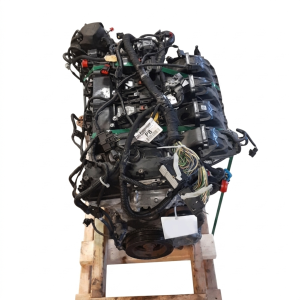
New Aftermarket Parts Available




The information in this article is provided for general reference and educational purposes only. Vehicle specifications, procedures, and part compatibility can vary by production date, trim level, and region. Always consult your vehicle's factory service manual and verify part numbers before purchasing or performing repairs. Safety-critical components such as airbags, seat belts, and braking systems should be installed by a qualified professional.
- Ford Escape:
- 🎬 Helpful Videos
- 🛍️ Shop This Part
- What's Unique About the 2013-2019 Ford Escape
- Symptoms You May Notice
- Most Likely Causes
- Rare But Worth Checking
- Diagnosis Steps
- Parts You'll Likely Need
- Related Codes That Often Appear With This One
- Technical Service Bulletins (TSBs) & Recalls
- Platform-Specific Known Issues
- Mechanic-Grade Diagnostic Values
- Scan Tool Commands That Help
- Wiring & Ground Locations
- Real Owner Repair Stories
- When the Usual Fixes Don't Work
- OEM Part Supersession History
- Model Year Variations Within This Range
- Diagnostic Flowchart
- Other Known Issues on This Vehicle
- Used vs. New Parts: Buying Guide for This Vehicle
- Real Owner Stories
- 2019 Ford Escape
- 2012 Ford Escape
- 2015 Lincoln MKC 2.0L EcoBoost
- 2014 Ford Escape
- Related OBD-II Codes
- Frequently Asked Questions
- 🎟️ Get 5% Off