

P0012 on 2011-2016 Chevrolet Cruze 1.4L Turbo: Causes and Fixes for Over-Retarded Cam Timing
On a 2011-2016 Cruze 1.4L, code P0012 is most often caused by low or dirty engine oil, or a faulty intake VVT solenoid. Always check your oil first. If an oil change doesn't fix it, replacing the intake VVT solenoid (GM Part No. 12655420) is the next step, costing about $30-$60 for an aftermarket part and is a common DIY fix.
- Always check your engine oil level and condition first. An oil change with the correct Dexos-spec synthetic oil can often fix this code.
- The most likely failed part is the intake VVT solenoid. You can confirm this by swapping it with the identical exhaust solenoid and seeing if the code changes to P0014.
- Replacing a VVT solenoid is a beginner-friendly DIY job that requires minimal tools (primarily an E10 socket) and can be done in under 30 minutes.
- Do not immediately assume you have a major timing chain problem, as this is less common and much more expensive to fix than oil or solenoid issues.
What's Unique About the 2011-2016 Chevrolet Cruze
The 1.4L Ecotec turbo engine in the first-generation Cruze relies heavily on clean, correct-spec engine oil for its Variable Valve Timing (VVT) system to function. These systems use small oil passages that are easily clogged by sludge from delayed oil changes or using non-Dexos certified oil. Furthermore, this engine has a very common PCV system failure where the valve cover itself cracks internally, leading to increased oil consumption. This oil consumption can cause the oil level to drop unexpectedly, starving the VVT system and triggering codes like P0012. While many cars can get this code, the Cruze 1.4L is particularly known for this issue stemming from either simple oil maintenance neglect or failure of the very accessible VVT solenoids located on top of the engine.
Generation note: The 2011-2016 model years primarily cover the first-generation Chevrolet Cruze. However, a fully redesigned second-generation Cruze was also introduced for the 2016 model year. Carryover first-generation models were sold as the 'Cruze Limited' in 2016. The causes and fixes for P0012 on the 1.4L turbo engine are consistent across the first generation (2011-2015) and the 2016 'Limited' models.
Symptoms You May Notice
- Check Engine Light is on
- Rough, unstable, or shaky idle
- Engine stalling at low speeds
- Reduced engine power and poor acceleration
- Noticeable decrease in fuel economy
- Rattling or ticking noise from the engine, especially on startup
- Replacing the camshaft position sensor without testing. The VVT solenoid is a much more common failure point for this code.
- Assuming a stretched timing chain without first checking the oil and testing the VVT solenoids. An oil change or solenoid replacement is a much cheaper and easier first step.
Most Likely Causes
- Low or Dirty Engine Oil 🔴 High Probability The VVT system uses hydraulic pressure to operate. The small passages in the VVT solenoids and actuators are highly susceptible to clogging from oil sludge or debris. The 1.4L engine is also prone to oil consumption from PCV issues, making low oil a frequent problem.
How to confirm: Check the engine oil dipstick. Note the level and the color/condition of the oil. If it is low, black, or sludgy, it needs to be changed. This is the number one check to perform. 🎬 Watch: A breakdown of common causes and fixes for P0012.
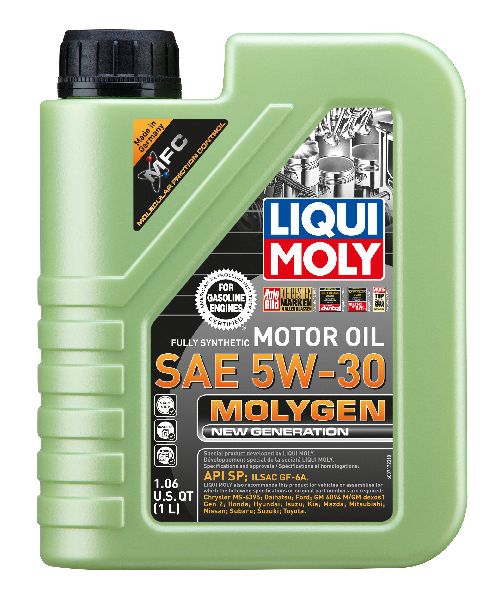
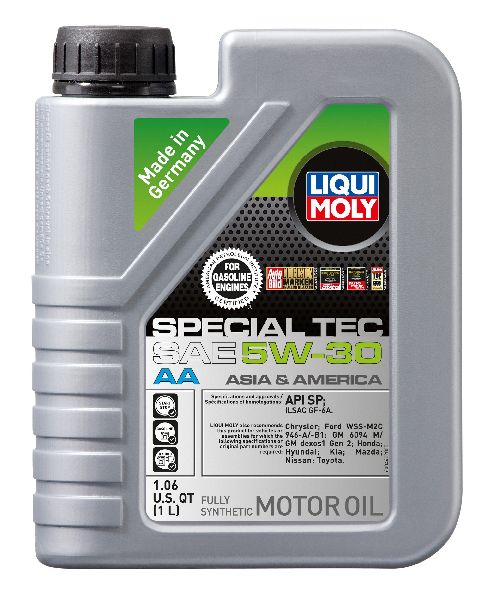
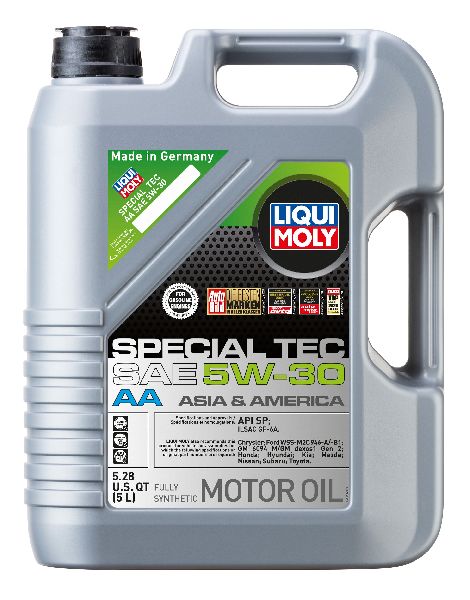
Typical fix: Perform an engine oil and filter change using a full synthetic oil that meets GM's Dexos1 specification and a quality oil filter. Many owners on forums like CruzeTalk report this simple fix resolves the code.
Est. part cost: $40-$80 - Faulty Intake Camshaft Position Actuator Solenoid (VVT Solenoid) 🔴 High Probability These solenoids are a very common failure item. They can fail electrically or, more commonly, become clogged internally with contaminants from the engine oil, causing them to stick.
How to confirm: Swap the intake and exhaust VVT solenoids (they are physically identical parts). Clear the codes and drive the vehicle. If the code changes from P0012 (intake) to P0014 (exhaust), the solenoid you moved to the exhaust position is faulty. When removing, inspect the small screens on the solenoid for sludge or debris.
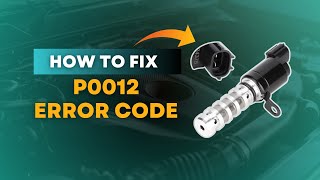
Typical fix: Replace the faulty VVT solenoid. It is located on top of the engine on the passenger side and held in by a single E10 bolt. 🎬 See this walkthrough on replacing the 1.4L VVT solenoid.
Est. part cost: $30-$70 - Stretched Timing Chain ⚪ Low Probability While less common than oil or solenoid issues, the timing chain on the 1.4L Ecotec engine is a known weak point that can stretch over time, especially on vehicles with over 100,000 miles or a history of poor oil maintenance. This causes the base engine timing to be incorrect.
How to confirm: Listen for a loud rattling or slapping noise from the passenger side of the engine for a few seconds on a cold startup. This is a strong indicator. Definitive confirmation requires removing the valve cover and timing cover to inspect the timing marks and chain tensioner.
Typical fix: Replacement of the timing chain, tensioner, and guides. This is a complex and expensive job that often requires professional service.
Est. part cost: $150-$350
Rare But Worth Checking
- Faulty Camshaft Position Sensor: While less common than a solenoid failure, the sensor that reads the camshaft's position can fail, sending incorrect data to the ECM. However, this usually triggers a specific sensor circuit code (e.g., P0340) rather than a timing correlation code like P0012.
- Damaged Camshaft Phaser/Actuator: The mechanical gear (phaser) on the end of the camshaft can fail internally, but this is much less common than a solenoid or oil issue. This is typically a last resort after all other causes are ruled out. One owner on a forum reported that even after a timing chain replacement, the P0012 code remained until the phaser itself was replaced.
Diagnosis Steps
- Check Engine Oil: Verify the oil level is correct and the oil is clean. If low, top it off. If old or dirty, perform a complete oil and filter change with Dexos-spec oil. Clear the code and see if it returns. This is the most important first step.
- Inspect VVT Solenoid Wiring: Check the electrical connector and wiring going to the intake VVT solenoid for any visible damage, corrosion, or loose connections.
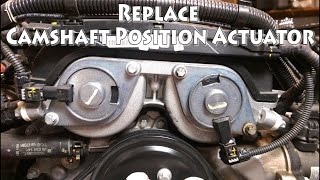
- Swap VVT Solenoids: The intake and exhaust VVT solenoids are physically identical and located next to each other on top of the engine. Label them, swap their positions, clear the codes, and drive the car. If the code returns as P0014 (exhaust side), the solenoid is confirmed bad. 🎬 Watch: This DIY guide helps you diagnose and fix timing codes.
- Inspect and Replace VVT Solenoid: If the solenoid is confirmed bad, replace it. Before installing the new part, inspect the old solenoid's screens for metal shavings or sludge, which could indicate a larger engine problem. The solenoid is held by one E10 (external Torx) bolt.
- Test Camshaft Position Sensor: If the problem persists, you can test the camshaft position sensor's signal with a multimeter or oscilloscope, though sensor failure is less common for this code.
- Inspect Timing System: If all else fails, the next step is a mechanical inspection of the timing chain, guides, and tensioner for wear or stretch. This is an advanced repair and may require a professional mechanic.
Parts You'll Likely Need
- Intake Camshaft Position Actuator Solenoid (VVT Solenoid)
(OEM #12655420 (Supersedes 55567050))— This is the most frequently failed component for code P0012 after ruling out oil issues. It controls oil flow to the cam phaser and is prone to sticking or clogging. The intake (12655420) and exhaust (12655421) solenoids are physically identical and can be swapped for diagnosis.
Trusted brands: ACDelco (OEM), Delphi, Dorman
OEM price range: $50-$90
Aftermarket price range: $30-$60 - Engine Oil and Filter — Low or dirty oil is the number one cause of VVT system problems. Using the correct full synthetic Dexos1 specification oil is critical for this engine.
Trusted brands: ACDelco (Filter), Mobil 1, Castrol, Valvoline
OEM price range: $50-$80
Aftermarket price range: $40-$60
Related Codes That Often Appear With This One
- P0011 — P0011 is for 'Intake Camshaft Position Timing - Over-Advanced'. It relates to the same system and can be caused by a sticking VVT solenoid or oil flow issues. Seeing both may indicate an erratically behaving solenoid.
- P0010 — P0010 is for 'Intake Camshaft Position Actuator Circuit'. This points more specifically to an electrical problem with the VVT solenoid (wiring, connector, or the solenoid coil itself) rather than a mechanical timing issue.
- P0171 — P0171 (System Too Lean) is often caused by the common PCV failure in the valve cover. The resulting oil consumption can lead to low oil levels, which in turn causes P0012.
Technical Service Bulletins (TSBs) & Recalls
- TSB 14311B: Special Coverage for a faulty negative battery cable causing various electrical issues.
- TSB 14371B: Special Coverage / Extended Warranty for leaking water pumps on certain model years.
- MC-10163845-9999: Special Coverage for failed PCV diaphragm within the valve cover assembly.
Platform-Specific Known Issues
- The 1.4L Turbo Ecotec engine is known to consume oil between changes, often due to a failed PCV system integrated into the valve cover. Owners must check the oil level regularly to prevent VVT-related codes like P0012.
- The timing chain and plastic guides can be a point of failure, especially on higher-mileage vehicles or those with poor maintenance history, leading to timing codes. A characteristic startup rattle is the primary symptom.
- A faulty negative battery cable can cause numerous, unrelated electrical faults that can sometimes be confusing during diagnosis. While not a direct cause of P0012, it's a common problem on this platform worth being aware of.
Mechanic-Grade Diagnostic Values
- VVT Solenoid (Oil Control Valve) Resistance — expected: 6 to 12 Ohms at approx. 68°F (20°C). Some sources specify a tighter range of 6.9 to 7.9 Ohms.. Failure: A reading of 0 ohms (short circuit), infinite resistance/OL (open circuit), or a value significantly outside the specified range indicates a faulty solenoid coil.
- Camshaft Position Sensor Power Pin to Ground (KOEO) — expected: ~5V with Key On, Engine Off.. Failure: 0V or significantly low voltage points to a problem with the ECM's 5V reference circuit or a wiring issue.
- Camshaft Position Sensor Signal Pin to Ground (Cranking) — expected: Voltage should fluctuate rapidly, typically between 0V and 5V, as the camshaft rotates.. Failure: A static voltage (stuck at 0V or 5V) or no voltage at all while the engine is cranking indicates a failed sensor.
- Camshaft Position Sensor Ground Pin to Chassis Ground — expected: Near 0 Ohms of resistance.. Failure: High resistance (OL) indicates a broken ground wire or poor connection to the ECM.
- Scan Tool Live Data: Desired vs. Actual Camshaft Position — expected: The 'Actual' camshaft position angle should closely follow the 'Desired' angle commanded by the ECM as engine RPM and load change.. Failure: A significant, persistent lag or deviation between the desired and actual angles confirms the over-retarded condition reported by P0012.
Scan Tool Commands That Help
- GDS2 (GM Dealer Scan Tool) or equivalent professional scanner: Camshaft Position Actuator Control / Solenoid Valve Test — This is a powerful bidirectional test to use after checking oil and wiring. It allows the technician to manually command the intake VVT solenoid to a specific angle (e.g., 0 to 20 degrees) while the engine is running. By observing the 'Desired' vs. 'Actual' cam angle PIDs, you can confirm if the solenoid is physically working and if the cam phaser is responding. If the actual angle doesn't change when commanded, it isolates the fault to a stuck solenoid, a clogged oil passage, or a failed phaser.
Wiring & Ground Locations
- G103 / G105 — G103 is typically on the driver's side front shock tower. G105 is in the left front of the engine compartment, near the underhood fuse block.. These are primary ground points for the Engine Control Module (ECM) and various engine sensors. A loose or corroded connection at these points can cause erratic sensor readings and unpredictable electrical faults, potentially contributing to timing codes or misdiagnosis.
- Intake Camshaft Position Sensor Connector — On top of the valve cover, connected to the intake camshaft position sensor.. This 3-pin connector provides power, ground, and signal for the sensor. The pins are typically: a 5V power supply, a 5V signal wire, and a ground. One user reported the middle pin as ground and the two outer pins as 5V. Checking for correct voltage at these pins is a key diagnostic step.
- Intake VVT Solenoid Connector — On top of the valve cover, connected to the intake VVT solenoid (the front-most of the two solenoids).. This 2-pin connector provides power and a control (ground) signal from the ECM to the solenoid. A damaged connector or wiring here will cause a P0010 (circuit code) but can also lead to a P0012 if the solenoid is not activating correctly.
Real Owner Repair Stories
- Reddit user Nutz4hotwheels in r/cruze (2012 Chevrolet Cruze 1.4L) — Engine would turn over but not start. It would only start and run smoothly if the camshaft position sensor was disconnected. Was getting a P0366 code (exhaust cam sensor circuit).
❌ Tried (didn't work) Replacing both camshaft position sensors, Verifying mechanical timing was correct
✅ What actually fixed it The owner discovered they had low oil pressure and traced it to a broken oil bypass valve inside the oil filter housing. Replacing the faulty bypass valve restored correct oil pressure and resolved the starting issue and codes. - YouTube channel 'Fix it Angel' (Unspecified vehicle, but demonstrates a common P0012 scenario.) — Low oil pressure warning light and Check Engine Light with code P0012.
❌ Tried (didn't work) Initial diagnosis pointed towards complex timing components or faulty solenoids.
✅ What actually fixed it A simple engine oil and filter change. The old oil was noted as being dirty ('a seven out of ten'). After the oil change and clearing the code, the warning lights did not return.
"I Checked Everything" — The Actual Cause
- While not a smoke test issue, a similar pattern exists for this code: 'Common Parts Replaced, But Actual Cause Was Oil Pressure Related'. In one documented case, after replacing camshaft sensors and verifying timing, the root cause of a no-start condition with cam codes was a broken oil bypass valve in the oil filter housing, which created a low oil pressure condition that starved the VVT system.
When the Usual Fixes Don't Work
- While most P0012 codes on the Cruze 1.4L are fixed with an oil change or a new VVT solenoid, there are documented cases where the problem was more obscure. One owner on a forum chased the code after replacing sensors and verifying timing, only to find the root cause was a broken oil bypass valve within the oil filter housing assembly, which was causing a loss of oil pressure to the VVT system. This highlights that if the common fixes fail, the next step should be to verify the entire oil pressure delivery system, not just the timing components.
OEM Part Supersession History
55567050→12655420— Updated design by the manufacturer.12655420→12679099— Latest revision of the part from GM.
Heads up: This is the most current OEM part number. When ordering an OEM solenoid, this is the number you will likely receive.
Model Year Variations Within This Range
- 2011-2016: The 1.4L turbo engine in this generation came with two RPO codes: LUJ and LUV. For the purposes of diagnosing P0012, they are functionally identical. The LUV was intended to have E85 capability, but this was not implemented, making it the same as the LUJ in practice.
- 2016+: The redesigned second-generation 2016 Cruze (not the 'Cruze Limited') introduced the new LE2 1.4L engine. This is a completely different engine with an aluminum block (vs. cast iron), direct injection, and an integrated exhaust manifold in the cylinder head. Parts and procedures for the LUJ/LUV engine do not apply to the LE2.
Diagnostic Flowchart
Other Known Issues on This Vehicle
Issues unrelated to this code that are worth knowing about as an owner of this generation:
- PCV System Failure / Cracked Valve Cover 🔴 High — Extremely common. The PCV regulator diaphragm inside the valve cover tears, creating a large vacuum leak. This often occurs between 60,000 and 100,000 miles. (Ref: MC-10163845-9999 (Special Coverage for 2015-16 models))
- Water Pump and/or Thermostat Housing Coolant Leaks 🔴 High — Very common failure point. Leaks can be slow or sudden, often happening before 100,000 miles. A sudden failure can cause rapid overheating. (Ref: 14371B / SB-10079524-0335 (Special Coverage extending warranty to 10 years/150,000 miles for some years))
- Faulty Negative Battery Cable 🟠 Medium — Common issue causing a wide range of bizarre electrical problems, including random warning lights (Service Stabilitrak), radio issues, and no-start conditions due to a poor ground connection. (Ref: 14311B (Special Coverage extending warranty to 10 years/120,000 miles))
- Oil Cooler/Filter Housing Gasket Leaks 🟠 Medium — The seals and gaskets for the oil cooler and filter housing assembly frequently degrade, causing significant oil and/or coolant leaks down the back of the engine.
- Cracked Piston (2016 Model Year) 🔴 High — A known issue specifically affecting some early second-generation 2016 models (not the 'Cruze Limited'), where pistons could crack, leading to catastrophic engine failure.
Used vs. New Parts: Buying Guide for This Vehicle
When a used part is the smart pick: For repairing code P0012 on this vehicle, using used parts is generally not recommended. The primary failure components (VVT solenoids, sensors, timing components) are either inexpensive to buy new or are critical wear items that should never be sourced from a junkyard.
Donor-vehicle mileage cap: roughly under 15000 miles for the part to have meaningful remaining life.
What to inspect on the donor part:
- Not applicable as used parts are not advised for this repair.
OEM-only on this vehicle (don't cheap out):
- Timing Chain Kit: Due to the critical nature of this component and known weakness on this engine, using an OEM or high-quality OEM-equivalent kit is essential for a lasting repair.
Aftermarket brands forum-validated for this vehicle:
- VVT Solenoids: ACDelco (OEM), Delphi, Dorman
- Cam/Crank Sensors: NTK, Delphi, Bosch
- Oil Filters: ACDelco, Wix, Mobil 1
Brands owners have reported issues with on this vehicle:
- Unnamed, no-brand 'white box' electronic parts (solenoids, sensors) from online marketplaces often have high premature failure rates.
Real Owner Stories
Aggregated from forums and TSBs cited above. Mileages and costs reflect what owners reported in those sources.
2011-2016 Chevrolet Cruze 1.4L Turbo
Symptoms: The car will stall when taking off from a red light or stop sign. The next time I get in the car it works fine.
What fixed it: Replaced the intake solenoid and had the computer reprogrammed by GM.
Source hint: Car Talk Community owner report
2011-2016 Chevrolet Cruze 1.4L Turbo — ~80000 miles
Symptoms: Check Engine Light is on, rough unstable or shaky idle, and a noticeable decrease in fuel economy.
What fixed it: Perform an engine oil and filter change using a full synthetic oil that meets GM's Dexos1 specification.
Source hint: CruzeTalk Forum
Related OBD-II Codes
Frequently Asked Questions
Is there a TSB for the electrical issues and random warning lights on my 2011-2016 Cruze?
My 1.4L Turbo has a P0012 and a whistling sound from the engine; is this related to a known issue?
Does the 2011-2016 Cruze 1.4L have a common problem with coolant leaks?
Can I use any engine oil to clear the P0012 code on my Cruze?
I hear a rattling noise on startup along with the P0012 code; what does this mean for the 1.4L engine?
Are the intake and exhaust VVT solenoids the same part on the 1.4L Turbo?
Helpful Videos

We Have This Part in Stock


The information in this article is provided for general reference and educational purposes only. Vehicle specifications, procedures, and part compatibility can vary by production date, trim level, and region. Always consult your vehicle's factory service manual and verify part numbers before purchasing or performing repairs. Safety-critical components such as airbags, seat belts, and braking systems should be installed by a qualified professional.
- Chevrolet Cruze:
- 🎬 Helpful Videos
- 🛍️ Shop This Part
- What's Unique About the 2011-2016 Chevrolet Cruze
- Symptoms You May Notice
- Most Likely Causes
- Rare But Worth Checking
- Diagnosis Steps
- Parts You'll Likely Need
- Related Codes That Often Appear With This One
- Technical Service Bulletins (TSBs) & Recalls
- Platform-Specific Known Issues
- Mechanic-Grade Diagnostic Values
- Scan Tool Commands That Help
- Wiring & Ground Locations
- Real Owner Repair Stories
- "I Checked Everything" — The Actual Cause
- When the Usual Fixes Don't Work
- OEM Part Supersession History
- Model Year Variations Within This Range
- Diagnostic Flowchart
- Other Known Issues on This Vehicle
- Used vs. New Parts: Buying Guide for This Vehicle
- Real Owner Stories
- 2011-2016 Chevrolet Cruze 1.4L Turbo
- 2011-2016 Chevrolet Cruze 1.4L Turbo — ~80000 miles
- Related OBD-II Codes
- Frequently Asked Questions
- 🎟️ Get 5% Off