

P0012 on 2013-2019 Cadillac ATS 2.0L Turbo: Causes and Fixes for Over-Retarded Intake Camshaft Timing
On a 2013-2019 Cadillac ATS with the 2.0L Turbo engine, code P0012 is most often caused by low or dirty engine oil, or a faulty intake camshaft actuator solenoid. First, check your oil level and condition. If the oil is fine, the solenoid is the next likely culprit, costing around $40-$90 for an OEM part and being a straightforward DIY replacement. This issue is common enough that GM issued a special coverage (15824) for the 2013 model year covering these exact components.
- Always check your engine oil level and condition first. An oil change with the correct Dexos-spec oil can often fix this code.
- The most likely failed part is the intake VVT solenoid. It's relatively inexpensive and easy to replace.
- A simple diagnostic trick on the 2.0L LTG is to swap the intake and exhaust solenoids to see if the code follows the part.
- A rattling noise from the engine is a serious symptom that points towards a stretched timing chain, which requires immediate professional attention.
What's Unique About the 2013-2019 Cadillac ATS
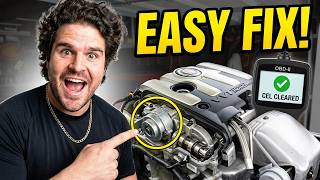
For the 2.0L LTG engine in the Cadillac ATS, the P0012 code points to a common set of VVT issues, but with a helpful diagnostic quirk. The intake and exhaust camshaft actuator solenoids are identical parts. This allows for a simple and definitive test: you can swap the intake and exhaust solenoids to see if the trouble code changes to P0013 or P0014, which would confirm the solenoid is faulty. 🎬 Watch: How to swap and test your VVT solenoids for free. Additionally, GM issued special coverage adjustments for these solenoids, indicating a known potential for failure. Special Coverage 15824 covered both intake (P0010) and exhaust (P0013) solenoids for 2013 ATS models, and N182189940 covered the exhaust solenoid for 2014 models. This history confirms a known weakness in these components on this platform.
Symptoms You May Notice
- Check Engine Light is on
- Rough or unstable engine idle
- Reduced engine power and sluggish acceleration
- Engine may hesitate or stall at low speeds
- Decreased fuel economy
- Rattling or ticking noise from the engine, especially on cold starts
- Difficulty starting the engine
- Replacing the camshaft position sensor. The sensor is reporting the timing issue, it is not the cause of it.
- Immediately replacing the timing chain without first checking the oil and VVT solenoids, which are far more common and cheaper fixes.
Most Likely Causes
- Low or Dirty Engine Oil 🔴 High Probability The VVT system is hydraulic and uses engine oil pressure to adjust timing. The small passages in the solenoids and phasers are easily clogged by sludge from old oil or low oil levels. Direct injection turbo engines like the LTG run hot and can be hard on oil, making regular changes with the correct oil critical.
How to confirm: Check the engine oil dipstick. The level should be between the 'add' and 'full' marks, and the oil should be amber/brown, not black, thick, or gritty. Ensure the correct viscosity oil (GM-specified Dexos-rated synthetic) is being used.
Typical fix: Perform an oil and filter change using a high-quality filter and the correct GM-specified Dexos-rated full synthetic 5W-30 oil. Clear the codes and drive to see if P0012 returns.
Est. part cost: $40-$80 - Faulty Intake Camshaft Position Actuator Solenoid (VVT Solenoid) 🔴 High Probability These solenoids are a very common failure item on the LTG engine. They can become clogged with debris from engine oil or fail electrically due to an internal wire breaking. GM issued two separate special coverage programs (15824 for 2013 models and N182189940 for 2014 models) for these solenoids, acknowledging their high failure rate.
How to confirm: Swap the intake solenoid with the identical exhaust solenoid. Clear the codes and drive the vehicle. If the code changes to P0014 (exhaust-related code), the solenoid you moved is bad. You can also test the solenoid's resistance with a multimeter; it should be within manufacturer specs (typically 8-12 ohms). Visually inspect the solenoid's screens for sludge or debris upon removal.
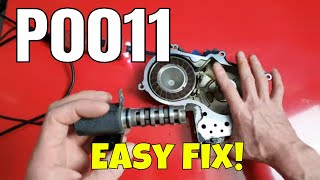
Typical fix: Replace the faulty intake camshaft position actuator solenoid. It is held in by a single bolt and is easily accessible on top of the engine. 🎬 See this step-by-step walkthrough for replacing the intake and exhaust solenoids. It is recommended to use an OEM ACDelco part.
Est. part cost: $40-$90 - Stretched Timing Chain or Worn Timing Components ⚪ Low Probability While less common than oil or solenoid issues, timing chains on the LTG can stretch over time, especially with high mileage, poor maintenance, or frequent overheating events. This causes a mismatch between the crankshaft and camshaft positions that the VVT system cannot compensate for.
How to confirm: Listen for a persistent rattling or scraping noise from the front of the engine, especially on cold starts. A professional diagnosis is needed to confirm, which involves checking camshaft/crankshaft correlation with a scan tool and may require removing the timing cover for visual inspection of the chain tensioner's extension.
Typical fix: This is a major repair that involves replacing the timing chain, tensioners, and guides. It is typically recommended to be done by a professional. An updated timing chain kit is available which is recommended for replacement.
Est. part cost: $300-$600
Rare But Worth Checking
- Failed Camshaft Phaser (Actuator Gear): This is the mechanical gear that the solenoid controls. It can become stuck or fail internally, but this is much less common than a solenoid failure. It is often replaced during a timing chain job.
- Faulty Camshaft Position Sensor: While possible, it is rare for the sensor itself to cause a timing correlation code like P0012. It is more likely to trigger a sensor-specific circuit code (e.g., P0340).
- Clogged Oil Passages: Severe engine sludge can block the small oil passages leading to the VVT solenoid and phaser, even if the solenoid itself is functional. This usually indicates a history of severely neglected oil changes and may require more extensive engine cleaning or repair.
Diagnosis Steps
- Check Engine Oil: Verify the oil level is correct and the oil is clean. If low or dirty, perform an oil and filter change with Dexos-rated 5W-30 full synthetic oil, clear the code, and see if it returns.
- Inspect Solenoid Connector: Check the electrical connector on the intake VVT solenoid for damage, corrosion, or loose pins.
- Swap VVT Solenoids: The intake and exhaust VVT solenoids on the 2.0L LTG are identical. Label them, then swap their positions. Clear the codes and drive the vehicle. If P0012 returns, the problem is not the solenoid. If a code for the exhaust cam, like P0014, appears, the original intake solenoid is confirmed to be faulty.
- Replace the Solenoid: If the solenoid is confirmed bad, replace it with a new part. 🎬 Watch a quick demonstration of the 2.0T camshaft solenoid replacement. The ACDelco OEM part is highly recommended over aftermarket alternatives.
- Listen for Noise: If the problem persists, listen carefully for any rattling from the front of the engine, which could indicate a timing chain issue.
- Seek Professional Diagnosis: If the above steps do not resolve the issue, the problem is likely more complex, such as a stretched timing chain or a faulty phaser. This requires advanced diagnostics and should be handled by a qualified mechanic.
Parts You'll Likely Need
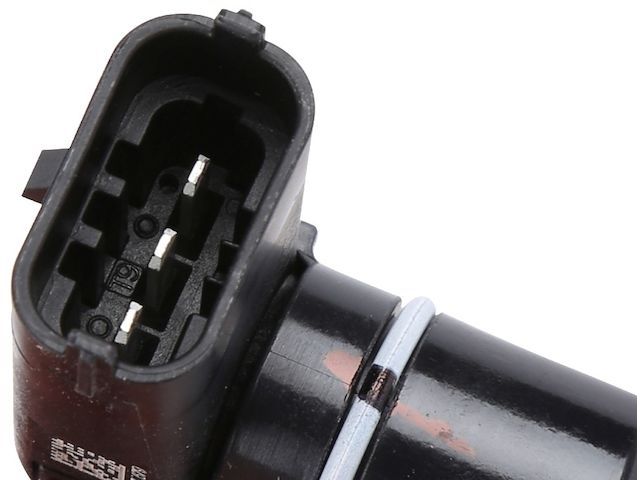
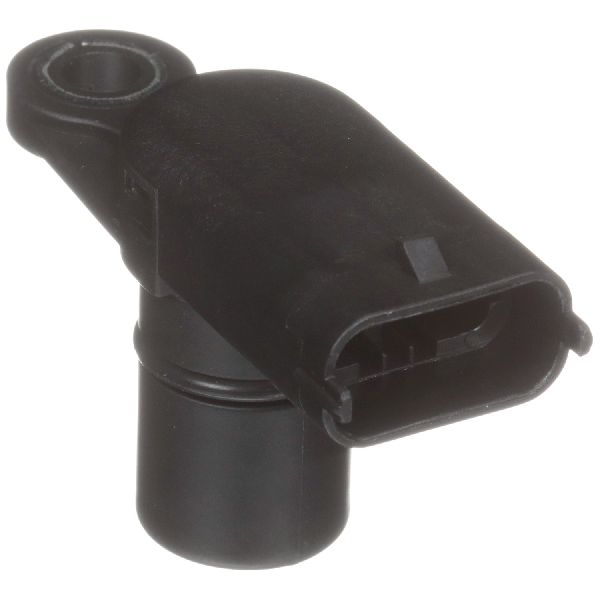
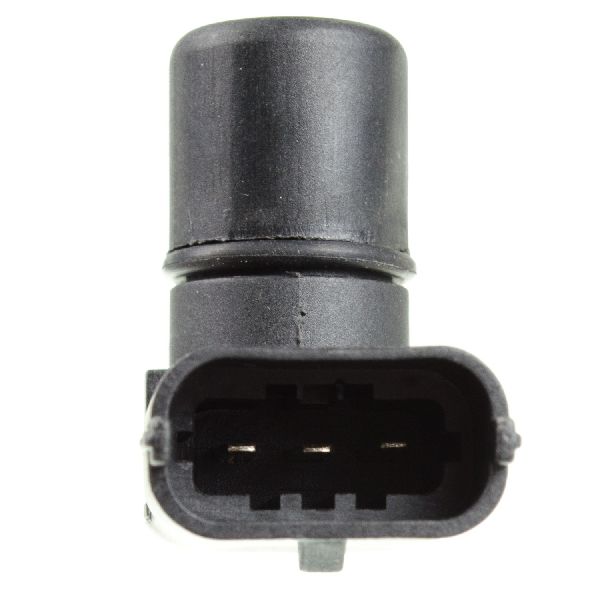
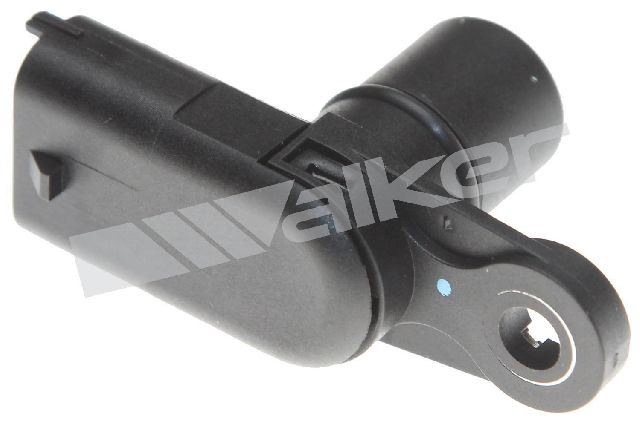
- Intake Camshaft Position Actuator Solenoid
(OEM #12679099)— This is the most common part to fail for this code, either by getting clogged with oil sludge or failing electrically. GM has superseded this part number multiple times; previous numbers include 12655420, 12628347, 12646783, and 12578517.
Trusted brands: ACDelco (OEM), Delphi, Dorman
OEM price range: $60-$90
Aftermarket price range: $30-$50
Related Codes That Often Appear With This One
- P0011 — This code for 'Intake Camshaft Position Timing - Over-Advanced' can appear if the VVT solenoid is sticking intermittently, causing both over-retarded and over-advanced conditions at different times.
- P0014 / P0015 — These are the exhaust camshaft timing equivalents. They may appear if there is a widespread oil pressure or sludge issue affecting both VVT solenoids, or if a technician swaps the intake and exhaust solenoids for diagnosis.
- P0010 — This code indicates an electrical circuit fault for the intake VVT solenoid. GM Special Coverage 15824 specifically addresses this code, which is caused by an internal broken wire in the solenoid. It often points directly to a failed solenoid rather than an oil flow issue.
Technical Service Bulletins (TSBs) & Recalls
- 15824: Special Coverage for Camshaft Position Actuator Valve Replacement. Covers 2013 ATS 2.0L for DTCs P0010 or P0013 due to internal broken wires in the solenoids.
- N182189940: Special Coverage for Exhaust Camshaft Position Actuator Solenoid Valve Control Circuit (DTC P0013). While for a different code, it corroborates the potential for solenoid failure on 2014 models using the identical part.
Platform-Specific Known Issues
- GM Special Coverage 15824 was issued for 2013 Cadillac ATS 2.0L models for faulty intake (P0010) and exhaust (P0013) camshaft actuator solenoids due to internal broken wires. This coverage extended the warranty on these parts to 10 years or 120,000 miles.
- GM Special Coverage N182189940 was issued for some 2014 model year ATS 2.0L LTG vehicles for a faulty *exhaust* camshaft actuator solenoid (causing code P0013). This indicates a known issue with the durability of these solenoids, and since the intake solenoid is an identical part, it is prone to the same failure mode.
Mechanic-Grade Diagnostic Values
- Camshaft Position Actuator Solenoid Resistance — expected: 8 to 12 ohms at 68°F (20°C).. Failure: A reading significantly outside this range, or showing an open/short (infinite/zero resistance), points to an internal failure of the solenoid coil.
- Scan Tool (GDS2) Camshaft Position Data at Warm Idle — expected: The 'Desired Intake Camshaft Position' and 'Intake Camshaft Position' PIDs (Parameter IDs) should match within 1-2 degrees. The 'Desired' value should be 0 degrees at idle.. Failure: If the 'Intake Camshaft Position' PID is stuck at a non-zero value or lags significantly behind the 'Desired' value when revving the engine, it indicates a mechanical or hydraulic issue (stuck phaser or oil flow problem).
- VVT Solenoid Connector Voltage (Key On, Engine Off) — expected: One pin (typically Pink/Black wire on GM harnesses) should show battery voltage (approx. 12V) relative to a good ground. The other pin (control wire) will show 0V.. Failure: No voltage on the power supply pin indicates a wiring or fuse issue upstream. The ECM provides a pulsed ground for control, so this is best tested with a scan tool's bidirectional command.
Scan Tool Commands That Help
- GDS2 (GM Global Diagnostic System 2): Camshaft Position Actuator Solenoid Control — This bidirectional command allows a technician to manually command the intake VVT solenoid on and off, or to a specific duty cycle. While observing the 'Intake Camshaft Position' PID, the technician can verify if the solenoid is responding electrically and if the phaser is responding hydraulically. A lack of change in the cam angle when the solenoid is commanded points to a faulty solenoid, clogged passage, or stuck phaser.
- GDS2 (GM Global Diagnostic System 2): Crankshaft Position Variation Learn — This procedure should be performed after replacing a crankshaft position sensor, camshaft position sensor, or any major timing components. While not a direct fix for P0012, it ensures the ECM has the correct baseline data for crankshaft position, which is critical for accurate timing calculations. Failure to perform this can sometimes lead to erroneous timing codes.
Wiring & Ground Locations
- Q6A Camshaft Position Actuator Solenoid - Intake — On the front of the engine, mounted into the cylinder head. For the 2.0L LTG, it is one of the two easily accessible solenoids on the top front of the engine.. This is the component in question. The connector has two pins: Pin 2 (often Pink/Black) is the 12V power supply, and Pin 1 (often a different color like Tan) is the control wire that the ECM grounds to activate the solenoid. Testing at this connector is the primary electrical diagnostic step.
- G104 / G109 — On the 2.0L LTG engine, these grounds are located on the cylinder head. G104 is on the lower rear of the head, and G109 is on the front of the right cylinder head.. The Engine Control Module (ECM) and its associated sensors rely on clean ground connections. A corroded or loose G104 or G109 ground can introduce electrical noise or voltage drops, potentially affecting the ECM's ability to accurately control the VVT solenoids, leading to intermittent timing faults.
- G108 — Located on the left (driver's side) radiator support in the engine bay.. This is a major chassis ground point. While not directly for the VVT circuit, a poor connection here can cause widespread, difficult-to-diagnose electrical problems for the entire engine management system, including the ECM.
Real Owner Repair Stories
- YouTube video by '614Lyfe' (2013 Cadillac ATS 2.0T) — Check engine light on, car felt sluggish with a loss of power, especially under acceleration or going uphill.
❌ Tried (didn't work) The owner had recently had an oil change, but the problem persisted, ruling out dirty oil as the immediate cause.
✅ What actually fixed it The owner replaced both the intake and exhaust VVT solenoids. The video shows the simple replacement process using a 10mm socket, confirming it as a straightforward DIY job. This resolved the check engine light and performance issues.
OEM Part Supersession History
12655420, 12628347, 12646783, 12578517→12679099 (current as of recent data)— GM frequently updates parts to improve durability and address known failure modes, such as the internal broken wires cited in TSB 15824. The newer part numbers represent revised designs.
Heads up: All listed part numbers are for the same solenoid and are interchangeable. However, it is always best practice to install the latest available part number (12679099) to benefit from the most recent design improvements.
Model Year Variations Within This Range
- 2013-2015 vs 2016-2019: While the core 2.0L LTG engine and VVT system remained largely the same, minor updates to engine management software and potentially the timing chain components were made over the production run. The 2016 model year introduced a start-stop system on some models, which can put different stresses on timing components, though the fundamental cause of P0012 (oil quality, solenoids) remains consistent across all years.
Diagnostic Flowchart
Other Known Issues on This Vehicle
Issues unrelated to this code that are worth knowing about as an owner of this generation:
- CUE Infotainment Screen Failure 🔴 High — Extremely common across all model years. The screen delaminates, cracks, and becomes unresponsive to touch ('ghost touch'). (Ref: A class-action lawsuit was filed over this issue.)
- Rear Differential Failure 🔴 High — Common, especially on earlier models (2013-2015). Presents as a whining or grinding noise from the rear of the vehicle that changes with speed.
- Cracked Pistons / Low-Speed Pre-Ignition (LSPI) 🔴 High — A known issue on early LTG engines (approx. 2013-2015), particularly when tuned. Can cause catastrophic engine failure. GM later updated piston design and oil specifications (requiring low-calcium Dexos1 Gen 2 oil) to mitigate this. (Ref: Internal GM service bulletins exist regarding oil specifications (e.g., 17-NA-039).)
- PCV System Issues & Carbon Buildup 🟠 Medium — Like many direct-injection engines, the LTG is prone to carbon buildup on intake valves over time (80k-100k miles), reducing performance. The PCV system can also contribute to oil consumption and vacuum leaks from cracked hoses.
- Turbocharger Oil Leaks / Failure 🟠 Medium — The turbo can fail or develop oil leaks, often due to extended oil change intervals or overheating. Frequent oil changes (every 5,000 miles) are recommended to prolong turbo life.
Used vs. New Parts: Buying Guide for This Vehicle
When a used part is the smart pick: For this specific repair, buying a used VVT solenoid is generally not recommended. The part is a known high-failure item with multiple design revisions from GM. A used part from a junkyard is likely to be an older, failure-prone version and may already be clogged or electrically weak.
Donor-vehicle mileage cap: roughly under 30000 miles for the part to have meaningful remaining life.
What to inspect on the donor part:
- If buying used is unavoidable, insist on a part from a low-mileage, documented front-end collision vehicle (indicating the engine was likely running well before the accident).
- Visually inspect the mesh screens on the solenoid; they must be perfectly clean and free of any sludge or metallic debris.
- Test the resistance with a multimeter before purchase; it must be within the 8-12 ohm specification.
OEM-only on this vehicle (don't cheap out):
- Camshaft Position Actuator Solenoid
Aftermarket brands forum-validated for this vehicle:
- ACDelco (OEM)
- Delphi (Often the original equipment manufacturer for GM)
Brands owners have reported issues with on this vehicle:
- Unbranded 'White Box' or budget brands (e.g., from Amazon/eBay). Forum and user reviews frequently report premature failure, incorrect operation, or being dead-on-arrival. While some brands like Dorman offer a wide range of VVT components, owner feedback is mixed, with some reporting success and others rapid failure. Given the critical nature of the part and the relatively low cost of an OEM unit, sticking with ACDelco or Delphi is the safest choice.
Real Owner Stories
Aggregated from forums and TSBs cited above. Mileages and costs reflect what owners reported in those sources.
2013 Cadillac ATS 2.0L LTG
Symptoms: Owner reported receiving P0012 and P0015 error codes simultaneously.
What fixed it: Following forum recommendations, the owner performed an oil change and replaced the VVT solenoids.
Source hint: CadillacForums thread titled 'p0012-and-p0015-error-codes.1112988/'
2013 Cadillac ATS 2.0L LTG
Symptoms: Internal broken wires in the camshaft actuator solenoids leading to DTCs P0010 or P0013.
What fixed it: Replacement of the Camshaft Position Actuator Valve under GM Special Coverage 15824.
Source hint: TSB 15824: Special Coverage for Camshaft Position Actuator Valve Replacement
2014 Cadillac ATS 2.0L LTG
Symptoms: Faulty exhaust camshaft position actuator solenoid valve control circuit.
What fixed it: Replacement of the solenoid valve as part of GM Special Coverage N182189940.
Source hint: GM Special Coverage N182189940
Related OBD-II Codes
Frequently Asked Questions
Is there a special warranty extension for the VVT solenoids on my 2013 Cadillac ATS 2.0L?
My 2014 ATS 2.0L has a P0012 code; is this covered under the same program as the 2013 models?
What type of oil should I use in my LTG engine to prevent P0012?
Can I test if the intake solenoid is bad without buying a new part?
I hear a rattling noise on cold starts along with the P0012 code. What does that mean?
Are there specific brands of solenoids recommended for the Cadillac ATS?
Helpful Videos
We Have This Part in Stock


The information in this article is provided for general reference and educational purposes only. Vehicle specifications, procedures, and part compatibility can vary by production date, trim level, and region. Always consult your vehicle's factory service manual and verify part numbers before purchasing or performing repairs. Safety-critical components such as airbags, seat belts, and braking systems should be installed by a qualified professional.
- Cadillac ATS:
- 🎬 Helpful Videos
- 🛍️ Shop This Part
- What's Unique About the 2013-2019 Cadillac ATS
- Symptoms You May Notice
- Most Likely Causes
- Rare But Worth Checking
- Diagnosis Steps
- Parts You'll Likely Need
- Related Codes That Often Appear With This One
- Technical Service Bulletins (TSBs) & Recalls
- Platform-Specific Known Issues
- Mechanic-Grade Diagnostic Values
- Scan Tool Commands That Help
- Wiring & Ground Locations
- Real Owner Repair Stories
- OEM Part Supersession History
- Model Year Variations Within This Range
- Diagnostic Flowchart
- Other Known Issues on This Vehicle
- Used vs. New Parts: Buying Guide for This Vehicle
- Real Owner Stories
- 2013 Cadillac ATS 2.0L LTG
- 2013 Cadillac ATS 2.0L LTG
- 2014 Cadillac ATS 2.0L LTG
- Related OBD-II Codes
- Frequently Asked Questions
- 🎟️ Get 5% Off