

P0011 on 2008-2010 Saturn VUE 2.4L & 3.6L: Causes and Fixes for Camshaft Timing
On the 2008-2010 Saturn VUE, P0011 is most often caused by low/dirty engine oil or a faulty intake camshaft actuator solenoid (OEM Part #12655420). For the 2.4L engine, replacing the solenoid (~$30-$60) is a common and effective fix. For the 3.6L LY7 V6, this code is a serious warning of a possible stretched timing chain, a well-documented issue covered by GM Special Coverage #11340G and a much more expensive repair.
- Always check your engine oil first. Low, old, or incorrect oil is the #1 cause of P0011.
- For the 2.4L engine, the most likely failed part is the intake VVT solenoid, which is an affordable and DIY-friendly fix.
- For the 3.6L V6 engine, P0011 is a serious warning sign for a stretched timing chain. Look for rattling noises or other timing codes (P0016/P0017).
- Do not confuse the VVT solenoid (actuator) with the camshaft position sensor; the solenoid is the part that most commonly fails for this code.
What's Unique About the 2007-2010 Saturn VUE
The 2008-2010 Saturn VUE presents two very different scenarios for code P0011 depending on the engine. For the 2.4L Ecotec, the cause is typically a simple and inexpensive fix like an oil change or a bad intake VVT solenoid. However, on the 3.6L LY7 V6, this code is a well-documented and significant red flag for premature timing chain stretch, a serious issue that can lead to major engine damage if ignored. While a bad solenoid is still a possibility on the V6, the high probability of a timing chain problem, as acknowledged by multiple GM Technical Service Bulletins, makes diagnosis on the 3.6L engine much more critical.
Generation note: The specified year range 2007-2010 covers the end of the first generation (2007) and the entire second generation (2008-2010). The 2.4L Ecotec and 3.6L LY7 V6 engines were only available in the second-generation 2008-2010 models. This guide focuses on these 2008-2010 models.
Symptoms You May Notice
- Check Engine Light is on
- Rough or unstable idle
- Poor acceleration and sluggish performance
- Engine stalling, especially at low speeds or when stopping
- Difficulty starting the engine
- Rattling or ticking noise from the engine, particularly on the 3.6L V6 on startup
- Replacing the camshaft position *sensor* when the problem is the camshaft position *actuator solenoid*. The solenoid is far more likely to be the cause of P0011.
- Immediately replacing the timing chain on a 2.4L Ecotec engine. While possible, it's a much rarer failure on the 4-cylinder compared to the VVT solenoids or oil issues.
- Using the wrong viscosity oil during an oil change. As one owner reported, using the wrong oil can trigger P0011 even with a brand new solenoid, leading to unnecessary parts replacement.
Most Likely Causes
- Low, Dirty, or Incorrect Viscosity Engine Oil 🔴 High Probability The VVT system is entirely dependent on oil pressure to function. Low levels, sludge from extended oil change intervals, or using oil of the wrong weight (e.g., 10W-30 instead of 5W-30) directly impacts the system's ability to phase the camshafts correctly.
How to confirm: Check the engine oil dipstick for level and inspect the oil's color and consistency. If it's low, black, or sludgy, it needs to be changed. Confirm the oil used matches the manufacturer's specification (SAE 5W-30). Manufacturer Bulletin #PIP5064C notes that for the V6 engine, technicians should check actual engine oil pressure when P0011 is present alongside rough running or misfires.
Typical fix: Perform an engine oil and filter change using a quality filter and the manufacturer-specified full synthetic oil.
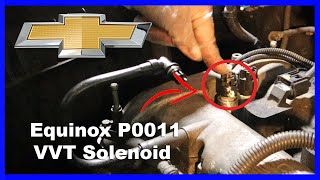
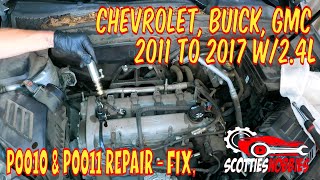
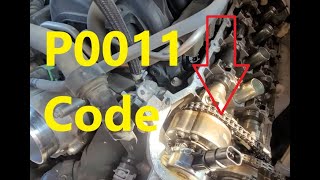
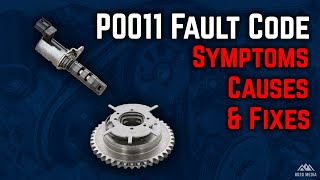
Est. part cost: $40-$80 - Faulty Intake Camshaft Position Actuator Solenoid (VVT Solenoid) 🔴 High Probability These solenoids control oil flow to the cam phasers. They can fail electrically or, more commonly, their internal screens become clogged with sludge, causing them to stick. This is an extremely common failure on the 2.4L Ecotec. 🎬 Watch: Step-by-step intake VVT solenoid replacement for the 2.4L engine.
How to confirm: You can test the solenoid's resistance with a multimeter; a reading between 5-15 Ω is generally expected. A definitive DIY method is to swap the intake and exhaust solenoids (Part #12655421 for exhaust) and see if the code changes to P0014 (for the exhaust camshaft), which confirms the solenoid is the problem.
Typical fix: Replace the Bank 1 intake camshaft position actuator solenoid. It is often recommended to replace both intake and exhaust solenoids at the same time as a preventative measure.
Est. part cost: $25-$60 - Stretched Timing Chain 🟡 Medium Probability This is a very common and well-documented issue specifically on the 3.6L LY7 V6 engine due to an original chain design that was prone to premature wear. GM acknowledged this by issuing TSBs like 11340G, which extended the warranty on the chains to 10 years/120,000 miles for certain vehicles.
How to confirm: Listen for a startup rattle that lasts for a few seconds. Manufacturer Bulletin #PIP4716F describes a short, sharp rattle noise from the front of the engine at start up associated with codes P0011, P0014, P0016, or P0017. A definitive diagnosis requires checking camshaft/crankshaft correlation deviation with a scan tool. If the deviation is greater than +/- 5 degrees, timing issues are likely. This is often seen with codes P0008, P0016, or P0017.
Typical fix: Replace the primary and secondary timing chains, all tensioners, and all guides. This is a complex and labor-intensive job (10+ hours) that is best left to a professional.
Est. part cost: $400-$800
Rare But Worth Checking
- Faulty Camshaft Phaser / Actuator: The mechanical gear on the end of the camshaft can fail, getting stuck in an advanced position due to internal debris or a failed locking pin. This is less common than a solenoid failure but is a possibility if a new solenoid and fresh oil don't resolve the code.
- Clogged Oil Control Passages in Cylinder Head: In engines with a history of poor oil maintenance, sludge can build up in the small oil passages that feed the VVT solenoids and cam phasers. Even with a new solenoid, if the passage is blocked, the system won't get the oil pressure it needs. This may require significant engine cleaning.
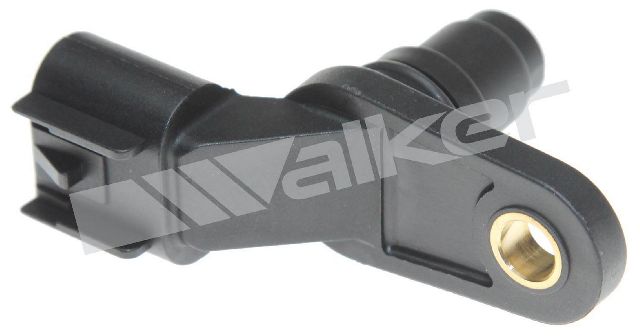
- Faulty Camshaft Position Sensor: The sensor that reads the camshaft's position can fail, but it's more likely to trigger a specific sensor circuit code (like P0341) rather than a performance code like P0011.
Diagnosis Steps
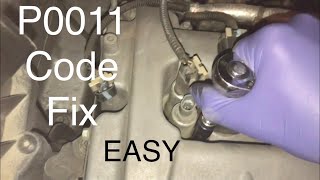
- Check Engine Oil: Verify the oil level is correct and the oil is clean and of the correct viscosity (SAE 5W-30). If in doubt, perform an oil and filter change. 🎬 Watch this before replacing parts to avoid unnecessary costs. Clear the code and see if it returns.
- Inspect VVT Solenoid: Locate the intake camshaft actuator solenoid on Bank 1. On the 2.4L, it's on top of the valve cover. On the 3.6L, Bank 1 is the bank closer to the firewall. Check the wiring and connector for damage.
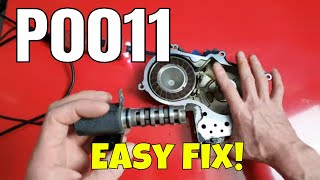
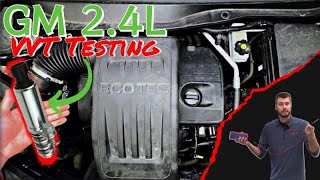
- Test/Swap Solenoid: Unplug the solenoid and test resistance with a multimeter (should be 5-15 ohms). 🎬 See how to properly test GM 2.4 camshaft actuators. For a better test, swap the intake solenoid (gray or black connector) with the exhaust solenoid (usually black connector). Clear codes and drive. If the code changes to P0014, the original intake solenoid is faulty.
- Replace Solenoid: If the test confirms a bad solenoid, replace the Bank 1 intake VVT solenoid (Part #12655420). They are generally affordable and accessible.
- Advanced Diagnosis (3.6L V6): If the code persists on a 3.6L V6, especially if accompanied by rattling noises or codes like P0008/P0016, the timing chain is the primary suspect. This requires professional diagnosis to confirm with a scan tool.
- Check Cam Phasers: If all else fails, the mechanical camshaft phaser may be at fault, requiring more in-depth engine work.
Parts You'll Likely Need
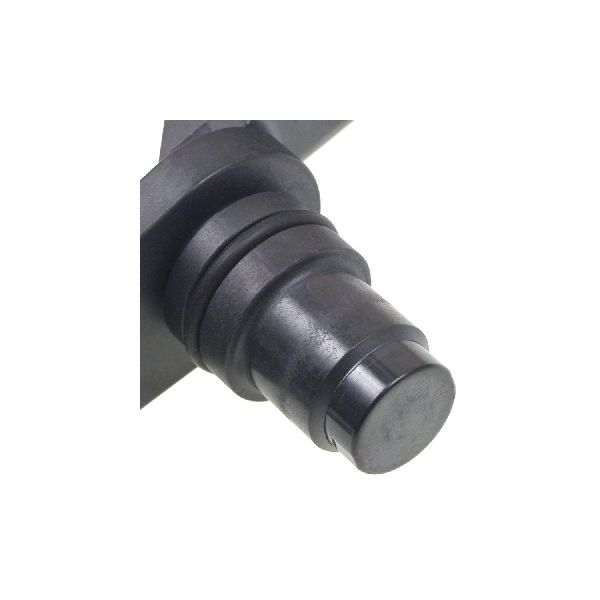
- Intake Camshaft Position Actuator Solenoid
(OEM #12655420 (superseded by 12679099))— This is the most common part to fail or clog, causing P0011 on both the 2.4L and 3.6L engines when oil issues are ruled out.
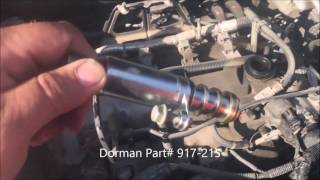
Trusted brands: ACDelco (OEM), Dorman (e.g., 917-215), Delphi
OEM price range: $40-$70
Aftermarket price range: $25-$50 - Exhaust Camshaft Position Actuator Solenoid
(OEM #12655421)— Useful for diagnostic swapping with the intake solenoid. Often replaced at the same time as the intake solenoid as a preventative measure. Dorman aftermarket part number is 917-216.
Trusted brands: ACDelco (OEM), Dorman (e.g., 917-216), Delphi
OEM price range: $40-$70
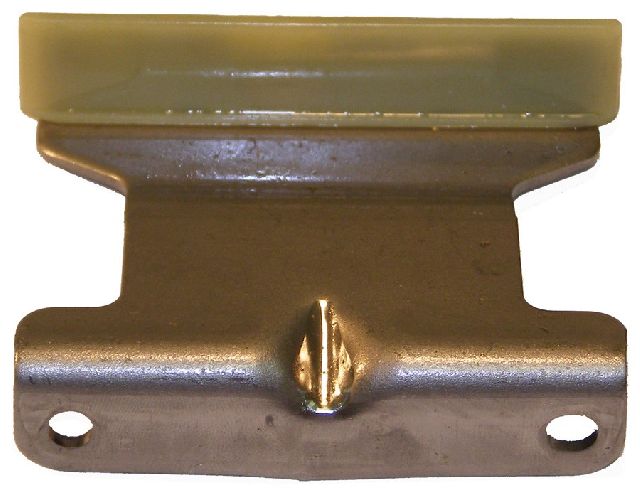
Aftermarket price range: $25-$50 - Timing Chain Kit (for 3.6L V6)
(OEM #12651450 (GM Kit, check VIN for exact fit))— This is the likely cause for a persistent P0011 on the 3.6L LY7 V6 engine, which is known for premature chain stretching. A complete kit with chains, guides, and tensioners is required.
Trusted brands: ACDelco (OEM), Cloyes, Melling
OEM price range: $500-$800
Aftermarket price range: $300-$500
Related Codes That Often Appear With This One
- P0014 — This is the corresponding code for the exhaust ('B') camshaft. Seeing both P0011 and P0014 together often points to a systemic issue like low/dirty oil affecting both VVT solenoids, or can occur when swapping solenoids for diagnosis.
- P0008 / P0016 / P0017 — These codes indicate a correlation problem between the crankshaft and one or both camshafts. On the 3.6L V6, they are a strong indicator that the timing chain has stretched or jumped a tooth and often accompany P0011.
- P0300 — This is a random misfire code. Incorrect valve timing caused by the P0011 fault can lead to unstable combustion and misfires across multiple cylinders.
Technical Service Bulletins (TSBs) & Recalls
- 08-06-01-011K: Addresses multiple camshaft position DTCs, including P0011, on the 3.6L V6 and provides diagnostic procedures for checking camshaft end play, a potential contributor to the timing issue.
- 11340G: Special Coverage Adjustment for Premature Timing Chain Wear on 2.8L/3.6L V6 Engines. This bulletin extended the warranty coverage for timing chain replacement to 10 years/120,000 miles on affected vehicles, including the 2007-2009 Saturn Outlook and other platform mates.
- 10-06-01-008 series (e.g., 10-06-01-008F): While primarily addressing oil consumption, these TSBs are relevant as excessive oil consumption can lead to low oil levels, which is a primary trigger for code P0011.
- Bulletin #PIP4716F: Notes that a short, sharp rattle noise from the front of the engine at start up may be found alongside DTCs P0011, P0014, P0016, or P0017.
- Bulletin #PIP5064C: States that on the V6 engine, P0011 and/or P0016 may be present with rough running, idle surge, or misfires on one or both banks.
Platform-Specific Known Issues
- The 3.6L LY7 V6 engine used in the 2008-2010 VUE has a widely recognized issue with premature timing chain stretching. GM issued Special Coverage Adjustment #11340G, extending the warranty
Mechanic-Grade Diagnostic Values
- VVT Camshaft Actuator Solenoid Resistance (2.4L Ecotec) — expected: 8 to 13 Ohms at 68°F (20°C). Failure: A reading outside this range, an open circuit (OL), or a resistance that fluctuates wildly when wiggling the connector indicates a faulty solenoid.
- VVT Camshaft Actuator Solenoid Resistance (3.6L LY7 V6) — expected: 4.6 to 7.9 Ohms. Failure: A reading of 0 Ohms (short circuit) or infinite/OL (open circuit) indicates a failed solenoid.
- VVT Solenoid Connector Voltage — expected: Battery Voltage (~12.6V) with Key On, Engine Off. Failure: No voltage or significantly low voltage suggests a break in the wiring or a problem with the ECM's driver circuit.
- Scan Tool Cam/Crank Correlation PID (3.6L V6) — expected: Less than +/- 4 degrees of deviation at idle.. Failure: A consistent deviation greater than 4 degrees, with the code often setting when deviation exceeds 6-9 degrees, strongly indicates a stretched timing chain.
- ECM Ground Voltage Drop — expected: Should not exceed 100 millivolts (0.1V).. Failure: A higher reading indicates a poor ground connection at points like G106, which can cause erratic module behavior and phantom codes.
Scan Tool Commands That Help
- GDS2 / Tech2: Camshaft Position Actuator Solenoid Test / Control — Use this bidirectional control with the engine at idle to command the intake VVT solenoid ON and OFF. A functional system (solenoid, phaser, oil passages) will cause the engine to run rough or stall when the solenoid is commanded ON. If there is no change in engine performance, it confirms a fault in the solenoid, a clogged oil passage, or a stuck phaser.
Wiring & Ground Locations
- G106 — On the engine, at the left front top corner (applies to both 2.4L and 3.6L engines for 2008 models).. This is a primary ground point for the Engine Control Module (ECM). A loose or corroded connection here can cause a host of unexplainable electrical issues, including erratic sensor readings and incorrect operation of actuators like the VVT solenoids.
- G107 (3.6L) — At the rear of the engine.. Serves as another critical engine ground. Verifying all engine-to-chassis grounds are clean and tight is a key step in diagnosing any electronic control fault.
- ECM X2 Connector, Pin 73 (2.4L) — This is the main ground pin for the ECM on the larger of the two main connectors.. A specific check can be done at this pin. A voltage drop test between this pin and the negative battery terminal should show less than 0.1V, confirming the integrity of the ground circuit back to the battery.
Real Owner Repair Stories
- Reddit user in r/MechanicAdvice (Vehicle with VVT system, analogous to Saturn Vue) — Check Engine Light with code P0011 immediately after an oil change, some sluggishness on acceleration.
❌ Tried (didn't work) Replaced the intake VVT solenoid.
✅ What actually fixed it The code was resolved by performing a second oil change using the correct, manufacturer-specified oil viscosity. The wrong weight oil had been used during the initial service, preventing the VVT system from operating correctly.
OEM Part Supersession History
12655420→12679099— This is the Intake Camshaft Position Actuator Solenoid. Supersessions typically indicate a design revision to improve reliability or address a known failure mode.
Heads up: The new part number is a direct replacement for the old one.12655421→12679100— This is the Exhaust Camshaft Position Actuator Solenoid. Like the intake side, this was likely updated for improved durability.
Heads up: The new part number is a direct replacement.Various early kits→ACDelco 12690388 (Updated Kit)— This is the Timing Chain Kit for the 3.6L LY7 V6. The original chains were prone to premature stretching. Updated kits feature more robust chains and improved tensioner designs to resolve the issue.
Heads up: When replacing timing chains on the 3.6L V6, it is critical to use the latest updated kit to prevent a repeat failure.
Model Year Variations Within This Range
- 2007 vs 2008-2010: The 2007 model year was the last of the first-generation VUE, which did not offer the 2.4L Ecotec or 3.6L LY7 V6. The second-generation, starting in 2008, introduced these engines and is a completely different platform (GM Theta), meaning wiring, ground locations, and component locations are not the same as the 2007 model.
Diagnostic Flowchart
Real Owner Stories
Aggregated from forums and TSBs cited above. Mileages and costs reflect what owners reported in those sources.
2008 Saturn Vue (Ecotec I4)
Symptoms: A sound like a vibrating heat-shield that increased with RPMs, loss of power, engine died while driving, and horrible metal crunchy sounds on attempted restart. The engine would not turn over or start.
What fixed it: The owner found a broken piece of the timing chain guide, indicating a catastrophic mechanical failure.
Source hint: Reddit r/MechanicAdvice
2007-2010 Saturn VUE
Symptoms: A P0011 code appeared immediately after having an oil change performed.
What fixed it: The owner initially replaced the VVT solenoid, but the code persisted. The actual fix was a second oil change using the correct manufacturer-specified oil viscosity, as the initial shop had used the wrong type.
Source hint: Reddit r/MechanicAdvice: Real-world case of wrong oil viscosity
3.6L V6 Engine (GM LLT/LY7)
Symptoms: Timing chain failure requiring a complete replacement of the primary and secondary chains.
What fixed it: Replaced the timing chains. The owner noted the high cost of OEM parts and expressed frustration with GM's design, noting that even reputable aftermarket brands have had quality issues.
Cost: $797-$797
Source hint: BobIsTheOilGuy.com: LLT 3.6L Timing Chains
Related OBD-II Codes
Frequently Asked Questions
Does the timing chain warranty extension (TSB 11340G) apply to my 2.4L Ecotec Saturn VUE?
I just had my oil changed and immediately got a P0011 code on my VUE. What happened?
How can I test if the VVT solenoid is causing the P0011 on my 2.4L Ecotec?
My 3.6L V6 Saturn VUE has a P0011 code and rattles on startup. Is this just a bad sensor?
Can normal oil consumption on the Saturn VUE trigger a P0011 code?
Helpful Videos
We Have This Part in Stock


The information in this article is provided for general reference and educational purposes only. Vehicle specifications, procedures, and part compatibility can vary by production date, trim level, and region. Always consult your vehicle's factory service manual and verify part numbers before purchasing or performing repairs. Safety-critical components such as airbags, seat belts, and braking systems should be installed by a qualified professional.
- Saturn VUE:
- 🎬 Helpful Videos
- 🛍️ Shop This Part
- What's Unique About the 2007-2010 Saturn VUE
- Symptoms You May Notice
- Most Likely Causes
- Rare But Worth Checking
- Diagnosis Steps
- Parts You'll Likely Need
- Related Codes That Often Appear With This One
- Technical Service Bulletins (TSBs) & Recalls
- Platform-Specific Known Issues
- Mechanic-Grade Diagnostic Values
- Scan Tool Commands That Help
- Wiring & Ground Locations
- Real Owner Repair Stories
- OEM Part Supersession History
- Model Year Variations Within This Range
- Diagnostic Flowchart
- Real Owner Stories
- 2008 Saturn Vue (Ecotec I4)
- 2007-2010 Saturn VUE
- 3.6L V6 Engine (GM LLT/LY7)
- Related OBD-II Codes
- Frequently Asked Questions
- 🎟️ Get 5% Off