

P0011 on 2019-2026 Ram 1500: Causes and Fixes for Over-Advanced Camshaft Timing
On a 2019-2026 Ram 1500, code P0011 is most often caused by low or dirty engine oil, or a failing VVT solenoid. Always check your oil first; if the level and quality are good, the VVT solenoid is the next likely culprit, costing around $40-$100 for the part. Ignoring this code, especially on the 5.7L HEMI, can be an early symptom of oiling issues that may lead to lifter and camshaft failure.
- Your first and cheapest step is to check your engine oil. Low level or poor quality is the #1 cause of P0011 on a Ram 1500.
- If the oil is good, the VVT solenoid for Bank 1 is the next most likely culprit. This is a relatively inexpensive and accessible part to replace for a DIYer.
- Do not immediately replace the camshaft position sensor; it is rarely the cause of a P0011 performance code.
- Ignoring this code can lead to more serious and expensive engine damage, especially on the 5.7L HEMI, which is known for camshaft and lifter issues that can be preceded by oil pressure-related codes.
- A manufacturer TSB confirms this code is a known issue on these trucks. [⭐ MANUFACTURER TSB — highest authority]
What's Unique About the 2019-2026 Ram 1500
For the 5th generation Ram 1500, particularly with the 5.7L HEMI, the Variable Valve Timing (VVT) system and the Multi-Displacement System (MDS) are highly dependent on oil pressure and cleanliness. This code can be an early warning sign of oiling issues that, if ignored, are sometimes associated with the infamous 'Hemi tick' which can signify a failing lifter and subsequent camshaft damage. Using the correct oil viscosity (as specified by the manufacturer, typically 5W-20) and maintaining regular oil change intervals is critical to the health of the hydraulic lifters and VVT components. On many 5.7L HEMI engines, the VVT solenoid is located under the intake manifold, making its replacement a much more involved job than on engines where it is externally accessible.
Diagnostic Flowchart
Tap your situation to follow the diagnostic path that matches what you're seeing on this vehicle.
Symptoms You May Notice
- Check Engine Light is on
- Rough or unstable idle
- Engine stalling, especially at low speeds
- Hard starting
- Reduced engine power and poor acceleration
- Decreased fuel economy
- Engine knocking or rattling sounds, sometimes described as a 'tick'.
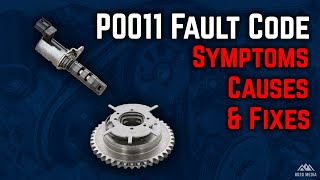
- Replacing the camshaft position sensor. While a sensor can fail, it typically throws a different set of codes (like P0340 or P0344). P0011 is a performance code, indicating a mechanical or hydraulic problem with the timing adjustment, not usually a sensor data issue. 🎬 Watch: Why you shouldn't replace parts before testing for P0011.
Most Likely Causes
- Low or Dirty Engine Oil 🔴 High Probability The HEMI and Pentastar VVT systems use oil pressure to actuate the cam phasers. Incorrect oil viscosity, low levels, or contamination from extended oil change intervals can clog the small passages in the VVT solenoids and phasers, causing them to stick. Using the wrong viscosity oil, such as 10W-30 instead of the specified 5W-20, can trigger a P0011 code shortly after an oil change because the thicker oil cannot flow correctly through the VVT system's small passages.
How to confirm: Check the engine oil dipstick for proper level and inspect the oil's color and consistency. If it's dark, gritty, or below the 'add' line, it needs to be changed. Verify the oil viscosity used matches the manufacturer's specification on the oil cap or in the owner's manual.
Typical fix: Perform an oil and filter change using the manufacturer-specified oil grade (e.g., SAE 5W-20 for most 5.7L HEMIs). In some cases, an engine flush may help clear sludge.
Est. part cost: $50-$100 - Faulty VVT Solenoid (Oil Control Valve) 🔴 High Probability This solenoid is an electro-mechanical part that lives in a harsh environment of heat and pressurized oil. It can fail electrically or become mechanically stuck from oil sludge, preventing it from correctly regulating oil flow to the cam phaser. On some 5.7L HEMI models, this solenoid is located under the intake manifold, making it a labor-intensive repair.
How to confirm: A professional scan tool can command the solenoid to activate. A common DIY method is to swap the Bank 1 and Bank 2 VVT solenoids; if the code changes to P0021 (the Bank 2 equivalent), the solenoid is faulty. You can also test the solenoid's resistance with a multimeter; a typical reading is between 6.9 and 7.9 ohms.
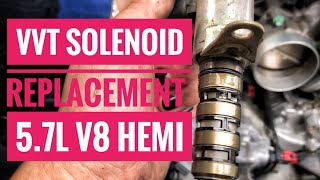
Typical fix: Replace the Bank 1 VVT solenoid. On the 3.6L Pentastar, it is located on the front of the valve cover. On many 5.7L HEMI engines, it is located under the intake manifold, requiring its removal for access. 🎬 See this walkthrough for replacing the Hemi VVT solenoid.
Est. part cost: $40-$100 - Failing Camshaft Phaser 🟡 Medium Probability The phaser is the mechanical gear that actually rotates the camshaft. It can become clogged with sludge or its internal locking pin can fail, causing it to get stuck in an over-advanced position.
How to confirm: This is more difficult to diagnose and usually confirmed after ruling out oil issues and the VVT solenoid. Diagnosis may involve checking timing marks and observing phaser operation with a high-end scan tool. A persistent code after replacing the solenoid often points to the phaser.
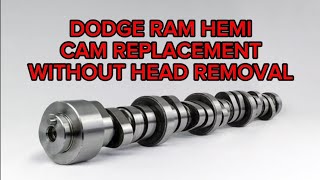
Typical fix: Replace the camshaft phaser, which is a labor-intensive job that often includes replacing the timing chain 🎬 Watch: How to replace the camshaft without removing cylinder heads. and tensioners at the same time. This can cost over $2,000 at a shop.
Est. part cost: $150-$400
Rare But Worth Checking
- Stretched Timing Chain or Failed Guide/Tensioner: While less common than solenoid or oil issues, a stretched chain can cause the base timing to be off, which the VVT system cannot compensate for, leading to this code.
- Failing Oil Pump / Low Oil Pressure: Systemic low oil pressure from a failing oil pump can starve the entire VVT system, causing codes like P0011 and P0021 to appear, often accompanied by a P0521 oil pressure code. This is a serious issue that can lead to catastrophic engine failure.
- Faulty Powertrain Control Module (PCM): This is extremely rare. The PCM should only be considered after all other mechanical and electrical possibilities have been exhaustively ruled out.
- Incorrect or Crushed Oil Filter: Using an incorrect or poor-quality oil filter can lead to oil pressure issues. In some cases, an incorrect cartridge-style filter can be crushed during installation, restricting oil flow to the VVT system and triggering timing codes.
Diagnosis Steps
- Check Engine Oil: Verify the oil level is correct and the oil is clean. If low, top it off. If old or dirty, perform a complete oil and filter change with the manufacturer-recommended oil type. This is the most common and cheapest fix.
- Scan for Other Codes: Use an OBD-II scanner to check for any other pending or active codes that could provide more clues (e.g., P0021, P0521, P0010).
- Inspect VVT Solenoid Wiring: Check the electrical connector and wiring going to the Bank 1 VVT solenoid for any damage, corrosion, or loose connections. The solenoid is located on the front of the passenger-side valve cover.
- Test the VVT Solenoid: The easiest way to test is to swap the VVT solenoids between Bank 1 (passenger side) and Bank 2 (driver side). Clear the codes and drive the vehicle. If the code returns as P0021, the solenoid you moved is bad and needs replacement. Alternatively, you can test the solenoid's resistance with a multimeter; it should be between 6.9-7.9 ohms.
- Advanced Diagnostics: If the steps above do not resolve the issue, the problem likely lies with the camshaft phaser or the timing chain assembly. This requires more in-depth mechanical work, including removing the valve cover and possibly the timing cover to inspect the components directly. This step is often best left to a professional.
- Consider PCM: Only after all mechanical and wiring issues have been ruled out should the PCM be considered a potential cause.
Parts You'll Likely Need
- Engine Variable Valve Timing (VVT) Solenoid
(OEM #5.7L Hemi: 53022298AA; 3.6L Pentastar: 5047897AC)— This is the most common part to fail for this code after confirming the oil is clean and full. It's an electro-mechanical part that gets stuck or clogged over time.
Trusted brands: Mopar, Dorman, Standard Motor Products (SMP), Cloyes
OEM price range: $60-$120
Aftermarket price range: $40-$80 - Camshaft Phaser — If the solenoid and oil are good, the mechanical phaser itself is the next likely cause. It can get clogged or mechanically fail, locking in an advanced position. Replacement is a significant labor cost.
Trusted brands: Mopar, Cloyes
OEM price range: $200-$400
Aftermarket price range: $150-$250
Related Codes That Often Appear With This One
- P0021 — This is the identical 'over-advanced' code for Bank 2. Seeing both P0011 and P0021 together strongly points to a systemic issue like low/dirty oil affecting both sides of the engine.
- P0521 — This code relates to Engine Oil Pressure Sensor Performance. If oil pressure is low, it can directly cause VVT system problems, triggering P0011.
- P0010 — This code indicates an electrical circuit fault ('A' Camshaft Position Actuator Circuit / Open Bank 1). If you see P0010 with P0011, it points more directly to a bad VVT solenoid or a wiring issue, rather than a mechanical phaser or oil problem.
- P0300 — Random Misfire. An over-advanced cam can disrupt the air/fuel mixture and ignition timing enough to cause misfires. In some cases, a P0011 code can be a precursor to the lifter failure that causes the 'Hemi tick' and persistent misfire codes.
Technical Service Bulletins (TSBs) & Recalls
- 18-044-26: Lists P0011-00 - Bank 1 Camshaft 1 Position Timing Over Advanced as a potential stored or active code alongside a variety of other engine and sensor codes. This indicates it's a known issue to the manufacturer, often addressed during broader diagnostic procedures or with software updates.
Platform-Specific Known Issues
- TSB 18-044-26: A Technical Service Bulletin (#18-044-26) issued in March 2026 for 2019 engines lists P0011-00 as a potential trouble code that may be active or stored. This TSB is a broad diagnostic aid, linking various codes together and often suggesting a PCM software update may be needed to correct faulty logic, but it does not point to a single root cause for P0011.
- Real Owner Experience: 3.6L Pentastar Camshaft Failure: A user on 5thgenrams.com with a 2019 Ram 1500 3.6L reported a ticking noise that led to a warranty repair at 60,000 miles. The dealer found the right intake camshaft was worn, which in turn damaged the exhaust cam. The repair involved replacing both camshafts, rockers, phasers, and sensors, highlighting how a timing-related issue can escalate.
Mechanic-Grade Diagnostic Values
- VVT Solenoid (Oil Control Valve) Internal Resistance — expected: 6.9 to 7.9 Ohms at 68°F (20°C). Failure: An open circuit (infinite resistance) or a reading outside the specified range indicates a faulty solenoid.
- VVT Solenoid (Oil Control Valve) Power Supply Voltage — expected: Battery voltage. Failure: No voltage at the power supply pin of the solenoid connector with the ignition on points to a wiring or fuse issue, not a bad solenoid.
- Scan Tool Camshaft Position Actual vs. Desired Angle — expected: The actual and desired camshaft position angles should closely match during engine operation, especially when the VVT system is commanded on.. Failure: A significant deviation (e.g., more than 20 degrees) between the actual and desired angle when the system is active indicates a problem with the VVT system's response.
Scan Tool Commands That Help
- Professional Scan Tool (e.g., wiTECH, Autel, Snap-on): VVT Solenoid Actuator Test / Oil Control Valve (OCV) Actuation — This bidirectional command allows the technician to manually activate the Bank 1 intake VVT solenoid. When activated at idle, a functioning solenoid and phaser system should cause the engine to hesitate, run rough, or stall. If there is no change in engine operation, it points to a stuck solenoid, clogged oil passage, or a faulty phaser.
Wiring & Ground Locations
- VVT Solenoid Connector (5.7L HEMI) — On many 5.7L HEMI engines, the VVT solenoid is located centrally in the engine valley, underneath the intake manifold. Access requires removing the entire intake manifold assembly.. Unlike engines where the solenoid is on the front of the valve cover, this location makes visual inspection of the wiring and connector difficult without significant disassembly. A damaged connector or wire during a previous repair (e.g., lifter replacement) could be the root cause.
- VVT Solenoid Connector (3.6L Pentastar) — Located on the front of the Bank 1 (passenger side) valve cover, making it easily accessible for testing and replacement.. Easy access allows for quick diagnostic steps like swapping the Bank 1 and Bank 2 solenoids to confirm if the solenoid is the faulty component.
- Engine Block Ground — A primary ground cable connects the negative battery terminal directly to the engine block, often on the left front side.. While a poor main ground typically causes multiple, more severe issues, a corroded or loose connection can introduce electrical noise that could potentially affect sensor readings or actuator performance. It's a foundational check for any electrical diagnosis.
Real Owner Repair Stories
- YouTube Commenter (Vehicle not specified, but general VVT system) — Persistent P0011 code.
❌ Tried (didn't work) Initial diagnosis pointed towards a bad solenoid.
✅ What actually fixed it The owner removed and cleaned the VVT solenoids with carburetor cleaner, performed an engine flush (with a product like Abro flush), and then did an oil change with fresh oil. The code did not return after 1,000 miles of driving. - Reddit user in /r/MechanicAdvice (Vehicle not specified, but general VVT system with P0011) — P0011 code appeared immediately after an oil change.
❌ Tried (didn't work) Considering replacing parts.
✅ What actually fixed it The issue was caused by the wrong viscosity oil being used (e.g., 5W-30 instead of 5W-20). The problem was resolved by performing another oil change with the correct manufacturer-specified oil.
When the Usual Fixes Don't Work
- While replacing the VVT solenoid is a very common fix for P0011, there are numerous documented cases where the code appears immediately following an oil change. In these instances, the root cause was not a failed part, but rather the service center using the incorrect oil viscosity (e.g., a thicker oil than specified). The thicker oil impedes the hydraulic function of the VVT system. The fix was simply to drain the incorrect oil and refill with the manufacturer-specified grade, at which point the code resolved without replacing any parts. This highlights the critical importance of verifying the oil type before proceeding to more expensive component replacement.
OEM Part Supersession History
53022298AA→53022298AB— Standard part revision by the manufacturer for improvements in design, materials, or manufacturing process.
Heads up: The new part number 53022298AB is a direct replacement for 53022298AA and is fully compatible.
Model Year Variations Within This Range
- 2019-2026 (5.7L HEMI): The location of the VVT solenoid (also called the Oil Control Valve or Multi-Displacement Solenoid) can vary. On many 5.7L HEMI engines within this generation, the solenoid is located in the valley under the intake manifold. This makes replacement a 4-6 hour job requiring removal of the fuel rail and intake. On other engines, the solenoid may be more accessible. It is critical to verify the location for the specific engine configuration before starting the repair.
Helpful Videos
We Have This Part in Stock



The information in this article is provided for general reference and educational purposes only. Vehicle specifications, procedures, and part compatibility can vary by production date, trim level, and region. Always consult your vehicle's factory service manual and verify part numbers before purchasing or performing repairs. Safety-critical components such as airbags, seat belts, and braking systems should be installed by a qualified professional.
- Ram 1500:
- 🎬 Helpful Videos
- 🛍️ Shop This Part
- What's Unique About the 2019-2026 Ram 1500
- Diagnostic Flowchart
- Symptoms You May Notice
- Most Likely Causes
- Rare But Worth Checking
- Diagnosis Steps
- Parts You'll Likely Need
- Related Codes That Often Appear With This One
- Technical Service Bulletins (TSBs) & Recalls
- Platform-Specific Known Issues
- Mechanic-Grade Diagnostic Values
- Scan Tool Commands That Help
- Wiring & Ground Locations
- Real Owner Repair Stories
- When the Usual Fixes Don't Work
- OEM Part Supersession History
- Model Year Variations Within This Range
- 🎟️ Get 5% Off