

P0011 on 2012-2015 Mercedes-Benz C-Class M276: Causes and Fixes for Intake Camshaft Timing
On the M276 engine, code P0011 is most often caused by a faulty camshaft adjuster magnet (solenoid) on Bank 1. This is a relatively inexpensive part (around $40-$80) and is easy to replace. However, it can also indicate a more serious issue like a failing camshaft adjuster (phaser), which is often preceded by a rattling noise on startup, or a less common but known issue of a shifted camshaft trigger wheel.
- For code P0011 on a 2012-2015 C-Class with the M276 engine, the first and easiest thing to check is the Bank 1 intake camshaft adjuster magnet (solenoid) for oil leaks or failure.
- Always use the correct specification engine oil (MB 229.5) and maintain regular oil change intervals, as the timing system is highly sensitive to oil quality and level.
- Do not ignore a metallic rattling noise on cold starts. This is a clear warning sign of failing camshaft adjusters, a common and more expensive repair on this engine.
- When replacing a faulty camshaft adjuster magnet, inspect the harness connector for oil. If oil is present, clean it thoroughly and consider replacing all four magnets to prevent future failures and potential ECU damage.
What's Unique About the 2012-2015 Mercedes-Benz C-Class

The M276 V6 engine has a known pattern of issues related to its camshaft timing system. While low oil is a universal cause, on this specific engine, the camshaft adjuster magnets (solenoids) are a very frequent failure point, as are the mechanical camshaft adjusters (phasers) themselves. A cold-start rattle is a classic symptom of a failing adjuster or a weak timing chain tensioner on the M276, which can eventually lead to this code. Mercedes-Benz issued a Technical Service Bulletin (TSB LI05.10-P-056435) for the startup rattle, which involves installing updated secondary chain tensioners and retrofitting check valves to maintain oil pressure. Additionally, the trigger wheels (reluctor wheels) for the camshaft position sensors are press-fit and have been known to physically shift on the camshaft, causing timing codes even if the mechanical timing is correct.
Symptoms You May Notice
- Check Engine Light (CEL) illuminated
- Rough or unstable idle
- Engine hesitation or stumbling during acceleration
- Hard starting, may require extended cranking
- Reduced engine power
- Decreased fuel economy
- A metallic rattling sound from the front of the engine on cold startups, lasting 2-5 seconds
- Replacing the camshaft position sensor when the actual fault is the adjuster magnet (solenoid) or oil contamination in the connector.
- Replacing the timing chain for a startup rattle when the noise is actually from the camshaft adjusters (phasers) losing oil pressure or weak secondary tensioners.
Most Likely Causes

- Faulty Camshaft Adjuster Magnet (Solenoid) 🔴 High Probability The seals on these magnets degrade over time, allowing oil to seep into the electrical connector, which can wick down the wiring harness and cause further issues. The internal solenoid can also fail electronically or become clogged with oil sludge.
How to confirm: Unplug the electrical connector for the Bank 1 intake camshaft magnet and inspect for oil. The magnet can also be removed (held by three E-Torx bolts) and inspected for sludge or tested for operation with a scan tool. 🎬 Watch: How to test and fix P0011 timing codes A common DIY test is to swap the Bank 1 intake magnet with the Bank 2 intake magnet; if the code changes to P0021, the magnet is faulty. Resistance across the solenoid's terminals should be between 10-18 ohms.
Typical fix: Replace the faulty camshaft adjuster magnet. It's recommended to replace all four (intake and exhaust for both banks) at the same time as a preventative measure, along with their seals. Installing sacrificial pigtail harnesses (e.g., part # A2711500153) is highly recommended to prevent future oil contamination of the main engine harness.
Est. part cost: $40-$80 per magnet - Low or Dirty Engine Oil 🔴 High Probability The entire camshaft adjustment system is hydraulic and relies on clean oil of the correct viscosity (MB 229.5 specification). Long oil change intervals can lead to sludge that clogs the small passages in the adjuster magnets and phasers.
How to confirm: Check the engine oil level and condition via the dipstick or vehicle service menu. If the oil is low, dark, or sludgy, it's a likely contributor.
Typical fix: Perform an oil and filter change using a Mercedes-Benz approved oil (e.g., MB 229.5 specification). Clear the codes and see if the problem returns.
Est. part cost: $80-$150 for oil and filter - Failing Camshaft Adjuster (Phaser) 🟡 Medium Probability The internal locking mechanisms and hydraulic chambers of the adjusters can wear out, causing them to lose oil pressure when the engine is off. This leads to a startup rattle and an inability to hold the correct timing position. Ignoring the rattle can lead to further wear and eventually cause timing codes like P0011.
How to confirm: A distinct, loud metallic rattle for 2-5 seconds on a cold start is the primary indicator. A mechanic can use a scan tool to monitor actual vs. commanded camshaft angles to confirm deviation. The specific Mercedes code P001177 ('The position of the intake camshaft (Bank 1) deviates from the specified value') strongly points to this mechanical failure.
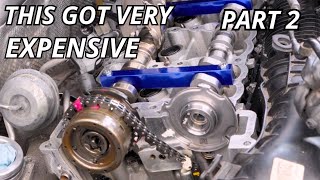
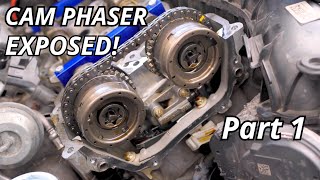
Typical fix: This is a significant repair requiring the replacement of the camshaft adjuster for Bank 1. 🎬 See this walkthrough of a complex M276 phaser replacement It often involves removing the valve cover and other components. It's wise to replace the timing chain tensioner on that bank at the same time.
Est. part cost: $400-$1000 per adjuster - Faulty Camshaft Position Sensor ⚪ Low Probability While less common than magnet failure, the sensor itself can fail or its connector can become contaminated with oil that has wicked through the engine harness from a leaking adjuster magnet.
How to confirm: Swap the Bank 1 intake sensor with the Bank 2 intake sensor. If the code changes to P0021 (the equivalent code for Bank 2), the sensor is faulty. Also, inspect the sensor's electrical connector for oil. A healthy sensor should have a resistance between 1,000 and 3,000 ohms.
Typical fix: Replace the camshaft position sensor.
Est. part cost: $50-$100
Rare But Worth Checking
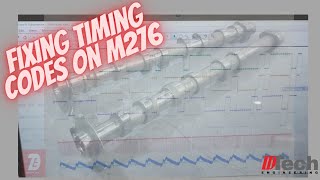
- Shifted Camshaft Trigger Wheel: The reluctor wheel that the camshaft position sensor reads is press-fit onto the camshaft. In some cases, it can physically rotate out of position, causing a persistent timing code even when mechanical timing is perfect. An oscilloscope is the best tool to diagnose this by comparing the cam signal patterns of Bank 1 and Bank 2. The official repair is a new camshaft, though some technicians have successfully repositioned the wheel and reset the learned values in the ECU. 🎬 Watch: How to fix timing codes without buying new parts
- Stretched Timing Chain or Failed Tensioner: While the M276 timing chains are considered durable, high mileage or poor maintenance can lead to stretch. More commonly, the hydraulic tensioners can weaken, causing chain slack, noise, and timing deviations. TSB LI05.10-P-056435 addresses this by recommending the installation of check valves in the cylinder head oil passages to help maintain oil pressure at the tensioners on startup.
Diagnosis Steps
- Check the engine oil level and condition. If low or dirty, perform an oil and filter change with the correct specification oil (MB 229.5), clear the codes, and re-test.
- Using a scan tool, check for other related trouble codes, especially specific Mercedes codes like P001177 or P001685.
- Inspect the electrical connector for the Bank 1 (passenger side) intake camshaft adjuster magnet for any signs of oil contamination. The intake magnets are the ones closer to the center of the engine.
- If oil is present, replace the adjuster magnet and its seal. Consider installing a short sacrificial harness pigtail if available to protect the main engine harness from oil wicking.
- If no oil is found, swap the Bank 1 intake magnet with the Bank 1 exhaust magnet (or Bank 2 intake magnet). If the code changes to an exhaust-related code (like P0014) or a Bank 2 code (P0021), the magnet is confirmed faulty.
- Listen carefully for a metallic rattle from the front of the engine during a cold start. A rattle lasting 2-5 seconds points strongly to a failing camshaft adjuster (phaser) or a weak secondary chain tensioner.
- If magnets are good and there is no rattle, consider swapping the camshaft position sensors between Bank 1 and Bank 2 to rule out a faulty sensor.
- If all the above steps fail, the problem may be a shifted camshaft trigger wheel or a failing camshaft adjuster. This requires advanced diagnostics, such as using an oscilloscope to compare cam signals or a scan tool to monitor commanded vs. actual cam angles under load.
Parts You'll Likely Need

- Camshaft Adjuster Magnet (Solenoid)
(OEM #A2761560790)— This is the most common failure point for P0011 on the M276 engine. It controls oil flow to the phaser and is prone to clogging, electronic failure, and leaking oil into the harness.
Trusted brands: Mercedes-Benz (Genuine), Pierburg, Bosch
OEM price range: $50-$90
Aftermarket price range: $25-$50 - Camshaft Adjuster (Phaser)
(OEM #A2760503600 (Intake, Bank 1). Superseded by A2760505200. Always verify with VIN.)— This mechanical part fails internally, causing a startup rattle and inability to hold correct timing. This is a major repair but is a known failure pattern on the M276 engine.
Related Codes That Often Appear With This One
- P0016 — Crankshaft Position - Camshaft Position Correlation (Bank 1, Sensor A). This code often appears with P0011 because it indicates a general misalignment between the crank and the intake cam on Bank 1, which is the root condition P0011 specifies as 'over-advanced'.
- P0021 — Intake 'A' Camshaft Position - Timing Over-Advanced (Bank 2). If you see this code along with P0011, it suggests a problem common to both banks, such as low/dirty oil or a stretched timing chain.
- P001177 — This is a more specific Mercedes-Benz fault code that translates to 'The position of the intake camshaft (Bank 1) deviates from the specified value', pointing more directly to a mechanical issue with the camshaft adjuster (phaser) itself.
Technical Service Bulletins (TSBs) & Recalls

- While a specific TSB number was not found in the search, multiple sources reference a Mercedes-Benz XENTRY Tip or TSB for installing check valves behind the timing chain tensioners to prevent oil drain-back and reduce startup rattle.
Platform-Specific Known Issues
- A cold-start rattle is a very common precursor to timing codes on the M276, indicating wear or oil pressure loss in the camshaft adjusters.
- Oil leaking from the camshaft adjuster magnets can travel through the wiring harness (a process called 'wicking') and damage other expensive components, including the engine control unit (ECU). It is critical to inspect the magnet connectors for oil.
- There is a known issue where the press-fit trigger wheel on the camshaft can shift, causing timing codes that cannot be fixed by replacing sensors or adjusters.
Mechanic-Grade Diagnostic Values
- Camshaft Adjuster Magnet (Solenoid) Resistance — expected: 10 - 18 Ohms. Failure: A reading outside of this range indicates an internal electrical failure of the solenoid coil.
- Camshaft Position Sensor Resistance — expected: 1,000 - 3,000 Ohms. Failure: A reading outside this range suggests the sensor's internal components have failed.
- Camshaft Position Sensor Signal Voltage — expected: Fluctuating between 0 and 5 volts while the engine is running.. Failure: A static voltage or no voltage indicates a failed sensor or wiring issue.
Hidden / Shadow Codes Worth Checking
- P001177: 'The position of the intake camshaft (Bank 1) deviates from the specified value.' This is a Mercedes-specific code that points more directly to a mechanical failure of the camshaft adjuster (phaser) rather than a sensor or solenoid issue. (see via A Mercedes-specific diagnostic tool like XENTRY/DAS or a high-end professional scanner that can read manufacturer-specific codes.)
- P001685: 'The position of the intake camshaft (cylinder bank 1) is implausible relative to the position of the crankshaft. There is a signal above the permissible limit value.' This code often accompanies P001177 and reinforces the diagnosis of a mechanical timing correlation problem, such as a failing adjuster or shifted trigger wheel. (see via A Mercedes-specific diagnostic tool like XENTRY/DAS or a high-end professional scanner.)
Scan Tool Commands That Help
- XENTRY / SDS (Mercedes Dealer Tool): Camshaft Adjuster Actuation Test — To individually command each camshaft adjuster magnet (solenoid) to check for a response. This can confirm if the solenoid is electronically functional and if it produces an audible click, helping to isolate a faulty magnet without swapping parts.
- XENTRY / SDS (Mercedes Dealer Tool): Reset adaptation maps / Vanos Learning Cycle — After replacing a mechanical component like a camshaft adjuster (phaser) or repositioning a trigger wheel. Simply clearing codes is not enough; this function forces the ECU to relearn the new positions and operational range of the VVT system.
Wiring & Ground Locations
- Y49/4 — On the front of the Bank 1 (passenger side) cylinder head. It is the solenoid for the intake camshaft.. This is the official Mercedes-Benz designator for the Bank 1 intake camshaft adjuster solenoid, the most common part to fail and cause code P0011. Knowing this identifier helps locate the correct component when referencing service documents.
- Y49/5 — On the front of the Bank 1 (passenger side) cylinder head, next to the intake solenoid.. This is the designator for the Bank 1 exhaust camshaft adjuster solenoid. While not the direct cause of P0011, it's often swapped with Y49/4 for diagnostic purposes.
Real Owner Repair Stories
- YouTube video 'Mercedes M276 "NO PARTS REQUIRED" FIX P0011 P0016 Timing Codes' (2016 Mercedes GL450 with M276 engine) — Check Engine Light with timing codes P0011 and P0016 for Bank 1 intake.
❌ Tried (didn't work) The technician immediately suspected a common issue beyond sensors or magnets.
✅ What actually fixed it The technician used an oscilloscope to confirm the Bank 1 intake cam signal was out of phase with the Bank 2 signal, proving the trigger wheel had shifted on the camshaft. The fix involved physically rotating the trigger wheel back into its correct position relative to the other bank and then performing a learning cycle reset with a scan tool. No parts were replaced. - MBWorld.org Forums (2015 C400 with M276 engine, ~100,000 miles) — Rattle noise on cold startup, no Check Engine Light on the dash.
❌ Tried (didn't work) The owner had previously replaced the Bank 1 adjuster about a year prior.
✅ What actually fixed it A scan revealed a stored (not active) code P002177, pointing to the Bank 2 intake adjuster. The technician replaced the failing Bank 2 intake camshaft adjuster (phaser) and the timing chain tensioner for that bank, which resolved the startup rattle. This story highlights that the issue can occur without an active CEL and that these adjusters can fail independently over time.
OEM Part Supersession History
A2761560490→A2761560790— Likely an updated internal design or improved seal to reduce the chance of oil leakage into the connector.A2760503600→A2760505200— The camshaft adjusters (phasers) were updated to improve durability and address the startup rattle issue caused by oil pressure bleed-down.
Diagnostic Flowchart
Other Known Issues on This Vehicle
Issues unrelated to this code that are worth knowing about as an owner of this generation:
- High-Pressure Fuel Pump (HPFP) Failure 🔴 High — Can occur at various mileages, often presenting as long crank times, stalling, and fault code P0087 (Fuel Rail Pressure Too Low).
- Plastic Cooling System Component Leaks (Thermostat/Water Pump) 🟠 Medium — Thermostat housings and water pumps are prone to leaking coolant, typically after 60,000-100,000 miles. Often requires replacing the entire assembly.
- PCV / Oil Separator Failure 🟠 Medium — Can cause high oil consumption, a whistling noise, and a very strong vacuum in the crankcase (difficult to remove oil cap with engine running).
- Upper Timing Cover Oil Leaks 🟡 Low — The sealant on the upper front timing covers can degrade, causing oil to seep down the front of the engine, often onto the alternator.
- W204 Rear Subframe Corrosion 🔴 High — Affects the W204 platform. Severe corrosion can cause the rear subframe to fail. Mercedes extended the warranty on this component to 20 years/unlimited mileage. (Ref: Warranty Extension)
Used vs. New Parts: Buying Guide for This Vehicle
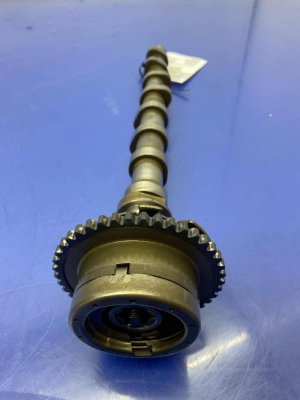
When a used part is the smart pick: For this specific repair, used parts are generally not recommended due to the nature of the failures. However, if the confirmed failure is a shifted trigger wheel and the camshaft itself is otherwise undamaged, sourcing a complete used camshaft from a low-mileage, verified donor vehicle could be a viable, though advanced, repair.
Donor-vehicle mileage cap: roughly under 60000 miles for the part to have meaningful remaining life.
What to inspect on the donor part:
- Verify the donor vehicle had a rear-end collision, suggesting the engine was running well.
- Inspect cam lobes for any scoring or excessive wear.
- Check for any signs of heavy oil sludge or varnish, which indicates poor maintenance.
- Ensure the trigger wheel on the donor camshaft is not visibly damaged or loose.
OEM-only on this vehicle (don't cheap out):
- Camshaft Adjuster (Phaser): Aftermarket phasers are notoriously unreliable for many manufacturers. Given the labor-intensive nature of this job, using a Genuine Mercedes or OEM-supplier part is critical to avoid repeat failure.
Aftermarket brands forum-validated for this vehicle:
- Pierburg: They are a known Original Equipment Manufacturer (OEM) for the camshaft adjuster magnets (solenoids). A Pierburg-branded part is often identical to the Genuine Mercedes part without the dealership markup.
- Bosch: A reliable OEM supplier for sensors like the camshaft position sensor.
Brands owners have reported issues with on this vehicle:
- Unbranded or 'white-box' camshaft adjusters (phasers) and solenoids from online marketplaces. These parts have a very high failure rate and often do not perform to the required specifications, leading to persistent codes and wasted labor.
Real Owner Stories
Aggregated from forums and TSBs cited above. Mileages and costs reflect what owners reported in those sources.
2012 Mercedes-Benz E350 M276
Symptoms: Startup rattle, Check Engine Light (CEL), and engine misfiring.
What fixed it: Replacing the timing chain tensioner and adding a check valve per the Mercedes-Benz XENTRY Tip/TSB.
Source hint: MBWorld.org Forums: M276 2012 E350 coupe startup rattle
2013 Mercedes-Benz C300 M276 — 90000 miles
Symptoms: A cold start rattle that eventually evolved into a timing-related trouble code.
What fixed it: The thread discusses the necessity of replacing the camshaft adjuster and the preventative measure of adding check valves and new tensioners.
Source hint: MBWorld.org Forums: Known m276 rattle..
Related OBD-II Codes
Frequently Asked Questions
What is the specific Mercedes-Benz code that indicates a mechanical failure of the Bank 1 intake camshaft adjuster?
Is there a recommended part to prevent oil from the magnets from damaging my engine wiring harness?
My 2012 C350 has a metallic rattle for about 3 seconds on cold starts. Is this related to P0011?
Can I test if the camshaft adjuster magnet is the problem without buying new parts?
Is there a TSB for the startup rattle on the M276 engine?
What engine oil specification should I use to prevent sludge-related timing issues?
Helpful Videos

Used OEM Parts in Stock
New Aftermarket Parts Available


The information in this article is provided for general reference and educational purposes only. Vehicle specifications, procedures, and part compatibility can vary by production date, trim level, and region. Always consult your vehicle's factory service manual and verify part numbers before purchasing or performing repairs. Safety-critical components such as airbags, seat belts, and braking systems should be installed by a qualified professional.
- Mercedes-Benz C-Class:
- 🎬 Helpful Videos
- 🛍️ Shop This Part
- What's Unique About the 2012-2015 Mercedes-Benz C-Class
- Symptoms You May Notice
- Most Likely Causes
- Rare But Worth Checking
- Diagnosis Steps
- Parts You'll Likely Need
- Related Codes That Often Appear With This One
- Technical Service Bulletins (TSBs) & Recalls
- Platform-Specific Known Issues
- Mechanic-Grade Diagnostic Values
- Hidden / Shadow Codes Worth Checking
- Scan Tool Commands That Help
- Wiring & Ground Locations
- Real Owner Repair Stories
- OEM Part Supersession History
- Diagnostic Flowchart
- Other Known Issues on This Vehicle
- Used vs. New Parts: Buying Guide for This Vehicle
- Real Owner Stories
- 2012 Mercedes-Benz E350 M276
- 2013 Mercedes-Benz C300 M276 — 90000 miles
- Related OBD-II Codes
- Frequently Asked Questions
- 🎟️ Get 5% Off