

P0011 on 2015-2021 Ford Transit Connect: VCT Solenoid Causes and Fixes
Code P0011 on a 2015-2021 Ford Transit Connect most often indicates a sticking intake camshaft timing (VCT) solenoid, frequently caused by dirty or low engine oil. The most common fix is replacing the VCT solenoid and changing the engine oil and filter. Ford has issued multiple service bulletins acknowledging this specific failure pattern.
- P0011 on your Transit Connect is almost always related to the variable camshaft timing (VCT) system.
- Before buying any parts, check your engine oil level and condition. A simple oil change can sometimes fix the problem.
- The most common failed part is the intake VCT solenoid, which gets stuck due to oil debris. This is a known issue acknowledged by Ford in service bulletins.
- Replacing the VCT solenoid is a relatively inexpensive and accessible DIY repair that resolves the issue in a majority of cases.
- Always use the correct viscosity engine oil as specified in your owner's manual to prevent future issues.
What's Unique About the 2015-2021 Ford TRANSIT CONNECT

Ford engines from this era are known for having Variable Camshaft Timing (VCT) systems that are sensitive to oil quality and maintenance. Multiple Ford Technical Service Bulletins (TSBs) point to a common pattern where small debris or sludge in the engine oil causes the VCT solenoids to stick, leading to timing-related codes like P0011. This makes regular, high-quality oil changes especially critical on the Transit Connect. The TSBs even recommend a specific diagnostic procedure (Pinpoint Test HK) to cycle the solenoid multiple times to try and dislodge debris before replacement.
Diagnostic Flowchart
Tap your situation to follow the diagnostic path that matches what you're seeing on this vehicle.
Symptoms You May Notice
- Check Engine Light is on
- Rough or unstable idle, sometimes described as 'jerky'.
- Engine stalling, especially when coming to a stop or at low RPM.
- Hesitation or lack of power during acceleration.
- Difficulty starting the engine, or extended cranking time.
- Reduced fuel economy.
- Rattling or ticking noises from the engine bay, which could indicate a problem with the cam phasers themselves.
- Replacing the camshaft position sensor when the root cause is a sticking VCT solenoid or dirty engine oil.
- Replacing the VCT phaser (a more expensive and labor-intensive job) before thoroughly diagnosing the VCT solenoid and oil quality.
- Assuming the VCT solenoid is bad without first attempting to clean it and its electrical connector, which can sometimes resolve the issue temporarily or permanently.
Most Likely Causes

- Sticking or Failed VCT Solenoid 🔴 High Probability Ford TSBs #SSM 47170 and #SSM 48423 specifically state that P0011 can be caused by 'small debris causing the VCT solenoid to stick'. The solenoid is a small valve with fine mesh screens that controls oil flow to the cam phaser, and it's highly susceptible to contamination from sludgy or dirty oil.
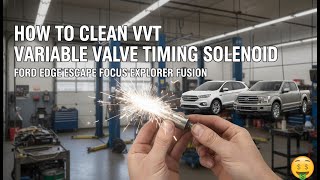
How to confirm: Use a scan tool to command the solenoid on and off while monitoring cam angle PIDs (VCTADV and VCTADVERR). 🎬 Watch: How to diagnose VVT solenoids and check engine codes. You can also remove the solenoid, clean it with MAF or brake cleaner, and test it by applying 12V to see if the internal plunger actuates with an audible click. 🎬 See how to clean your VVT solenoid to clear codes.
Typical fix: Replace the Bank 1 intake VCT solenoid. It is highly recommended to also perform an oil and filter change at the same time to remove the contaminants that caused the failure. The OEM part number for the 2.5L and 2.0L engines is often CJ5Z-6M280-A.
Est. part cost: $44-$70 - Low or Dirty Engine Oil 🔴 High Probability The entire Ti-VCT system is hydraulic and relies on clean oil at the correct pressure to function. Ford's own TSBs point to oil debris as the primary cause of solenoid failure. Neglecting oil changes leads to sludge that clogs the tiny passages and screens in the VCT solenoids.
How to confirm: Check the oil level on the dipstick and inspect the oil's color and consistency. If the level is low or the oil is dark, thick, or past its service interval, it is the most likely starting point for the problem.
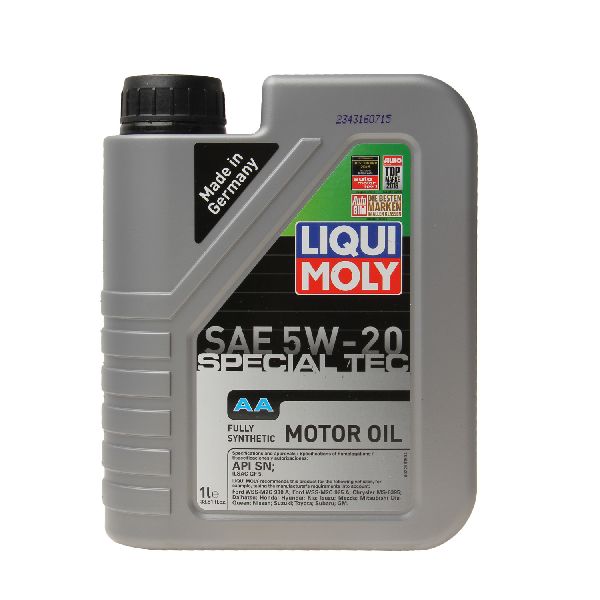
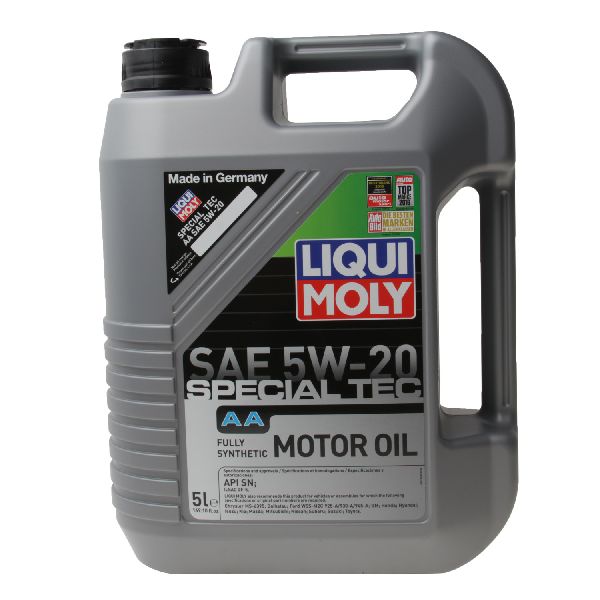
Typical fix: Perform an engine oil and filter change using the manufacturer-specified oil viscosity (typically 5W-20 for the 2.5L and 5W-30 for the EcoBoost engines, check your owner's manual). Clear the codes and drive to see if P0011 returns.
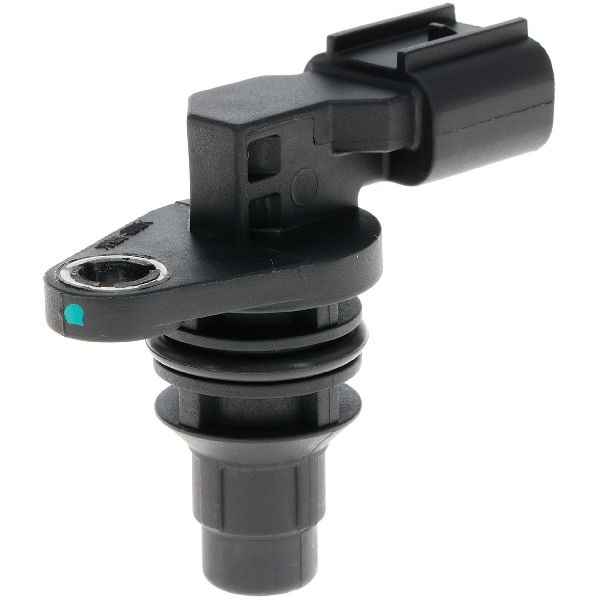
Est. part cost: $40-$90 - Faulty Camshaft Position Sensor ⚪ Low Probability
How to confirm: A failing sensor can send incorrect data to the ECM. This is less common than a solenoid failure for this specific code. Often, a failing sensor will trigger other specific sensor circuit codes like P0341 in addition to the timing performance code.
Typical fix: Replace the Bank 1 intake camshaft position sensor.
Est. part cost: $20-$150
Rare But Worth Checking
- Worn Timing Chain or Phasers: If the VCT solenoid and oil are good, the issue could be mechanical. A stretched timing chain or a failing VCT phaser (the gear on the end of the camshaft) can cause a persistent P0011 code. This is a much more involved and expensive repair.
- Clogged Oil Passages: In engines with a history of poor maintenance, sludge can build up and clog the small oil passages in the cylinder head that feed the VCT system, even if the oil has been recently changed. An engine flush may be attempted, but sometimes disassembly is required.
Diagnosis Steps
- Check the engine oil level and condition. If it's low or dirty, perform an oil and filter change with the correct viscosity oil, clear the code, and see if it returns. This is the number one recommended first step.
- Scan for any other trouble codes that could point to a related issue (e.g., P0010, P0012, P0016).
- Visually inspect the wiring and connector for the intake VCT solenoid and the camshaft position sensor on Bank 1 for any damage, oil contamination, or loose connections.
- Using a capable scan tool, monitor the desired vs. actual camshaft angle PIDs. For Ford, these are often labeled VCTADV (desired angle) and VCT_INT_DIF or VCTADVERR (error/difference). A large, persistent error value confirms a timing control problem.
- As per Ford TSB SSM 47170, use the scan tool's actuator test function to cycle the intake VCT solenoid 10 times. This may dislodge debris and fix the problem. If the engine's idle smooths out during the test, it's a strong indicator the solenoid was sticking.
- Remove the intake VCT solenoid. Inspect its screens for debris. Clean the solenoid with an appropriate cleaner (like MAF sensor cleaner) and test its mechanical function by applying 12 volts and ground to its terminals; you should hear and see the internal plunger click.
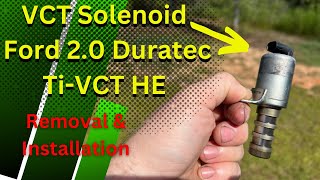
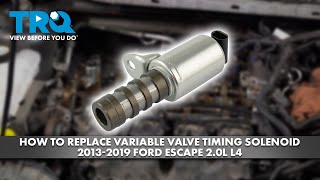
- If the solenoid is dirty, sticking, or fails the bench test, replace it. Be careful not to drop the mounting bolt into the engine during removal/installation. 🎬 Watch this step-by-step guide to replacing the VVT solenoid.
- If the solenoid and wiring are good, the problem may be more severe, such as a failing VCT phaser or a stretched timing chain, which requires more advanced mechanical diagnosis.
Parts You'll Likely Need

- Variable Camshaft Timing (VCT) Solenoid
(OEM #CJ5Z-6M280-A (Fits many 2.0L/2.5L applications))— This is the most frequent point of failure for code P0011 on this vehicle, often due to sticking from oil debris as noted in Ford TSBs.
Trusted brands: Motorcraft, Dorman, Cloyes
OEM price range: $50-$70
Aftermarket price range: $30-$60 - Engine Oil and Filter — Clean engine oil is critical for the VCT system to operate correctly. Low or dirty oil is a primary cause of this code and can cause the new solenoid to fail prematurely.
Trusted brands: Motorcraft, Mobil 1, Castrol
OEM price range: $40-$80
Aftermarket price range: $30-$60
Related Codes That Often Appear With This One
- P0012 — This code is for 'Camshaft Position 'A' - Timing Over-Retarded'. It relates to the same system and can appear if the VCT solenoid is sticking intermittently or fails in the opposite direction.
- P0010 — This code indicates an electrical circuit problem with the VCT solenoid itself (e.g., open or shorted wiring), which would prevent it from operating correctly and could be a precursor or companion to P0011.
- P0016 — This code indicates a correlation issue between the crankshaft and camshaft positions. It often appears with other timing codes like P0011 when the timing is significantly off, potentially pointing towards a stretched timing chain.
Technical Service Bulletins (TSBs) & Recalls
- SSM 54366: Notes that 2015-2021 Ford vehicles may exhibit P0011 and other VCT codes, directing technicians to a specific diagnostic test.
- SSM 47170: States that P0011 may be due to small debris causing the VCT solenoid to stick and advises cycling the solenoid to clear it before replacement.
- SSM 48423: Repeats the guidance from SSM 47170 for a slightly updated vehicle year range, confirming the persistent nature of the issue.
Platform-Specific Known Issues
- Ford has issued multiple Technical Service Bulletins (TSBs) that apply to this vehicle range for P0011 and related codes. Specifically, TSBs #SSM 47170 and #SSM 48423 note that 'small debris causing the VCT solenoid to stick' can be the cause. These TSBs direct technicians to perform a specific diagnostic test (Pinpoint Test HK11) to cycle the solenoid 10 times with a scan tool to attempt to clear the debris before replacing the part.
Mechanic-Grade Diagnostic Values
- VCT Solenoid Internal Resistance — expected: 7 to 14 Ohms. Failure: A reading of OL (infinite resistance) indicates an open coil. A very low reading (under 5 Ohms) indicates a short.
- VCT Solenoid Connector Voltage (Key On, Engine Off) — expected: Battery Voltage (approx. 12V). Failure: No voltage indicates an open in the power supply circuit (VPWR), potentially from the fuse or PCM power relay.
- Scan Tool PID: VCTADVERR (Camshaft Timing Over/Under-Retard Error) — expected: Close to 0 degrees at idle and during steady-state driving.. Failure: A large, persistent positive or negative value indicates the camshaft is not reaching its commanded position. For P0011, a significant positive value (over-advanced) would be expected.
Hidden / Shadow Codes Worth Checking
- Mode 6, Test ID $81: This test monitor is for Variable Cam Timing Advance / Retard error. A failure of this monitor can be an early indicator of a VCT system problem before a standard DTC like P0011 is set. (see via A capable OBD-II scanner that can display Mode 6 test results.)
Scan Tool Commands That Help

- Ford IDS, FORScan: VCT Solenoid On/Off State Control or Output State Control (OSC) — This bidirectional command is used to manually cycle the VCT solenoid, as recommended by Ford TSBs SSM 47170 and SSM 48423. Cycling the solenoid 10 times can dislodge small debris and may resolve the fault without part replacement. It also confirms if the PCM can control the solenoid.
- FORScan: Clear Transmission Adaptive Tables — While not directly for the engine, if drivability issues like harsh shifting accompany the P0011 code, resetting the transmission's learned shift strategy after fixing the engine issue can improve overall vehicle behavior.
Wiring & Ground Locations
- G101 — Lower left rear of the engine compartment.. This is a primary engine ground. A poor connection here can cause erratic behavior in various engine sensors and actuators, including the VCT solenoids and camshaft position sensors.
- G102 / G103 — Left side of the engine compartment.. These grounds are also critical for the Powertrain Control Module (PCM) and its related circuits. Verifying they are clean and tight is a key step in diagnosing any electronic engine control fault.
- VCT Solenoid Connector — On the front of the cylinder head, inserted into the valve cover.. The two pins are for power (VPWR) from the PCM relay and the control signal (ground-side switched) from the PCM. Testing for voltage and continuity occurs at this connector.
Real Owner Repair Stories
- GM-Trucks Forum user (Vehicle with high mileage (230k)) — Traction/stability light comes on, followed by P0011 code, especially once the engine reaches operating temperature. At idle, oil pressure drops, causing shaking and near-stalling.
❌ Tried (didn't work) Replacing the Camshaft Position Sensor., Multiple oil changes and flushes with different oil types., Replacing the VCT solenoid.
✅ What actually fixed it The user concluded that worn cam bearings were likely causing low oil pressure when the oil was hot and thin. This low pressure was insufficient to operate the VCT system correctly. A VVT-delete kit, which locks the phasers, resolved the code and drivability issues as a workaround to avoid a full engine rebuild.
OEM Part Supersession History
CJ5Z-6M280-A→This part number appears to be current for many applications.— N/A
Heads up: This part (CJ5Z-6M280-A) is widely used across Ford's 2.0L, 2.3L, and 2.5L engines in vehicles like the Escape, Fusion, and Focus, in addition to the Transit Connect. Aftermarket cross-references include Dorman 917-196 and Gates VVS144.
Model Year Variations Within This Range
- 2015-2016: These earlier models could be equipped with the 1.6L EcoBoost I4 engine, which was discontinued for the Transit Connect after 2016. While the P0011 diagnosis is similar (oil-related, VCT solenoid), part numbers for the VCT system components may differ from the more common 2.5L and later 2.0L GDI engines.
- 2019-2021: Later models in this range introduced the 2.0L GDI I4 as a standard engine. The VCT solenoid part number (CJ5Z-6M280-A) is often shared with the 2.5L engine, but wiring diagrams and PCM pin locations could vary slightly.
Helpful Videos

Used OEM Parts in Stock

New Aftermarket Parts Available


The information in this article is provided for general reference and educational purposes only. Vehicle specifications, procedures, and part compatibility can vary by production date, trim level, and region. Always consult your vehicle's factory service manual and verify part numbers before purchasing or performing repairs. Safety-critical components such as airbags, seat belts, and braking systems should be installed by a qualified professional.
- Ford TRANSIT CONNECT:
- 🎬 Helpful Videos
- 🛍️ Shop This Part
- What's Unique About the 2015-2021 Ford TRANSIT CONNECT
- Diagnostic Flowchart
- Symptoms You May Notice
- Most Likely Causes
- Rare But Worth Checking
- Diagnosis Steps
- Parts You'll Likely Need
- Related Codes That Often Appear With This One
- Technical Service Bulletins (TSBs) & Recalls
- Platform-Specific Known Issues
- Mechanic-Grade Diagnostic Values
- Hidden / Shadow Codes Worth Checking
- Scan Tool Commands That Help
- Wiring & Ground Locations
- Real Owner Repair Stories
- OEM Part Supersession History
- Model Year Variations Within This Range
- 🎟️ Get 5% Off