

P0011 on 2019-2023 Ford Ranger 2.3L EcoBoost: Causes, Symptoms, and Fixes
On a 2019-2023 Ford Ranger, P0011 is almost always caused by low or dirty engine oil, or a failing intake VCT solenoid. An oil change is the first step. If that doesn't work, a new Motorcraft VCT solenoid costs about $40-$80 and is a common, DIY-friendly fix.
- Always check your engine oil first. A simple oil change with the correct 5W-30 synthetic blend oil and a new filter fixes P0011 more often than not.
- The most likely failed part is the intake VCT solenoid. Swapping it with the exhaust solenoid is a free and definitive way to diagnose the problem.
- When replacing a VCT solenoid, also change the engine oil and filter to prevent debris from damaging the new part.
What's Unique About the 2019-2023 Ford Ranger
The 2.3L EcoBoost engine uses a Twin Independent Variable Camshaft Timing (Ti-VCT) system that is highly sensitive to oil quality and cleanliness. Ford has acknowledged in service bulletins that small debris in the oil can cause the VCT solenoids to stick, making this a common issue. A unique and helpful feature of this engine is that the intake and exhaust VCT solenoids are identical and easily accessible, allowing for a simple diagnostic swap to confirm the faulty part. This exact issue is also common on platform mates like the 2.3L EcoBoost Mustang and Explorer.
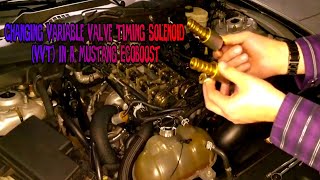
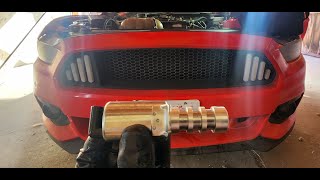
🎬 Watch: A step-by-step guide to changing the VVT solenoid.Symptoms You May Notice
- Check Engine Light is on
- Rough or unstable idle
- Engine hesitation or stumbling on acceleration
- Reduced fuel economy
- Engine stalling, especially when coming to a stop
- Rattling or ticking noise from the engine
- Replacing the camshaft position sensor. While possible, a sensor failure is much less common than a VCT solenoid or oil-related issue for this specific code.
- Assuming a major timing chain failure before performing an oil change and swapping the VCT solenoids.
Most Likely Causes
- Low, Dirty, or Incorrect Viscosity Engine Oil 🔴 High Probability The Ti-VCT system is hydraulic and extremely sensitive to oil pressure and cleanliness. Turbocharged engines can be harder on oil, and fuel dilution can also degrade oil viscosity, a known issue on this platform addressed in TSB SSM 50736. Using an oil thicker than the specified 5W-30 can delay VCT phaser actuation and trigger this code.
How to confirm: Check the oil level on the dipstick and inspect its color, consistency, and smell. If the level is low, the oil is dark/gritty, smells of fuel, or is overdue for a change, this is the likely cause.
Typical fix: Perform an engine oil and filter change using the manufacturer-specified oil (Motorcraft 5W-30 Synthetic Blend or equivalent) and a quality filter (Motorcraft FL-910S). This simple step resolves the code in many cases.
Est. part cost: $40-$80 - Sticking or Failed Intake VCT Solenoid 🔴 High Probability This is the most common component failure for P0011. Debris in the oil can clog the small passages in the solenoid, causing it to stick. Ford TSB SSM 50067 directly addresses this issue and suggests cycling the solenoid with a scan tool to clear debris before replacement.
How to confirm: Swap the intake VCT solenoid with the identical exhaust VCT solenoid. Clear the codes and drive the vehicle. If the code changes to P0014 (Exhaust Camshaft Position Timing), the solenoid is confirmed to be faulty. This is a widely-used and effective diagnostic technique on this engine.
Typical fix: Replace the intake VCT solenoid. 🎬 See this walkthrough for replacing the solenoid on the 2.3L engine. It is recommended to use an OEM Motorcraft part. An oil change at the same time is highly advised to prevent the new solenoid from failing due to contaminated oil.
Est. part cost: $40-$80
Rare But Worth Checking
- Damaged VCT Solenoid Wiring or Connector: Check for oil saturation, corrosion, or loose pins at the solenoid connector before replacing parts. A visual inspection is the first step.
- Failing Camshaft Phaser: While less common than a solenoid failure, the mechanical phaser on the end of the camshaft can fail. This is a more complex and expensive repair, often accompanied by rattling noises, especially on startup.
- Stretched Timing Chain or Worn Guides: If the engine has high mileage or a poor maintenance history, wear in the primary timing components can cause cam/crank correlation errors. This is a major repair and should be considered only after ruling out oil and solenoid issues.
Diagnosis Steps
- Check Engine Oil: Verify the oil level is full and the oil is clean and has the correct viscosity (SAE 5W-30). If low, dirty, past its service interval, or smells of fuel, perform an oil and filter change. Clear the code and drive to see if it returns.
- Inspect VCT Solenoid Wiring: Check the electrical connector for the intake VCT solenoid on the top of the valve cover. Ensure it is secure and free of oil, corrosion, or damage.
- Swap VCT Solenoids: Label and swap the positions of the identical intake and exhaust VCT solenoids. They are located next to each other on the valve cover. This is a no-cost diagnostic test.
- Re-evaluate Codes: Clear the codes with a scanner and drive the vehicle. If the code returns as P0014, the solenoid you moved to the exhaust side is faulty and must be replaced. If P0011 returns, the solenoid is likely not the issue.
- Test Solenoid (Optional): If the code P0011 returns after the swap, the problem lies elsewhere. You can test the original solenoid's resistance with a multimeter (should be between 6-12 ohms) or by applying 12V to see if the internal pintle clicks.
- Advanced Diagnostics: If the oil and solenoid are good, the issue may be a failing cam phaser or a timing chain problem. This requires professional diagnosis with a scan tool to monitor commanded vs. actual cam angles and potentially mechanical inspection of the timing components.
Parts You'll Likely Need
- Variable Camshaft Timing (VCT) Solenoid
(OEM #HL3Z-6M280-A (Supersedes CJ5Z-6M280-A/B))— This is the most common component to fail, typically by sticking due to oil debris.
Trusted brands: Motorcraft
OEM price range: $40-$80
Aftermarket price range: $30-$60 - Engine Oil and Filter
(OEM #Motorcraft FL-910S)— Correct oil level and cleanliness are critical for the VCT system to function. This should always be the first step in addressing P0011.
Trusted brands: Motorcraft
OEM price range: $50-$80
Aftermarket price range: $40-$70
Related Codes That Often Appear With This One
- P0014 — This code for the exhaust camshaft will appear if you swap a faulty intake VCT solenoid to the exhaust side for diagnosis.
- P0016 — This code indicates a correlation error between the crankshaft and intake camshaft. If it appears with P0011, it can increase the suspicion of a mechanical timing issue like a stretched chain, but can also be triggered by a severely stuck VCT solenoid.
Technical Service Bulletins (TSBs) & Recalls
- SSM 50067: Covers various 2015-2021 Ford vehicles, including the Ranger, for VCT codes (P0011 included). Notes that small debris may cause the VCT solenoid to stick and advises cycling the solenoid with a scan tool (Pinpoint Test HK12) 10 times to attempt to clear the debris before replacement.
- SSM 50736: Pertains to 2019-2021 Rangers with the 2.3L EcoBoost. It states that increased oil levels or a fuel smell in the oil can occur from frequent short trips, long idling, or cold climates. Ford considers this normal but it can degrade oil viscosity and affect VCT performance.
Platform-Specific Known Issues
- On the Ranger5G.com forums, multiple owners confirm that the VCT solenoid swap is the go-to diagnostic for P0011. One user noted that after getting the code, an oil change didn't fix it, but swapping the solenoids caused a P0014 to appear, confirming a bad intake solenoid.
- A Reddit user with a 3.5L EcoBoost (which uses a similar VCT system) fixed a P0011 code by replacing the VCT solenoids and the valve cover gasket as a preventative measure due to minor oil seepage around the old solenoid seals. This highlights the importance of inspecting seals during the repair.
Mechanic-Grade Diagnostic Values
- VCT Solenoid Internal Resistance — expected: 5 to 15 Ohms. Failure: A reading of 0 Ohms indicates a short, while an infinite or OL reading indicates an open circuit.
- VCT Solenoid Connector Voltage (Key On, Engine Off) — expected: ~12V (Battery Voltage). Failure: No voltage or significantly low voltage points to a wiring or fuse issue upstream of the solenoid.
- Engine Oil Pressure at Idle (Normal Operating Temp) — expected: Minimum 15 PSI. Failure: Pressure below 15 PSI at idle can indicate worn components or oil pump issues, which will starve the VCT system of the pressure it needs to operate.
Scan Tool Commands That Help
- Ford IDS or FORScan: Pinpoint Test HK / Output State Control (OSC) — This bidirectional command manually cycles the VCT solenoid on and off. Ford TSB SSM 50067 recommends performing this test 10 times to dislodge small debris that may be causing the solenoid to stick. If the code clears after this test, it can prevent an unnecessary solenoid replacement.
Wiring & Ground Locations
- VCT Solenoid Connectors — On top of the valve cover, at the front of the engine. The intake and exhaust solenoid connectors are side-by-side and easily accessible.. These connectors are a primary test point. The pins should be inspected for oil contamination (which can seep from a bad solenoid seal), corrosion, or damage. A multimeter can be used here to check for power supply and the control signal from the PCM.
- Cylinder Head to Firewall Ground Strap — Typically found on the back of the cylinder head, connecting to the vehicle's firewall/cowl.. This is a critical ground path for the PCM and many engine sensors, including those involved in the VCT system. A loose, corroded, or broken ground strap can introduce electrical noise and cause erratic sensor readings, potentially leading to false VCT codes.
OEM Part Supersession History
CJ5Z-6M280-A / CJ5Z-6M280-B→HL3Z-6M280-A— Ford often updates parts to improve reliability or address known failure modes. While the specific reason isn't officially published, updated solenoids often have improved internal materials or screen designs to better resist clogging from oil debris.
Diagnostic Flowchart
Other Known Issues on This Vehicle
Issues unrelated to this code that are worth knowing about as an owner of this generation:
- 10R80 Transmission Shift Quality Issues 🟠 Medium — Commonly reported by owners, especially on 2019-2021 models. Can manifest as hard shifts, clunking, lurching, or hesitation. (Ref: Multiple software updates (TSBs) have been released by Ford to improve shift logic. In some cases, valve body or CDF drum service is required.)
- APIM (SYNC 3) Module Failures 🟡 Low — A notable number of owners report issues like a black screen, unresponsiveness, or connectivity problems. Often related to low battery voltage or software glitches. (Ref: Software updates are the first step. In some cases, the APIM module requires replacement.)
- EGR System Moisture Contamination 🟡 Low — Can cause a bucking or surging sensation between 30-50 mph, often without a check engine light. The issue is moisture affecting the DPFE sensor.
- Fuel Dilution of Engine Oil 🟡 Low — More common in vehicles used for frequent short trips or in cold climates. The engine may not reach operating temperature long enough to vaporize fuel from the oil. (Ref: TSB SSM 50736 acknowledges this is a normal characteristic but advises owners to ensure the vehicle is driven long enough to get the oil warm.)
Used vs. New Parts: Buying Guide for This Vehicle
When a used part is the smart pick: For a VCT solenoid, a used part is generally not recommended. The cost of a new, reliable aftermarket or OEM part is low, and the failure is often caused by internal wear or clogging that would be invisible on a used part. The labor involved in replacing it makes using a questionable used part a poor value proposition.
Donor-vehicle mileage cap: roughly under 40000 miles for the part to have meaningful remaining life.
What to inspect on the donor part:
- Verify the part number matches the latest OEM supersession (HL3Z-6M280-A).
- Inspect the mesh screens for any visible tears or heavy sludge.
- Check the electrical connector for corrosion or damage.
- Ask for the donor vehicle's history to avoid parts from engines with known sludge or maintenance issues.
OEM-only on this vehicle (don't cheap out):
- Camshaft Phasers
Aftermarket brands forum-validated for this vehicle:
- Dorman (specifically part # 917-196)
- Bosch
Brands owners have reported issues with on this vehicle:
- Unbranded, no-name solenoids from online marketplaces are frequently reported to fail prematurely.
Real Owner Stories
Aggregated from forums and TSBs cited above. Mileages and costs reflect what owners reported in those sources.
2019 Ford Ranger 2.3L EcoBoost
Symptoms: Check engine light for P0011; an initial oil change did not resolve the issue.
What fixed it: Swapping the intake and exhaust solenoids caused the code to change to P0014, confirming a bad intake solenoid which was then replaced.
Source hint: Ranger5G.com forum discussion in the '2019+ Ford Ranger and Raptor Forum'
Ford F-150 3.5L EcoBoost
Symptoms: P0011 code present on a similar EcoBoost VCT system.
What fixed it: Replacing the VCT solenoids and the valve cover gasket due to minor oil seepage around the old solenoid seals.
Source hint: Reddit (r/f150): 'Resolved P0011 Code by Replacing VVT Solenoid'
Related OBD-II Codes
Frequently Asked Questions
My 2021 Ranger has a fuel smell in the oil; is this causing my P0011 code?
What does Ford recommend if my VCT solenoid is sticking on my 2019 Ranger?
Can I use a thicker oil than 5W-30 to stop the engine rattling associated with P0011?
Is there a simple way to tell if the intake solenoid itself is bad without buying parts?
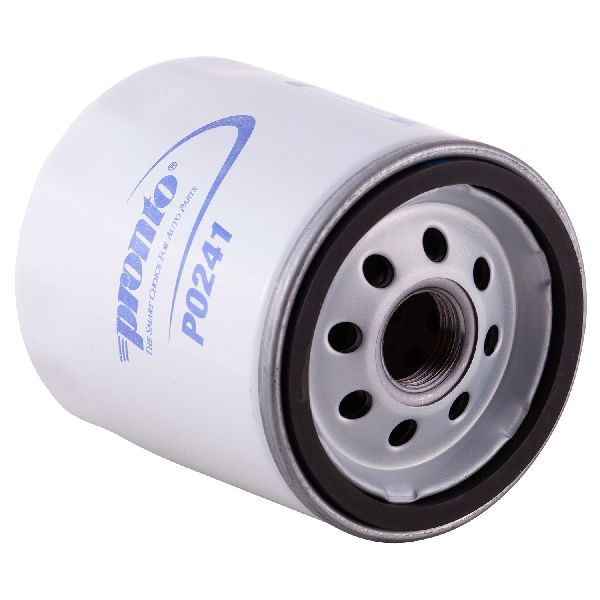
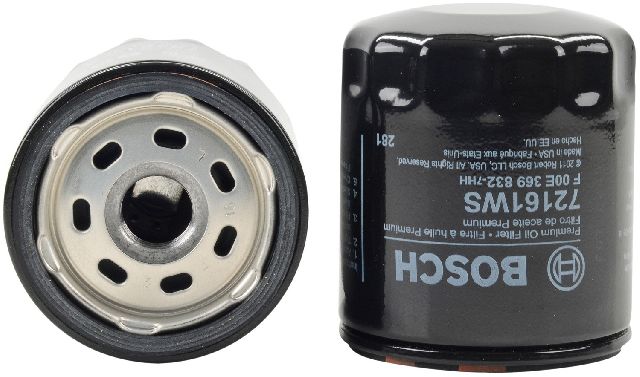
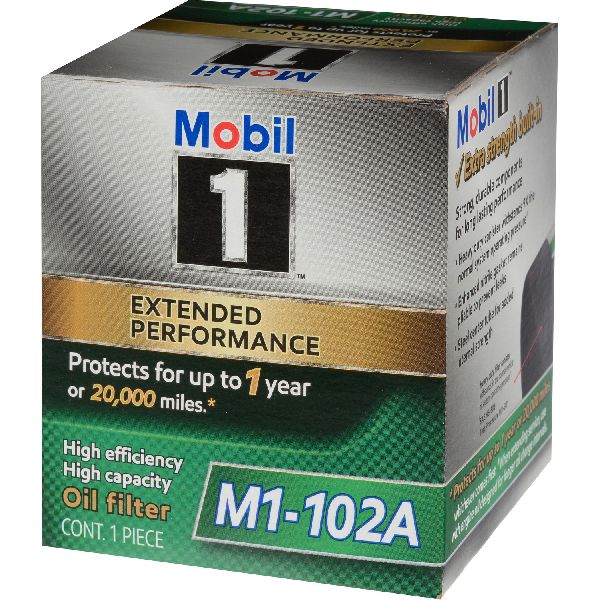
Which oil filter should I use for my 2.3L EcoBoost to prevent VCT issues?
Are other Ford vehicles with the 2.3L engine prone to this same P0011 issue?
Helpful Videos
Used OEM Parts in Stock

New Aftermarket Parts Available


The information in this article is provided for general reference and educational purposes only. Vehicle specifications, procedures, and part compatibility can vary by production date, trim level, and region. Always consult your vehicle's factory service manual and verify part numbers before purchasing or performing repairs. Safety-critical components such as airbags, seat belts, and braking systems should be installed by a qualified professional.
- Ford Ranger:
- 🎬 Helpful Videos
- 🛍️ Shop This Part
- What's Unique About the 2019-2023 Ford Ranger
- Symptoms You May Notice
- Most Likely Causes
- Rare But Worth Checking
- Diagnosis Steps
- Parts You'll Likely Need
- Related Codes That Often Appear With This One
- Technical Service Bulletins (TSBs) & Recalls
- Platform-Specific Known Issues
- Mechanic-Grade Diagnostic Values
- Scan Tool Commands That Help
- Wiring & Ground Locations
- OEM Part Supersession History
- Diagnostic Flowchart
- Other Known Issues on This Vehicle
- Used vs. New Parts: Buying Guide for This Vehicle
- Real Owner Stories
- 2019 Ford Ranger 2.3L EcoBoost
- Ford F-150 3.5L EcoBoost
- Related OBD-II Codes
- Frequently Asked Questions
- 🎟️ Get 5% Off