

P0011 on 2015-2019 Ford Fusion Energi: Causes and Fixes for Over-Advanced Camshaft Timing
On a 2015-2019 Ford Fusion Energi, code P0011 is most often caused by a sticking intake VCT (Variable Camshaft Timing) solenoid due to dirty or low engine oil. The most common fix is to replace the intake VCT solenoid and perform an engine oil and filter change with the correct specification oil.
- P0011 on your Fusion Energi almost always points to an issue with the intake VCT solenoid on Bank 1.
- The first and most important diagnostic step is to check your engine oil level and condition. Low or dirty oil is the leading cause of this problem.
- A Ford TSB (SSM 50067) directly addresses this code on your vehicle, suggesting the VCT solenoid is sticking due to oil debris.
- Before replacing parts, consider having a technician use a scan tool to cycle the solenoid, which may clear the blockage as per the TSB.
What's Unique About the 2015-2019 Ford FUSION ENERGI
The 2.0L Atkinson-Cycle engine in the Fusion Energi is shared with other Ford and Lincoln hybrids like the C-Max and MKZ, which are also known for this issue. Ford has issued a Technical Service Bulletin (TSB SSM 50067) that directly applies to this vehicle and year range, pointing to small debris in the engine oil causing the VCT solenoid to stick. This makes a sticking solenoid a much higher probability cause on this platform compared to more severe mechanical timing issues. The Atkinson cycle design prioritizes fuel efficiency, and proper VVT function is critical to its operation.
Diagnostic Flowchart
Tap your situation to follow the diagnostic path that matches what you're seeing on this vehicle.
Symptoms You May Notice
- Check Engine Light is on
- Rough or unstable idle
- Poor acceleration or sluggish performance
- Engine stalling, especially at low speeds or when stopping
- Reduced fuel economy
- Rattling or ticking noise from the engine, especially on startup or acceleration.
- Replacing the camshaft phaser (an expensive, labor-intensive part) before diagnosing the much cheaper and more common VCT solenoid failure.
- Replacing the camshaft position sensor without first checking the oil condition and VCT solenoid operation.
- Assuming any engine rattle is a catastrophic timing chain failure without first investigating the VCT system.
Most Likely Causes
- Sticking/Failing Intake VCT Solenoid 🔴 High Probability Ford TSB #SSM 50067 specifically identifies that small debris in the oil can cause the VCT solenoid to stick, triggering this code on 2015-2021 Ford vehicles. The small passages in the solenoid are easily clogged by oil contaminants.
How to confirm: Listen for a clicking sound from the solenoid area. A more definitive test involves using a capable scan tool to command the solenoid on and off to check its response 🎬 Watch: A pro mechanic's guide to diagnosing VVT solenoid codes., as recommended by Ford's TSB. You can also remove the solenoid and test its resistance with a multimeter (typically 6.9-7.9 ohms) or apply a 12V source to see if the internal plunger actuates. Visually inspect the solenoid's screens for sludge or debris.
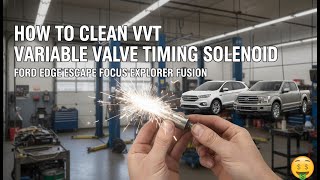
Typical fix: Replace the Bank 1 intake VCT solenoid. It is highly recommended to perform an oil and filter change at the same time to remove the contaminants that likely caused the failure. Some owners have had success cleaning the solenoid with brake cleaner 🎬 See how to clean your solenoid to potentially save on parts., but replacement is the more reliable fix.
Est. part cost: $30-$70 - Low or Dirty Engine Oil 🔴 High Probability The VCT system is hydraulic and relies entirely on clean oil at the correct pressure and viscosity. Contaminated oil or a low oil level is a primary cause of VCT solenoid failure and can trigger this code on its own. Using oil that is too thick can also restrict flow.
How to confirm: Check the engine oil level via the dipstick and inspect the oil's condition. If the oil is dark, gritty, or below the 'add' line, this is a likely contributor. Many owner experiences confirm that simply being low on oil triggered the code and symptoms.
Typical fix: Perform a complete engine oil and filter change using the manufacturer-specified grade of oil (Ford specifies 5W-20 Synthetic Blend for this engine). Clear the code and drive to see if it returns.
Est. part cost: $40-$80 - Faulty Camshaft Position Sensor ⚪ Low Probability
How to confirm: The sensor provides the position data to the PCM. If the sensor is failing, it can send incorrect data, triggering the code. This is less common than a solenoid failure. Often, a failing sensor will be accompanied by other codes, like P0016 or P0340.
Typical fix: Replace the Bank 1 intake camshaft position sensor.
Est. part cost: $25-$60
Rare But Worth Checking
- Worn Timing Chain or Cam Phaser: This is a more serious mechanical issue. If you hear a persistent rattling or chain noise from the engine, especially on startup, it could indicate a stretched timing chain or a failing cam phaser, which is the mechanical gear that the solenoid controls. This is an expensive repair and should only be considered after ruling out the more common and cheaper causes like the oil and VCT solenoid.
Diagnosis Steps
- Check Engine Oil: Verify the oil level is correct and the oil is clean. The manufacturer recommends Motorcraft 5W-20 Synthetic Blend oil. If low or dirty, perform an oil and filter change, clear the code, and drive the vehicle to see if the code returns. This is the most common and cheapest fix.
- Inspect VCT Solenoid Wiring: Check the electrical connector and wiring to the intake VCT solenoid for any damage, corrosion, or loose connections.
- Test the VCT Solenoid: Use a scan tool with bidirectional controls to command the VCT solenoid to cycle. Per TSB SSM 50067, cycling the solenoid 10 times may clear debris. Alternatively, remove the solenoid. Check that the small filter screens are not clogged with sludge. Test its resistance with a multimeter (should be 6.9-7.9 ohms) or by applying a 12V power source to check for mechanical actuation of the internal plunger.
- Replace VCT Solenoid: If the solenoid fails testing, is clogged, or if an oil change doesn't resolve the code, replace the intake VCT solenoid. It is located on the valve cover. 🎬 Watch this step-by-step walkthrough for replacing the VVT solenoid.
- Test Camshaft Position Sensor: If the problem persists, test the camshaft position sensor and its circuit.
- Inspect Mechanical Timing: If all else fails, a deeper mechanical inspection of the timing chain, guides, and cam phaser may be necessary, which is best left to a professional.
Parts You'll Likely Need
- Engine Variable Valve Timing (VVT) Solenoid
(OEM #CJ5Z-6M280-A)— This is the most common point of failure for P0011 on this engine, often due to sticking from oil contaminants, as noted in Ford TSB SSM 50067.
Trusted brands: Motorcraft, Dorman (917-196)
OEM price range: $50-$70
Aftermarket price range: $30-$60 - Engine Oil and Filter
(OEM #Motorcraft 5W-20 Synthetic Blend, Motorcraft FL-910S Filter)— Clean engine oil of the correct viscosity is critical for the VCT system's operation. An oil change is a required first step and is necessary to prevent a new solenoid from failing prematurely.
Trusted brands: Motorcraft, Mobil 1, Castrol
OEM price range: $40-$80
Aftermarket price range: $30-$60
Related Codes That Often Appear With This One
- P0010 — This code indicates an electrical circuit issue with the VCT solenoid ('A' Camshaft Position Actuator Circuit). If you see P0010 and P0011 together, it points strongly to a bad solenoid, a wiring problem to the solenoid, or a faulty PCM.
- P0012 — This code is for 'Timing Over-Retarded' on the same camshaft. Seeing both could indicate an erratic VCT solenoid, severe oil flow problems, or a mechanical issue with the phaser.
- P0016 — This code indicates a correlation issue between the crankshaft and camshaft position sensors. If seen with P0011, it could point towards a jumped timing chain or a failing camshaft position sensor giving erroneous data.
Technical Service Bulletins (TSBs) & Recalls
- SSM 50067: Addresses illuminated MIL with various VCT DTCs (including P0011) due to small debris causing the VCT solenoid to stick. It applies to a wide range of 2015-2021 Ford and Lincoln vehicles.
Platform-Specific Known Issues
- A Ford Technical Service Bulletin (SSM 50067) was issued for 2015-2021 Ford and Lincoln vehicles, including the Fusion, for a range of VCT-related codes including P0011. The bulletin states the cause may be small debris causing the VCT solenoid to stick and recommends cycling the solenoid with a diagnostic tool (Pinpoint Test HK12) to attempt to clear it before replacement.
- The 2.0L Atkinson-Cycle engine is shared across the Ford Fusion Hybrid, Ford C-Max Hybrid, and Lincoln MKZ Hybrid, all of which share the same VCT system and potential for this code.
Mechanic-Grade Diagnostic Values
- VCT Solenoid Internal Resistance — expected: 6.9 to 7.9 ohms at 68°F (20°C). Failure: A reading outside of this range, or an open/infinite reading, indicates a faulty solenoid.
- Scan Tool Live Data PID: VCT_INT_DIF1 (Camshaft Intake Difference Bank 1) — expected: Close to 0 degrees at idle.. Failure: A persistent non-zero value when no advance is commanded indicates a discrepancy between the desired and actual cam angle, often due to a sticking solenoid or phaser.
- Scan Tool Live Data PID: VCTADVERR (Camshaft Timing Over/Under-Retard Error) — expected: Close to 0 degrees at idle and steady-state driving.. Failure: For P0011, a consistent positive value indicates the camshaft is over-advanced and not responding to PCM commands to retard.
- Camshaft Position Sensor Signal Voltage (at sensor connector, key on) — expected: The signal wire should show approximately 5 volts.. Failure: No voltage or incorrect voltage can indicate a wiring issue or a problem with the PCM's 5V reference circuit.
Hidden / Shadow Codes Worth Checking
- Mode 6, Test ID $81: This is a non-continuous monitor for the Variable Camshaft Timing (VCT) system. It checks for the camshaft's ability to reach its target angle. A failure in this monitor can be an early indicator of a VCT system problem before a standard DTC like P0011 is set. (see via An advanced OBD-II scan tool capable of reading Mode $06 data.)
Scan Tool Commands That Help
- FORScan / Ford IDS: VCT Solenoid On/Off Control (Cycle Test) — This bidirectional command is used to manually activate the VCT solenoid. It helps confirm if the solenoid is mechanically responding (an audible click should be heard) and can sometimes dislodge small debris, as suggested in Ford TSBs.
Wiring & Ground Locations
- VCT Solenoid Connector (WPT-1251) — On the top of the valve cover, directly connected to the VCT solenoid.. This 2-pin connector provides power and the control signal (ground from PCM) to the solenoid. Damage, corrosion, or a loose connection here will cause a loss of control over the solenoid, leading to timing faults. One pin is the power supply, and the other is the control line from the PCM.
OEM Part Supersession History
CJ5Z-6M280-A→No direct supersession found, this part number remains current.— N/A
Heads up: This part number (CJ5Z-6M280-A) is used across a wide range of Ford and Lincoln 2.0L and 2.5L engines, including the Fusion Hybrid/Energi models.
Model Year Variations Within This Range
- 2019: For the 2019 model year, the Fusion Energi received an updated battery pack that increased the all-electric range. This change does not affect the 2.0L Atkinson-cycle gasoline engine or its VCT system, so the causes and fixes for P0011 remain the same across the 2015-2019 range.
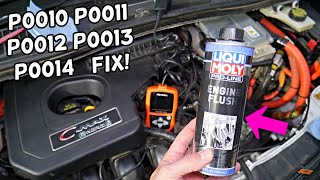
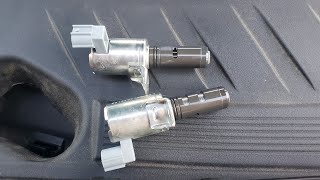
Helpful Videos

Used OEM Parts in Stock


New Aftermarket Parts Available




The information in this article is provided for general reference and educational purposes only. Vehicle specifications, procedures, and part compatibility can vary by production date, trim level, and region. Always consult your vehicle's factory service manual and verify part numbers before purchasing or performing repairs. Safety-critical components such as airbags, seat belts, and braking systems should be installed by a qualified professional.
- Ford FUSION ENERGI:
- 🎬 Helpful Videos
- 🛍️ Shop This Part
- What's Unique About the 2015-2019 Ford FUSION ENERGI
- Diagnostic Flowchart
- Symptoms You May Notice
- Most Likely Causes
- Rare But Worth Checking
- Diagnosis Steps
- Parts You'll Likely Need
- Related Codes That Often Appear With This One
- Technical Service Bulletins (TSBs) & Recalls
- Platform-Specific Known Issues
- Mechanic-Grade Diagnostic Values
- Hidden / Shadow Codes Worth Checking
- Scan Tool Commands That Help
- Wiring & Ground Locations
- OEM Part Supersession History
- Model Year Variations Within This Range
- 🎟️ Get 5% Off