

P0011 on 2015-2017 Ford Expedition 3.5L: Causes and Fixes for Over-Advanced Camshaft Timing
On a 2015-2017 Expedition with the 3.5L EcoBoost, P0011 is most often caused by a faulty Variable Camshaft Timing (VCT) solenoid on the passenger side intake camshaft. Low or dirty oil is another primary cause. Replacing a VCT solenoid is a moderately difficult DIY job with the part costing between $25 and $80. Ignoring the code can lead to a much costlier timing chain replacement.
- P0011 on your Expedition means the passenger-side intake camshaft timing is stuck in an over-advanced position.
- The first and most important step is to check your engine oil. Low or dirty oil is a very common cause.
- The most likely failed part is the Bank 1 (passenger side) intake VCT solenoid. This is a common failure point noted in Ford TSBs.
- Swapping the passenger side intake solenoid with the driver's side one is a great way to confirm if the solenoid is the problem before buying a new part.
- If you hear a rattling noise on startup, the issue could be a more serious stretched timing chain, which is a known problem for this engine and requires professional repair.
What's Unique About the 2015-2017 Ford Expedition
The 1st generation 3.5L GTDI (EcoBoost) V6 engine relies heavily on its Twin Independent Variable Camshaft Timing (Ti-VCT) system for both power and efficiency. This system is hydraulically operated using engine oil pressure and is particularly sensitive to oil quality, viscosity, and level. Ford has issued multiple Technical Service Bulletins (TSBs), such as SSM 48423, noting that small debris in the oil can cause the VCT solenoids to stick, leading to timing codes like P0011. TSB SSM 48423 even suggests a diagnostic procedure where the solenoid is electronically cycled 10 times with a scan tool to try and clear the debris before replacement. This makes checking oil and the VCT solenoids the primary diagnostic focus, distinguishing it from platforms where mechanical timing failure might be the first assumption.
Symptoms You May Notice
- Check Engine Light is on
- Rough or erratic idle, sometimes dropping below 500 RPM
- Engine stalling, especially at low speeds
- Difficulty starting the engine
- Reduced engine power and acceleration, sometimes described as 'no turbo availability'
- Decreased fuel economy
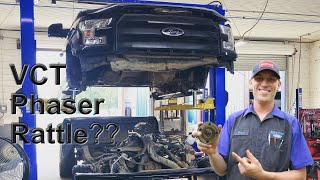
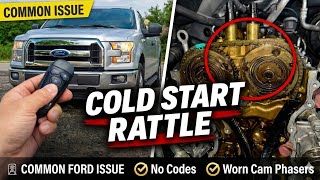
- Rattling noise from the engine, especially on a cold start, which can indicate a related timing chain or phaser issue
- Replacing the camshaft position sensor when the actual fault is with the VCT solenoid or oil pressure.
- Immediately assuming a stretched timing chain and replacing phasers without first testing or replacing the much cheaper and more accessible VCT solenoids.
- Performing a full timing chain replacement when the only issue was a single faulty VCT solenoid.
Most Likely Causes
- Low, Dirty, or Incorrect Viscosity Engine Oil 🔴 High Probability The VCT system is entirely dependent on clean oil at the correct pressure to function. Sludge or low oil levels can starve the VCT phasers and solenoids, causing them to stick or respond slowly. Using oil other than the recommended 5W-30 full synthetic or synthetic blend can also impede the system's function.
How to confirm: Check the oil level on the dipstick and inspect its condition. If it's low, dark, sludgy, or past its change interval, it's the first suspect.
Typical fix: Perform an oil and filter change using the manufacturer-recommended oil (Motorcraft SAE 5W-30 Synthetic Blend) and a high-quality filter (Motorcraft FL-500S). Clear codes and re-evaluate.
Est. part cost: $40-$80 - Failing Bank 1 Intake VCT Solenoid 🔴 High Probability Multiple Ford TSBs (SSM 48423, SSM 47170) specifically mention that small debris can cause the VCT solenoid to stick, leading to this code. It's a well-documented failure point on this engine, with many owner-documented fixes.
How to confirm: Swap the Bank 1 intake VCT solenoid with the Bank 2 intake solenoid. They are identical parts. Clear the codes and drive the vehicle. If the code changes to P0021 (Bank 2), the solenoid is confirmed to be faulty. This is the most definitive DIY diagnostic method.
Typical fix: Replace the Bank 1 (passenger side) intake VCT solenoid. It is often recommended to replace the valve cover gasket or solenoid seals at the same time to prevent oil leaks.
Est. part cost: $25-$80 - Stretched Timing Chain 🟡 Medium Probability The first-generation 3.5L EcoBoost engines are known for timing chain stretch, especially after 100,000 miles. This can be accelerated by long oil change intervals. A stretched chain causes the cam/crank correlation to be off, which can trigger P0011, often accompanied by P0016.
How to confirm: This often presents with a distinct rattling noise on startup that lasts for a few seconds ('cold start rattle'). Confirmation requires significant labor, including removing the timing cover to physically inspect the chain tensioner's extension and slack. A fully extended tensioner indicates a stretched chain.
Typical fix: Replace the timing chain, guides, and tensioners. This is a labor-intensive job often costing over $2,000 at a shop.
Est. part cost: $400-$800 for a complete kit - Failing Camshaft Phaser ⚪ Low Probability The cam phaser itself can fail mechanically, getting stuck in the advanced position. This is often diagnosed and replaced along with a stretched timing chain, as the labor to access them is the same. A failing phaser is another cause of the cold start rattle.
How to confirm: Difficult to confirm without ruling out the solenoid first. If a new solenoid doesn't fix the issue, and the timing chain is suspect, the phaser is a likely culprit. A professional scan tool can graph commanded vs. actual cam angle to see if the phaser is responding.
Typical fix: Replace the Bank 1 intake camshaft phaser, typically done as part of a full timing chain service.
Est. part cost: $150-$300
Rare But Worth Checking
- Damaged Wiring to VCT Solenoid: Check the connector and wiring harness for any signs of damage, corrosion, or oil contamination before replacing the solenoid. The plastic connector can become brittle with heat cycles.
- Faulty Camshaft Position Sensor: While less common for an over-advanced code, a sensor providing incorrect data to the PCM could theoretically cause this issue. However, this would typically be accompanied by a specific sensor circuit code (e.g., P0340 or P0344).
Diagnosis Steps
- Verify Oil Level and Condition: Ensure the engine oil is full, clean, and of the correct 5W-30 viscosity. If in doubt, perform an oil and filter change with Motorcraft parts. Clear the code and see if it returns. This is the cheapest and easiest first step.
- Scan for Other Codes: Check if any other codes are present, such as P0016 or codes for the other bank (P0021), which can help narrow down the diagnosis.
- Inspect VCT Solenoid Wiring: Visually inspect the electrical connector and wiring for the Bank 1 (passenger side) intake VCT solenoid. Ensure it's secure and free of damage or oil.
- Test the VCT Solenoid (Solenoid Swap): The most effective DIY test is to swap the Bank 1 intake solenoid with the Bank 2 (driver's side) intake solenoid. They are identical parts. Clear the codes and drive the vehicle. If the fault moves to the other bank and triggers code P0021, you have confirmed the solenoid is bad. This is a very common and reliable diagnostic step mentioned in owner forums.
- Command Solenoid with Scan Tool (Professional): A professional technician can use a bidirectional scan tool to command the solenoid on and off while monitoring the camshaft position sensor data (CMP_DS_B1 vs. CMP_A_B1) to see if the phaser responds as expected. TSB SSM 48423 suggests cycling the solenoid 10 times to attempt to clear debris.
- Check for Mechanical Timing Issues: If the solenoid is confirmed to be good but the code persists, the problem is likely mechanical. Listen for a cold start rattle. Diagnosis requires removing the valve cover and timing cover to inspect the timing chain for slack and check the tensioner extension. This is a significant job and often best left to a professional.
Parts You'll Likely Need
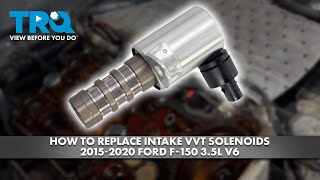
- Variable Camshaft Timing (VCT) Solenoid
(OEM #HL3Z-6M280-A (Supersedes BL3Z-6M280-B, AT4Z-6M280-A))— This is the most common cause of P0011 on this engine, as documented by owner experiences and multiple Ford TSBs. It is the same part for intake and exhaust on this engine.
Trusted brands: Motorcraft, Dorman, Standard Motor Products (SMP)
OEM price range: $40-$70
Aftermarket price range: $25-$50 - Timing Chain Kit — If the timing chain has stretched (common over 100k miles), a complete kit including the chain, guides, and tensioners is required to restore proper engine timing.
Trusted brands: Motorcraft, Cloyes
OEM price range: $500-$800
Aftermarket price range: $300-$500 - Valve Cover Gasket / VCT Solenoid Seals
(OEM #DL3Z-6584-B (Right/Pass. Side Gasket))— When replacing the VCT solenoids, the valve cover must be removed. It is best practice to replace the valve cover gasket and the individual VCT solenoid seals to prevent future oil leaks. Some owners opt to replace the entire valve cover if the old one is brittle or has been opened before.
Trusted brands: Motorcraft, Fel-Pro
OEM price range: $30-$50 (Gasket), $150 (Cover)
Aftermarket price range: $20-$40 (Gasket)
Related Codes That Often Appear With This One
- P0016 — Crankshaft Position - Camshaft Position Correlation (Bank 1, Sensor A). This code often appears with P0011 because if the cam is stuck in an advanced position, its correlation with the crankshaft will also be incorrect. TSB 16-0038 specifically calls out this code pair (P0011 and P0016) as an indicator for replacing the Bank 1 intake VCT solenoid on low-mileage vehicles.
- P0021 — 'A' Camshaft Position - Timing Over-Advanced (Bank 2). If you see both P0011 and P0021, it points towards a systemic issue affecting both banks, such as very low oil pressure, severe oil contamination, or an incorrectly installed timing chain.
Technical Service Bulletins (TSBs) & Recalls
- SSM 54366: Notes that various 2015-2021 Ford vehicles may exhibit P0011 among other VCT codes.
- TSB-16-0093: Addresses P0011 on 2016 models with less than 2000 miles, suggesting VCT solenoid replacement.
- SSM 48423: States that P0011 on 2015-2020 models may be due to small debris causing the VCT solenoid to stick.
- SSM 47170: Repeats the guidance from SSM 48423, pointing to debris in the VCT solenoid.
- TSB160038: An earlier TSB for low-mileage 2016 3.5L GTDI engines with P0011 and other codes.
Platform-Specific Known Issues
- TSB SSM 48423 and SSM 47170 note that P0011 can be caused by small debris causing the VCT solenoid to stick. The TSB recommends attempting to cycle the solenoid with a scan tool to clear it before replacement.
- TSB 16-0093 (superseding 16-0038) addresses P0011 on low-mileage (under 2000 miles) 2016 Expeditions, indicating a potential for early-life failure of the VCT solenoid and directing technicians to replace the affected solenoid.
- The 1st Gen 3.5L EcoBoost engine has a well-documented issue with timing chain stretch, typically presenting after 100,000 miles, which can cause P0011, often paired with P0016.
Mechanic-Grade Diagnostic Values
- VCT Solenoid Power Supply Voltage — expected: Battery voltage (approx. 12.0-12.6V) with key on, engine off.. Failure: No voltage or significantly low voltage indicates a wiring or PCM power supply issue.
- VCT Solenoid Internal Resistance — expected: While no specific Ohm value was found in searches, a technician would look for an open circuit (infinite resistance) or a short circuit (near zero resistance). Comparing the resistance between all four solenoids is a good diagnostic check; a significant deviation in one indicates a likely failure.. Failure: Infinite or near-zero resistance.
- Camshaft Position (CMP) Sensor Power Supply — expected: Approximately 5 volts DC with the key on, engine off.. Failure: No voltage or incorrect voltage points to a wiring or PCM issue.
- Camshaft Position (CMP) Sensor Signal Voltage — expected: A fluctuating digital signal (square wave) between 0 and 5 volts as the engine is running.. Failure: No signal, a constant voltage, or a voltage that doesn't change with engine RPM indicates a failed sensor.
Scan Tool Commands That Help
- Ford IDS (Integrated Diagnostic System): VCT Advance Error PID (Parameter Identification) — To monitor the difference between the PCM's commanded camshaft angle and the actual angle reported by the CMP sensor in real-time. A large, persistent error value on Bank 1 points to a problem in that system.
- Ford IDS (Integrated Diagnostic System): VCT Solenoid Duty Cycle PID — To observe how hard the PCM is working to control the solenoid. If the duty cycle for the Bank 1 intake solenoid is significantly higher than the others but the cam angle isn't responding, it can indicate a stuck phaser or a clogged oil passage.
- Ford IDS (or other high-level bidirectional scanner): VCT Solenoid On/Off Command — As mentioned in TSB SSM 48423, this function can be used to cycle the solenoid repeatedly (e.g., 10 times) to try and dislodge small debris causing it to stick. It can also be used at idle to see if activating the solenoid causes a change in idle quality, confirming the solenoid is functioning electrically.
Wiring & Ground Locations
- Bank 1 VCT Solenoid Connector — On the front of the passenger side valve cover. There are two solenoids; the intake ('A') solenoid is typically the one positioned more towards the center of the engine.. This is the primary electrical connection for the component most likely to cause P0011. The connector and its wiring are susceptible to heat damage and oil contamination, which can cause an open or short circuit.
- PCM Connector — The Powertrain Control Module (PCM) is typically located in the engine bay, often on the passenger side firewall.. The control signal (ground) for the VCT solenoid originates here. A pinpoint test may require checking for continuity between the VCT solenoid connector and the corresponding pin at the PCM connector to rule out a wiring break.
Real Owner Repair Stories
- Reddit user in r/f150 (2018 F-150 3.5L EcoBoost, 70k miles) — Intermittent hesitation and rough idle, P0011 code.
❌ Tried (didn't work) The owner had previously had the cam phasers replaced under warranty at 40k miles, so the initial concern was a repeat failure.
✅ What actually fixed it The owner replaced both VCT solenoids (Part HL3Z-6M280-A) and the passenger side valve cover (Part HL3Z-6582-F) as a preventative measure against seal leaks. This resolved the hesitation and rough idle. - Ford F150 Forum user (2019 F-150 3.5L EcoBoost, 69k miles) — Intermittent power loss, 'no turbo availability', rough run at low RPM (dropping to 500), codes P0011 and P0016.
❌ Tried (didn't work) The user had cam phasers replaced at 30k miles and a private mechanic diagnosed it as cam phasers again.
✅ What actually fixed it The user notes that another forum member suggested the issue is likely the VCT solenoid valve being stuck open, and that replacing just the solenoid is the correct first step before a full phaser job. The thread implies this is the common resolution.
When the Usual Fixes Don't Work
- While replacing the Bank 1 intake VCT solenoid is the most common fix, some owners have found this does not resolve the issue. In a forum post regarding a 2006 Expedition with P0011 and P0022, the owner first replaced both VVT solenoids, which did not fix the codes. The ultimate fix required a full timing job, including the timing chain, guides, tensioners, cam phasers, and a new high-volume oil pump. After all that work, the P0011 code still returned, indicating a potential underlying issue like a wiring problem or a faulty replacement part. This highlights that while the solenoid is the most probable cause, it is not the only cause, and a full diagnosis is critical.
OEM Part Supersession History
AT4Z-6M280-A, BL3Z-6M280-B→HL3Z-6M280-A— Standard part evolution and design updates by Ford to improve reliability.
Model Year Variations Within This Range
- 2015-2017: The 2015-2017 Ford Expedition uses the first-generation 3.5L EcoBoost V6. While the Ford F-150 received the updated second-generation 3.5L EcoBoost and 10-speed transmission in 2017, the Expedition platform did not get this powertrain update until the 2018 model year. Therefore, diagnostics and parts for a 2017 Expedition 3.5L are the same as the 2015-2016 models.
Diagnostic Flowchart
Other Known Issues on This Vehicle
Issues unrelated to this code that are worth knowing about as an owner of this generation:
- Carbon Buildup on Intake Valves 🟠 Medium — A long-term issue common to all direct-injection engines, becomes noticeable after 70,000-100,000 miles, causing rough idle or misfires.
- Turbocharger Coolant Line Leaks 🟠 Medium — The jiffy-tite fittings on the turbo coolant lines are known to degrade and leak coolant over time. This is a common failure point with age and heat cycles.
- Intercooler Condensation (Shudder) 🟡 Low — Early EcoBoost models could accumulate water in the intercooler, especially in humid climates, which could be ingested by the engine causing a shudder or misfire under hard acceleration. Later designs and TSBs helped mitigate this.
- Cracked Exhaust Manifolds 🟠 Medium — Can occur on higher mileage examples, leading to an exhaust leak tick noise that is especially noticeable on a cold start before the metal expands.
- Ignition Coil and Spark Plug Failure 🟡 Low — As a turbocharged engine, it is harder on spark plugs and coils. Misfires can occur if plugs are not changed at recommended intervals (around 60,000 miles).
Used vs. New Parts: Buying Guide for This Vehicle
When a used part is the smart pick: For this repair, the only parts where a used component might be considered are electrical connectors or a section of wiring harness if the original is damaged. Given the high failure rate and low cost of the primary culprits, used mechanical or electronic parts are not recommended.
Donor-vehicle mileage cap: roughly under 100000 miles for the part to have meaningful remaining life.
What to inspect on the donor part:
- For a wiring connector, ensure the plastic is not brittle or cracked.
- Check for any signs of corrosion on the pins.
- Verify the locking tab is intact and functional.
OEM-only on this vehicle (don't cheap out):
- Camshaft Phasers: Aftermarket phasers for this engine have a poor reputation in enthusiast communities. It is strongly recommended to use only Ford/Motorcraft OEM phasers if a timing job is required.
- Timing Chain and Components: Due to the critical nature of these parts and the labor involved, using OEM Motorcraft or a top-tier, highly-reputable aftermarket brand like Cloyes is essential for a lasting repair.
Aftermarket brands forum-validated for this vehicle:
- Motorcraft (OEM)
- Standard Motor Products (SMP)
- Cloyes (For timing kits)
Brands owners have reported issues with on this vehicle:
- Dorman: While widely available, some users in forums express a preference to avoid Dorman VCT solenoids due to past negative experiences with the brand's other products, though specific failures for this part are not detailed.
Real Owner Stories
Aggregated from forums and TSBs cited above. Mileages and costs reflect what owners reported in those sources.
2019 F-150 XLT 3.5L EcoBoost
Symptoms: Intermittent power loss accompanied by P0011 and P0016 codes.
What fixed it: The issue was identified as a sticking VCT solenoid on the passenger side intake.
Source hint: f150forum.com: P0011 and P0016 codes on 2019 F150 XLT Screw with 3.5 Ecoboost
2017 F-150 3.5L EcoBoost
Symptoms: P0011 code triggered; quoted $1400 for repair including two VVT solenoids and a valve cover.
What fixed it: Forum members suggested this is a DIY-accessible job with much lower parts costs, though the valve cover gasket/seals should be replaced to prevent leaks.
Source hint: ford-trucks.com: P0011 on 2017 F150 Ecoboost
2016 Ford Expedition 3.5L GTDI — ~1500 miles
Symptoms: P0011 code present on a very low-mileage vehicle.
What fixed it: Replacement of the affected VCT solenoid as directed by TSB 16-0093.
Source hint: TSB 16-0093
2015 Ford Expedition 3.5L EcoBoost — ~110000 miles
Symptoms: Distinct rattling noise on startup lasting for a few seconds and P0011 code.
What fixed it: Replacement of the timing chain, guides, and tensioners due to chain stretch.
Source hint: vehicle_specific_issues: 1st Gen 3.5L EcoBoost timing chain stretch
Related OBD-II Codes
Frequently Asked Questions
My 2016 Expedition has less than 2,000 miles and just threw a P0011 code. Is this a known issue?
I'm seeing P0011 on my 2015 Expedition 3.5L GTDI. Could it just be a piece of dirt in the system?
What specific oil and filter should I use for my 2015-2017 3.5L EcoBoost to prevent VCT issues?
Is there a way to test if the Bank 1 VCT solenoid is actually bad without buying a new one?
My Expedition has over 100,000 miles and makes a rattling noise on cold starts along with the P0011 code. What does this mean?
A shop quoted me $1,400 to fix P0011 by replacing solenoids and a valve cover. Is this reasonable for a 2017 3.5L?
Helpful Videos
We Have This Part in Stock



The information in this article is provided for general reference and educational purposes only. Vehicle specifications, procedures, and part compatibility can vary by production date, trim level, and region. Always consult your vehicle's factory service manual and verify part numbers before purchasing or performing repairs. Safety-critical components such as airbags, seat belts, and braking systems should be installed by a qualified professional.
- Ford Expedition:
- 🎬 Helpful Videos
- 🛍️ Shop This Part
- What's Unique About the 2015-2017 Ford Expedition
- Symptoms You May Notice
- Most Likely Causes
- Rare But Worth Checking
- Diagnosis Steps
- Parts You'll Likely Need
- Related Codes That Often Appear With This One
- Technical Service Bulletins (TSBs) & Recalls
- Platform-Specific Known Issues
- Mechanic-Grade Diagnostic Values
- Scan Tool Commands That Help
- Wiring & Ground Locations
- Real Owner Repair Stories
- When the Usual Fixes Don't Work
- OEM Part Supersession History
- Model Year Variations Within This Range
- Diagnostic Flowchart
- Other Known Issues on This Vehicle
- Used vs. New Parts: Buying Guide for This Vehicle
- Real Owner Stories
- 2019 F-150 XLT 3.5L EcoBoost
- 2017 F-150 3.5L EcoBoost
- 2016 Ford Expedition 3.5L GTDI — ~1500 miles
- 2015 Ford Expedition 3.5L EcoBoost — ~110000 miles
- Related OBD-II Codes
- Frequently Asked Questions
- 🎟️ Get 5% Off