

P0011 on 2011-2016 Chevrolet Cruze 1.4L: Camshaft Timing Causes and Fixes
For a 2011-2016 Cruze with a 1.4L Turbo, code P0011 is most often caused by a low engine oil level or a faulty intake camshaft actuator solenoid. This engine is known to consume oil, so always check the oil level first. Replacing the solenoids is a common, accessible, and relatively inexpensive DIY fix that often resolves the issue.
- Always check your engine oil level first. Low or dirty oil is the #1 cause of P0011 on the 1.4L Cruze.
- The second most likely fix is replacing the intake camshaft actuator solenoid, a simple and affordable DIY job.
- If you are experiencing high oil consumption, the valve cover with its integrated PCV system is likely the root cause and needs to be replaced.
- If the code appeared immediately after an engine repair near the camshafts, check for the plastic oil sleeve mentioned in TSB #PIP4543D.
- Do not immediately assume a major timing chain issue. Rule out the simple and common causes (oil, solenoids) first to avoid expensive misdiagnoses.
What's Unique About the 2011-2016 Chevrolet Cruze
The 1.4L Turbo (RPO: LUV) engine in the first-generation Cruze is known for specific issues that lead to P0011. It is highly sensitive to oil level and quality, and frequent PCV system failures can cause significant oil consumption, leading to low oil levels that starve the VVT system. Additionally, a specific GM Technical Service Bulletin (TSB #PIP4543D) points to a unique plastic oil sleeve on the camshaft actuator that can be damaged or lost during repairs, causing persistent timing codes like P0011, P0014, P0016, and P0017.
Generation note: The 2011-2016 model years cover the first generation of the Chevrolet Cruze. The 'Cruze Limited' model sold in 2016 is also a first-generation vehicle, sold alongside the redesigned second generation. The 1.4L LUV engine is shared with other GM vehicles which exhibit the same P0011 issues.
Symptoms You May Notice
- Check Engine Light is on
- Rough or unstable idle, sometimes with RPMs jumping up and down
- Reduced engine power and poor, hesitant acceleration
- Worse than normal fuel economy
- Engine stalling, especially when coming to a stop or at low speeds
- Rattling, ticking, or chattering noise from the engine, particularly on startup
- Replacing the camshaft position sensor. The sensor reports the position, but the solenoid and actuator control it. A sensor failure is less common for P0011 and usually presents with different codes related to the sensor circuit itself.
- Replacing the ECM. As seen in owner complaints, the ECM is rarely the cause. Mechanical issues (oil level, solenoids, phasers) should be exhausted first.
- Assuming the timing chain has jumped. While possible, it is far less common than oil-related or solenoid failures. A full timing check should only be done after the simpler, more probable causes are eliminated.
Most Likely Causes
- Low or Dirty Engine Oil 🔴 High Probability The 1.4L engine is known for oil consumption due to PCV system issues and potential leaks from the oil cooler. The VVT system is hydraulic and requires a specific oil pressure and volume to function; low or sludgy oil is the most common reason for it to fail and set a P0011 code.
How to confirm: Check the engine oil level on the dipstick. If the level is below the minimum mark, this is the most likely culprit. Inspect the oil's condition; if it is dark, thick, or past its change interval, it can clog the solenoid screens.
Typical fix: Perform an oil and filter change using the manufacturer-specified full synthetic 5W-30 oil that meets dexos1 specifications. Top off the oil immediately and clear the code to see if it returns.
Est. part cost: $40-$80 - Faulty Intake Camshaft Position Actuator Solenoid 🔴 High Probability These solenoids get clogged with oil sludge or fail electrically over time, preventing proper oil flow to the cam phaser. They are a very common failure item on this engine.
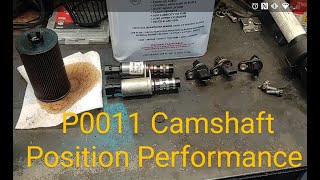
How to confirm: A definitive diagnostic step is to swap the intake and exhaust solenoids. They are identical and located on top of the valve cover. The intake solenoid is the one closer to the firewall (rear). Clear the codes and drive. If the code changes to P0014 (Exhaust Camshaft Position), the solenoid is confirmed bad.
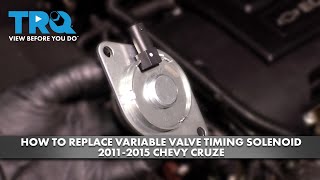
Typical fix: Replace the intake camshaft actuator solenoid. It is located on the top of the valve cover, held by one 10mm bolt, and is easily accessible.
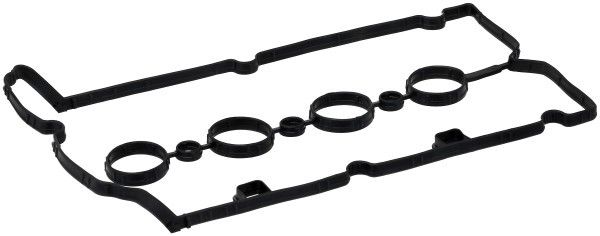
Est. part cost: $25-$60 - Failed PCV System (Valve Cover) 🟡 Medium Probability The PCV check valve, which is a rubber diaphragm integrated into the valve cover, is a notorious failure point. It tears, creating a vacuum leak. This leads to excessive oil being sucked into the intake manifold and burned, causing high oil consumption, which then results in a low oil level and triggers P0011.
How to confirm: Listen for a distinct whistling or sucking noise from the engine bay at idle. Another sign is a burning oil smell. A failed PCV system often triggers a P0171 (System Too Lean) code alongside P0011 due to the unmetered air entering the engine.
Typical fix: The entire valve cover assembly must be replaced, as the PCV components are integrated. This is a common DIY repair.
Est. part cost: $60-$150 - Sticking/Failed Intake Camshaft Phaser (Actuator) ⚪ Low Probability The phaser (the gear on the end of the camshaft) can get stuck due to internal wear or oil contamination, preventing it from changing cam timing correctly. This is less common but can happen after other causes are ruled out.
How to confirm: This is difficult to diagnose without professional tools. It's usually suspected after new solenoids and correct oil level/pressure fail to fix the code. A mechanic can command the phaser position with a scan tool to check for response.
Typical fix: Replace the intake camshaft phaser. This is a complex repair as it requires removing the valve cover and timing chain.
Est. part cost: $70-$150
Rare But Worth Checking
- Damaged or Missing Camshaft Actuator Oil Sleeve: Per TSB #PIP4543D, a small black plastic oil sleeve sits between the camshaft and the actuator (phaser). This part directs oil into the actuator. It can be easily damaged, lost, or forgotten during repairs like a timing chain or cylinder head service, leading directly to codes P0011, P0014, P0016, or P0017. The part is not sold separately and comes with a new actuator.
- Stretched Timing Chain or Failed Tensioner: While the 1.4L LUV uses a timing chain designed to last the engine's life, neglect (like infrequent oil changes) can cause it to stretch or the tensioner to fail. This causes a physical mismatch in cam/crank timing that solenoids cannot correct. This is a major repair and is often accompanied by rattling noises.
Diagnosis Steps
- Check Engine Oil Level and Condition: This is the most critical first step. Immediately check the dipstick. If the oil is low, top it off with full synthetic 5W-30 dexos1 oil, clear the code, and drive. If the oil is old or dirty, perform a full oil and filter change.
- Scan for Other Codes: Check for codes like P0171 (points to PCV) or P0014, which can help narrow the diagnosis.
- Inspect Solenoid Connectors: Ensure the electrical connectors for the intake and exhaust camshaft actuator solenoids are secure, and the locking tabs are engaged. Check for oil contamination in the connectors.
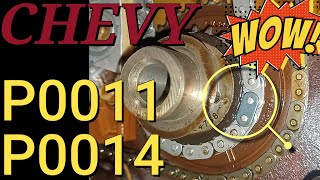
- Test the Solenoid (Swap Test): This is the most effective DIY diagnostic. The intake (rear) and exhaust (front) solenoids are identical. Unplug them, remove the single 10mm bolt from each, and swap their positions. Clear the codes and drive. If P0011 returns, the problem is not the solenoid. If the code changes to P0014, 🎬 See how to diagnose and fix P0011 and P0014 codes. the solenoid you moved to the exhaust side is faulty and must be replaced.
- Check PCV System: With the engine running, listen for a loud whistling or sucking sound from the valve cover. You can also try to remove the oil cap while the engine is running; if there is strong suction holding it down, the PCV diaphragm has likely failed.
- Advanced Diagnostics: If the above steps do not resolve the issue, the problem may be a faulty camshaft phaser, a stretched timing chain, or the missing oil sleeve from a previous repair. These require more in-depth mechanical inspection and are often best left to a professional.
Parts You'll Likely Need
- Intake Camshaft Position Actuator Solenoid
(OEM #55567050)— This is the most common mechanical part to fail, either by getting clogged with debris or failing electrically. It is identical to the exhaust solenoid.
Trusted brands: ACDelco, Delphi, Dorman
OEM price range: $40-$60
Aftermarket price range: $20-$40 - Engine Valve Cover with PCV Valve
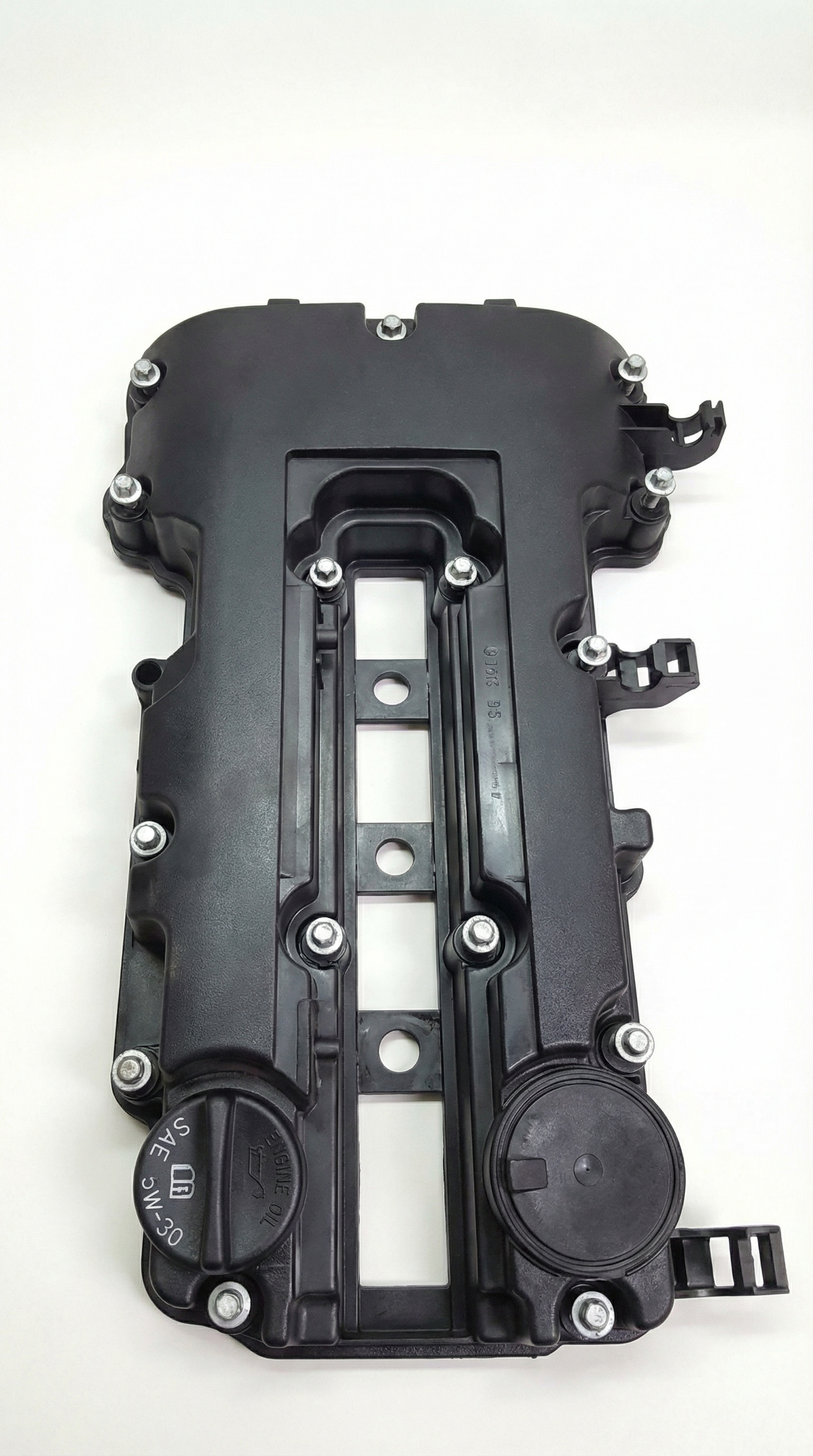
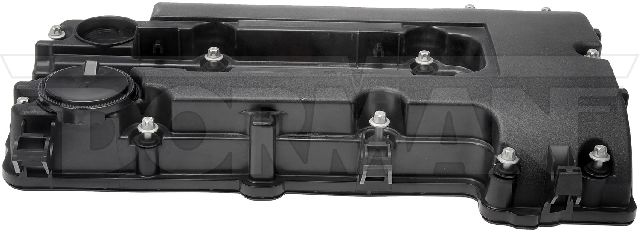
(OEM #25198874)— The integrated PCV valve diaphragm is a known, high-frequency failure point that causes oil consumption, which in turn triggers P0011 due to low oil levels. It often causes a P0171 code as well.
Trusted brands: ACDelco, Dorman
OEM price range: $100-$150
Aftermarket price range: $50-$90
Related Codes That Often Appear With This One
- P0014 — Exhaust Camshaft Position System Performance. Often appears if both solenoids are failing, if there's a systemic oil pressure/quality issue affecting both cam phasers, or after swapping a bad intake solenoid to the exhaust side for diagnosis.
- P0171 — System Too Lean (Bank 1). This is a strong indicator that the root cause is a failed PCV valve cover. The torn diaphragm creates a vacuum leak, leaning out the air-fuel mixture and triggering P0171, while also causing the oil consumption that leads to P0011.
- P0016 / P0017 — Crankshaft/Camshaft Position Correlation. These codes indicate a more serious physical timing mismatch between the crank and cams. They often point to a stretched timing chain, incorrect timing setup, or the missing plastic oil sleeve mentioned in TSB #PIP4543D.
Technical Service Bulletins (TSBs) & Recalls
- Bulletin #PIP4543D: Warns technicians that after a repair involving camshaft actuators, codes P0011, P0014, P0016, or P0017 can be set if a specific 'black plastic oil sleeve' is damaged or missing. This sleeve is critical for directing oil into the actuator.
Platform-Specific Known Issues
- NHTSA owner complaint ODI #11487940 mentions a recurring P0011 code that led a dealership to suggest a cylinder head replacement, indicating how misdiagnosis can lead to expensive and unnecessary repair suggestions.
- NHTSA owner complaint ODI #11353803 explicitly links DTC P0011 to TSB #PIP4543D, suggesting that the issue of the camshaft actuator oil sleeve is a known problem within the owner community.
Mechanic-Grade Diagnostic Values
- Camshaft Position Actuator Solenoid Resistance — expected: 5–9 Ω. Failure: A reading outside this range, especially a very high (kilo-ohm or mega-ohm) reading, indicates a failed solenoid.
- Camshaft Position Actuator Solenoid Low Reference Circuit to Ground — expected: Less than 5 Ω. Failure: A reading greater than 5 Ω suggests an open or high resistance in the ground circuit, which could point to a wiring issue or a problem with the ECM itself.
Scan Tool Commands That Help
- GDS2 (or equivalent professional scan tool): Intake Camshaft Position Actuator Command — After verifying oil level and swapping solenoids, a technician can use this command to manually activate the intake cam phaser. The scan tool should show the 'Desired Intake Camshaft Position' and 'Intake Camshaft Position' angle values matching as the command is sent. A failure to match indicates a problem with the phaser, oil passages, or timing chain, rather than the solenoid.
Wiring & Ground Locations
- K20 Engine Control Module (ECM) Connector X1, Pin 48 — The ECM is located in the engine bay. Pin 48 on the X1 connector is for the Intake Camshaft Phaser Solenoid.. This is the specific pin on the ECM that sends the control signal to the intake VVT solenoid. Testing for a PWM signal here can confirm if the ECM is commanding the solenoid correctly, helping to isolate a wiring fault from a faulty ECM.
- Q6F Camshaft Position Actuator Solenoid Valve – Intake — On top of the valve cover, the rearmost of the two solenoids (closer to the firewall).. This is the component itself. The harness connector here has a low reference (ground) circuit at terminal 1 and the control signal from the ECM at the other terminal. Testing resistance and voltage at this connector is a primary diagnostic step.
Real Owner Repair Stories
- ScannerDanner Forum (2016 Chevrolet Cruze, <50k miles) — Recurring P0011 code, no noticeable drivability issues.
❌ Tried (didn't work) Replacing VVT solenoids, Replacing timing chain (mechanic noted it had slack), Oil and filter change, Replacing the ECU (dealership attempt)
✅ What actually fixed it The dealership, after consulting with GM engineering, finally replaced the intake camshaft phaser (actuator), which resolved the code. - Reddit r/cruze (2013 Chevrolet Cruze 1.8L) — P0011 code, rattling noise on startup.
❌ Tried (didn't work) Replacing crankshaft sensor, Replacing both intake and exhaust solenoids, Using engine additives (Seafoam, Lucas)
✅ What actually fixed it The user reported that the issue was a failed intake sprocket (phaser), which had been replaced two years prior and failed again. Replacing the intake phaser resolved the code and the startup rattle.
OEM Part Supersession History
12992408→55567050— Standard part revision by the manufacturer.
Model Year Variations Within This Range
- 2011-2016: The 1.4L Turbo engine used in this generation is designated as RPO LUJ or LUV. While functionally very similar and sharing most parts relevant to P0011, there may be minor differences in associated components or software calibrations. However, the diagnosis and common failure points for P0011 remain consistent across both engine codes within this generation.
Diagnostic Flowchart
Other Known Issues on This Vehicle
Issues unrelated to this code that are worth knowing about as an owner of this generation:
- Coolant Leaks (Water Pump & Thermostat Housing) 🔴 High — Very common, can occur as early as 30,000-60,000 miles. The plastic thermostat housing is prone to cracking and the water pump seal often fails.
- Oil Cooler Gasket Leaks 🟠 Medium — Common issue on higher mileage vehicles. The seals between the oil cooler and the engine block degrade, causing oil to leak onto the hot exhaust manifold, creating a burning smell.
- PCV System / Valve Cover Failure 🔴 High — Extremely common. The integrated PCV diaphragm tears, causing vacuum leaks, high oil consumption, and rough running. Often triggers P0171.
- Transmission Problems 🟠 Medium — Some owners report harsh shifting, slipping, and premature transmission failure, particularly in the 2011 model year. (Ref: 16V502000)
- Turbocharger Failure 🟠 Medium — Can occur on higher mileage vehicles, sometimes due to oil starvation from clogged feed lines or other oil-related issues. Symptoms include loss of power and blue smoke from the exhaust.
Used vs. New Parts: Buying Guide for This Vehicle
When a used part is the smart pick: Given the low cost of new aftermarket parts, buying used is generally not recommended for the primary causes of P0011. The failure rate of solenoids and PCV valve covers is high, so a used part may have limited remaining life.
Donor-vehicle mileage cap: roughly under 60000 miles for the part to have meaningful remaining life.
What to inspect on the donor part:
- For a VVT solenoid, ensure the screens are intact and there is no heavy sludge.
- For a valve cover, inspect the PCV diaphragm area for any signs of tearing or oil residue, though internal damage may not be visible.
- Check for a clean donor engine, as this may indicate better maintenance history.
OEM-only on this vehicle (don't cheap out):
- Camshaft Phaser (Actuator): This is a critical timing component. Given the labor involved, using a new OEM (ACDelco) or high-quality OEM-supplier part is strongly recommended to ensure longevity.
- Timing Chain Kit: Always use a new, high-quality kit for this repair.
Aftermarket brands forum-validated for this vehicle:
- VVT Solenoids: ACDelco (OEM), Delphi, Dorman are commonly used and widely available.
- Valve Cover: ACDelco (OEM) and Dorman are common replacements.
Brands owners have reported issues with on this vehicle:
- Unbranded, no-name solenoids from online marketplaces can have high failure rates. While some owners report success with cheap aftermarket parts, others experience recurring codes.
Real Owner Stories
Aggregated from forums and TSBs cited above. Mileages and costs reflect what owners reported in those sources.
2017 Chevy Sonic LS 1.4L
Symptoms: The owner experienced a persistent P0011 code that remained even after attempting to fix it with a new solenoid.
What fixed it: Replacing the camshaft actuator (phaser) finally resolved the issue.
Source hint: Reddit discussion titled 'P0011 Code 2017 Chevy Sonic LS 1.4L : r/ChevySonic'
2011-2016 Chevrolet Cruze 1.4L
Symptoms: Recurring P0011 code; the dealership suggested a full cylinder head replacement.
What fixed it: The source notes this as a case of potential misdiagnosis leading to unnecessary expensive repair suggestions.
Source hint: NHTSA owner complaint ODI #11487940
Chevrolet Sonic 1.4L Turbo
Symptoms: A year-long, multi-shop battle with a persistent P0011 code that would not go away despite multiple attempts.
What fixed it: The thread illustrates the difficulty of diagnosis when simple fixes like solenoids fail to clear the code.
Source hint: Sonic Owners Forum thread titled 'P0011 Won't Go Away | Sonic Owners Forum'
Related OBD-II Codes
Frequently Asked Questions
Does Bulletin #PIP4543D apply to my Chevrolet Cruze if I still have P0011 after a repair?
Can a failed PCV system on my 1.4L LUV engine cause a P0011 code?
Which VVT solenoid should I replace for a P0011 code on my Cruze?
Is there a simple way to test if my intake solenoid is bad before buying a new one?
What type of oil should I use in my 2011-2016 Cruze to prevent VVT issues?
Why is my Cruze whistling and idling roughly along with the P0011 code?
Helpful Videos
Used OEM Parts in Stock
New Aftermarket Parts Available


The information in this article is provided for general reference and educational purposes only. Vehicle specifications, procedures, and part compatibility can vary by production date, trim level, and region. Always consult your vehicle's factory service manual and verify part numbers before purchasing or performing repairs. Safety-critical components such as airbags, seat belts, and braking systems should be installed by a qualified professional.
- Chevrolet Cruze:
- 🎬 Helpful Videos
- 🛍️ Shop This Part
- What's Unique About the 2011-2016 Chevrolet Cruze
- Symptoms You May Notice
- Most Likely Causes
- Rare But Worth Checking
- Diagnosis Steps
- Parts You'll Likely Need
- Related Codes That Often Appear With This One
- Technical Service Bulletins (TSBs) & Recalls
- Platform-Specific Known Issues
- Mechanic-Grade Diagnostic Values
- Scan Tool Commands That Help
- Wiring & Ground Locations
- Real Owner Repair Stories
- OEM Part Supersession History
- Model Year Variations Within This Range
- Diagnostic Flowchart
- Other Known Issues on This Vehicle
- Used vs. New Parts: Buying Guide for This Vehicle
- Real Owner Stories
- 2017 Chevy Sonic LS 1.4L
- 2011-2016 Chevrolet Cruze 1.4L
- Chevrolet Sonic 1.4L Turbo
- Related OBD-II Codes
- Frequently Asked Questions
- 🎟️ Get 5% Off