

P0010 on 2007-2013 Mini Cooper: Causes and Fixes for the VANOS Circuit Fault
On a 2007-2013 Mini Cooper, code P0010 is almost always caused by a faulty intake VANOS solenoid, often due to low or dirty engine oil. A new solenoid is the most common fix, costing around $40-$120 for the part, and is a simple DIY job for most owners. Swapping the intake and exhaust solenoids is the definitive diagnostic test.
- P0010 on your Mini is an electrical fault code for the intake VANOS solenoid.
- Before buying any parts, check your engine oil level. Low oil is a very common cause.
- The easiest way to diagnose a bad solenoid is to swap it with the identical exhaust solenoid and see if the code changes to P0013.
- Replacing a VANOS solenoid is a beginner-friendly DIY task that takes less than 30 minutes.
- Be aware of the N14 engine's reputation for timing chain issues; a persistent rattling noise should be investigated by a professional immediately.
What's Unique About the 2007-2013 Mini Cooper
The Mini N12 and N14 engines are known for two key issues that directly contribute to this code: high oil consumption and timing chain problems, often called the 'death rattle'. Because the VANOS system is hydraulically operated by engine oil, low oil levels or oil that is dirty and sludgy can easily clog or damage the delicate VANOS solenoids, leading to failure. While P0010 points to an electrical fault with the solenoid, the root cause is very often related to the engine's oil state, a frequent topic of discussion among Mini owners.
Symptoms You May Notice
- Check Engine Light is on
- Rough or uneven idle, may surge or stall when coming to a stop
- Reduced engine power and sluggish acceleration
- Decreased fuel economy
- Engine may be difficult to start
- Rattling or knocking noise from the engine, especially if related to timing chain issues
- Replacing the camshaft position *sensor*. P0010 is a fault with the actuator (solenoid) *circuit*, not the sensor that measures the camshaft's position. Replacing the sensor will not fix this code. 🎬 Watch: Understanding P0010 causes and fixes
Most Likely Causes
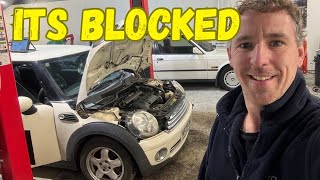
- Faulty Intake VANOS Solenoid 🔴 High Probability The solenoids are sensitive to oil contamination. 🎬 Watch: How to clean a blocked VANOS solenoid Sludge or debris from infrequent oil changes or timing chain guide wear can cause the solenoid to stick or fail electrically.
How to confirm: Swap the intake and exhaust VANOS solenoids (they are identical). Clear the codes. If the fault code changes to P0013 (Exhaust Camshaft Actuator Circuit), the solenoid is bad. You can also test its resistance with a multimeter; a good solenoid should read approximately 10-12 Ohms. An open circuit (infinite resistance) or short (near zero resistance) confirms failure.
Typical fix: Replace the faulty VANOS solenoid and its O-ring. It is often recommended to replace both intake and exhaust solenoids at the same time.
Est. part cost: $40-$120 - Low or Dirty Engine Oil 🔴 High Probability N12/N14 engines are known for consuming oil between changes. If the level gets too low, it can starve the VANOS system of the hydraulic pressure it needs to function, triggering faults.
How to confirm: Check the engine oil level via the dipstick. Inspect the oil's color and consistency. If it's low, black, or sludgy, this is a likely contributor.
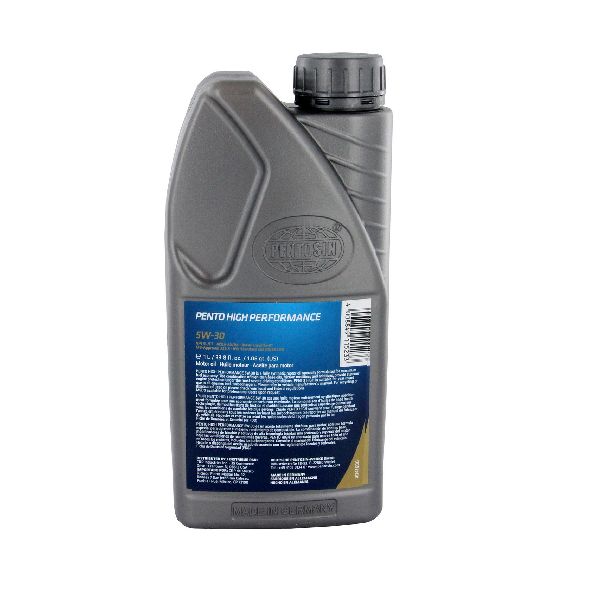
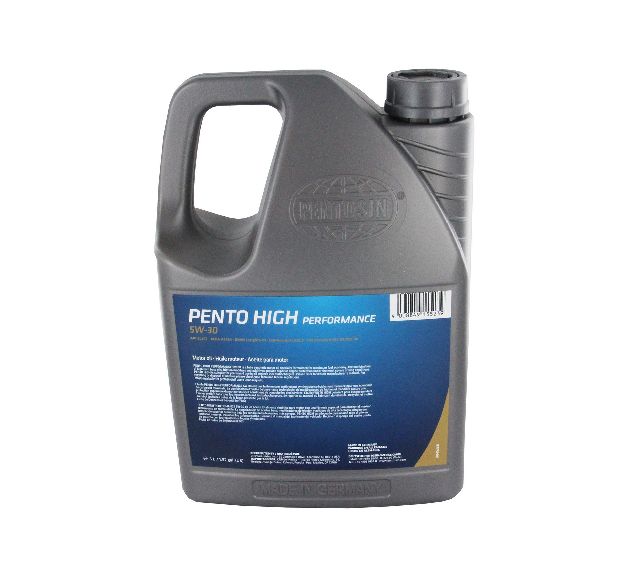
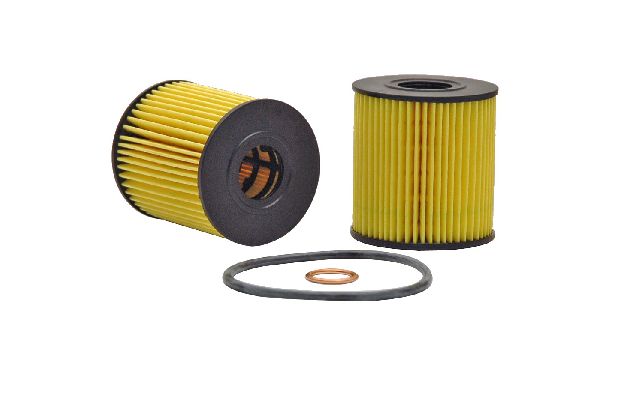
Typical fix: Top up the oil to the correct level or perform a complete engine oil and filter change using a manufacturer-specified oil like BMW LL-01 5W-30.
Est. part cost: $50-$100 - Damaged Wiring or Connector 🟡 Medium Probability Engine vibration and heat can cause wires to become brittle or connectors to fail. In one documented case, a mechanic improperly swapped the VANOS and purge valve connectors after a rebuild, causing P0010.
How to confirm: Visually inspect the wiring harness and connector going to the intake VANOS solenoid. Look for any signs of corrosion, frayed wires, or loose pins. Use a multimeter to check for continuity and proper voltage at the connector with the key on.
Typical fix: Repair the damaged section of wiring or replace the connector pigtail.
Est. part cost: $10-$30
Rare But Worth Checking
- Stretched Timing Chain or Failed Guides: While this typically throws other codes like P0015 or P0016, it's a very common issue on N14 engines. Debris from broken plastic chain guides can clog the oil pump pickup and the VANOS solenoid screens, indirectly causing a P0010. A rattling noise on startup is a major warning sign.
- Faulty Engine Control Module (DME): This is very rare, but if the solenoid and wiring are confirmed to be good, the fault may lie within the DME's internal driver circuit for the solenoid.
- Clogged Non-Return Valve: A small, often overlooked check valve in the cylinder head can get clogged with debris, restricting oil flow to the VANOS solenoid. This can cause VANOS-related codes even if the solenoid itself is good.
Diagnosis Steps
- Check Engine Oil Level and Condition: This is the first and most important step. If the oil is low or dirty, correct this before proceeding. Ensure the correct oil specification (e.g., BMW LL-01) is used.
- Scan for Codes: Confirm P0010 is the primary code. Note any other codes present, especially timing correlation or other VANOS codes.
- Inspect the Connector: Check the electrical connector on the intake VANOS solenoid (front of the engine, passenger side) for damage, oil contamination, or corrosion.
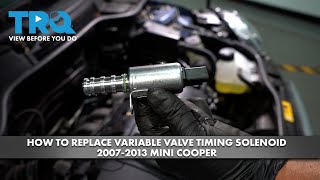
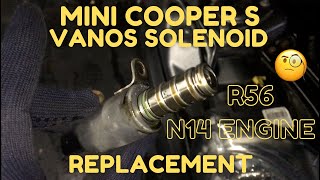
- Swap the Solenoids: The intake and exhaust VANOS solenoids are identical and easily accessible. Disconnect and unbolt both (typically a 10mm or T30 Torx bolt 🎬 See this step-by-step solenoid replacement walkthrough), swap their positions, and bolt them back in. Be careful as the Torx bolts are known to strip easily.
- Re-scan Codes: Clear the codes, start the engine, and let it run for a few minutes. If the code changes to P0013 (Exhaust 'B' Actuator Circuit), you have confirmed the solenoid itself is faulty. Purchase and install a new solenoid.
- If Code P0010 Returns: If the same code comes back after the swap, the problem is in the wiring to the intake solenoid or the DME. Test the circuit for voltage and continuity using a multimeter.
- Address Deeper Issues: If you hear a rattling noise, especially on cold starts, have your timing chain system inspected by a professional, as this is a known and serious issue with these engines.
Parts You'll Likely Need
- VANOS Solenoid
(OEM #11368610388 (supersedes 11367587760, 11367604292, 11367566652))— This is the most common part to fail, either electrically or by getting clogged with oil debris, directly causing the P0010 circuit fault.
Trusted brands: Genuine MINI, Pierburg (often the OEM supplier), Delphi
OEM price range: $90-$140
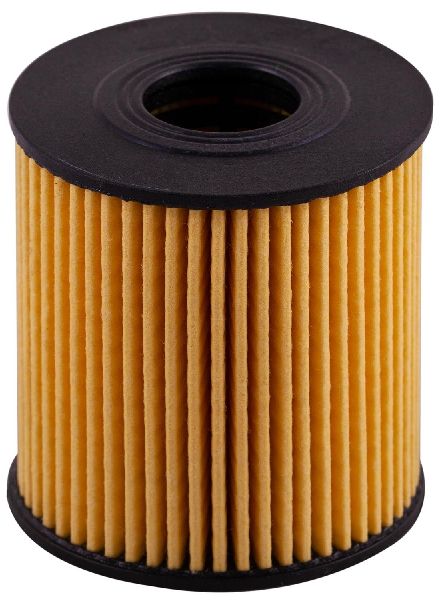
Aftermarket price range: $40-$80 - Engine Oil and Filter — Low or dirty oil is a primary cause of VANOS solenoid failure. An oil change is critical preventative maintenance.
Trusted brands: Liqui Moly, Motul, Castrol EDGE (must meet BMW LL-01 spec)
OEM price range: $70-$100
Aftermarket price range: $50-$80
Related Codes That Often Appear With This One
- P0013 — This code for the exhaust VANOS solenoid circuit will appear if you swap a faulty intake solenoid to the exhaust position as a diagnostic test.
- P0011 / P0012 — These codes indicate the camshaft timing is mechanically over-advanced or over-retarded. They can appear alongside P0010 if the solenoid failure also results in incorrect physical timing.
- 2A87, 2A9A, 2A82 — These are manufacturer-specific fault codes that point to VANOS system issues (like 'camshaft stuck' or 'invalid signal') and often accompany the generic P0010 code.
Technical Service Bulletins (TSBs) & Recalls
- TSB SI M 11 02 07: Describes the procedure for measuring timing chain stretch to determine if replacement is necessary, a key diagnostic for the 'death rattle' issue.
Platform-Specific Known Issues
- N14 Engine Timing Chain Failure ('Death Rattle'): These engines are infamous for premature timing chain wear, causing the chain to stretch and the plastic guides to break. This can lead to catastrophic engine failure if ignored. Debris from the guides can clog oil passages and the VANOS solenoids.
- High Oil Consumption: Both N12 and N14 engines tend to consume a significant amount of oil. Owners must check the oil level frequently (e.g., every other fuel fill-up) to prevent it from running low, which can cause a variety of oil-pressure related codes, including P0010.
Mechanic-Grade Diagnostic Values
- VANOS Solenoid Connector Voltage — expected: One pin should have 12V with ignition on. The other is a pulse-width modulated (PWM) signal from the DME.. Failure: A reading of 3V on the power wire with the key on can indicate an internal fault in the DME, as documented in one case where multiple components on the same circuit showed low voltage.
- VANOS Solenoid Resistance — expected: Approximately 10-12 Ohms between the two pins.. Failure: Infinite resistance (open circuit) or near-zero resistance (short circuit).
Hidden / Shadow Codes Worth Checking
- 2A87: Exhaust VANOS, jammed mechanically. Indicates the exhaust camshaft actuator is stuck. (see via BMW/MINI specific scan tool like ISTA, Autel, or Foxwell.)
- 2A82: Intake VANOS, jammed mechanically. Indicates the intake camshaft actuator is stuck. (see via BMW/MINI specific scan tool like ISTA, Autel, or Foxwell.)
- 2A9A: Cam sensor, inlet: signal invalid for synchronization. Often points to a VANOS solenoid issue rather than the sensor itself. (see via BMW/MINI specific scan tool like ISTA, Autel, or Foxwell.)
- 2A9B: Cam sensor, exhaust: signal invalid for synchronization. Can be triggered by a faulty exhaust VANOS solenoid. (see via BMW/MINI specific scan tool like ISTA, Autel, or Foxwell.)
Scan Tool Commands That Help
- ISTA, Autel, Foxwell: Delete/Reset VANOS adaptations — This function should be performed after replacing a VANOS solenoid or performing any work on the timing system. It forces the DME to relearn the camshaft position limits. The procedure involves turning the ignition on/off in a specific sequence as prompted by the scan tool.
- ISTA/D: VANOS system test / activation — This is a diagnostic test that allows a technician to command the VANOS solenoids to activate, helping to determine if the solenoid, wiring, and DME driver are functioning without having to physically remove parts.
Wiring & Ground Locations
- VANOS Solenoid Connector — On the N12 engine, both solenoids are on the front of the cylinder head. On the N14 engine, the single intake VANOS solenoid is on the back of the cylinder head, near the timing chain tensioner.. This is the primary point for testing the electrical circuit. It has two pins: one for 12V power and one for the PWM signal from the DME.
- Engine Ground Strap — A braided strap located in front of the battery, connecting the engine to the chassis. Accessing the chassis end may require removing the headlight.. A corroded or loose main engine ground can cause a wide range of electrical faults and CELs. While not specific to P0010, ensuring all grounds are clean and tight is a fundamental step in diagnosing any electrical issue.
- DME Ground Points — On the driver's side, in front of the firewall, near the DME and fuse box. There are also ground points under the sill cover on the right side.. A TSB (SI M61 05 07) notes that loose ground points can cause various electrical problems and a lack of communication with control modules.
Real Owner Repair Stories
- Reddit user p8ntballa100 (MINI Cooper S (N14 engine)) — Check engine light for retarded timing, rough idle, surging at low RPMs.
❌ Tried (didn't work) Cleaning the fuel filter
✅ What actually fixed it Replacing the VANOS solenoid (actuator) located on the rear of the N14 engine. The user noted that the intake manifold did not need to be fully removed, only the tubing on the left side. - CarTechnoloGY forum user (2008 Mini R56S (N14)) — Low voltage (3V) at the intake VANOS solenoid connector with ignition on.
❌ Tried (didn't work) Testing wiring harness continuity (showed less than 1 ohm)., Applying 12V to the harness and confirming it reached the solenoid pin., Replacing the DME with a used unit from a scrapyard, which exhibited the same 3V output.
✅ What actually fixed it The thread was a request for help and did not have a final resolution posted, but it serves as a valuable data point that a 3V reading at the solenoid may point to a DME-side issue affecting multiple components on the same circuit (turbo regulation valve, tank vent valve, etc.).
OEM Part Supersession History
11367566652, 11367587760, 11367604292→11368610388— Standard part evolution. Later versions are said to have improved screens to better resist clogging from oil debris.
Model Year Variations Within This Range
- 2007-2010 (Cooper S): The turbocharged N14 engine has single VANOS on the intake camshaft only. The solenoid is located on the rear of the cylinder head, which is less accessible than on other models.
- 2007-2013 (Cooper, non-turbo) and 2011+ (Cooper S): The naturally-aspirated N12 engine (and later N16/N18 turbo engines) uses a dual VANOS system with two identical, interchangeable solenoids for the intake and exhaust cams. Both are located on the front of the engine, making the 'swap test' for diagnosis possible.
Diagnostic Flowchart
Other Known Issues on This Vehicle
Issues unrelated to this code that are worth knowing about as an owner of this generation:
- Timing Chain Tensioner Failure & Stretch ('Death Rattle') 🔴 High — Very common on N14 engines (2007-2010 Cooper S), typically starts between 50k-80k miles. Less common but still possible on N12/N18. (Ref: MINI TSB SI M 11 02 07 addresses checking the timing chain tension.)
- High-Pressure Fuel Pump (HPFP) Failure 🔴 High — Common on N14 turbocharged engines, can fail as early as 40,000 miles. Symptoms include long cranks, rough cold starts, and code P2880. (Ref: Extended warranty programs were issued in some markets, but most have expired. No formal recall.)
- Thermostat Housing & Water Pump Leaks 🟠 Medium — The plastic thermostat housing is prone to cracking and leaking with age and heat cycles. Water pumps can also fail prematurely.
- Intake Valve Carbon Buildup 🟠 Medium — Significant issue on the direct-injection N14 engine, causing misfires, rough idle, and power loss. Typically requires cleaning (walnut blasting) every 40k-60k miles.
- High Oil Consumption 🟠 Medium — Both N12 and especially N14 engines are known to consume oil, often up to 1 quart per 1,000 miles. Owners must check oil levels frequently.
Used vs. New Parts: Buying Guide for This Vehicle
When a used part is the smart pick: Never. The VANOS solenoid is a relatively inexpensive part where the primary failure mode is internal clogging or electrical failure due to age and oil contamination. A used part carries a high risk of being near the end of its life or already clogged, offering poor value and potentially causing the same fault code to return shortly after installation.
What to inspect on the donor part:
- Not applicable as used parts are not recommended.
OEM-only on this vehicle (don't cheap out):
- While not strictly 'OEM-only', forum users strongly advise against cheap, no-name solenoids from marketplaces like eBay or Amazon. The risk of premature failure is high.
Aftermarket brands forum-validated for this vehicle:
- Pierburg: Widely cited as the Original Equipment Manufacturer (OEM) for Mini. A Pierburg-branded part is often identical to the Genuine MINI part at a lower cost.
- URO Parts: Offered as a lower-cost aftermarket alternative by some vendors.
- Topran: Mentioned as an aftermarket option.
Brands owners have reported issues with on this vehicle:
- Unbranded or generic solenoids from online marketplaces. While some users report success with extremely cheap parts, many others report them being dead-on-arrival or failing quickly.
Real Owner Stories
Aggregated from forums and TSBs cited above. Mileages and costs reflect what owners reported in those sources.
2011 Mini Cooper S — 174000 miles
Symptoms: Engine went into limp mode, CEL code P0010. Engine is idling a little rough - some surges up to 1.5K RPM and then back to 750.
What fixed it: Swapping the VANOS solenoids to confirm failure and replacing the faulty unit.
Source hint: North American Motoring owner_reports
2011 Mini Cooper Countryman S
Symptoms: P0010 code appeared immediately after a timing chain replacement.
What fixed it: Diagnostic solenoid swap test to determine if the issue was the new solenoid or a wiring problem from the recent repair.
Source hint: NorthAmericanMotoring.com Thread: '2011 Countryman S P0010 code help'
2007-2010 Mini Cooper S (N14)
Symptoms: Rattling noise from the engine, especially on cold starts; P0010 code triggered by debris clogging oil passages.
What fixed it: Replacement of the timing chain and plastic guides as per TSB SI M 11 02 07.
Source hint: vehicle_specific_issues: N14 Engine Timing Chain Failure ('Death Rattle')
Mini Cooper (N12/N14)
Symptoms: P0010 code triggered after an engine rebuild.
What fixed it: Correcting the electrical connections; the mechanic had accidentally swapped the gas purge valve and VANOS solenoid connectors.
Source hint: NorthAmericanMotoring.com Thread: 'P0010'
Related OBD-II Codes
Frequently Asked Questions
How can I tell if my P0010 code is caused by the 'Death Rattle' mentioned in TSB SI M 11 02 07?
Can I use any engine oil to clear the P0010 code on my N12/N14 engine?
Is there a simple way to test if my Intake VANOS solenoid is actually bad before buying a new one?
I just had my engine rebuilt and now I have a P0010 code. What should I check first?
Why does my Mini Cooper S keep getting P0010 even though I just changed the oil?
Helpful Videos

We Have This Part in Stock


The information in this article is provided for general reference and educational purposes only. Vehicle specifications, procedures, and part compatibility can vary by production date, trim level, and region. Always consult your vehicle's factory service manual and verify part numbers before purchasing or performing repairs. Safety-critical components such as airbags, seat belts, and braking systems should be installed by a qualified professional.
- Mini Cooper:
- 🎬 Helpful Videos
- 🛍️ Shop This Part
- What's Unique About the 2007-2013 Mini Cooper
- Symptoms You May Notice
- Most Likely Causes
- Rare But Worth Checking
- Diagnosis Steps
- Parts You'll Likely Need
- Related Codes That Often Appear With This One
- Technical Service Bulletins (TSBs) & Recalls
- Platform-Specific Known Issues
- Mechanic-Grade Diagnostic Values
- Hidden / Shadow Codes Worth Checking
- Scan Tool Commands That Help
- Wiring & Ground Locations
- Real Owner Repair Stories
- OEM Part Supersession History
- Model Year Variations Within This Range
- Diagnostic Flowchart
- Other Known Issues on This Vehicle
- Used vs. New Parts: Buying Guide for This Vehicle
- Real Owner Stories
- 2011 Mini Cooper S — 174000 miles
- 2011 Mini Cooper Countryman S
- 2007-2010 Mini Cooper S (N14)
- Mini Cooper (N12/N14)
- Related OBD-II Codes
- Frequently Asked Questions
- 🎟️ Get 5% Off