

P0010 on 2012-2018 Mazda 3 SKYACTIV: Electric VVT Circuit Causes and Fixes
On a 2012-2018 Mazda 3 with a SKYACTIV engine, P0010 is an electrical circuit fault, not a mechanical timing issue. Before considering expensive repairs, check the most common and cheapest culprit: a faulty Electric VVT (EVVT) relay in the engine bay fuse box. This $15-$30 part (OEM# G110-67-730) is a frequent failure point. Swapping it with the horn relay is a free way to diagnose the problem.
- P0010 on a SKYACTIV Mazda 3 is an ELECTRICAL circuit code for the INTAKE VVT MOTOR, not a mechanical or oil pressure issue.
- ALWAYS check the cheap and simple fixes first: start with the EVVT relay and inspect the wiring.
- DO NOT let a mechanic replace the mechanical camshaft phaser/actuator gear for this code without first ruling out the entire electrical circuit.
- The intake side uses an electric motor (EVVT), while the exhaust side uses a traditional oil solenoid (OCV). P0010 refers to the intake side.
What's Unique About the 2012-2018 Mazda 3
Unlike many vehicles that use oil-pressure-controlled solenoids (OCVs) for all camshaft adjustments, the 2012-2018 Mazda 3 SKYACTIV-G engine uses a unique hybrid system. It features a sophisticated electric motor (EVVT) to adjust the intake camshaft and a traditional hydraulic solenoid for the exhaust camshaft. Therefore, the common diagnosis of a 'stuck' or 'dirty' oil control valve for P0010 does not apply here. The fault lies specifically within the electrical control system of the intake's electric motor.
Generation note: This guide covers the end of the second generation (2012-2013) and the full third generation (2014-2018) of the Mazda 3, both of which used the SKYACTIV-G engines. The diagnosis and parts are consistent across these model years for the 2.0L and 2.5L engines.
Symptoms You May Notice
- Check Engine Light is on
- Rough idle or stalling
- Reduced engine power and acceleration
- Difficulty starting the engine
- Decreased fuel economy
- Vehicle may enter 'limp mode'
- Replacing the VVT Camshaft Actuator (Phaser): A Reddit user reported a shop incorrectly replaced this expensive mechanical gear for nearly $1000, which did not fix the P0010 electrical circuit code. The fix was a $17 relay.
- Replacing the Camshaft Position Sensor: This sensor reports cam position but does not control the actuator. A P0010 code is for the actuator circuit, not the sensor circuit.
Most Likely Causes
- Faulty Electric VVT Relay 🔴 High Probability This is a standard automotive relay that can fail over time. Multiple forum reports confirm it's a frequent and often overlooked cause for P0010, leading to expensive misdiagnoses.
How to confirm: Locate the EVVT relay in the engine compartment fuse box (the diagram on the lid should identify it). Swap the relay with an identical one from a non-critical circuit like the horn or fog lights. Clear the code and drive. If the code does not return, the relay is faulty.
Typical fix: Replace the relay. This is a simple plug-and-play part.
Est. part cost: $15-$40 - Damaged Wiring or Loose Connector 🟡 Medium Probability Engine vibration and heat can cause wires to chafe or connectors to become loose over time. A slice in the wiring insulation near the EVVT motor connector has been reported by owners.
How to confirm: Visually inspect the wiring harness and connector going to the electric VVT motor on the front of the engine. Look for breaks, corrosion, or loose pins. Mazda's diagnostic procedure involves checking for open circuits or shorts to ground in this harness.
Typical fix: Repair the damaged section of wire or clean/replace the connector terminals.
Est. part cost: $5-$50 - Failed Electric VVT Motor ⚪ Low Probability While the motor itself is robust, its internal electronics or the motor windings can fail, creating a circuit fault detected by the PCM.
How to confirm: After confirming the relay and wiring are good, this is the next logical step. Diagnosis involves using a multimeter to check for correct resistance at the motor's connector pins, which requires a factory service manual for specifications. This is best left to a professional.
Typical fix: Replace the entire electric VVT motor assembly.
Est. part cost: $650-$850 - Blown EVVT Fuse ⚪ Low Probability
How to confirm: Check the fuse box in the engine bay for a fuse labeled 'EVVT' (likely a 20A fuse) and inspect if it's blown. This fuse provides power to the EVVT relay.
Typical fix: Replace the blown fuse. If it blows again, there is a short circuit in the system that must be diagnosed.
Est. part cost: $1-$5
Rare But Worth Checking
- Faulty Powertrain Control Module (PCM): This is extremely rare. The PCM should only be considered after all other possibilities, including the entire circuit and the VVT motor itself, have been professionally tested and ruled out. Mazda's own diagnostic tree lists this as the final step after all wiring and component checks fail.
Diagnosis Steps
- Check Engine Oil: First, ensure the engine oil level is correct and the oil is clean. While this electrical code is not typically caused by oil issues, low/dirty oil is a common cause for general VVT system problems and is a good first check.
- Inspect the EVVT Relay: Locate the EVVT relay in the engine bay fuse box. The fuse box lid diagram should label it. Swap it with a known-good, identical relay from a non-critical system (e.g., horn, fog lights) and clear the codes. If the code does not return after driving, the relay was the issue.
- Check the EVVT Fuse: Locate and inspect the 'EVVT' 20A fuse in the engine bay fuse box. Replace if blown. If it blows repeatedly, a short circuit is present.
- Inspect Wiring and Connector: Carefully inspect the electrical connector and wiring going to the Electric VVT Motor on the intake side of the engine for any signs of damage, corrosion, or looseness. Pay close attention to the area near the connector where wires can chafe.
- Test the EVVT Motor Circuit: If the above steps do not resolve the issue, use a multimeter to test for power, ground, and signal at the EVVT motor connector. This step is best performed by a technician with access to a wiring diagram from the factory service manual.
- Test the EVVT Motor: If the circuit is good, the motor itself may have failed. It can be tested for resistance across its terminals. An out-of-spec reading indicates a failed motor.
- Consider the PCM: Only after all other components in the circuit have been proven to be good should the PCM be considered as the potential cause.
Parts You'll Likely Need
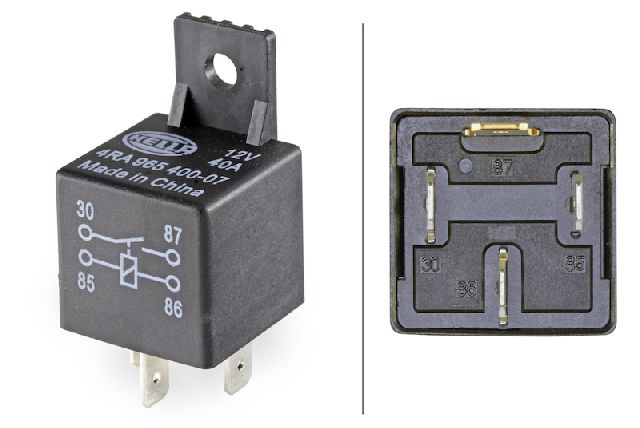
- Electric VVT Relay
(OEM #G110-67-730)— This is a common failure point and the cheapest, easiest part to replace. It is often overlooked, leading to more expensive and unnecessary repairs.
Trusted brands: Genuine Mazda, Standard Motor Products, Denso
OEM price range: $25-$40
Aftermarket price range: $15-$30 - Electric Intake VVT Motor
(OEM #PE01-12-4Z0C)— This is the actuator motor that the P0010 code refers to. It is replaced only after the relay, fuse, and wiring have been confirmed to be good.
Trusted brands: Genuine Mazda
OEM price range: $680-$875
Aftermarket price range: $300-$500
Related Codes That Often Appear With This One
- P0011 — If the circuit fault (P0010) leads to the camshaft being stuck in an advanced position, the PCM may also log a P0011 ('A' Camshaft Position - Timing Over-Advanced) code.
- P0012 — If the circuit fault (P0010) prevents the actuator from advancing the timing, the PCM may log a P0012 ('A' Camshaft Position - Timing Over-Retarded) code.
- P1380:00 — The official Mazda diagnostic procedure for P0010 instructs the technician to check if DTC P1380:00 (Variable Valve Timing Control Malfunction) is also present. If it is, troubleshooting for that code should be performed.
Technical Service Bulletins (TSBs) & Recalls
- SA-033-25 (Contextual): Although for a 2025 CX-70, it confirms that codes P0011, P0012, and P0010 can be related to a malfunctioning intake EVVT motor.
- SA-003/21: While unrelated to the engine (it concerns the MRCC radar system), this TSB for 2019-2021 Mazda3/CX-30 models shows an example of a service alert issued to address a known electronic component issue, similar to how the P0010 fault is a known pattern.
Platform-Specific Known Issues
- A Manufacturer Technical Service Bulletin for a newer Mazda (TSB SA-033-25) mentions DTCs P0011, P0012, and possibly P0010 being caused by a malfunction in the intake EVVT motor, confirming this technology is the focus for these codes on modern Mazda engines.
Mechanic-Grade Diagnostic Values
- Voltage at EVVT relay terminal C (harness-side) — expected: B+ (Battery Positive Voltage). Failure: Voltage is not B+. This indicates an open or short in the power supply circuit from the EVVT 20A fuse.
- Voltage at EVVT relay terminal D (harness-side) with ignition ON — expected: B+ (Battery Positive Voltage). Failure: Voltage is not B+. This indicates an issue with the PCM command circuit.
- Continuity check of EVVT motor ground circuit — expected: Continuity should exist between EVVT motor/driver connector terminal 2A (harness-side) and body ground.. Failure: No continuity indicates an open in the ground circuit.
- Physical inspection of EVVT motor joint — expected: The motor joint should rotate smoothly by hand in 15° increments.. Failure: If the joint does not rotate smoothly, the motor/driver assembly is faulty and should be replaced.
Scan Tool Commands That Help
- Professional Scan Tool (e.g., XTOOL, Autel, Mazda IDS): Bidirectional Control / Active Test for VVT Solenoid — Can be used to command the VVT system to operate while monitoring its response. While not a specific named command in the Mazda P0010 diagnostic tree, generic active tests can help verify if the actuator responds to commands, assuming the circuit is intact.
Wiring & Ground Locations
- EVVT Relay Connector — In the main engine compartment fuse and relay box.. This is the central power switch for the EVVT motor. Terminals C (power in) and D (control from PCM) are critical test points for voltage.
- EVVT Motor/Driver Connector — On the front of the engine, connected to the electric VVT motor on the intake camshaft side.. This is the final connection to the component. Terminal 2A is the ground circuit, and terminals like 1E and 2B receive power from the relay. Terminals 1A, 1B, 1C, 1D are communication lines with the PCM.
- PCM Connector — Typically located in the engine bay, protected from the elements.. The PCM is the source of the control signals. For example, PCM terminals 1AZ and 1O connect to the EVVT motor/driver and are checked for shorts during advanced diagnosis.
- Engine/Body Ground Points — Various points on the engine block, transmission, and chassis (e.g., strut tower).. A poor engine ground can cause a variety of electrical faults. The EVVT motor's ground circuit (Terminal 2A) relies on a solid connection to the body ground.
Real Owner Repair Stories
- Reddit user 'reddit_1975_user' on r/mazda3 (2012 Mazda 3 2.0 Skyactiv, 188,000 miles) — Check Engine Light with code P0010.
❌ Tried (didn't work) Replaced VVT cam actuator (phaser) for nearly $1000 at a shop; code returned two days later., Took to Mazda dealer, who wanted 6+ hours for diagnosis to trace wires., Replaced spark plugs, battery, and coil packs.
✅ What actually fixed it A second independent shop suggested replacing the VVT solenoid relay. A $17 relay was installed, the code was cleared, and the issue was resolved, with the permanent code clearing after 200 miles of driving. - Reddit user on r/MechanicAdvice (2013 Mazda 3 2.0L Skyactiv) — Car went into limp mode, threw code P0010.
❌ Tried (didn't work) Initially misidentified the part and looked at the wrong connector.
✅ What actually fixed it The user found a slice in the wire insulation very close to the correct EVVT actuator connector. While the user did not post a final repair confirmation, this discovery points directly to a wiring fault as the cause, a known issue for this code.
OEM Part Supersession History
PE01-12-4Z0A, PE01-12-4Z0B→PE01-12-4Z0C— Standard part revision and improvement over the production lifespan.
Heads up: The newest part number (PE01-12-4Z0C) is the correct and backward-compatible replacement.
Diagnostic Flowchart
Other Known Issues on This Vehicle
Issues unrelated to this code that are worth knowing about as an owner of this generation:
- Infotainment 'Ghost Touch' and System Malfunctions 🟠 Medium — Very common on 2014-2018 models. The screen may register phantom touches, freeze, or endlessly reboot. (Ref: Mazda issued a warranty extension program (CSP13) and a class-action settlement was reached. Dealers may replace the Center Display or Connectivity Master Unit (CMU) for affected vehicles.)
- Carbon Buildup on Intake Valves 🟡 Low — A known characteristic of all Gasoline Direct Injection (GDI) engines, including SKYACTIV-G. While Mazda's design aims to minimize it by running hotter valves, buildup can still occur over high mileage (80k+ miles), potentially causing rough idle or misfires. (Ref: No specific TSB, but it's a widely discussed topic. Preventative measures like using top-tier fuel and periodic spirited driving are recommended.)
- Stains/Streaks from Exterior Window Trim 🟡 Low — Reported on some models where black window trim leaches residue onto the paint, especially after car washes or UV exposure. (Ref: TSB 09-001/22 addresses 'white-streak stains' on door panels from exterior components on some models.)
Used vs. New Parts: Buying Guide for This Vehicle
When a used part is the smart pick: A used part is generally not recommended for this repair due to the low cost of the most common failure item. The EVVT relay is inexpensive new, making a used one pointless. If the entire EVVT motor is needed, a used unit from a low-mileage donor could be a cost-saving measure, but it carries significant risk as it is a precision electric motor.
Donor-vehicle mileage cap: roughly under 60000 miles for the part to have meaningful remaining life.
What to inspect on the donor part:
- Verify the donor vehicle's mileage; lower is always better.
- Check for a clean service history if possible; vehicles with regular oil changes are less likely to have engine-related issues.
- Inspect the part for any physical damage, corrosion on the connectors, or signs of being tampered with.
- Ensure the part number matches or is a compatible superseded version.
OEM-only on this vehicle (don't cheap out):
- Electric Intake VVT Motor (PE01-12-4Z0C): Due to the complexity and precision of this part, a Genuine Mazda OEM part is strongly recommended. Aftermarket options are limited and may not have the same durability or performance.
- Electric VVT Relay (G110-67-730): While quality aftermarket brands like Denso or Standard Motor Products are acceptable, the OEM relay is not significantly more expensive and is a safe choice.
Aftermarket brands forum-validated for this vehicle:
- Denso (for relay)
- Standard Motor Products (SMP) (for relay)
Brands owners have reported issues with on this vehicle:
- No-name or unbranded 'white box' parts from online marketplaces, especially for the EVVT motor.
Real Owner Stories
Aggregated from forums and TSBs cited above. Mileages and costs reflect what owners reported in those sources.
2012 Mazda 3 2.0L Skyactiv — 188000 miles
Symptoms: Check engine light on; shop misdiagnosed as needing a VVT cam actuator.
What fixed it: Replaced the VVT solenoid relay (EVVT relay).
Cost: $17-$17
Source hint: Reddit r/mazda3 (2022) thread regarding 2012 Skyactiv P0010 misdiagnosis
2013 Mazda 3
Symptoms: P0010 code present.
What fixed it: Repaired a slice in the wire insulation near the actuator connector.
Source hint: Reddit r/MechanicAdvice (2022) user report
2012-2018 Mazda 3
Symptoms: Rough idle and P0010 code.
What fixed it: Swapped the EVVT relay with the horn relay.
Source hint: Mazda3Revolution.com forum consensus
Related OBD-II Codes
Frequently Asked Questions
I have a 2012 Mazda 3 Skyactiv with P0010; a shop quoted me $1,000 for a VVT actuator. Is there a cheaper fix?
Does TSB SA-033-25 apply to my 2012-2018 Mazda 3?
My 2013 Mazda 3 has a rough idle and P0010. Could it be the wiring?
Is the EVVT fuse a common failure point for the P0010 code?
Can I use parts from a Mazda 6 or CX-5 to diagnose my Mazda 3's P0010 code?
Will cleaning my intake valves fix a P0010 code?
We Have This Part in Stock

The information in this article is provided for general reference and educational purposes only. Vehicle specifications, procedures, and part compatibility can vary by production date, trim level, and region. Always consult your vehicle's factory service manual and verify part numbers before purchasing or performing repairs. Safety-critical components such as airbags, seat belts, and braking systems should be installed by a qualified professional.
- Mazda 3:
- 🛍️ Shop This Part
- What's Unique About the 2012-2018 Mazda 3
- Symptoms You May Notice
- Most Likely Causes
- Rare But Worth Checking
- Diagnosis Steps
- Parts You'll Likely Need
- Related Codes That Often Appear With This One
- Technical Service Bulletins (TSBs) & Recalls
- Platform-Specific Known Issues
- Mechanic-Grade Diagnostic Values
- Scan Tool Commands That Help
- Wiring & Ground Locations
- Real Owner Repair Stories
- OEM Part Supersession History
- Diagnostic Flowchart
- Other Known Issues on This Vehicle
- Used vs. New Parts: Buying Guide for This Vehicle
- Real Owner Stories
- 2012 Mazda 3 2.0L Skyactiv — 188000 miles
- 2013 Mazda 3
- 2012-2018 Mazda 3
- Related OBD-II Codes
- Frequently Asked Questions
- 🎟️ Get 5% Off