

P0010 on 2011-2023 Dodge Charger 3.6L: Causes and Fixes for Camshaft Actuator Circuit
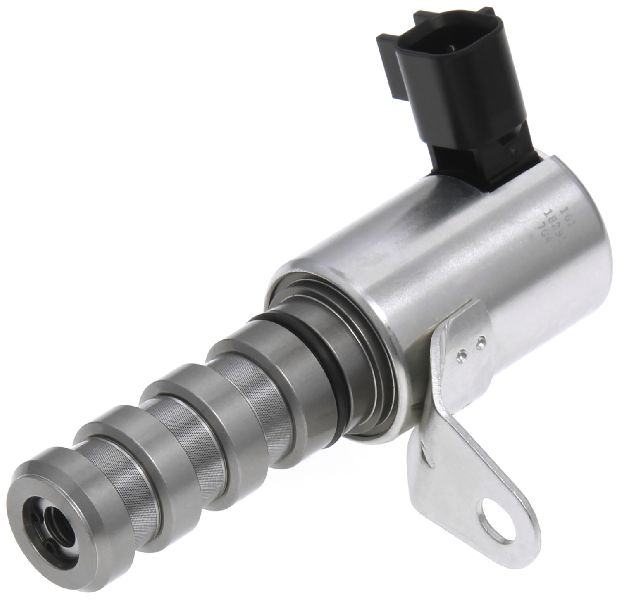
On the 3.6L Pentastar, P0010 almost always points to a faulty intake VVT solenoid on the passenger side, often caused by dirty or low engine oil. The most common fix is replacing the solenoid, which is held by three T30 Torx bolts. The job is simple and the OEM part costs about $90-$150.
- P0010 on your Charger 3.6L points to an electrical issue with the passenger-side intake VVT solenoid.
- Before buying any parts, check your engine oil. Low or dirty oil is a primary cause of this code.
- The most common repair is replacing the VVT solenoid, a simple and affordable DIY task.
- A smart diagnostic trick is to swap the intake and exhaust solenoids on the passenger side; if the code follows the part (changes to P0013), you've found the culprit.
- If you hear a rhythmic ticking from the engine, see a professional. P0010 could be a symptom of a more serious internal engine problem known as the 'Pentastar tick'.
What's Unique About the 2011-2023 Dodge Charger
The 3.6L Pentastar V6 engine is known for its Variable Valve Timing (VVT) system being highly sensitive to oil quality and pressure. Because of this, a P0010 code is frequently triggered by something as simple as a delayed oil change or using the wrong viscosity oil. However, this code can also be an early warning sign of the 'Pentastar tick,' a known issue where failing rocker arm roller bearings introduce metal debris into the oil. This debris then clogs the fine mesh screens on the VVT solenoids, leading to oil starvation, circuit faults, and eventually more severe engine damage if ignored.
Generation note: The 2011-2023 Dodge Charger is a single generation (LD), but it received a significant facelift in 2015. The 3.6L Pentastar engine has been used throughout this period with some updates. However, the causes, diagnosis, and repair for code P0010 are consistent across all model years in this range.
Symptoms You May Notice
- Check Engine Light is on
- Rough or unstable idle
- Poor acceleration and loss of power
- Reduced fuel economy
- Engine may be difficult to start
- Rattling or knocking noise from the engine.
- Replacing the camshaft position sensor. P0010 is a circuit code for the actuator (solenoid), not the sensor. While a sensor can fail, it will typically set a different code (e.g., P0340).
Most Likely Causes
- Low, Dirty, or Incorrect Viscosity Engine Oil 🔴 High Probability The Pentastar VVT system is hydraulic and highly dependent on oil pressure and cleanliness. Sludge from extended oil change intervals can clog the small passages and screens in the VVT solenoids, impeding their function and triggering a circuit code.
How to confirm: Check the oil level on the dipstick and examine its color and consistency. If the oil is low, black, or sludgy, this is a likely contributor.
Typical fix: Perform an engine oil and filter change using the manufacturer-specified full synthetic oil (typically SAE 5W-20 or 5W-30, check your owner's manual) and a quality filter.
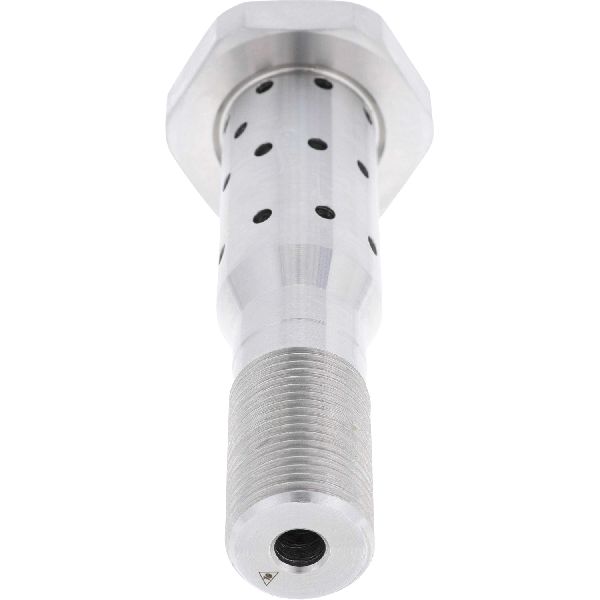
Est. part cost: $50-$100 - Faulty VVT Solenoid (Oil Control Valve) 🔴 High Probability The solenoid is the most common component to fail. It can get clogged internally with oil sludge or simply fail electrically over time, causing an open or short in the coil winding.
How to confirm: Swap the Bank 1 intake solenoid (passenger side, front) with the Bank 1 exhaust solenoid (passenger side, rear). They are identical parts. Clear the codes and drive. If the code changes to P0013 (Exhaust Camshaft Position Actuator Circuit), the solenoid is bad. You can also test the solenoid's resistance with a multimeter; a typical reading is between 7.0 and 8.0 ohms.
Typical fix: Replace the faulty VVT solenoid. It is held in by three T30 Torx bolts and is easily accessible on the front of the passenger-side cylinder head. Many owners recommend using an OEM Mopar part over aftermarket alternatives for better longevity.
Est. part cost: $40-$150 - Damaged Wiring or Connector 🟡 Medium Probability The plastic connector clip can become brittle from heat cycles and break, leading to a poor connection. Wires can also become frayed or contaminated with oil from nearby leaks.
How to confirm: Visually inspect the wiring harness and connector for the Bank 1 intake VVT solenoid. Check for broken plastic, corroded pins, or oil inside the connector. Wiggle the connector with the engine running to see if it affects the idle.
Typical fix: Clean the connector with electrical contact cleaner. If the connector or pigtail is damaged, it will need to be replaced.
Est. part cost: $20-$40
Rare But Worth Checking
- Failing Rocker Arms ('Pentastar Tick'): This is a serious mechanical issue known to affect Pentastar engines, especially from 2011-2013. A rhythmic ticking sound from the top of the engine is the key symptom, caused by failed rocker arm bearings. The failure introduces metal debris into the oil, which clogs VVT solenoids and oil passages. If you hear a tick, P0010 is a symptom of a larger problem that requires professional diagnosis and likely replacement of rocker arms, lifters, and potentially camshafts.
- Faulty Powertrain Control Module (PCM): This is very rare. The internal driver circuit in the PCM that controls the solenoid can fail. This should only be considered after all other possibilities (solenoid, wiring, oil) have been exhaustively ruled out with a multimeter and scan tool.
Diagnosis Steps
- Check the engine oil level and condition. Top off or perform an oil and filter change if it's low or dirty. Use the correct oil viscosity (e.g., 5W-20 or 5W-30). This solves the problem more often than you'd think.
- Inspect the electrical connector and wiring for the Bank 1 (passenger side) intake VVT solenoid. Look for damage, corrosion, or oil contamination. The connector clip is often brittle; handle with care.
- To confirm a bad solenoid, swap the Bank 1 intake solenoid with the Bank 1 exhaust solenoid (they are identical). They are located on the front of the passenger-side cylinder head. Clear the codes with a scan tool.
- Drive the vehicle and re-scan. If the code changes to P0013, the solenoid you moved is confirmed to be faulty.
- If P0010 returns after the swap, the problem is in the wiring or the PCM. Use a multimeter to check for battery voltage on one pin and a control signal (pulse-width modulated ground) from the PCM on the other pin at the solenoid connector with the key on.
- If wiring checks out and the solenoid is good, listen carefully for a 'Pentastar tick' which could indicate a larger mechanical issue like failing rocker arms contaminating the oil system.
- If all else fails, the issue may be a rare PCM failure, which requires professional diagnosis.
Parts You'll Likely Need
- VVT Solenoid / Oil Control Valve
(OEM #05184101AH)— This is the most common part to fail, either due to internal clogging from dirty oil or electrical failure. It directly controls oil flow to the cam phaser. The original part number 05184101AG has been superseded by 05184101AH.
Trusted brands: Mopar (OEM), Dorman, Standard Motor Products (SMP)
OEM price range: $90-$150
Aftermarket price range: $40-$90
Related Codes That Often Appear With This One
- P0011 — P0011 indicates 'Timing Over-Advanced' for the same camshaft. While P0010 is an electrical circuit code, a malfunctioning solenoid can sometimes lead to performance-related timing codes as well.
- P0013 — This is the equivalent circuit code for the Bank 1 exhaust camshaft actuator. If you swap the intake and exhaust solenoids for diagnosis, you expect P0010 to change to P0013 if the solenoid is faulty.
Technical Service Bulletins (TSBs) & Recalls
- Customer Satisfaction Notification V51: This notification for 2011-2014 models involves reprogramming the Powertrain Control Module (PCM) to correct how Permanent Fault Codes (PFC) are stored and cleared, which could prevent issues during a smog check. While not directly for P0010, ensuring your vehicle's software is up-to-date is good practice.
- TSB 09-002-14 Rev. B: This TSB addresses misfire codes (P0300, P0302, P0304, P0306) on 2011-2013 models caused by excessive cylinder leakage from a faulty left cylinder head. While not directly for P0010, it's related to the early engine issues on this platform and was covered by an extended warranty (X56).
Platform-Specific Known Issues
- The 3.6L Pentastar engine is known for the 'Pentastar tick,' caused by premature failure of the rocker arm roller bearings. This failure can release metal debris into the oil, which clogs the VVT solenoid screens and causes codes like P0010. If you hear a ticking noise, this code may be a symptom of the larger issue requiring replacement of the rocker arms and potentially camshafts.
Mechanic-Grade Diagnostic Values
- VVT Solenoid Internal Resistance — expected: 7.0 to 8.0 Ohms at 68°F (20°C). Failure: A reading of infinity (OL) indicates an open coil, while a reading near zero ohms indicates a shorted coil.
- VVT Solenoid Connector Power Supply Pin — expected: ~12V (Battery Voltage) with Key On, Engine Off. Failure: No voltage suggests a problem with the power supply from the Auto Shutdown (ASD) relay or a break in the power wire.
- VVT Solenoid Control Circuit Resistance — expected: Below 5.0 Ohms. Failure: Resistance above 5.0 Ohms indicates an open or high-resistance in the control wire between the solenoid connector and the PCM.
Hidden / Shadow Codes Worth Checking
- P0010, P0013, P0020, P0023 simultaneously: While not a single 'shadow code,' having all four VVT circuit fault codes appear at the same time is a specific diagnostic pattern. It strongly indicates a common-point failure rather than four individually failed solenoids. (see via This pattern is visible on any standard OBD-II scanner. TSB 08-111-21 identifies the root cause as a poor engine ground harness connection.)
Scan Tool Commands That Help
- wiTECH, Autel, XTOOL, or other professional bidirectional scanner: VVT Solenoid Actuation Test / Active Test — Use this command to manually cycle the VVT solenoid. A distinct clicking sound confirms the solenoid is mechanically and electrically responding to commands. No click points to a seized or dead solenoid. This test helps isolate a faulty solenoid from a wiring or PCM driver issue without having to remove the part first.
Wiring & Ground Locations
- Bank 1 Intake VVT Solenoid Connector — On the front of the passenger-side cylinder head, connecting to the forward-most VVT solenoid.. This is the primary point for testing voltage and resistance for the circuit related to code P0010.
- Engine Ground Harness Connection (per TSB 08-111-21) — The TSB applies to the engine harness ground connection; its exact location may vary slightly by model year but should be traced from the main engine harness to the chassis or block.. A poor connection at this single ground point can cause all four VVT circuit codes (P0010, P0013, P0020, P0023) to trigger simultaneously. Technicians may waste time diagnosing individual solenoids when the root cause is a shared ground.
Real Owner Repair Stories
- YouTube channel 'World Mechanics' (2018 Dodge Charger 3.6L (demonstration also applies to Dodge Journey)) — Check Engine Light with code P0010.
❌ Tried (didn't work) The video proceeds directly to diagnosis, first recommending a check of wiring and oil level.
✅ What actually fixed it The VVT solenoid was replaced, the code was erased, and the Check Engine Light did not return after starting the engine, confirming the fix. - Go-Parts repair data citation (2021 Chrysler 300 3.6L V6) — Multiple VVT circuit open codes (P0010, P0013, P0020, P0023) appeared simultaneously.
❌ Tried (didn't work) Replacing the individual VVT solenoids would not have resolved the issue.
✅ What actually fixed it The issue was traced to a poor engine ground connection, as outlined in TSB 08-111-21. Repairing the ground connection cleared all four codes. - ChallengerTalk forum user (Dodge Challenger 3.6L) — Check Engine Light with codes P0010 and P0013, slight drop in MPG.
❌ Tried (didn't work) User was considering cleaning the solenoids.
✅ What actually fixed it The user admitted to neglecting oil and filter changes. The advice given and acknowledged was that dirty oil was the root cause, and the proper fix is to perform an oil change and replace the solenoids, not clean them.
"I Checked Everything" — The Actual Cause
- In cases where multiple VVT circuit codes (P0010, P0013, etc.) are present at once, individual circuit tests for each solenoid may show no faults. The actual cause, as identified in TSB 08-111-21, can be a single poor engine ground connection that affects all VVT solenoid circuits simultaneously.
When the Usual Fixes Don't Work
- While replacing the VVT solenoid is the most common fix, it is not always the solution. In a documented case for a 2021 model, multiple VVT codes including P0010 were present simultaneously. The root cause was not the solenoids, but a poor engine ground connection as described in TSB 08-111-21. The fix was to repair the ground wire, not replace any of the VVT components. This highlights the importance of diagnosing multiple codes as a systemic issue before replacing individual parts.
OEM Part Supersession History
05184101AG→05184101AH— Standard part revision and improvement by the manufacturer.
Heads up: None. The new part number (05184101AH) is a direct replacement for the old one.
Model Year Variations Within This Range
- 2014-2023: The oil filter and housing assembly was redesigned. The new design integrates a bypass valve that can be a point of failure, especially if incorrect or low-quality oil filters are used. A failure here can cause oil pressure issues that lead to VVT codes like P0010.
- 2016-2023: The 3.6L Pentastar engine was significantly updated ('Pentastar Upgrade'). It added a two-stage Variable Valve Lift (VVL) system alongside the existing VVT system. While P0010 diagnosis is unchanged, these engines have additional VVL solenoids and more valvetrain complexity.
Diagnostic Flowchart
Other Known Issues on This Vehicle
Issues unrelated to this code that are worth knowing about as an owner of this generation:
- Cracked Oil Filter / Cooler Housing Assembly 🔴 High — Extremely common, especially on 2011-2016 models. Often fails between 60,000 and 120,000 miles, causing significant oil and/or coolant leaks in the engine valley.
- 'Pentastar Tick' (Rocker Arm / Lifter Failure) 🔴 High — Common, particularly in earlier 2011-2014 engines, but can occur at any mileage. Caused by failing needle bearings in the rocker arms, leading to camshaft damage if not addressed. (Ref: TSB 09-002-14 Rev. B)
- Cooling System Failures (Thermostat, Radiator, Water Pump) 🟠 Medium — Failures of the thermostat, water pump, and radiator are frequently reported, typically after 80,000 miles, leading to overheating conditions.
- Cylinder Head Failure (Bank 2) 🔴 High — Primarily affected 2011-2013 models, causing misfires on cylinders 2, 4, and 6. This was due to premature wear of the valve guides and seats. (Ref: TSB 09-002-14 Rev. B (also covered by X56 Warranty Extension for 10 years/150,000 miles))
Used vs. New Parts: Buying Guide for This Vehicle
When a used part is the smart pick: It is generally not recommended to buy a used VVT solenoid. This part is both electronic and hydraulic, and its internal passages and screen are highly susceptible to clogging from contaminated oil in the donor vehicle. The risk of inheriting the same problem or getting a part with a short lifespan is high.
What to inspect on the donor part:
- If buying used is unavoidable, visually inspect the mesh screens for any signs of sludge or metallic debris.
- Test the resistance with a multimeter before purchase; it should be between 7.0 and 8.0 Ohms.
OEM-only on this vehicle (don't cheap out):
- VVT Solenoid: Forum consensus and mechanic advice strongly favor using the OEM Mopar part (05184101AH). Aftermarket solenoids for this application are reported to have a higher rate of premature failure.
Aftermarket brands forum-validated for this vehicle:
- While OEM is preferred, Dorman is a widely available aftermarket alternative that offers a direct replacement.
Brands owners have reported issues with on this vehicle:
- No specific brands are universally cited as 'avoid at all costs,' but there is a general caution against inexpensive, unbranded parts for this specific component due to its critical role in engine timing and sensitivity to manufacturing tolerances.
Real Owner Stories
Aggregated from forums and TSBs cited above. Mileages and costs reflect what owners reported in those sources.
2011-2013 Dodge Charger 3.6L Pentastar V6
Symptoms: Misfire codes (P0300, P0302, P0304, P0306) and excessive cylinder leakage.
What fixed it: Replacement of the left cylinder head as part of the X56 extended warranty coverage.
Source hint: TSB 09-002-14 Rev. B
2011-2023 Dodge Charger 3.6L Pentastar V6
Symptoms: P0010 code persists even after replacing the VVT solenoid with a part that passed a resistance test; clean oil was present.
What fixed it: Investigation into potential loose connectors, clogged oil passages from sealant, or checking for a bad PCM ground/continuity.
Source hint: Reddit r/MechanicAdvice: P0010, No wire shorts, new VVT solenoid passes resistance test, clean oil
2011-2023 Dodge Charger 3.6L Pentastar V6
Symptoms: P0010 code triggered on a 3.6L engine; owner needed to verify if the issue was the solenoid, wiring, or the computer.
What fixed it: Testing the ground wire and checking for continuity back to the PCM connector to determine if the PCM itself had failed.
Source hint: DodgeForum.com: How to fix p0010 code
Related OBD-II Codes
Frequently Asked Questions
Is there a TSB for the 'Pentastar tick' on my 2011-2013 Dodge Charger that might be causing P0010?
Can I swap parts to test if the VVT solenoid is bad on my 3.6L Pentastar?
What specific oil should I use in my Charger to prevent VVT circuit codes?
Does Customer Satisfaction Notification V51 apply to my 2014 Charger's P0010 code?
Why does my Charger's VVT connector keep failing?
Is the P0010 code related to the common oil filter housing leaks on the 2011-2016 Charger?
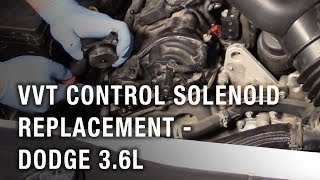
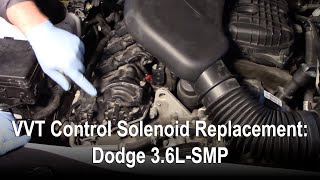
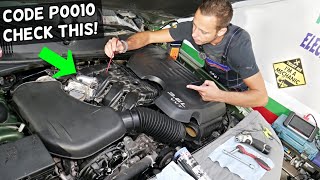
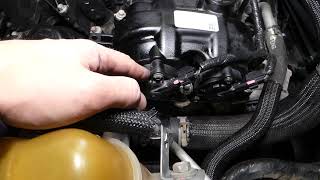
Helpful Videos
![How to Fix P0010 Engine Code in 4 Minutes [2 DIY Methods / Only $6.53]](https://img.youtube.com/vi/p9bv-ibS4OE/mqdefault.jpg)
We Have This Part in Stock


The information in this article is provided for general reference and educational purposes only. Vehicle specifications, procedures, and part compatibility can vary by production date, trim level, and region. Always consult your vehicle's factory service manual and verify part numbers before purchasing or performing repairs. Safety-critical components such as airbags, seat belts, and braking systems should be installed by a qualified professional.
- Dodge Charger:
- 🎬 Helpful Videos
- 🛍️ Shop This Part
- What's Unique About the 2011-2023 Dodge Charger
- Symptoms You May Notice
- Most Likely Causes
- Rare But Worth Checking
- Diagnosis Steps
- Parts You'll Likely Need
- Related Codes That Often Appear With This One
- Technical Service Bulletins (TSBs) & Recalls
- Platform-Specific Known Issues
- Mechanic-Grade Diagnostic Values
- Hidden / Shadow Codes Worth Checking
- Scan Tool Commands That Help
- Wiring & Ground Locations
- Real Owner Repair Stories
- "I Checked Everything" — The Actual Cause
- When the Usual Fixes Don't Work
- OEM Part Supersession History
- Model Year Variations Within This Range
- Diagnostic Flowchart
- Other Known Issues on This Vehicle
- Used vs. New Parts: Buying Guide for This Vehicle
- Real Owner Stories
- 2011-2013 Dodge Charger 3.6L Pentastar V6
- 2011-2023 Dodge Charger 3.6L Pentastar V6
- 2011-2023 Dodge Charger 3.6L Pentastar V6
- Related OBD-II Codes
- Frequently Asked Questions
- 🎟️ Get 5% Off