

P0010 on 2014-2018 Chevrolet Silverado 5.3L: Intake Cam Actuator Circuit Causes and Fixes
On a 2014-2018 Silverado 5.3L, code P0010 is almost always caused by a faulty Bank 1 (driver's side) intake camshaft position actuator solenoid, OEM part number 12681018. Before replacing it, check your engine oil level and condition. A new ACDelco solenoid costs about $85-$110 and is a DIY-friendly fix that can be confirmed by swapping it with the adjacent exhaust solenoid.
- First, check your engine oil. Low or dirty oil is a primary cause of VVT system faults.
- The most likely failed part is the Bank 1 (driver's side) intake camshaft position actuator solenoid (Part #12681018).
- A simple, no-cost diagnostic is to swap the intake and exhaust solenoids on the driver's side to see if the trouble code follows the part (changes to P0013).
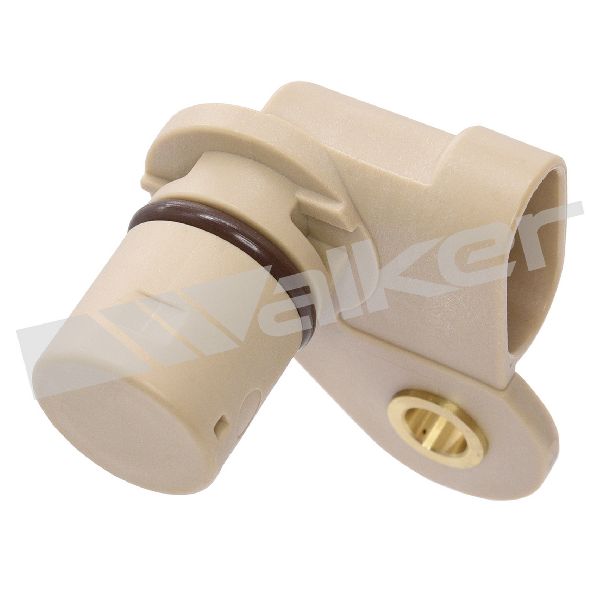
- Do not confuse the actuator solenoid with the camshaft position sensor; they are different parts, and replacing the sensor will not fix P0010.
- Consider replacing both the intake and exhaust solenoids on the driver's side at the same time for a more robust repair.
What's Unique About the 2014-2018 Chevrolet Silverado
On the 5.3L EcoTec3 V8 engine, the camshaft position actuator solenoids are a known failure point. The issue is common enough that GM has issued service bulletins for similar engines with the same codes, recommending solenoid replacement. While P0010 is an electrical circuit code, it's most often triggered by the internal failure of the solenoid itself (an open or shorted coil) rather than external wiring damage. However, harness chafing against the engine, particularly the camshaft cover, is also a possibility noted in GM bulletins for this platform. For instance, Bulletin #PIP5553A notes that a wiring jumper harness can chafe at the bolt of the X154 connector, potentially leading to a stall or a crank-no-start condition alongside code P0010.
Symptoms You May Notice
- Check Engine Light illuminated
- Rough or unstable engine idle
- Engine hesitation or stalling, especially at low speeds or at stop signs.
- Reduced engine power and poor acceleration
- Increased fuel consumption.
- Rattling or ticking noise from the engine
- Replacing the Camshaft Position Sensor. P0010 is a code for the actuator solenoid circuit, not the position sensor. The sensor reads cam position, while the solenoid controls it. Replacing the sensor will not fix this code.
Most Likely Causes
- Faulty Bank 1 Intake Camshaft Position Actuator Solenoid 🔴 High Probability These solenoids are a common failure item on GM V8 engines. They can fail electrically, causing an open or short in the internal coil, which directly triggers the P0010 circuit code. Debris from oil can also clog the internal passages and cause the mechanical part of the solenoid to stick.
How to confirm: Swap the Bank 1 (driver's side) intake solenoid with the Bank 1 exhaust solenoid, as they are identical. Clear the codes and drive. If the code changes to P0013 ('B' Camshaft Position Actuator Circuit), the solenoid is faulty. Alternatively, test the solenoid's resistance with a multimeter; a reading outside of the 7-12 Ohm range (or an open circuit/OL) indicates failure. Some service manuals specify a range of 6.9-7.9 ohms for similar GM engines, while NHTSA ODI #11342559 describes a failed intake solenoid testing at 1.4k Ohms when the specification was 8-13 Ohms.
Typical fix: Replace the Bank 1 intake camshaft position actuator solenoid (Part No. 12681018). Many technicians and GM TSB 17-NA-098 recommend replacing both the intake and exhaust solenoids on the affected bank at the same time as a preventative measure.
Est. part cost: $85-$110 for one OEM ACDelco solenoid. - Low, Dirty, or Incorrect Viscosity Engine Oil 🟡 Medium Probability The VVT system is entirely dependent on clean oil at the correct pressure. Sludge or debris from delayed oil changes can clog the tiny filter screens and passages within the actuator solenoid, causing it to malfunction and potentially trigger a circuit fault. Using oil that does not meet the GM dexos1 specification can accelerate this process.
How to confirm: Check the engine oil level on the dipstick and inspect its condition. If the oil is very dark, sludgy, or below the 'add' line, this is a likely contributor. Check service records for the last oil change interval. The VVT system is sensitive to oil pressure, which should be at least 22-24 PSI at a hot idle.
Typical fix: Perform an engine oil and filter change using a full synthetic oil that meets GM's dexos1 specification (0W-20 is typically specified for the 5.3L EcoTec3). Note that in some cases, such as reported in NHTSA ODI #11342559, an oil change alone may not resolve the code if the solenoid has already failed electrically.
Est. part cost: $50-$100 - Damaged Wiring or Poor Connection ⚪ Low Probability GM has issued multiple service bulletins (e.g., 18-NA-307, 21-NA-149, PIP5553A) regarding engine wiring harnesses chafing on various engine components, which can lead to a short or open circuit. On the 5.3L V8, common chafe points include the edge of the camshaft cover and other brackets on the front of the engine.
How to confirm: Visually inspect the wiring harness leading to the Bank 1 intake VVT solenoid. Check for chafing against the camshaft cover, cylinder head, or nearby brackets. Unplug the connector and check for corrosion, backed-out pins, or oil contamination inside the connector. Check for 12V power on one pin of the connector with the key on, engine off.
Typical fix: Repair the damaged section of wire and protect the harness from future contact using woven polyester electrical tape and re-routing or securing with zip ties. If the connector is damaged, replace the connector pigtail.
Est. part cost: $15-$40 for a connector pigtail
Rare But Worth Checking
- Failed Engine Control Module (ECM): This is very rare. The ECM's internal driver for the solenoid circuit can fail. This should only be considered after all other possibilities, including wiring and the solenoid itself, have been exhaustively checked and confirmed to be good.
Diagnosis Steps
- Check the engine oil level and condition. If it is low, dirty, or past its service interval, perform an oil and filter change with the correct viscosity oil (typically 0W-20 full synthetic meeting dexos1 spec). Clear the code and see if it returns.
- Inspect the wiring harness and connector for the Bank 1 (driver's side) intake camshaft position actuator solenoid. It is the front-most of the two solenoids on the driver's side cylinder head. Look for any signs of damage, chafing, or corrosion.
- Perform a solenoid swap test. The intake and exhaust solenoids on Bank 1 are identical. Unplug both, remove the single 10mm bolt holding each, and swap their positions. Clear the codes and drive the vehicle. If P0010 returns, the issue is likely in the wiring or ECM. If the code changes to P0013 (Exhaust Actuator Circuit), the solenoid you moved is faulty and must be replaced.
- If a swap test is not feasible, test the solenoid directly. Unplug it and measure 🎬 See this step-by-step VVT solenoid testing guide the resistance between its two pins with a multimeter. A healthy solenoid should read between 7 and 12 ohms. An infinite reading (OL) means it's open, and a reading near zero means it's shorted; either indicates replacement is needed.
- If the solenoid tests good, check the wiring. With the key on and engine off, use a multimeter to check for 12 volts at one of the pins on the harness connector. Then, check the continuity of the control wire from the other pin back to the ECM. Check for shorts to ground on both wires.
- If the solenoid and wiring are confirmed to be good, the fault may lie within the Engine Control Module (ECM), though this is very uncommon.
Parts You'll Likely Need
- Camshaft Position Actuator Solenoid
(OEM #12681018)— This is the most common part to fail, either electrically (internal open/short) or by getting clogged with debris, directly causing the P0010 code.
Trusted brands: ACDelco (OEM/GM Genuine), Delphi, Dorman
OEM price range: $85-$110
Aftermarket price range: $40-$75
Related Codes That Often Appear With This One
- P0011 — P0011 indicates the camshaft timing is over-advanced. An electrical fault in the solenoid (P0010) often prevents it from controlling oil flow, causing the cam timing to be incorrect and setting P0011 as well. TSB 17-NA-098 lists these codes together.
- P0013 — This is the circuit code for the exhaust ('B') solenoid on the same bank. It will appear if the diagnostic swap test (swapping intake and exhaust solenoids) is performed. It can also appear if both solenoids fail around the same time, which is common.
- P0020 — This is the circuit code for the intake ('A') solenoid on Bank 2 (passenger side). It would typically only appear with P0010 if a diagnostic swap was performed between banks or if multiple solenoids have failed.
Technical Service Bulletins (TSBs) & Recalls
- 17-NA-098: While the public version often cites the 2.4L engine, it addresses P0010, P0011, P0013, and P0014, recommending replacement of both camshaft position actuator solenoid valves due to failure. This procedure is commonly applied to the 5.3L V8 as well.
- 18-NA-307 / 21-NA-149: Pertains to related codes but highlights a known issue where the engine wiring harness can chafe on the camshaft cover or other engine brackets, causing electrical shorts that could also trigger P0010.
- PIP5553A: Identifies a potential for a wiring jumper harness to chafe on a bolt at the X154 connector on the lower-left side of the engine front cover, which can cause a stall, no-start, and set P0011 and related electrical codes like P0010.
Platform-Specific Known Issues
- A relevant GM Technical Service Bulletin (TSB 17-NA-098) for similar engines with this code recommends replacing both the intake and exhaust solenoids on the affected bank at the same time, as they are subjected to the same conditions and wear.
Mechanic-Grade Diagnostic Values
- Camshaft Position Actuator Solenoid Resistance — expected: 7 to 12 Ohms. Failure: A reading of 0 Ohms (short), infinite/OL (open), or significantly outside the expected range.
- VVT Solenoid Connector Voltage (Power Pin) — expected: Approximately 12V (Battery Voltage) with Key On, Engine Off.. Failure: No voltage or significantly low voltage suggests a problem with the power supply wire or a fuse.
- Engine Oil Pressure (Hot Idle) — expected: Minimum of 22-24 PSI at 1,000 RPM.. Failure: Consistently low oil pressure can starve the VVT system and trigger timing-related codes.
- Scan Tool Live Data: Desired vs. Actual Camshaft Angle — expected: The 'Actual' angle should closely follow the 'Desired' angle commanded by the ECM during engine operation (e.g., a snap throttle test).. Failure: A persistent deviation or lack of movement in the 'Actual' angle when the 'Desired' angle changes indicates a fault in the solenoid, oil pressure, or the cam phaser itself.
Scan Tool Commands That Help
- GDS2 (GM Global Diagnostic System 2): Camshaft Position Actuator Control/Test — This is the definitive functional test. It allows a technician to command the solenoid's duty cycle from 0% to 100% while the engine is running. By watching the 'Desired vs. Actual Camshaft Angle' PIDs in live data, you can confirm if the solenoid is receiving the command and if the mechanical cam phaser is responding. A lack of response from the 'Actual' angle confirms a fault in the solenoid, oil supply, or phaser.
Wiring & Ground Locations
- G103 / G104 — On the front of the respective cylinder heads (G103 on driver side, G104 on passenger side). These are primary engine-to-chassis grounds.. A poor ground connection at these points can cause a host of electrical issues, including erratic sensor readings and incorrect voltage for actuators like the VVT solenoids. While not a direct cause of a P0010 circuit code, poor grounds can create voltage drops that mimic circuit faults and are a known issue on this platform causing flickering lights and other electrical gremlins.
- VVT Solenoid Connector — On the front of the driver's side (Bank 1) cylinder head. The intake solenoid is the front-most of the two solenoids.. This is the direct connection point for the component in question. Pin 1 is typically the 12V power supply from the ECM, and Pin 2 is the control circuit (pulsed ground) from the ECM. All electrical testing for the circuit begins here.
Real Owner Repair Stories
- GM-Trucks.com forum user (2014-2018 Silverado/Sierra) — Flickering dash lights, truck suddenly shutting down at idle, voltage reading under 14V, radio shutting down.
❌ Tried (didn't work) Initial diagnostics pointed towards alternator or battery issues.
✅ What actually fixed it The user found and cleaned a corroded main ground connection on the frame. Although not directly causing P0010, this highlights the sensitivity of the truck's electronics to ground integrity, which can cause unpredictable electrical faults. Another user noted that a low battery, even if it can still start the truck, can cause similar issues. - NHTSA ODI #11150787 — An owner reported that the check engine light came on at 50,000 miles and the vehicle would shut off when coming to a stop or idling, with codes P0010 and P0011 present.
- NHTSA ODI #11242387 — A driver experienced the engine stalling frequently in slow traffic, including a dangerous instance while making a turn across oncoming traffic, which was attributed to the camshaft actuator solenoid valve and codes P0010 and P0011.
- NHTSA ODI #11183476 — One owner noted that their vehicle would warm up and then shut off on a daily basis. Despite replacing both the intake and exhaust solenoids, the issue persisted, suggesting that the root cause may sometimes lie beyond the solenoids themselves.
OEM Part Supersession History
12633123, 12734067→12681018— GM regularly updates service parts to integrate new materials or design improvements for durability and performance.
Model Year Variations Within This Range
- 2014-2018: While the L83 engine and its VVT system remained largely the same from 2014-2018, these engines are known for issues with the Active Fuel Management (AFM) system, which can lead to lifter failure. While not a direct cause of P0010, severe engine mechanical problems stemming from AFM can sometimes be preceded by various other engine codes as the overall health declines.
Diagnostic Flowchart
Other Known Issues on This Vehicle
Issues unrelated to this code that are worth knowing about as an owner of this generation:
- AFM/DFM Lifter Failure 🔴 High — Very common, especially on 2014-2021 models. Can occur anywhere from 50,000 to 150,000 miles. Failure of the special lifters used for cylinder deactivation leads to ticking noises, misfires, and can require camshaft replacement if not caught early.
- Transmission Torque Converter Shudder (Chevy Shake) 🟠 Medium — Widespread on 2015-2019 models with the 8-speed (8L90) transmission. Owners report a vibration or shudder during light acceleration, often described as driving over rumble strips. (Ref: TSB 18-NA-355: Recommends a transmission fluid flush with a specific Mobil 1 Blue Label fluid. If this doesn't work, torque converter replacement is often necessary.)
- Cracked A/C Condenser 🟡 Low — Common on 2014-2018 models, leading to loss of refrigerant and poor A/C performance. (Ref: GM offered a special coverage adjustment/extended warranty for this specific part, but it may now be expired for most vehicles.)
- Vibrations ('Chevy Shake') 🟠 Medium — Affects many 2014-2016 K2XX platform trucks and SUVs. The cause can be difficult to diagnose, with potential sources including imbalanced driveshafts, tire issues, or even roof panel bonding on SUVs. (Ref: TSB PI1354C: Addresses potential causes like tires and driveshafts.)
- Excessive Oil Consumption 🟠 Medium — Reported in some 5.3L V8 engines, potentially related to piston rings or the AFM system, leading to low oil levels between changes.
Used vs. New Parts: Buying Guide for This Vehicle
When a used part is the smart pick: For this specific repair, using a used VVT solenoid is generally not recommended. The part is a known high-failure item, and its remaining lifespan is impossible to determine. The cost of a new aftermarket part is low enough that the risk and labor of installing a used part that may fail shortly after is not worth the small savings.
Donor-vehicle mileage cap: roughly under 40000 miles for the part to have meaningful remaining life.
What to inspect on the donor part:
- If you must use a used part, pull it from the lowest-mileage donor vehicle possible.
- Inspect the screens on the used solenoid for any metal shavings or heavy sludge, which indicates poor engine health of the donor.
- Test the resistance with a multimeter before purchase; it should be within the 7-12 ohm range.
OEM-only on this vehicle (don't cheap out):
- Engine Control Module (ECM)
Aftermarket brands forum-validated for this vehicle:
- ACDelco (OEM)
- Delphi
Brands owners have reported issues with on this vehicle:
- Ultra-cheap, unbranded solenoids from online marketplaces have a high rate of premature failure.
Real Owner Stories
Aggregated from forums and TSBs cited above. Mileages and costs reflect what owners reported in those sources.
2014-2019 Chevrolet Silverado 1500 5.3L
Symptoms: The owner experienced issues related to the exhaust cam actuator circuit. They used a diagnostic method of swapping solenoids to see if the fault followed the part.
What fixed it: Swapping the intake and exhaust solenoids confirmed the part was bad when the code moved from P0013 to P0010.
Source hint: Go-Parts.com P0013 Article
2014-2018 Chevrolet Silverado 5.3L V8
Symptoms: Vehicle experienced stalling and a no-start condition along with electrical codes.
What fixed it: Repairing a wiring jumper harness that was chafing on a bolt at the X154 connector on the lower-left side of the engine front cover.
Source hint: PIP5553A
Related OBD-II Codes
Frequently Asked Questions
Does GM TSB 17-NA-098 apply to my 5.3L Silverado even though it mentions the 2.4L engine?
What specific oil should I use in my 2014-2018 Silverado 5.3L to prevent VVT issues?
Is there a specific part number for the Bank 1 intake solenoid on my truck?
Where is the wiring most likely to chafe on my 5.3L V8 engine?
What is the correct resistance for the VVT solenoids on this vehicle?
Can I test the solenoid myself without buying new parts?
Helpful Videos
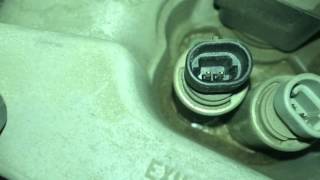

We Have This Part in Stock
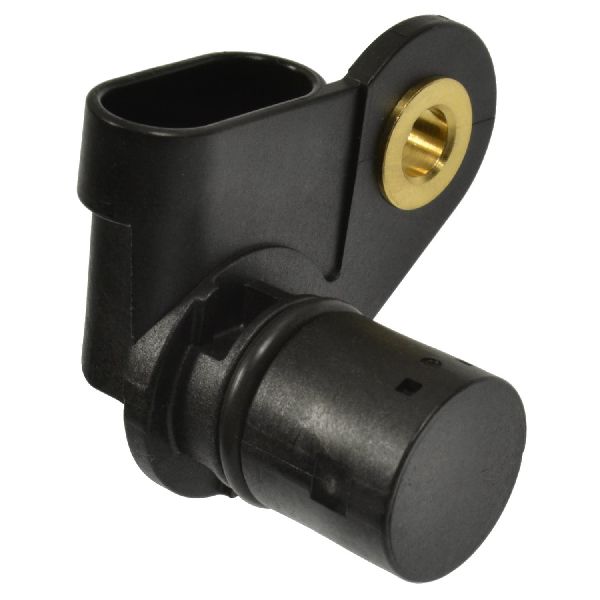

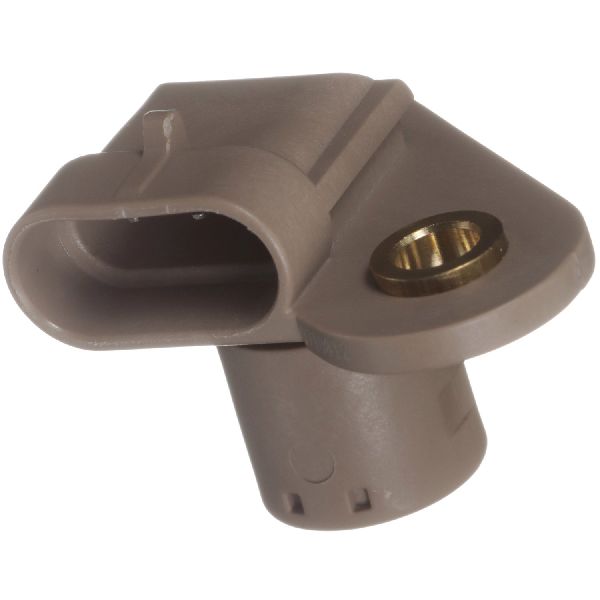
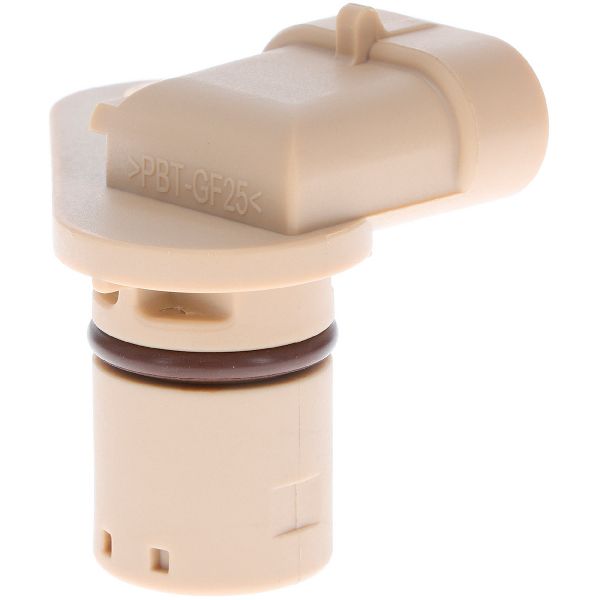

The information in this article is provided for general reference and educational purposes only. Vehicle specifications, procedures, and part compatibility can vary by production date, trim level, and region. Always consult your vehicle's factory service manual and verify part numbers before purchasing or performing repairs. Safety-critical components such as airbags, seat belts, and braking systems should be installed by a qualified professional.
- Chevrolet Silverado:
- 🎬 Helpful Videos
- 🛍️ Shop This Part
- What's Unique About the 2014-2018 Chevrolet Silverado
- Symptoms You May Notice
- Most Likely Causes
- Rare But Worth Checking
- Diagnosis Steps
- Parts You'll Likely Need
- Related Codes That Often Appear With This One
- Technical Service Bulletins (TSBs) & Recalls
- Platform-Specific Known Issues
- Mechanic-Grade Diagnostic Values
- Scan Tool Commands That Help
- Wiring & Ground Locations
- Real Owner Repair Stories
- OEM Part Supersession History
- Model Year Variations Within This Range
- Diagnostic Flowchart
- Other Known Issues on This Vehicle
- Used vs. New Parts: Buying Guide for This Vehicle
- Real Owner Stories
- 2014-2019 Chevrolet Silverado 1500 5.3L
- 2014-2018 Chevrolet Silverado 5.3L V8
- Related OBD-II Codes
- Frequently Asked Questions
- 🎟️ Get 5% Off