

C1100 on 2015-2020 Ford F-150: ABS Pump Circuit Failure Causes and Fixes
Code C1100 on a 2015-2020 Ford F-150 indicates an ABS Pump Motor or Switch Circuit Failure. This is often caused by a faulty ABS control module or its wiring, leading to the ABS and traction control warning lights illuminating. The fix usually involves replacing the ABS module or repairing the associated wiring, though third-party repair services for the module are a cost-effective option.
- C1100 means your truck's ABS and stability control are disabled due to a problem with the ABS pump circuit.
- Before replacing the expensive ABS module, thoroughly check the related fuses and the wiring/connector at the module for power, ground, and any signs of damage.
- The most common causes are a faulty ABS control module or a wiring issue leading to it.
- Consider using a mail-in repair service for the ABS module as a cost-effective alternative to buying a new one.
- This is not a DIY-friendly repair for most people, as replacing the ABS module requires special procedures for bleeding the brakes and programming the new unit to the vehicle.
What's Unique About the 2015-2020 Ford F-150
For the 13th generation F-150 (2015-2020), the C1100 code is most frequently associated with a failure of the ABS control module itself or the wiring connected to it. While fuses and the pump motor can be culprits, many owners report that the electronic module is the ultimate point of failure. Diagnostics should focus on confirming power and ground at the module's connector before condemning the expensive pump and module assembly. Unlike some other faults, this code is rarely caused by wheel speed sensors. Several companies also offer repair services for the original module, which can be a cost-effective alternative to a full replacement.
Symptoms You May Notice
- ABS warning light is illuminated on the dashboard.
- Traction Control or Stability Control (ESC) warning light is on.
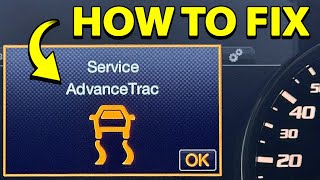
- "Service AdvanceTrac" message may appear on the instrumen 🎬 Watch this guide on common causes for the Service AdvanceTrac lightt cluster.
- Loss of anti-lock braking functionality; wheels may lock and skid during hard braking.
- Loss of traction and stability control.
- In some cases, the ABS pump may run continuously, even with the ignition off.
- Scan tool may show no communication with the ABS module.
- Replacing wheel speed sensors. This code is specific to the ABS pump motor circuit, not the wheel speed sensors. Wheel speed sensor faults will set different codes (e.g., C1101, C1102, or U0415 from a wiring fault).
Most Likely Causes
- Faulty ABS Control Module 🔴 High Probability The ABS module is an electronic component subject to failure from heat, vibration, and age. Several sources point to the module itself being a common point of failure for this code on F-150s, often due to internal component failure on the circuit board.
How to confirm: After verifying that power, ground, and signal wires to the module are intact and have correct voltage, the module is diagnosed by exclusion. A bi-directional scan tool may fail to communicate with it or command the pump to activate.
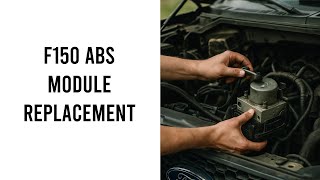
Typical fix: Replace the ABS control module and hydraulic unit assembly, or remove the electronic module and send it to a specialized repair service. A new or reprogrammed module must be configured to the vehicle's VIN and may require a brake bleed procedure.
Est. part cost: $600-$1100 for a new assembly, or $150-$350 for a mail-in repair service. - Open or Short in the ABS Pump Motor Circuit Wiring 🟡 Medium Probability The wiring harness leading to the ABS module is located in the engine bay and can be susceptible to damage from heat, moisture, and corrosion. Chafing against other components is a common cause of shorts or opens in the circuit.
How to confirm: Perform a visual inspection of the wiring harness for any signs of damage, chafing, or corrosion at the connector. Use a multimeter to check for continuity and voltage on the power and ground wires at the ABS module connector (C135), following a vehicle-specific wiring diagram.
Typical fix: Repair the damaged section of wiring or replace the corroded connector pigtail.
Est. part cost: $20-$100 - Blown Fuse or Faulty Relay ⚪ Low Probability The ABS pump motor draws significant current and is protected by a high-amperage fuse and relay. A voltage spike or a failing pump can cause these to blow.
How to confirm: Locate the fuse box (Battery Junction Box in the engine compartment) and identify the fuses for the ABS system. Check BJB fuse 53 (10A) for the module's power supply. Visually inspect the fuse for a broken filament and test the relay's function or swap it with a known good one.
Typical fix: Replace the blown fuse or faulty relay. If the fuse blows again immediately, it indicates a short circuit that must be found.
Est. part cost: $5-$30
Rare But Worth Checking
- Internal Failure of the ABS Pump Motor: While the code points to the circuit, the motor itself can fail internally, causing an electrical fault that triggers the code. Often, the motor is part of the entire ABS hydraulic control unit (HCU) and is replaced as an assembly with the module.
Diagnosis Steps
- Connect an OBD-II scanner capable of reading chassis codes to confirm C1100 is present and check for any other related DTCs like B1342 or U0415.
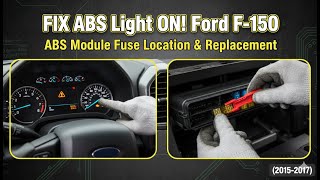
- Inspect the ABS system fuses and relays in the engine bay's Battery Junction Box. Specifically check fuse 53 (10A). Replace if blown or faulty. 🎬 Watch this quick tutorial on finding and replacing the F-150 ABS fuse
- Visually inspect the ABS module connector (C135) and the entire visible length of its wiring harness for any signs of corrosion, moisture intrusion, or physical damage like chafing or melting.
- Using a vehicle-specific wiring diagram, use a multimeter to test for proper battery voltage and ground at the ABS module connector. Check for voltage greater than 10V at pin 30 (circuit CBB53 GY/BN) of connector C135. Check for ground continuity (less than 5 ohms) at pins 13 and 38 (circuit GD121 BK/YE).
- If possible, use a bi-directional scan tool like FORScan or Ford's IDS to command the ABS pump motor to activate. If it does not respond despite having proper power and ground, the module/pump assembly is likely faulty.
- If wiring and power are good, the most likely cause is a failed ABS control module. Consider sending the module to a reputable repair service as a cost-effective alternative to full replacement.
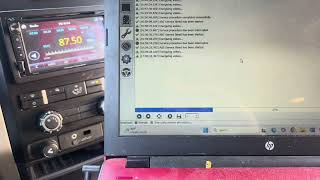
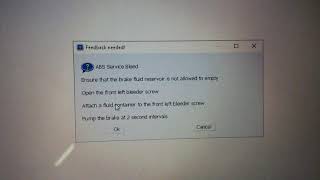
- If replacing the entire assembly or using a salvaged unit, the module must be programmed to the vehicle's VIN using a tool like FORScan or by a dealer. The brake system must then be bled using the specific ABS service bleed procedure to remove air from the hydraulic unit. 🎬 See how to perform an ABS brake bleed using FORScan
Parts You'll Likely Need
- ABS Control Module / Hydraulic Assembly
(OEM #FL3Z-2C215-B (supercedes FL3Z-2C215-A, for models up to 10/12/2015), HL3Z-2C219-C)— This is the most common point of failure for the C1100 code on this platform after wiring has been ruled out. The electronic module fails and can no longer control the pump motor.
Trusted brands: Motorcraft, Bosch
OEM price range: $700-$1100
Aftermarket price range: $500-$800 - ABS Module Repair Service — A cost-effective alternative to replacing the entire unit. Companies can diagnose and repair the internal electronic faults on the original module, which avoids the need for programming.
Trusted brands: Circuit Board Medics, Module Master, XeMODeX
OEM price range: N/A
Aftermarket price range: $150-$350 - ABS Module Connector — Corrosion or damage at the connector can cause an open or short in the circuit, triggering the code.
Trusted brands: Motorcraft, Dorman
OEM price range: $50-$100
Aftermarket price range: $30-$70
Related Codes That Often Appear With This One
- B1342 (ECU is defective)
- B1596 (Service Continuous Codes)
- U0415 (Invalid Data Received From ABS Control Module) - Often indicates a wiring issue affecting the module's communication.
- U3002 (Vehicle Identification Number Mismatch) - This will appear if a used ABS module is installed without being reprogrammed.
Mechanic-Grade Diagnostic Values
- ABS Module Power Supply Voltage at Connector C135 — expected: Greater than 10 volts. Failure: Voltage less than 10V indicates an open in the power supply circuit or a blown fuse (BJB Fuse 53).
- ABS Module Ground Circuit Resistance at Connector C135 — expected: Less than 5 ohms. Failure: Resistance greater than 5 ohms indicates an open or high resistance in the ground circuit (G103).
- ABS Pump Motor Coil Resistance — expected: Typically a low ohm value, such as 0.2–5 Ω (exact value is vehicle-specific). Failure: An infinite reading (open) or near-zero (short) indicates a failed pump motor.
Scan Tool Commands That Help
- FORScan / Ford IDS: ABS Module Configuration (AS-BUILT format) — Required when installing a new or used ABS module to program the vehicle's VIN and specific configuration into the module. Failure to do so will result in a VIN mismatch code (U3002) and prevent the system from working.
- FORScan / Ford IDS: ABS Service Bleed — This is a mandatory procedure after replacing the ABS hydraulic control unit (HCU) or if air has entered the ABS pump. The function cycles the internal pump and valves to purge trapped air that cannot be removed with a conventional brake bleed.
- FORScan / Ford IDS: ABS Pump Motor Actuator Test — Used during diagnosis to command the ABS pump motor to turn on. If the pump has proper power and ground but does not activate during this test, it points to a failure in the pump motor or the control module itself.
Wiring & Ground Locations
- C135 — The main electrical connector on the ABS control module, located under the hood, typically attached to the hydraulic control unit near the master cylinder.. This is the primary connection point for all power, ground, and communication signals for the ABS system. All voltage and resistance tests for the module and pump circuit are performed at this connector.
- G103 — A primary chassis ground point located on the left front fender.. The ABS module relies on this ground point for a clean return path. A corroded or loose G103 can cause high resistance, leading to intermittent or permanent C1100 codes. The ground circuit (BK-YE wire) at pins 13 and 38 of connector C135 terminates here.
- Battery Junction Box (BJB) Fuse 53 — In the under-hood fuse box.. This 10A fuse provides the key-on power to the ABS control module via the GY-BN wire at pin 30 of connector C135. If this fuse is blown, the module will be inactive and may set a C1100 or communication code.
Real Owner Repair Stories
- Ford F150 Forum (2012 F-150 (similar 12th gen platform, but diagnosis is identical)) — ABS light on, pedal fades at a stop.
❌ Tried (didn't work) Initially misdiagnosed as a master cylinder issue.
✅ What actually fixed it The user replaced the entire ABS pump/module assembly with a used unit from a salvage yard. After installation and bleeding the brakes, the pedal fade was gone, but the ABS light came on as soon as the truck moved. This indicates a successful mechanical repair but a required programming step for the electronic module. - Ford F150 Forum user SilverSTX150 (2015-2020 generation F-150) — ABS and traction control lights on.
❌ Tried (didn't work) Installing a used ABS module and programming it with FORScan cleared some codes but new codes appeared (C116A-E0), pointing to the pressure switch in the hydraulic unit (HCU).
✅ What actually fixed it The user concluded that the hydraulic control unit (HCU)/pump assembly also needed to be replaced, not just the electronic module. This highlights that while the module is a common failure, the fault can also lie within the hydraulic pump assembly it controls.
OEM Part Supersession History
FL3Z-2C215-A→FL3Z-2C215-B— Revision update by Ford.
Heads up: FL3Z-2C215-B is the correct service part for models built up to 10/12/2015. Later models use different part numbers like HL3Z-2C219-C. It is critical to match the part number or use a VIN lookup, as modules for different years or with different features (like Adaptive Cruise Control) are not interchangeable without causing further issues.
Model Year Variations Within This Range
- 2015-2020: While the C1100 fault is common across the generation, the specific ABS module part number can vary based on model year, drivetrain (4x2 vs 4x4), and optional features like Adaptive Cruise Control. A module from a 2018+ truck may not be compatible with a 2015-2017 truck due to differences in other vehicle systems, such as the introduction of the 10-speed transmission. Always verify part number compatibility before purchasing a replacement.
Diagnostic Flowchart
Other Known Issues on This Vehicle
Issues unrelated to this code that are worth knowing about as an owner of this generation:
- Frozen Door Latches 🔴 High — Very common, especially in cold weather. Can result in doors not latching or opening while driving. (Ref: Recall 17S33 / NHTSA 17V652; Customer Satisfaction Program 18N03)
- Warped Dashboard 🟡 Low — Common on XL and XLT trim levels; the dash deforms and separates near the defrost vents. (Ref: TSB 19-2041 (superseded), TSB 20-2268)
- 10R80 10-Speed Transmission Harsh/Delayed Shifting 🔴 High — Widespread issue on 2017-2020 models, causing clunks, jerks, and delayed engagement. (Ref: Multiple TSBs issued, including TSB 21-2145 and TSB 24-2046)
- 5.0L V8 Excessive Oil Consumption 🟠 Medium — Affects some 2018-2020 models, caused by high engine vacuum during deceleration. (Ref: TSB 19-2365)
- Integrated Wheel End (IWE) 4WD Actuator Failure 🟠 Medium — Common issue where a loss of vacuum causes grinding noises from the front hubs and failure to engage 4WD. (Ref: No specific recall, but a well-documented problem.)
Used vs. New Parts: Buying Guide for This Vehicle
When a used part is the smart pick: A used ABS module from a salvage yard can be a cost-effective option, but ONLY if you have access to software like FORScan (with an extended license) or a willing dealership/shop to perform the programming. If you cannot program the module, it will not work and will set a VIN mismatch code.
Donor-vehicle mileage cap: roughly under 100000 miles for the part to have meaningful remaining life.
What to inspect on the donor part:
- Verify the part number on the used module EXACTLY matches your original part or is a verified superseded number.
- Inspect the connector pins for any signs of corrosion, moisture, or damage.
- Choose a donor vehicle from a similar climate to avoid introducing a part that has seen excessive salt/corrosion.
- Ensure the donor vehicle was not involved in a severe front-end collision that could have damaged the module or HCU.
OEM-only on this vehicle (don't cheap out):
- ABS Module/HCU Assembly: While aftermarket units exist, OEM (new or used) or a repair of your original OEM unit is strongly recommended. The complexity of the part and its integration with vehicle safety systems makes OEM the most reliable choice.
Aftermarket brands forum-validated for this vehicle:
- Cardone (Remanufactured): Often available as a remanufactured option that may not require programming, but verify this for the specific part number.
Brands owners have reported issues with on this vehicle:
- Unbranded, no-name units from online marketplaces should be avoided due to the high likelihood of programming issues and premature failure.
Real Owner Stories
Aggregated from forums and TSBs cited above. Mileages and costs reflect what owners reported in those sources.
2015-2020 Ford F-150
Symptoms: The owner was dealing with complexities after an accident where the ABS module needed replacement. They noted that while the electronic module can be swapped, the hydraulic control unit (HCU) itself can also be a source of issues.
What fixed it: Replacement of the ABS module/pump assembly followed by necessary programming.
Source hint: Ford F150 Forum thread titled 'Replacing ABS Pump Module - Ford F150 Forum'
2015-2020 Ford F-150
Symptoms: Multiple dashboard warning lights were illuminated. Upon inspection, the owner found physical damage to the wiring harness.
What fixed it: Repaired a chafed wire leading to a front wheel speed sensor.
Source hint: YouTube video 'ABS Module Troubleshooting (U0415)'
Related OBD-II Codes
Frequently Asked Questions
Can I use a used ABS module from a salvage yard for my F-150 to fix the C1100 code?
Which fuse should I check on my 2015-2020 F-150 if I suspect an ABS power issue?
My F-150 is displaying 'Service AdvanceTrac' along with the ABS light; is this related to C1100?
Is there a TSB for the warped dashboard or frozen door latches on my F-150?
Do I need to bleed the brakes after replacing the ABS module assembly?
Can I just repair my existing ABS module instead of buying a new one for $1100?
Helpful Videos
We Have This Part in Stock



The information in this article is provided for general reference and educational purposes only. Vehicle specifications, procedures, and part compatibility can vary by production date, trim level, and region. Always consult your vehicle's factory service manual and verify part numbers before purchasing or performing repairs. Safety-critical components such as airbags, seat belts, and braking systems should be installed by a qualified professional.
- Ford F-150:
- 🎬 Helpful Videos
- 🛍️ Shop This Part
- What's Unique About the 2015-2020 Ford F-150
- Symptoms You May Notice
- Most Likely Causes
- Rare But Worth Checking
- Diagnosis Steps
- Parts You'll Likely Need
- Related Codes That Often Appear With This One
- Mechanic-Grade Diagnostic Values
- Scan Tool Commands That Help
- Wiring & Ground Locations
- Real Owner Repair Stories
- OEM Part Supersession History
- Model Year Variations Within This Range
- Diagnostic Flowchart
- Other Known Issues on This Vehicle
- Used vs. New Parts: Buying Guide for This Vehicle
- Real Owner Stories
- 2015-2020 Ford F-150
- 2015-2020 Ford F-150
- Related OBD-II Codes
- Frequently Asked Questions
- 🎟️ Get 5% Off